-
Global Resilience Hub: Leveraging AI for Loss and Damage in Climate Change
-
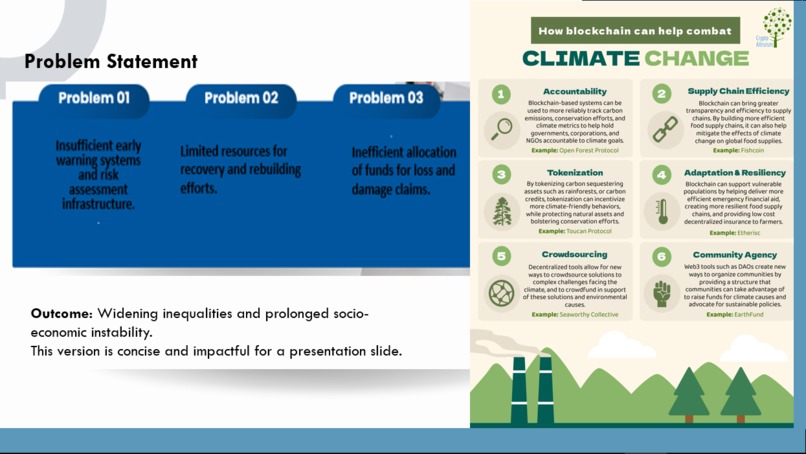
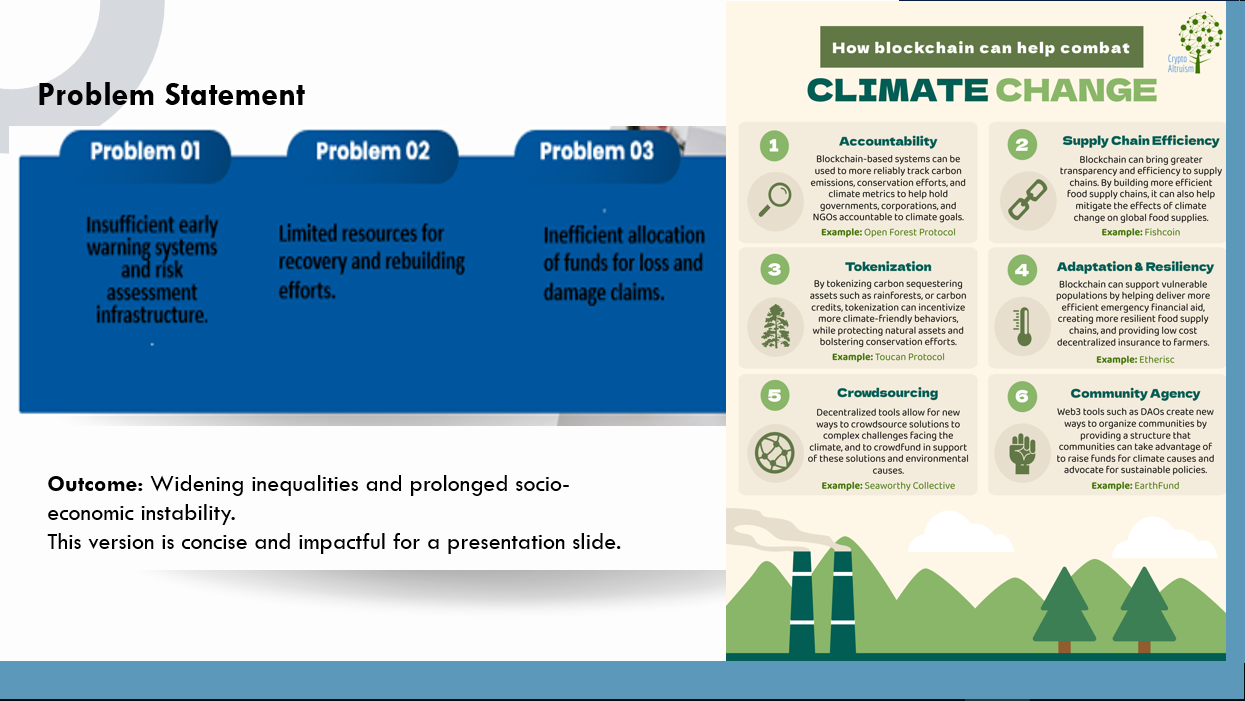
Problem Statement
-
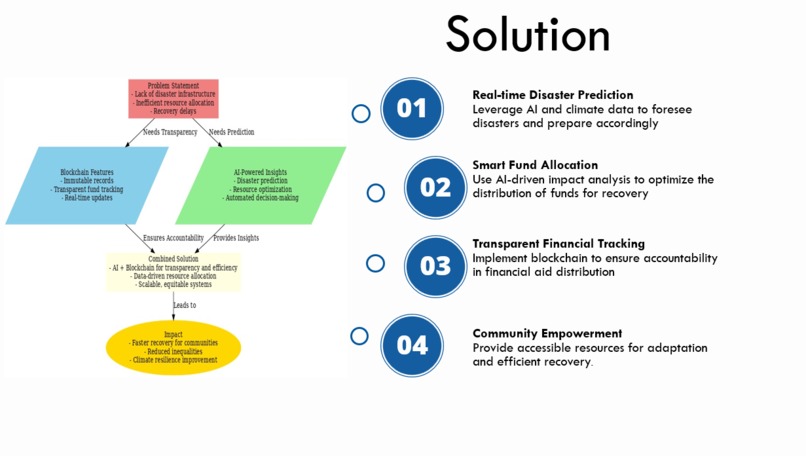
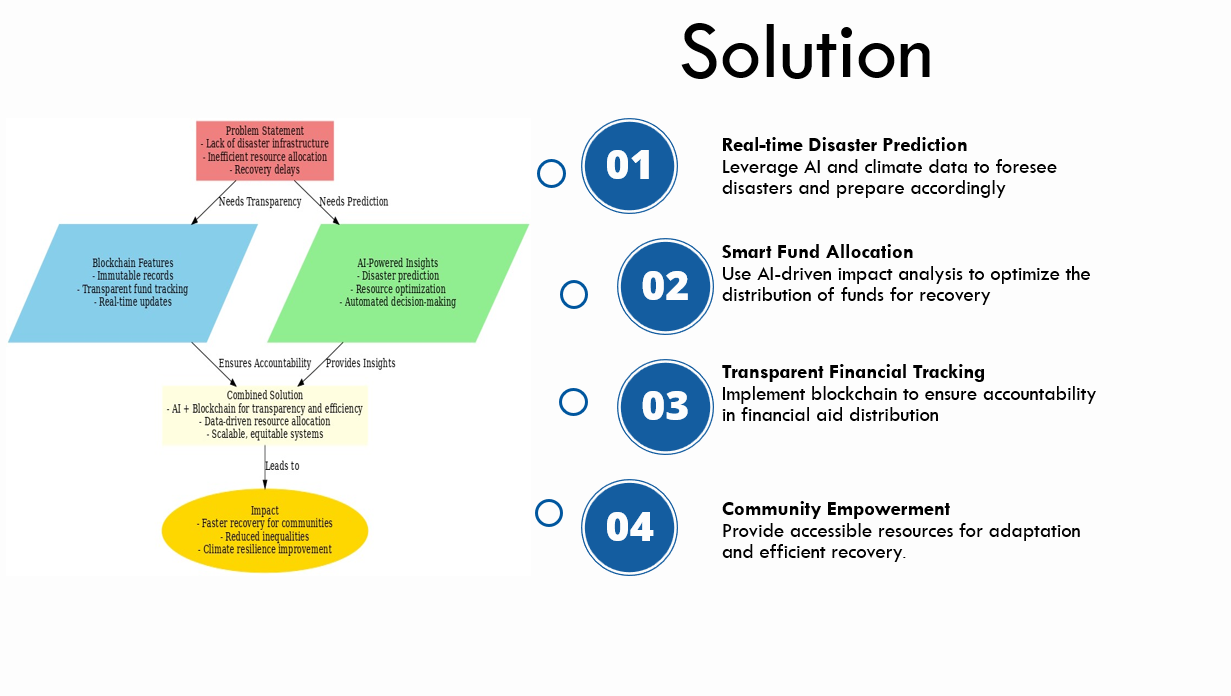
Solution
-
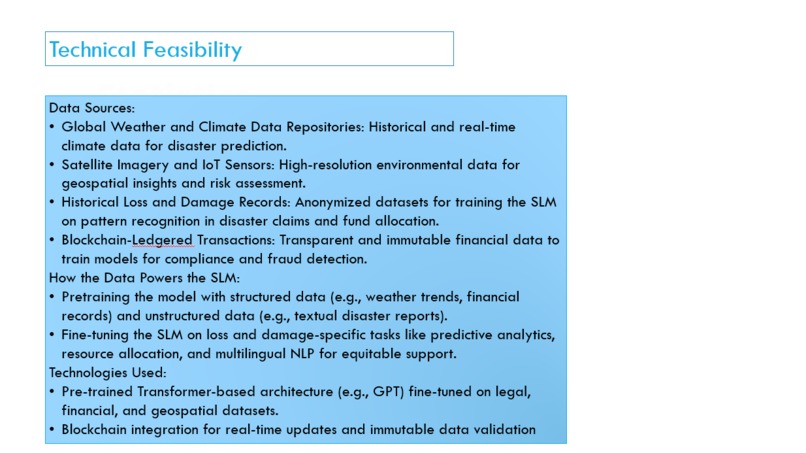
Technical Feasibility
-
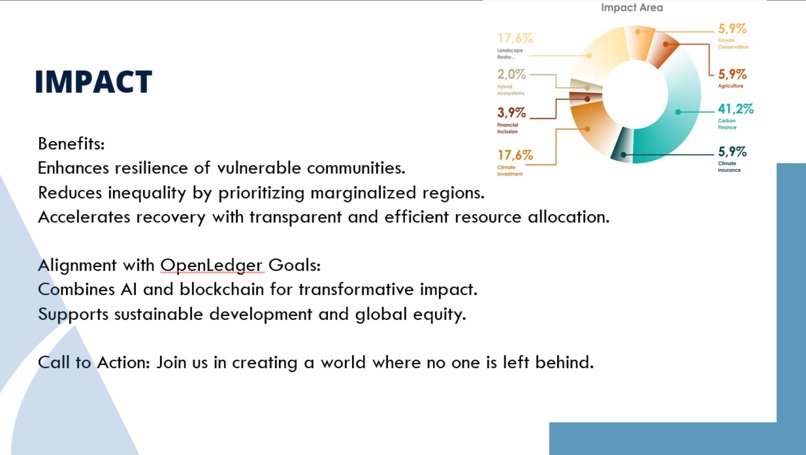
IMPACT
Inspiration
The idea for the Global Resilience Hub was born from witnessing the recurring inefficiencies in disaster response systems worldwide. Natural disasters don’t just claim lives—they disrupt communities and economies, often leaving the most vulnerable without timely assistance. We wanted to create a solution that bridges this gap by leveraging AI for foresight and blockchain for trust, ensuring faster, fairer, and more impactful responses.
What It Does
The Global Resilience Hub is a comprehensive disaster management platform that:
Predicts Disasters: Uses AI-driven predictive models to forecast disasters, providing early warnings. Streamlines Fund Allocation: Employs blockchain technology to track donations and automate fund disbursement with transparency.
Crowdsources Real-Time Data: Allows communities to contribute on-ground insights, improving situational awareness.
Builds Trust: Creates an immutable ledger of all transactions, ensuring accountability and fostering public confidence.
How We Built It
We combined advanced technologies to bring this idea to life:
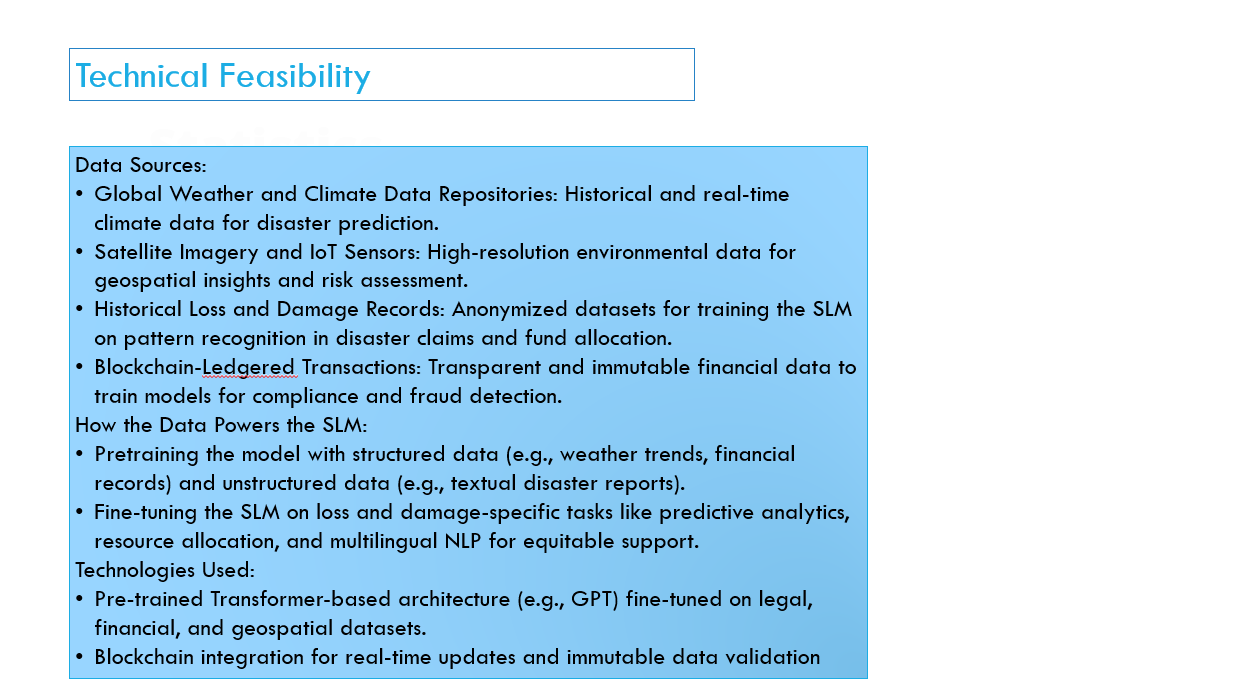
AI for Predictions: Trained a specialized language model on historical disaster data, weather patterns, and socio-economic indicators to identify risk zones.
Blockchain for Transparency: Integrated a blockchain layer with smart contracts for secure, tamper-proof fund tracking and allocation.
User-Friendly Interface: Designed an intuitive dashboard for responders, donors, and communities to access and interact with the platform.
Challenges We Ran Into
Data Diversity: Aggregating reliable, multi-regional data for disaster forecasting was tough. We resolved this by leveraging open data sources and validating datasets rigorously.
Blockchain Integration: Balancing the technical complexity of blockchain while maintaining a simple user experience was a critical challenge.
Time Constraints: With limited time in the hackathon, we had to prioritize features and deliver a solid prototype.
Accomplishments That We’re Proud Of
Successfully integrating AI and blockchain in a seamless system for disaster management.
Creating a prototype that forecasts disasters and transparently tracks relief funds in real time.
Designing a solution that aligns with global needs, enabling equitable access to disaster aid.
What We Learned
The power of combining emerging technologies to tackle real-world problems.
The importance of user-centric design in building trust and ensuring adoption.
Collaboration is key—our diverse skill sets helped overcome obstacles and innovate under pressure.
What’s Next for Global Resilience Hub
Scaling Predictive Models: Incorporating more data sources for improved accuracy and wider applicability.
Global Partnerships: Collaborating with governments, NGOs, and international relief agencies to deploy the platform.
Expanding Features: Adding multilingual capabilities, integrating drone-based real-time data collection, and expanding blockchain use cases.
Field Testing: Piloting the system in disaster-prone regions to refine its functionality and impact.
Built With
- amazon-web-services
- bigquery
- ethereum
- geonames-api
- github
- google-cloud
- javascript
- mongodb
- openweathermap-api
- pytorch
- react
- solidity
- tensorflow


Log in or sign up for Devpost to join the conversation.