-
-
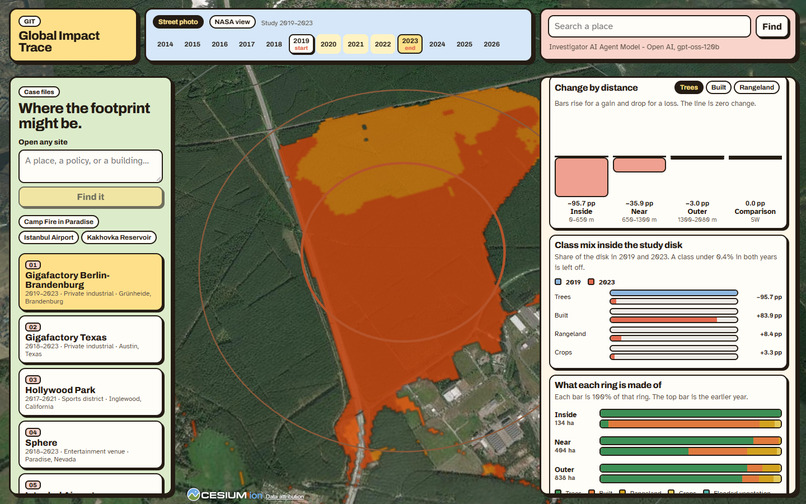
Metrics and Nasa Relevant Data Points
-
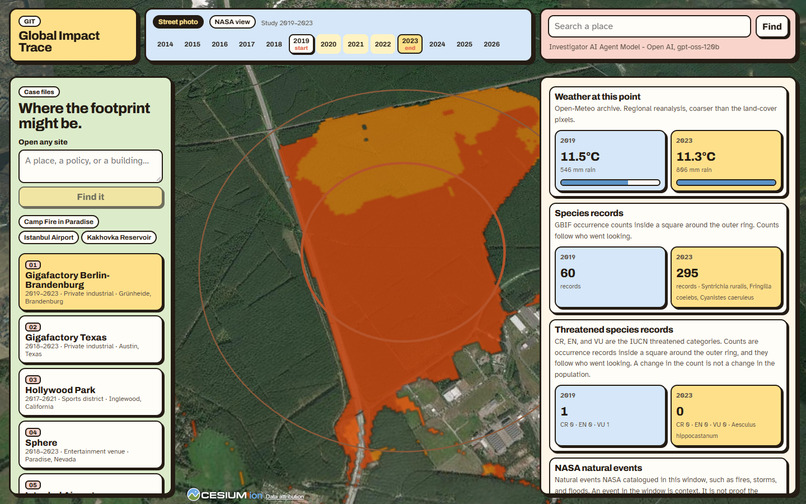
Evidence Data from Various sources and News
-
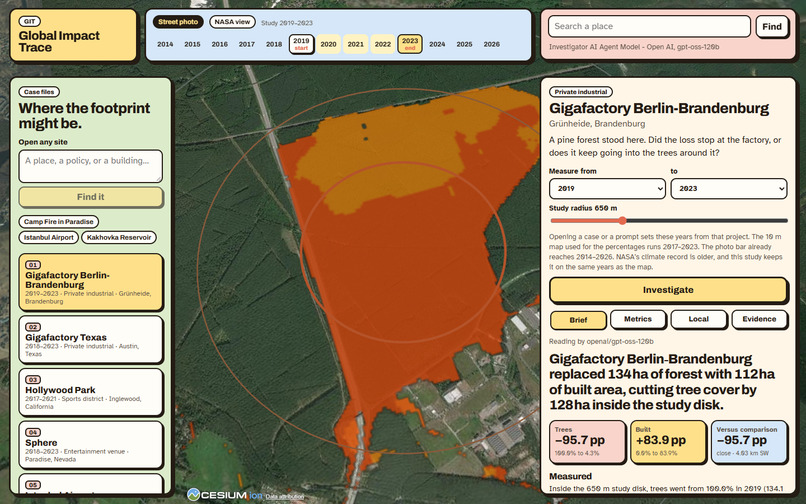
Brief Dashboard Overview
-
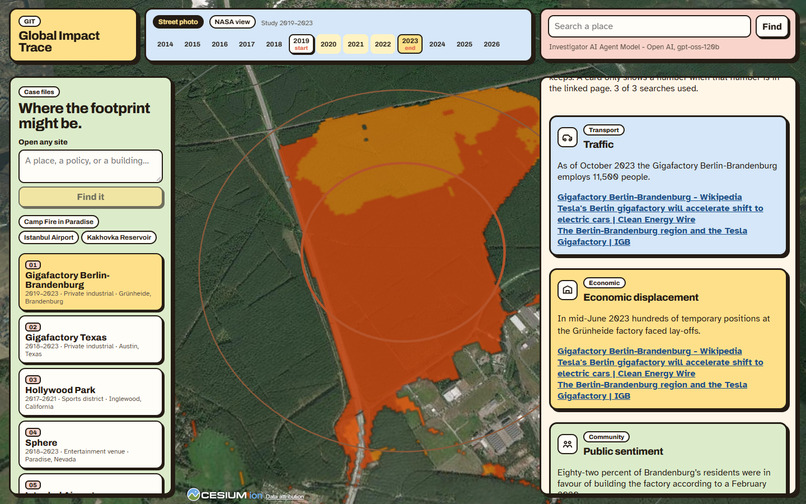
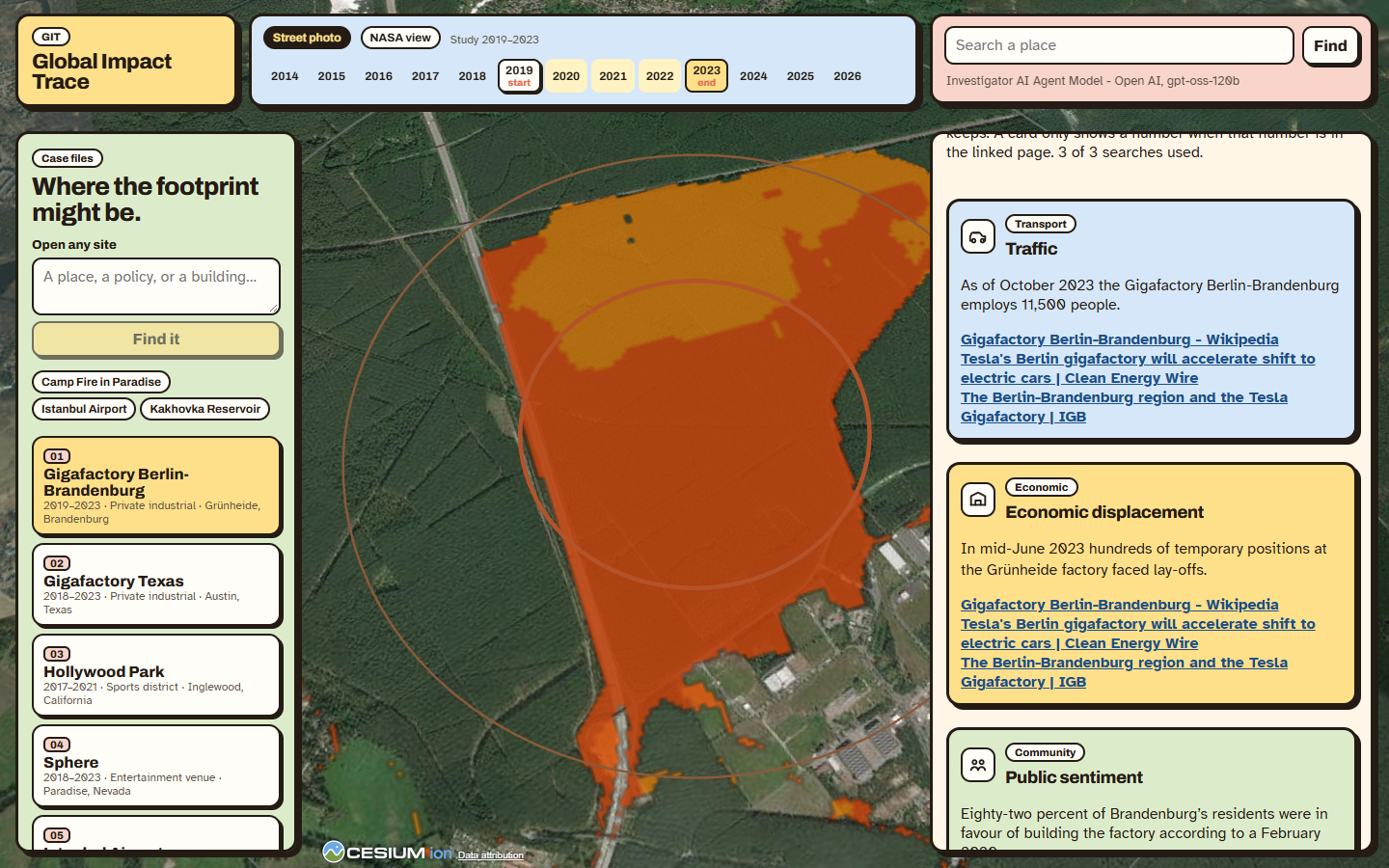
Local Impact Data scraped real time by AI Agent
-
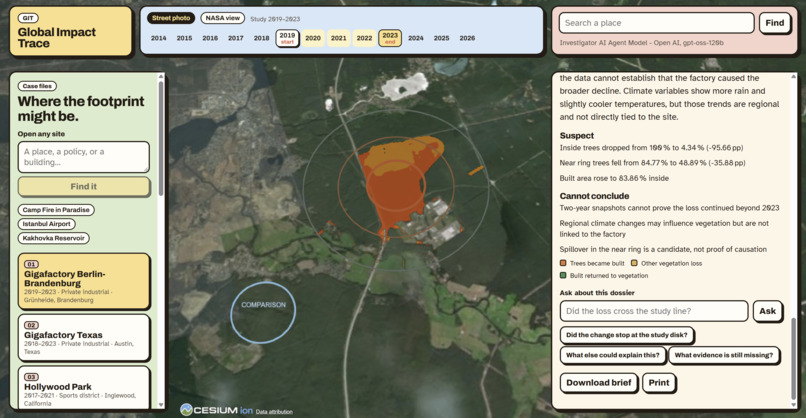
Ask about the Dossier, Print/Download
-
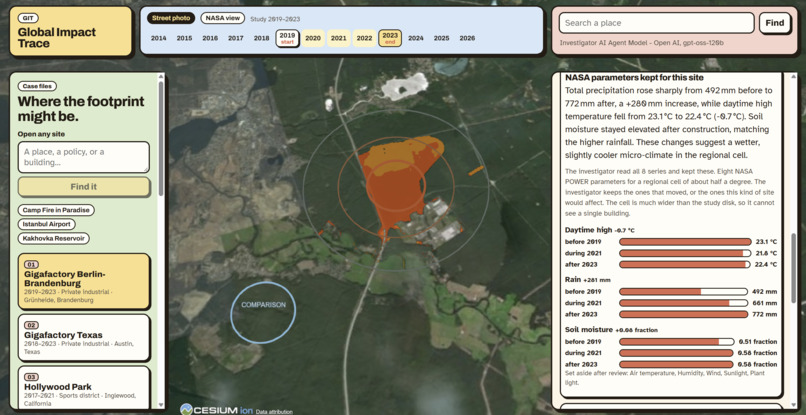
Nasa Relevant Metrics
Global Impact Trace (GIT)
What is it?
- Claims kept repeating. The trees were protected. The land was empty. The impact stayed inside the fence. A press photo cannot settle that.
- Global Impact Trace checks one place across land cover, distance, climate, air, species, and a few local facts. Each result stays separate.
To give a context, the FAO put deforestation at about 10 million hectares a year, and the UN expects about 68 percent of people in cities by 2050. This is the check for one site inside that picture.
The public site is the demo. It loads pre-analyzed case files and runs with no AI. The investigator and live search stay on the machine used for the video.
Team
- Vishnu built the mapping, the dashboard application, and the AI agent, and tested the runs.
- Shruthi led UI/UX, research on the environmental and other metrics, data collection from the sources, and testing and validation.
Tech Stack We Used
- React and Cesium for the photo, the year scrub, and the change layer.
- A Python API reads Impact Observatory land cover, counts the disk, two rings, and a comparison patch, and pulls NASA climate, air, species, events, and news.
- Groq writes the reading. Local cards use at most three web searches.
Real world impact and Novelty
- A city desk, a newsroom, or the neighbors can check one site before the claim becomes the record.
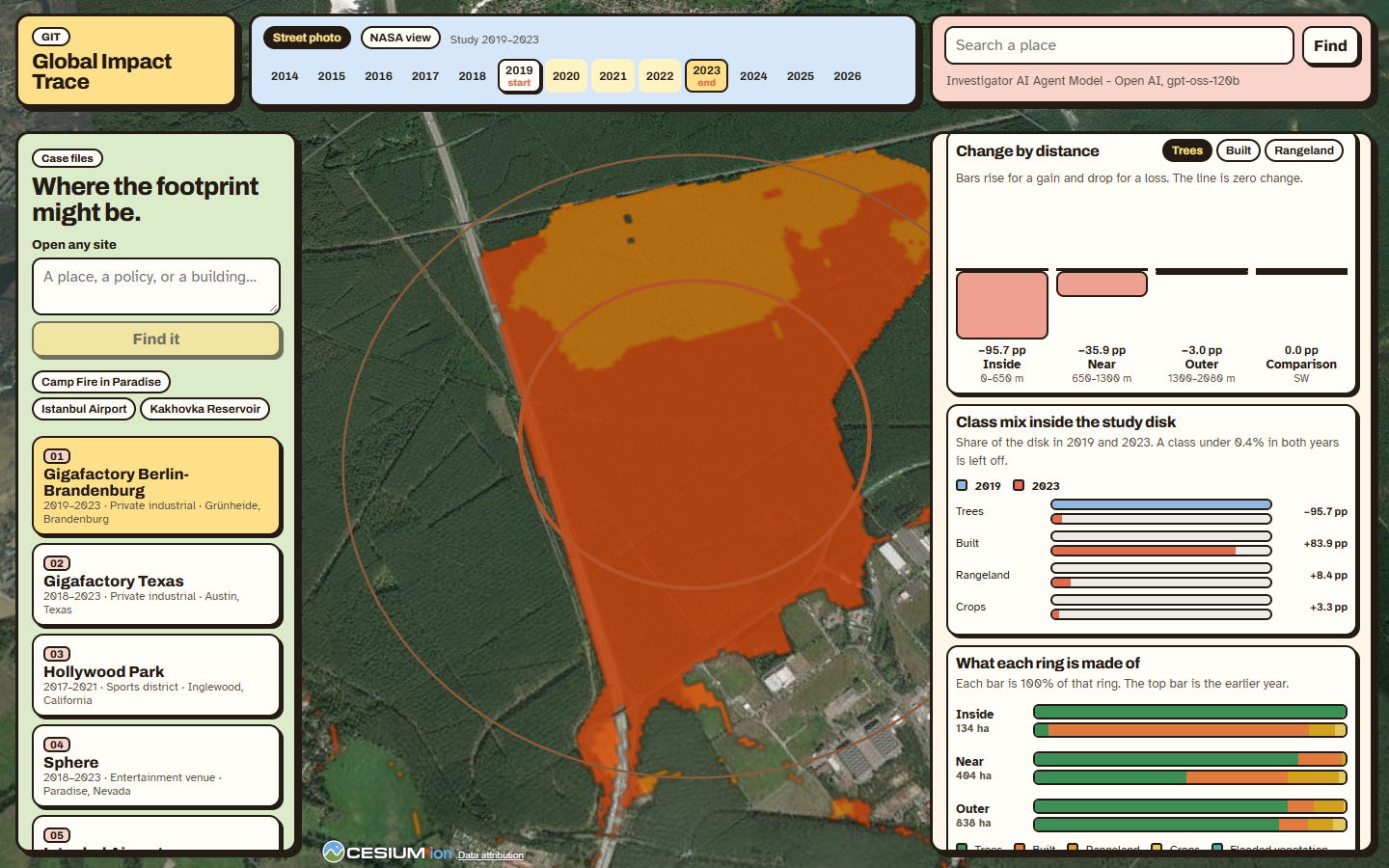
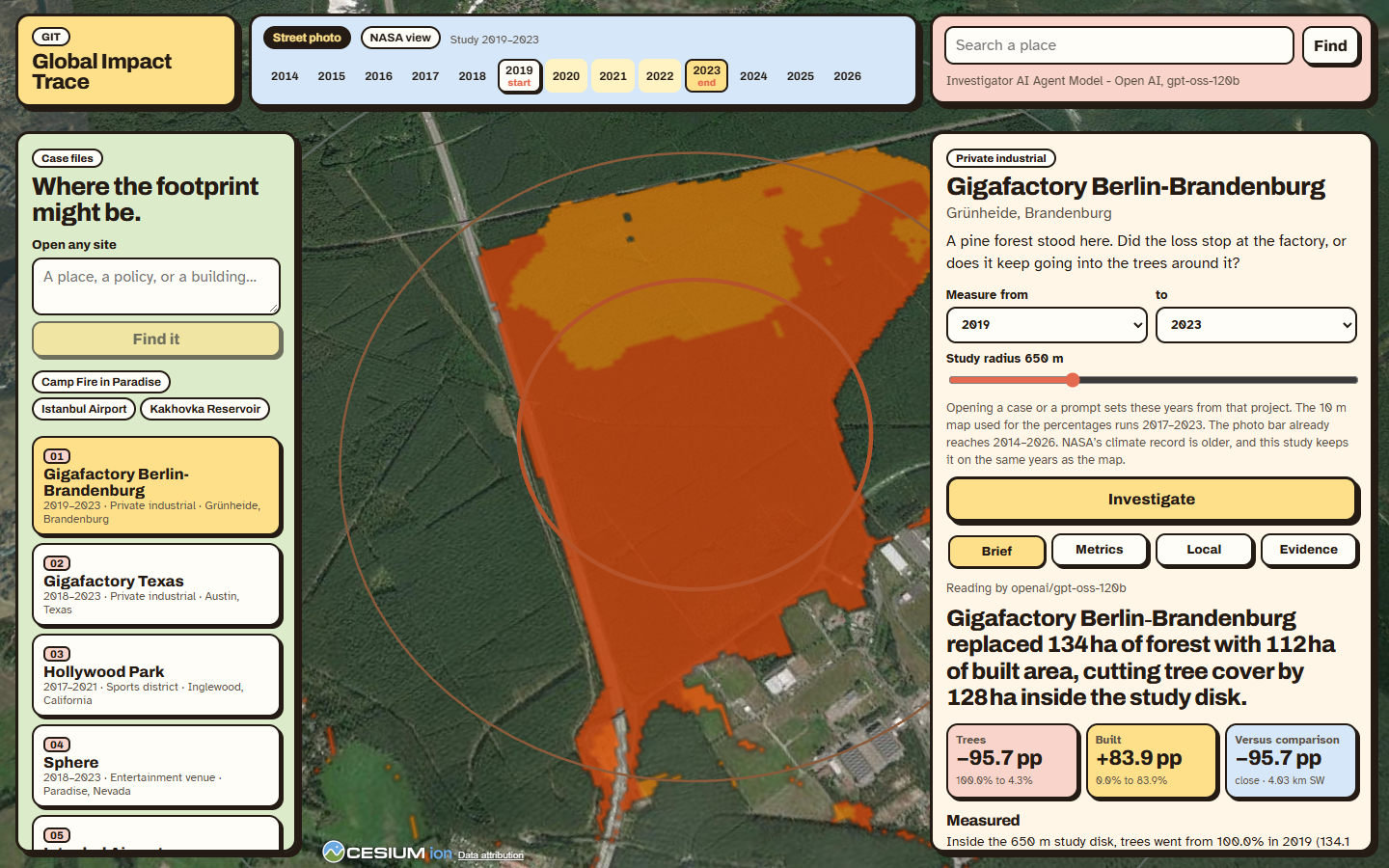
- Gigafactory Berlin, 2019 to 2023: trees inside the disk went from 100 percent (134.1 ha) to 4.3 percent (5.8 ha), down 95.7 points. Built land went from 0 to 83.9 percent.
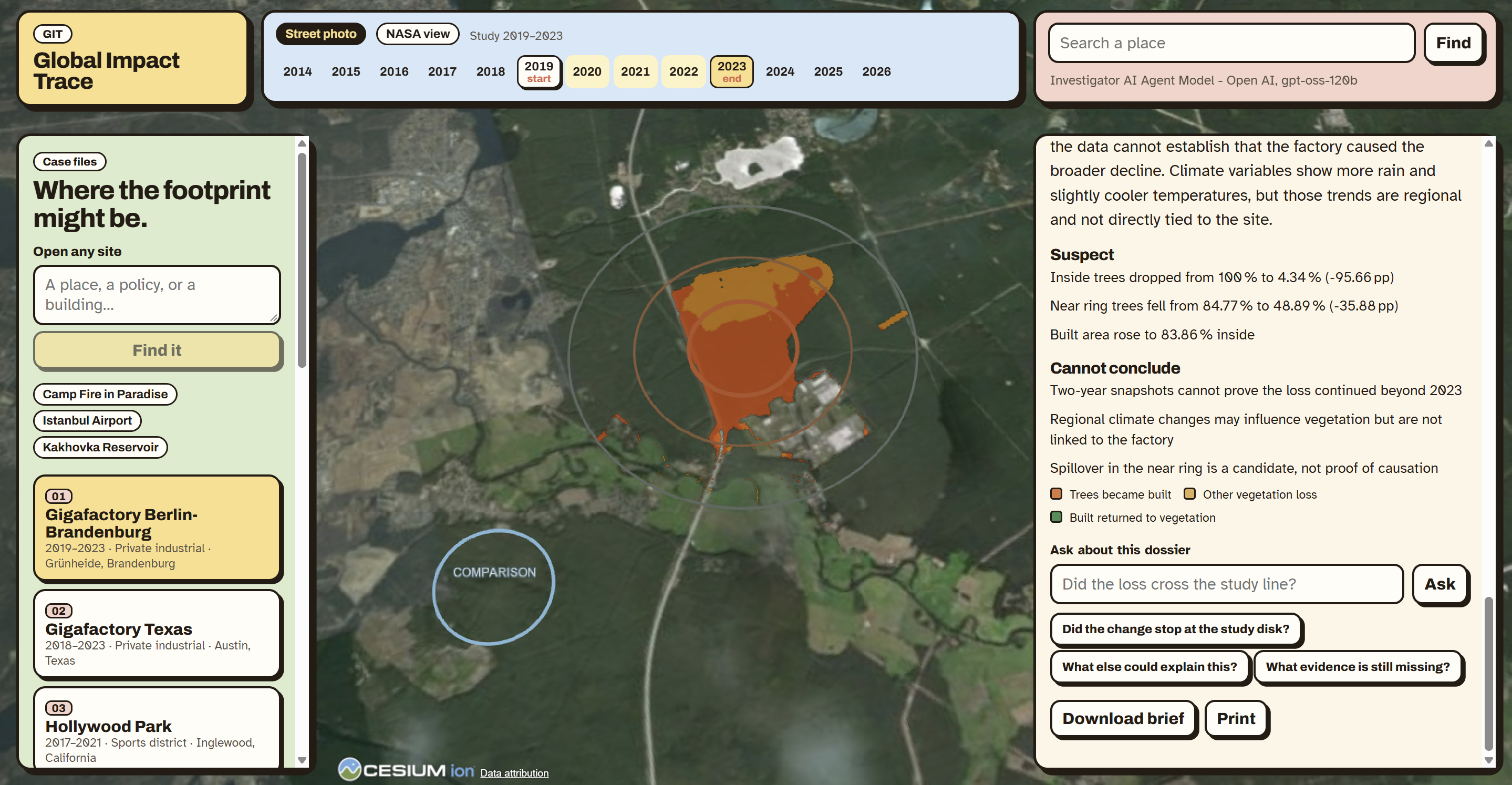
- Just outside, trees fell 35.9 points. Farther out, 3. A patch about 4 km southwest barely moved. About 128 hectares left that one disk.
- The dimensions stay separate. There is no single destruction score.
- Distance is part of the result: inside, near, and outer rings, plus a comparison disk.
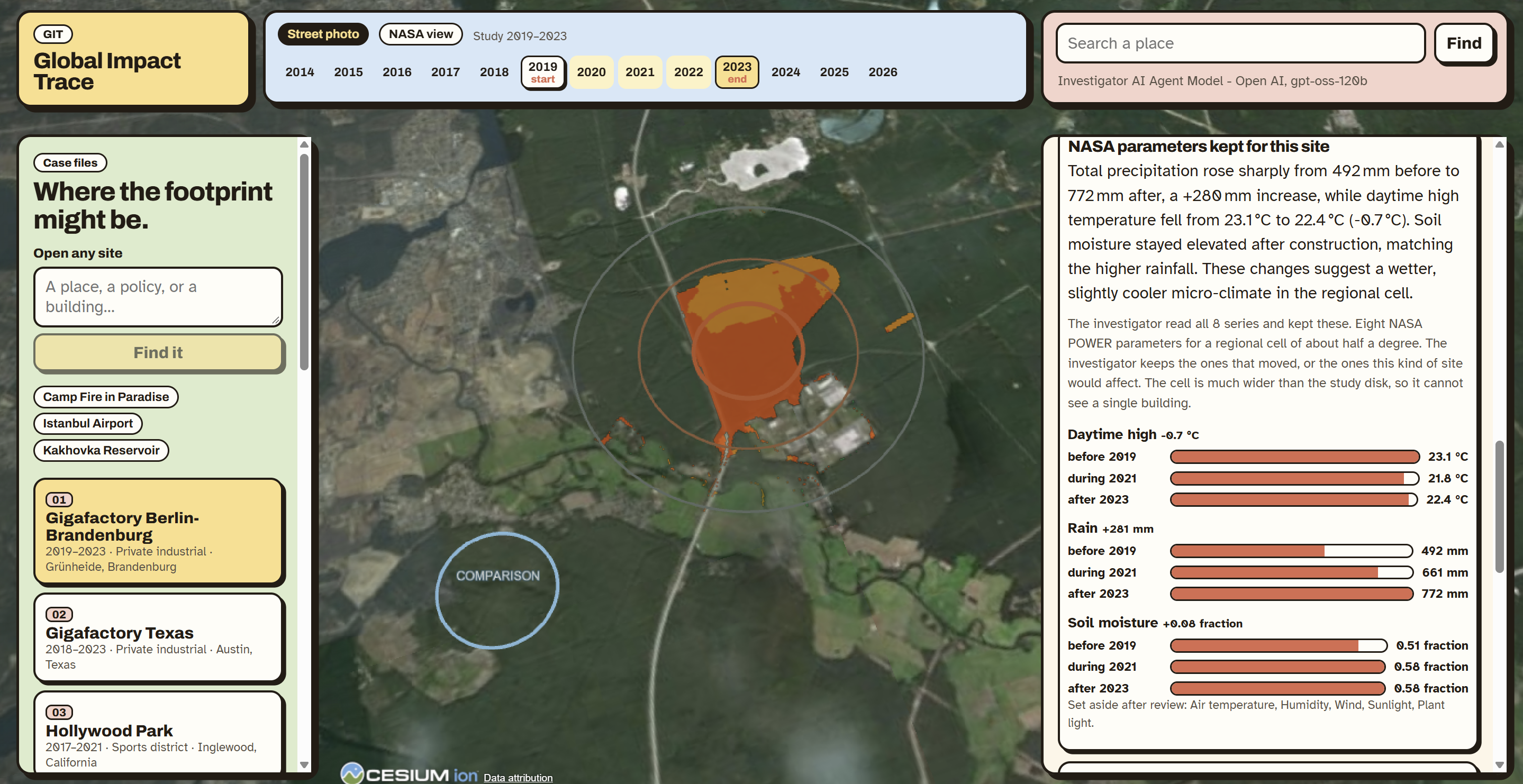
- The investigator keeps two or three NASA series, sets the rest aside, and says the cell is regional.
- Local facts are chosen for that place, and left blank when the page has no figure.
Core features
- Open a case and the years and radius move with it. Or type a place, a building, or a policy.
- Investigate paints the change layer. Orange-red means trees became built.
- Brief, Metrics, Local, and Evidence each have one job.
- The street photo scrubs from 2014 to 2026. The percentages do not come from that photo.
Additional features
- A NASA view for a dated photo, plants, or ground heat.
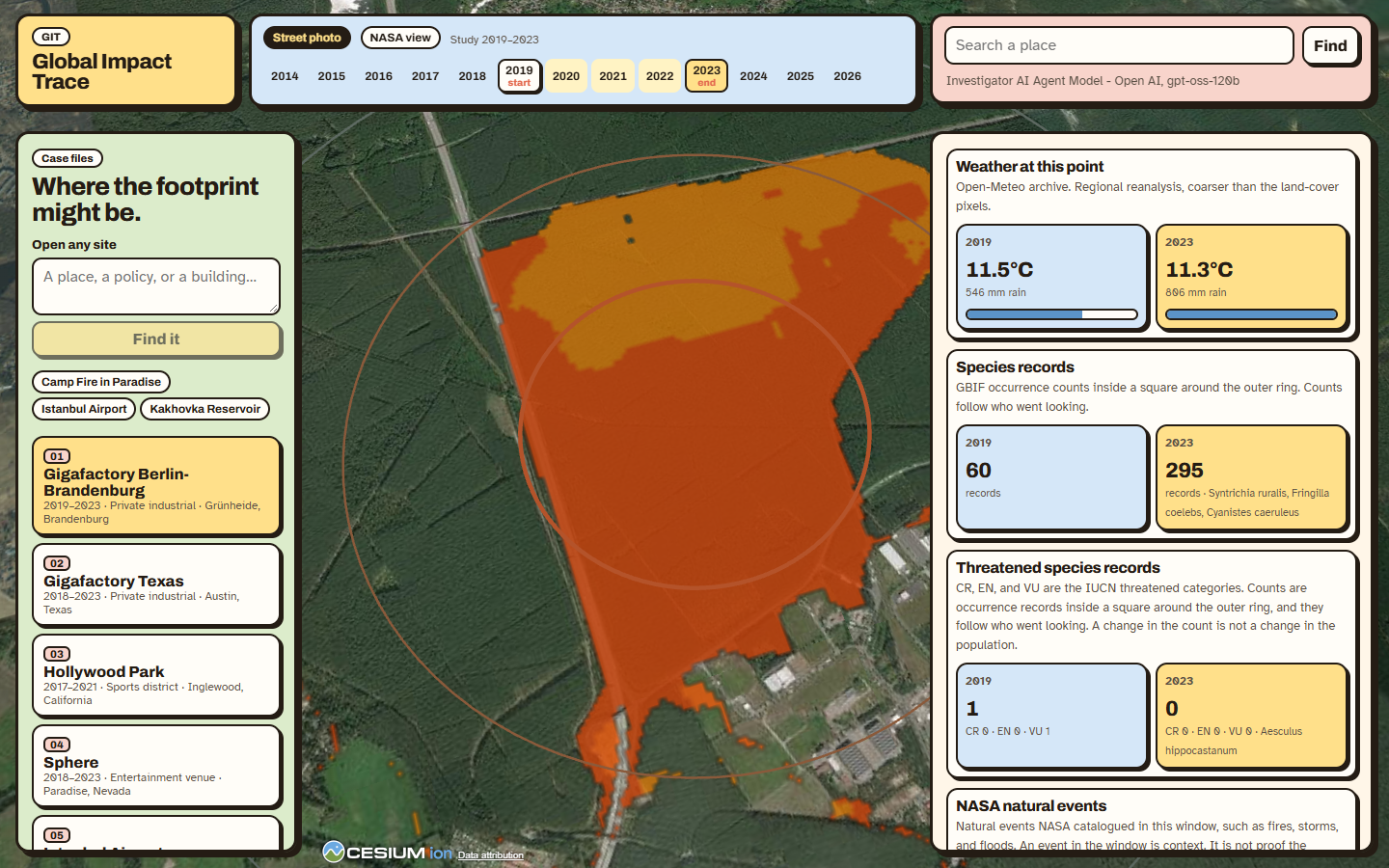
- Regional air, species records, natural events, and news leads.
- Hectares translated into an aboveground CO2 figure and a simple 25 mm storm scenario.
- In Chicago or New York, a permit can start a disk. A permit newer than 2023 is labeled as context.
- If the model key is missing, the measured lines still show.
What did we learn?
- The globe is a picture. The percentages come only from a 10 m land-cover map, 2017 to 2023.
- The code measures the pixels. The model writes the brief and picks which climate series to show.
- A web number is safe only when it is on the linked page. A wetter regional year is not the project's doing.
Challenges we Faced
- The class map ends in 2023, while the photo bar runs further.
- A cold site is slow because the map windows download first. The full stack stays local, so the public demo ships saved readings.
- A 10 m map often misses street trees and calls some parks built. We dropped sites where both years already read as built.
Future enhancements and Next Steps
- A population grid, protected land the disk overlaps, and night lights as a second check on construction.
- Two cases on one sheet.
- A newer land-cover year when a trustworthy map exists past 2023.
- Verify a short list of sites against parcels, permits, and on-the-ground photos before treating a reading as final.
- Keep a human review on the brief, and show the map version and date on every run.
- Move the map work to a queue so more than one person can run a site.
- Add accounts and a clear line between a measured class change and a claim that the project caused it.
- Only after that is this a product a desk could cite, rather than a demo of saved cases with no AI on the public site.


Log in or sign up for Devpost to join the conversation.