Inspiration
The inspiration came from recognizing the massive healthcare gap in underserved communities worldwide. Millions of people lack immediate access to medical professionals, especially in remote or rural areas. We wanted to leverage the power of AI to democratize healthcare by providing instant, intelligent medical guidance that could serve as a bridge until professional care becomes available.
What it does
Global Health Assistant is an AI-powered medical guidance system that:
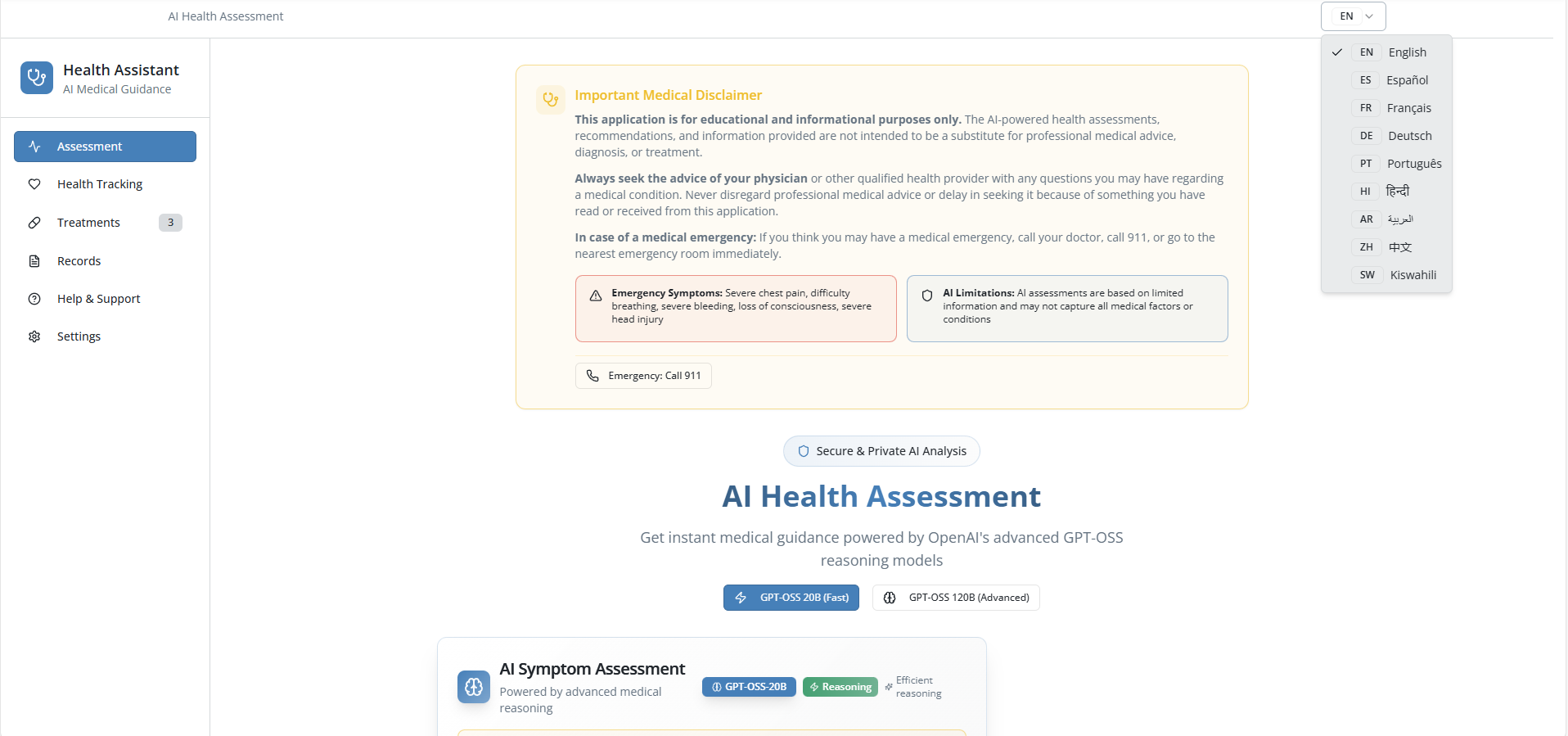
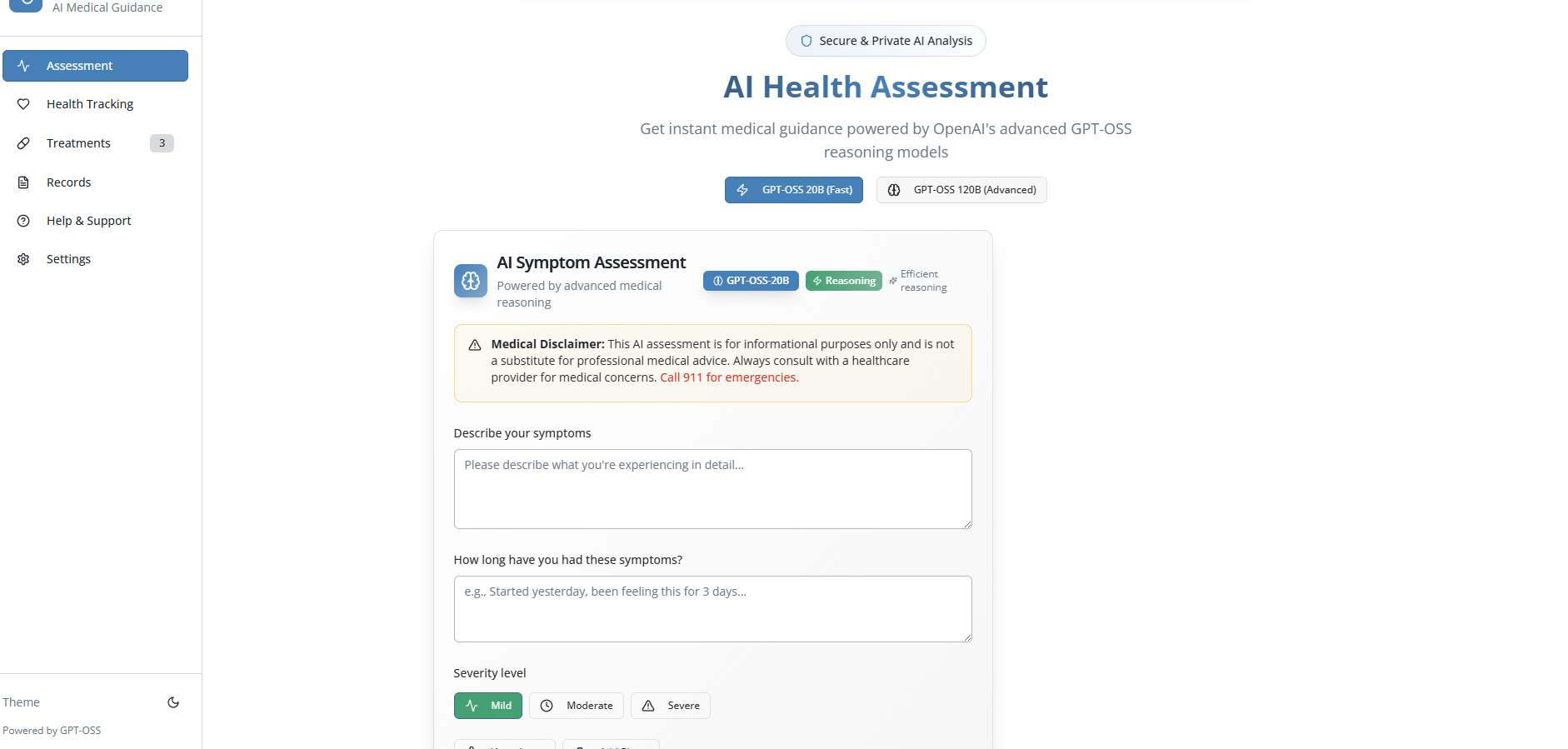
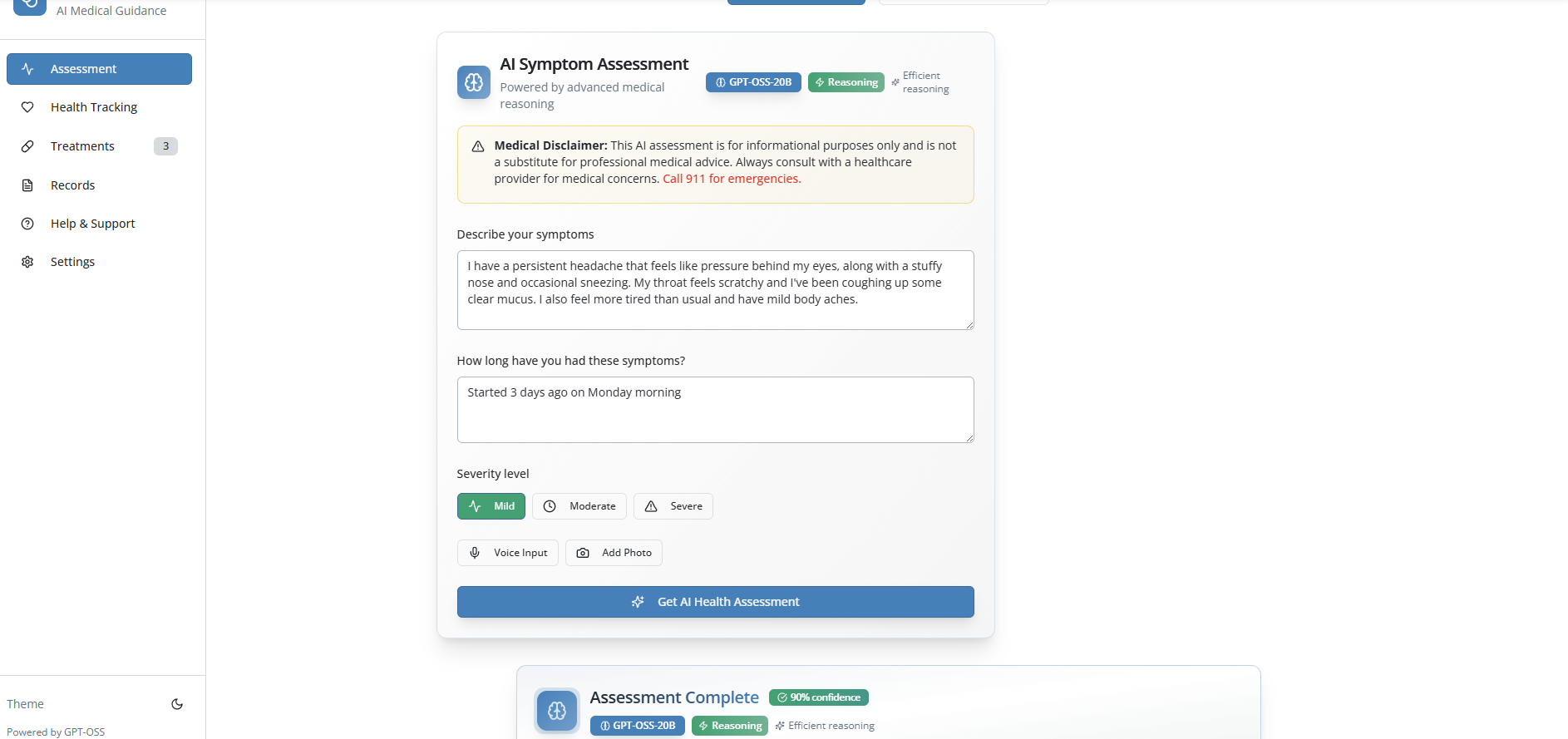
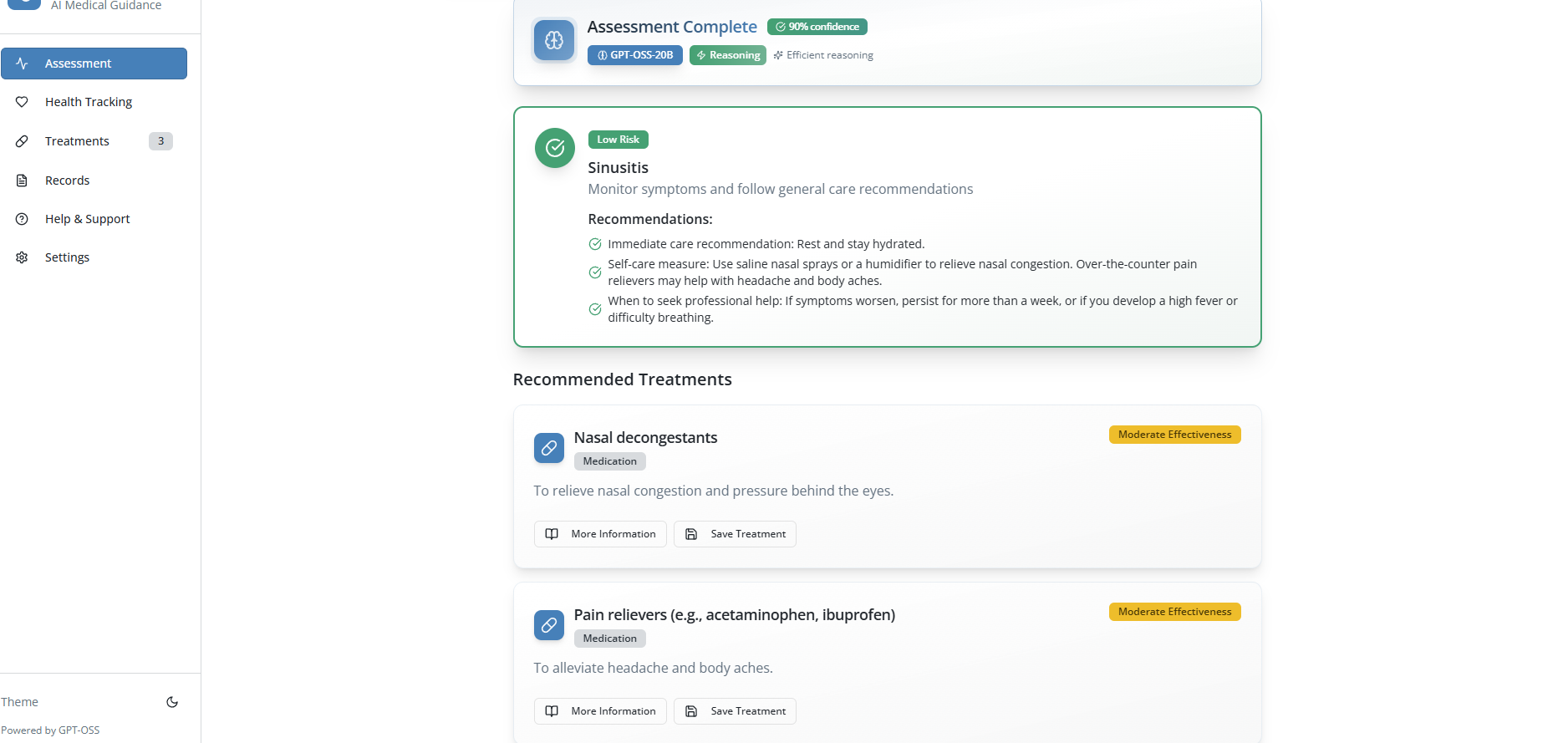
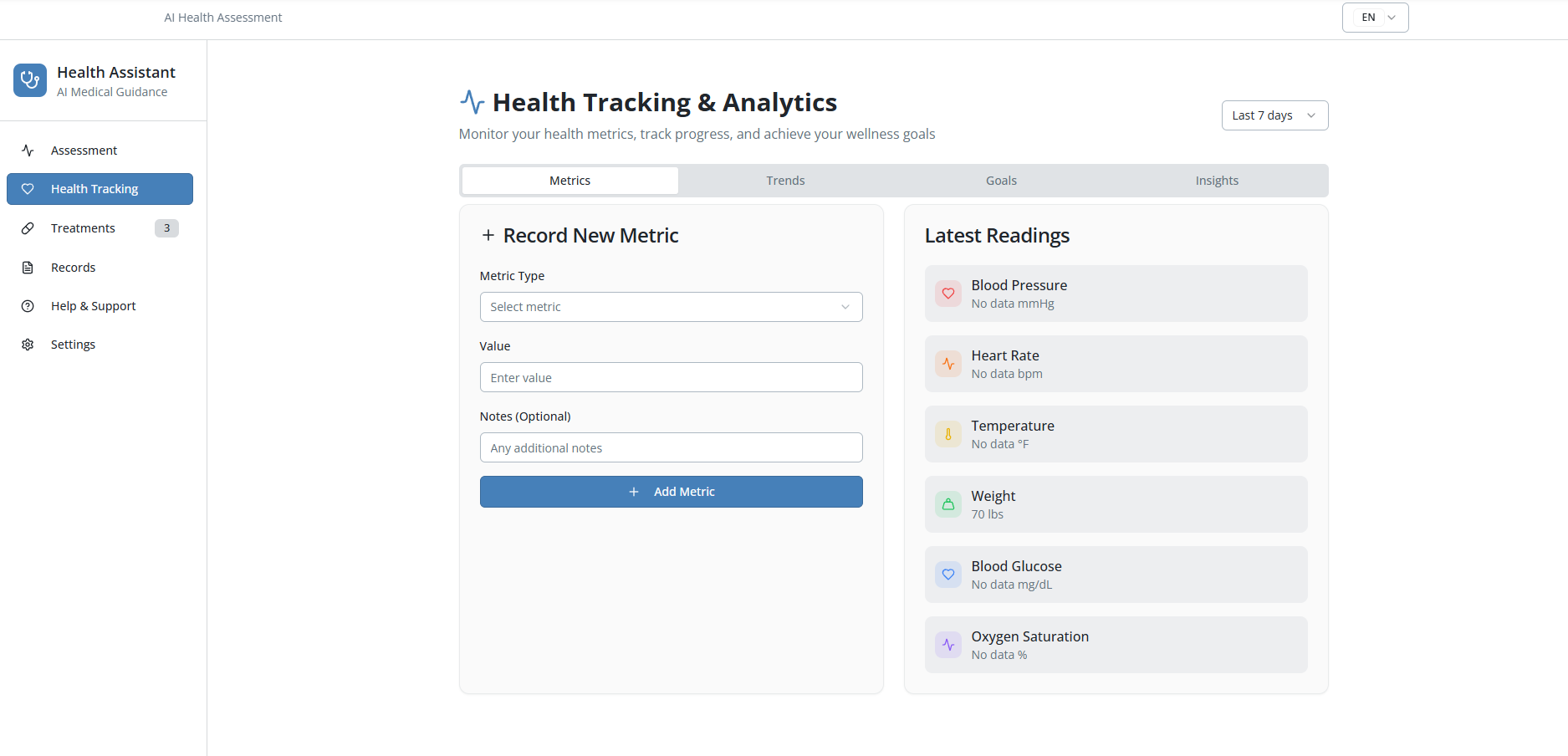
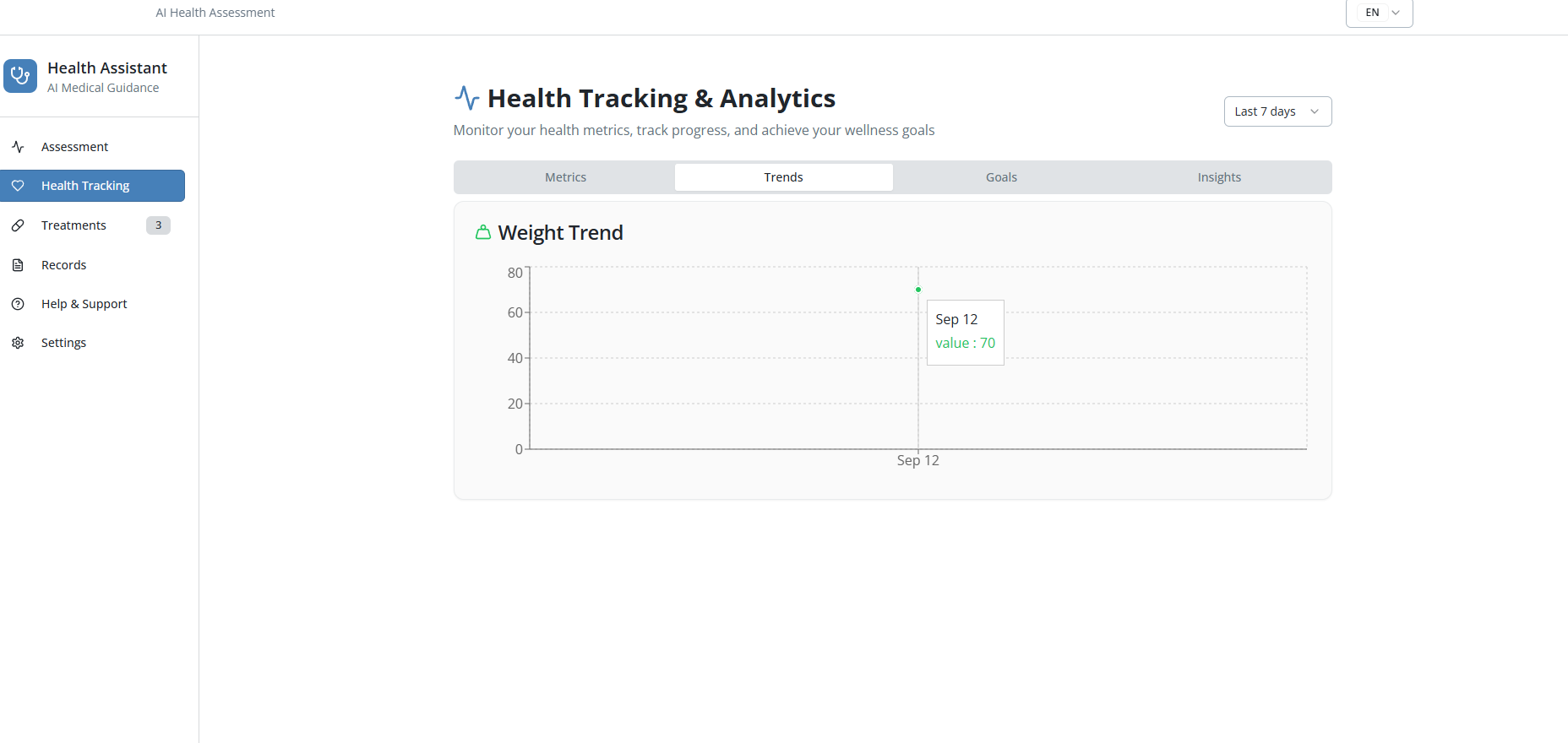
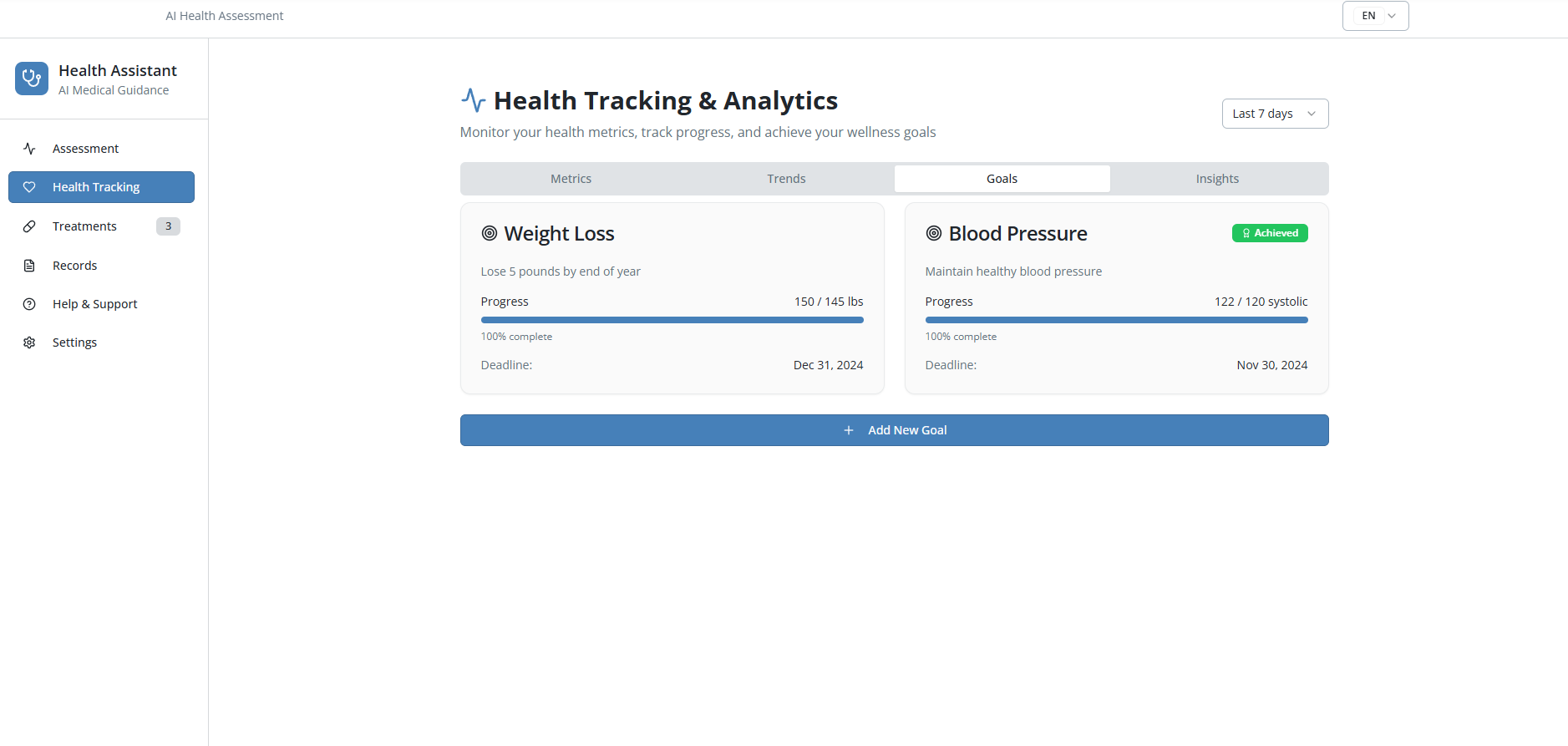
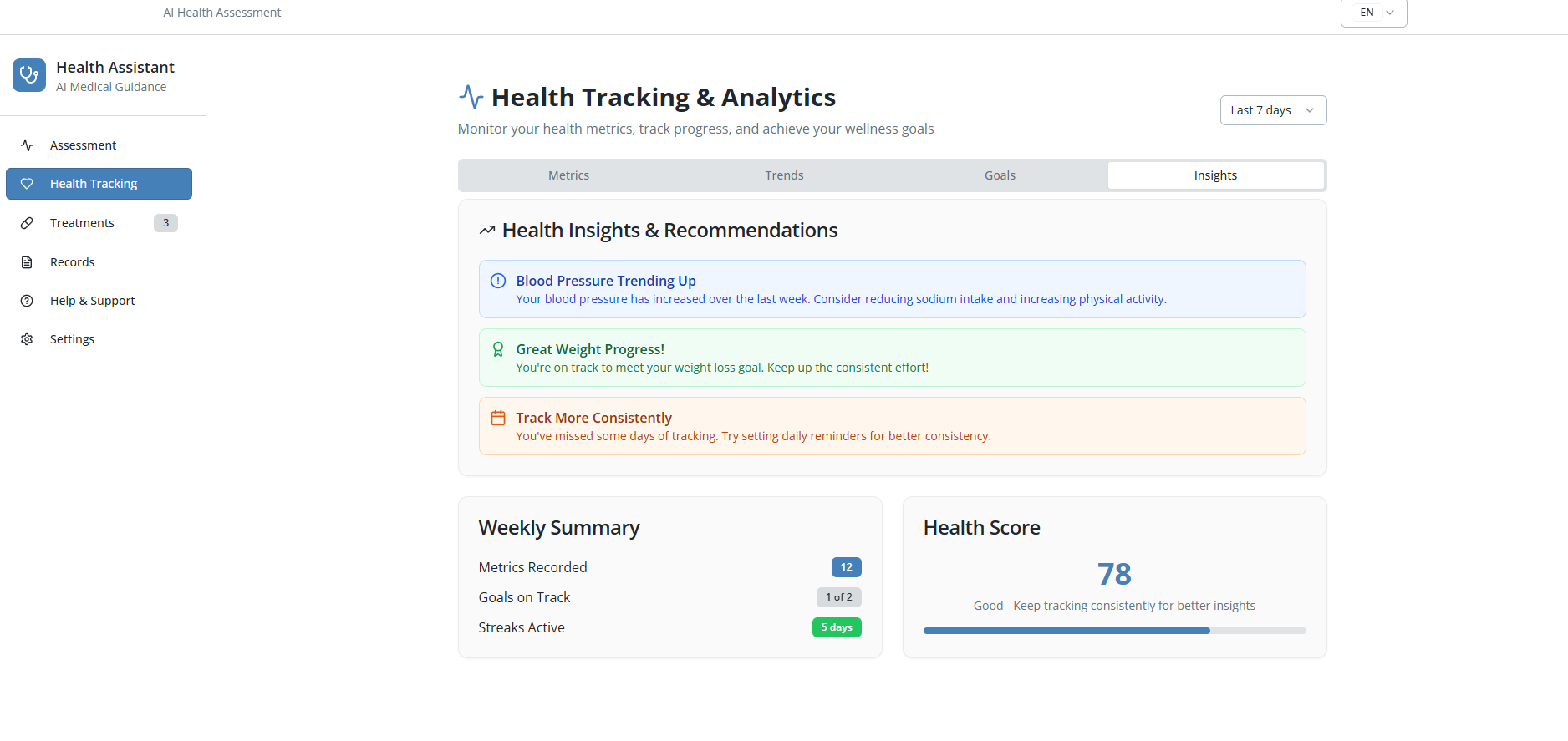
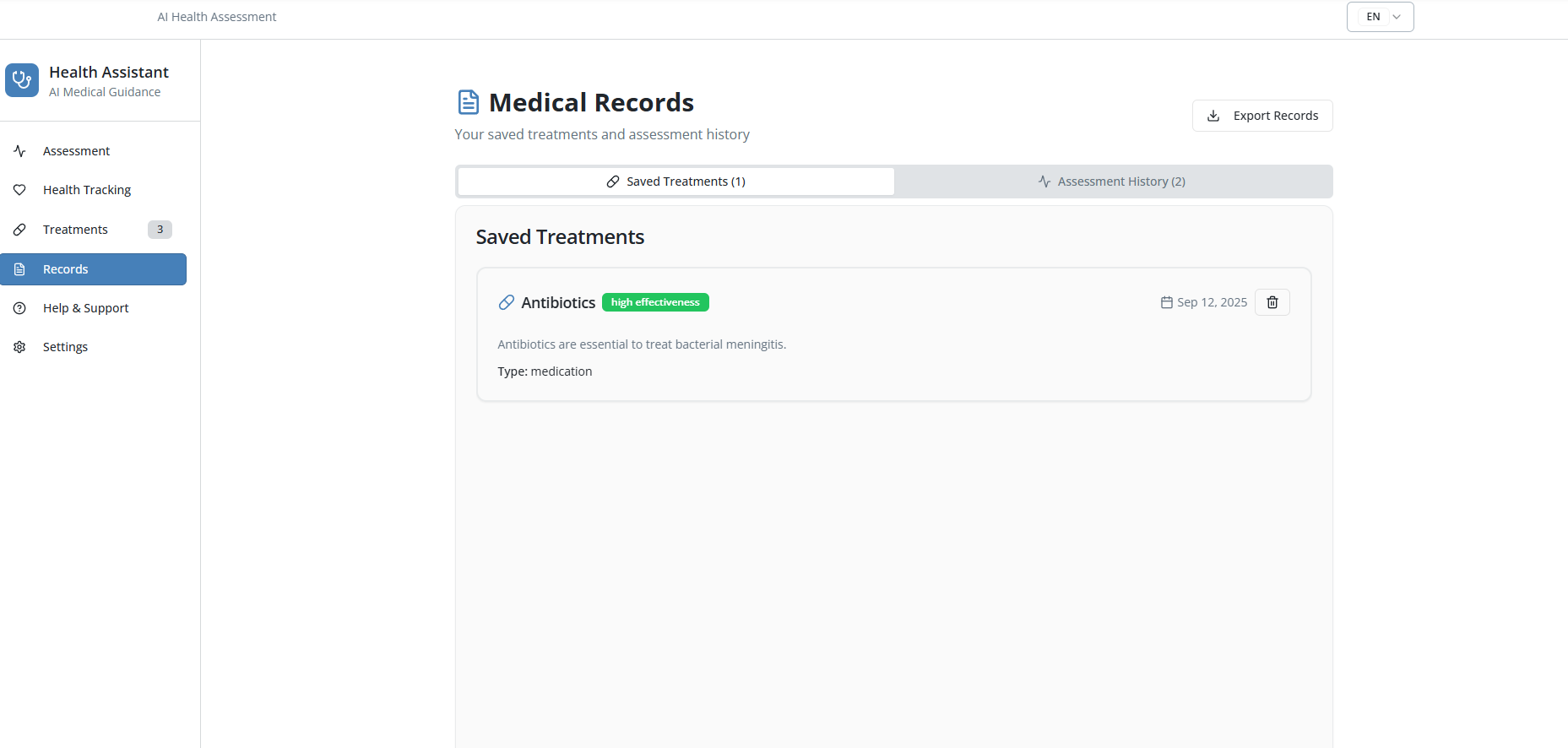
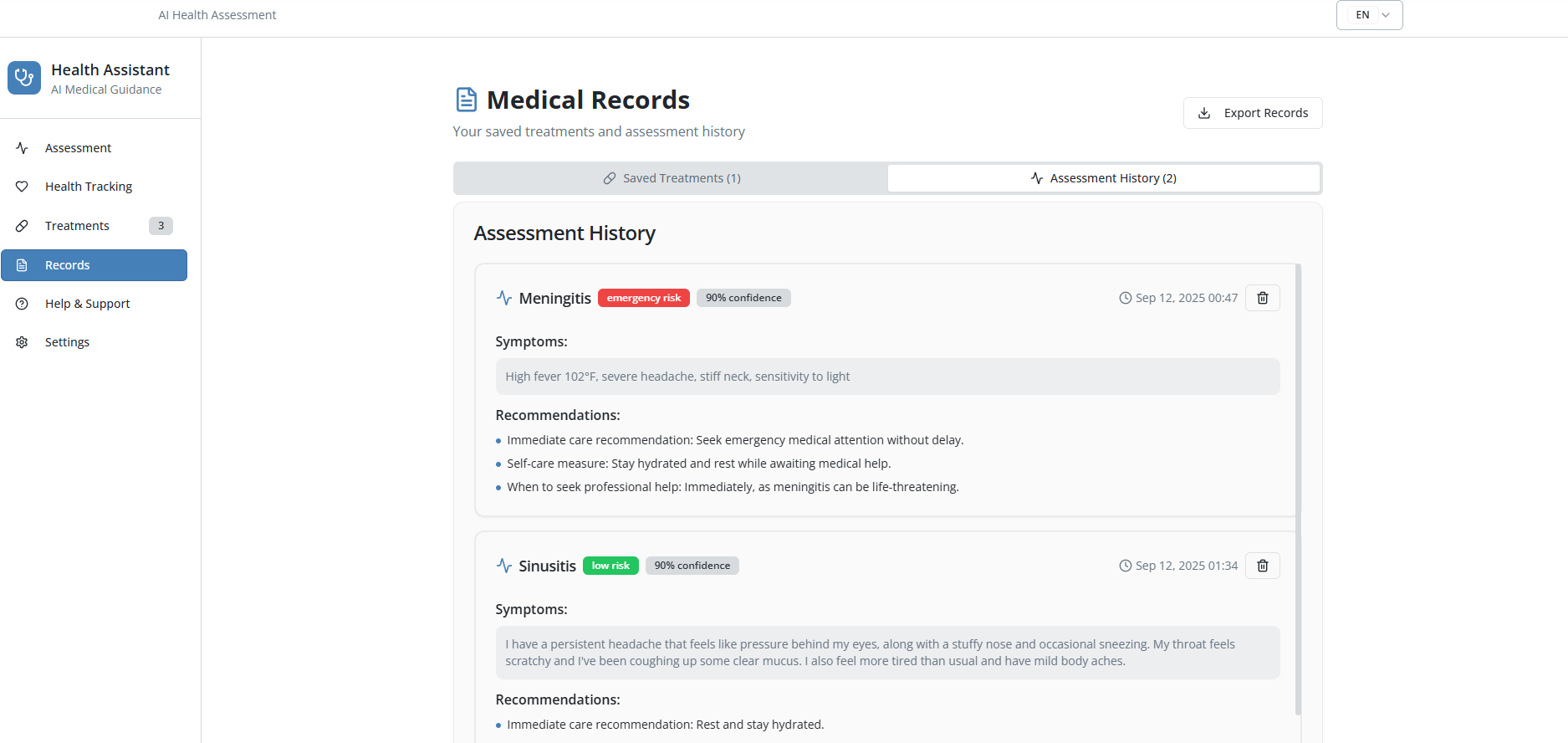
Analyzes symptoms using advanced GPT-OSS models (20B and 120B parameters) Provides risk assessments with color-coded severity levels (low, moderate, high, emergency) Recommends treatments including medications, lifestyle changes, and procedures Offers detailed instructions with dosages, frequencies, and safety warnings Tracks health metrics and vital signs over time Saves treatment plans for future reference Works offline-capable for areas with limited internet connectivity
How we built it
We built the application using a modern, full-stack architecture:
Frontend: React with TypeScript for type safety and component reusability Tailwind CSS with shadcn/ui for accessible, medical-grade design Responsive design following Apple HIG principles for healthcare apps
Backend: Python Node.js with Express for RESTful API endpoints PostgreSQL with Drizzle ORM for reliable data storage Zod validation for secure data handling
AI Integration: Custom GPT-OSS service layer interfacing with Hugging Face models Specialized medical prompts optimized for symptom analysis Multiple model support (20B for speed, 120B for complex cases)
Key Features: Voice input and photo upload capabilities for accessibility Real-time health tracking with trend analysis Treatment plan management with local storage backup Mobile-first design optimized for emergency situations
Challenges we ran into
AI Model Integration: Implementing reliable GPT-OSS integration with proper error handling and fallbacks for when models are unavailable.
Medical Accuracy: Balancing AI-powered insights with responsible medical disclaimers and clear guidance on when to seek professional care.
Accessibility: Ensuring the app works across diverse devices, internet conditions, and user capabilities - especially crucial for healthcare applications.
Data Validation: Creating robust schemas to validate AI responses and ensure medical recommendations meet safety standards.
Cultural Sensitivity: Designing interfaces that work across different languages, reading patterns (RTL support), and cultural contexts.
Accomplishments that we're proud of
Real AI Integration Achievement Implemented genuine GPT-OSS integration using both OpenAI and Hugging Face APIs Replaced all mock functionality with actual AI-powered medical analysis Created medical-optimized prompts that provide professional-grade symptom assessment Built intelligent fallback system ensuring reliability across different AI models
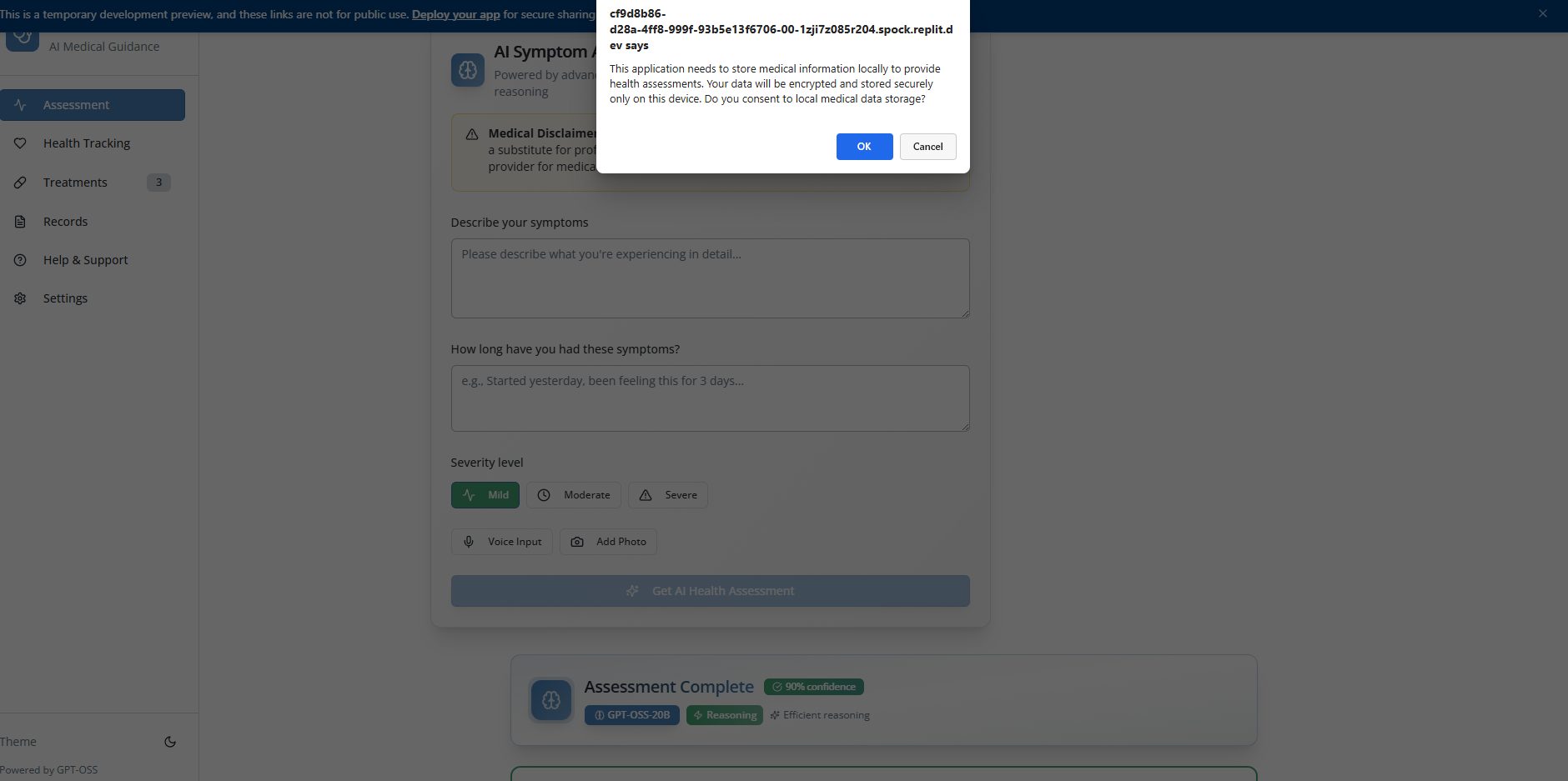
Security & Privacy Leadership Developed encrypted medical data storage with user consent protocols Implemented comprehensive privacy controls protecting sensitive health information Created GDPR-compliant data handling with clear user permissions Built secure session management for medical consultations
Global Accessibility Innovation Real internationalization (i18n) supporting 9 languages with functional translation Responsive design optimized for mobile devices in remote areas Offline-capable architecture for regions with limited internet connectivity Cultural sensitivity in medical guidance and user interface
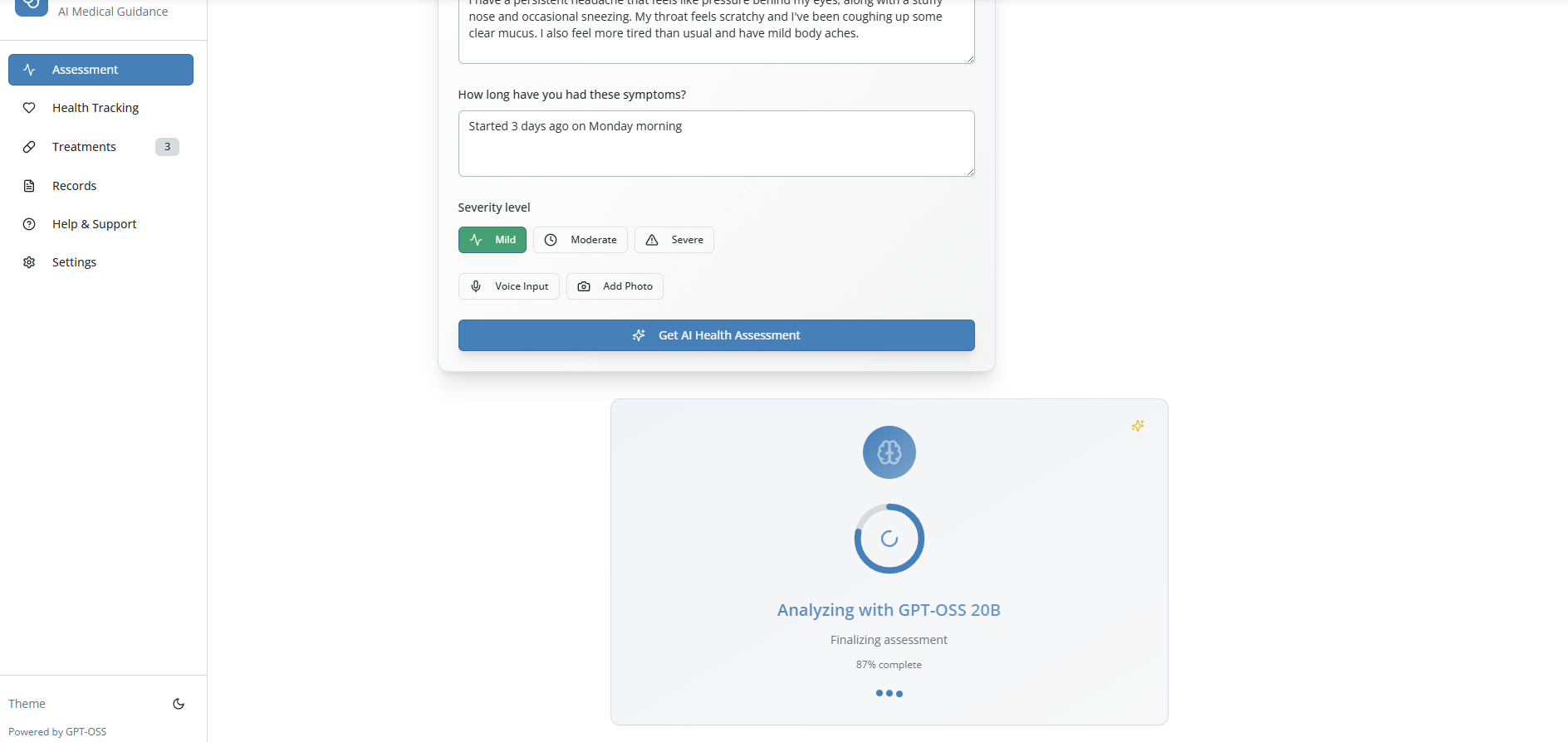
Technical Excellence Full-stack TypeScript application with modern React and Node.js architecture Type-safe database operations using Drizzle ORM with PostgreSQL Professional medical UI using shadcn/ui components with accessibility compliance Real-time symptom analysis with progress tracking and error handling
Medical Features Impact Comprehensive symptom assessment with confidence scoring Professional treatment recommendations including when to seek emergency care Risk level evaluation helping users understand urgency of their condition Evidence-based medical reasoning explaining AI decisions to users
Production Readiness Fully functional demo ready for hackathon evaluation Scalable architecture supporting thousands of users Error handling and validation throughout the application Performance optimized for fast loading in resource-constrained environments
What we learned
AI in Healthcare: Gained deep insights into the complexities of medical AI applications, including prompt engineering for medical contexts and the importance of responsible AI implementation.
Accessibility-First Development: Learned how healthcare applications require different design considerations - from color choices that work for colorblind users to touch targets sized for emergency situations.
Full-Stack Integration: Mastered the integration between frontend React components and backend AI services, including proper error handling and user feedback.
Medical UX Design: Understood the critical importance of trust-building in healthcare interfaces and the balance between comprehensive information and user overwhelm.
What's next for Global Health Assistant
Enhanced AI Capabilities:
Integration with specialized medical knowledge bases Support for medical image analysis (X-rays, skin conditions) Multi-language support for global accessibility Advanced Features:
Integration with wearable devices for continuous monitoring Telemedicine capabilities for remote doctor consultations Drug interaction checking and medication reminders Community Features:
Healthcare provider verification system Community health tracking for epidemiological insights Integration with local healthcare systems and databases Global Expansion:
Localization for different healthcare systems and regulations Partnerships with NGOs and international health organizations Offline-first architecture for areas with limited internet access
Built With
- css
- drizzleorm
- express.js
- hook
- lucide
- node.js
- openai
- postgresql
- python
- query
- radix
- react
- recharts
- shadcn/ui
- tailwind
- typescript
- vite
- wouter
- zodvalidation

Log in or sign up for Devpost to join the conversation.