Inspiration
Thank you for taking the time to go through my project. Building this was a learning journey, and I appreciate every review and bit of feedback. I got this idea after missing a Google hackathon that perfectly matched my skills. I realized how easy it is to miss great opportunities, so I built this AI application
What it does
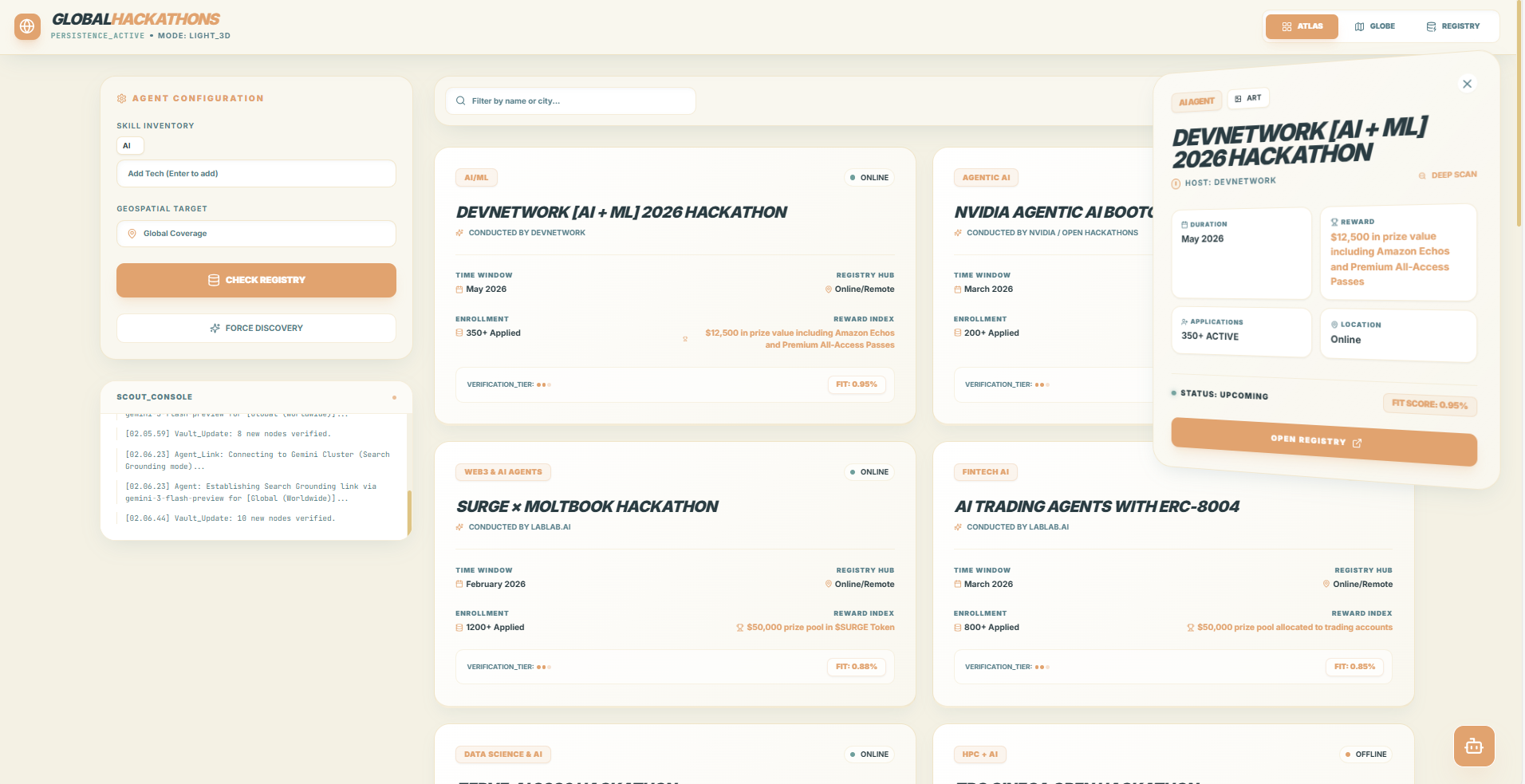
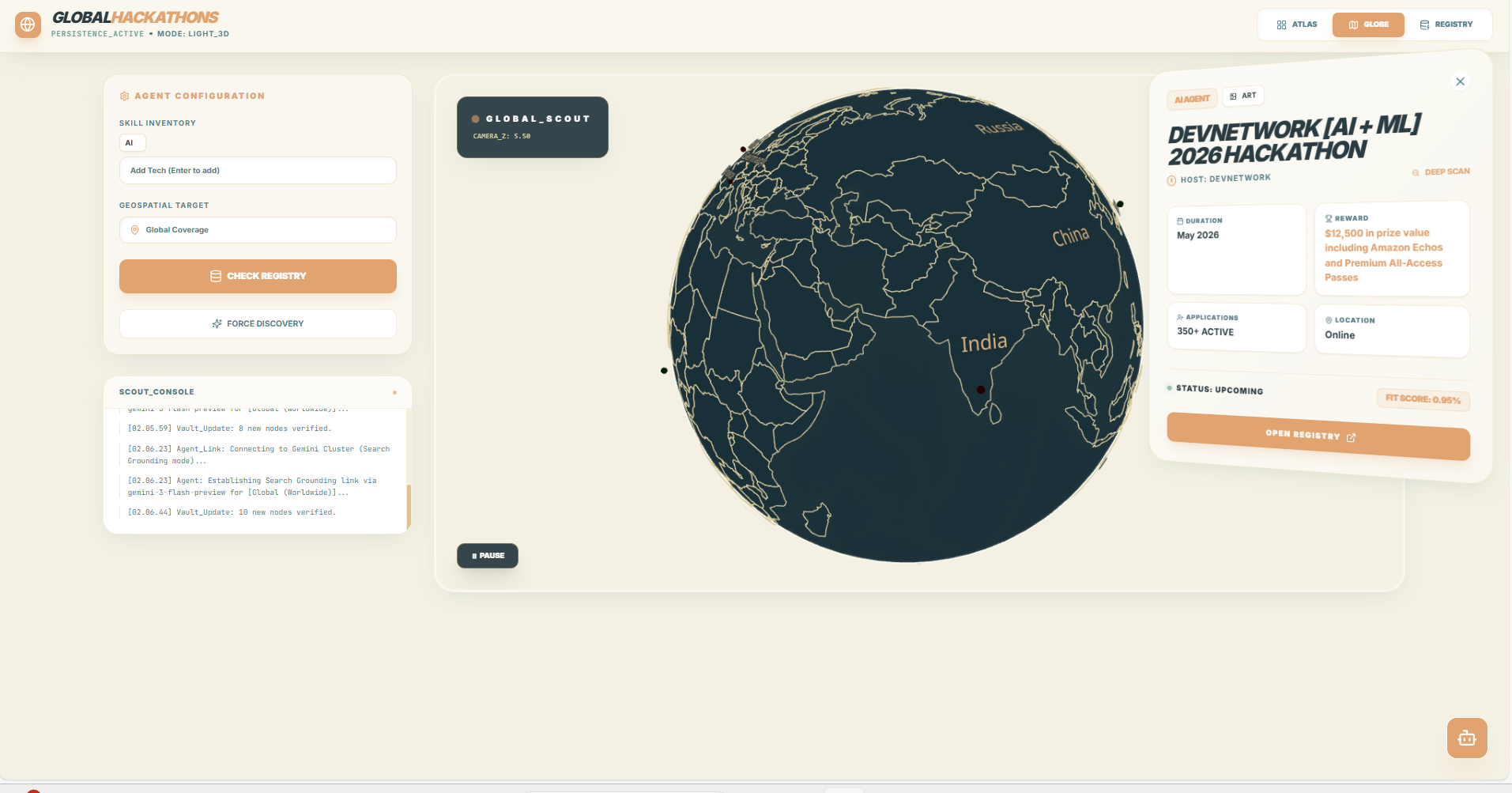
"Global hackathon" AI is a persistent AI system that discovers and tracks active global hackathons based on user skills and location. It stores results permanently, avoids duplicate searches, and visualizes opportunities on an interactive 3D globe.
How we built it
Global Hackathon AI is an agent-based system built using Google AI Studio with Gemini models to perform structured web search reasoning and data extraction. The agent identifies active hackathons, extracts normalized metadata (dates, location, format, prizes, category, and participation), and stores each event in a persistent registry that prevents rediscovery until the hackathon expires.
A key design goal was true memory, not prompt-based recall. Once a hackathon is discovered, it is stored and reused across sessions, enabling efficient daily scouting without redundant searches. The frontend visualizes this data on a 3D globe, progressively revealing hackathons based on zoom level and user filters to maintain clarity and performance.
Challenges we ran into
Designing true persistent memory so hackathons are stored once and not rediscovered until they end
Extracting clean, structured data from inconsistent and unstructured search results
Preventing duplicate entries while keeping data updated
Visualizing global hackathons on a 3D globe without clutter
Synchronizing AI search results with the frontend in real time
Accomplishments that we're proud of
Designed a 3D globe interface to visualize global hackathons clearly Turned a missed hackathon into a working, real-world solution
What we learned
I learned that building a real AI agent is less about model size and more about state, memory, and control flow. Most AI systems forget past outputs, so designing a persistent registry taught me how to make AI behavior reliable over time. I also learned how to handle noisy, unstructured web data and convert it into consistent, structured information using prompt engineering and validation logic.
Finally, integrating AI outputs into a 3D visualization helped me understand how important progressive disclosure and UX design are when working with large, global datasets.

Log in or sign up for Devpost to join the conversation.