-
-
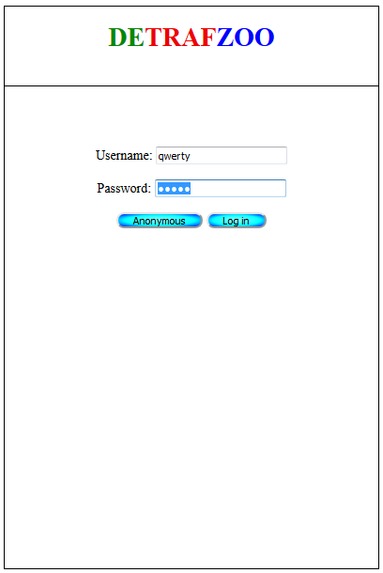
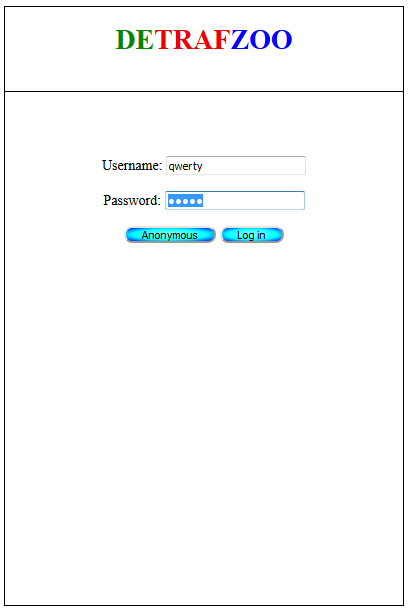
0 - Login
-
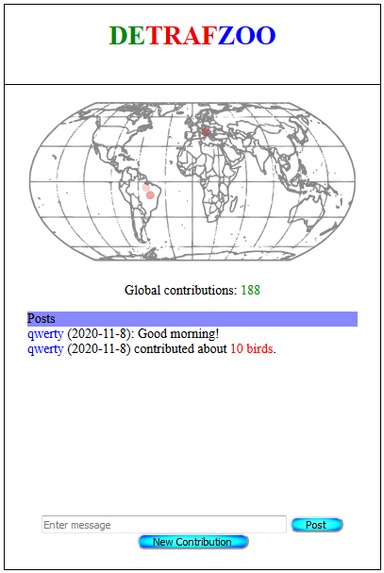
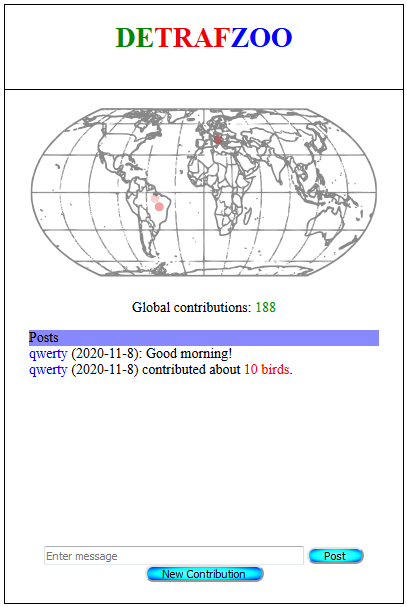
1 - Mapper+Feed (networking)
-
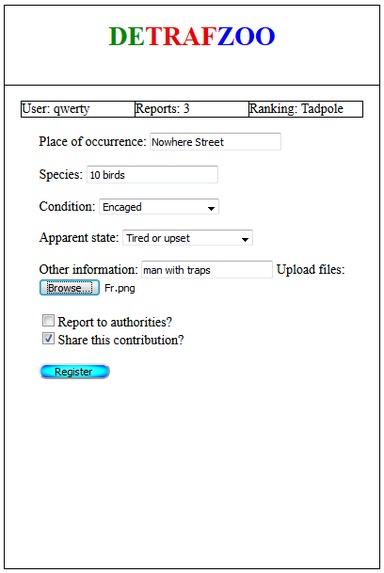
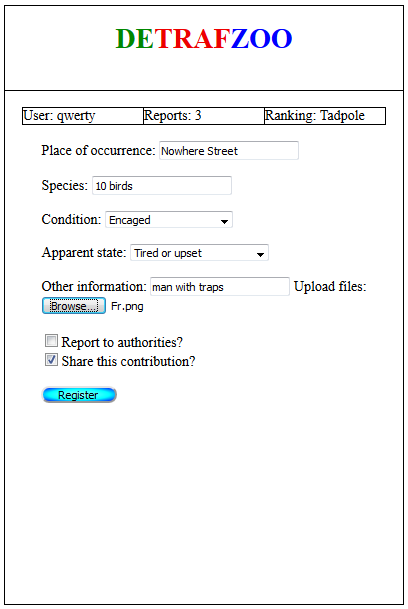
2a - Contribution (logged in)
-
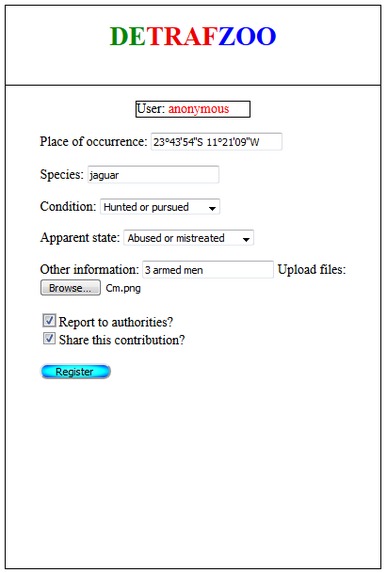
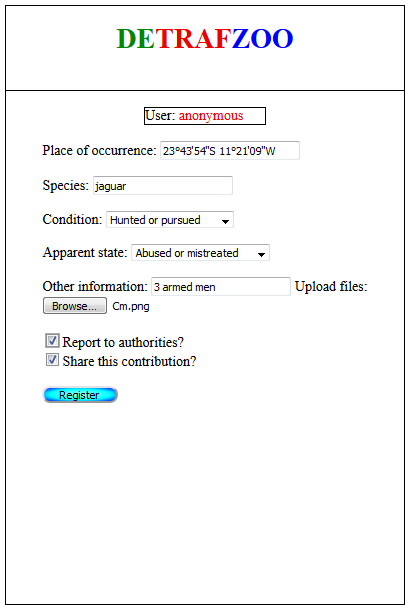
2b - Anonymous Contribution
group_11
Inspiration
Wildlife animal trafficking is committed in different ways, on and off-line, and targetting consumers with very different profiles. There are many strands, which make it difficult to compile all data related to suspected trafficking and, consequently, making it difficult to monitor or carry out an in-depth analysis to make decisions with effective impacts.
Most of the information associated with trafficking comes from the inspection authorities, when the traded animals are apprehended, which brings bias to the data and underestimates the real size of animal trafficking, being it an illegal market.
The population on the places where pouching is more common have a general disbelief in the righteousness or competence of government agents, and even outright fear, so people hesitate to report on trafficking, which reduces the reception of that kind of datum, helping on the underestimation of the problem.
Animal trafficking has a strong attachment to social and cultural issues, so we aim to find an alternative to enhance the awareness and participation of the whole society in fighting it, using social networking and information sharing.
What it does
DeTrafZoo is the first environmental social network, promoting the acceleration of society's awareness based on the democratization of the cause, the sharing of information, denouncing of illegal activities and the engagement based on psychological influence through digital social interaction.
It's a social network that will serve to accelerate and compile data related to activities associated with wildlife animal trafficking, be it hunting, buying and selling, transportation or illegal maintenance in captivity. We created a global network for registering occurrences of trafficking activities, which could also gather information from government agencies, crossing data from different platforms and reports from civilians.
It will serve as a tool to assist government intelligence agencies for making high-impact decisions, offering, from the compilation of data, summaries of trafficking activities related to critical spots, most targetted species and giving out a dynamic view of the evolution of the scenario.
It will also serve as a tool for scientific research, in addition to fostering environmental awareness since it will draw the participation of the whole society to collaborate, and environmental education, being used as a didactic resource in schools.
How I built it
The application was developed from scratch in HTML, CSS, SVG and pure (vanilla) JavaScript, using a text editor (SciTE). The Equal Earth map was created using Inkscape, based on free (Creative Commons) material.
Challenges I ran into
Being the first Hackathon for all members of the team had a definitive impact, as we were overwhelmed by all the activities and deadlines. Another problem was not having full agreement of all members about the goals of the project, which had to be changed midway due to lack of a solid defining idea.
Accomplishments that I'm proud of
Despite all difficulties, we were able to focus on the defined solution and come up with a working "demo", which, although not perfect, encompasses most of the features originally thought of.
What I learned
I learned that a Hackathon is just like a marathon, we have to exercise and be prepared for anything and everything. Studying about new tools, experimenting with new technologies and having demos of several applications can help, because many of them could be adapted to bring this application to life.
What's next for DeTrafZoo to identify wildlife trafficking activity
Expand its use worldwide to generate trustworthy information to all society, including governments, researchers and any one that really cares about our planet.


Log in or sign up for Devpost to join the conversation.