-
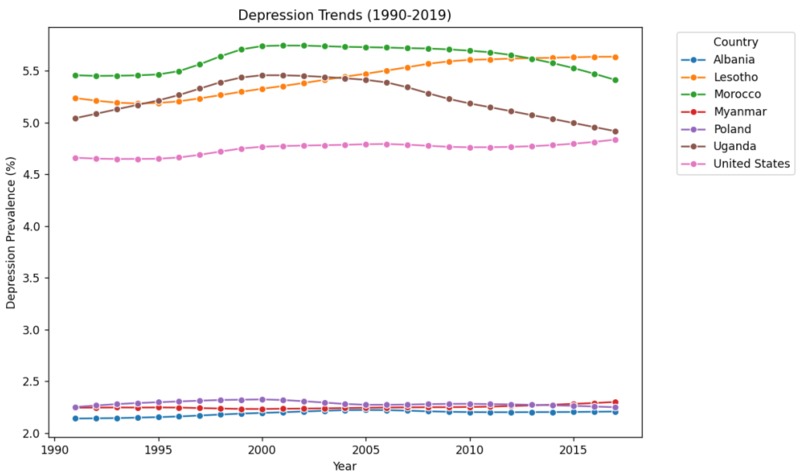
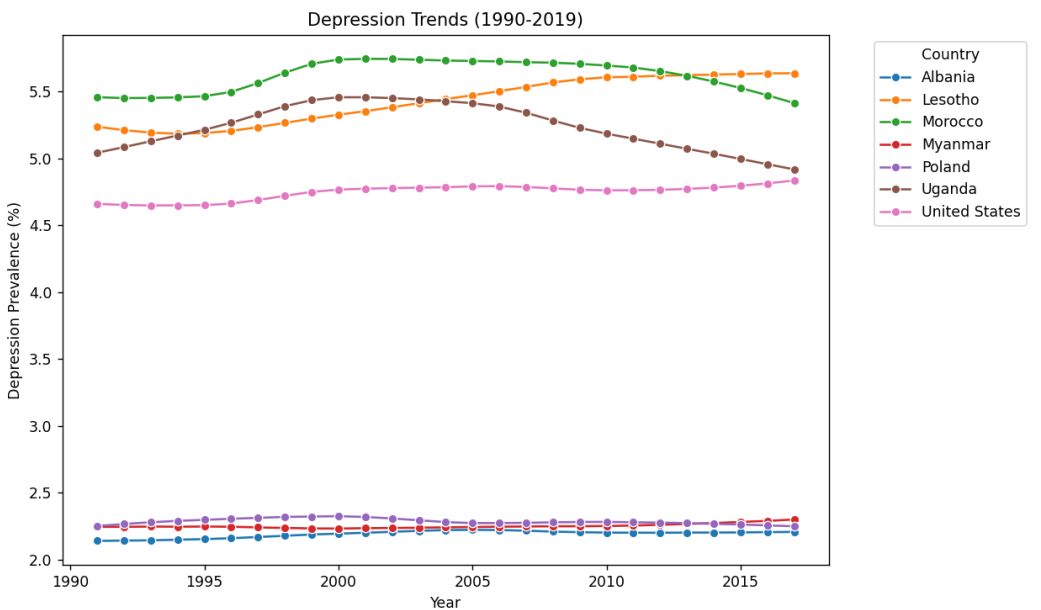
Depression trends (1990-2019) for top 3 & bottom 3 countries & USA
-
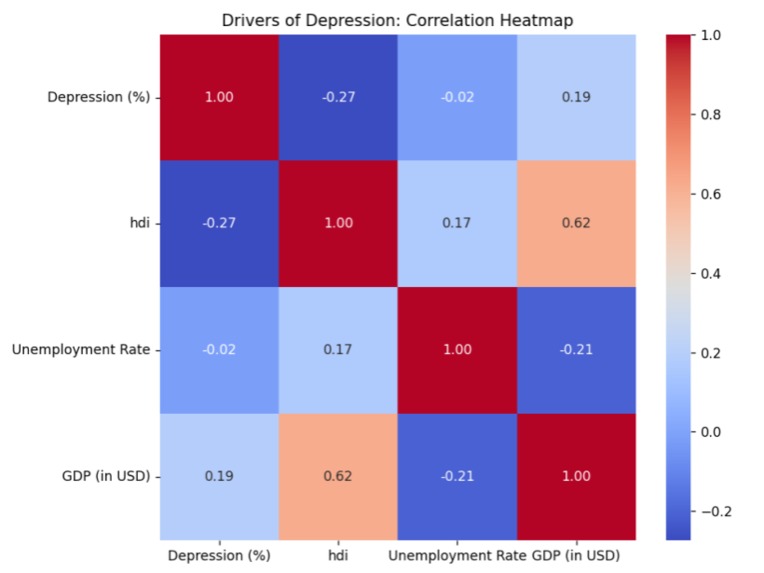
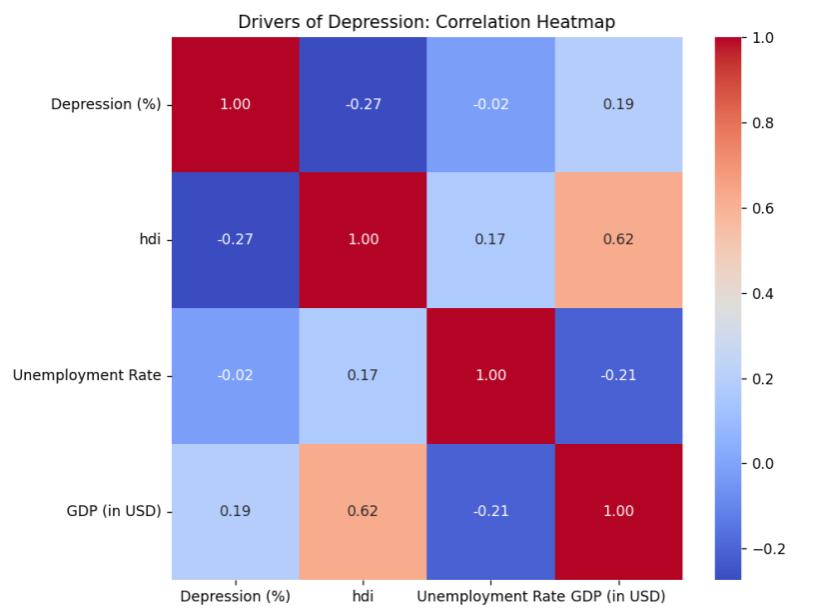
Correlation Heatmap of Depression & Related factors
-
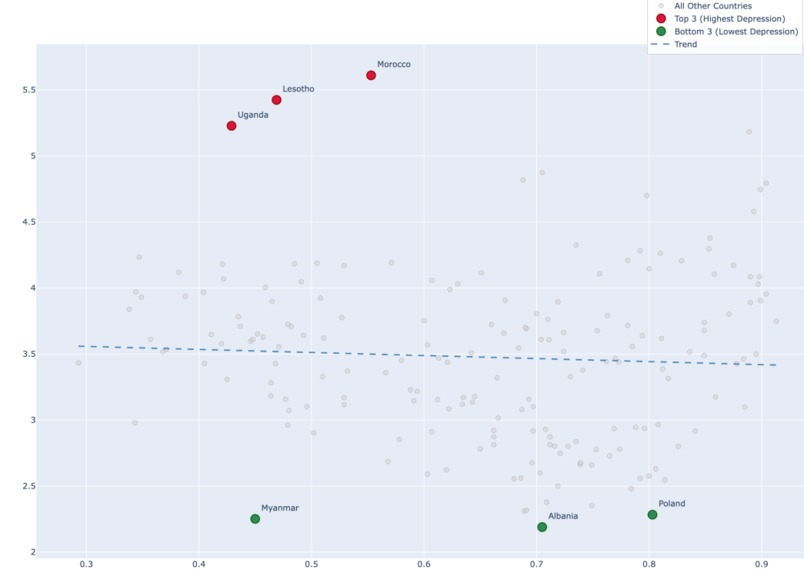
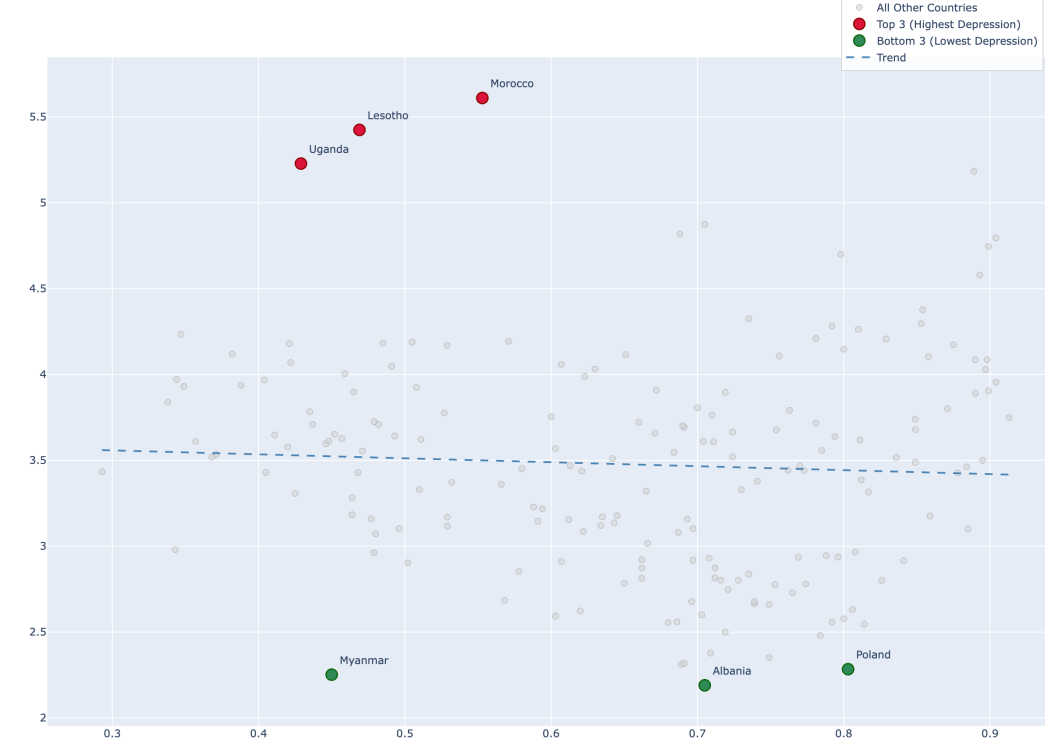
HDI vs Depression with trendline, highlighting top 3 & bottom 3 countries
-
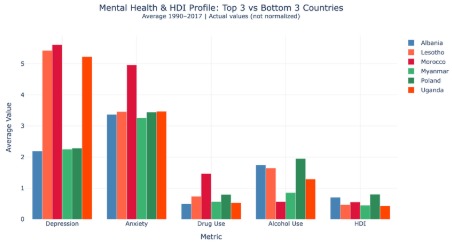
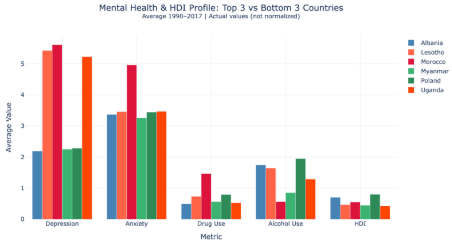
Mental health & HDI profile: Top 3 vs Bottom 3 countries
-
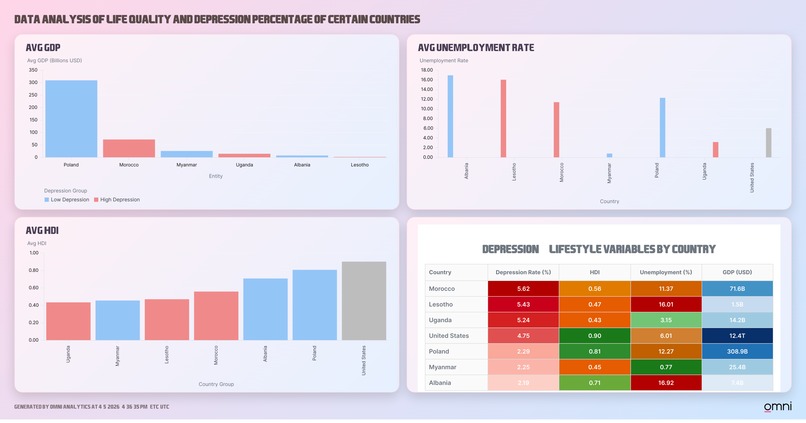
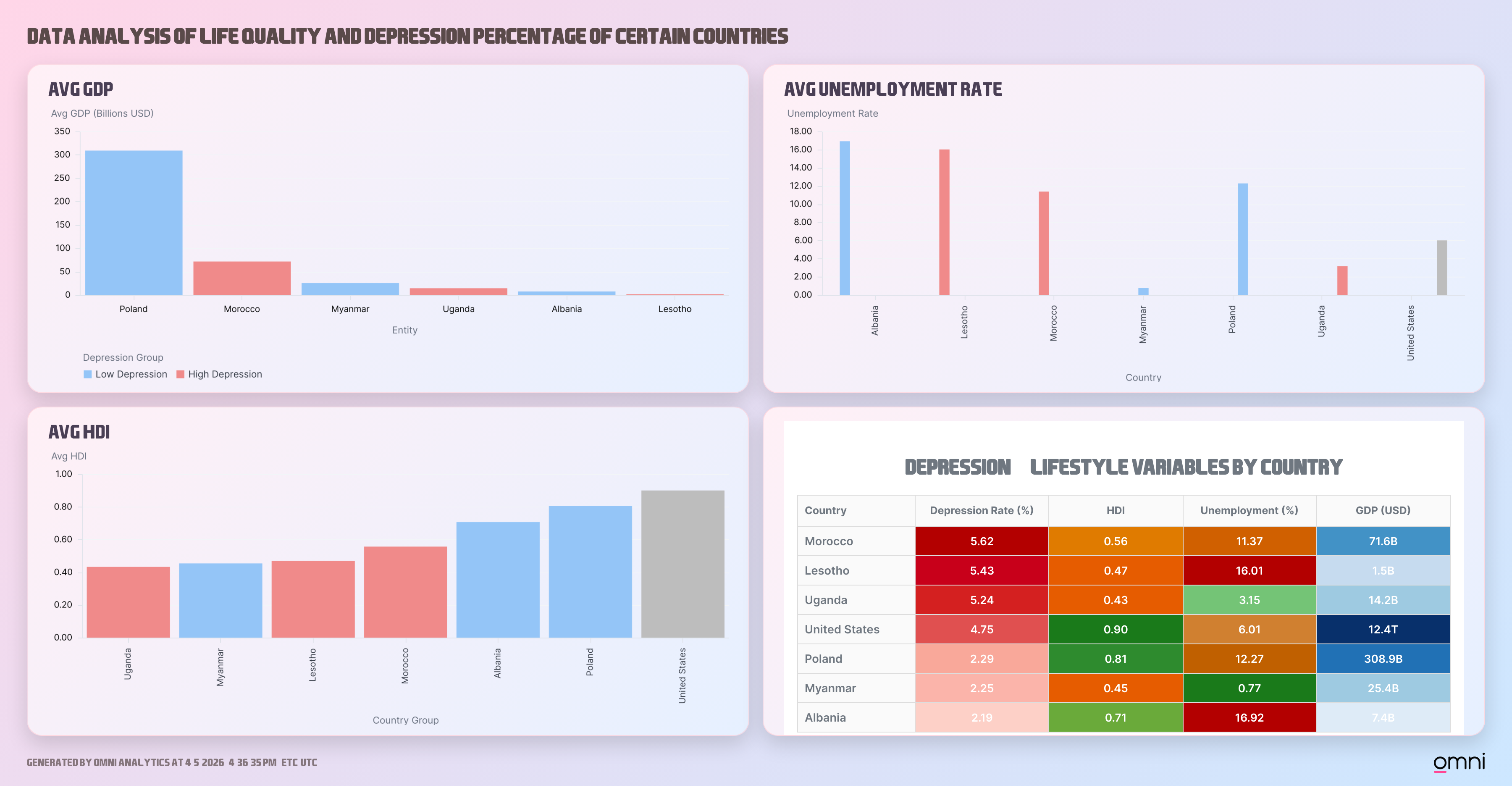
Omni Dashboard: Data Analysis of Life Quality and Depression Percentage of Certain Countries
-
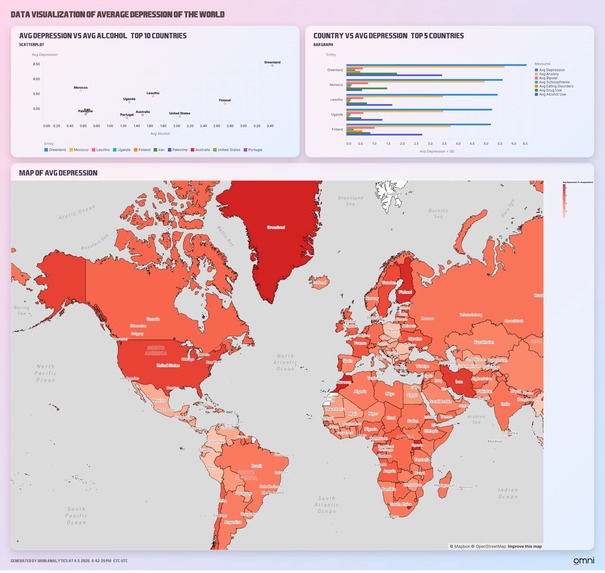
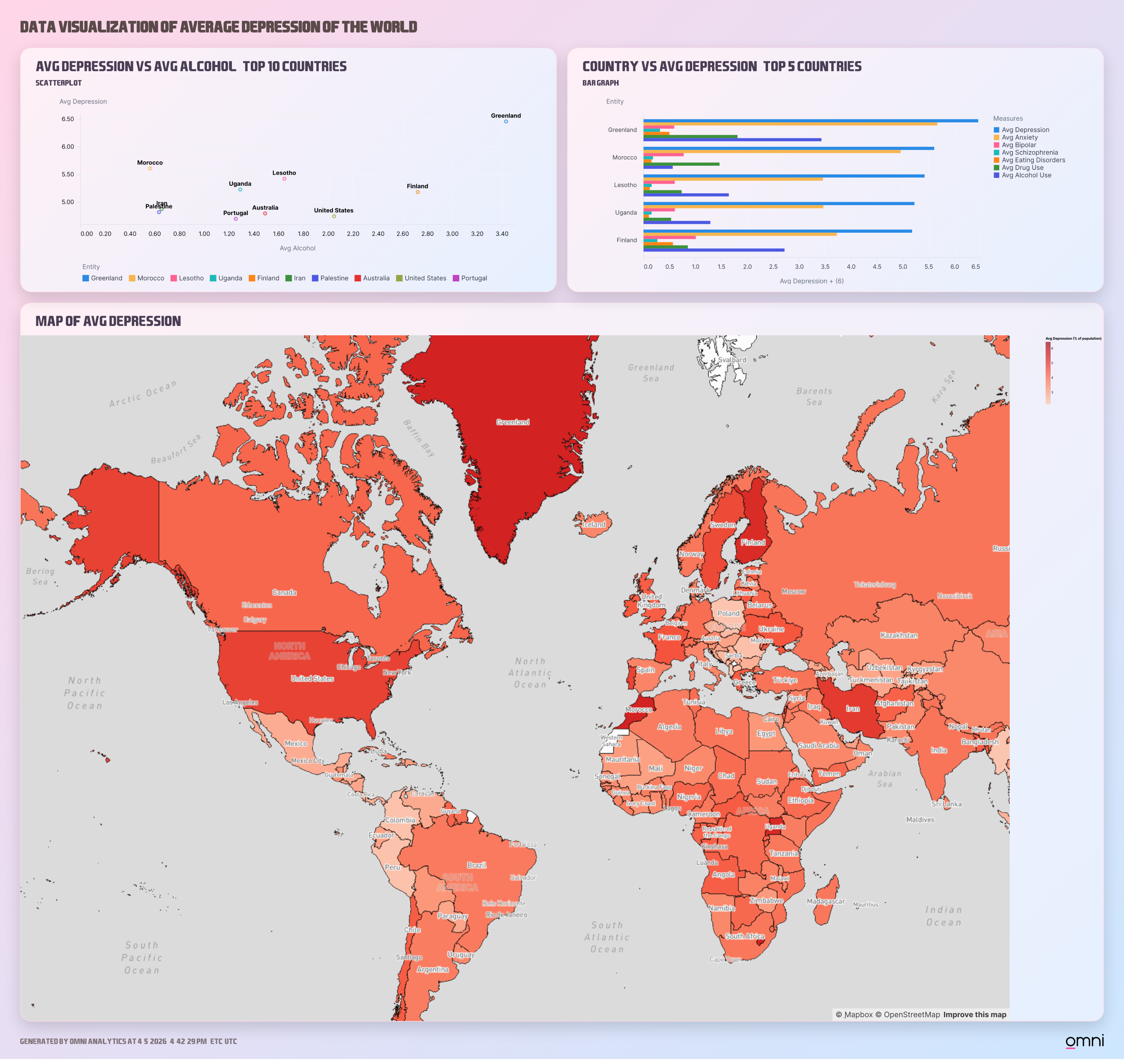
Omni Dashboard: Data Visualization of Average Depression of the world
Inspiration:
Having found a dataset with rates of mental health disorders by country, we began to wonder what factors might correlate with these disorder rates. We chose to assess whether HDI might correlate. HDI (human development index) is a measure of countries’ social & economic development. We also decided to look into how unemployment rates might correlate with the depression rates across the country.
What it does:
We decided to analyze and observe how factors, such as human development index (HDI) and unemployment rate, affect the rate of depression across a period of 27 years (1990-2017) in seven countries across the globe.
How we built it:
We found three different data sets that covered the same time period (1990-2017), one for HDI, one for unemployment, and mental health disorders. After that, we cleaned up all three of the data sets, deleted all the countries other than the seven that we needed—three countries with the highest depression rates, three with the lowest depression rates, and the United States for reference—and merged them together. After merging together the data sets, we created three different visualizations that showcased how the factors affected depression. We also created several different graphs using Omni that visualized the different trends in the data set.
HDI analysis was based in part on a summary table of means for top 3 & bottom 3 countries; while it seemed to have an effect/correlation with depression in many cases, Myanmar has low HDI but is in bottom 3 countries by depression. This indicates that HDI alone does not explain depression.
Challenges we ran into:
We first tried the Melissa track and decided to look into if the air quality index and PM 2.5 concentration has any correlation with property values and could allow us to predict property values of properties across Orange County. However, after finding our data sets and actually doing our analysis, we found out that there’s no significant correlation between air quality index and PM 2.5 concentration on property values. This was eight hours into the hackathon. So we decided we need to completely restart. Afterwards, we did a pivot to mental health across countries, but we were too focused on a vague overall analysis of several different disorders across ‘all’ the countries in the world, which was too much to handle. So we decided to focus on seven countries and just depression and one other factor. So we found two other data sets to compare with and at that point, we kind of started doing our own thing and analyzing separately without properly communicating. This is why we have two separate analyses, one an in depth analysis on HDI and mental health, and the other a more overall analysis on HDI, unemployment rates and mental health.
Accomplishments that we're proud of
We’re proud of creating a data science project and completing it on time, despite the many hurdles we faced along the way. We’re also proud of finally understanding how to use GitHub, because at the beginning, most of us didn’t have much experience with it, and we had to spend about two hours getting it to work for everyone.
What we learned
Depression and HDI separate the two groups cleanly—but anxiety, drug use and alcohol use reveal that Morocco has an entirely different profile from Lesotho and Uganda, suggesting the top 3 don't share a single common cause. Unemployment rate might not have a significant impact on depression rates because we noticed that Albania has the highest percentage of unemployment rate but conversely just had the least amount of depression, whereas Lesotho has the second highest rate of unemployment, yet has the second highest rate of depression.
What's next for Global Depression Across Countries
The next step for Global Depression Across Countries is to do further research into more factors that may affect rates of depression and other mental disorders across a wider selection of countries.


Log in or sign up for Devpost to join the conversation.