💡 Inspiration
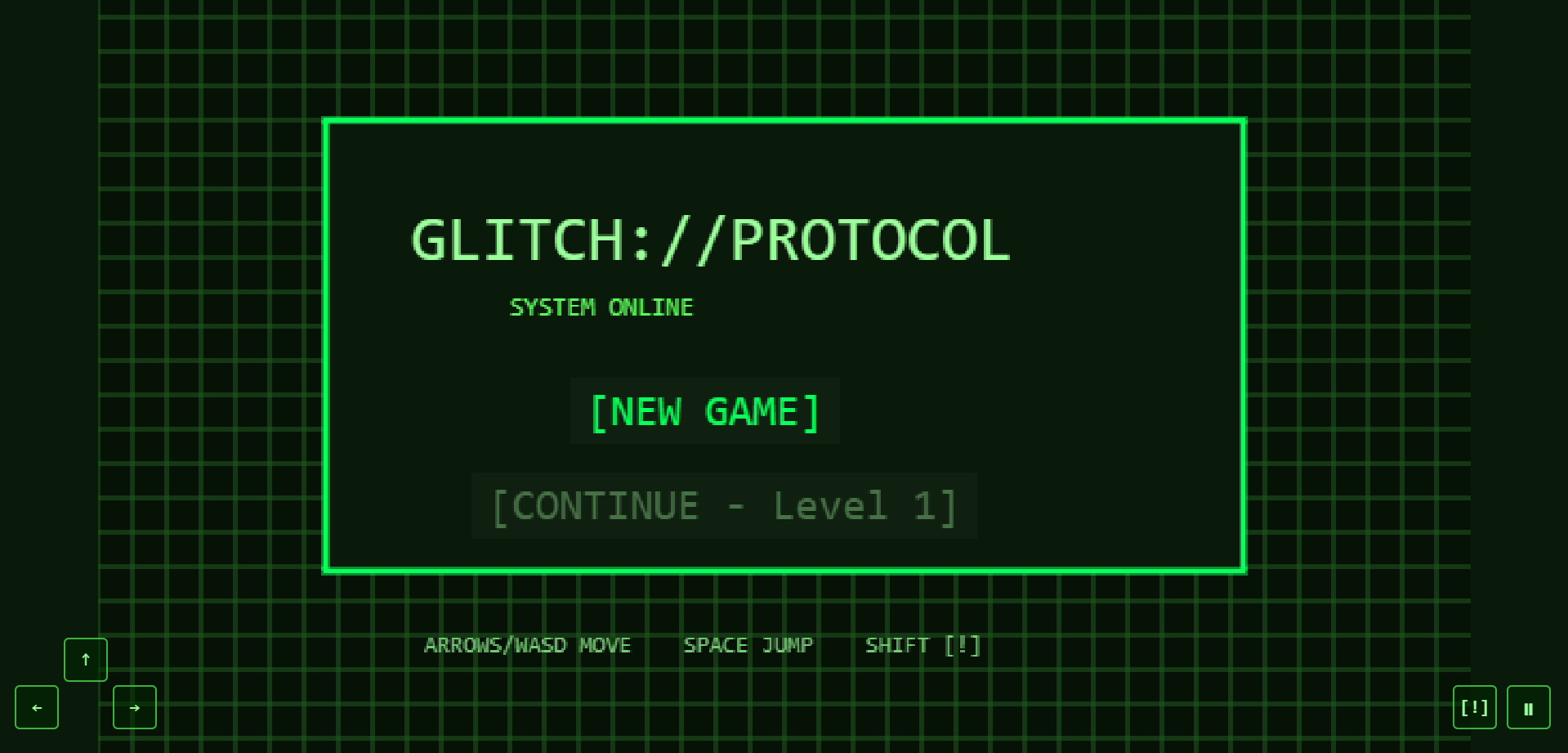
The initial spark for GLITCH://PROTOCOL came from a frustrating reality every developer knows: encountering game-breaking bugs. We thought, "What if the bugs aren't errors? What if they are the features?" We wanted to build a fast-paced cyberpunk thriller where total system corruption is inevitable, and your only hope of survival is to exploit terminal glitches and weaponize the crumbling code against the system's own firewall.
🛠️ How We Built It
The game is built from the ground up as a responsive, client-side web application designed for instant accessibility:
- Core Engine: Powered by Phaser 3 to handle fluid arcade physics, asset rendering, and high-performance gameplay loops.
- Frontend: Built using clean, semantic HTML5 and canvas styling to capture a retro CRT terminal aesthetic.
- Logic: Written entirely in vanilla JavaScript, structuring custom state machines to handle evolving glitch mechanics and shifting enemy patterns.
🚧 Challenges We Faced
Our biggest hurdle was fine-tuning the balance of the "glitch" mechanics. We wanted the gameplay to feel chaotic and volatile without causing actual, game-crashing errors. Mimicking memory leaks, visual artifacts, and erratic controls required meticulous math and strict state management to ensure that while the screen looked corrupted, the underlying engine remained perfectly stable.
🎓 What We Learned
This project pushed our boundaries in browser-based performance optimization. We learned how to deeply manipulate Phaser's camera pipelines and post-processing FX to simulate visual screen tearing without dropping frames. We also gained a massive appreciation for modular JavaScript architecture when managing complex, time-sensitive game states.
Built With
- css
- html5
- javascript
- node.js
- phaser3

Log in or sign up for Devpost to join the conversation.