
What is it?
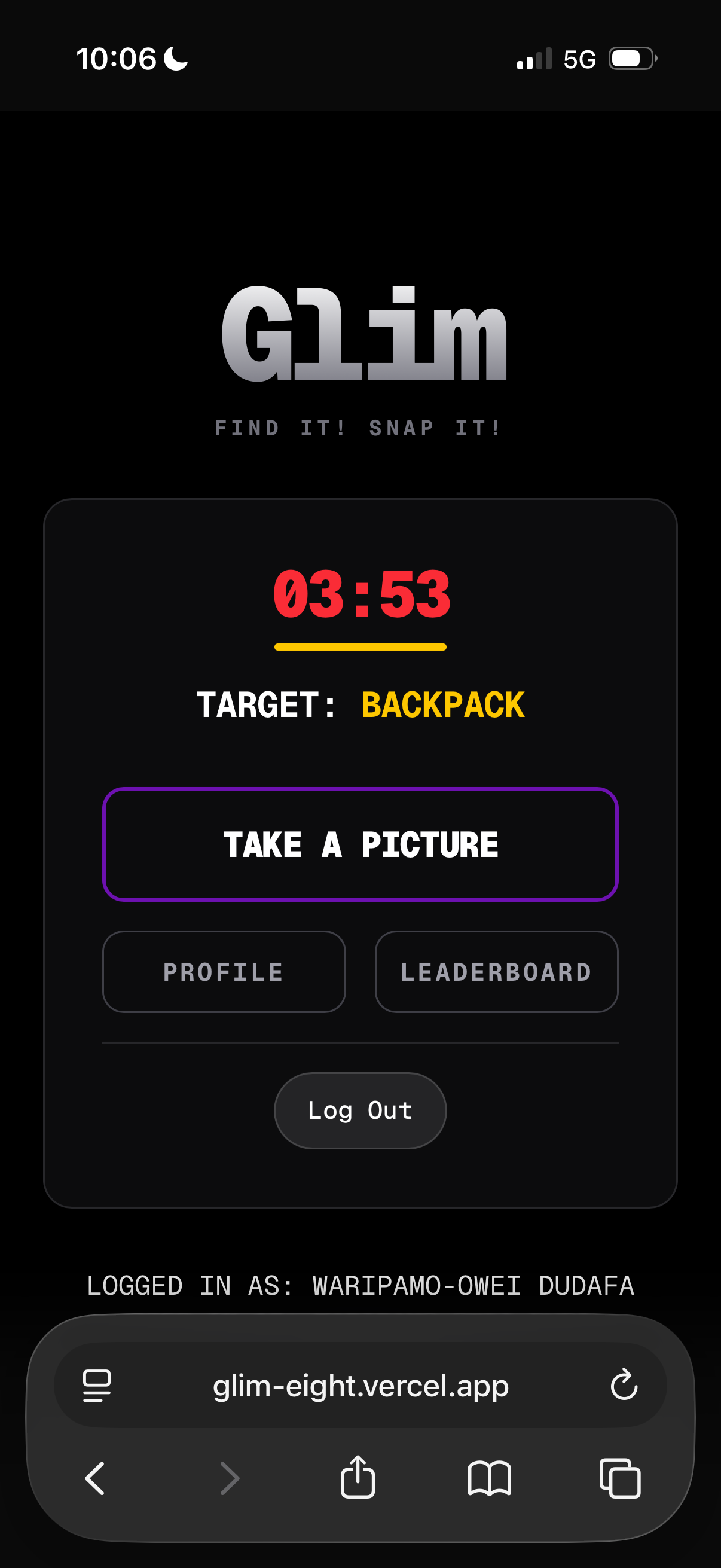
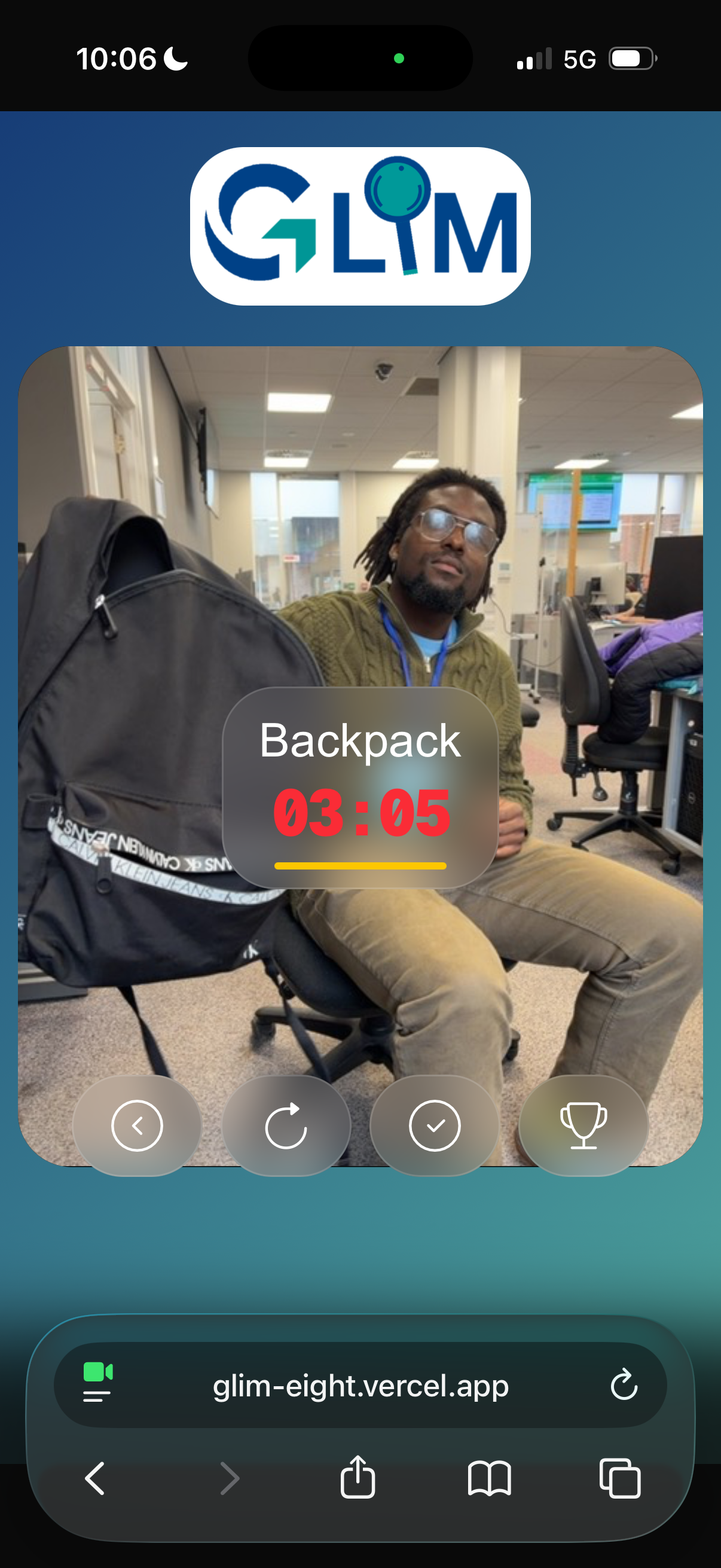
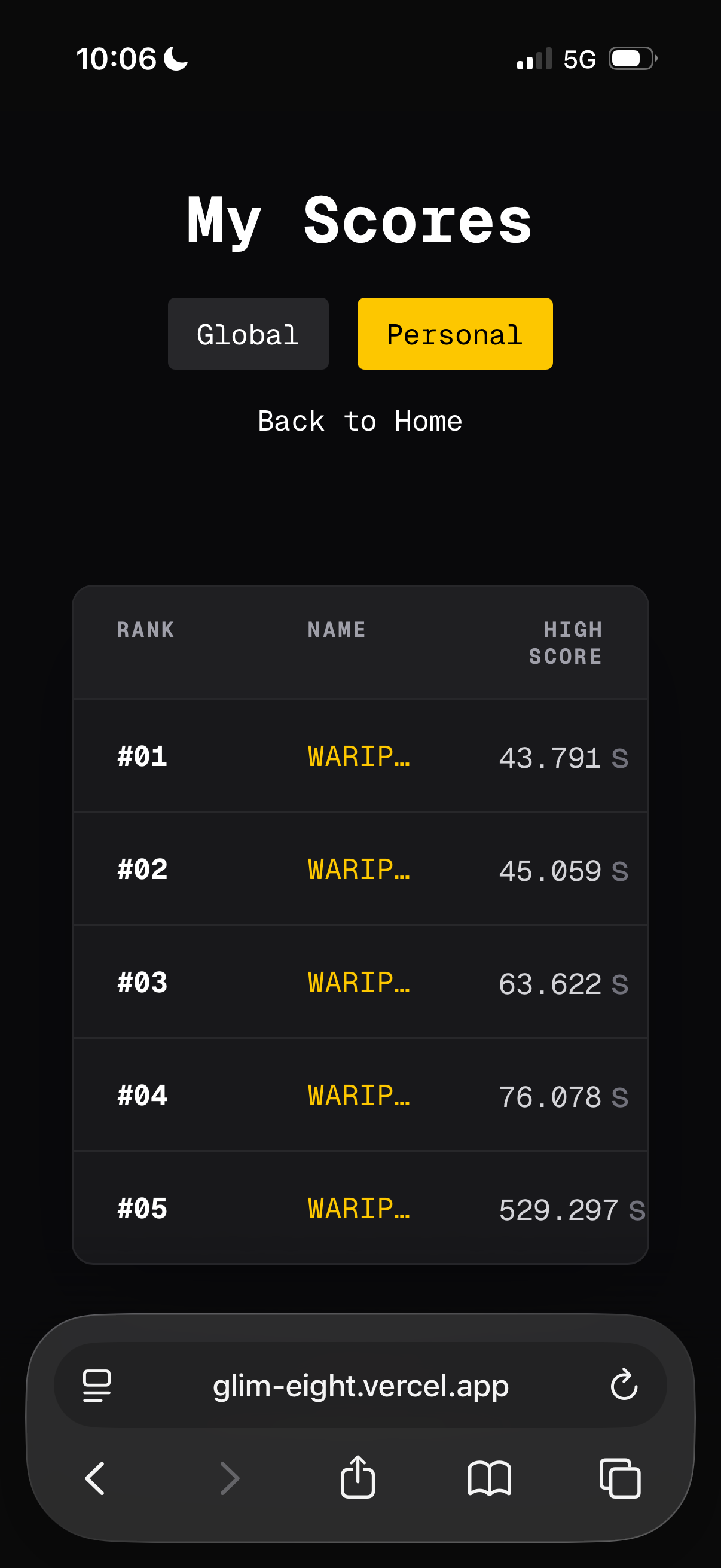
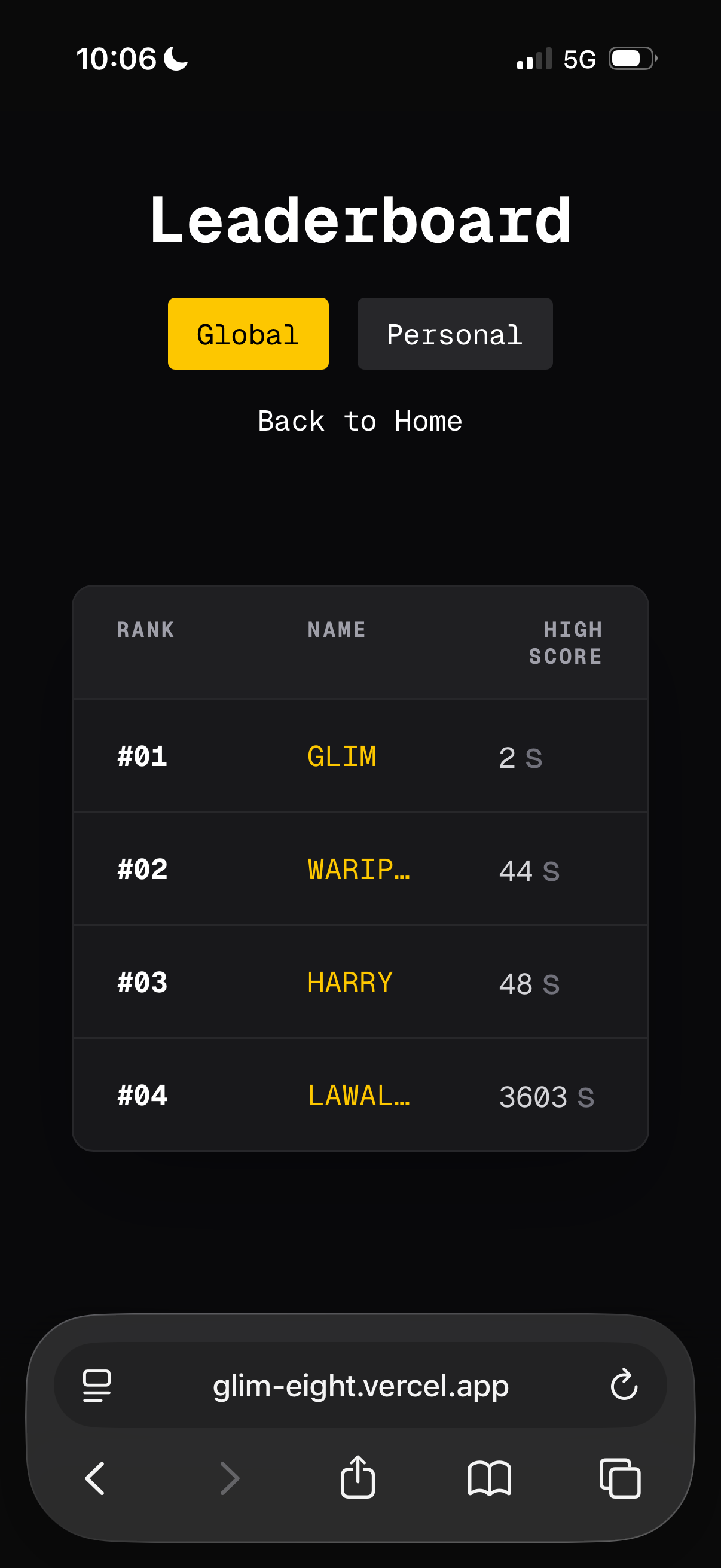
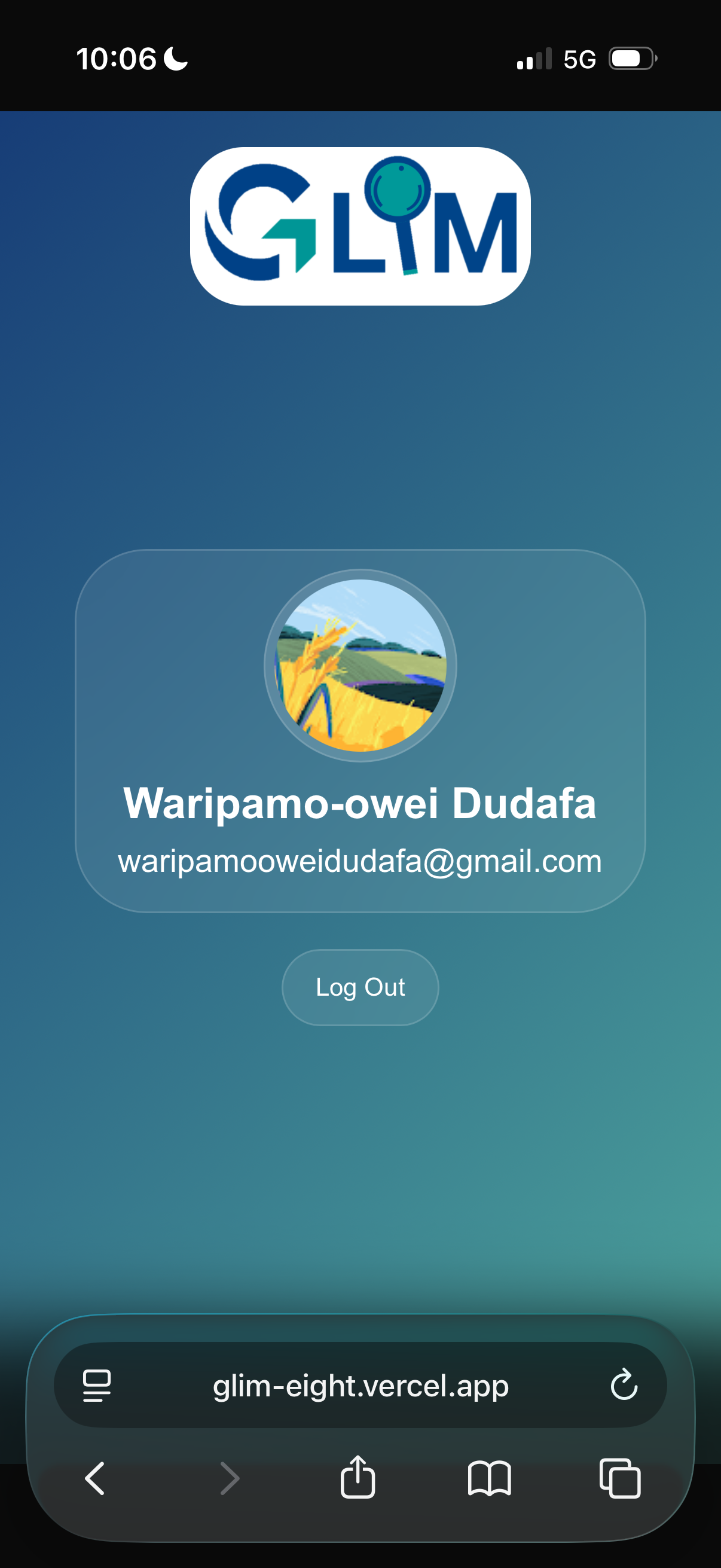
A scavenger hunt game, where users are told an item to find within a specified time window. Once the user finds the item they use the camera function to capture an image of the object. The image will then be reviewed by the Gemini API to determine if the user has captured the correct item. There score is then recorded and uploaded to a leaderboard, where they can compete against other users for fastest times.
How we built it
Stage 1 - Idea Generation We began with an idea to create a prediction trading market, where users could predict and compete against each other on aircraft arrival and departure times. We decided to pivot from this idea towards the scavenger app that is more interactive for the user.
Stage 2 - Technical Discussion Once we decided on the project, we then divided the labour and decided on the tech-stack that we was most compatible with our project.
Stage 3 - Prototyping We then constructed a low-fidelity prototype of Glim, which illustrated the pages that will be part of app. We also created a user flow diagram to grasp the user perspective when creating the app. Then we created a MVP so that we had a working product so we could create the foundations that we could build off of to fine tune the user experience.
Stage 4 - Testing Once the app was completed, testing began to ensure all functions operated as intended and to also view any weaknesses that needed to be rectified.
Challenges we ran into
We had some issues in the beginning whilst attempting to sync Auth0 with Supabase, which was resolved by using the databases separately. Another issue arose when attempting to sync our timer with the Gemini API timer, which we resolved by passing in timestamps through the API to calculate the timer in the app.
Accomplishments that we're proud of
We were able to quickly prototype rather than being overwhelmed with design. Finishing the app with plenty of time before the deadline to allow proper time for reflection and review.
What we learned
We learned about the importance of prototyping for creating a strong base in which our ideas could be implemented from.
We also learnt about the capabilities of Supabase, it was simple to use and very intuitive.
What's next for GLIM?
Promotional activities coinciding with our push to the IOS App Store and Google Play Store, as well as tailoring UI for specific user demographics.
Built With
- gemini
- nextjs
- react
- sql
- supabase
- typescript


Log in or sign up for Devpost to join the conversation.