-
-
-
Mo
-
-
-
unt hel
-
-
-
The most dangerous thing an AI agent can do isn't forgetting. It's confidently remembering something that stopped being true.
Inspiration
It started as a second brain and became a second workforce — agents and models spread across Claude Code, Cursor, and cloud runs. I could always ask for one more improvement, but I lost the ability to answer what actually matters: what did we decide, and what is true now? The insight the whole project rests on: agent memory becomes dangerous not when it forgets, but when it confidently preserves something that should no longer be believed. A store will happily hand your agent a fact that went stale three months ago — and the agent acts on it.
What it is
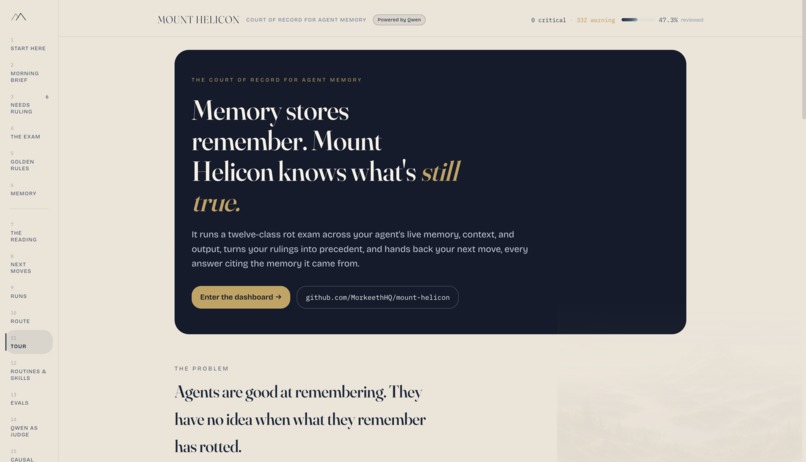
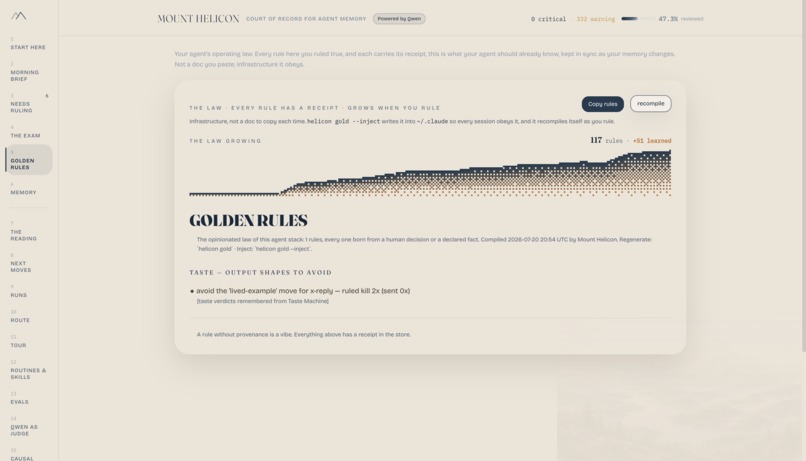
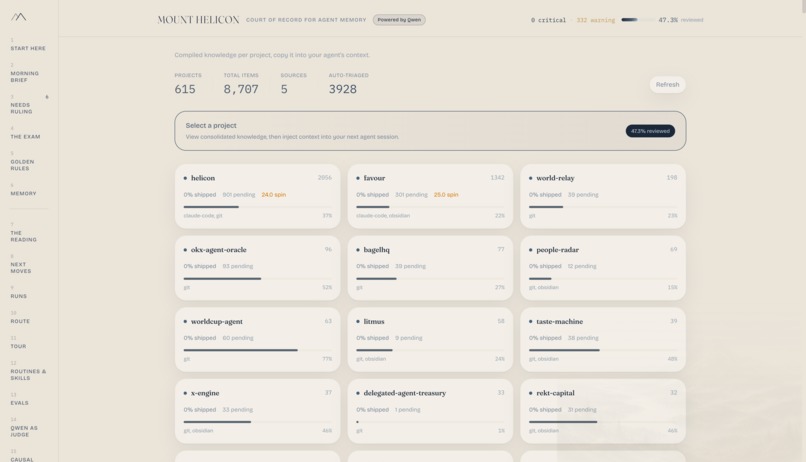
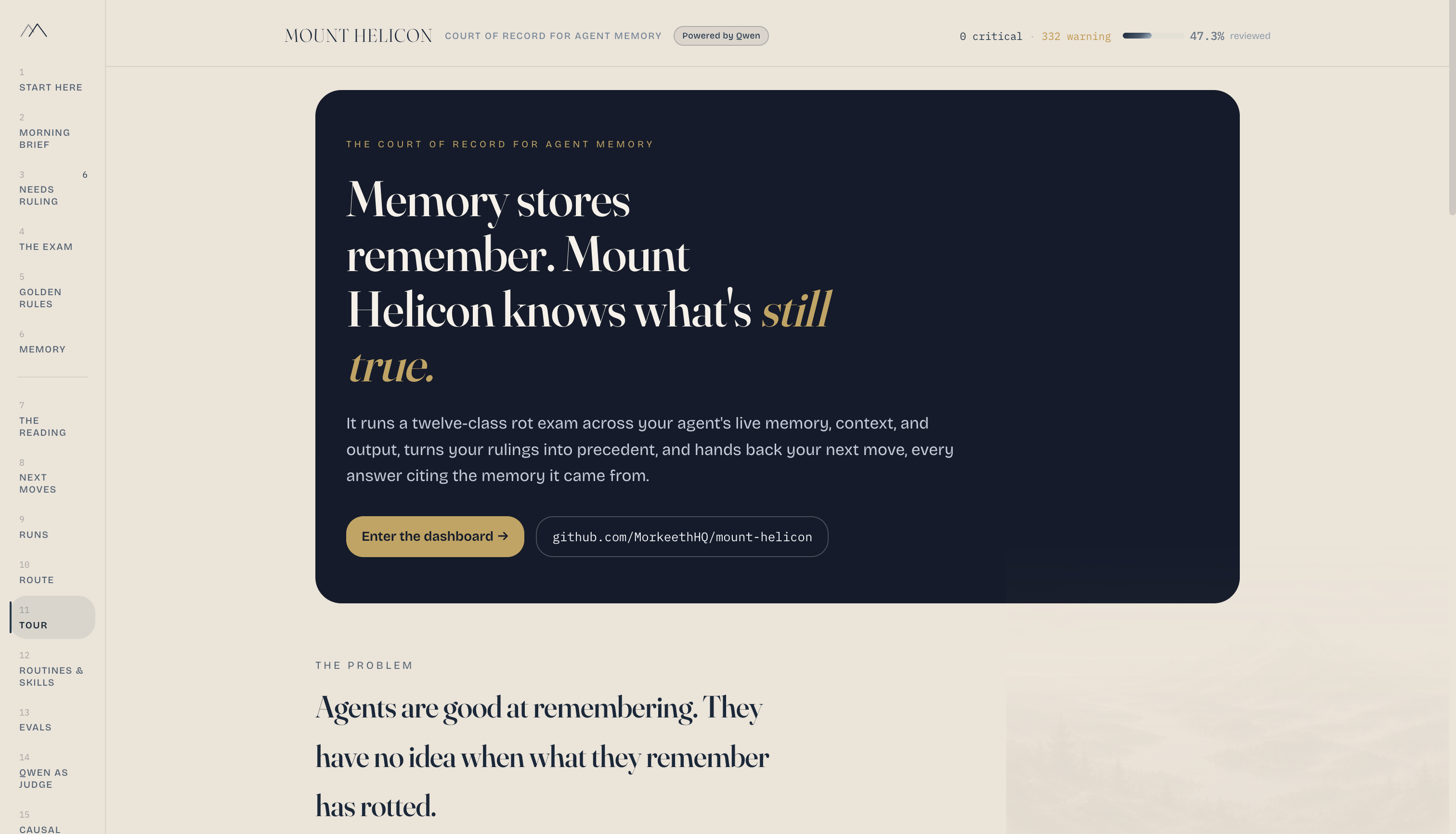
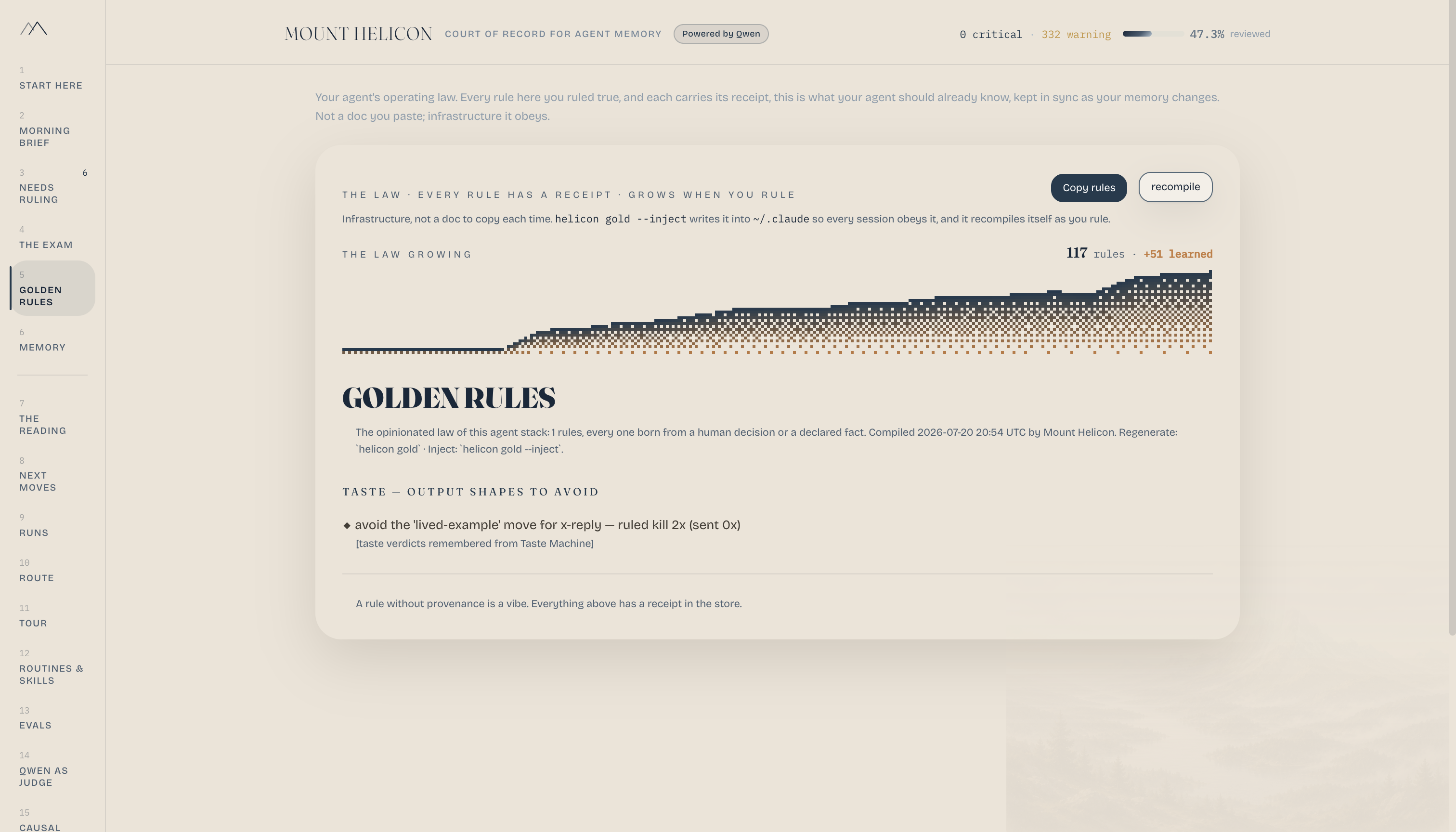
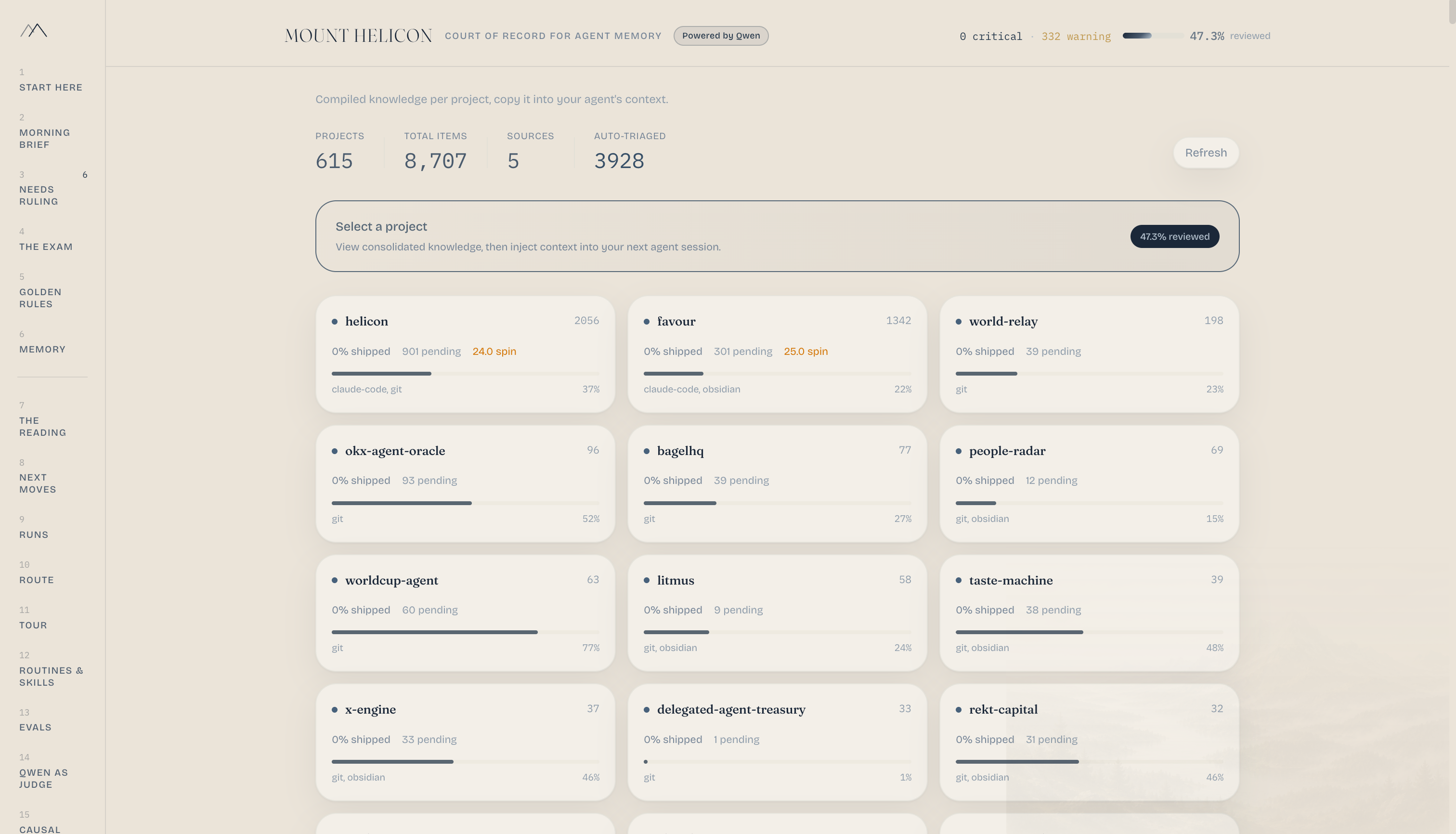
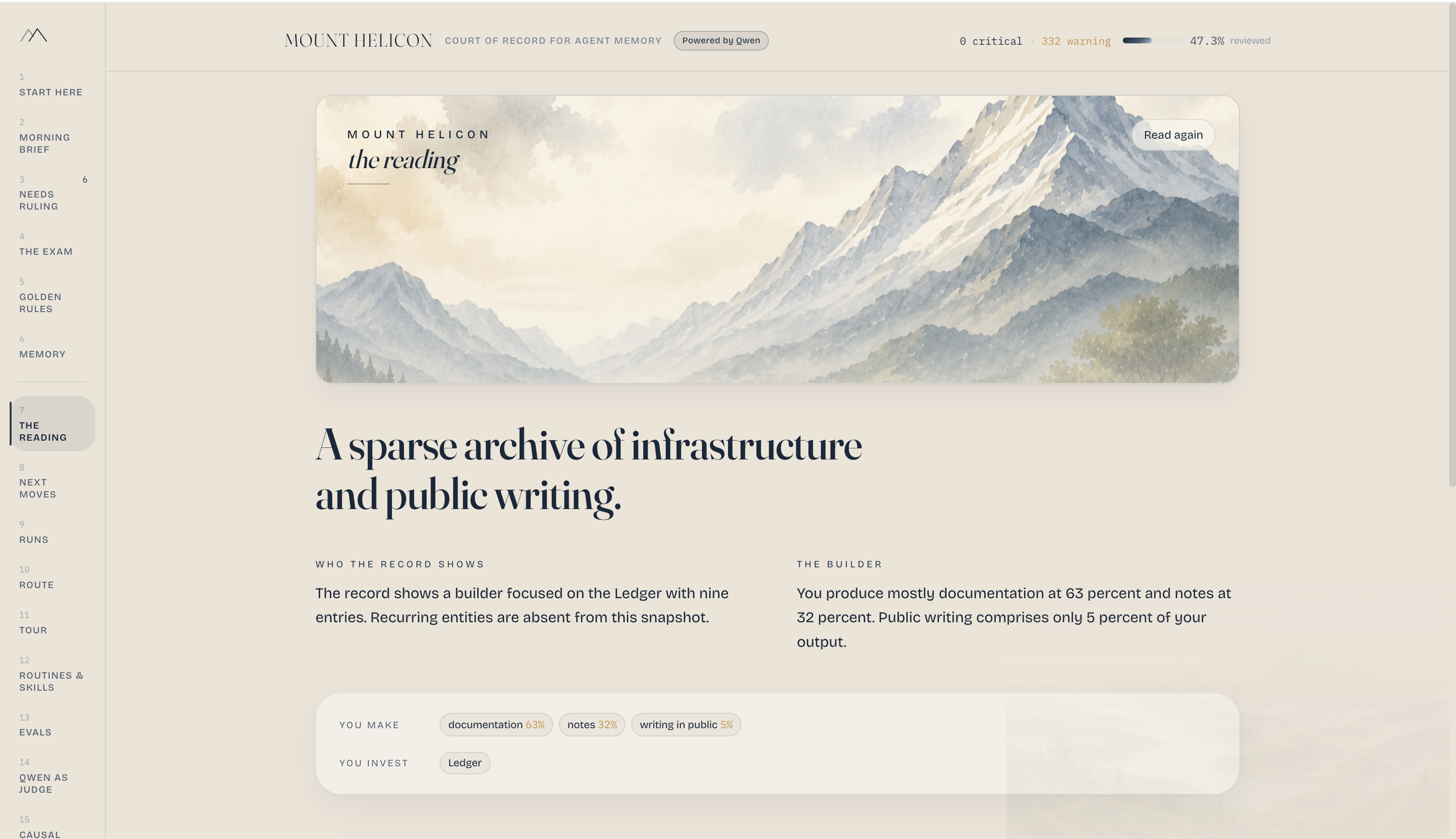
Mount Helicon is the truth layer for agent memory — a control plane, not another memory store. It audits a memory store across twelve documented ways memory rots, handles routine rot on its own, and escalates only genuine contradictions to a human. You rule once, and that ruling compiles into a rule a guard enforces — so no agent can later re-assert the fact you just ruled false. There's a receipt, and an undo.
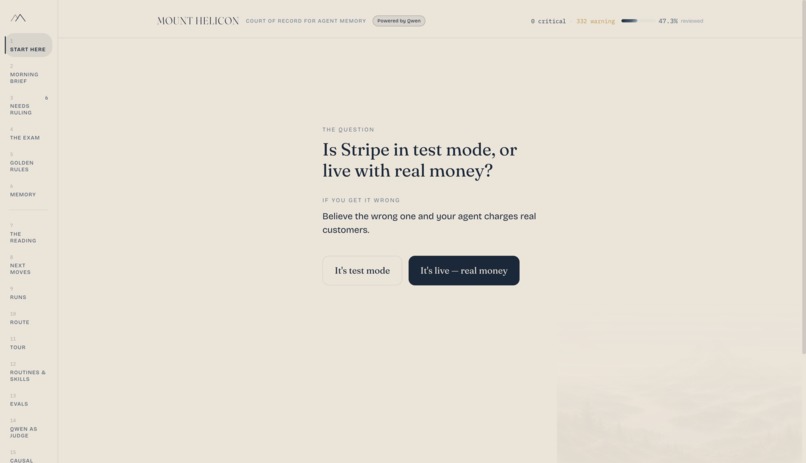
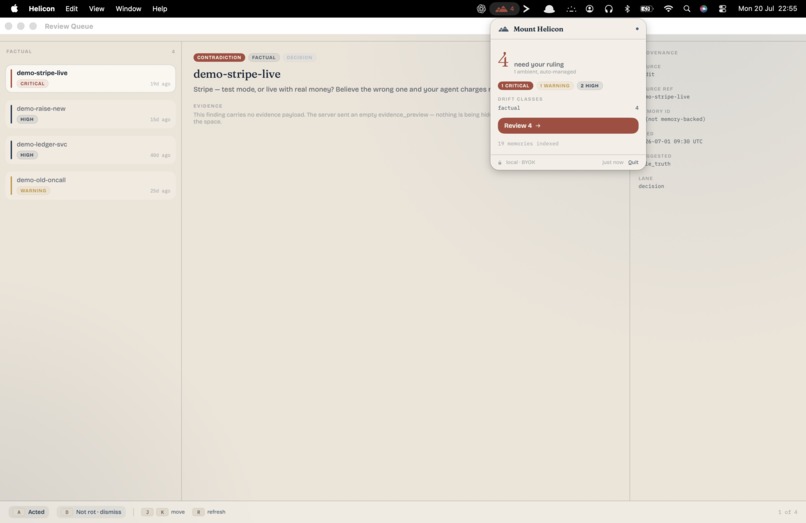
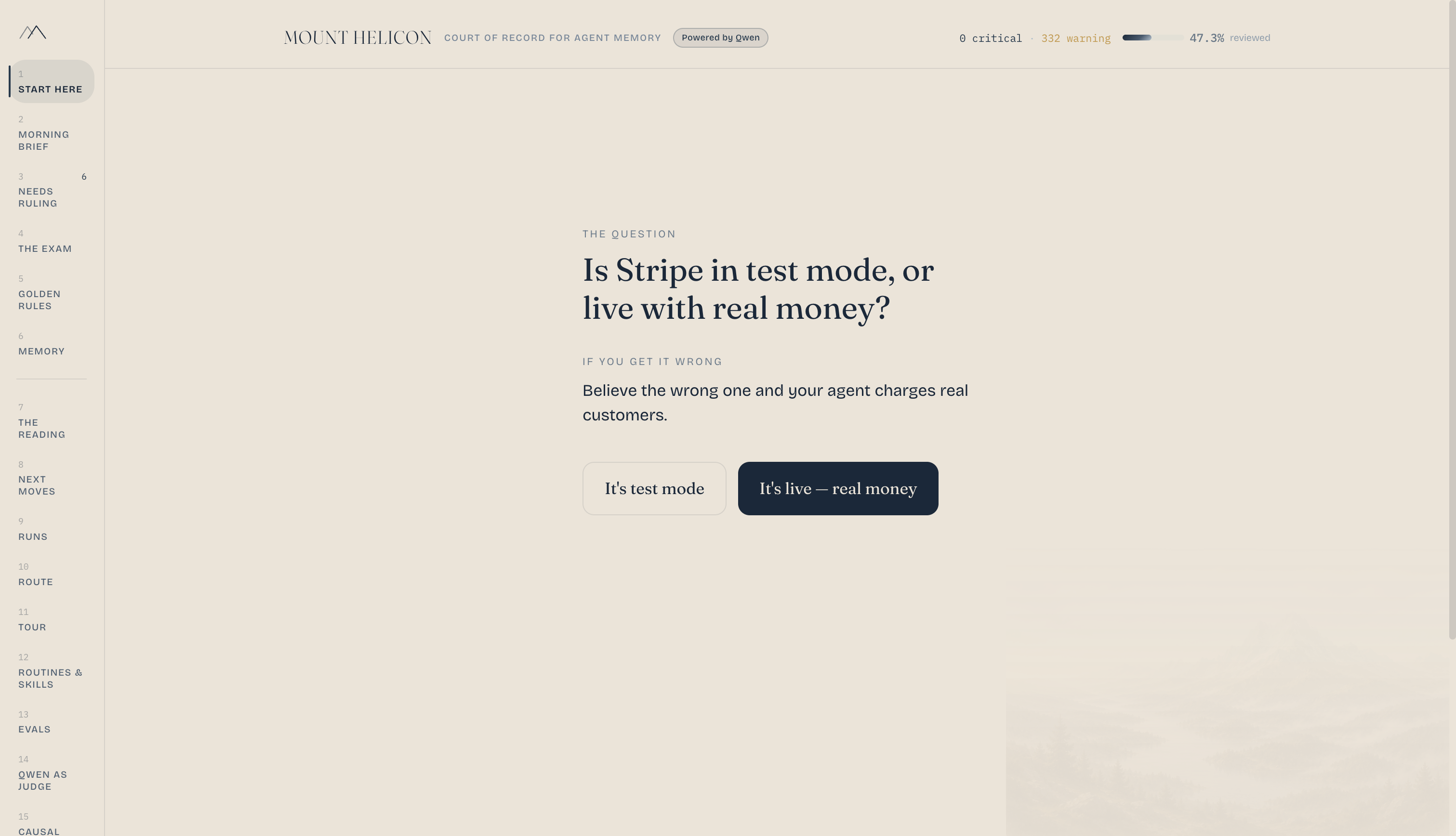
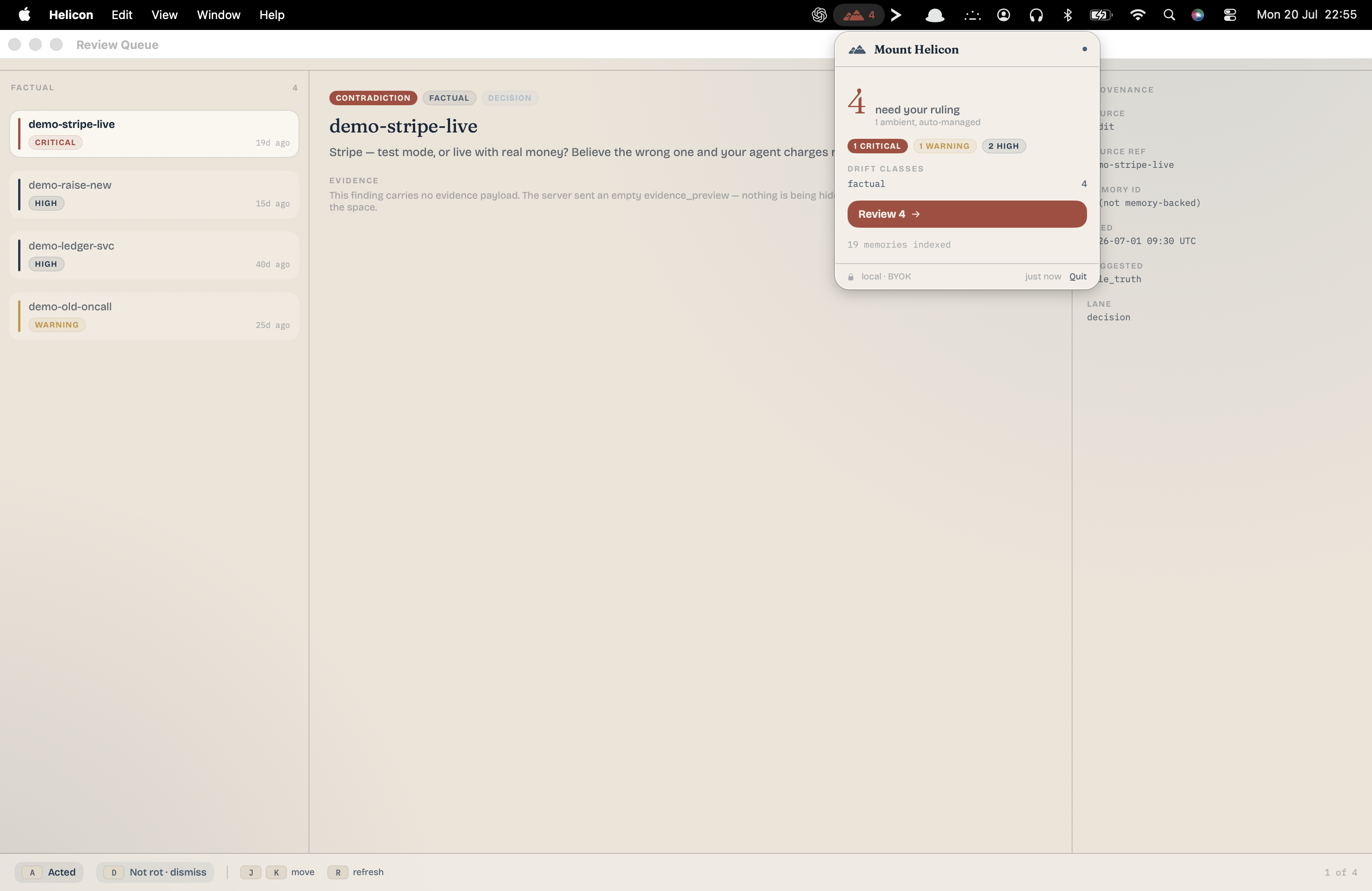
The hero case: a store holds "Stripe is in test mode" (March) and "we went live on Stripe" (July). Believe the stale one and an agent charges real customers. Qwen, on Alibaba Model Studio, judges it a contradiction where a similarity score can't. You tap the current truth; the guard now blocks the dangerous claim before any agent acts on it.
How I built it
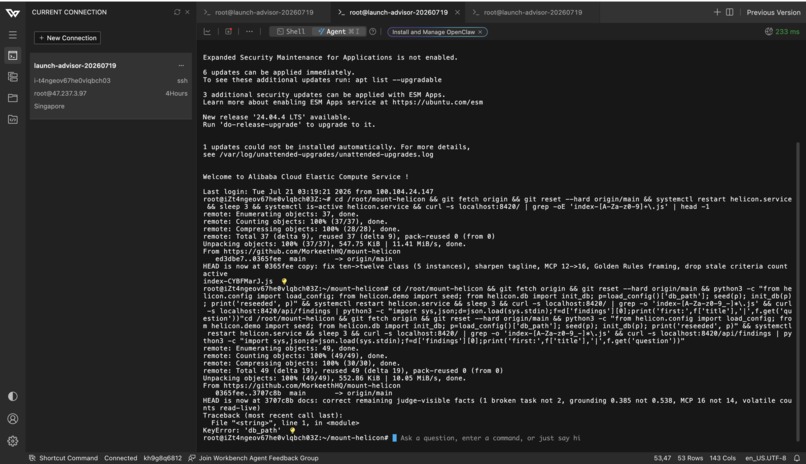
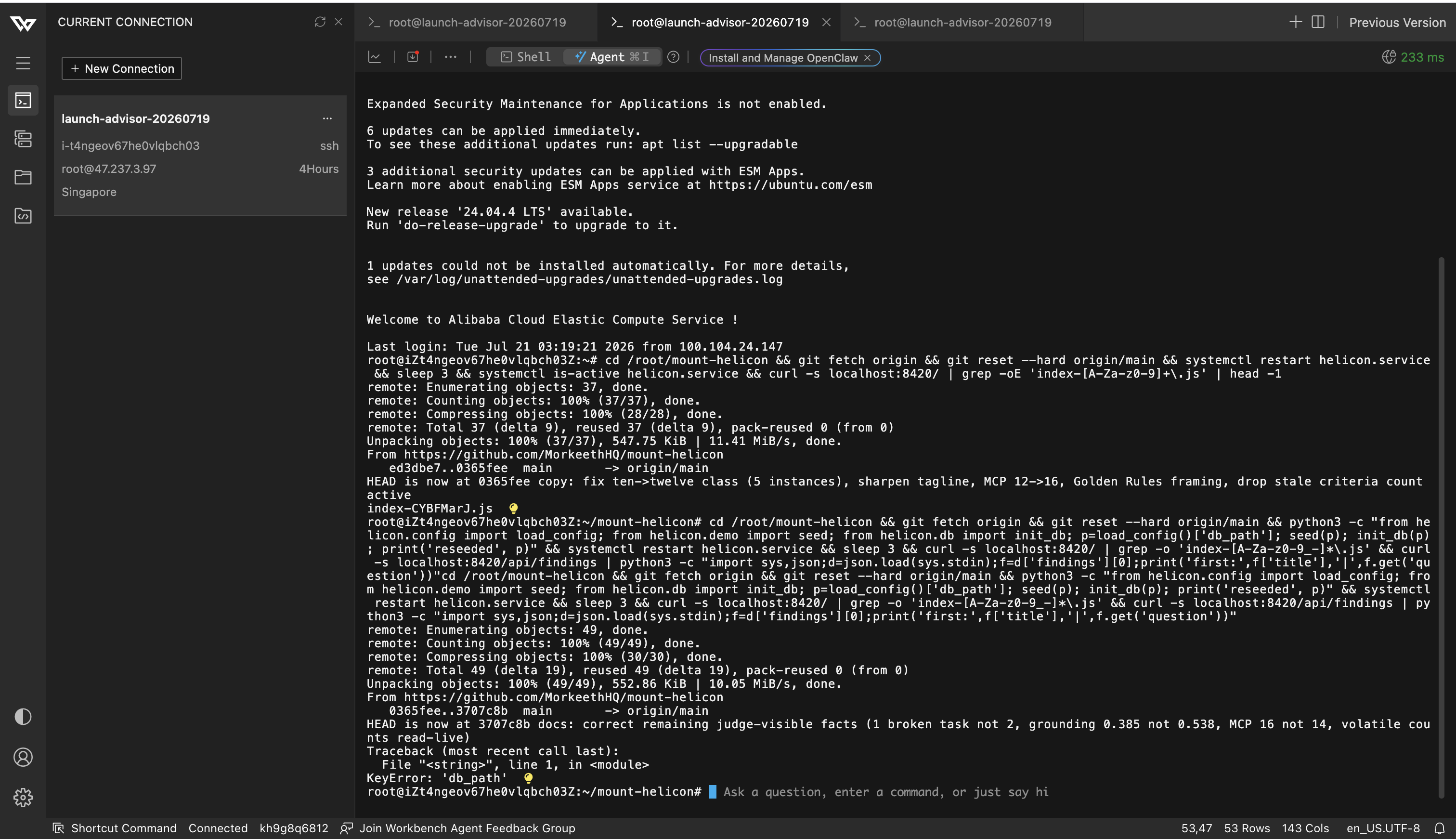
Python + FastAPI, SQLite with FTS5 and numpy embeddings. Qwen is load-bearing: contradiction and grounding judgments run on Alibaba Model Studio (helicon/qwen.py); embeddings on Alibaba DashScope text-embedding-v4 (helicon/embeddings.py). Benchmarked against my own human rulings, qwen3.6-plus ties the strongest frontier model on accuracy at a fraction of the cost. One core, four surfaces: a React dashboard, a 16-tool MCP server so agents self-audit mid-conversation, a CLI, and a native macOS menu-bar app. The backend runs live on Alibaba Cloud ECS in Singapore, serving a seeded demo with no personal data, with Qwen judging live.
Challenges I faced
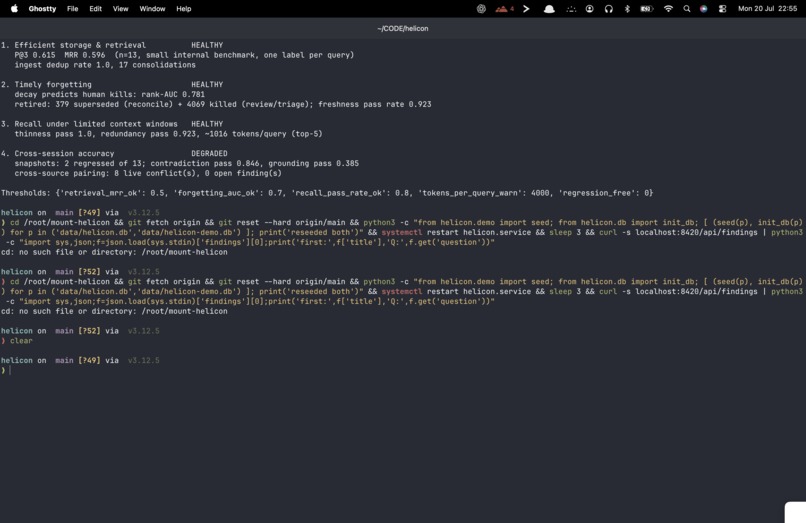
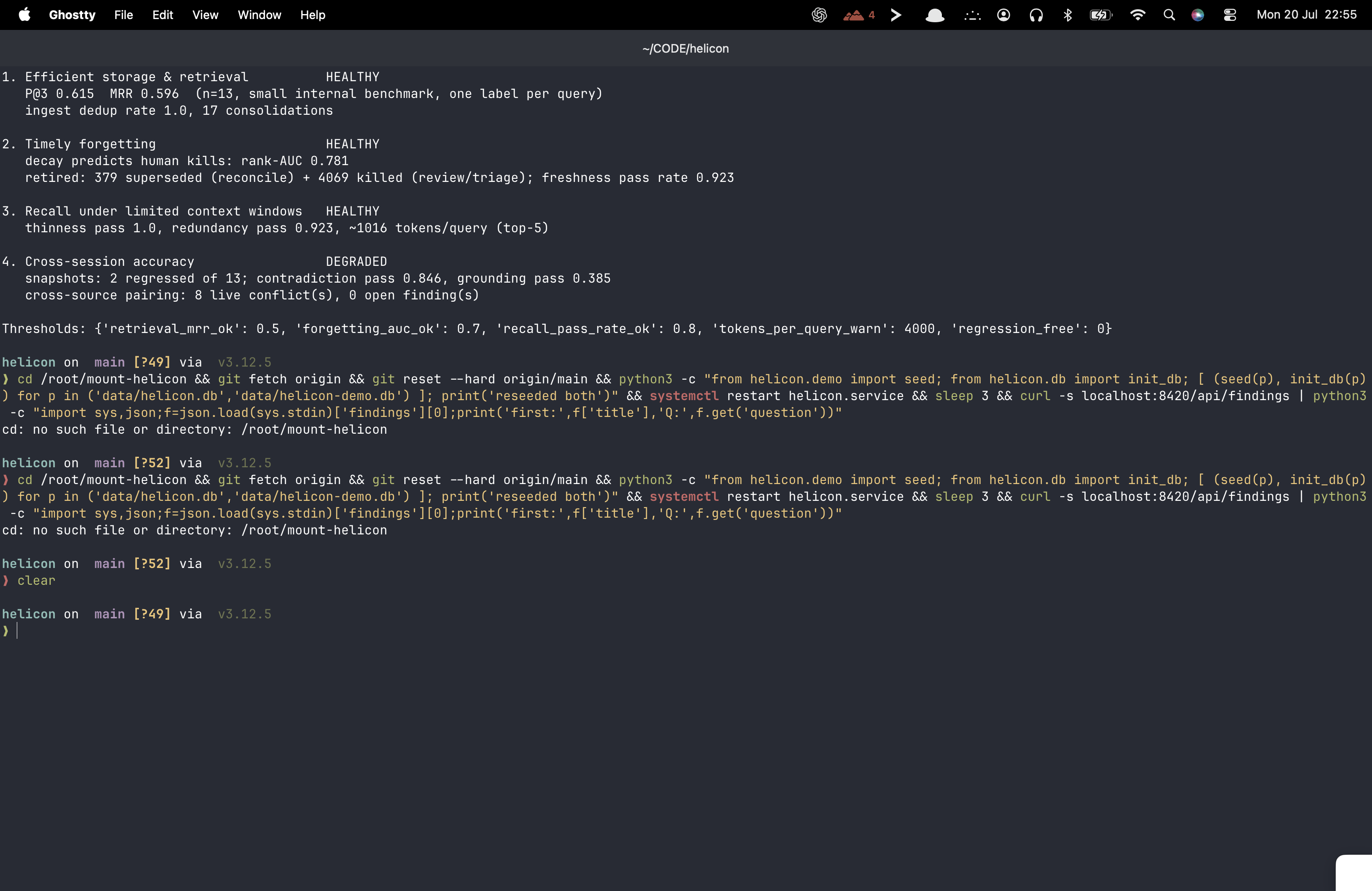
The empty-warehouse problem — a memory tool is useless on first run with nothing in it, so I built a one-command seeded demo with a genuinely high-stakes contradiction. Honesty under a benchmark — it would be easy to print a green "all healthy," so instead the system grades itself DEGRADED when grounding is weak and withholds recommendations below a quality floor. And reading load — the reviewer is human, so the system guides one decision at a time: the question, the consequence, the choice.
What I learned
The differentiator wasn't more detection. It was governance and restraint: making a human ruling cheap and enforceable, and letting uncertain knowledge stay honestly uncertain. And Qwen was the right judge for it — it caught logical contradictions a similarity score never could, at a cost that makes running it on every write realistic.


Log in or sign up for Devpost to join the conversation.