-
-

-
-
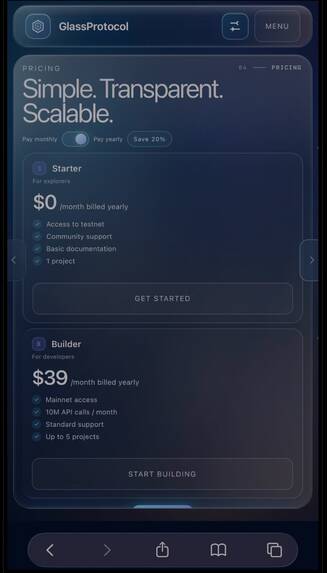
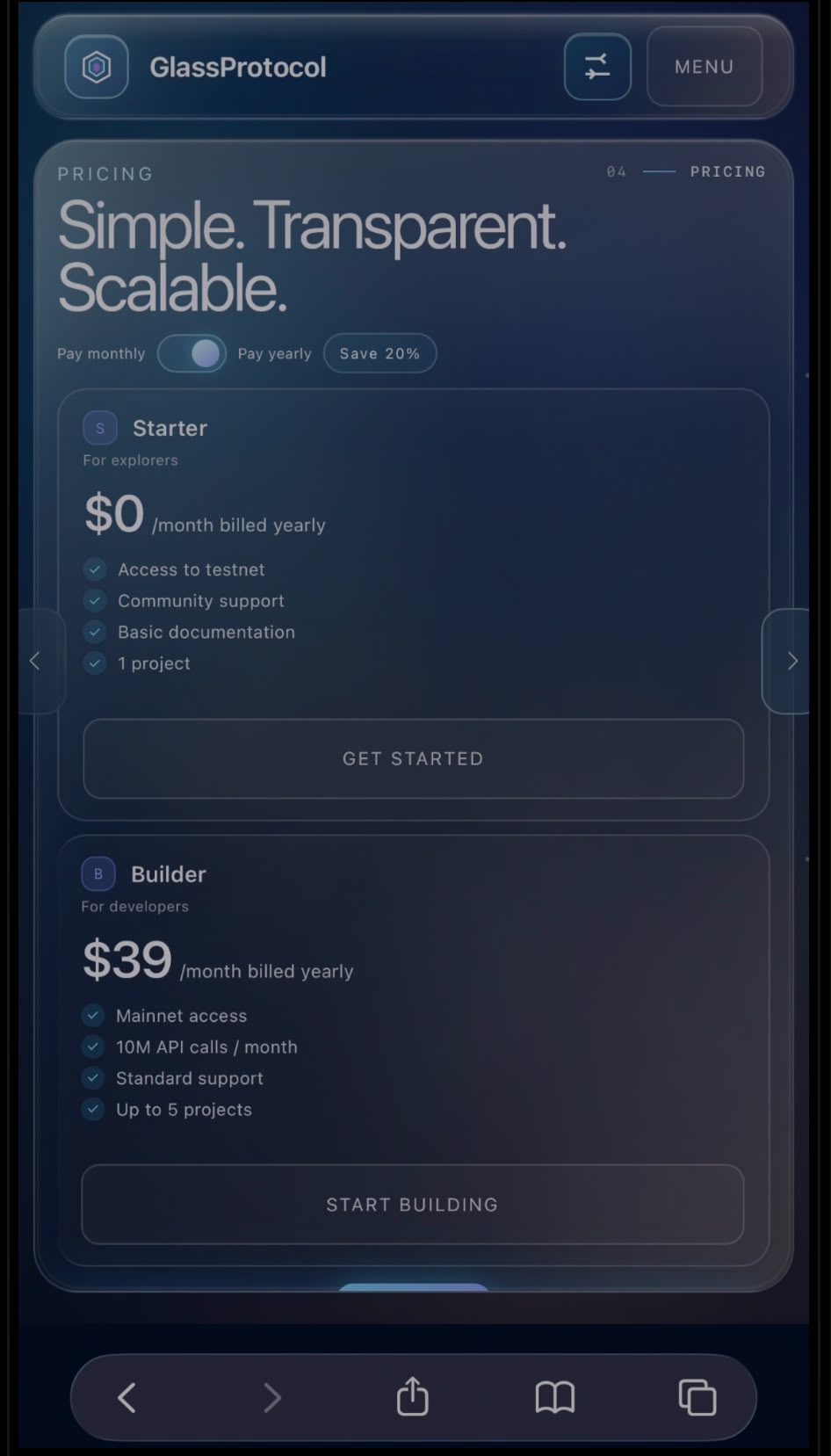
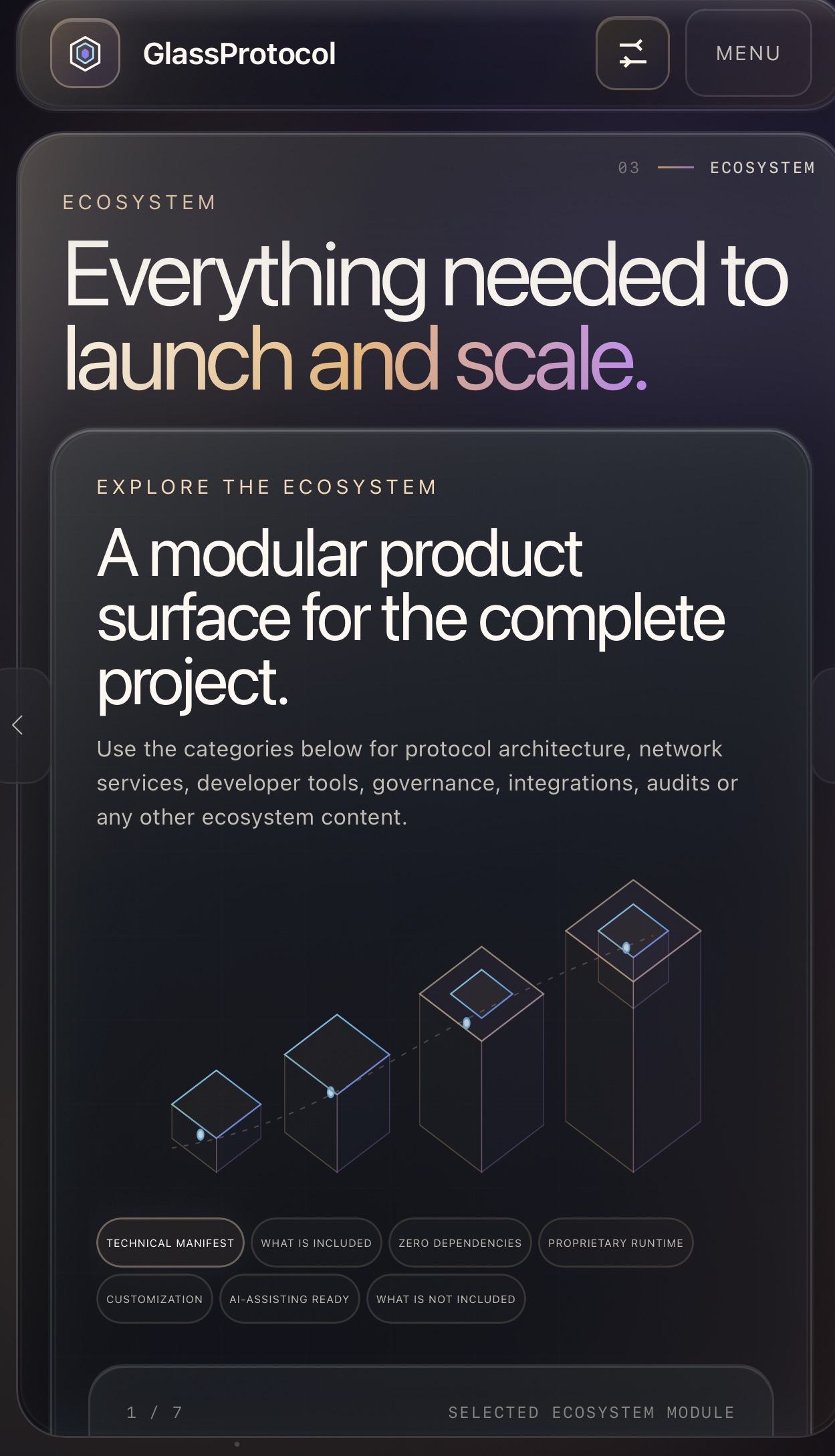
Mobile view
-
-
-

Inspiration
Modern web development is deeply burdened by framework bloat, runtime compilation lag, and heavy third-party dependencies. We wanted to see how far we could push user interface performance by engineering a premium, highly adaptive visual template and UI customizer built entirely on top of platform primitives.
What it does
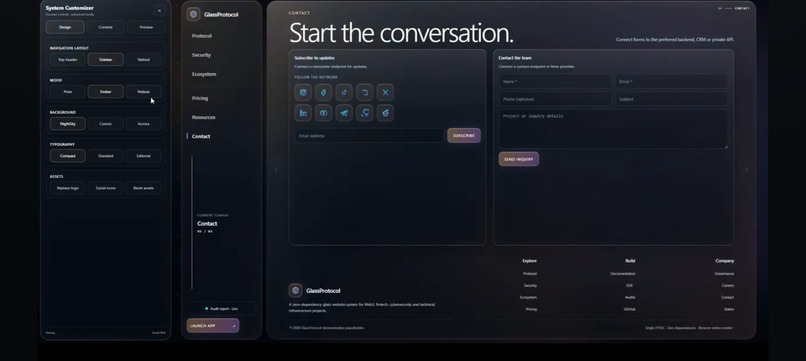
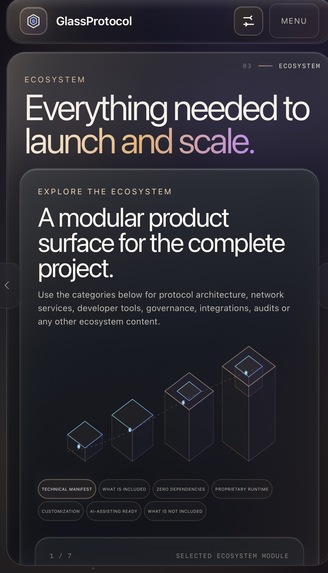
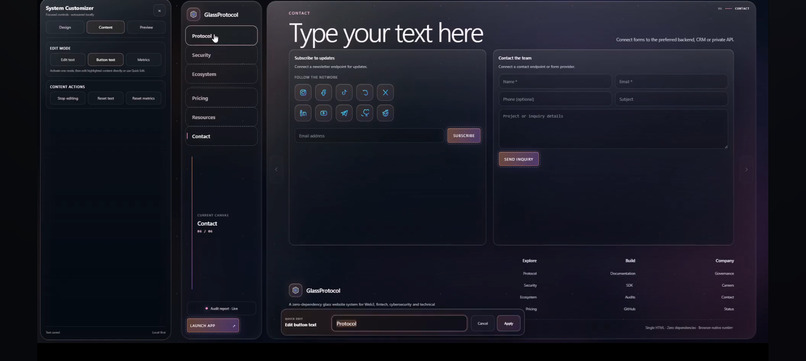
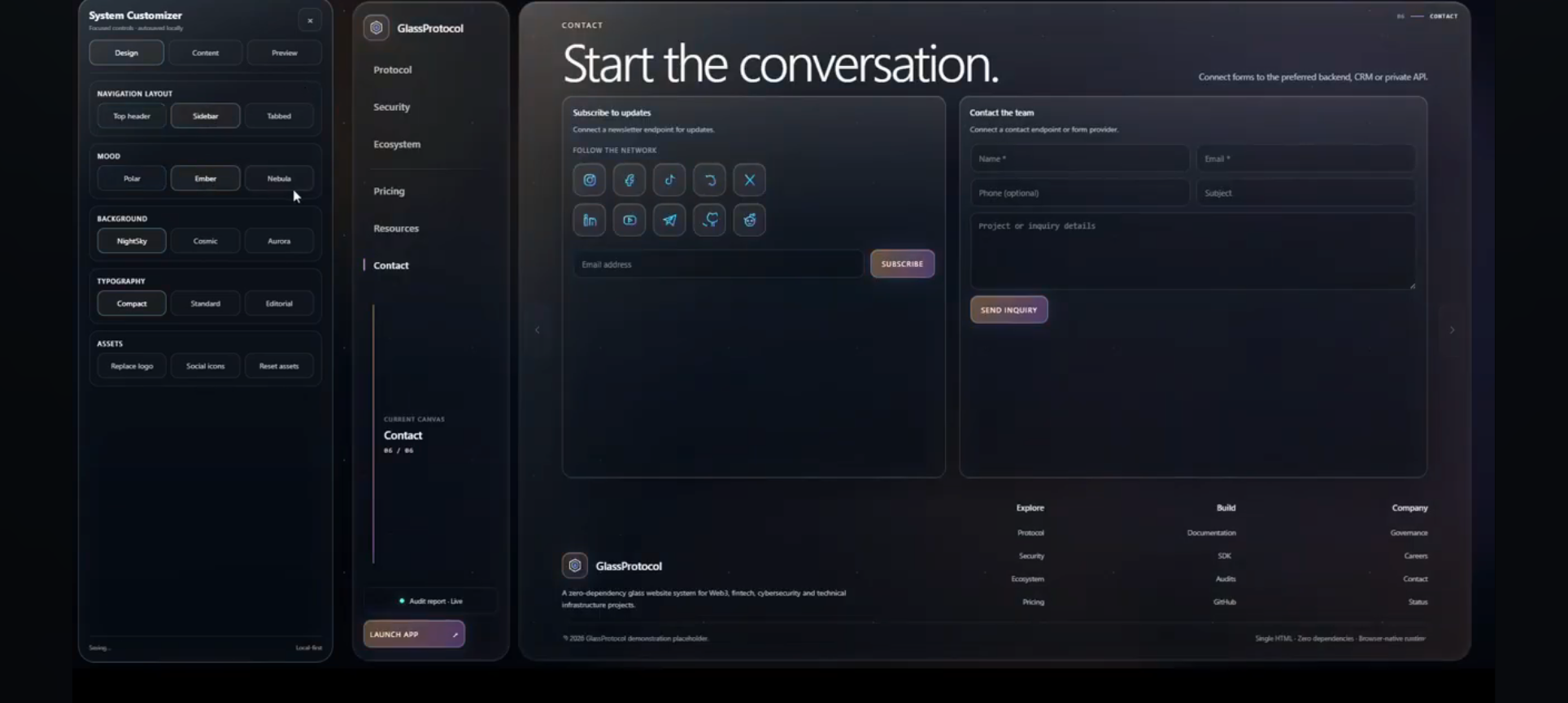
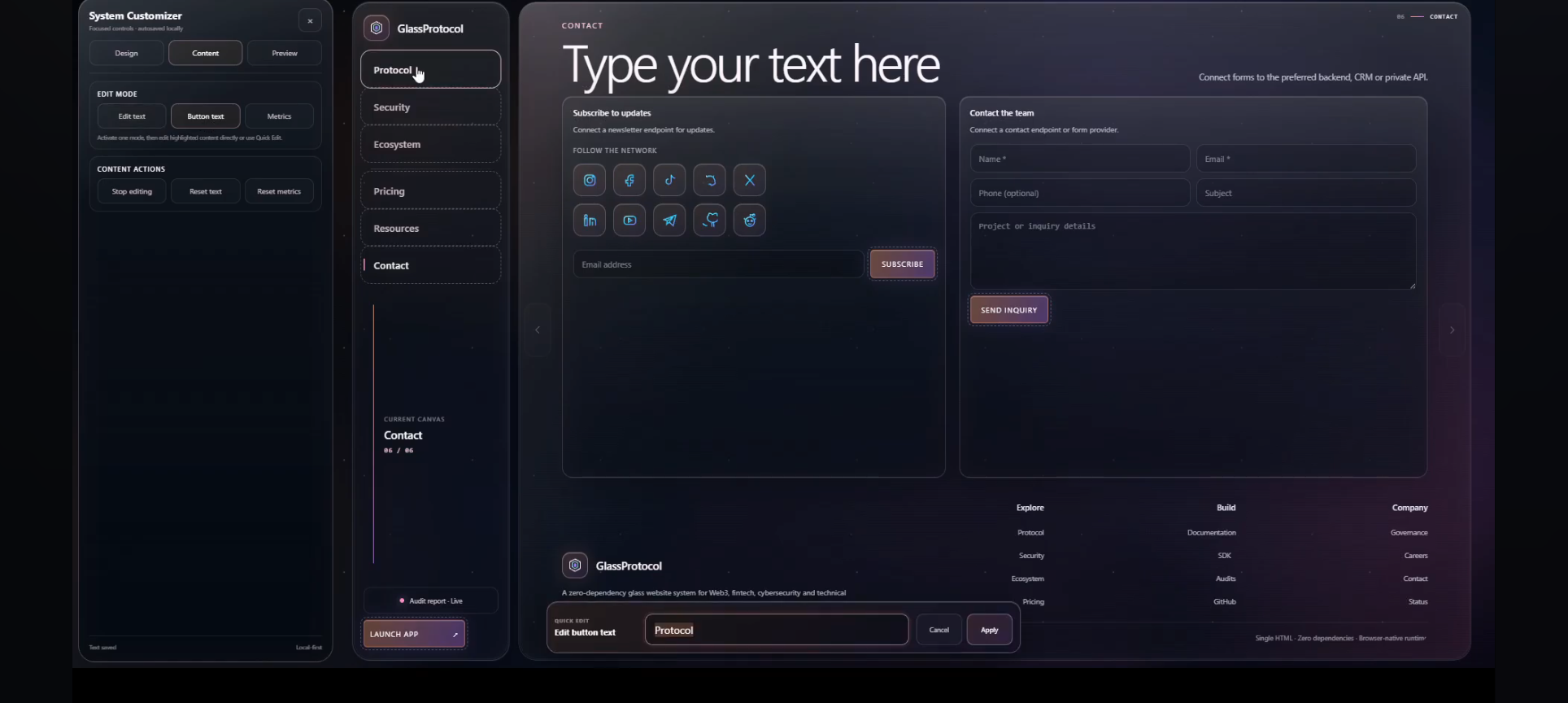
GlassProtocol is an independent, highly diverse HTML template system combined with an integrated browser-native canvas customizer. Engineered for maximum flexibility, it functions as a universal layout engine that can be adapted to any digital ecosystem including high-performance SaaS platforms, engineering dashboards, or developer portals. Users can dynamically hot-swap 81 design combinations, altering theme visual profiles, typography configurations, and structural layouts directly within their client-side viewport. Once satisfied, the custom workspace generates a lightweight, production-ready, unminified source code package ready for clean deployment.
How we built it
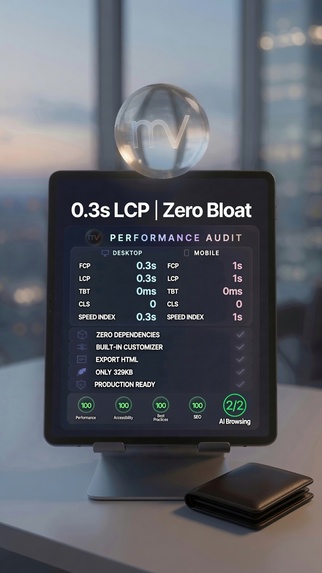
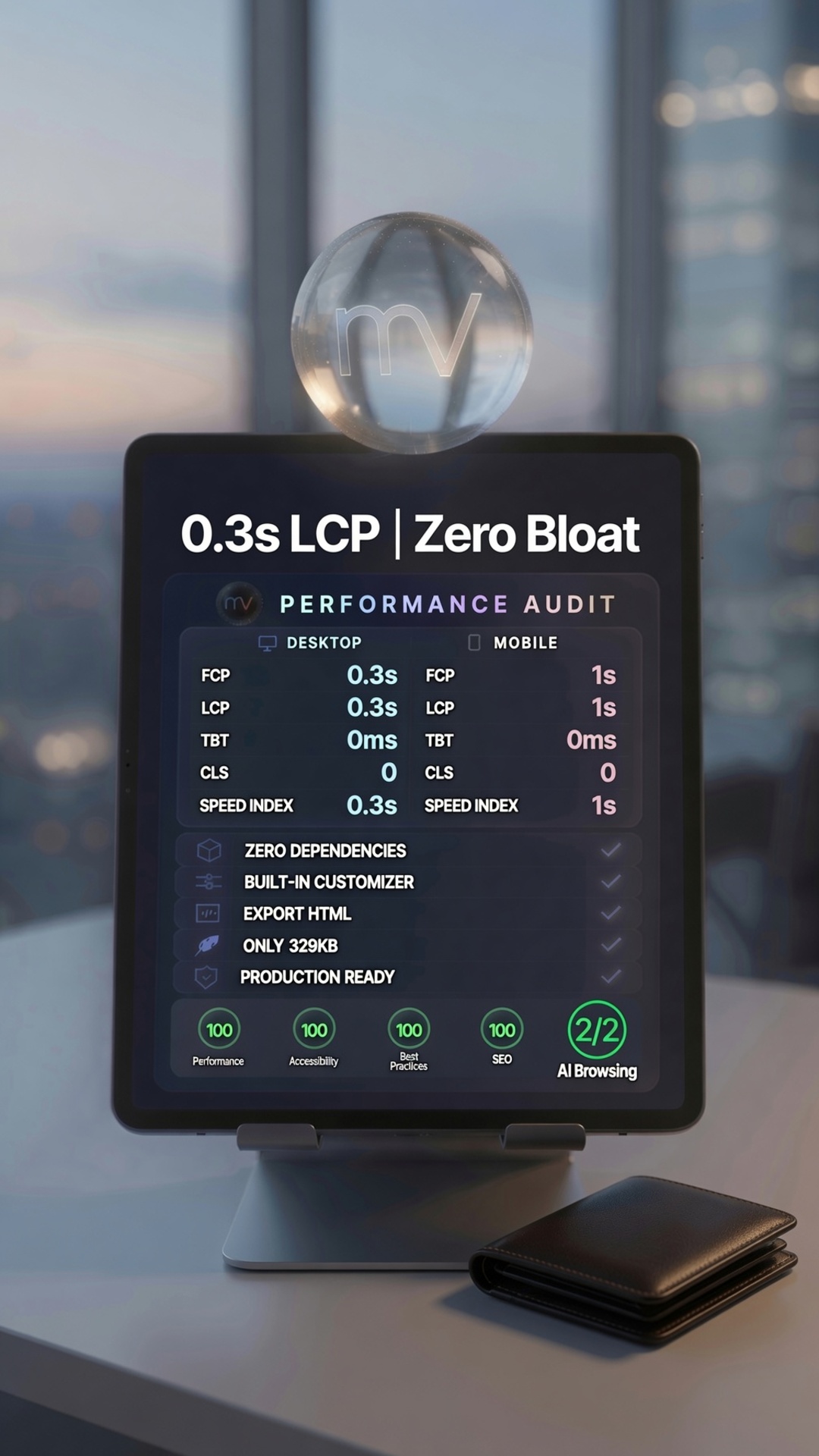
To guarantee absolute runtime control and a perfect 100/100 Lighthouse performance profile across desktop and mobile, we built everything from scratch.
Zero Dependencies: The entire application operates directly within the client-side environment without third-party frameworks, libraries, user accounts, or cloud architectures.
Direct Canvas Editing: Allows users to modify text and layout configurations directly on the visual workspace with zero-latency auto-saving functionality.
Optimized Build Pipelines: Automatically purges operational boilerplate upon deployment, exporting an instantly optimized, clean vanilla code payload.
Architecture: Structured entirely with native HTML, CSS variables, dynamic inline SVG assets, and modular, vanilla JavaScript.
Motion & States: Integrated custom panel state logic, native client-side responsive layout configurations, and a fluid, hardware-friendly motion feedback system.
Challenges we faced
Balancing extreme cross-device visual parity while strictly adhering to a zero-dependency architecture required engineering highly reusable custom component networks. Ensuring 81 distinct visual design combinations could render instantly without main-thread blocking latency forced meticulous runtime auditing of the browser layout engine.
Accomplishments that we're proud of
Achieving flawless execution efficiency: maintaining a pristine 100/100 Lighthouse score, optimizing initial payload sizes down to lightweight levels, and allowing full multi-device preview capabilities while running 100% on the local thread.
What we learned
Building complex web automation and canvas editing tools using platform primitives yields vastly superior performance and memory efficiency compared to traditional component framework lifecycles.
What's next for GlassProtocol
Expanding the runtime execution environment to leverage low-level WebGPU parallel compute pipelines for large-scale telemetry data stream visualization within the 3D depth and parallax viewports.
Built With
- css3
- design
- html5
- javascript
- no-code
- performance
- svg
- ui
- ux
- vanilla
- zero-dependency


Log in or sign up for Devpost to join the conversation.