Inspiration
When YouTuber Hank Green posted his viral video, “If you live in Georgia, watch this”, people suddenly tuned in to learn about an energy regulation bill that could impact renewable energy policy and utility pricing in Georgia. In just a few days, thousands of comments poured in from citizens asking: “Where can I actually read this bill?” “Who voted for it?” “How do I contact my representatives?” That video revealed something powerful: People want to participate, they just don’t have a clear, accessible way to understand legislation or act on it. That moment inspired GlassGov, a platform designed to turn moments like that into lasting, informed participation. GlassGov helps citizens see the facts, read summaries, reach out to representatives, and engage with clarity.
What it does
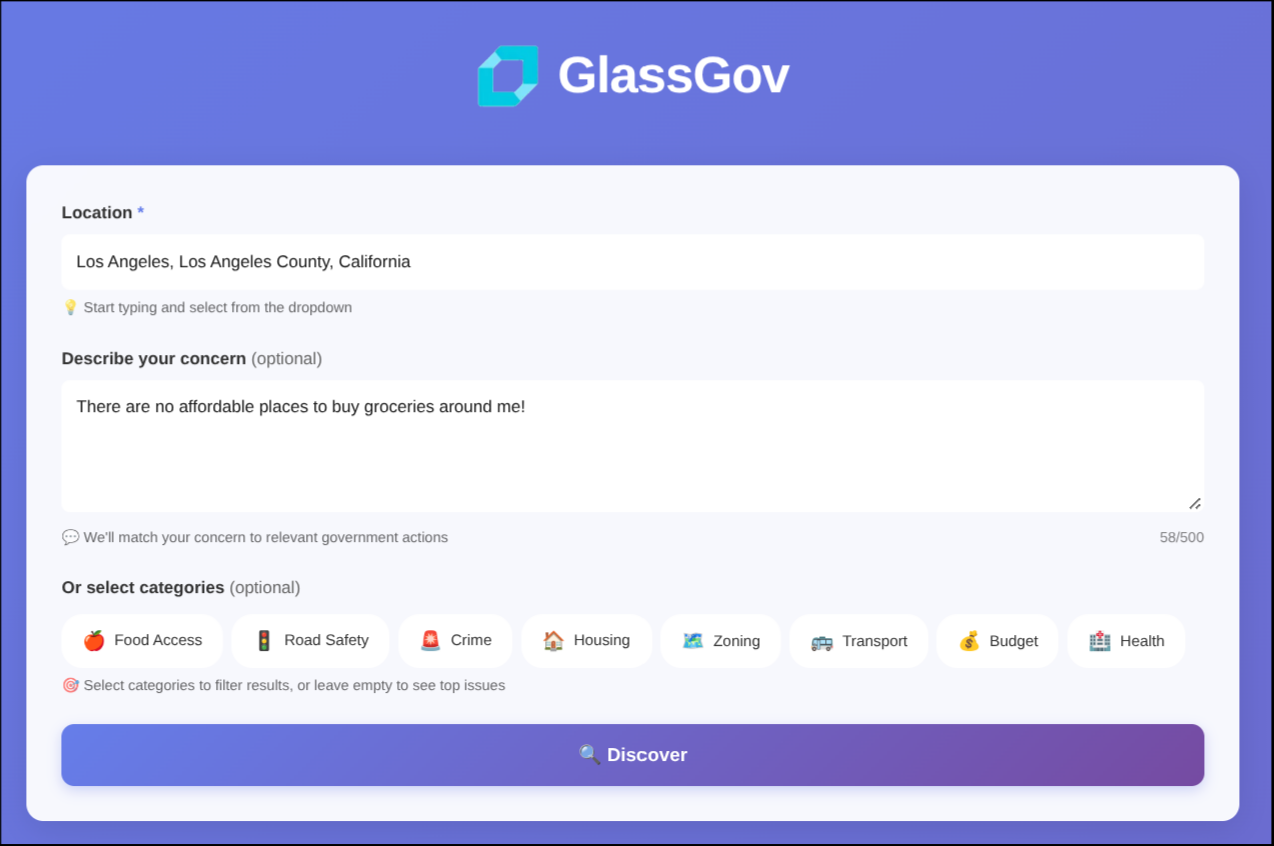
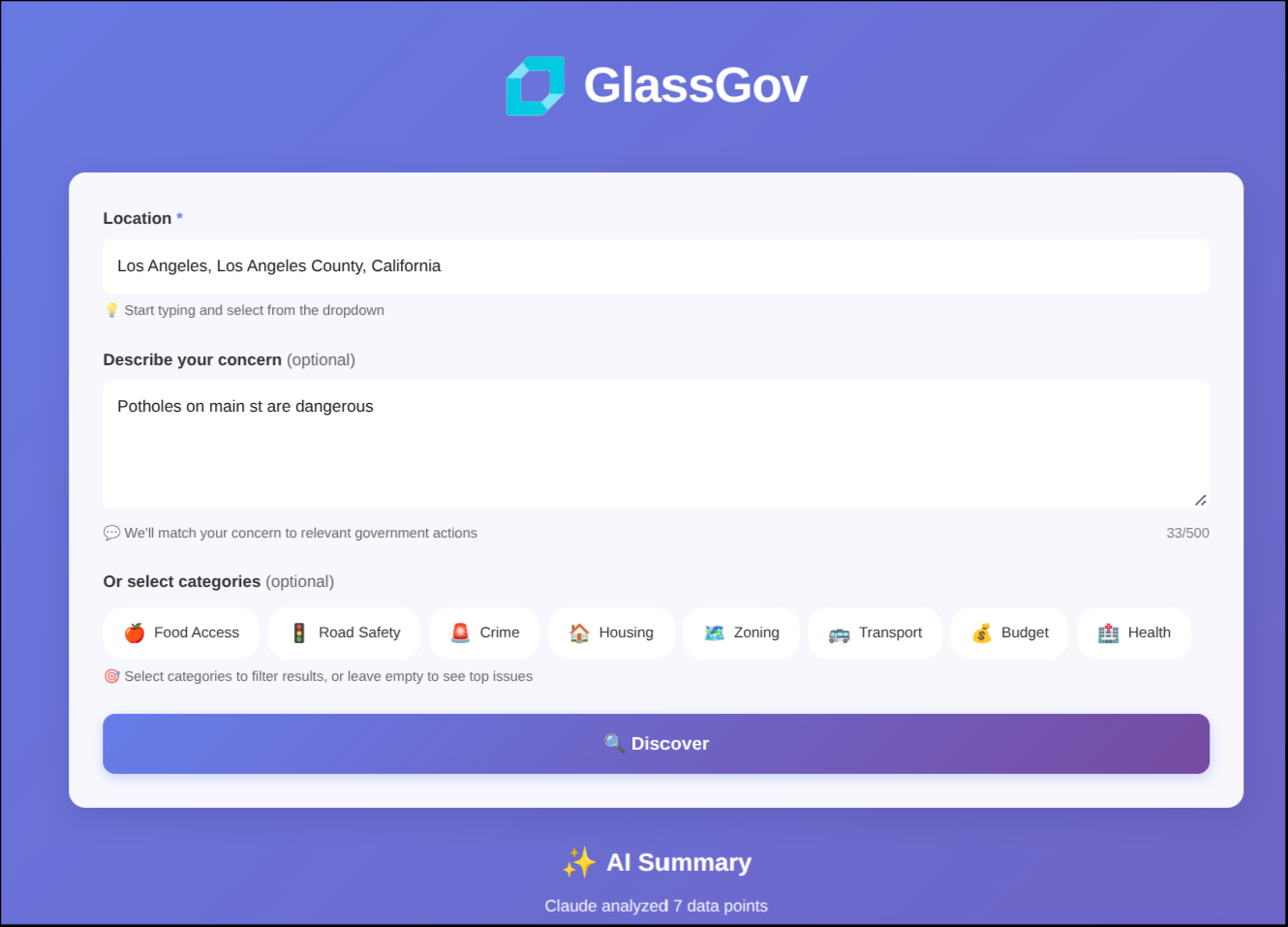
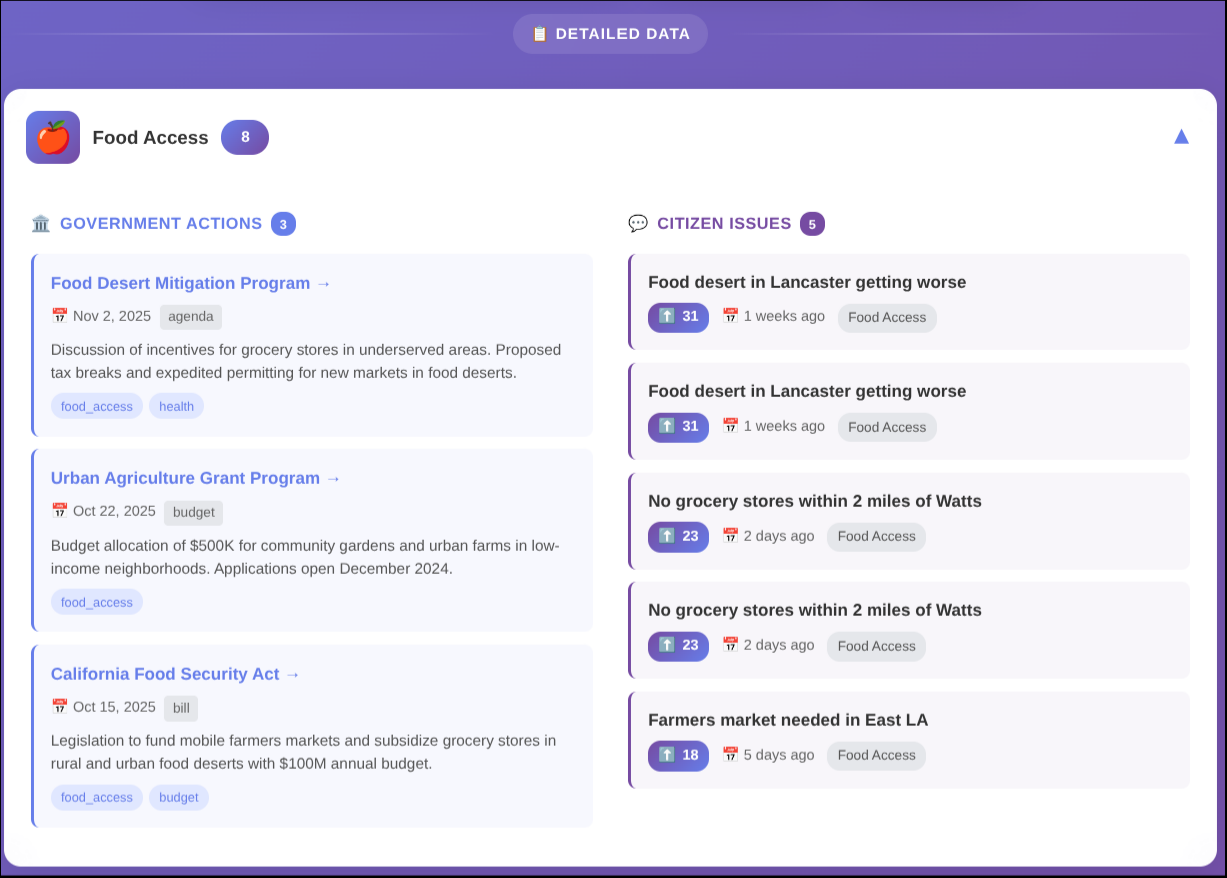
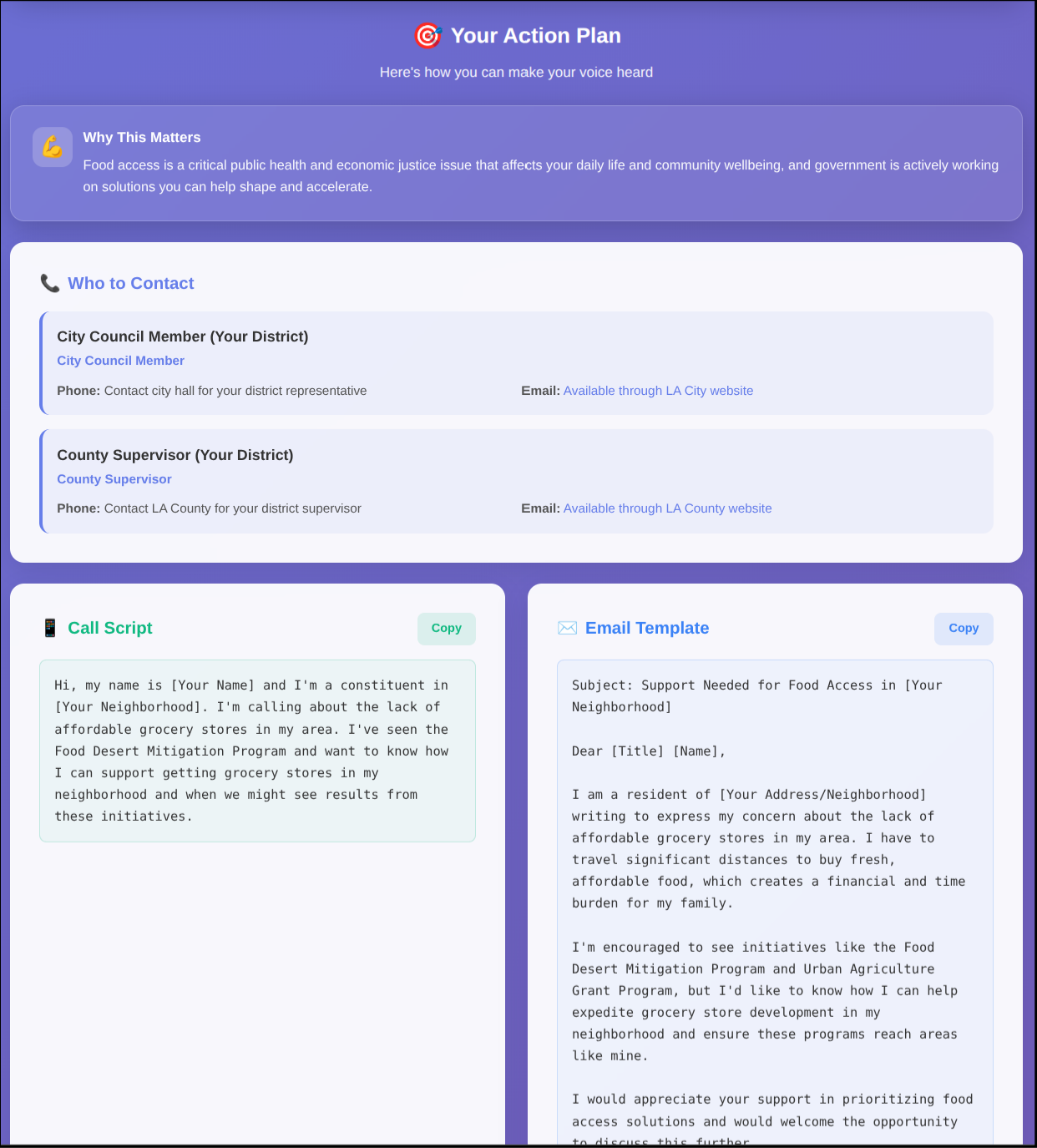
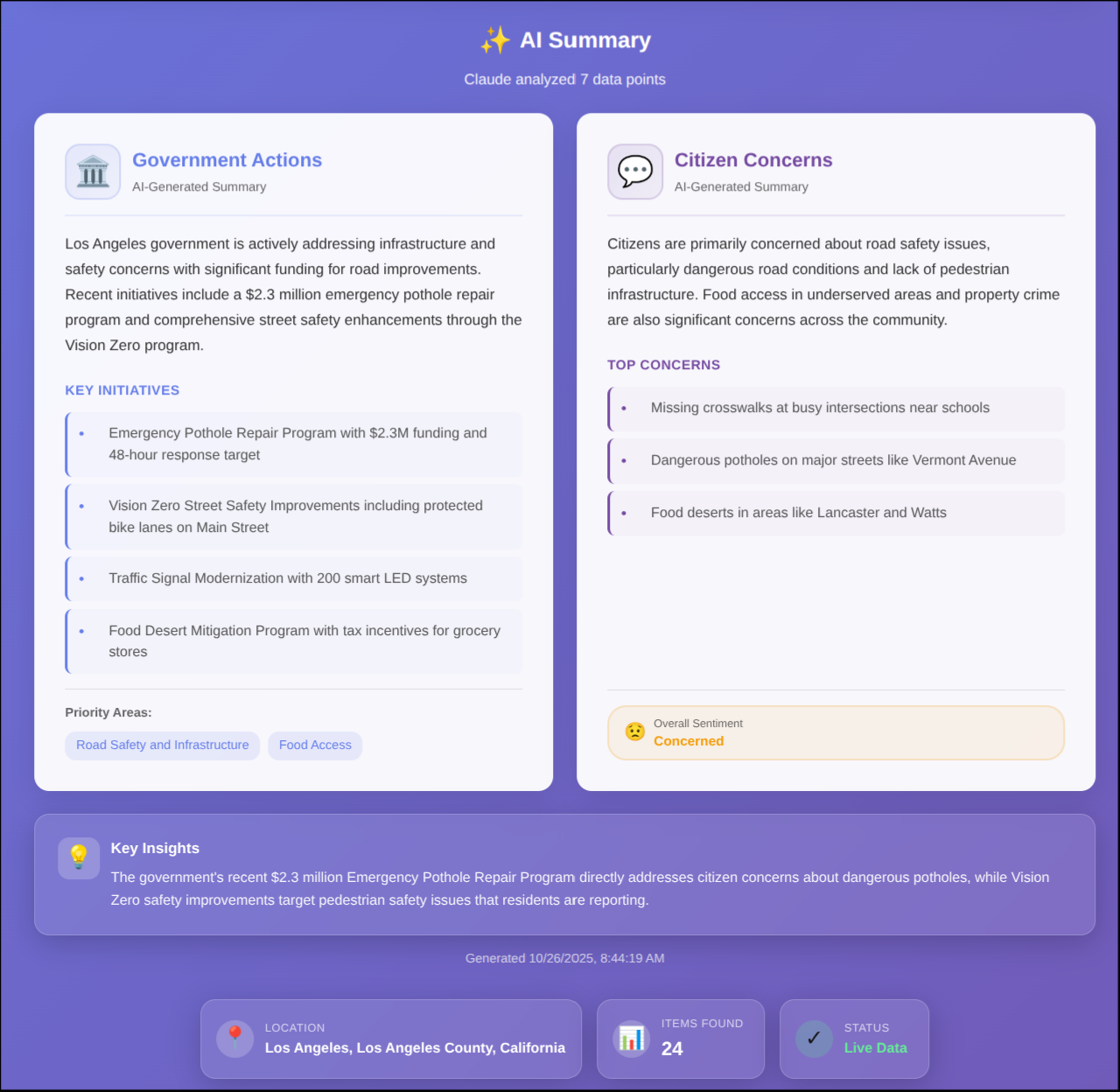
GlassGov empowers citizens to understand, discuss, and influence the policies that shape their lives. It connects open legislative data with AI-powered summaries and community feedback, allowing users to: Find bills related to categories they're affected by View AI-generated summaries written in plain language. See related bills, public opinions, and discussion threads. Have AI powered representative contacting (phone/email scripts) Upvote, comment, and connect with others who care about the same issues.
In short: GlassGov makes government transparent and participatory, bringing clarity to civic conversations.
How we built it
Data Layer: We used public state legislative APIs (e.g., Open States) to collect live bill data (titles, sponsors, summaries, and statuses) and Google Places API for location data. Models: Hugging Face (Named Entity Relation (NER)) Backend: Built with Flask + PostgreSQL for handling API calls, search queries, and data categorization. AI Layer: Integrated Claude for generating short, readable bill summaries and making call/email scripts. Frontend: Developed in Next.JS + Tailwind CSS, for a clean user experience Deployment: Hosted on Vercel, containerized by Docker
Challenges we ran into
The Open States API had complicated queries for bills making it difficult to troubleshoot. While there wasn't the best documentation we still figured it out. Piecing together a data structuring Python script and linking it to PostgreSQL to have the API data populate a table was an extreme hurdle since data was extremely unstructured.
Accomplishments that we're proud of
Seamlessly linked citizen issues -> legislative actions using AI. Created a framework scalable to any U.S. state. Built a personalized action generator (email + call scripts). Learning new tools on the spot Managing messy organized legislative data
What we learned
AI can be a bridge, not a barrier, between policy complexity and public understanding. There are endless innovative pathways that are opened with AI and tools available as well. We also learned how to utilize a NER model for classification/labelling.
What's next for GlassGov
Implementing a wider scale prototype available to the entire country or even internationally would be the next step. Alongside that, improving UI/UX to better deliver a more personalized website experience. Partnering with creators (like Hank Green) and nonprofits to turn awareness into measurable civic impact.
Built With
- anthropic
- claude-api
- docker
- flask
- google-places
- next.js
- postgresql
- psql
- pytorch
- react
- tailwind


Log in or sign up for Devpost to join the conversation.