-
-
Thumbnail
Inspiration
I care a lot about sustainability, but like many people, I still find it hard to make better choices when buying clothes. Even when I try to shop ethically, I often wonder: What is this made of? Where was it made? Is this brand sustainable, or just pretending to be?
It’s hard to find clear answers. The information is often hidden, confusing, or not there at all. That’s why I wanted to build something that makes it easy to check sustainability before you buy—so people can make better choices without all the guesswork. I hope this can help change shopping habits, one decision at a time.
What it does
Glasses is a simple application that helps people pause and reflect right before they buy something.
Here’s how it works:
- Users can paste a product URL, scan a clothing tag, or type the product name.
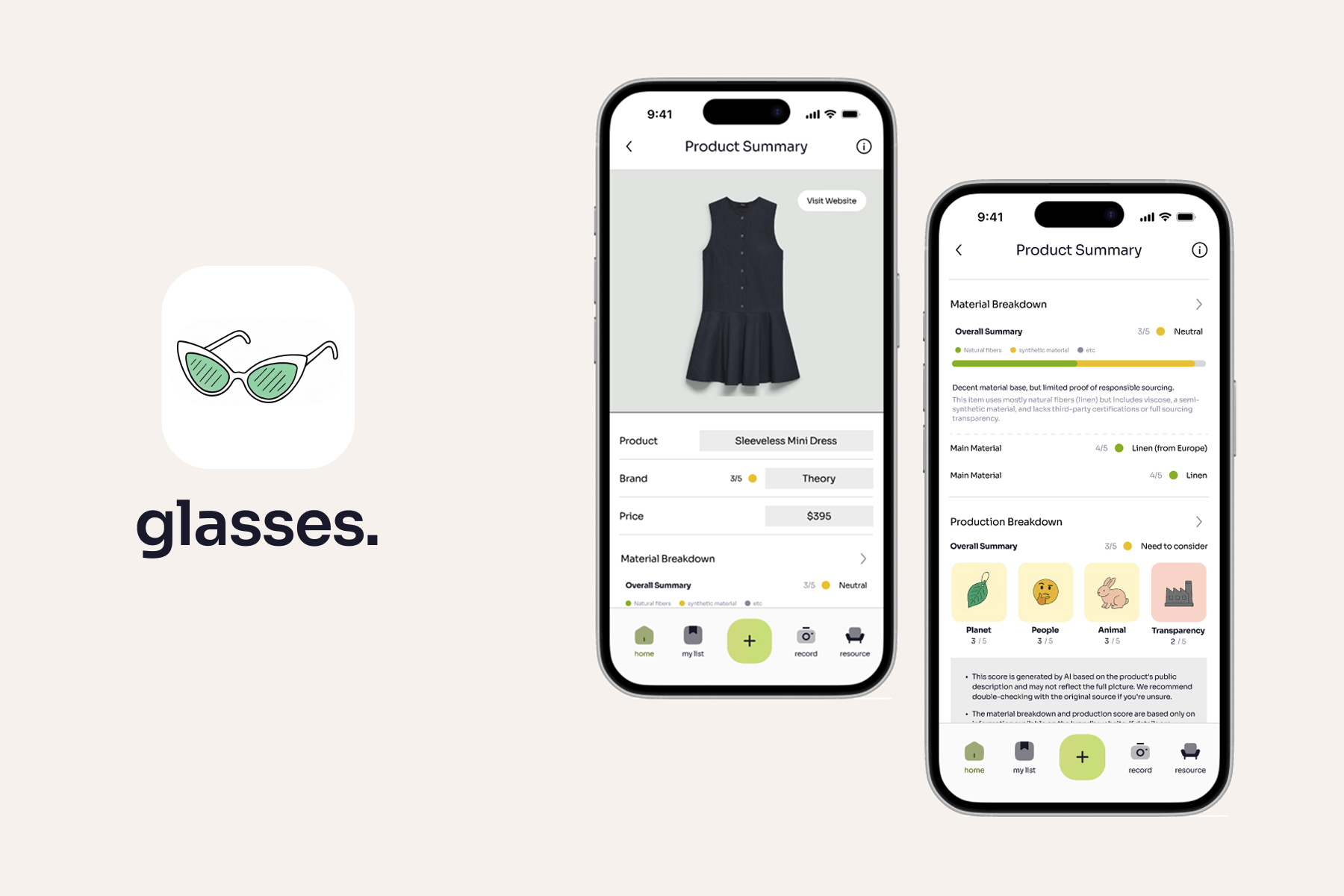
- Glasses uses AI to pull key sustainability info—like materials, production origin, and how transparent the brand is.
- The app shows a clarity score (out of 5) based on how clearly the product explains its sustainability.
- After that, users can choose to save the product, but they must first answer one question: _ Do you need it? Not sure? Or just want it?_ This screen is designed to create a moment of pause. It encourages users to think twice before buying, because the most sustainable choice is often buying less.
By logging these small decisions, Glasses helps users see patterns over time and build better habits. It doesn’t shame or judge—it simply supports thoughtful choices.
How we built it
I built a high-fidelity prototype using Figma to test the user flow, interface, and interactions.
To validate our concept, we conducted both quantitative and qualitative research: Secondary Research: I reviewed recent studies and trend reports on sustainable fashion. Across sources, three key factors stood out in what people care about when shopping sustainably
- Material: 67% of consumers say sustainable materials influence their buying decisions.
- Brand Transparency: 55% want brands to clearly explain what makes their products sustainable.
- Quality: While often overlooked, quality is a core concern, especially as fast fashion cuts corners on fabric and labor. Shoppers increasingly look for durability and long-term value.
The biggest barriers to sustainable shopping are convenience and lack of access to clear information.
- 52% consciously try to make sustainable choices, but convenience often wins.
- 88% of consumers are skeptical of brand sustainability claims.
- On average, people are willing to pay only about 9.7% more for sustainable goods.
Qualitative Research I analyzed:
- Comments from 6 YouTube videos (500K–1M views) about fast fashion, sustainability, and shopping habits
- Comments from 4 TikTok videos (500K–4.3M views) with similar themes These revealed frustration, confusion, guilt, and a lack of support in the moment of decision
Competitive Analysis I evaluated 1 partial competitor and 4 indirect competitors. I focused on whether these services support sustainable decision-making and deliver the information users are looking for. Most tools prioritize post-purchase reflection or static brand scoring. Only 1 partial competitor provides product-level insights solely focusing on ethical production.
I also reviewed App Store reviews, Reddit threads, and YouTube content to identify unmet user needs—like trust, accessibility, and decision-time clarity. These gaps directly shaped Glasses’ core value: making reflection easy, fast, and supportive before the purchase.
Design Process I used affinity mapping to synthesize all insights and define the core problem space and opportunity areas. Based on these findings, I built a user flow and journey map, then rapidly sketched low-fidelity ideas. From there, I moved into mid- and high-fidelity prototyping in Figma to bring the vision to life.
Challenges we ran into
Time Constraints I had more ideas I wanted to explore, like using wardrobe photos or OOTD images to build a personalized dataset and offer smarter insights during the decision-making process. But due to time limitations, I chose to focus on the core feature: helping users pause and reflect before making a purchase. Tone Design One of my biggest challenges was crafting the right tone. I didn’t want the app to feel judgmental or guilt-driven. It took careful thinking to design prompts that encourage self-reflection without making users feel pressured or shamed. Prioritizing Simplicity As a solo designer, I had to be very intentional about what to include. I resisted the urge to add too much data or too many features. My goal was to keep the experience simple, fast, and clear, especially because this reflection moment happens right before a purchase, when attention is limited.
Accomplishments that we're proud of
Reframing sustainability as a behavioral design problem, not just an educational one. Creating a clear, reflection-oriented experience in a compact and calming interface. Designing a decision support tool that emphasizes pause over pressure—a subtle but powerful way to shift habits.
What we learned
- People don’t want guilt — They want support -Prioritized high-impact features due to limited time
- Used existing research (video comments, stats) to validate the concept quickly
- Learned to balance research and design by staying focused on building a clear, usable prototype
What's next for Glasses
- Add user dashboards to show personal impact and reflection trends over time
- Revisit ideas like using wardrobe photos or OOTD images to create a personalized dataset and offer smarter, context-aware suggestions
Built With
- figma

Log in or sign up for Devpost to join the conversation.