-
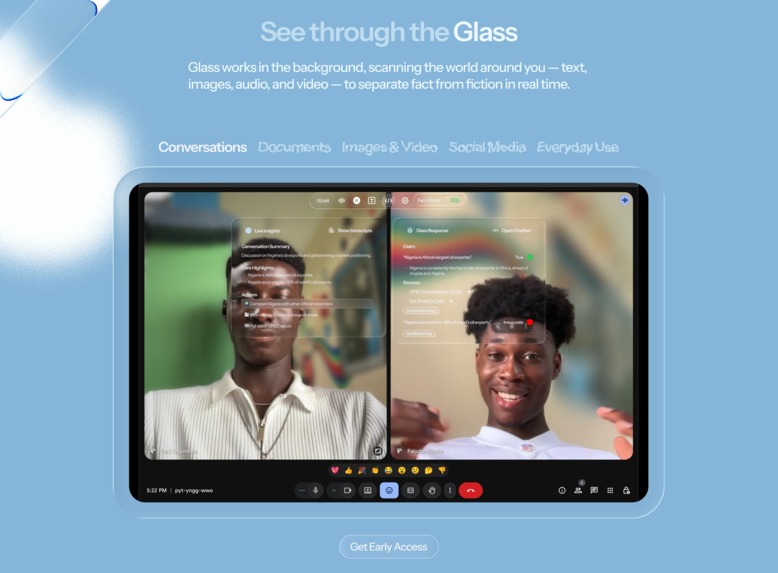
Glass in real time.
-
Inspiration
We live in an era where truth is harder than ever to pin down. From deepfakes and AI-generated voices to misleading headlines and viral rumors, it’s becoming nearly impossible for people to separate fact from fiction. The inspiration for Glass came from a simple frustration: “Why isn’t there a tool that tells me instantly if what I’m seeing or reading is real?” We wanted to build that lens of clarity — something that could restore trust in information and empower people everywhere.
What it does
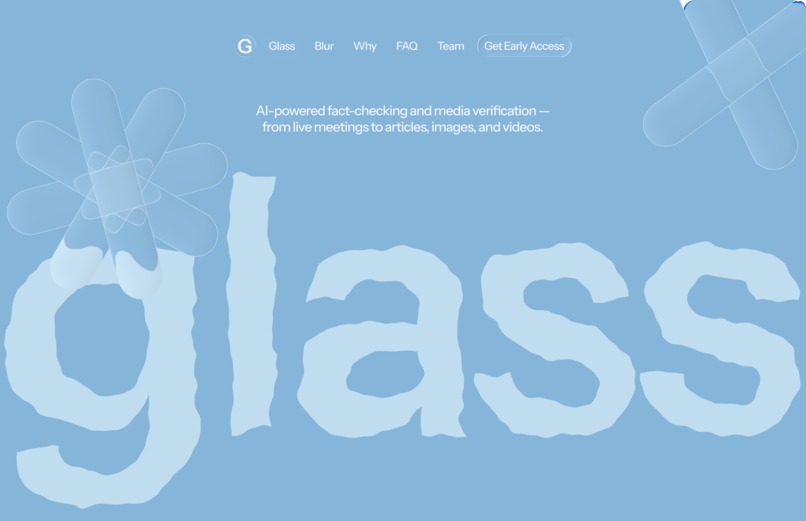
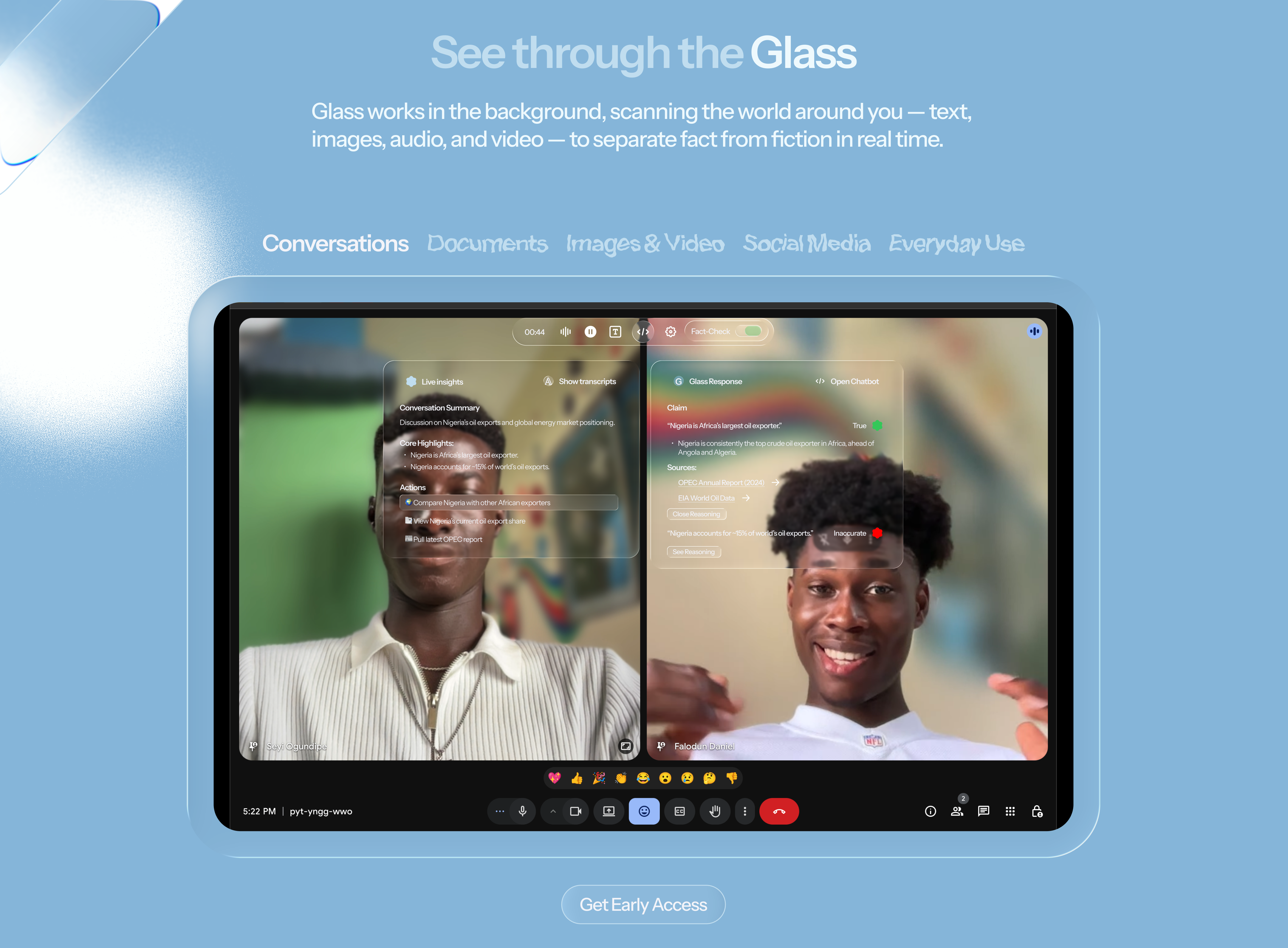
Glass is an AI-powered fact-checker that works across live meetings, articles, images, and videos. Whether you’re reading the news, scrolling through social media, or even on a Zoom call, Glass verifies claims in real-time, detects manipulation in media, and provides trustworthy context — all seamlessly in the background. It works in two modes: the Glass overlay, which sits directly on top of your content to highlight what’s true, false, or unverifiable in real time, and the Glass dashboard, where users can paste links, upload files, or review past verifications with deeper insights. Together, they make Glass feel like a personal truth filter for the internet. A transparent layer of protection.
How we built it
Challenges we ran into
The hardest challenge was trust. Building a tool that people actually believe requires not only technical accuracy but also thoughtful UX, knowing when to intervene, when to stay quiet, and how to present truth without bias. Another major challenge was making Glass work inside live meetings and calls, delivering verification quickly enough to keep up with real-time conversations. On top of that, we had to engineer fast responses for articles, images, and videos, all while scaling real-time checks without breaking user flow and we had less than three days to pull it off.
Accomplishments that we're proud of
We’re proud that Glass already works on live video calls, catching misinformation as it happens, a breakthrough we didn’t think we’d achieve so quickly. We’re also proud of the simple, elegant glass-like interface that makes Glass feel like a companion, not an interruption. Most of all, we’re proud that Glass could be a step toward rebuilding trust online.
What we learned
We learned that solving misinformation isn’t just about technology, it’s about psychology, trust, and usability. People don’t just want “the truth,” they want clarity delivered in a way that feels empowering rather than confrontational. Designing for that balance taught us how critical user experience is in tackling complex social problems.
What's next for Glass
We want to take Glass beyond individual users. Our next steps are scaling it into enterprise tools for journalists, educators, and researchers - people who need truth at speed. From there, Glass can grow into a global layer of trust on top of the internet, ensuring that no matter where you are or what you’re consuming. Clarity begins here.
Built With
- next.js
- openai
- react
- three.js
- typescript


Log in or sign up for Devpost to join the conversation.