Inspiration
Cyber threats evolve rapidly, making manual detection slow and inefficient. We aimed to build an AI-powered system that proactively hunts for anomalies in network logs, helping security teams respond faster and more accurately.
What it does
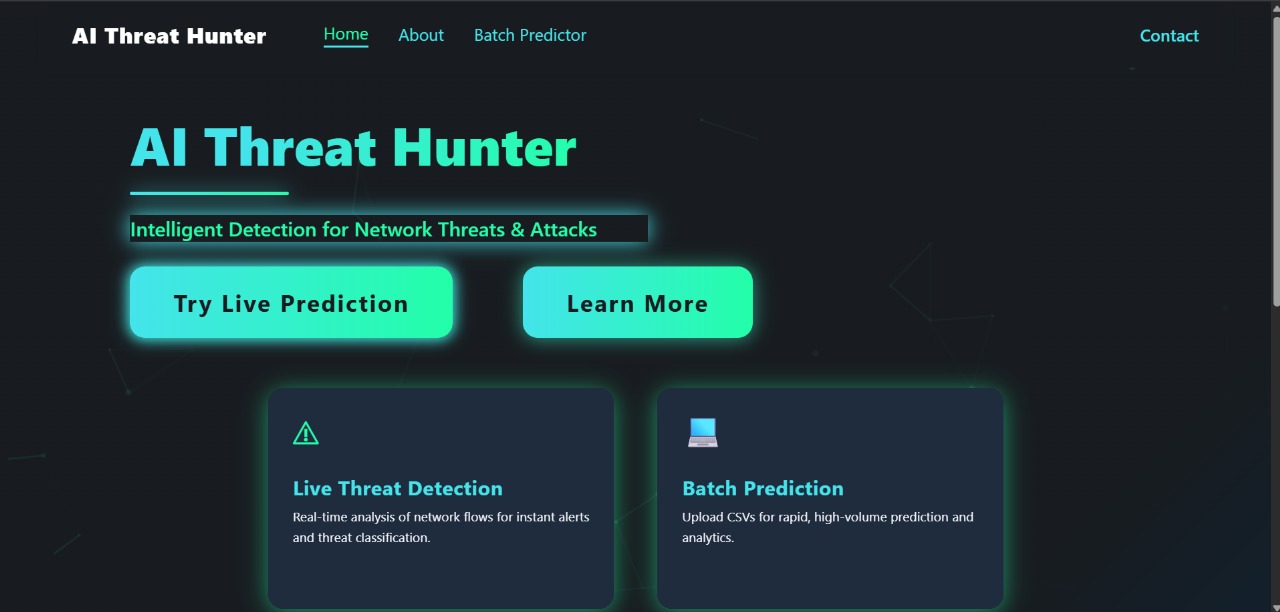
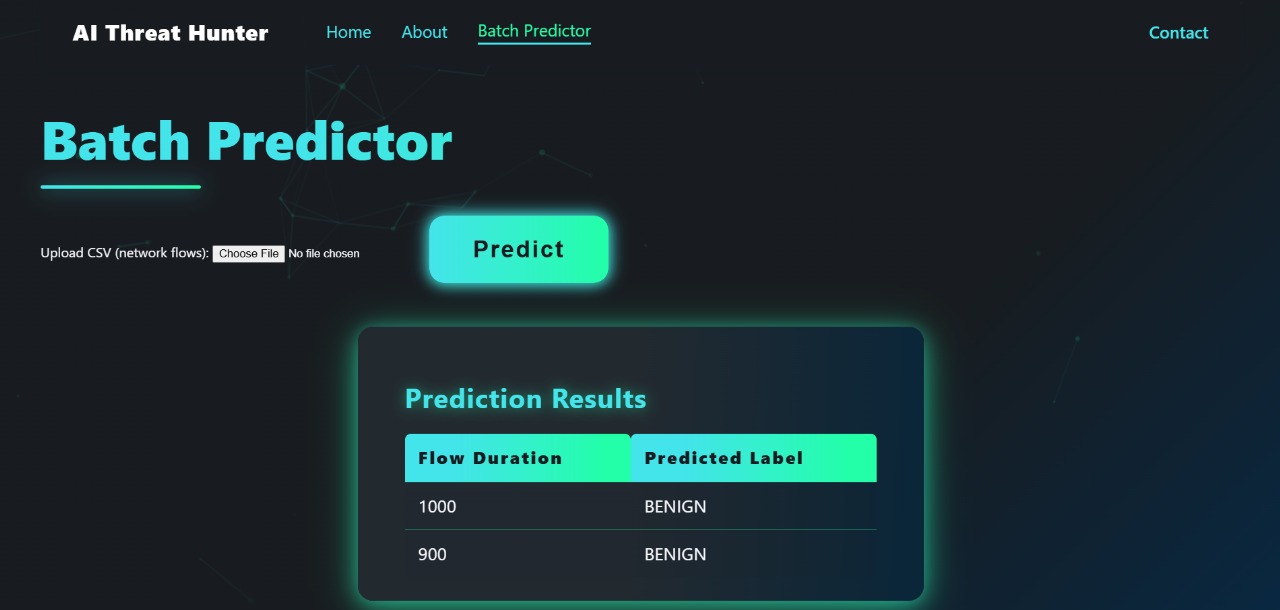
The AI Threat Hunter ingests real-time network log data via Kafka, analyzes it using machine learning models to detect unusual patterns, and alerts users about potential threats with a clear visualization dashboard.
How we built it
We combined Apache Kafka for streaming log ingestion, an Isolation Forest model in Python for anomaly detection, and a FastAPI backend serving real-time analysis. Grafana dashboards visualize detected threats dynamically.
Challenges we ran into
Handling real-time data streams and ensuring low-latency detection required careful integration. Tuning the anomaly detection model to minimize false alarms while catching true threats was also complex.
Accomplishments that we're proud of
Delivered an end-to-end, scalable threat hunting pipeline with adaptive AI models and real-time visualization. The system can detect zero-day attacks by learning behavioral baselines beyond signature methods.
What we learned
Integration of streaming data with AI models is powerful but requires robust architecture. Balancing detection sensitivity and false positive rates is critical for practical cybersecurity applications.
What's next for Untitled
Improve model accuracy with deep learning techniques, add automated threat response actions, and enhance UI/UX for security analysts. Explore multi-source log correlation for comprehensive threat intelligence.
Built With
- css
- csv
- fastapi
- git
- html5
- jupyter
- python
- scikit-learn


Log in or sign up for Devpost to join the conversation.