-
-

-
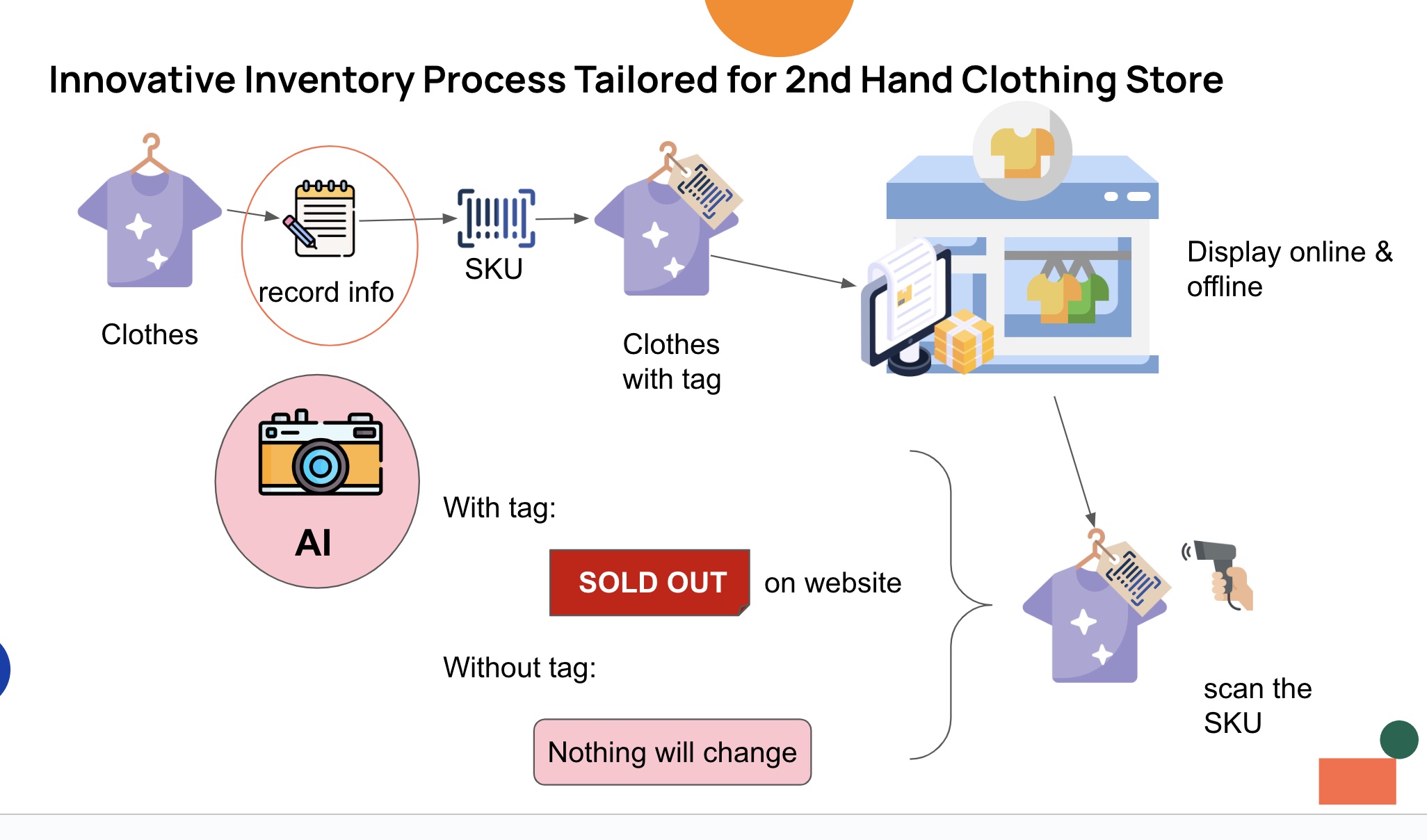
Innovative Inventory Process Graph
-
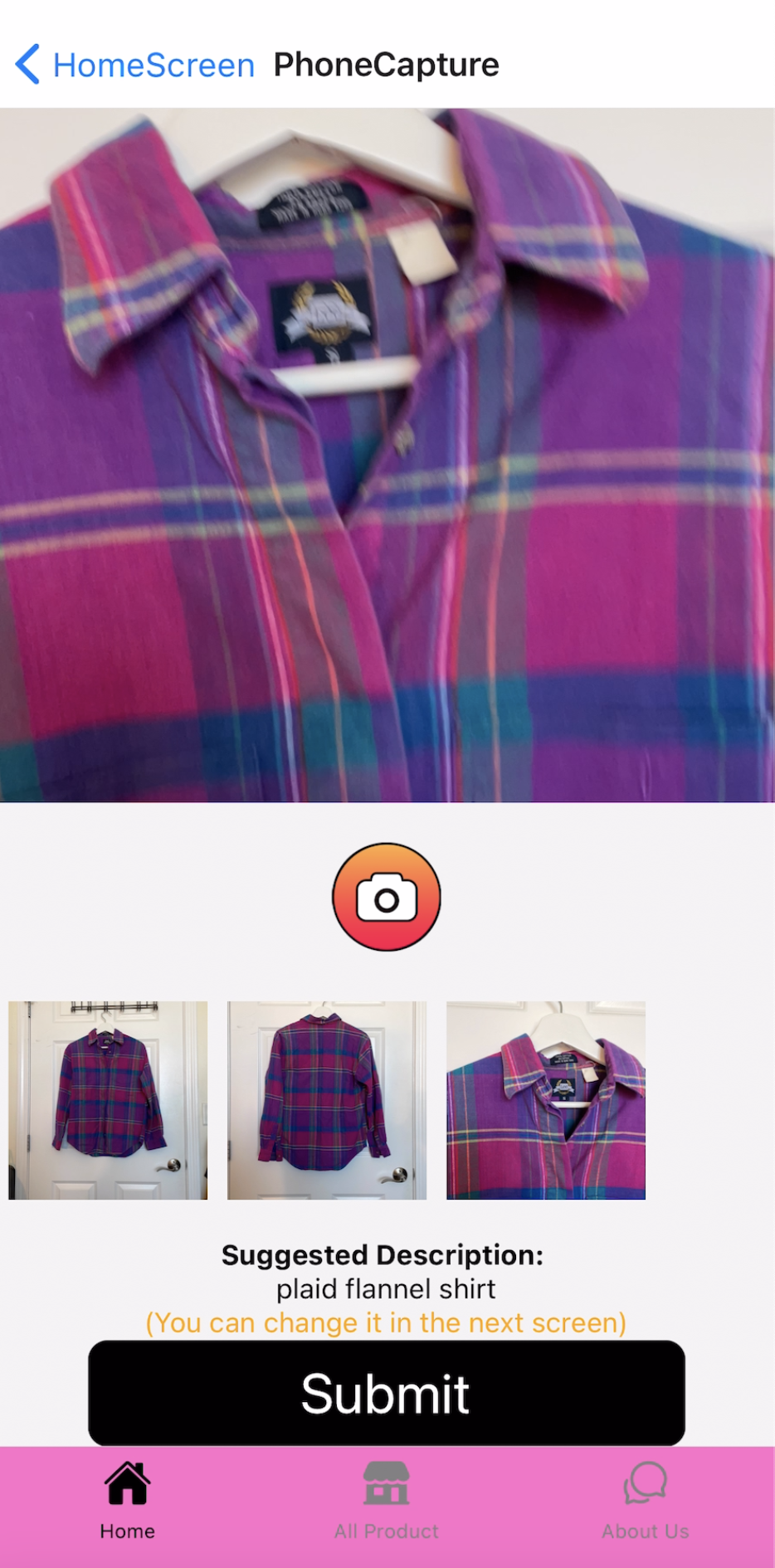
AI Inventory Tool Graph
-

Grants, awards and talks
-
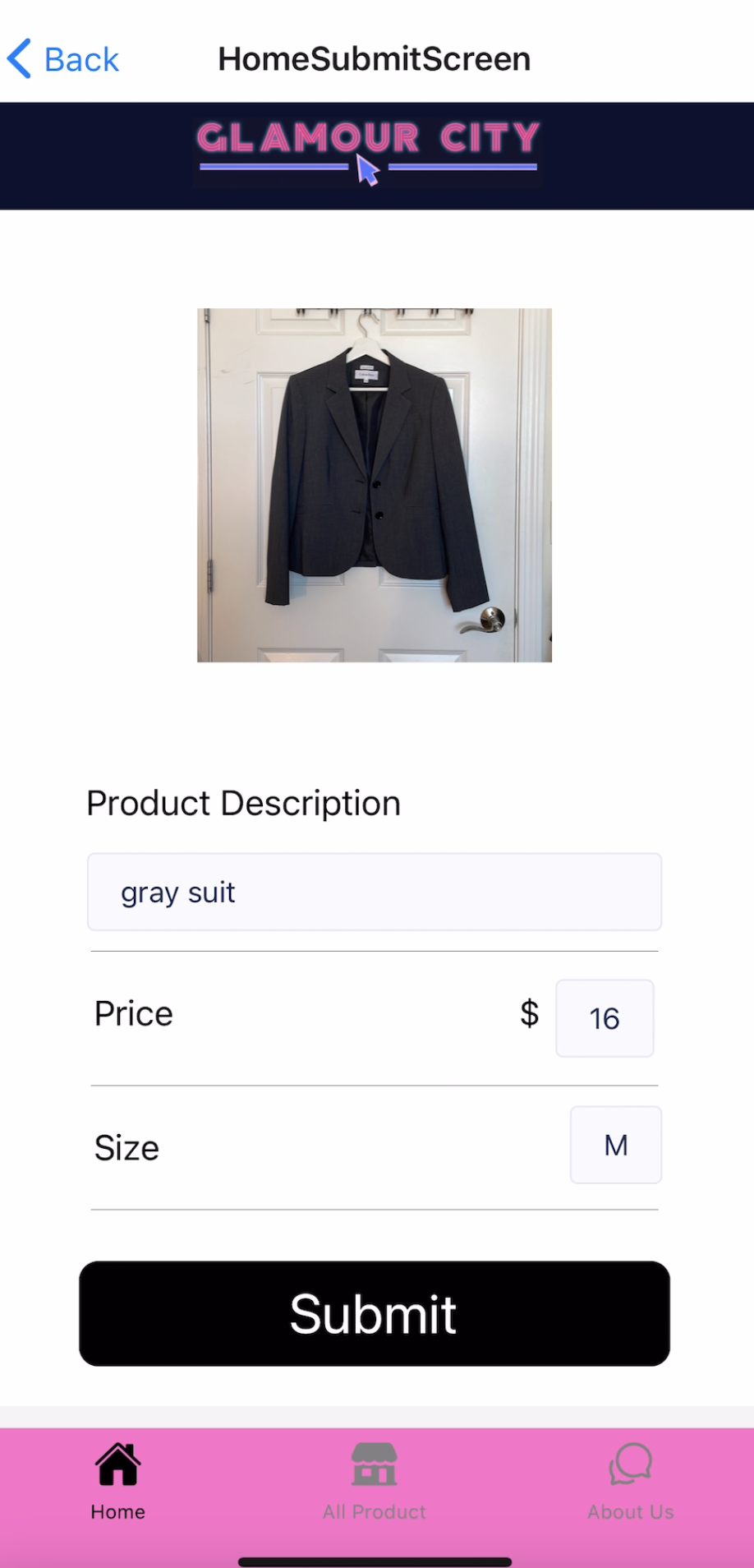
Screenshot #1
-
-
-
-
-







Inspiration
The fashion industry is the 2nd largest pollution contributor next to the oil industry. Responsible for 20% of wastewater, 10% of global carbon emissions, and a shocking 80% of textiles ending up in landfills, the ocean, or being incinerated, the industry's environmental footprint is significant. Among the array of sustainable fashion alternatives, buying and selling secondhand clothes stands out as the most straightforward tactic to reduce waste and curb the demand for new, low-quality clothing. Yet, the resale industry is primarily composed of stores that are stuck with outdated technology, hampering their capacity to expand and effectively transition into the online market.
An industry report indicates that the younger demographics are driving nearly 70% of industry revenue, with a significant surge in demand for eco-friendly and vintage clothes over the past half-decade. Data from 2021 suggests that 53% of U.S. consumers shopped secondhand, and 41% preferred secondhand stores as their go-to place for clothes shopping. Further, we conducted a study, analyzing 1200 organic Twitter posts about secondhand shopping experiences, discovered that most of the secondhand clothing stores (thrift stores) were concentrated in urban areas, leaving rural populations with limited access to quality secondhand clothing. Thus, online shopping emerges as one of the few viable options when it comes to secondhand clothing shopping.
Problems we want to address
Even though local thrift stores have established offline businesses for decades, most have no or low online presence due to hesitancy from limited experience in online marketing and e-commerce operations. The current market offers no simple, affordable solutions for local stores to establish a professional online presence, upload a large amount of their physical inventory, and manage it effectively.
To address these challenges, we provide an integrated platform catering to secondhand store owners. This comprehensive solution includes website and mobile app builders, an AI inventory system, an analytical backend, POS systems, and logistical assistance.
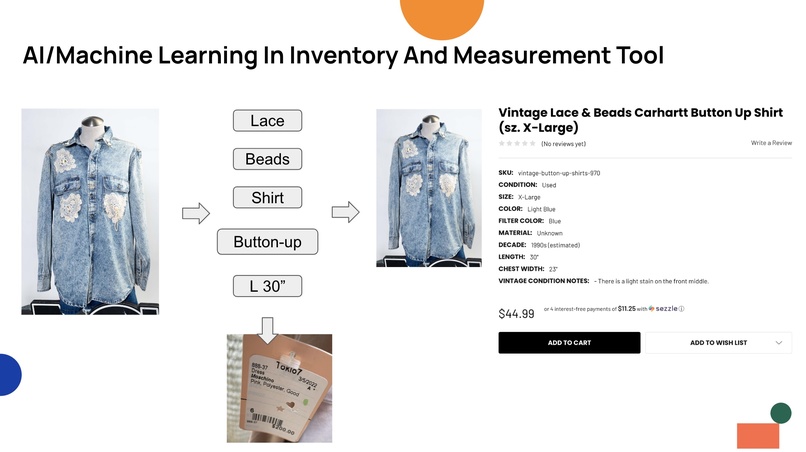
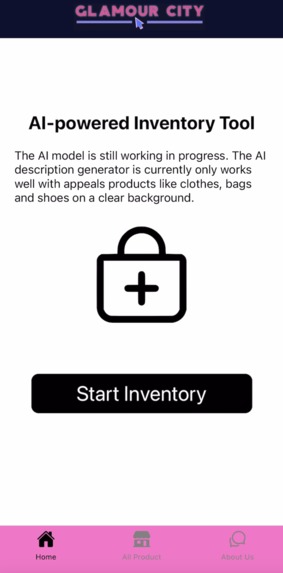
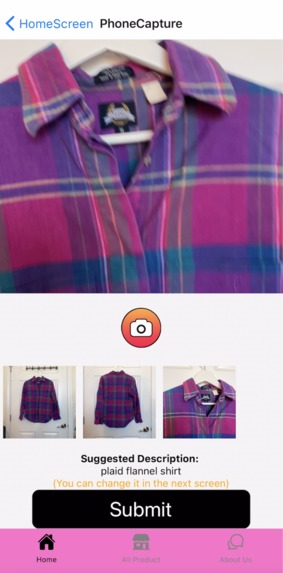
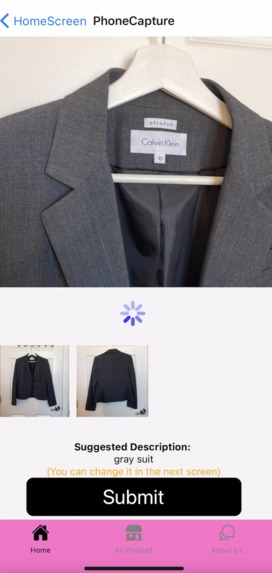
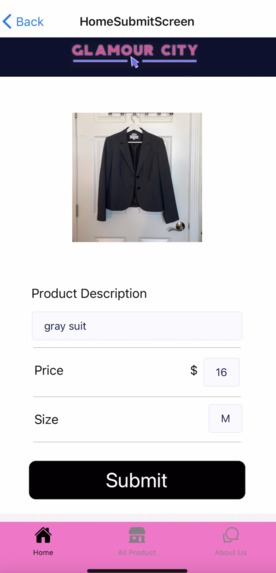
For this Hackathon, we are working on building our AI-powered inventory software (mobile app) that can convert clothing photos into distinct features (like color, category, and occasion), measurements (which will be developed after the hackathon) and automatically generate product listings, eliminating the need for manual description writing.
What it does
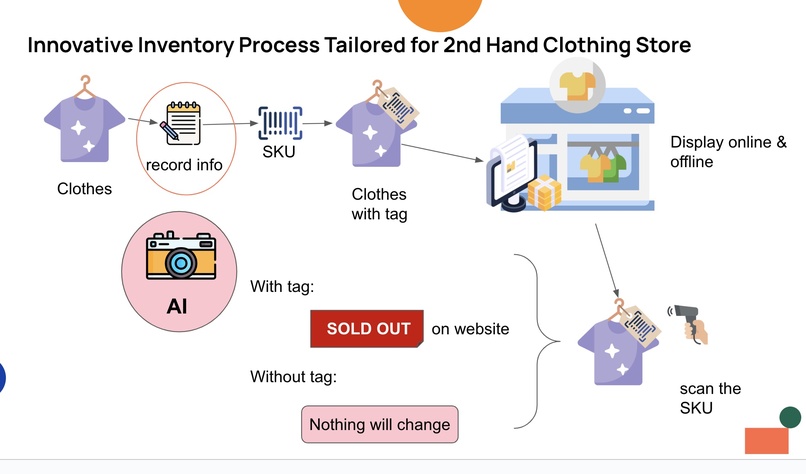
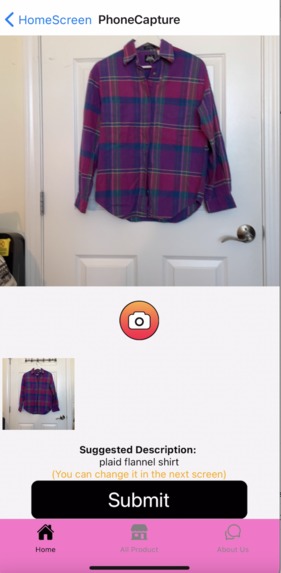
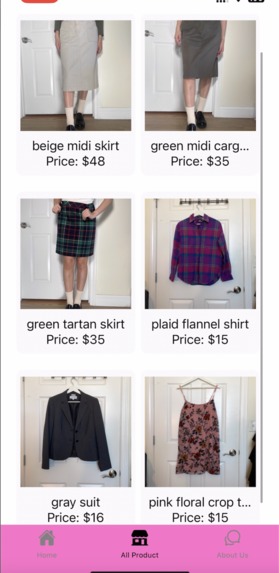
The innovative inventory system we designed requires just less than 30 seconds to capture a product image, after which it generates a description, generates and prints (if connected to a printer) an SKU, and uploads the information to a central database. Most importantly, this system integrates well with their offline businesses and ensures that store owners don't need to perform redundant tasks when establishing their online store, as the necessary product information is ready during inventory management.
How we built it
The inventory IOS app is built through React Native. We host our AI model, MySQL database, and PHP backends on Google Cloud.
Challenges we ran into
When developing the continually capture photos feature, we ran into many bugs when integrating react-native-vision-camera into our react native app. Thankfully, the ChatGPT helped us to get those bugs fixed finally!
Accomplishments that we're proud of
We are proud that we are able to successfully integrate the generative AI model into our own app that could potentially solve real-life sustainable fashion problems!
What's next for Glamour City Technologies
1) We will keep testing and adding new features to the current mobile inventory app. The features will include auto measurement detection for each product, options to add/delete/edit more features to each product etc.
2)[Go-to-market #1]We will also develop and offer external plugins for platforms such as Shopify, Etsy, Depop, and eBay, enabling store owners to use our inventory software as their stepping stone to e-commerce and our inventory management console as their comprehensive database for all online sales.
3) [Go-to-market #2] Since we will have access to all the online inventories of the stores (once we are able to onboard more stores), we aim to develop our own user-friendly marketplace and mobile platform for secondhand clothing buyers. This will enable them to enjoy the experience of visiting their favorite local thrift store online, free from geographical constraints. Furthermore, our platform will host a unique cultural community where users can discover inspiring ideas and share their enthusiasm for sustainable fashion.
Pitch Deck Link
Built With
- ai
- generative-ai
- google-cloud
- mysql
- php
- react-native


Log in or sign up for Devpost to join the conversation.