Inspiration
The 20th century saw an explosion in the development of digital technology that has revolutionized modern life. From the invention of the computer to the internet, and smartphones, digital life has become an integral part of daily existence. The way we work, communicate, entertain, and access information has been transformed, shaping the way we live and interact with the world around us.
However, there are barriers to digital life for disabled people.
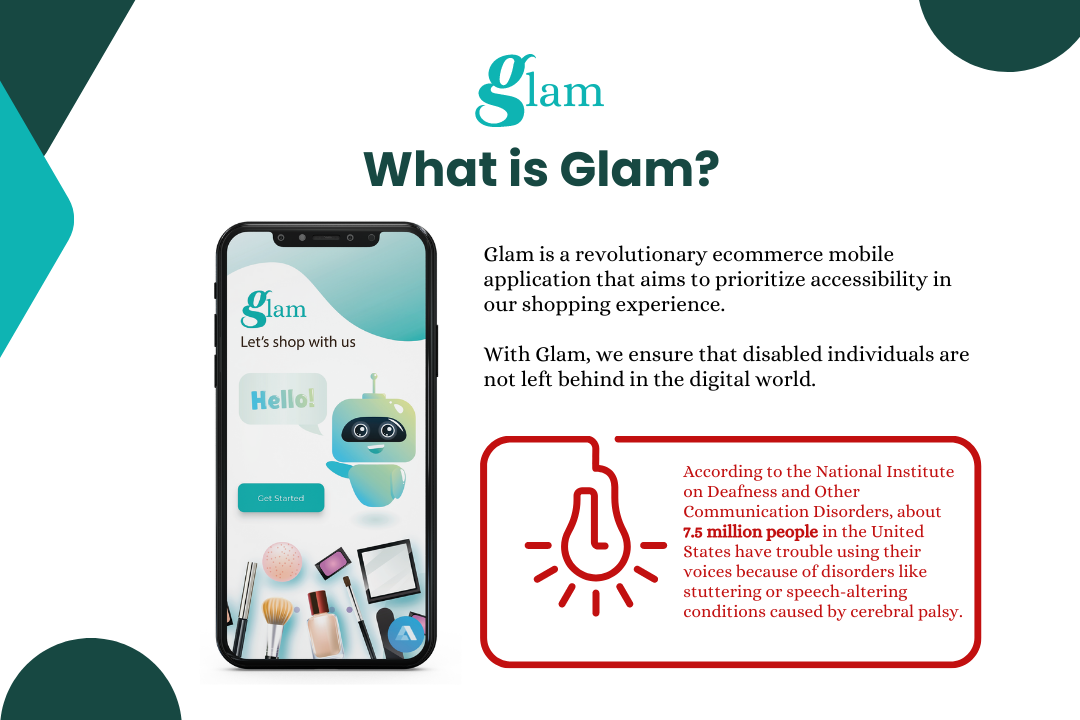
According to the National Institute on Deafness and Other Communication Disorders, about 7.5 million people in the United States have trouble using their voices because of disorders like stuttering or speech-altering conditions caused by cerebral palsy.
Voice assistants could radically improve our lives. Their inaccessibility could even be dangerous for those with mobile disabilities, who could only rely on voice assistants.
What it does
Introducing to you, Glam. Glam is a revolutionary ecommerce mobile application that aims to prioritize accessibility in our shopping experience. With Glam, we ensure that disabled individuals are not left behind in the digital world.
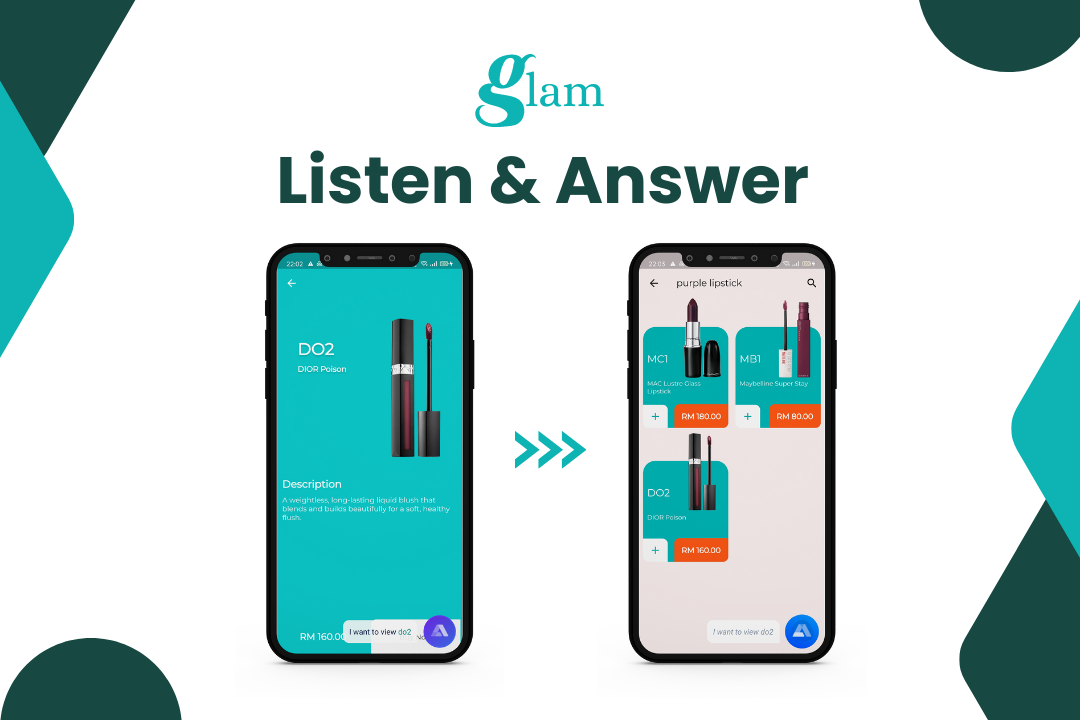
Glam listen and answer to users. With the aid of audio recognition and artificial intelligence, Glam can help users navigate from choosing a product to check out with just the voice.
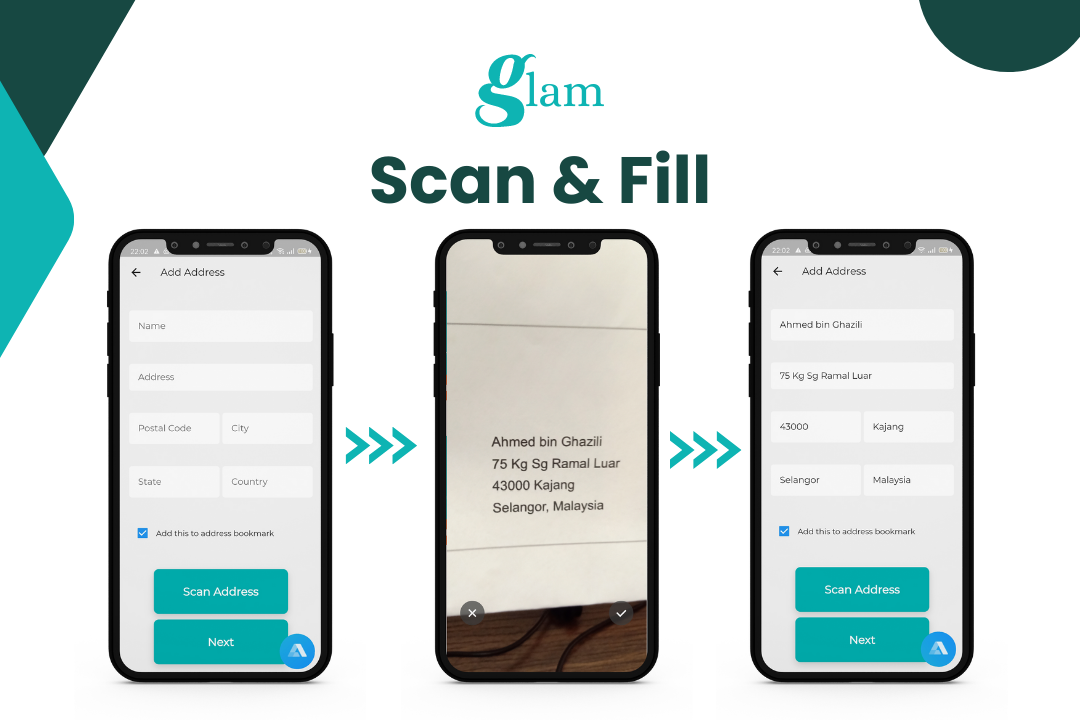
Glam scan and fill users' details. Entering address and payment card details can be a hassle. With the aid of optical character recognition, Glam can detect the wording and automatically fill in the details.
With us, you will have a convenient, hassle-free, and enjoyable shopping experience.
Value Proposition
Towards vendors
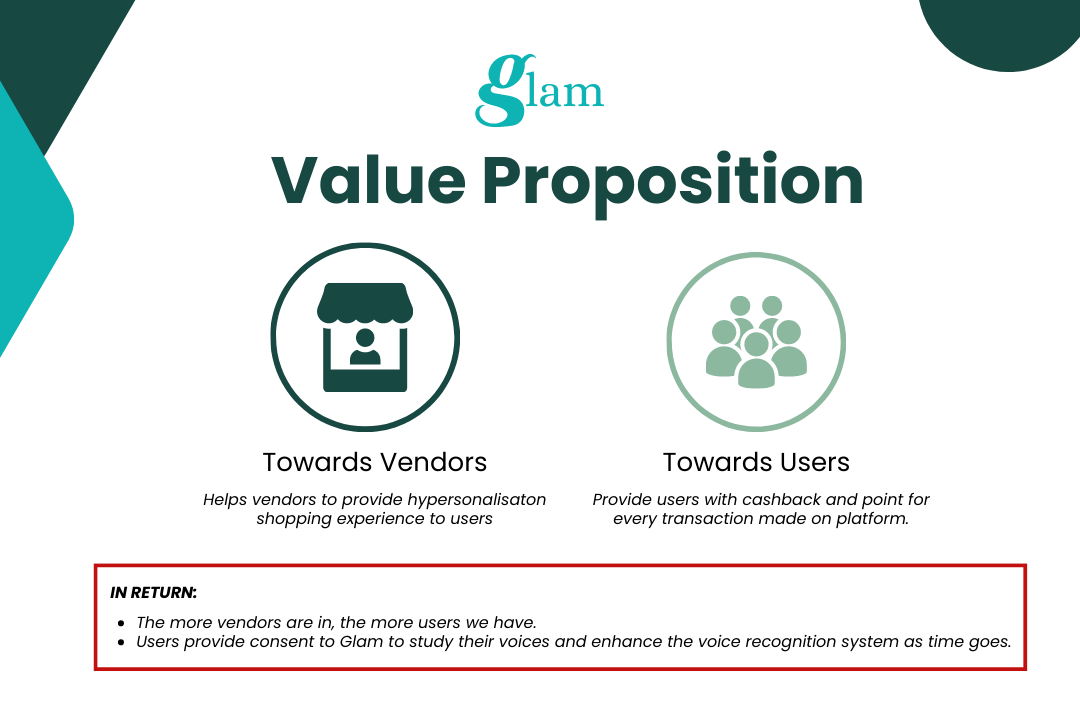
- Helps vendors to provide hypersonalisation shopping experience to users
- Glam will store session of recent shopping habits of users
- When users enter to a vendors' store, the first dashboard will be displayed based on the session data.
- Scenario :
- Let's say, user has been searching for purple lipsticks the past 3 days.
- When user enter store ABC from Glam, the first home screen will be full of red lipsticks.
- This will help the vendor to increase retention rate.
Towards users
- Provide users with cashback and point for every transaction made on platform.
- User's consent for us to store their voice for further learning is needed.
In return
- The more vendors are in, the more users we have.
- Users provide consent to Glam to study their voices and enhance the voice recognition system as time goes.
Overall, with an:
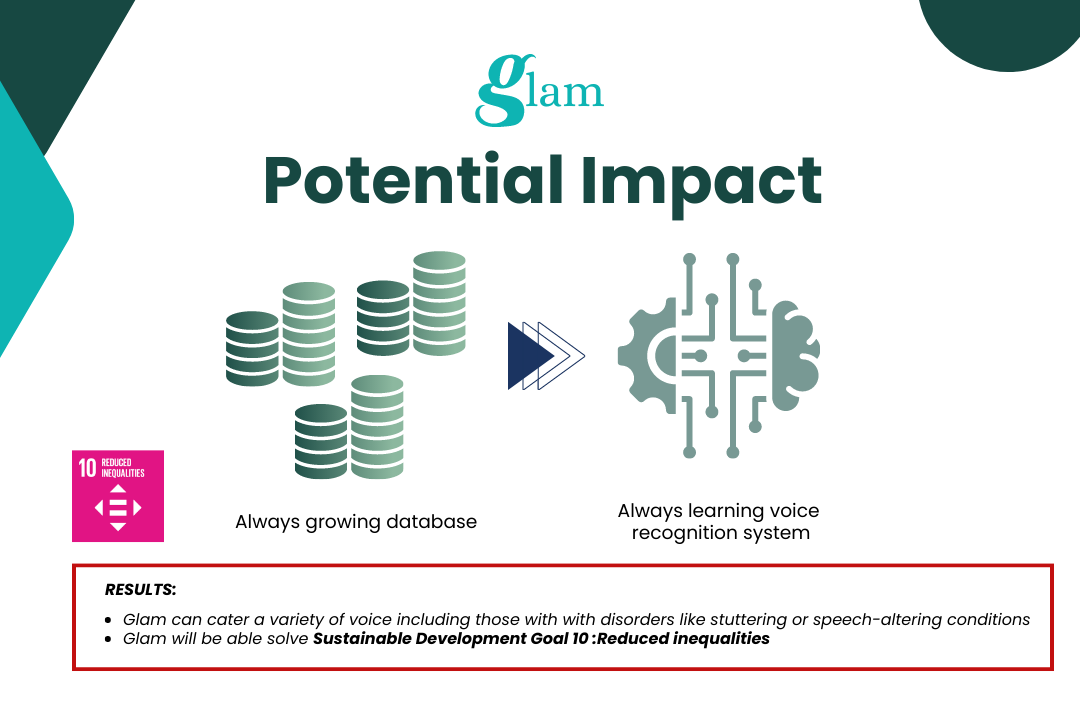
- Always growing database
- Always learning voice recognition system to cater a variety of voice including those with disorders like stuttering or speech-altering conditions caused by cerebral palsy.
Glam aims to solve Sustainable Development Goal 10 :Reduced inequalities
Voice assistants could radically improve our lives. With an increased accessibility, disabled can fully rely on voice assistants for help.
How we built it
- Flutter
- Dart
- Voice recognition
- Optical character recognition
- Machine learning
Challenges we ran into
- Not having a clear understanding of the research objectives. We were unclear of which scope of disabilities and areas we hope to cover. Making it difficult to collect and analyze data effectively in the early stage.
- We had issues with implementation as voice recognition and optical character recognition is something new to all of us.
Accomplishments that we're proud of
Being able to come out with a revolutionary ecommerce mobile application with the highest accessibility possible for everybody
What we learned
In the early stage, we did research on visual impairment group. Only to find out, there are barriers to digital life for disabled people. We were not aware of digital barrier. We learnt that there are still a lot to improve to make sure no one get left behind in the revolutionary digitalized world.
What's next for Glam
- Detect multilingual feature to cater to whole wide world nationality
- Develop a virtual beauty personal shopper that recommends user products based on their facial recognition
Built With
- dart
- flutter
- machine-learning
- ocr
- voice-recognition


Log in or sign up for Devpost to join the conversation.