-
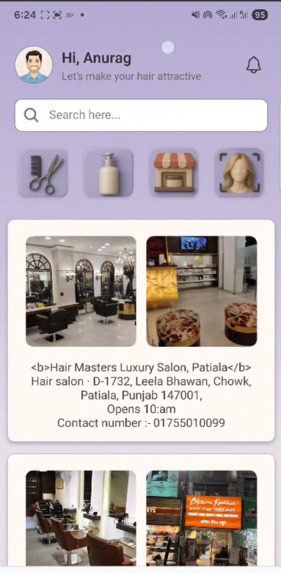
Home Screen of app
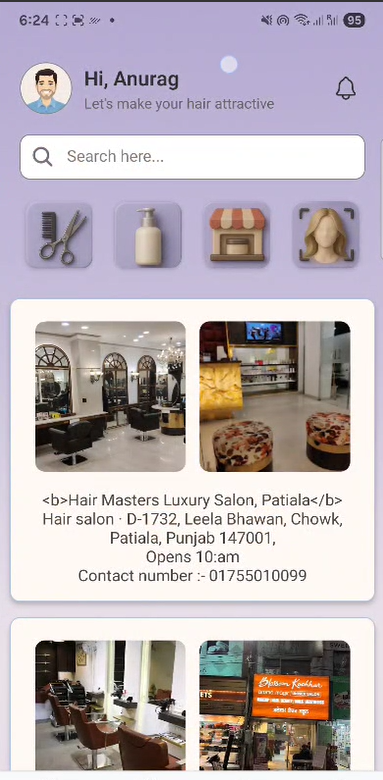
Inspiration
The idea for Glancia ai came from a simple but common problem we observed around us—most people are unsure whether a hairstyle, beard style, or grooming decision will actually suit their face until it’s too late. This leads to dissatisfaction, wasted money, and low confidence. Seeing friends change salons repeatedly, regret haircuts, and blindly follow trends inspired us to explore whether technology could remove guesswork from personal grooming.
What it does
Glancia AI is an AI-powered grooming assistant that analyzes a user’s facial features from a photo to identify face shape and key attributes, then recommends suitable hairstyles, beard styles, and grooming looks. It combines facial analysis with an assistant to explain why a look fits, helping users make confident decisions before cutting, buying, or booking.
How we built it
We built Glancia AI using a mobile-first approach with a structured UI flow. Facial analysis and recommendation logic were implemented using third-party AI APIs to accelerate development at the prototype stage. An AI assistant powered by language models was added to provide explanations and guidance. The app architecture was designed modularly so features like virtual try-ons, salon booking, and product integration can be added in later phases.
Challenges we ran into
The biggest challenge was execution under constraints—balancing academics, limited funds, and dependency on third-party APIs. Outsourcing parts of development slowed progress and caused delays. Integrating virtual try-ons proved technically complex, especially mapping recommended styles accurately to facial landmarks. Additionally, navigating grants, investor expectations, and extensive compliance paperwork as student founders added significant pressure.
Accomplishments that we're proud of
Despite constraints, we successfully built a functional prototype with face analysis, personalized recommendations, and an AI assistant, along with a complete UI flow. We refined our problem–solution clarity, validated that the problem is real, and learned how to scope features realistically. Most importantly, we persisted through setbacks without abandoning the idea.
What we learned
We learned that early-stage startups should prioritize proving one core value over building everything at once. Owning execution and scoping tightly matters more than perfection. We also learned the importance of honesty in positioning, managing sunk costs, and protecting mental health while building alongside academic and personal commitments.
What's next for Glancia Ai
The next step is to shrink the product to a focused V1, soft-launch it to a small set of users, gather real feedback, and validate demand. Post-graduation, Glam AI will continue as a lean side project alongside professional work, with future expansion driven strictly by real user pull rather than assumptions.
Built With
- deepar
- openai
- react-native


