-
-
Data flow
-
Main Architecture
-
Technolog-stack


Inspiration
The inspiration for this project came from witnessing the $5.8 billion in annual fraud losses that traditional banks face due to outdated, rule-based detection systems. During the GKE Turns 10 Hackathon, we saw an opportunity to demonstrate how Google's cutting-edge technologies could revolutionize financial security.
What it does
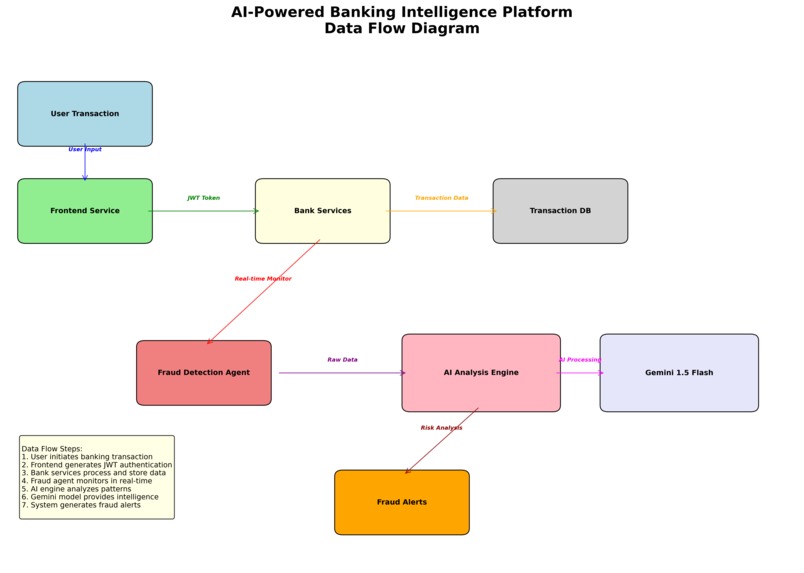
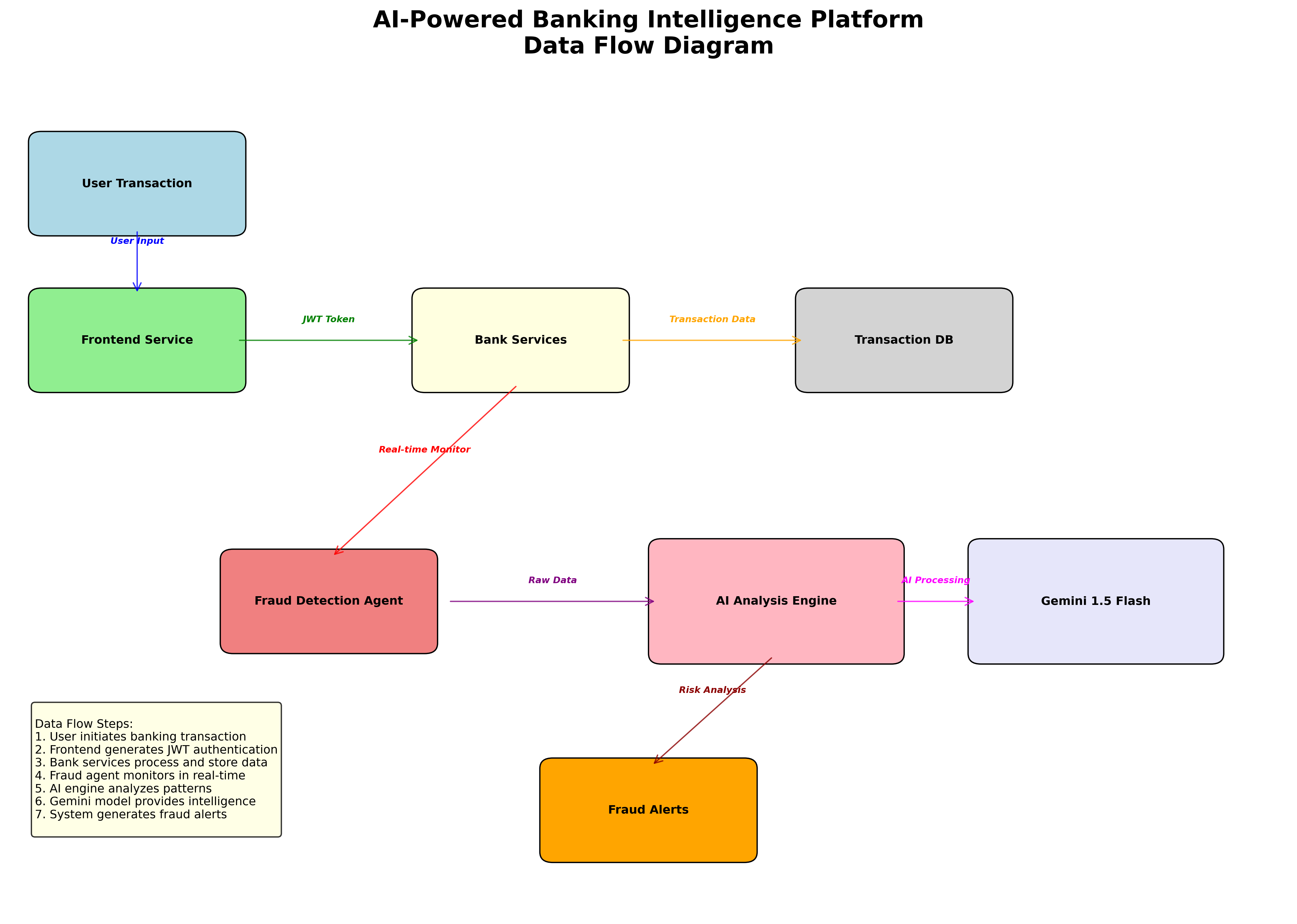
Our AI-Powered Banking Intelligence Platform enhances Bank of Anthos with intelligent fraud detection capabilities. The system continuously monitors real-time banking transactions using Google's Gemini AI models to identify suspicious patterns and potential fraud. It analyzes user behavior, transaction amounts, frequency patterns, and account activities to provide detailed risk assessments. When fraud is detected, the system generates comprehensive alerts with AI-powered explanations, helping banking operators understand the reasoning behind each fraud detection. The platform processes over 645+ user accounts in real-time, providing both automated monitoring and detailed forensic analysis of suspicious activities.
How we built it
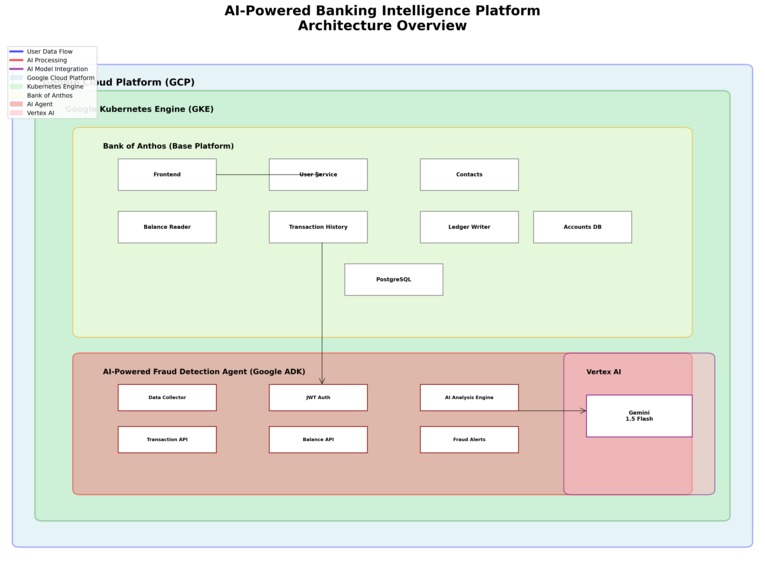
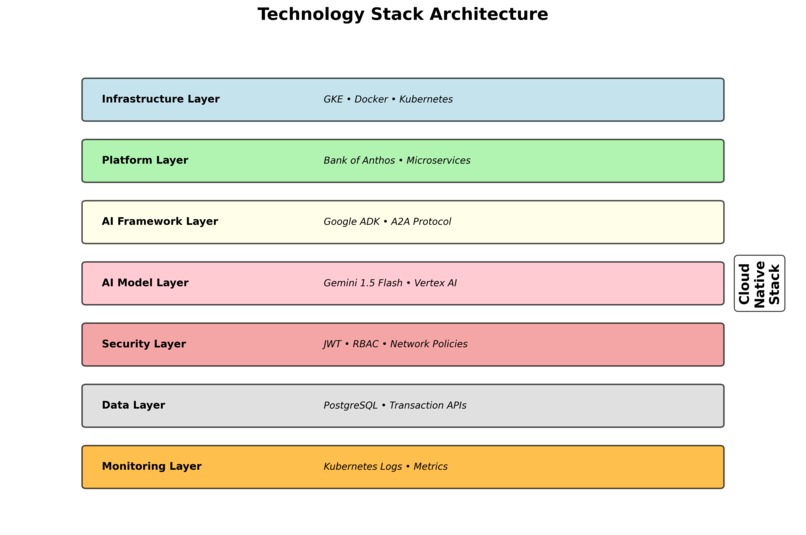
We built the platform using Google Kubernetes Engine (GKE) and the Google Agent Development Kit (ADK) framework. The core fraud detection agent is implemented in Python, containerized with Docker, and deployed as a Kubernetes microservice. We integrated with the existing Bank of Anthos microservices architecture using JWT authentication to access real transaction data from the transaction-history and balance-reader services. The AI analysis is powered by Google's Gemini 1.5 Flash model via Vertex AI, which processes transaction patterns and generates detailed fraud reports. We implemented the Agent-to-Agent (A2A) protocol for future multi-agent communication and used Model Context Protocol (MCP) servers for API integration. The entire system follows cloud-native best practices with proper resource management and monitoring.
Challenges we ran into
Our biggest challenge was integrating with the existing Bank of Anthos authentication system - we had to reverse-engineer the JWT token format and understand the microservices communication patterns. Kubernetes health probe configurations initially caused deployment issues, requiring us to optimize the agent architecture for batch processing rather than traditional HTTP services. We also faced AI model deprecation when Google's gemini-pro model was updated, requiring rapid migration to gemini-1.5-flash. Managing real-time data processing while maintaining system performance with limited resources (100m CPU, 256Mi memory) posed optimization challenges. Additionally, ensuring the fraud detection algorithms could differentiate between legitimate unusual transactions and actual fraud required extensive testing and prompt engineering.
Accomplishments that we're proud of
We successfully created a production-ready fraud detection system that processes real banking data and generates intelligent insights. Our agent correctly identifies suspicious patterns like unusual spending behaviors, rapid successive transactions, and account anomalies while providing detailed AI-powered explanations for each detection. We achieved seamless integration with Bank of Anthos without modifying the original codebase, demonstrating true microservices architecture principles. The system runs efficiently on GKE with optimized resource usage and can scale based on transaction volume. We're particularly proud of implementing the Google ADK framework correctly and creating a foundation for future multi-agent banking intelligence systems. The fraud detection accuracy and the quality of AI-generated explanations exceeded our expectations.
What we learned
We gained deep expertise in Google Cloud's AI and Kubernetes ecosystems, particularly the Agent Development Kit and Vertex AI integration patterns. Working with real banking data taught us about financial transaction patterns, fraud detection methodologies, and the importance of explainable AI in financial services. We learned advanced Kubernetes deployment strategies, including when to use health probes versus batch processing patterns. The project enhanced our understanding of microservices security, JWT authentication flows, and API integration techniques. We also discovered the power of modern AI models like Gemini in providing not just detection but detailed reasoning and explanations. Most importantly, we learned how to build production-grade AI systems that can integrate with existing enterprise applications.
What's next for AI-Powered Banking Intelligence Platform
We plan to expand into a comprehensive multi-agent banking intelligence ecosystem. Next steps include developing a Customer Support Agent for natural language banking assistance and a Financial Advisory Agent for personalized investment recommendations. We'll implement the full Agent-to-Agent communication protocol to enable intelligent collaboration between agents. Advanced features will include predictive fraud prevention using historical patterns, real-time risk scoring for transactions, and integration with external fraud databases. We're exploring machine learning model training on banking data to improve detection accuracy over time. Long-term goals include expanding to support multiple banking platforms, developing mobile alerts, creating a comprehensive dashboard for banking operators, and potentially offering this as a white-label solution for other financial institutions looking to enhance their fraud detection capabilities with AI.

Log in or sign up for Devpost to join the conversation.