-
-
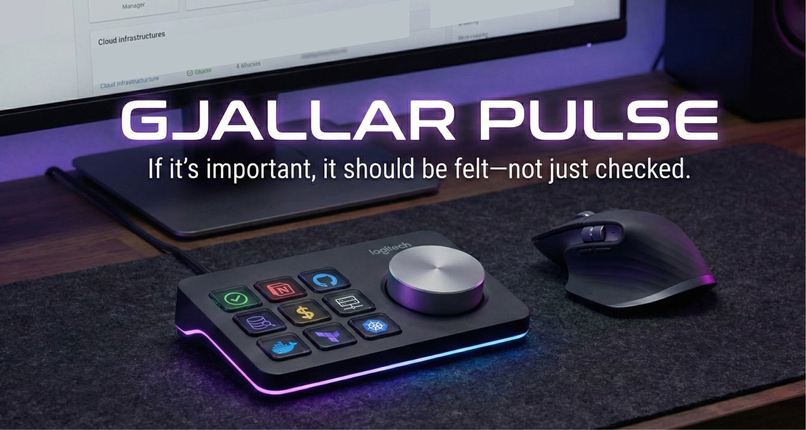
Gjallar Pulse concept photo
-
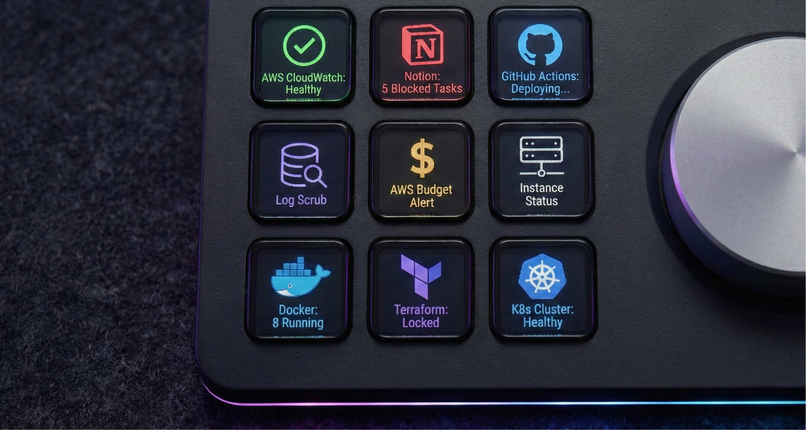
Gjallar Pulse concept photo
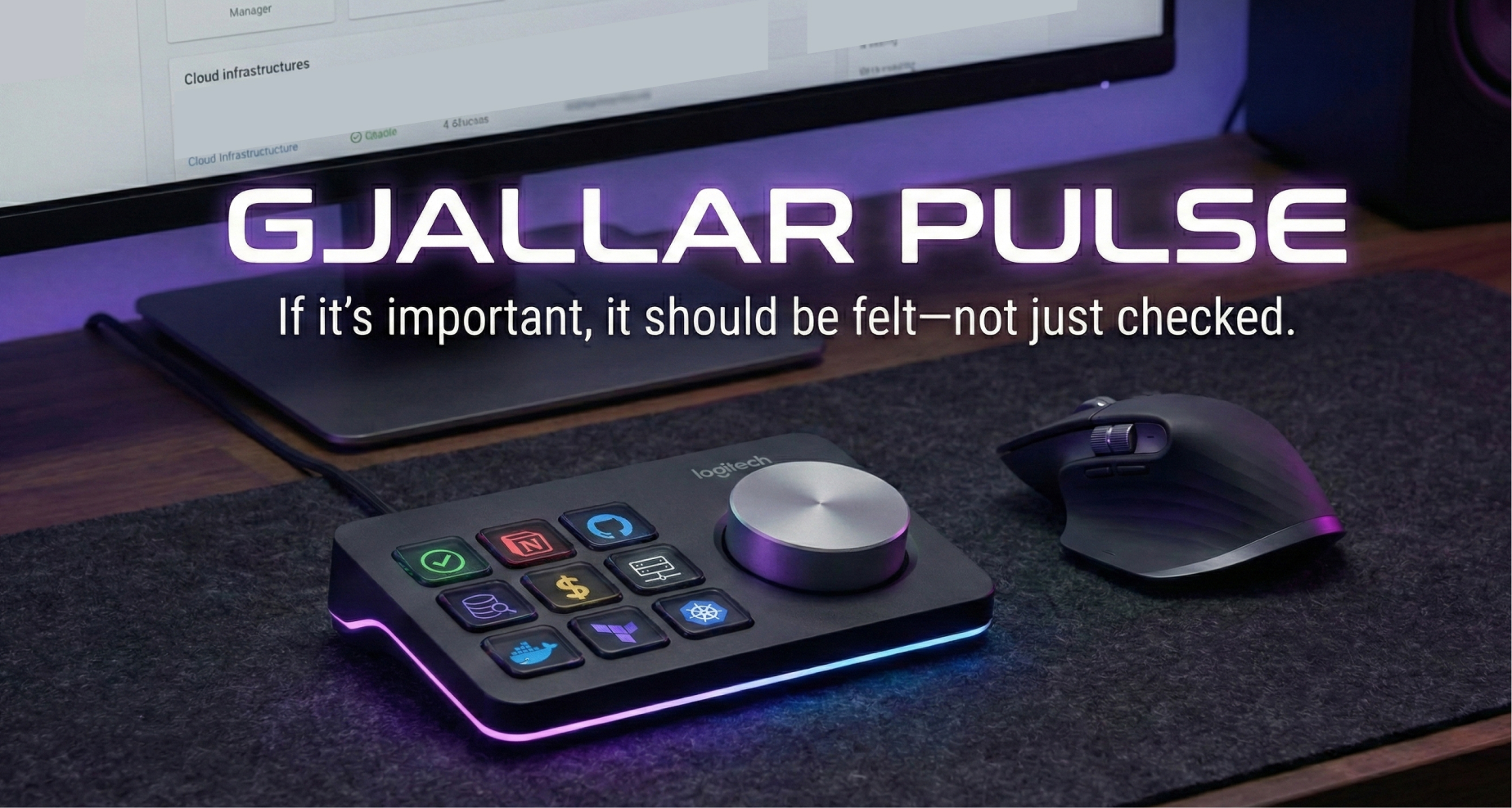
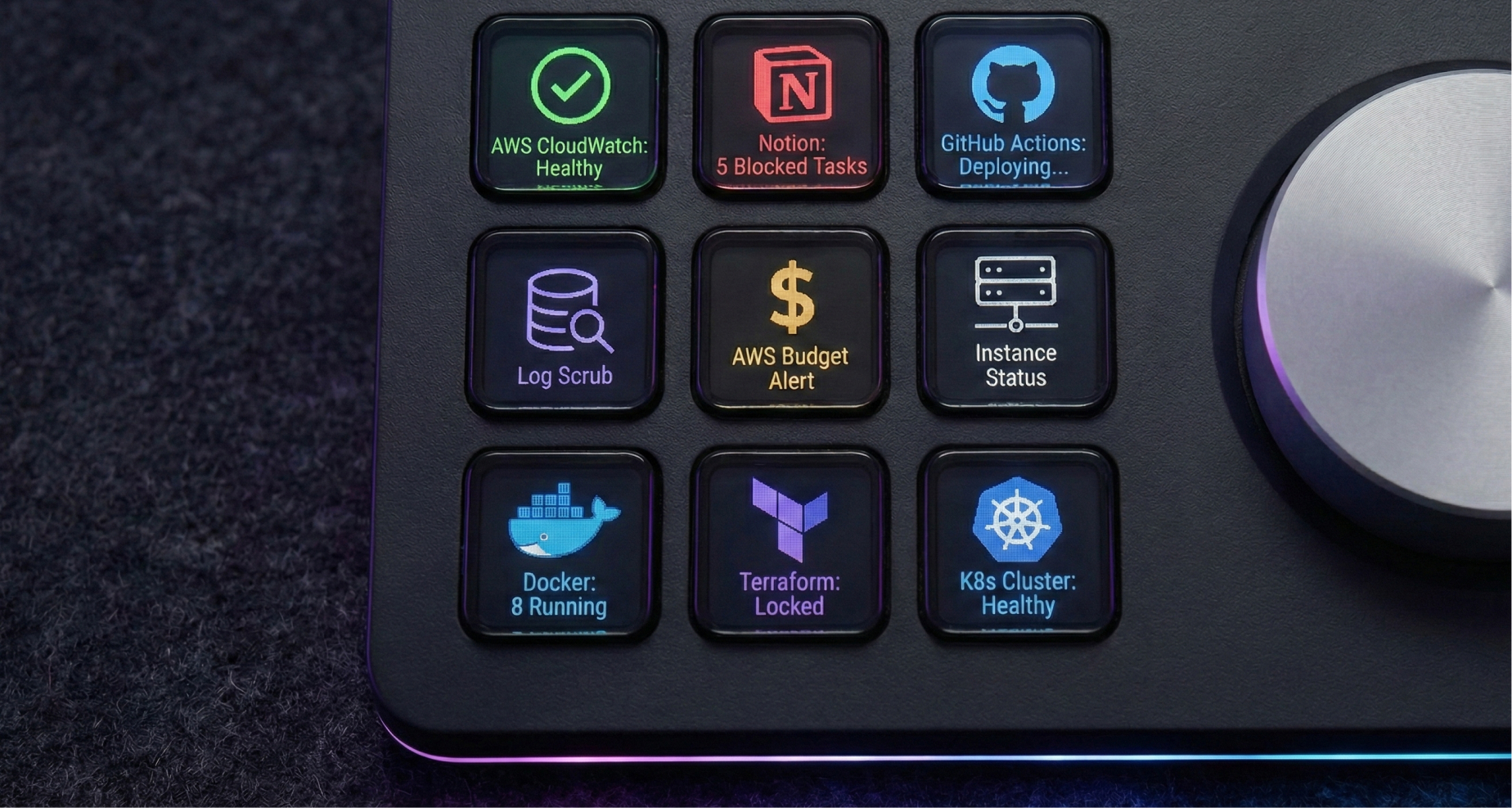
Inspiration
Modern engineering is drowning in a "Tab Tsunami." Developers and DevOps engineers spend hours context-switching between invisible AWS clusters and fragmented Notion workspaces. This creates a cognitive "context-switching loop" where critical system health is often buried under dozens of browser tabs.
Inspired by the concept of a "digital nervous system," Gjallar Pulse was conceived to bridge the gap between the "invisible" cloud and the developer's physical reality. By leveraging the Logitech MX Ecosystem, the project aims to transform professional hardware into a tactile dashboard, ensuring that high-stakes signals are sensed, not just observed.
What it does
Gjallar Pulse is designed to redefine infrastructure management by making high-stakes data a physical experience:
- Ambient Observability: The 9 LCD keys on the MX Creative Console act as live micro-dashboards, broadcasting real-time health from AWS CloudWatch and GitHub Actions.
- Haptic Heartbeats: The MX Master 4 is designed to provide silent haptic pulses. Engineers "feel" server latency spikes or AWS incidents directly in their palm, maintaining flow without having to check a monitor.
- Tactile Safety Guardrail: The Creative Dial is engineered for precision navigation through Notion workflows and DevOps audit trails.
- Intentional Operations: To prevent accidental costs, the design locks dangerous cloud operations behind a physical mechanism: users must rotate the dial while holding a keypad button to confirm high-stakes deployments.
How we’re building it
The proposed architecture utilizes the Logitech Actions SDK as the primary bridge between hardware and software.
- The Backend: A Node.js environment designed to communicate with the AWS SDK for real-time CloudWatch metrics and the Notion API for live task monitoring.
- The Interface: A custom set of dynamic LCD icons intended to update via the Actions SDK to reflect live system states (Green for healthy, pulsing Red for incidents).
- The Haptic Logic: The project involves programming custom vibration patterns using the Haptic Sense Engine to distinguish between different alert severities.
Challenges we’re tackling
The primary technical hurdle is API Latency. Bridging the gap between cloud logs and local hardware triggers requires highly efficient asynchronous handling to ensure that "dial scrubbing" feels instantaneous and tactile rather than lagged.
We are also solving for "Signal vs. Noise." A core design challenge is refining haptic patterns to ensure they are informative enough to be noticed without breaking a developer's deep-work state. The "Ambient UI" must feel like an extension of the body, not a source of distraction.
Accomplishments that we're proud of
The conceptual breakthrough of the "Physical Safety" mechanism is a highlight of the project. Turning a high-stakes cloud deployment into a deliberate, physical action (the dial rotation) brings a level of intentionality to DevOps that software alone cannot provide. Designing the MX Master 4 as an "observability tool" marks a major shift in the utility of professional peripherals.
What we learned
The research phase has shown that the future of productivity isn't more screens—it's better touch. Integrating the Logitech Actions SDK with the tools developers use every day transforms a set of accessories into an essential Infrastructure Interface. Moving from "Observing" to "Sensing" infrastructure significantly reduces cognitive load.
What's next for Gjallar Pulse
The roadmap for Gjallar Pulse includes expanding to more DevOps tools like Terraform and Docker. We also plan to integrate AI-driven summaries, where the Actions Ring doesn't just show an error, but suggests a one-click, haptic-confirmed fix. The goal is for Gjallar Pulse to be the standard for how engineers "touch" the cloud.
Built With
- awssdk
- figma
- githubactionsapi
- logitechactionsring
- logitechactionssdk
- logitechhapticsenseengine
- node.js
- notionapi
- typescript


Log in or sign up for Devpost to join the conversation.