-
-
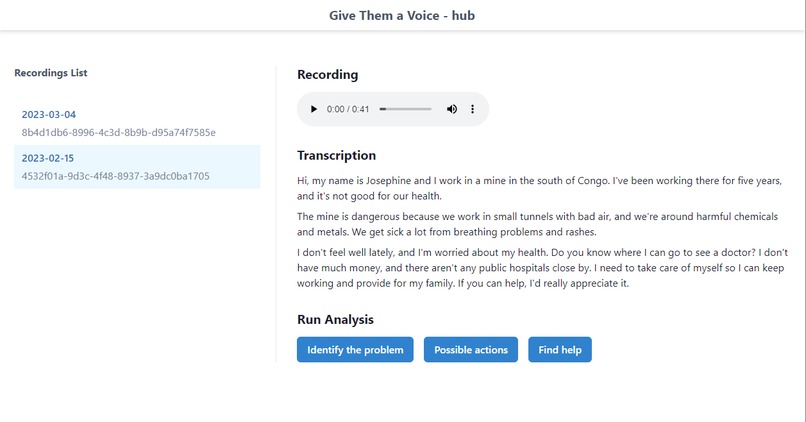
Hub app
-
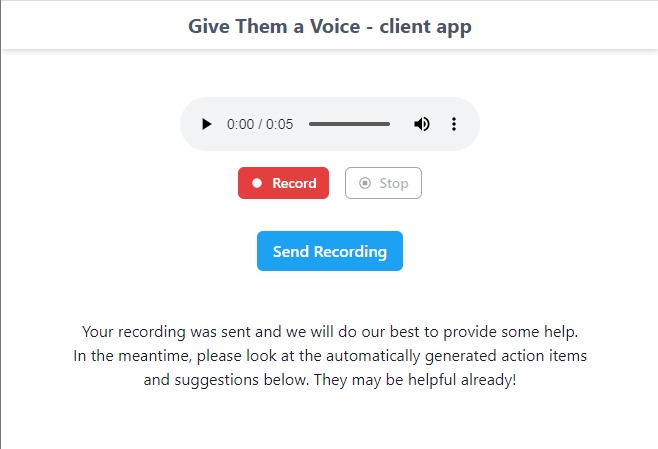
User app

Inspiration
The inspiration for this project was a podcast with Siddharth Kara - an author of "Cobalt Red: How The Blood of The Congo Powers Our Lives".
There is an untold story of poverty, exploitation and human tragedy in Congo, happening right now. There are people, many of them women, young women and kids, living and working in sub-human conditions.
"An increasing number of women, girls, and boys live in these [mining] camps and work at the mining sites throughout all stages of the operating process. The living conditions of these camps are inhumane and the human rights violations are extensive. There is no safe access to water, food, education, and health, including sexual and reproductive health. Women often engage in the most toxic job at the mining sites: “droumage” - crushing, sorting, washing, processing, and/or selling minerals."
As this hackathon theme is "taking action" and is organized in the month of "International Women's Day" - I wanted to explore the question if A-powered solution could, at least in some small way, help with this very complicated problem and therefore improve at least a bit the quality of life of many women that live in those kind of environment today.
What it does
(For details, demos and videos, please refer to https://github.com/tomek-michniewicz/give-them-a-voice)
The are two parts of the solution: client and hub. Please look at the "Demo" section for links and examples.
Client app
- record a person's story and send it to the hub
- hub automatically transcribe it into text (AI), could also translate, if needed
- optionally, based on the transcription and the knowledge base of the hub, a person could get an automated feedback: meaningful actions, contact information for aid providers, etc. (powered by chat and embeddings AI)
Hub app
- keeps the transcriptions of the voice recordings send by people
- allows to run multiple analysis on every transcription. Some of them can be done automatically right after the transcript is ready and actions could be automatically taken (ie. sending messages, notifying the right people, etc.)
- as analysis are simply a questions in natural language for the chat AI, anyone could easily add them and not special technology knowledge is required
- hub can keep the knowledge base of the previous actions taken, useful contact information, etc. that grows over time, so the requests could be better served and providing aid could be more efficient
How we built it
- ReactJS, Vite, Tailwind CSS, Chakra UI for rapid development of both client and hub frontends
- Microsoft Azure Speech-to-Text for transcriptions
- OpenAI ChatGPT for text analysis
- Google Firestore for DB and file storage
Challenges we ran into
Accomplishments that we're proud of
- with the modern tech stack it was relatively easy to have 2 front end applications + server functions up and running in no time
What we learned
- tech part is not that hard those days, takes more time to think about what we want to build (that it provides a real value to the people) and, more importantly, why to do it this or other way
What's next for Give Them a Voice
- opensource the code, so the idea could be worked on by a larger community
Built With
- azure
- chakra
- chatgpt
- firestore
- openai
- react
- tailwind
- typescript
- vite

Log in or sign up for Devpost to join the conversation.