
Inspiration
The idea for Give came about naturally during our brainstorming. While we were thinking about the Global Impact vertical, we realized that although we want to make an impact on the world around us, as busy college students, we don’t have the resources to research meaningful projects and we don’t have the money to donate to big charities. We’re sure that there are many people in our generation who are aware of global issues but may be in a similar situation as us – where they do not have the disposable income or resources to make a meaningful difference. For people like us, we want to solve these problems by decreasing the barrier of entry into charity through Give.
What it does
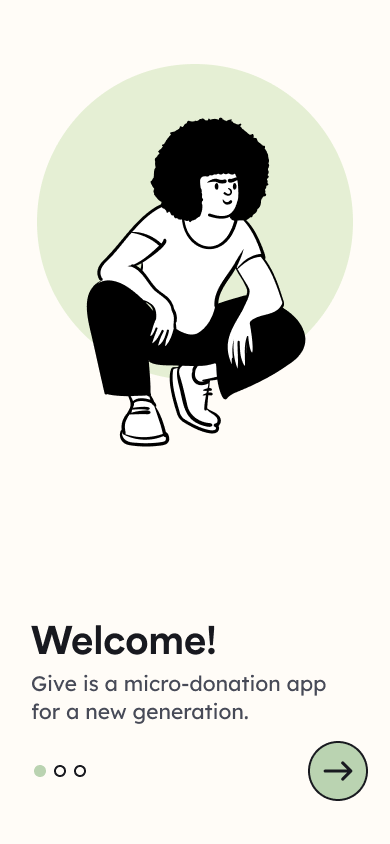
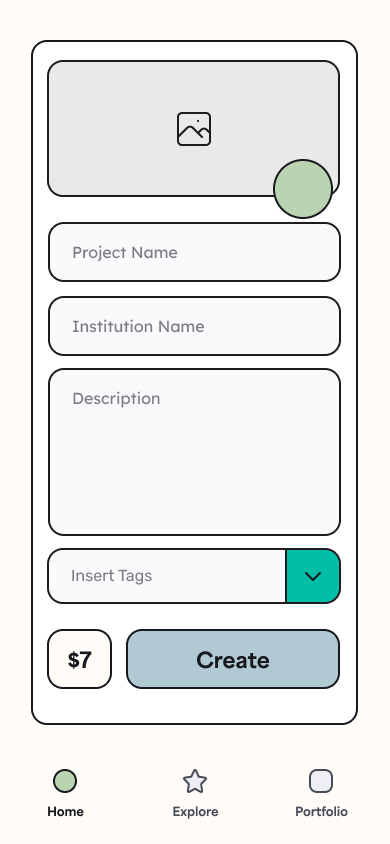
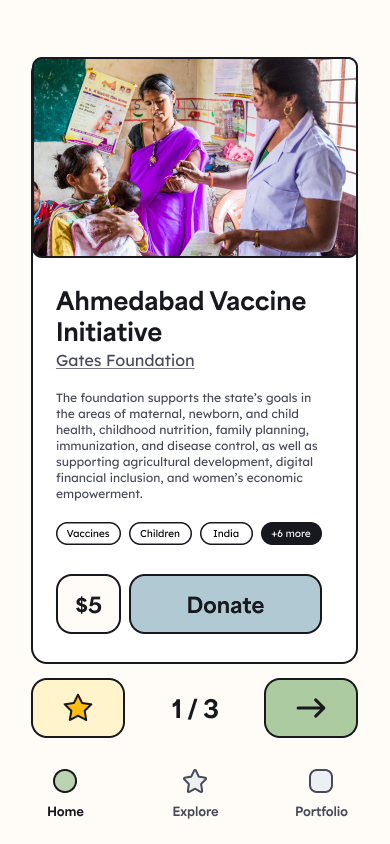
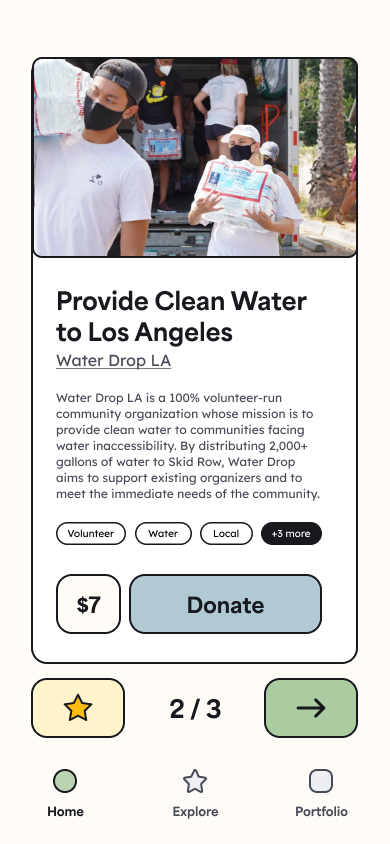
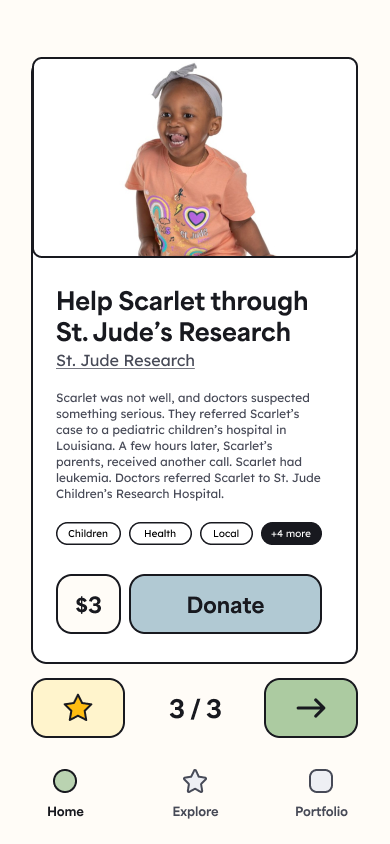
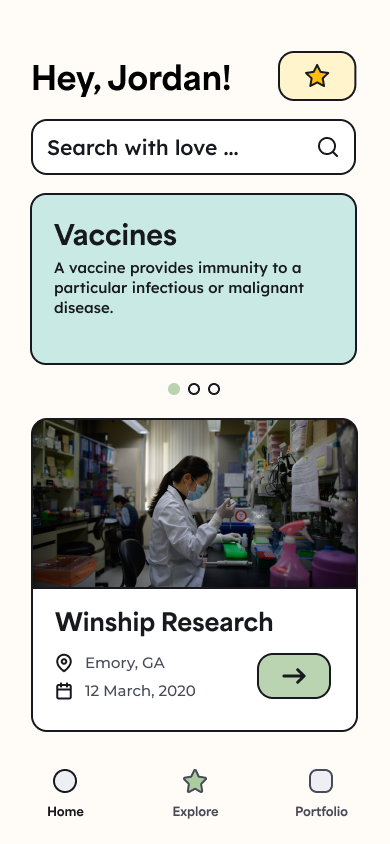
At its core, Give makes it easier to donate. Every morning, we present you with a curated list of five projects recommended to you by our algorithm based on your initial interests and donation history. Along with a brief description of the project, we display a recommended amount (under $10) that you can use to donate in three clicks. Furthermore, an independent tracker displays the percentage of your donation that will go directly to those in need (whereas the rest goes to the institution sponsoring it) so that you can make an informed decision about the impact of your donation. On the explore tab, you can view a curated list of charities for the week, projects based on your location, and a never-ending list of projects sorted by what is recommended for you. Finally, on the portfolio tab, you can view the total money you have donated, keep up to date with previous projects, and generate a list of donation records for ease of use at tax time.
Give is great for NGOs! From the institutional point of view, Give aggregates an untapped market of 18-30 year olds who typically did not have the disposable income and resources to donate onto one portal. Whether it is a high-profile NGO like the Gates Foundation or a local NGO like WaterDrop, Give’s ease of use and recommendation algorithm will increase donations for every institution.
How we built it
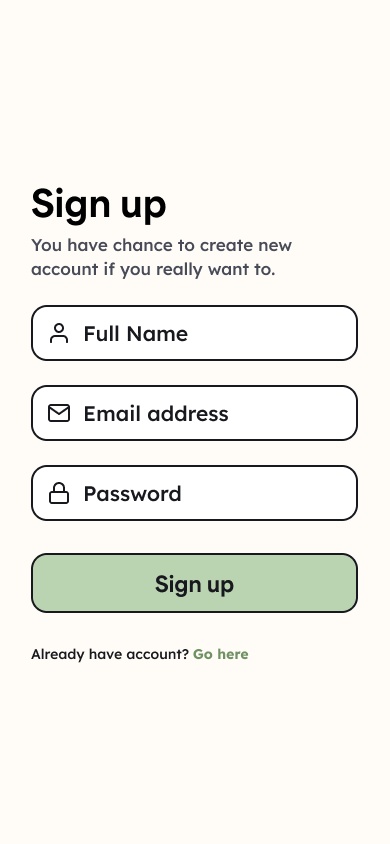
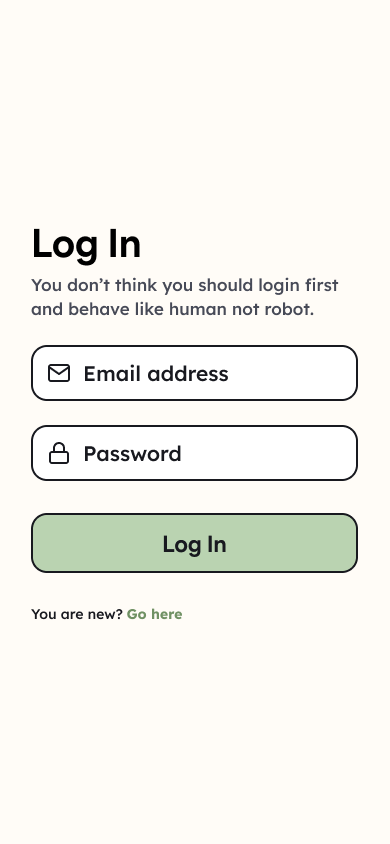
After we decided that we wanted to go with a large scale application, we had to decide on a tech stack to use. In the end we picked Spring Boot for the backend, MySql for the database, and React Native for the frontend. A large part of the reason we chose this stack is because none of us had worked with them before, so it was a cool learning experience. The process of building the application was pretty tough, after getting our general repository setup, we pretty smoothly made our prototypes in Figma and got our basic backend API working. After battling with dependency issues and bugs, we first implemented the main page, with the payments and carousel viewing, which is the main feature of the site. Next, we worked on designing the user sign up pages and the explore page, and finally integrated the paypal API and our backend API to make everything work!
Challenges we ran into
We certainly had our fair share of challenges. The beginning of our hack was pretty smooth, we had some smaller issues setting up and getting accustomed to all the new software that we hadn’t used much, but didn’t have any massive issues. Getting our backend API setup was decently quick, however working on the frontend development definitely did not go that way. After finishing a decent amount of backend, we had a number of issues with getting react dependencies to work on all of our systems, and also run our code correctly. Even after resolving those mostly, importing packages caused a lot of trouble. The frontend development as a whole also caused a lot of bugs, none of us were super slick with react, so getting some of the more complicated featured implemented definitely took some time. As the night went on we definitely lost a lot of productivity due to lack of sleep also.
Accomplishments that we're proud of
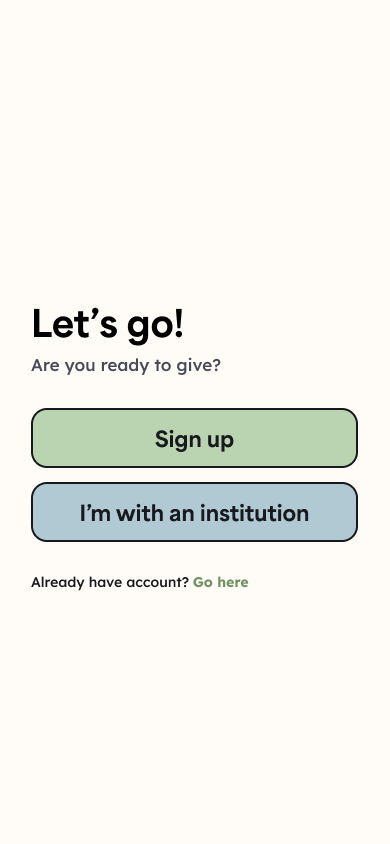
I would say that we’re most proud of the carousel page and the connections with the home page and other pages. The carousel was a great mix of our best frontend design and execution, along with the coolest application of our backend API to make the individual cards. Aside from that, our development pipeline is very solid, we have a proper API that links correctly with both the frontend and database that’s robustly built so that we can add a bunch of new features really easily. Outside of the slick features that we added, we’re really proud that we have an actually solid project in which we all learned a lot about real software development skills, and got to make a cool project on top of it all.
What we learned
As a team, we learned what it was really like to make a full stack application. We all had some level of experience with software development, but definitely hadn’t touched the software that we used for this project. Springboot, React Native, and MySQL were mostly new to us, especially in a time crunch where we need to properly integrate them all together. Aside from tech, we definitely learned the value of budgeting time properly, and having a strong team plan to accomplish goals more efficiently.
What's next for Give
Next for Give, is building out features that interconnect the globe, and scaling our application so that organizations and individuals alike can reap the benefits. Firstly we need to turn our current prototype into a properly scaled cloud application (hopefully) with no bugs. After that, Give would need to focus on reaching out to organizations to improve the selection of donation opportunities that we can provide, along with spending some on advertising to let people know that we’re out there.
Built With
- figma
- java
- mysql
- react
- react-native
- springboot

Log in or sign up for Devpost to join the conversation.