Inspiration
Agents are useful when they can act directly on Git problems, but they become fragile when they have to guess through a UI or pretend every conflict is machine-solvable. GitWand started from a boundary-first idea: resolve what is objectively deterministic, surface what is ambiguous, and keep the human in control of the decision.
What it does
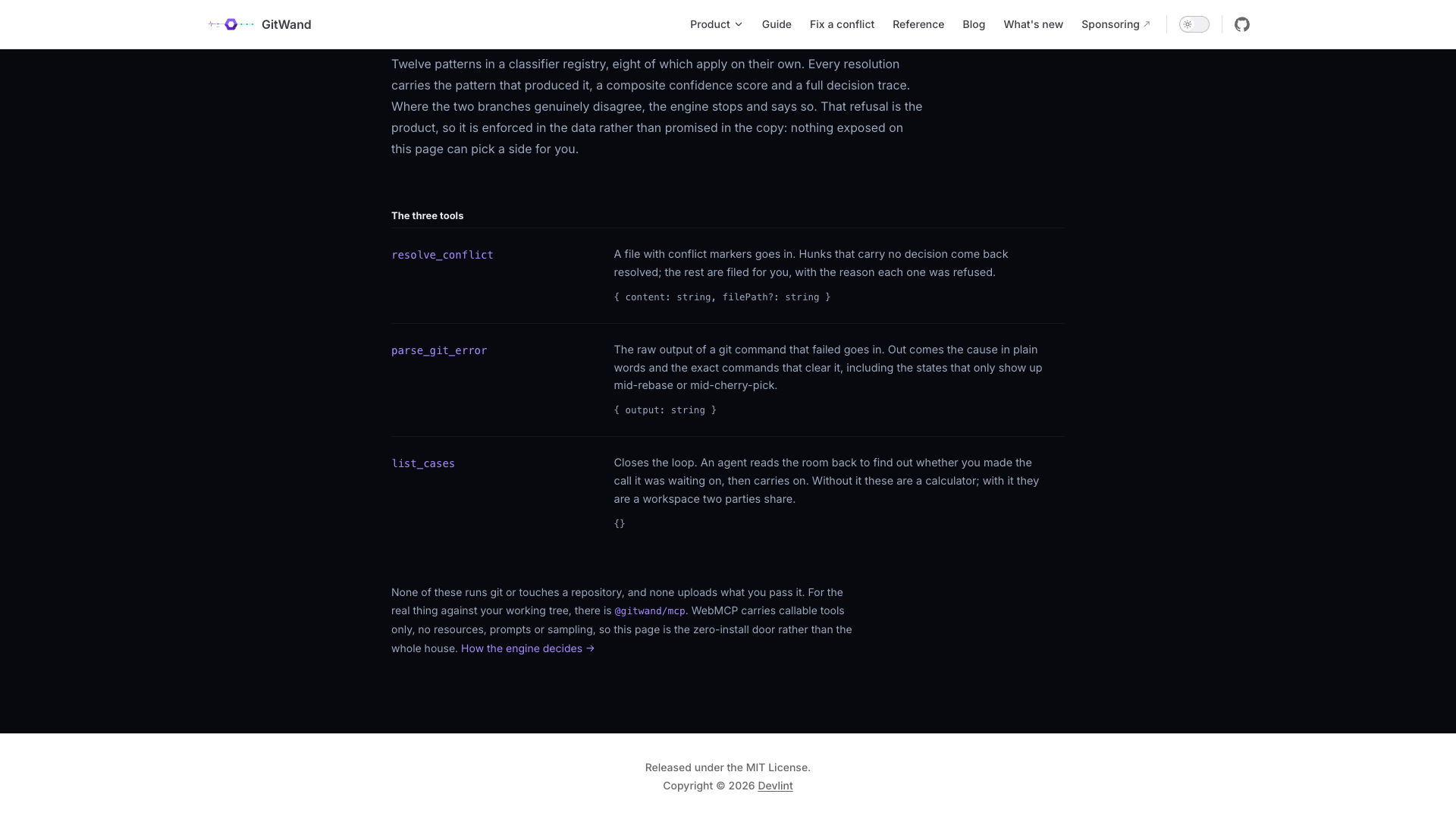
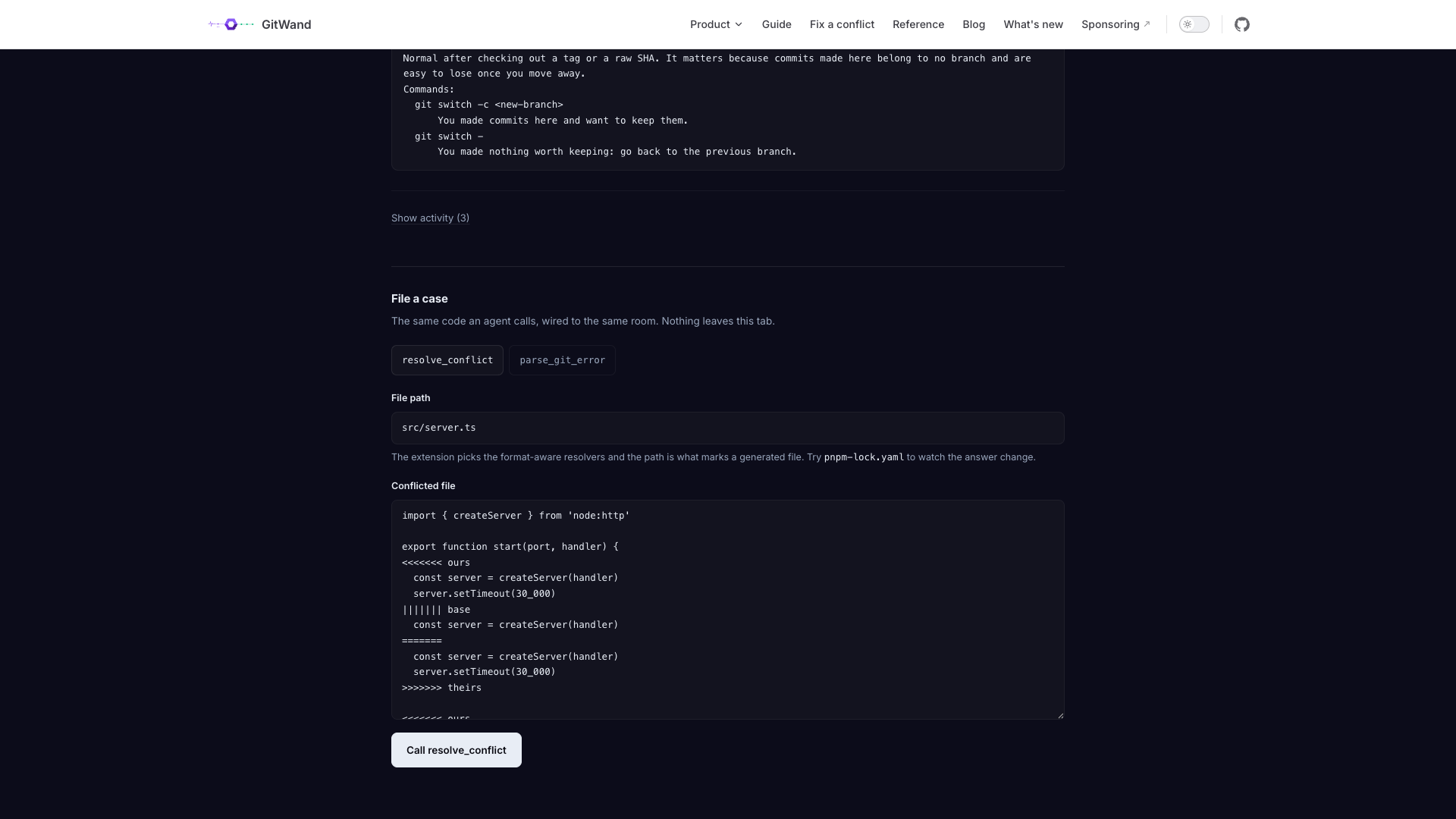
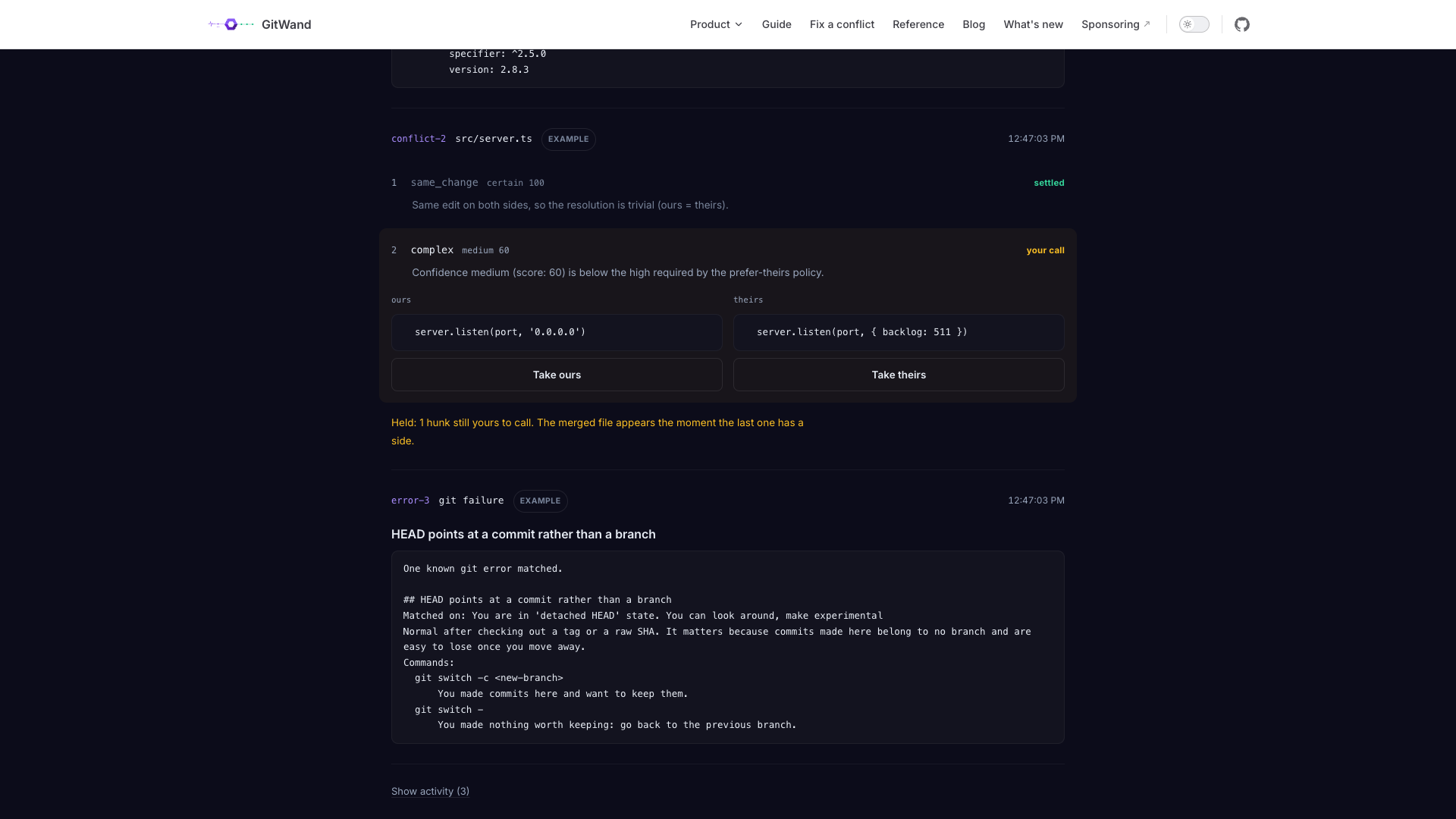
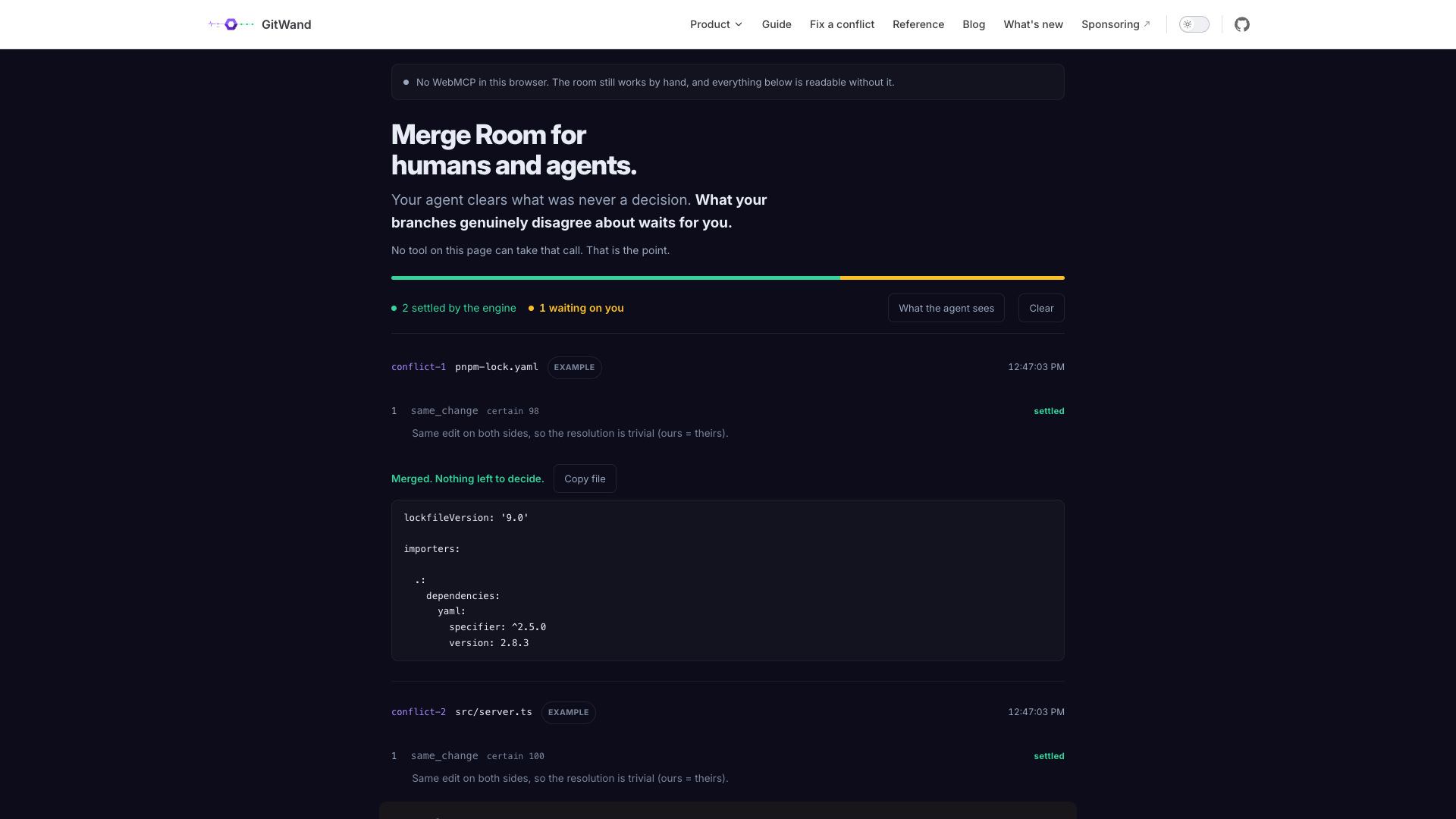
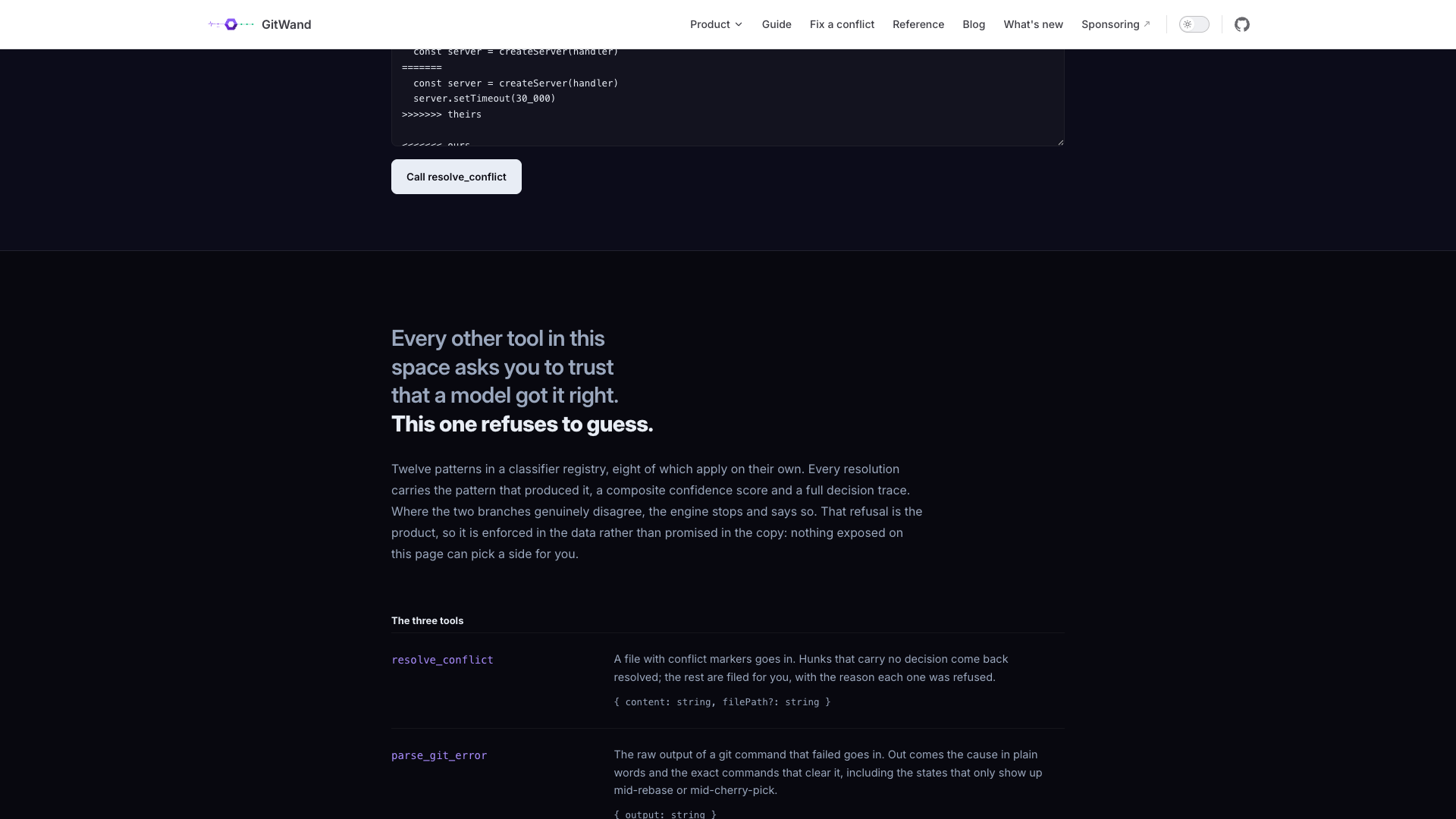
GitWand Agent turns a Git conflict into a shared Merge Room for humans and agents. The page exposes three WebMCP tools: resolve_conflict, parse_git_error, and list_cases. Deterministic hunks are settled automatically; genuinely ambiguous ones are filed for the human to choose; and the agent can read the room back to resume work once a decision is made.
How we built it
We registered the tools directly on the page and wired the UI around live case state. The same browser tab that the agent sees also shows the Merge Room, so the result is visible in real time. The implementation keeps the resolution logic narrow and explicit: no guessing, no hidden side effects, and no tool that can silently pick a side for you.
Challenges we ran into
The main challenge was resisting the temptation to make the agent do too much. Git conflicts often mix deterministic edits with real intent decisions, so the product had to make that boundary obvious. Another challenge was designing list_cases so the agent can return after a human decision and continue without losing context.
What we learned
Agent-native software works best when it is precise about what the machine can and cannot decide. WebMCP is a good fit because it lets a website define exactly how an agent should interact with it, instead of forcing the agent to infer the UI.
What's next
More conflict patterns, richer case history, and tighter integration with real repository workflows.
Built With
- tauri-2
- typescript
- vue-3
- webmcp


Log in or sign up for Devpost to join the conversation.