-
-
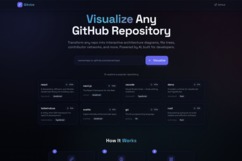
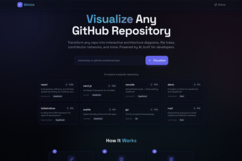
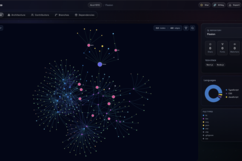
Home Page
-

Repo Visualization
-

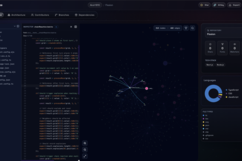
Code Inspector
-
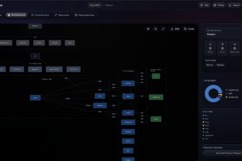
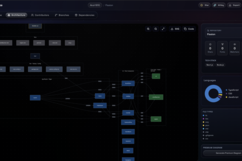
Architecture Diagram
-

Branch graph
-
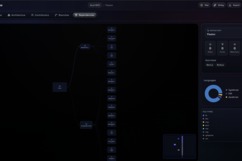
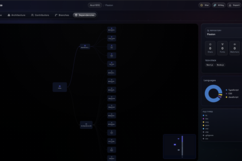
Dependence diagram

Inspiration
I built Gitvize to solve a recurring problem: understanding an unfamiliar repository takes too much time. As a solo developer, I wanted a way to quickly see how a codebase is structured, how files connect, and where important activity happens, without manually opening dozens of files.
What it does
Gitvize turns any GitHub repository URL into an interactive visual dashboard. It shows architecture flow, file-tree relationships, dependency maps, branch and commit timelines, and contributor insights in one place. It supports public repositories instantly and private repositories through a one-time secure token flow. Just replace "Hub" to "Vize".
How I built it I built Gitvize using Next.js, React, and TypeScript, with Tailwind CSS for UI and Framer Motion for interactions. Mermaid is used for architecture diagrams, Cytoscape for file and network graphs, React Flow with Dagre for dependency layouts, and Recharts for repository analytics. GitHub REST API data is fetched via server routes and transformed into visualization-ready structures.
Challenges I ran into The toughest challenge was balancing rich graph detail with smooth performance, especially for large repositories. Another challenge was designing an access flow that is frictionless for public repos but secure and clear for private repos. I also had to handle varied repository structures so visual outputs remained meaningful across different tech stacks.
Accomplishments that I am proud of I’m proud that Gitvize delivers a complete end-to-end repository intelligence experience as a solo-built product. It combines multiple visual perspectives into one coherent workflow, includes secure private-repo support, and has been hardened with production-focused validation and security improvements.
What I learned I learned that developer tools create the most value when they reduce cognitive load, not when they add more complexity. I also learned that production readiness depends equally on API safety, input validation, and reliability checks, not just frontend polish. Rapid iteration on real repository examples was key to making the product practical.
What's next for Gitvize Next, I plan to improve large-repo scalability, add deeper AI-powered architecture and risk insights, and introduce exportable technical reports for teams. I also want to add collaboration features such as shared views and pinned findings, so Gitvize can support both individual developers and engineering teams.
Built With
- css
- cytoscape.js
- drizzle
- github
- lucide
- mermaid
- next.js
- node.js
- postgresql
- radix
- recharts
- rest
- shadcn-ui
- tailwind
- typescript
- vercel

Log in or sign up for Devpost to join the conversation.