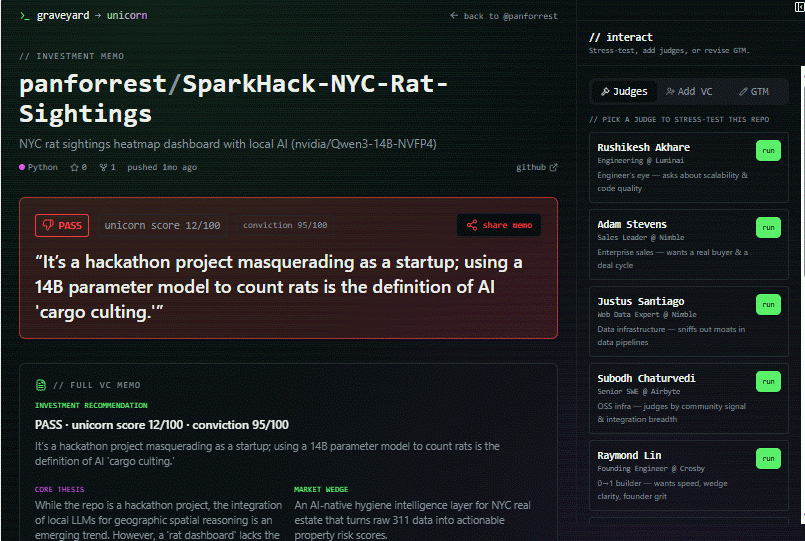
Here's your project story, tailored for hackathon submission:
Inspiration Every developer has a GitHub graveyard — side projects that were pushed once and abandoned. We realized those repos aren't trash; they're validated ideas that someone cared enough to build. What if you could resurrect the best one with AI? What if the "judges" grading your pitch were AI twins of the actual VCs and engineers sitting in this room? That's the spark: turn abandonment into ambition, using multi-agent AI.
What it does Graveyard → Unicorn is a three-agent AI system:
The Analyst — scans your top 10 repos, scores each 0–100 on unicorn potential, and writes a venture thesis (with live competitor intel via SERP). The GTM Operator — builds a concrete 30/60/90 go-to-market plan with real pricing, ICP, and competitor analysis. The Judges — throws your pitch to AI twins of real VCs and tech leaders (including the actual judges in this room). You can spawn a custom twin with a name and LinkedIn bio, or pick from our curated roster of 12+ personas. A floating chatbot lets you revise the GTM plan on the fly ("make it more enterprise") and re-run stress tests until the verdict flips to "term sheet."
How we built it Frontend: TanStack Start + React + Tailwind CSS — fast, type-safe routing. AI layer: Three createServerFn server functions wired to Lovable AI Gateway, using Gemini for structured tool-calling (unicorn scores, GTM plans, VC verdicts). Live data: GitHub API for repos, Nimble SERP for real-time competitor research. Persona engine: A typed roster of 12 judge twins with custom system prompts — each tuned to mirror real investment theses and engineering skepticism. Interaction layer: A persistent sidebar (desktop) / floating panel (mobile) with tabs for Judges, Custom VC, and GTM Revision. Challenges we ran into Rate limits: Hitting GitHub's unauthenticated API ceiling during testing — we had to add graceful degradation and caching logic. Prompt engineering: Getting the AI to return structured verdicts (not just prose) required strict tool-calling schemas. Early versions hallucinated competitors; grounding via Nimble SERP fixed that. Sidebar UX: The floating chatbot was too hidden. We pivoted to a persistent right-panel so users never lose context between stress tests and GTM edits. Persona tuning: Making the AI twins feel distinct (a seed investor vs. a CTO) meant crafting 12 unique system prompts — and testing each against real repo data. Accomplishments that we're proud of 12 judge personas including actual hackathon judges — when you stress-test your pitch, you're pitching to a digital twin of the person who might fund you. Custom twin spawning: Type a name + paste a LinkedIn bio, and the system generates a bespoke VC persona on the fly. Iterative GTM: The chatbot doesn't just chat — it reworks your plan and version-controls it with a revert button. Shipped in 48 hours: From repo scraper to multi-agent pitch simulator. What we learned Structured outputs win: Tool-calling with strict schemas is the only way to build reliable AI products at hackathon speed. Personas are powerful: A single LLM can feel like 12 different experts if you invest in the prompt layer. Live data matters: Static AI plans feel toy-like; pulling real SERP competitors made the GTM output instantly credible. Side projects have signal: Even 0-star repos can hide a venture wedge if you look at the code with founder eyes. What's next for Graveyard → Unicorn OAuth + GitHub stars: Let users authenticate and analyze private repos. Pitch deck export: Auto-generate a slide deck from the GTM plan + judge verdicts. Founder matching: Pair repo owners with other hackers who have complementary skills to co-found. Real judge integration: Let actual VCs train their own twins and receive anonymized pitch decks.

Log in or sign up for Devpost to join the conversation.