-
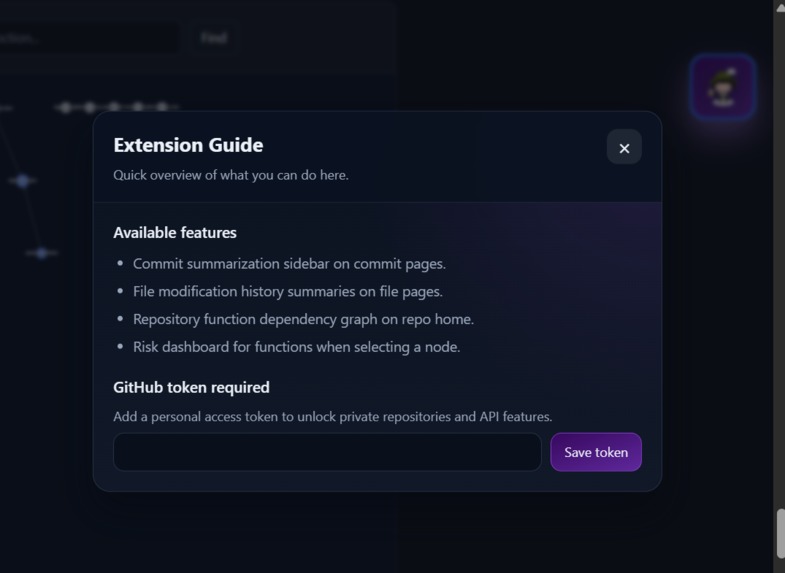
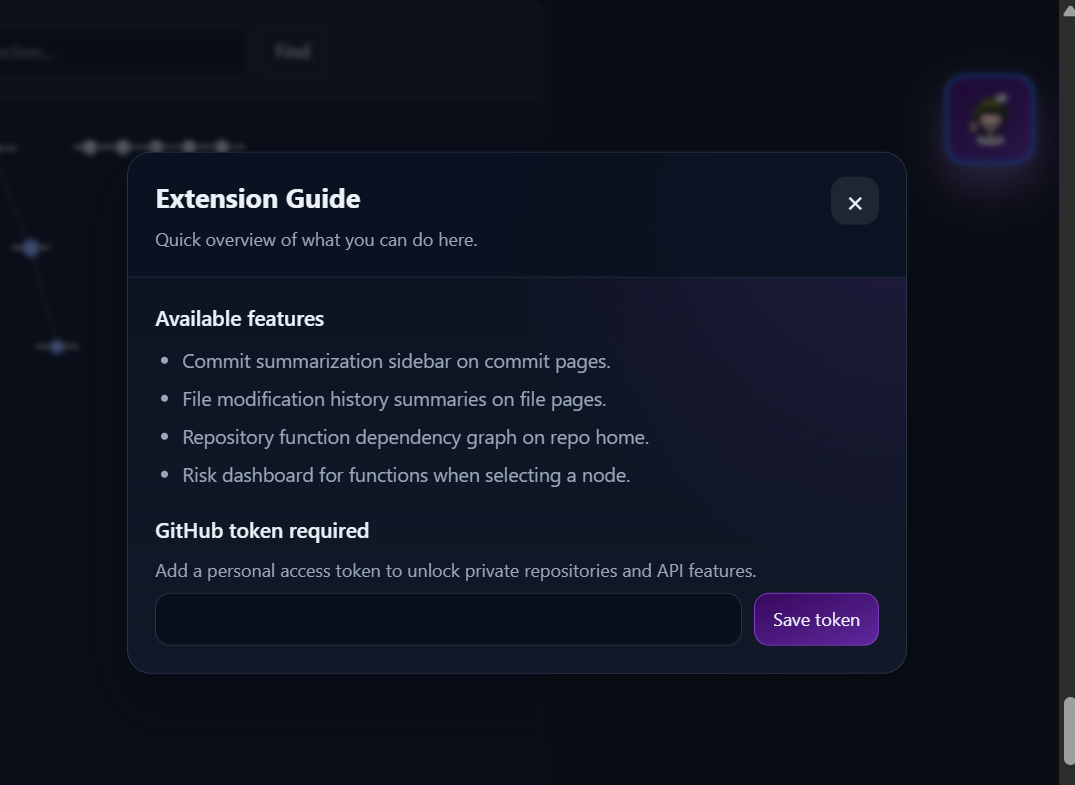
info pop up
-
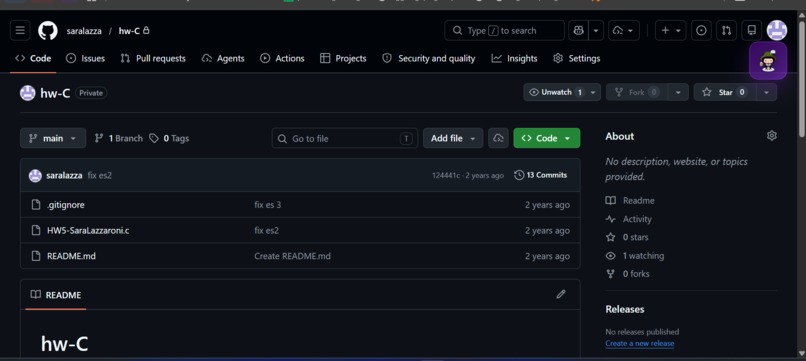
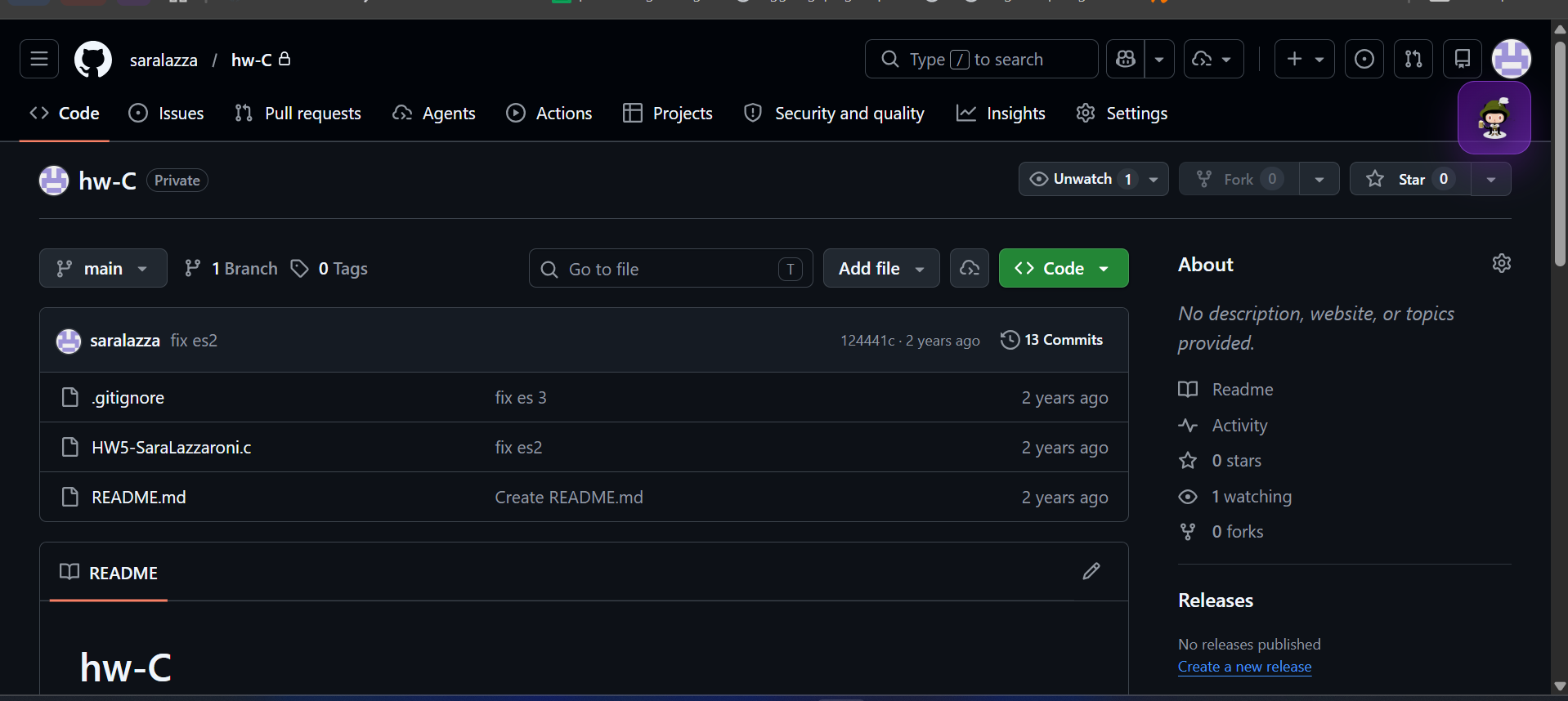
homepage
-
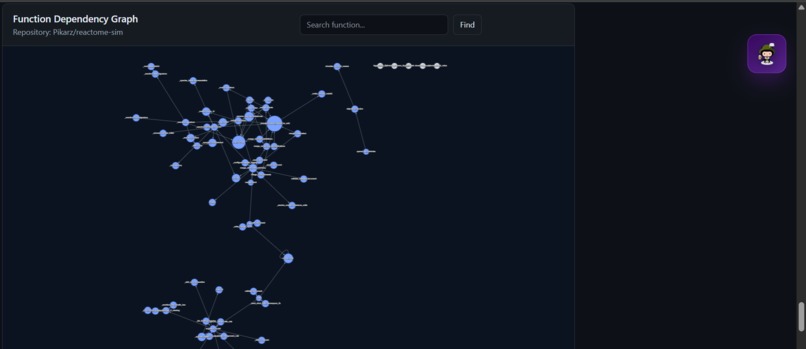
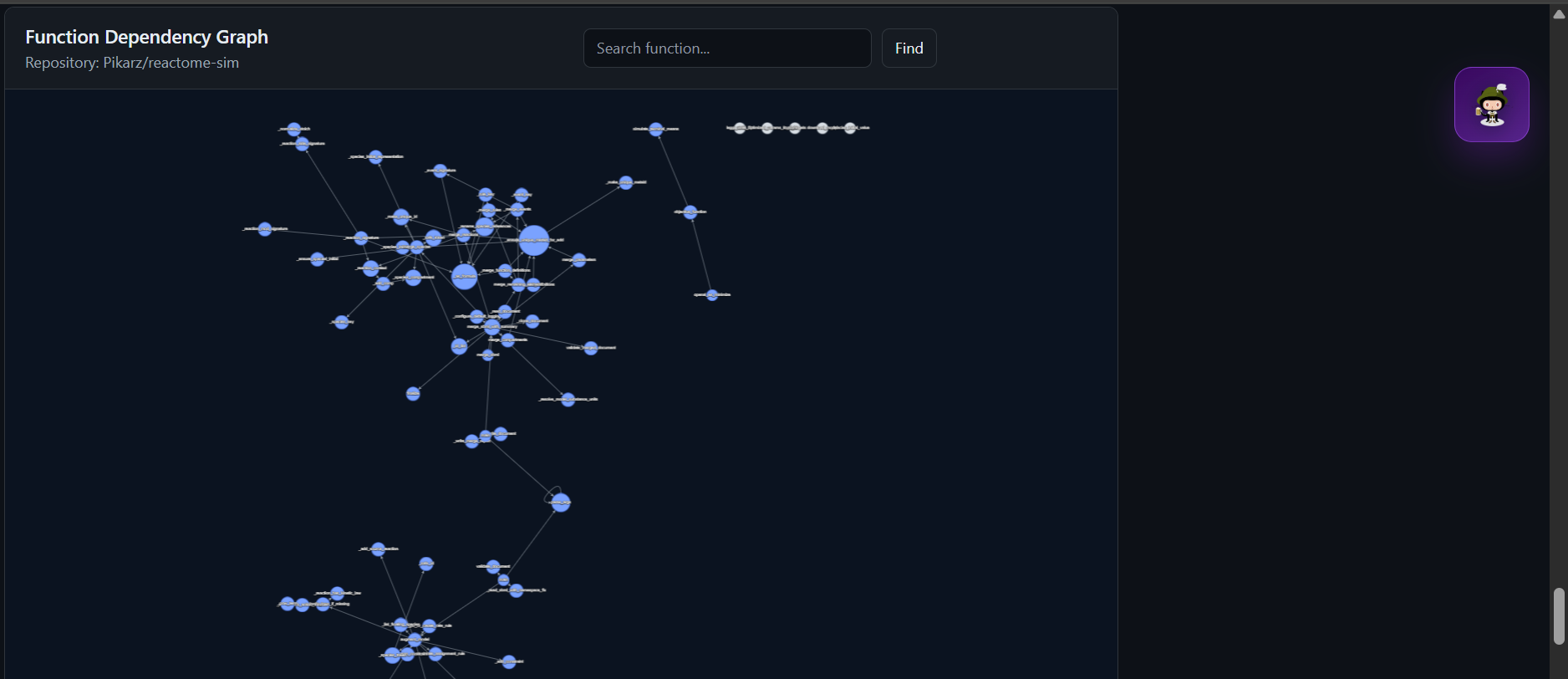
repository graph
-
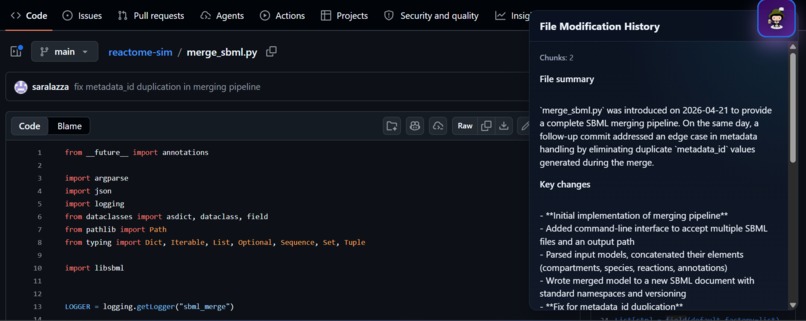
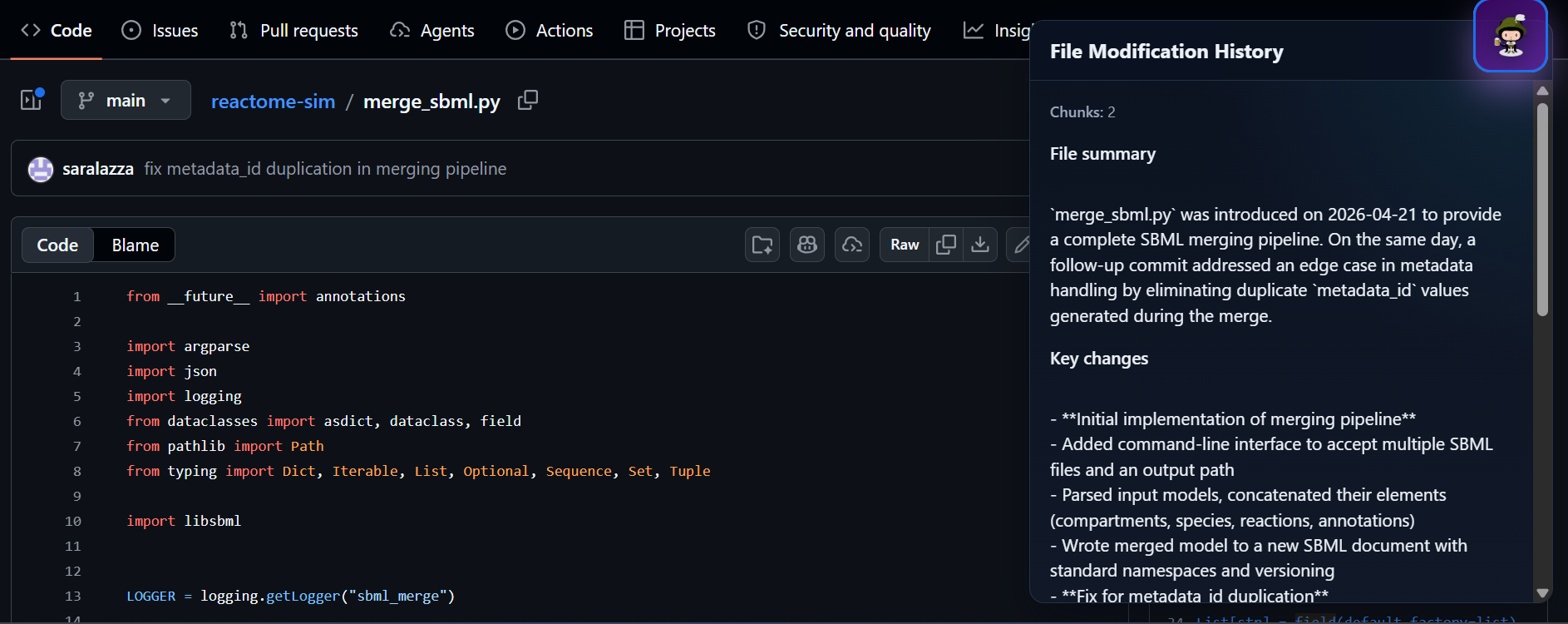
file history summarization
-
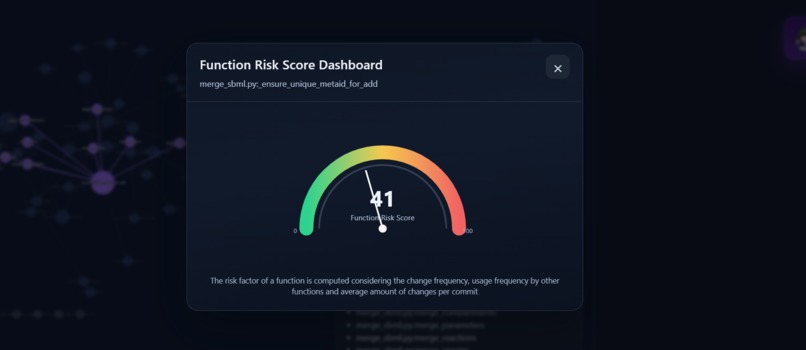
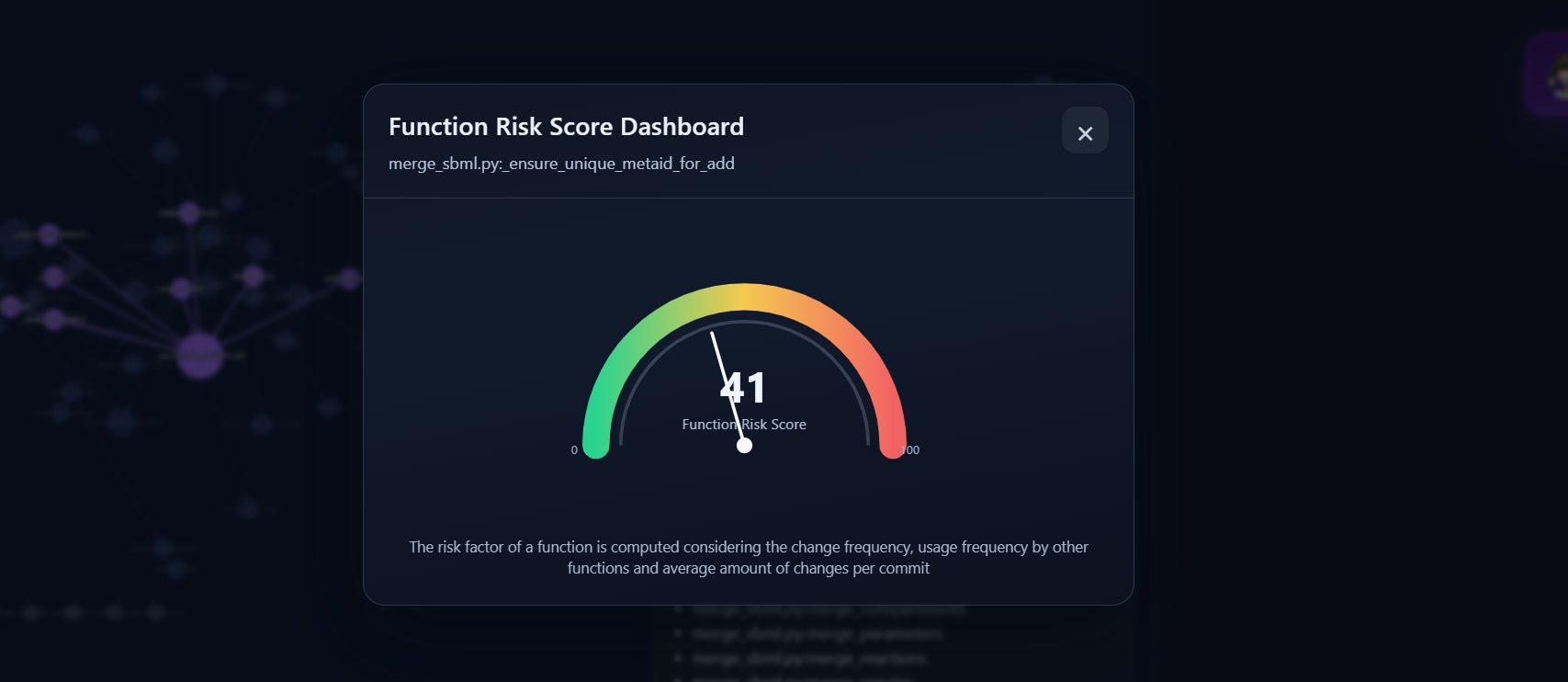
function risk dashboard
GitThePoint
Inspiration
Modern codebases are increasingly complex, with hidden dependencies and evolving logic that make understanding risk difficult. We were inspired by the idea of bringing visibility and intelligence into codebases by combining static analysis, version history, and AI. The goal was to create a tool that helps developers not just read code, but understand how it evolves and where it might break.
What it does
GitThePoint is a developer tool that enhances GitHub repositories with:
- Commit Intelligence: Automatically summarizes each commit using an LLM, explaining what changed, how, and why.
- Function Dependency Graph: Visualizes the entire codebase as a graph where:
- Nodes represent functions/methods
- Edges represent function calls (A → B)
- Interactive Exploration:
- Hovering highlights dependencies
- Tooltips show incoming relationships
- Risk Analysis Dashboard:
- Clicking a function opens a popup with a Risk Score (0–100)
- Includes:
- Code Churn
- Change Frequency
- Structural Risk (fan-in / fan-out)
- File History Summarization
Provides high-level summaries of how a file evolved over time, helping developers quickly understand its purpose and evolution.
This transforms a repository into a living, interactive system map with risk insights.
How we built it
The system is composed of three main parts:
1. Chrome Extension
- Injects UI directly into GitHub pages
- Adds:
- Sidebar for commit summaries
- Graph visualization under README
- Interactive modals for risk analysis
- Sidebar for file history
2. Flask Backend
- Handles:
- GitHub API data fetching
- Commit diff parsing
- Function-level analysis
- Risk metric computation
- Provides endpoints like:
/summarize→ commit summaries/graph→ dependency graph/function-risk→ risk analysis/file-history→ file history summaries
3. Intelligence Layer
- LLM Integration (GitHub Models):
- Summarizes diffs chunk-by-chunk
- Aggregates into developer-friendly insights
- Static Analysis Engine:
- Parses code (AST for Python + heuristics for others)
- Builds cross-file function call graphs
4. Frontend Visualization
- Cytoscape.js for graph rendering
- Custom UI components:
- Dynamic node sizing (based on fan-in)
- Hover highlighting
- Tooltip with dependency context
- Custom risk dashboard modal with gauge visualization
Challenges we ran into
Function-level diff tracking
Mapping commits to specific functions is non-trivial, especially across languages.Cross-language parsing
Supporting Python, JS, Java, C required fallback heuristics beyond AST parsing.Graph scalability
Large repositories can produce very dense graphs, impacting performance and readability.UI integration with GitHub DOM
Injecting UI without breaking GitHub layout required careful DOM targeting and styling isolation.LLM consistency
Ensuring structured, deterministic summaries required careful prompt engineering.
Accomplishments that we're proud of
- Built a fully interactive code intelligence layer on top of GitHub
- Successfully combined:
- Static analysis
- Version history
- LLM reasoning
- Designed a developer-first UX:
- Graph exploration
- Risk visualization
- Immediate insights without leaving GitHub
- Created a modular architecture that cleanly separates:
- Backend analysis
- Frontend visualization
- AI reasoning
What we learned
- Prompt engineering is critical for consistent AI outputs in developer tools
- Static analysis becomes exponentially harder across multiple languages
- Visualizations are powerful, but only if paired with actionable insights
- Developers value tools that integrate directly into their workflow
- Combining historical + structural data gives much stronger signals than either alone
What's next for GitThePoint
- Risk-aware graph coloring (nodes colored by risk score)
- Top risky functions leaderboard
- Click-to-navigate: jump directly to function source on GitHub
- Performance optimization for large repositories
- Smarter LLM insights:
- Suggested refactors
- Missing tests detection
- Team-level insights:
- Ownership mapping
- Collaboration hotspots
GitThePoint aims to become a real-time code intelligence platform, helping developers understand not just what the code is, but how it behaves, evolves, and where it might fail.
Built With
- analysis
- and-risk-metrics).-data-handling:-in-memory-processing-and-optional-lightweight-caching-(e.g.
- apis)
- chrome
- commits
- css
- cytoscape
- cytoscape.js-(interactive-graph-visualization).-platforms:-google-chrome-(browser-extension-environment)
- file-history)
- flask
- frequency
- git-history-mining-(for-churn
- github
- github-(as-the-primary-data-source-and-integration-platform).-apis-&-services:-github-rest-api-(repository-data
- github-models
- github-models-api-(llm-powered-summarization).-techniques-&-systems:-ast-parsing-(for-python-static-analysis)
- github-rest
- graph-based-analysis-(function-dependency-graph)
- heuristic-parsing-(for-multi-language-support)
- html
- html/css-(ui-components-and-styling).-frameworks-&-libraries:-flask-(backend-api-server)
- javascript
- javascript-(chrome-extension
- python
- ui-interactions)


Log in or sign up for Devpost to join the conversation.