-
-
logo
-
Workflow
-
Articheture Diagram
-
0
-
1
-
2
-
3
-
4
-
log
Inspiration
Lately I have been working with 3D game development and quickly realized something really frustrating. Managing and importing 3D assets takes way too much time. Using AI to generate models is cool but the AI makes them completely blind. If you ask for a wooden crate it just gives you one without knowing if it belongs in a simple low poly mobile game or a massive Unreal Engine world. It has no clue about polygon limits or scale or even what folder it goes into. I realized that a smart automation flow for 3D objects is indispensable if we actually want to speed up development. Nobody wants to waste hours manually resizing meshes just to stop the game engine from crashing.
What it does
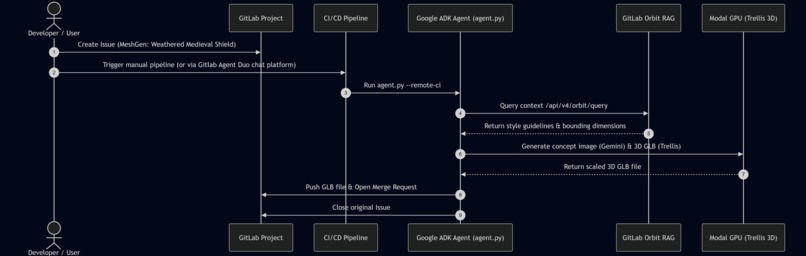
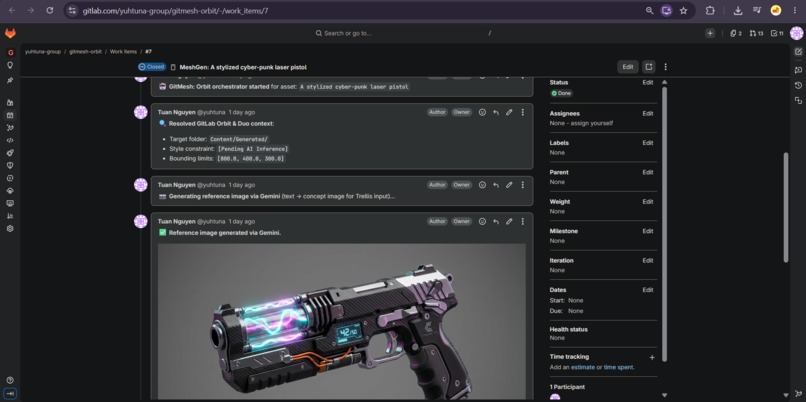
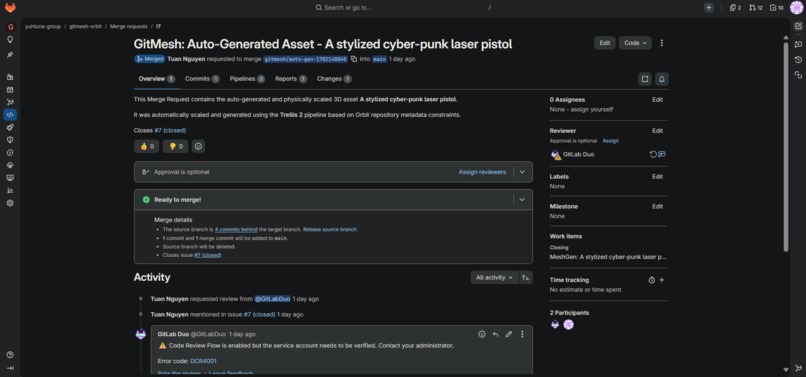
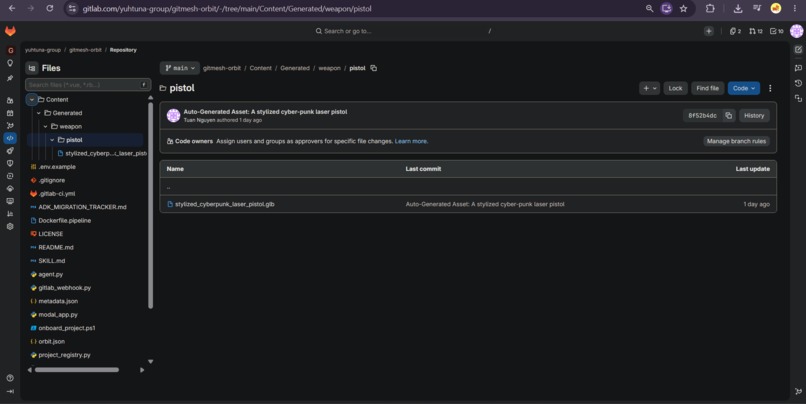
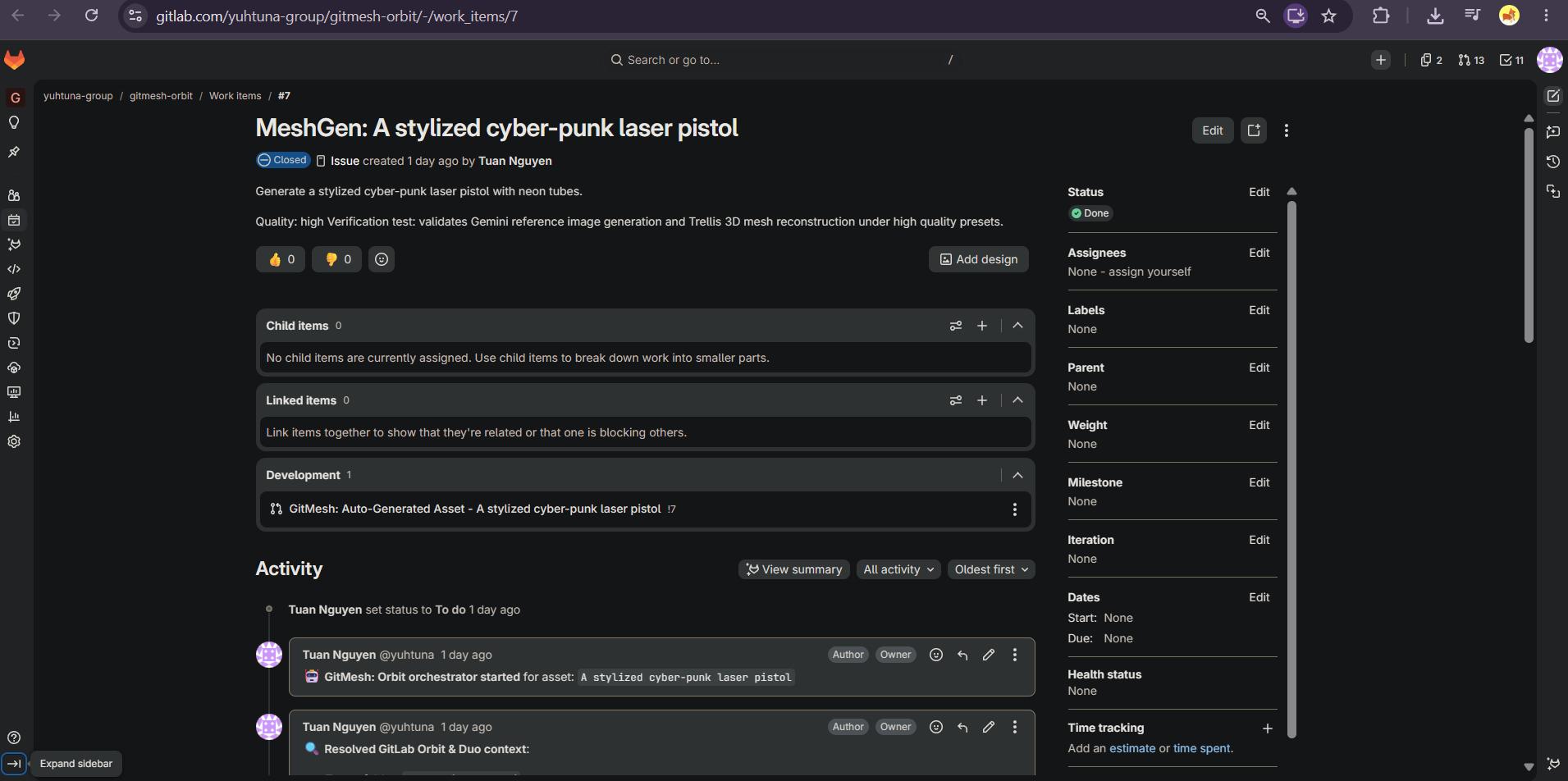
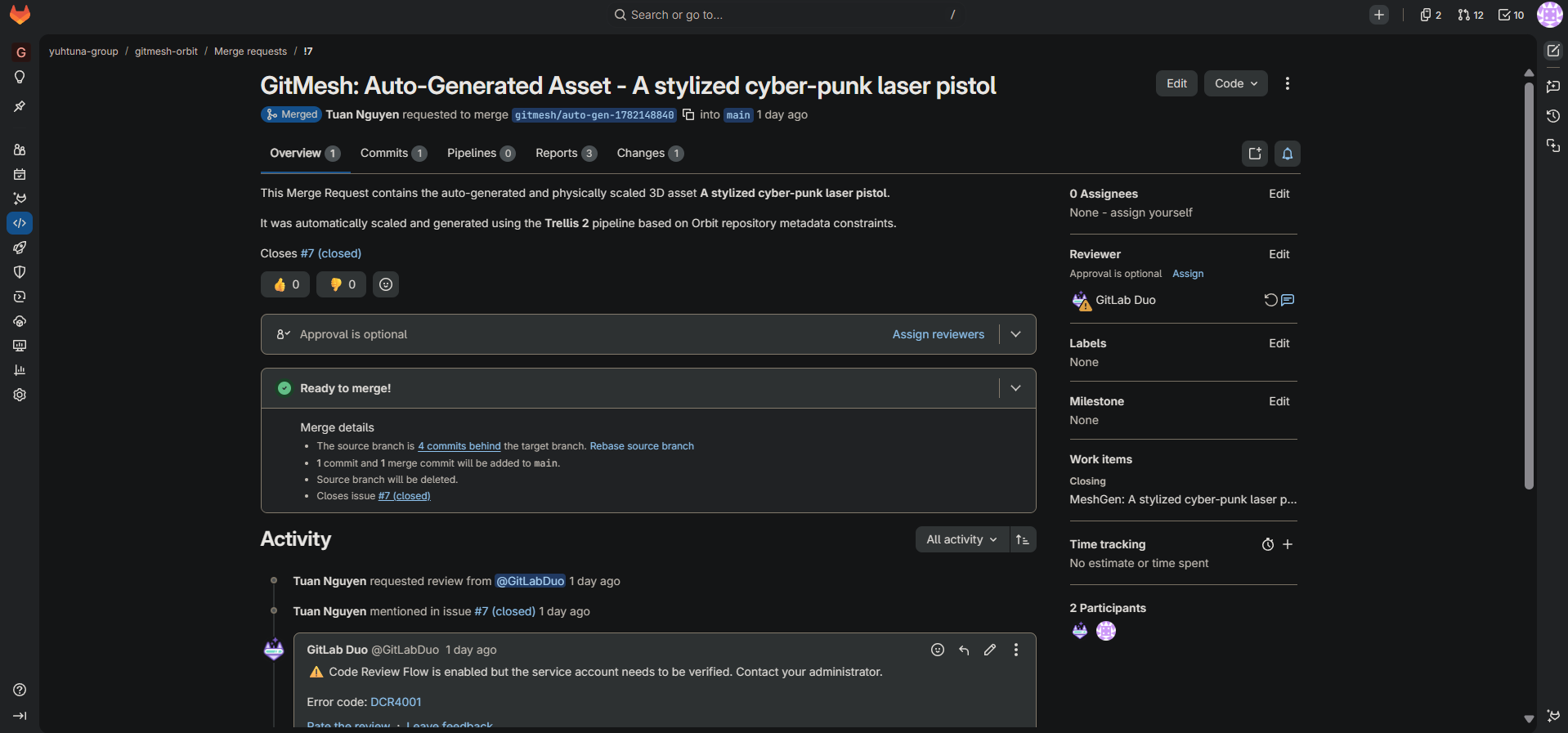
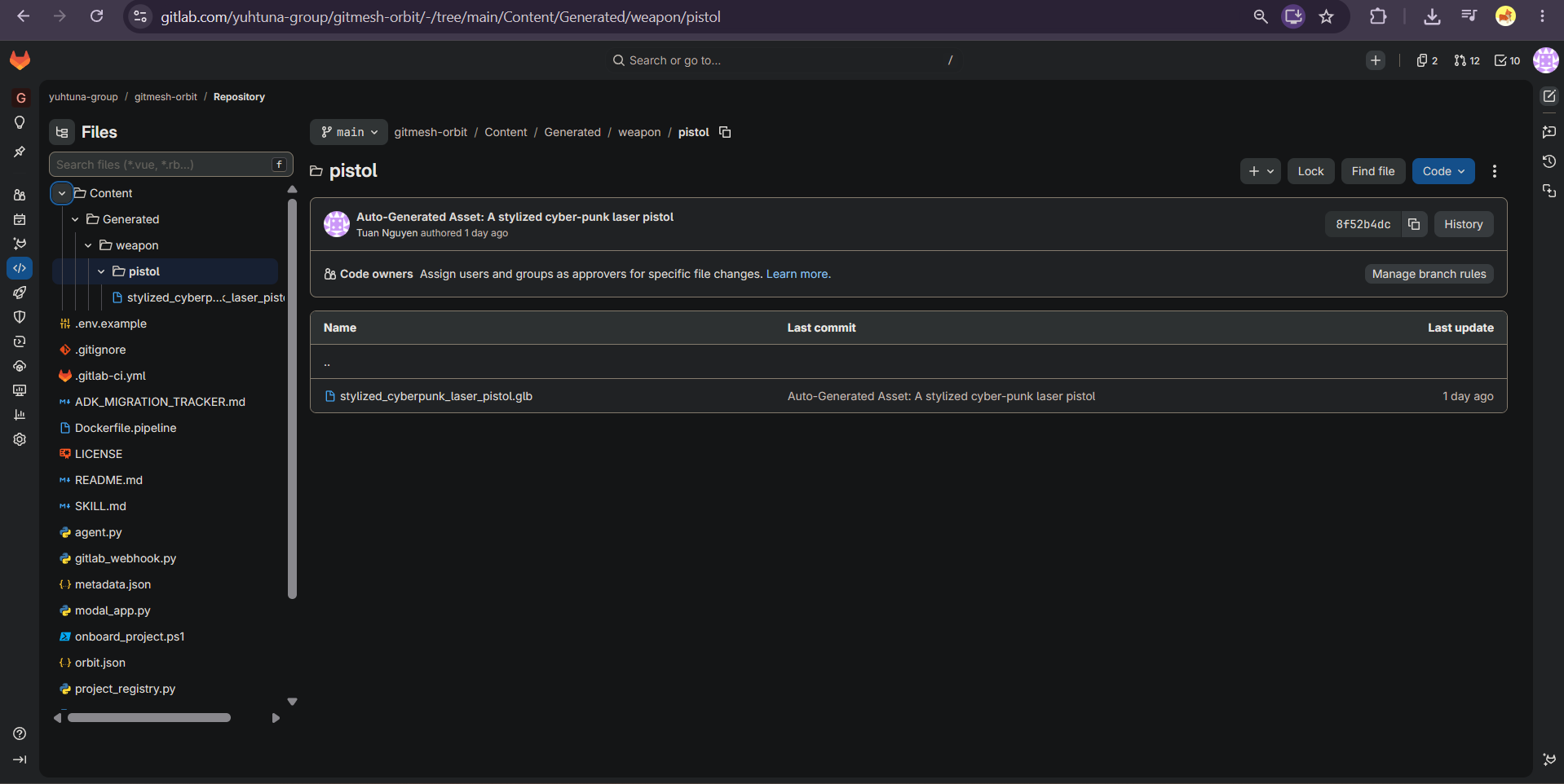
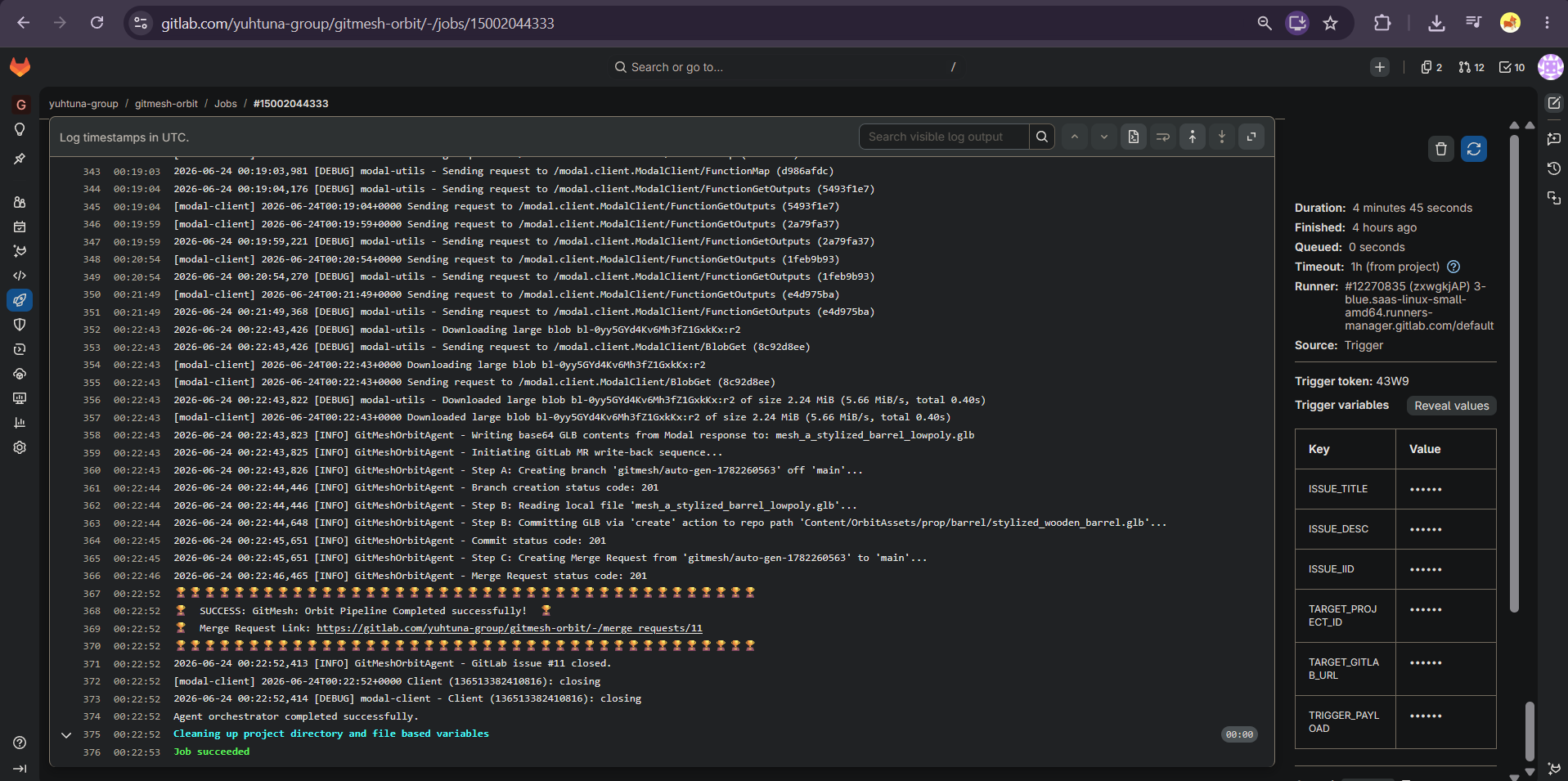
GitMesh Orbit is an AI art director that actually gets the physical rules of your project. It intercepts requests for new 3D assets and automatically generates perfectly scaled models that are ready for production. Instead of just spitting out a random file it creates the geometry scales it to fit the exact dimensions of your target environment and automatically commits the finished file straight into your repository pipeline via a Merge Request. No more manual scaling and no broken engine imports.
How we built it
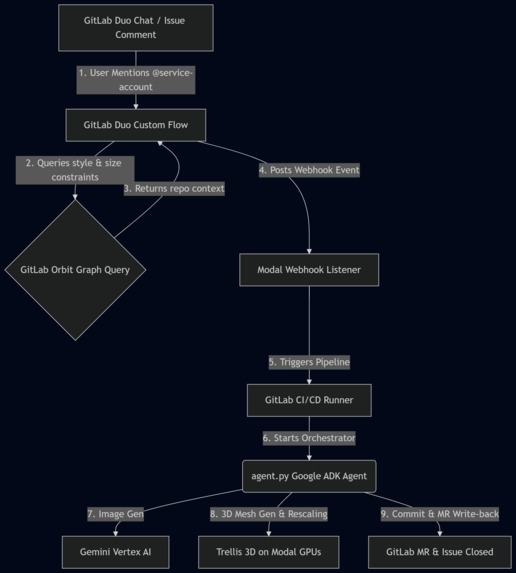
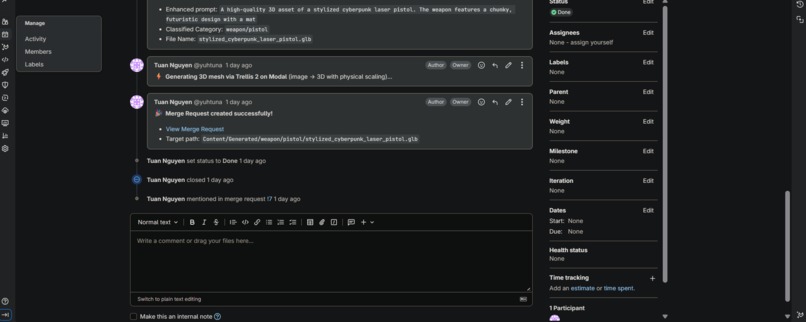
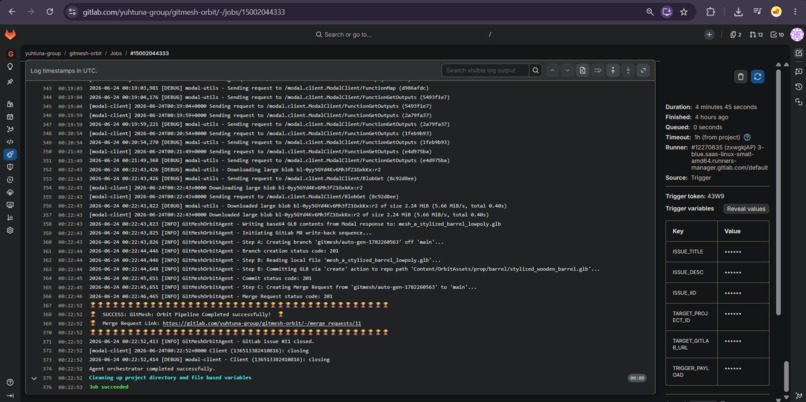
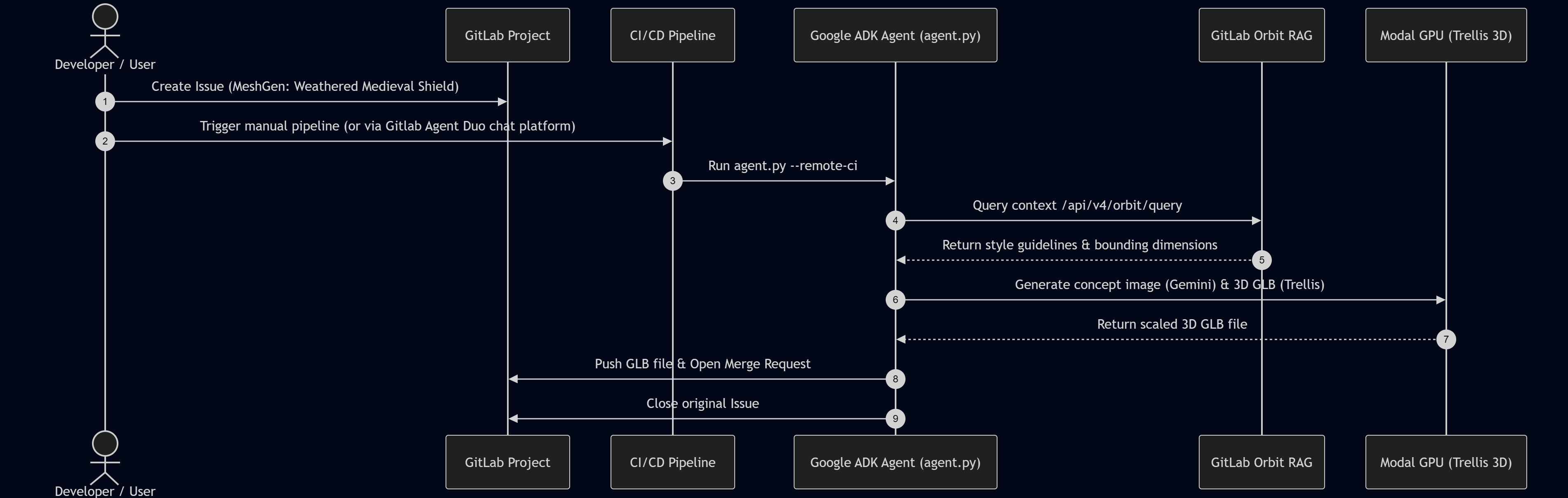
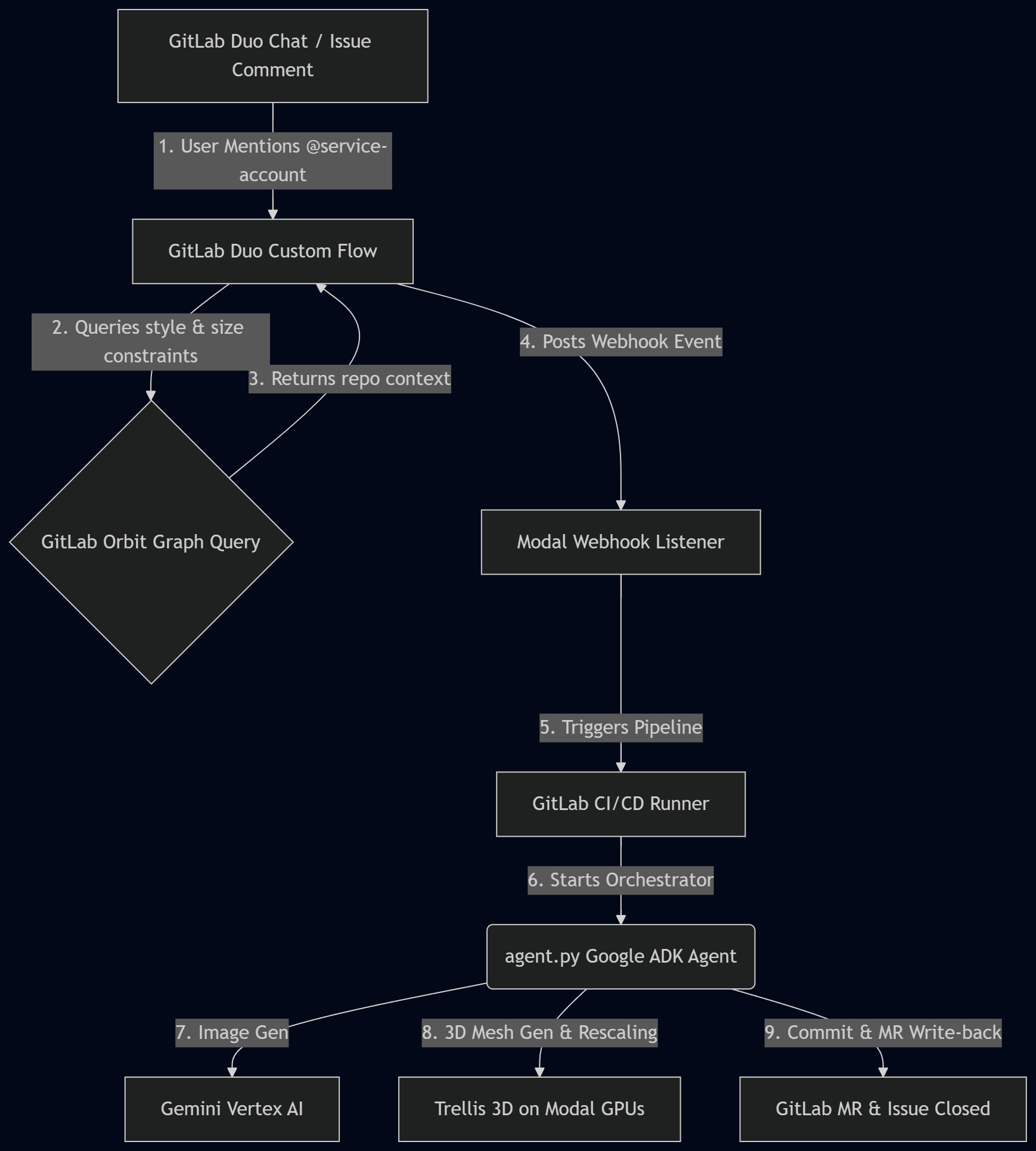
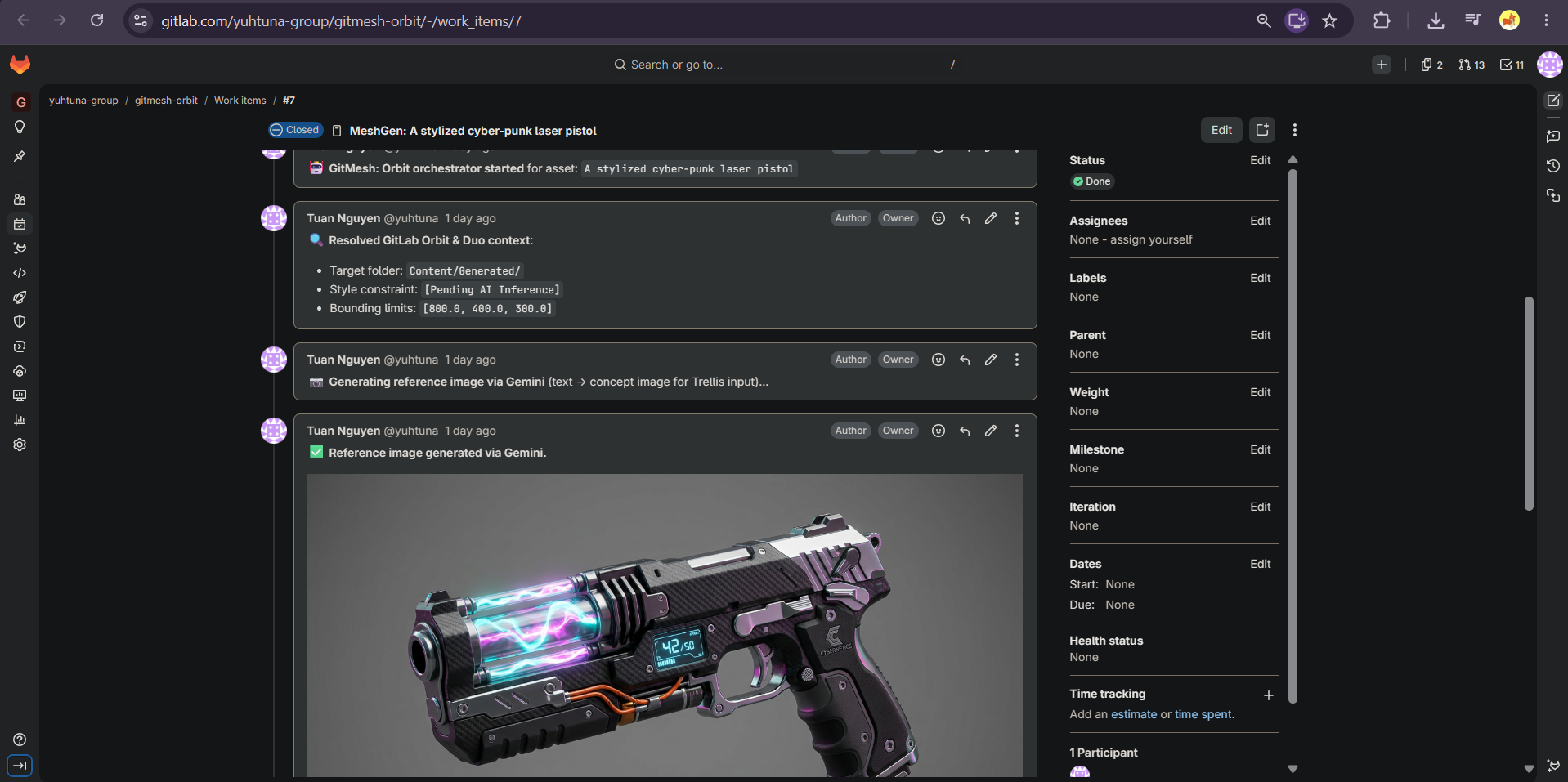
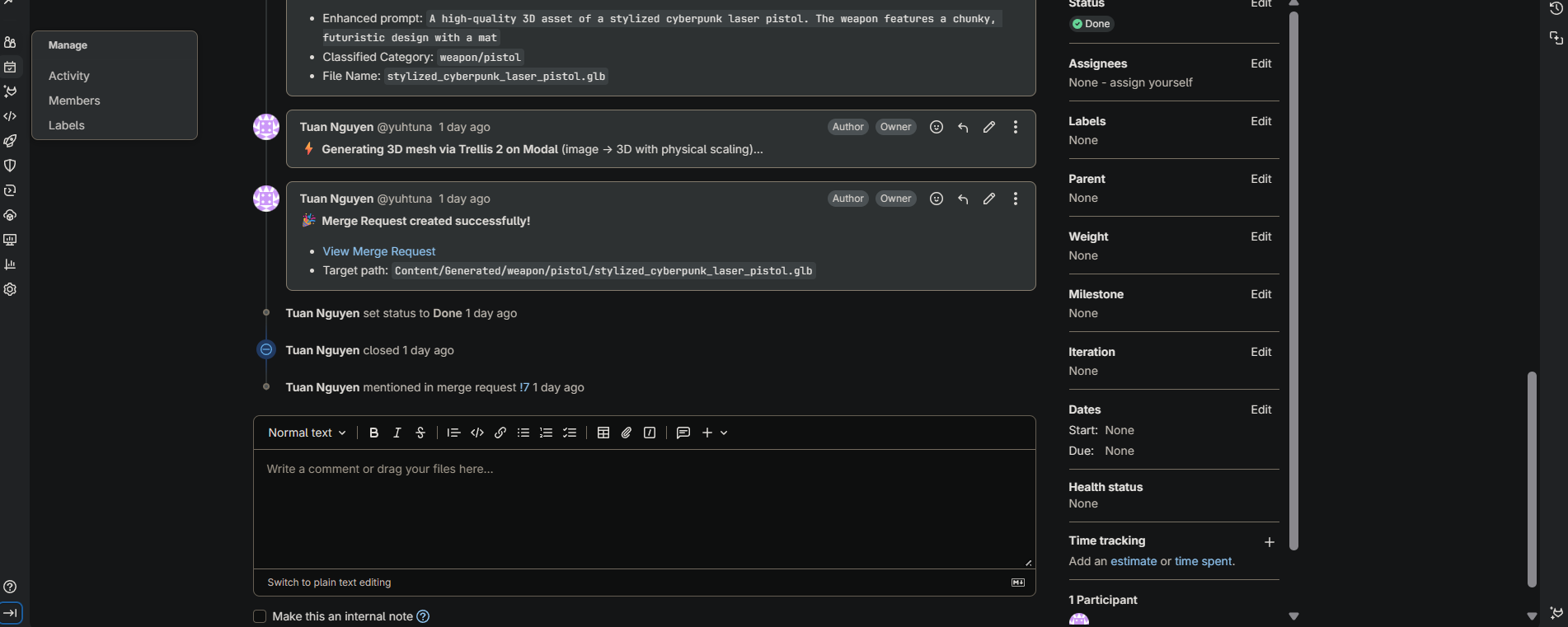
This is where the engineering really comes together. I built the backend orchestrator using Python. When a developer asks for a new asset GitLab Duo acts as the brain to parse the exact intent. Then the spatial memory kicks in. The pipeline queries the GitLab Orbit API to grab the exact constraints like bounding box limits and the correct destination folder. With those rules in place GitMesh uses Gemini to generate a high quality reference image. That image gets routed to Modal where Trellis 2 runs on serverless L4 GPUs to generate the actual 3D mesh. Modal scales the geometry perfectly to match the Orbit data and finally the GitLab API automatically drops the finished GLB file into a brand new Merge Request.
Challenges we ran into
Getting the math right for the automatic scaling was definitely the hardest part. The AI generates the raw mesh at an arbitrary size so I had to implement a calculation that computes the bounding box of the generated geometry and applies a uniform scaling factor to fit exactly inside the dimensions provided by Orbit. Another big hurdle was ensuring the system handles API timeouts since 3D generation takes time. I solved this by offloading the heavy lifting to the serverless Modal GPUs so the GitLab webhook can trigger the job and exit cleanly without hanging.
Accomplishments that we're proud of
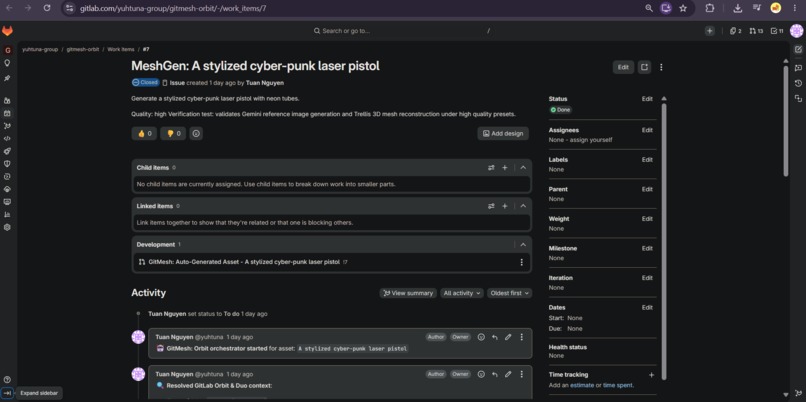
I am incredibly proud of getting the full cycle pipeline completely working from a single chat trigger all the way to a finished Merge Request. Proving that an AI agent can read a repository spatial constraints using Orbit and then automatically push a physically scaled asset back into the continuous integration flow feels like a massive leap forward for technical artists.
What we learned
I learned a massive amount about how to structure context aware agents. Building this taught me that the reasoning power of a large language model is only as good as the hard data you feed it. Using Orbit as a retrieval augmented generation layer completely changed how I think about injecting spatial and repository context into generative workflows.
What's next for GitMesh: Orbit
The immediate next step is building out scene decomposition. Right now the system excels at generating one perfect prop at a time. The next evolution will use GitLab Duo to break down a massive prompt like pirate ship into a JSON manifest containing a mast and barrels and cannons. Then the architecture will map that manifest to a swarm of parallel GPUs to generate the entire suite of props all at once and push them in a single massive commit.

Log in or sign up for Devpost to join the conversation.