-
-
Logo
-
Event-driven workflow diagram
-
Agents diagram
-
PL0
-
PL1
-
pl2
-
PL3
-
PL4
-
PL6
👋 The Problem
Are you an indie game developer tired of the manual grind, or just looking for a tool that automates making fully animated, high-quality 3D meshes for your project? Then you've come to the right place.
Building immersive environments requires a massive volume of physical props. Yet, while software engineers can automate code deployment with CI/CD pipelines, the 3D asset pipeline remains a notorious, manual bottleneck. Technical artists are forced to hand-model, clean up, and rig every single object in tools like Blender before it ever reaches the game engine. GitMesh eliminates this friction, automatically generating, procedurally rigging, and attaching ready-to-use 3D objects directly to your project issues in minutes.
💡 What It Does
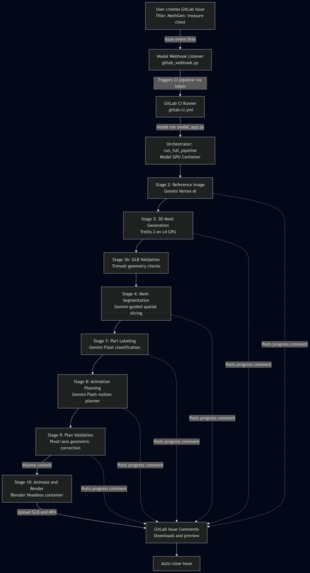
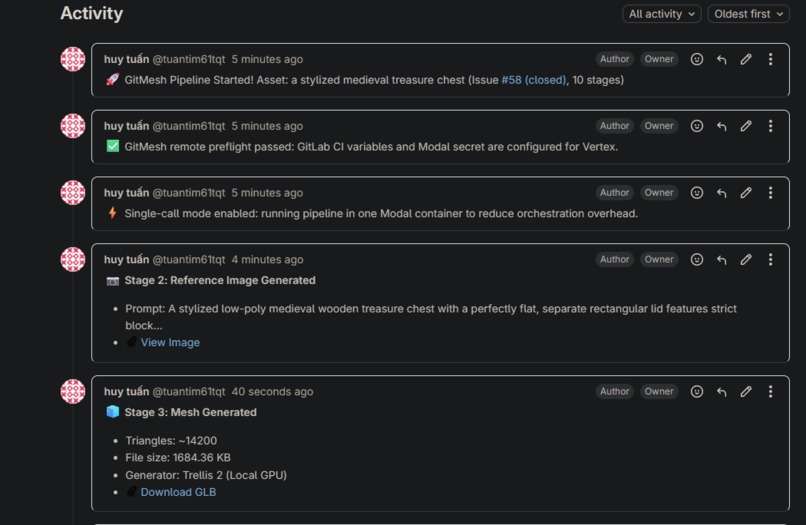
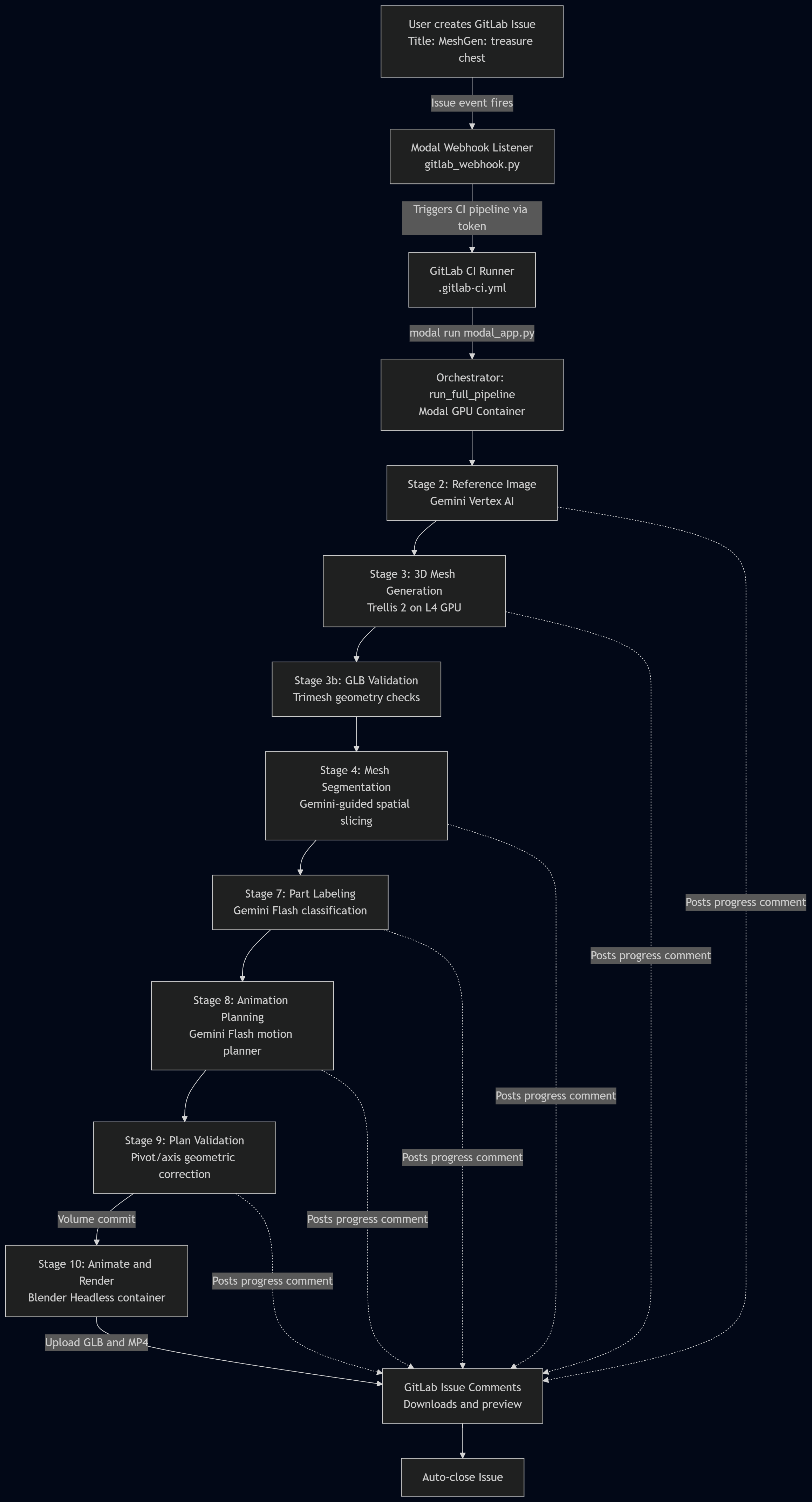
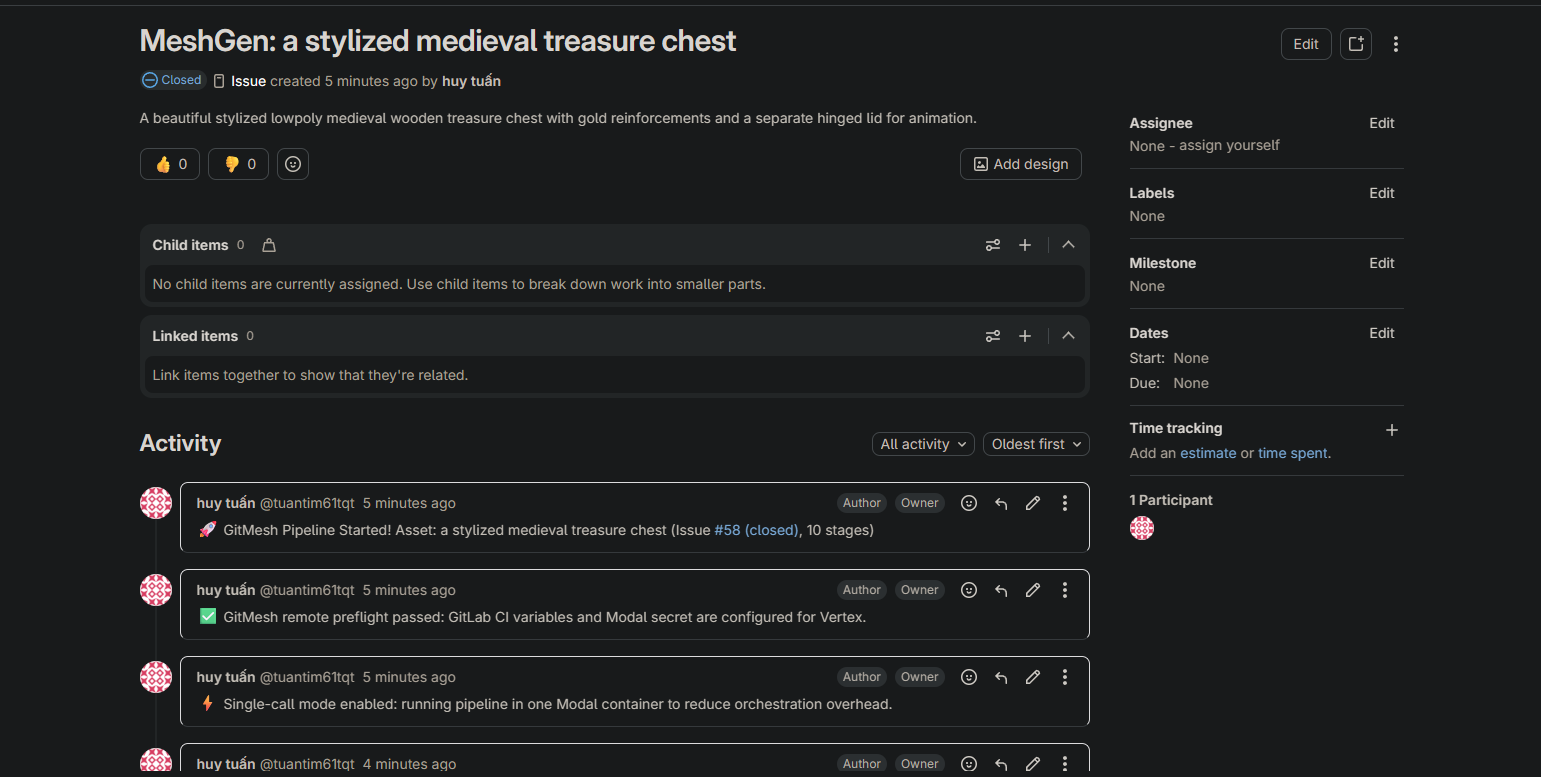
GitMesh treats 3D asset production as an automated, event-driven CI/CD microservice triggered natively within your workspace. When you open a standard GitLab issue requesting a new asset, GitMesh intercepts the event and activates an autonomous control plane.
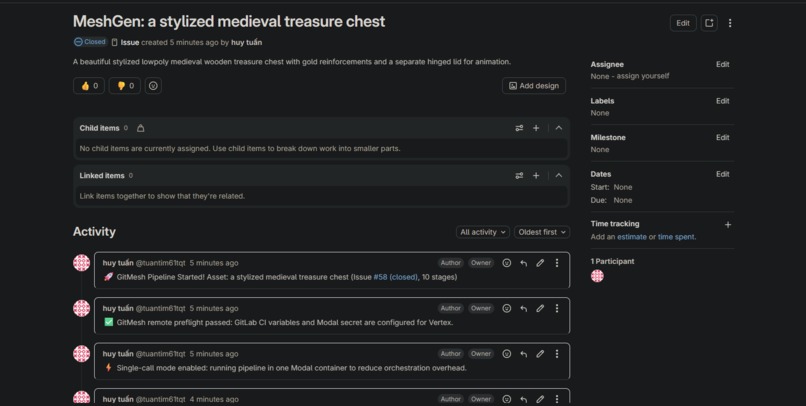
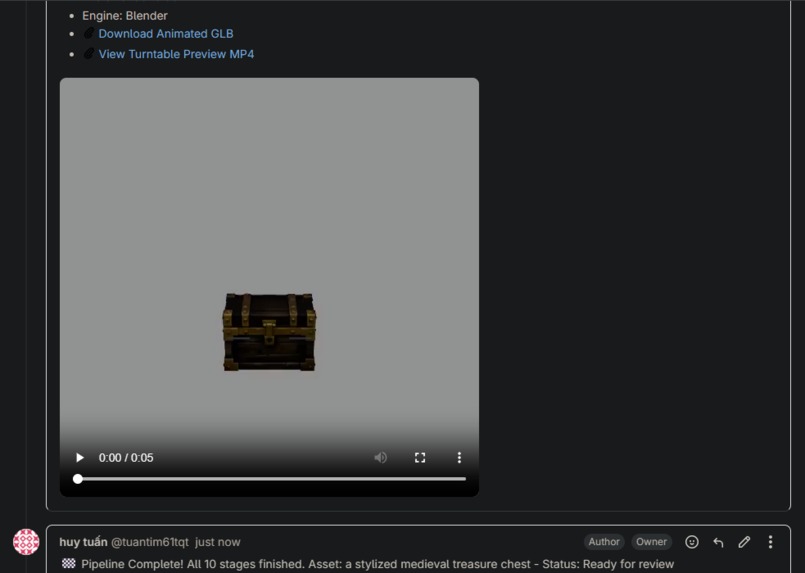
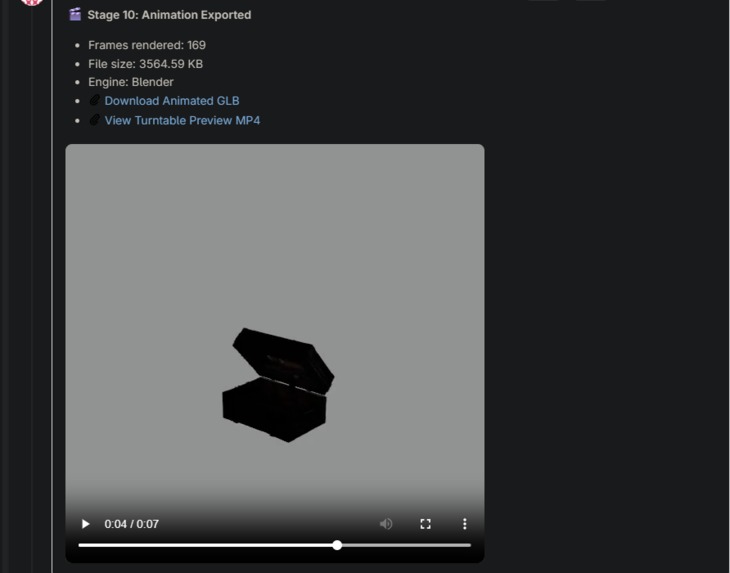
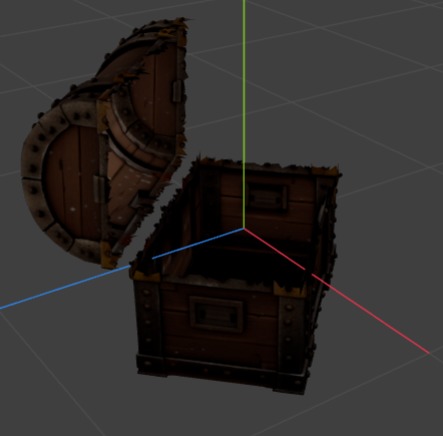
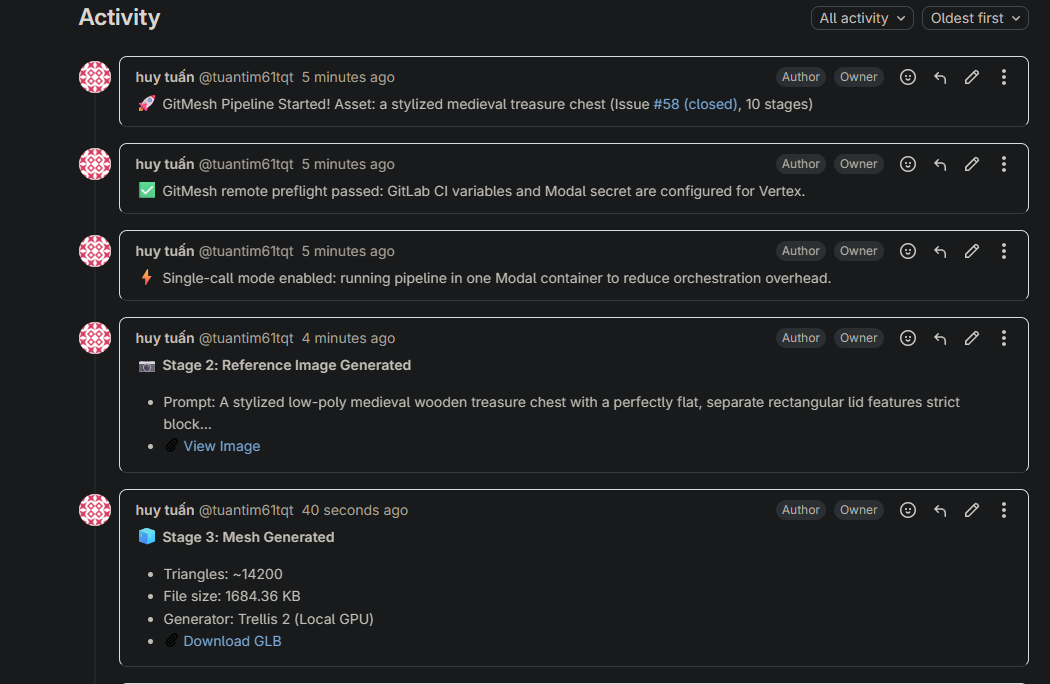
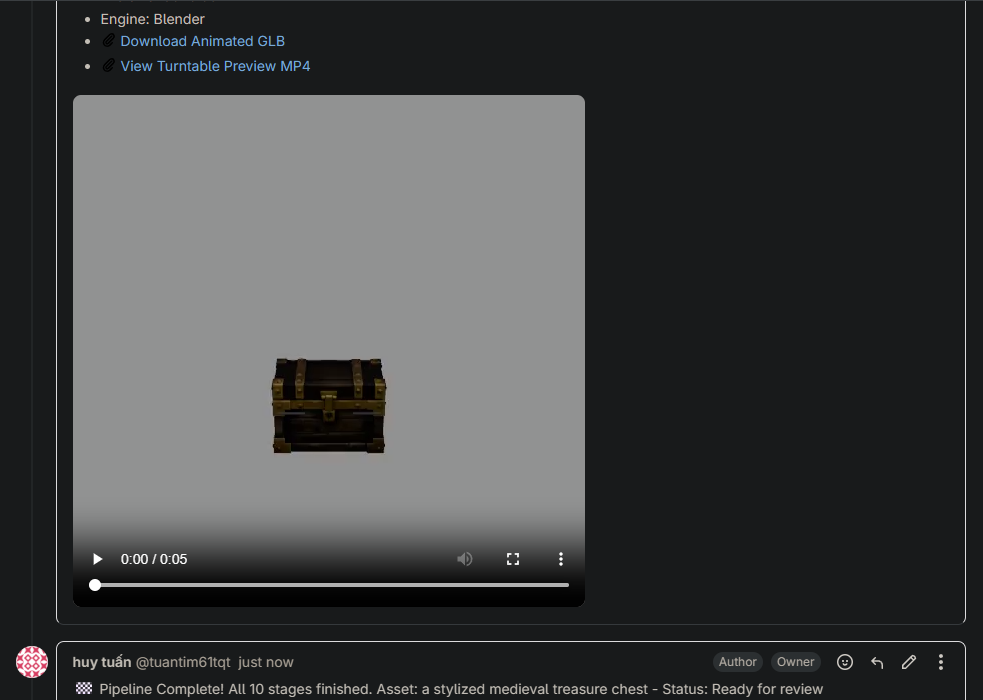
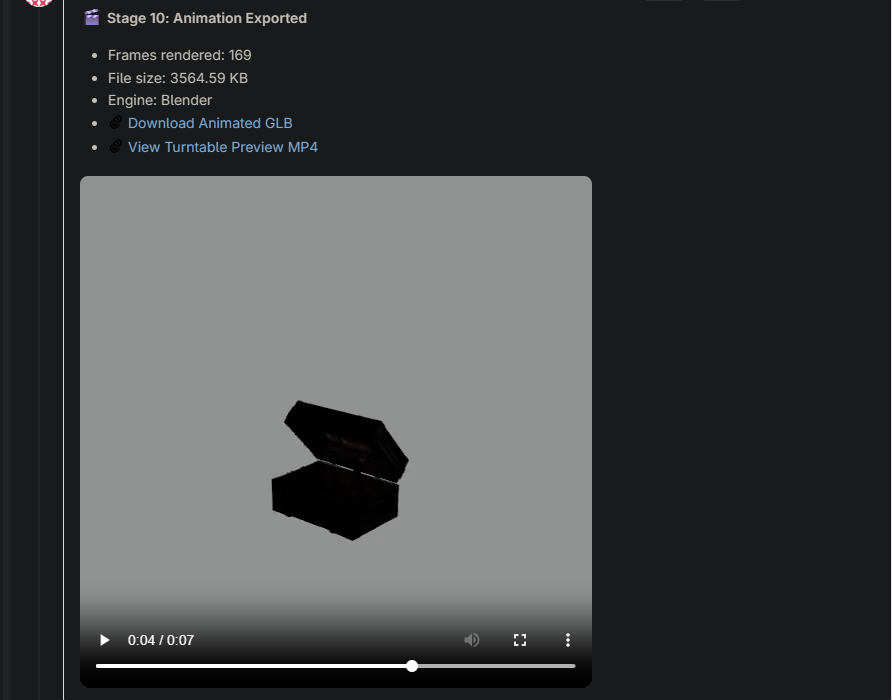
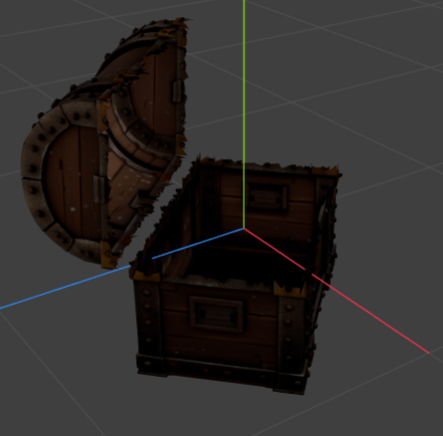
Instead of leaving you in the dark while it computes, GitMesh posts live progress comments directly to the issue thread at every generation stage. Within minutes, it generates the 3D geometry, applies a procedural animation rig, renders a preview video, attaches the completed .glb and .mp4 files directly to the thread, and automatically closes the issue.
⚙️ The Multi-Stage AI Architecture
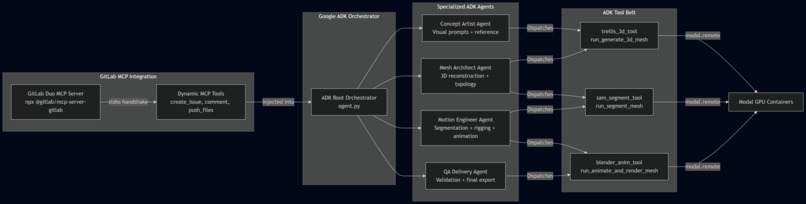
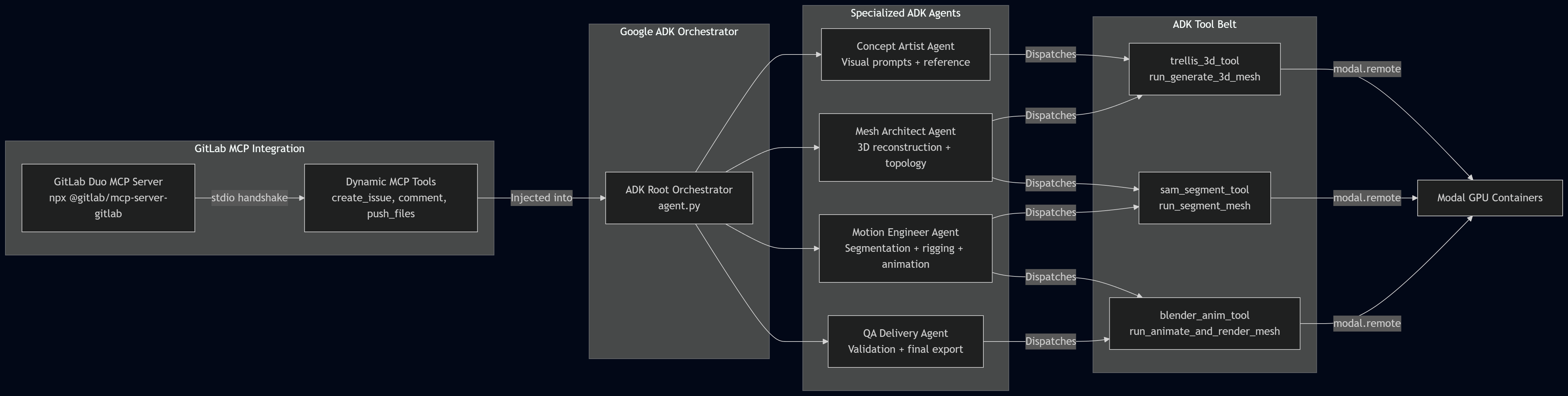
Instead of building a brittle API wrapper, we engineered an enterprise-grade, multi-stage cloud architecture powered by a heavy stack of AI models and GitLab CI/CD:
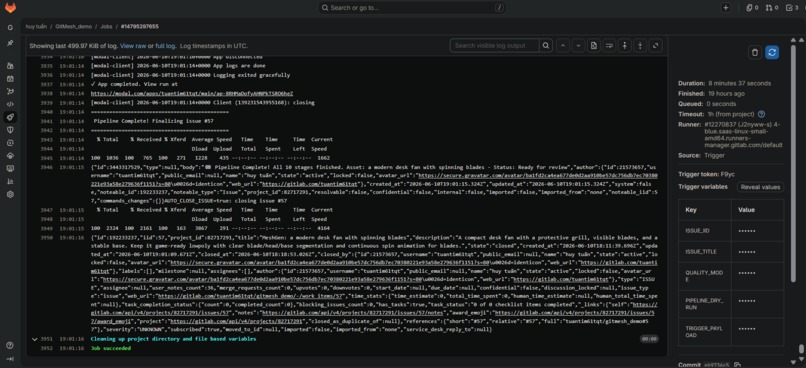
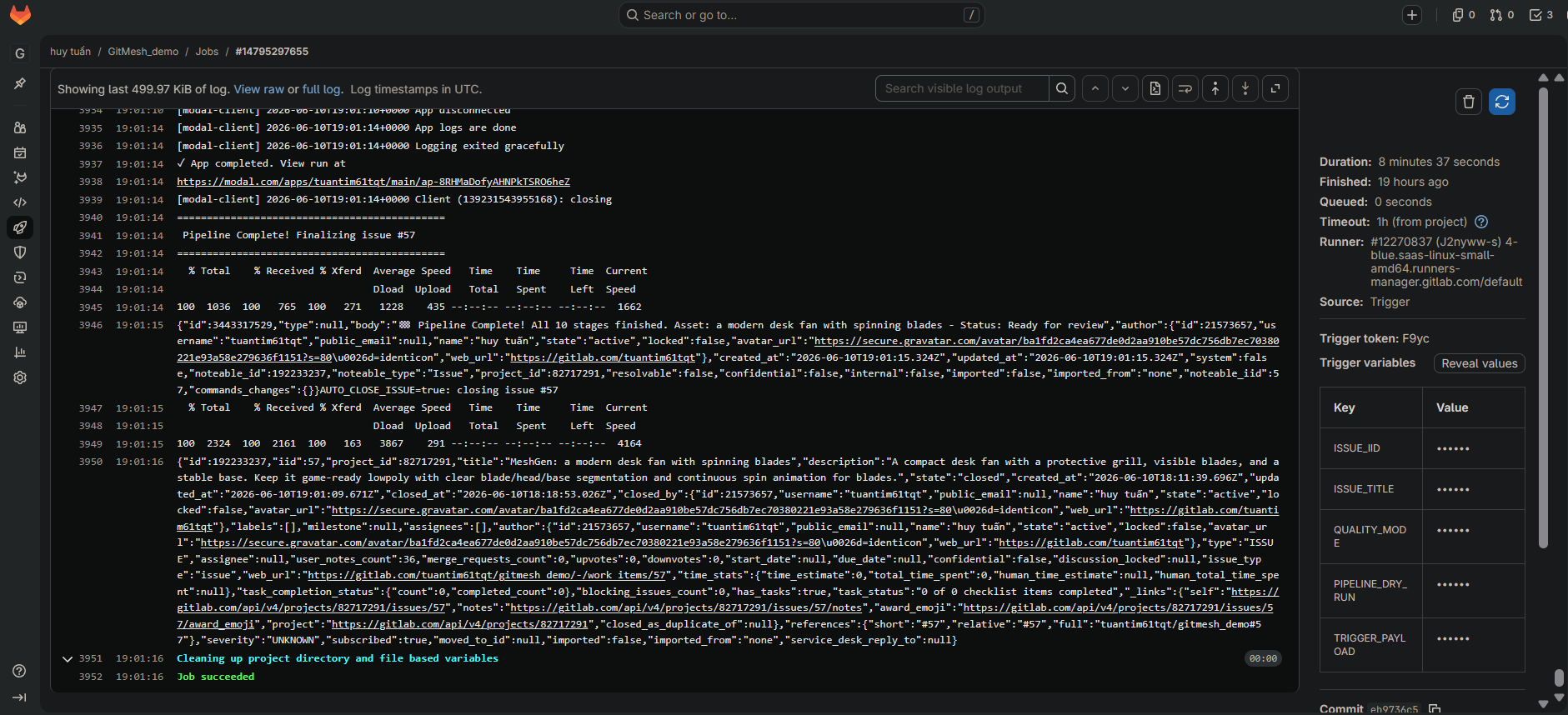
The CI/CD Automation Backbone: When an issue fires, our Modal Webhook Listener (gitlab_webhook.py) intercepts the payload and securely triggers a native GitLab CI Runner via token. The .gitlab-ci.yml pipeline then deploys our main orchestrator inside a serverless Modal GPU Container.
The AI Relay Race (Generation): Asset creation begins with Gemini Vertex AI generating a highly detailed 2D reference image. This image is immediately passed to Trellis 2 running on serverless L4 GPUs to reconstruct the dense 3D mesh.
The Spatial Reasoning Engine (Gemini Flash): We didn't stop at raw generation. We utilized Gemini Flash as a sophisticated spatial reasoning engine to handle intelligent mesh segmentation, part labeling, and dynamic animation planning.
Validation & Procedural Rendering: Custom Python logic utilizes Trimesh to validate the geometry and correct the pivot axis in 3D space. The orchestrator then commits the animation plan to a Modal Persistent Volume, which is loaded into a headless Blender Container. Blender executes the procedural render and pushes the final deliverables back to the GitLab issue.
🚧 Challenges We Ran Into
Our biggest hurdle was streamlining the DevOps friction required to pass heavy binary 3D assets and animation plans across serverless, containerized environments. We solved this by implementing Modal Persistent Volumes to pass state between our Validation Container and our Headless Blender Container. Additionally, relying on AI for spatial animation often leads to errors, which we mitigated by writing strict Trimesh geometric pivot correction math to guarantee flawless renders every time.
🏆 Accomplishments That We're Proud Of
We are incredibly proud of the deeply integrated live feedback loop. Engineering the orchestrator to dynamically post real-time progress updates back to the GitLab issue thread at every single stage of the pipeline required precise asynchronous state management. Proving that an LLM can reliably orchestrate complex CI/CD infrastructure, pass data across L4 GPUs, and automate the heaviest parts of a creative pipeline is a massive engineering win for us.
🚀 What's Next for GitMesh
The next evolution is moving beyond isolated items to build entire 3D scenes populated with dynamically generated, animated objects. Instead of creating standalone assets one by one, V2 will parse complex spatial descriptions, generate full environment layouts, and coordinate multiple serverless worker pipelines to construct, animate, and assemble cohesive 3D worlds all inside a unified project tracking system.
🧑💻 About the Builder
My focus heavily blends AI orchestration and computer vision with 3D modeling and game design in Unreal Engine 5 and Blender. GitMesh is the exact system I wanted to build to bridge those two worlds together, bringing the rigor of software engineering directly to the creative pipeline.

Log in or sign up for Devpost to join the conversation.