Inspiration
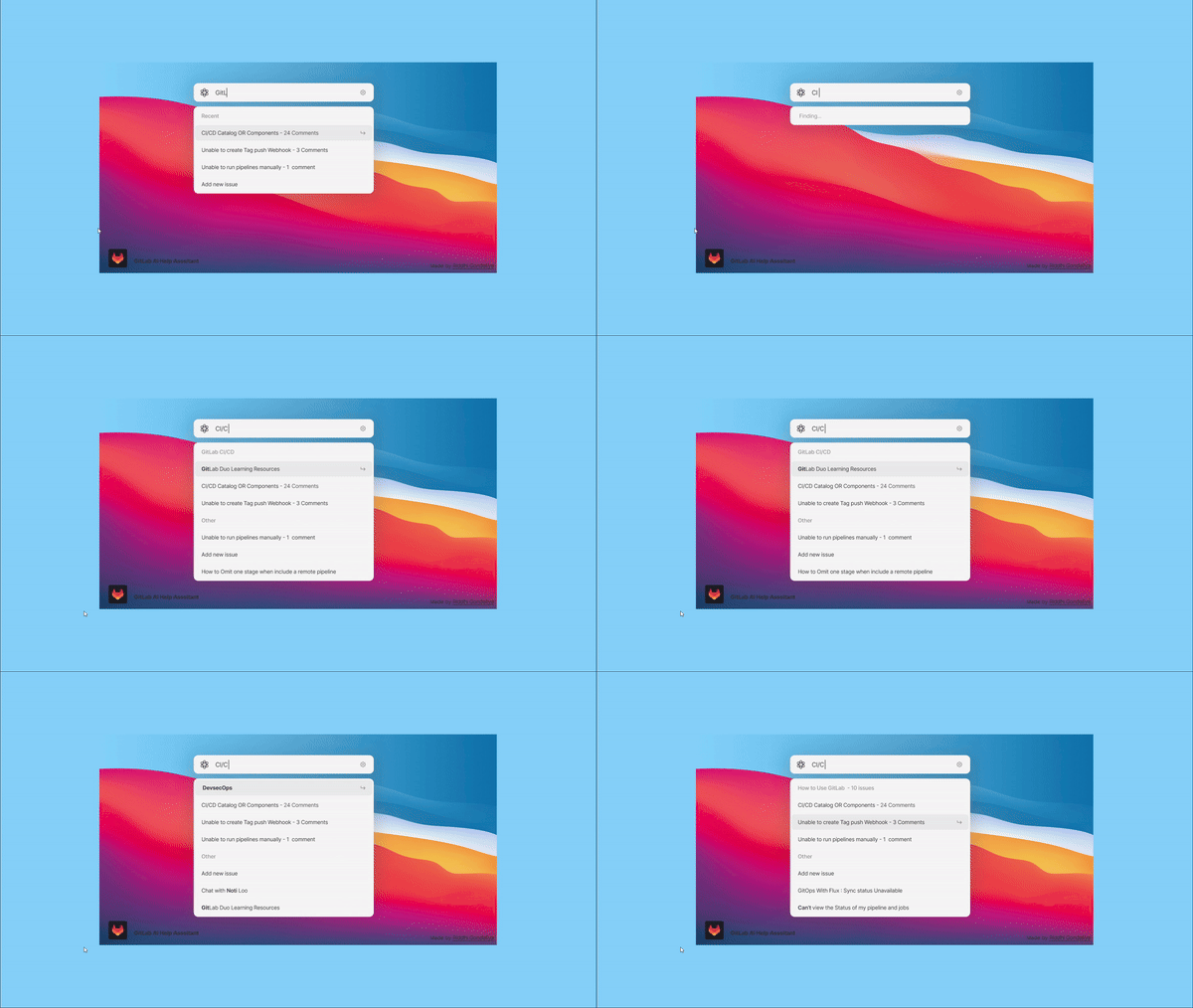
I was inspired by how developers seek help and find solutions on community forums like Stack Overflow and GitLab. Noticing the complex user interface and the frustration of searching through numerous issues, I saw an opportunity. My goal is to simplify this process, making developers' tasks easier and more productive.
What it does
The GitLab AI Help Assistant quickly finds solutions for developers by searching through community forums and picking out answers to already solved problems. It understands what developers are asking for and matches their questions with the best solutions from other developers who faced similar issues. This way, developers get fast and useful help, drawing on the shared knowledge of the GitLab community, so they can fix problems and get back to work without delay.
How we built it
ChatGPT To build the next version of the GitLab AI Help Assistant, we'll leverage advanced AI and machine learning technologies, focusing on natural language processing to improve understanding and responses to developer queries. The process involves integrating the assistant with a wider range of development tools, using data analytics to offer proactive support, and creating a feedback loop with the community for continuous improvement. Ethical AI practices will guide the development to ensure fairness, transparency, and privacy. By involving the GitLab community in beta testing and feedback, we'll refine the assistant's capabilities, making it a more intuitive, helpful, and integrated part of developers' workflows. This approach aims to enhance the assistant's responsiveness, predictive abilities, and overall usefulness in addressing developers' needs, making software development smoother and more efficient.
Challenges we ran into
The GitLab AI Help Assistant helps developers overcome the drawbacks of less community support. It makes solving problems faster, tailors learning to each developer, boosts the quality of their work, and keeps them engaged and open to new ideas. With this AI help, GitLab aims to make the development process smoother and more productive for everyone, no matter how much support they get from others.
What we learned
Through designing the GitLab AI Help Assistant, we've learned a lot: Personalized help is crucial for developers' productivity, and quality advice matters more than sheer volume. Listening to user feedback is key for continuous improvement, while a simple interface encourages more use. Building a community where developers share and collaborate is vital for success, and keeping up with fast-paced tech changes is necessary. Finding the right mix of AI and human interaction helps solve complex issues, and protecting user data is a top priority. These insights have shaped our approach to making the GitLab AI Help Assistant a valuable tool for developers.
What's next for GitLab AI help Assistant
The next big thing for the GitLab AI Help Assistant is to let users easily report problems right from the chat and make it super clear which problems have been solved and which haven't. Imagine typing your issue into the chat and the assistant taking care of it, making everything smoother and faster. Plus, with a clearer display, you can quickly see if someone else has already fixed a similar problem or if it's still up in the air. This upgrade is all about making GitLab even more user-friendly and helpful, turning it into a go-to spot for getting things done without any fuss.
Why this feature is important for GitLab in long term :
By adding the AI Help Assistant, GitLab can make things easier and faster for developers, making them happier and more likely to stick around. It's like having a smart helper that quickly finds answers in the community, saving everyone time. This cool feature can also attract more users and make GitLab stand out as a place that's always looking for ways to improve. Plus, it can help GitLab save money by answering lots of questions automatically, allowing them to focus on making even better tools for developers. Overall, it's a win-win for GitLab and its users, creating a stronger, more connected community.
Built With
- figma

Log in or sign up for Devpost to join the conversation.