Inspiration 💫
Software development is inherently complex, but much of the friction developers face isn't in writing code—it's in the surrounding "meta-work": planning, context-switching, structuring ideas, and formatting documentation. When the GitLab AI Hackathon was announced, we realized that participants themselves face this exact friction when trying to conceptualize and plan their projects under a tight deadline. We were inspired to build a tool that “drinks its own champagne”—an AI-powered assistant designed to eliminate the friction of planning an AI project that eliminates friction. We wanted to empower developers to focus on innovating and coding, rather than stressing over the structure of their pitch, missing requirements, or leaving bonus prize money on the table.
What it does ⌨️
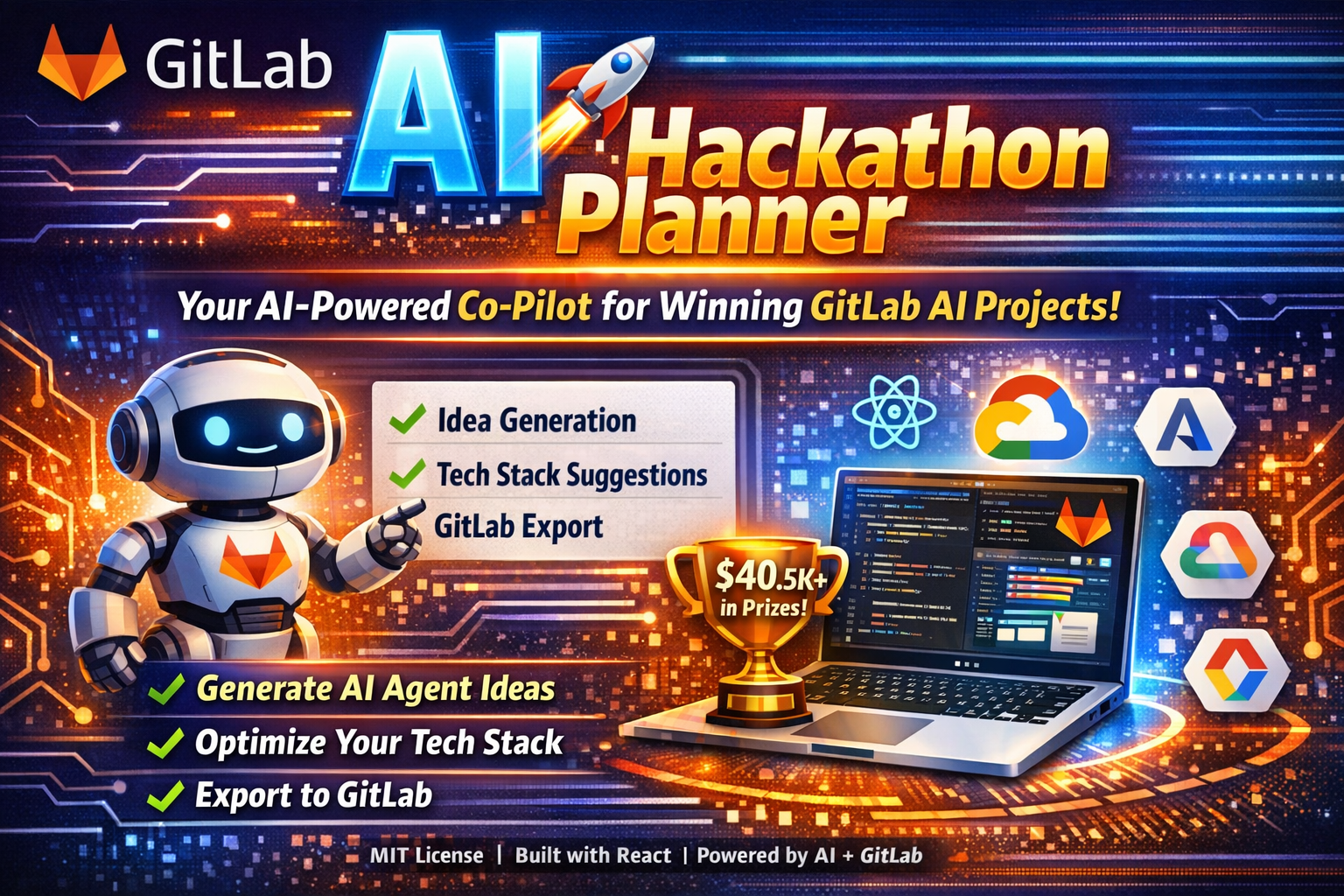
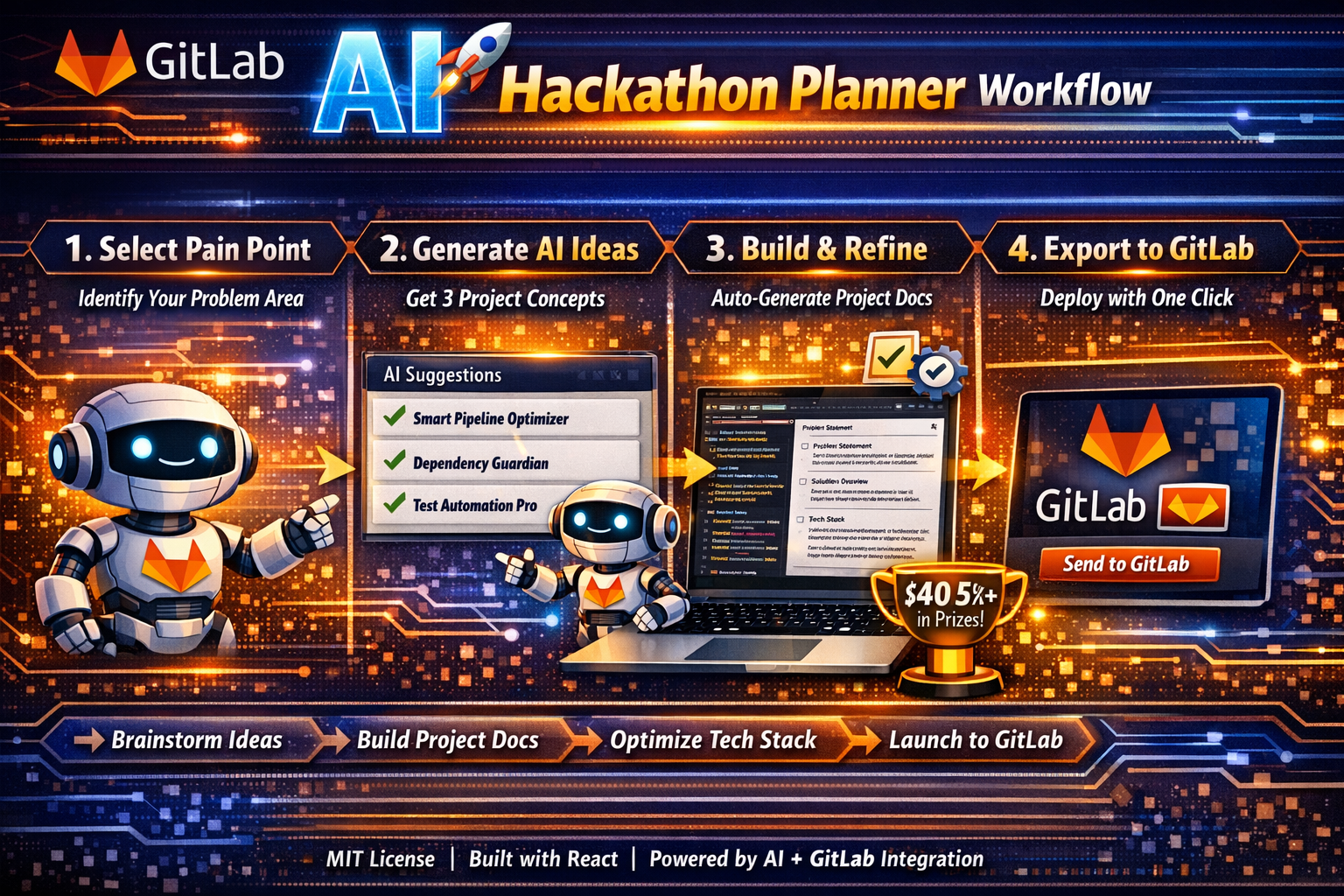
The GitLab AI Hackathon Planner is an intelligent project planning assistant and AI co-pilot that reduces 3-4 hours of manual documentation down to 40 minutes. It guides developers through the entire lifecycle of a hackathon submission:
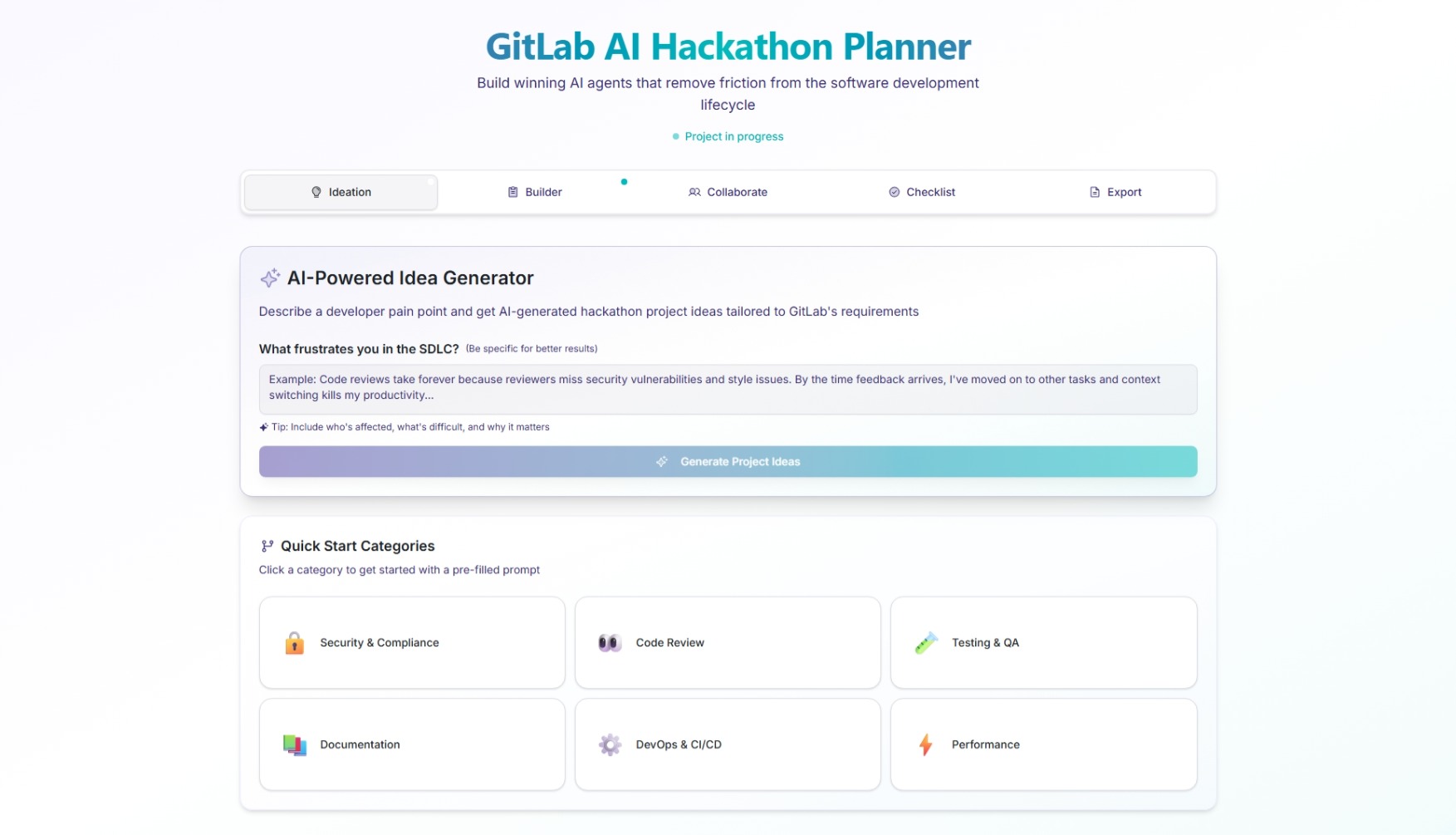
- Rapid Ideation: Turns a vague developer pain point into 3 concrete, fully-formed AI agent concepts in seconds.
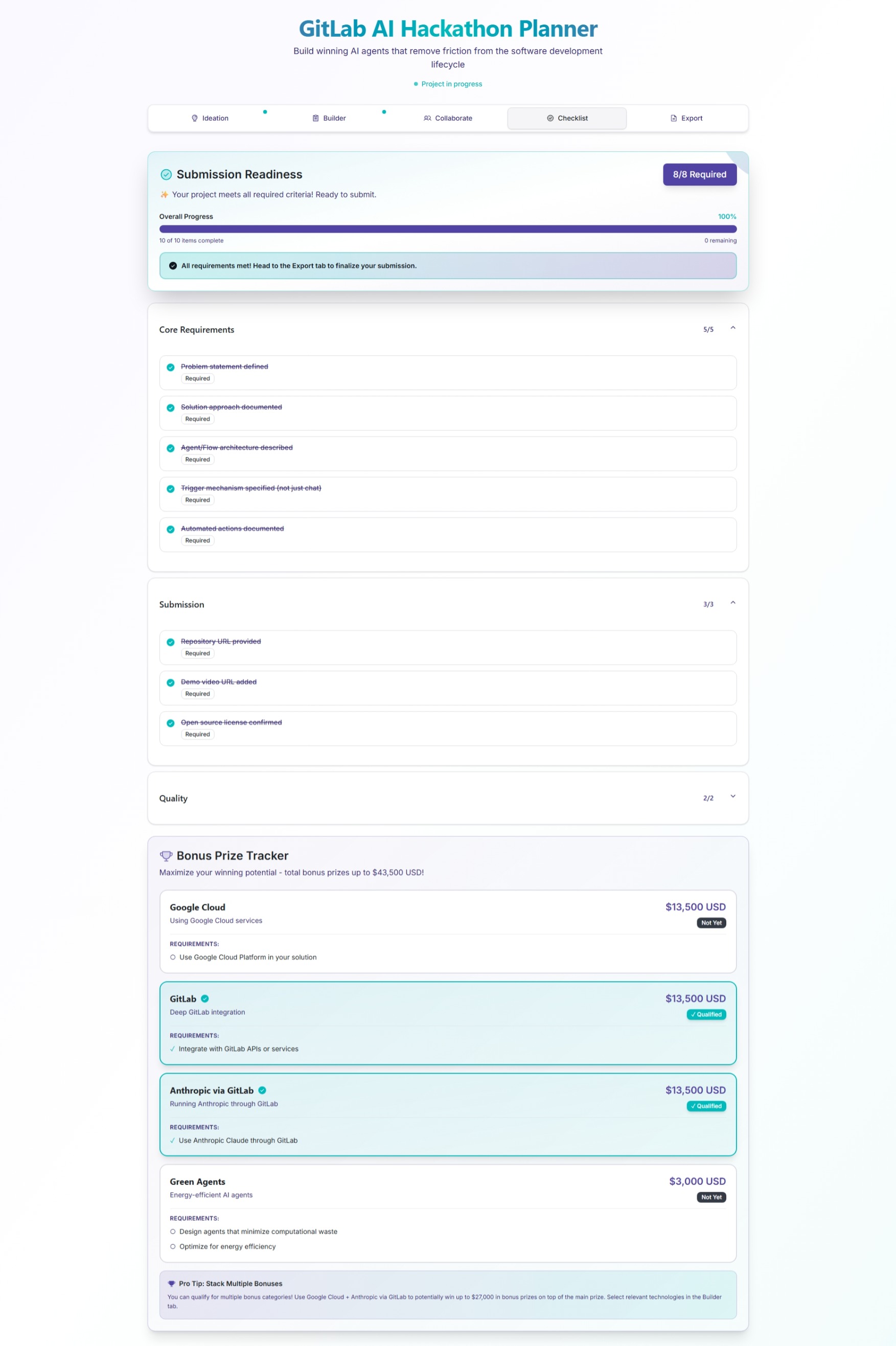
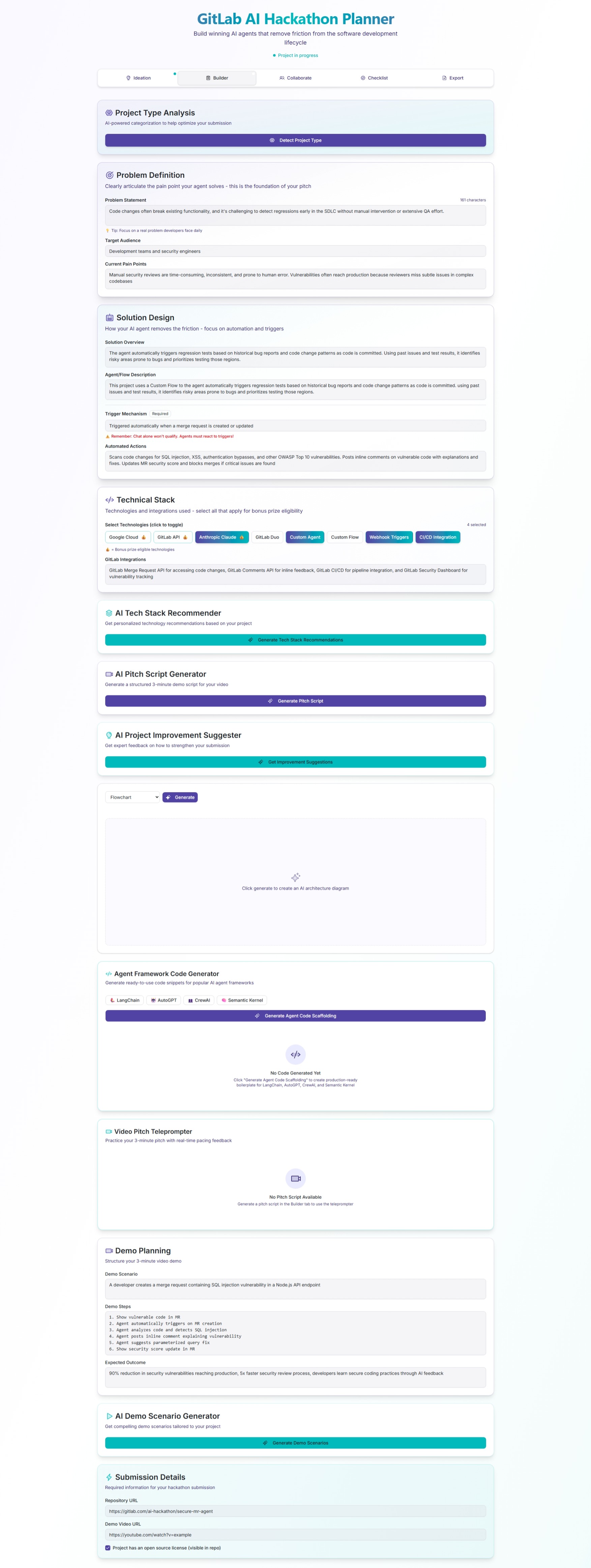
- Bonus Prize Mapping: Intelligently recommends a tech stack tailored to your project that specifically unlocks alignment with the hackathon's $40.5K in bonus categories (e.g., Deep GitLab Integration, Google Cloud, Anthropic).
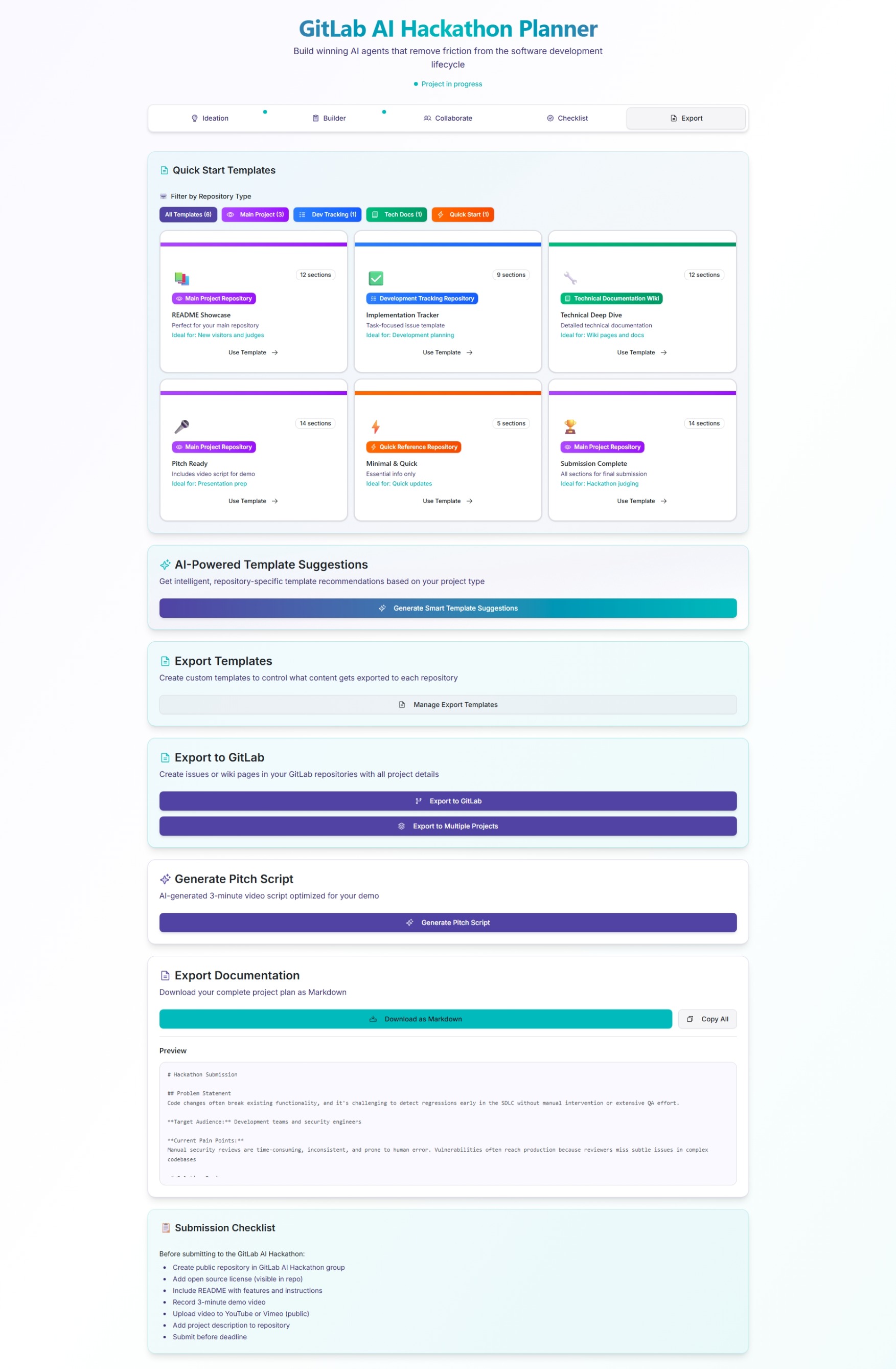
- Presentation Generation: Automatically drafts 3-minute, time-stamped pitch scripts and realistic, step-by-step demo scenarios optimized for judging criteria.
- Direct GitLab Export: Validates your submission against a smart checklist, then uses the GitLab API to programmatically export polished, repository-specific templates directly to your GitLab Issues and Wiki pages.
How we built it 🏗️
We built the application with a heavy focus on type safety, scalable frontend architecture, and robust AI integration. The codebase is primarily driven by TypeScript (93.6%), ensuring strict data handling between our UI components and the AI engine.
- Frontend Architecture: Crafted with React 19, Tailwind CSS v4, and shadcn/ui to create a clean, modern, and highly responsive developer-friendly interface. We used Framer Motion for purposeful animations that prevent cognitive overload.
- AI Integration: Powered by OpenAI GPT-4 via the Spark AI SDK, utilizing dynamic prompt engineering to contextualize user inputs specifically for the GitLab ecosystem and SDLC friction points.
- Data & API: We utilized Spark KV Storage for automatic client-side persistence (ensuring zero data loss across sessions) and integrated directly with the GitLab REST API to authenticate users via Personal Access Tokens and push content to multiple repositories.
Challenges we ran into 🪫
One of the biggest hurdles was tuning the AI to output highly structured, practical project plans rather than generic advice. Initially, the generated milestones and tech stacks were either too vague or too ambitious for a time-constrained hackathon. We had to heavily refine our prompt architecture and parsing logic in TypeScript to ensure the generated outputs mapped perfectly to our frontend state.
Additionally, securely managing personal access tokens entirely on the client side while orchestrating complex, multi-repository API calls to GitLab (differentiating between Issue formatting and Wiki page markdown generation) required careful state management and error boundary design.
Accomplishments that we're proud of 🏆
We are incredibly proud of the seamless user experience and the tangible time saved. A user can go from a blank screen to a fully structured, exported project plan in under 40 minutes with a 100% submission completeness rate.
From a technical standpoint, maintaining a strict TypeScript codebase allowed us to catch countless edge cases at compile-time, resulting in a highly stable application. We also successfully quantified the theoretical time saved during the planning phase using our tool, which we model as a productivity multiplier:
$$ \text{Efficiency Gain} = \sum_{i=1}^{n} \left( \frac{T_{manual} - T_{ai}}{T_{manual}} \right) \times 100\% $$
Where $T_{manual}$ is the time spent manually structuring a project (avg. 3-4 hours) and $T_{ai}$ is the time taken using our planner (avg. 40 mins)—resulting in an 80%+ efficiency gain and identifying 3.2x more bonus qualifications per project.
What we learned 🏫
Building this planner deepened our understanding of the exact administrative friction points in the SDLC. We learned advanced context-aware prompt engineering to force LLMs into strict structural constraints that align with complex judging rubrics. Technically, it reinforced the immense value of a strict TypeScript configuration and modern React 19 hooks in fast-paced hackathon environments—spending a little extra time on types and API validation up front saved us hours of debugging later.
What's next for the GitLab AI Hackathon Planner 🌌
The next evolution of the planner moves beyond text generation into deeper visualization and execution. We plan to:
- Visual Architecture Diagrams: Integrate a feature to automatically generate flowchart diagrams (like Mermaid.js) based on the AI-designed agent architecture.
- Video Pitch Timing Tool: Build a teleprompter-style interface that helps participants practice their AI-generated 3-minute pitch with real-time pacing feedback.
- Agent Framework Integration: Output direct code snippets or scaffolded boilerplate for actual agent frameworks like LangChain or AutoGPT based on the planned tech stack.
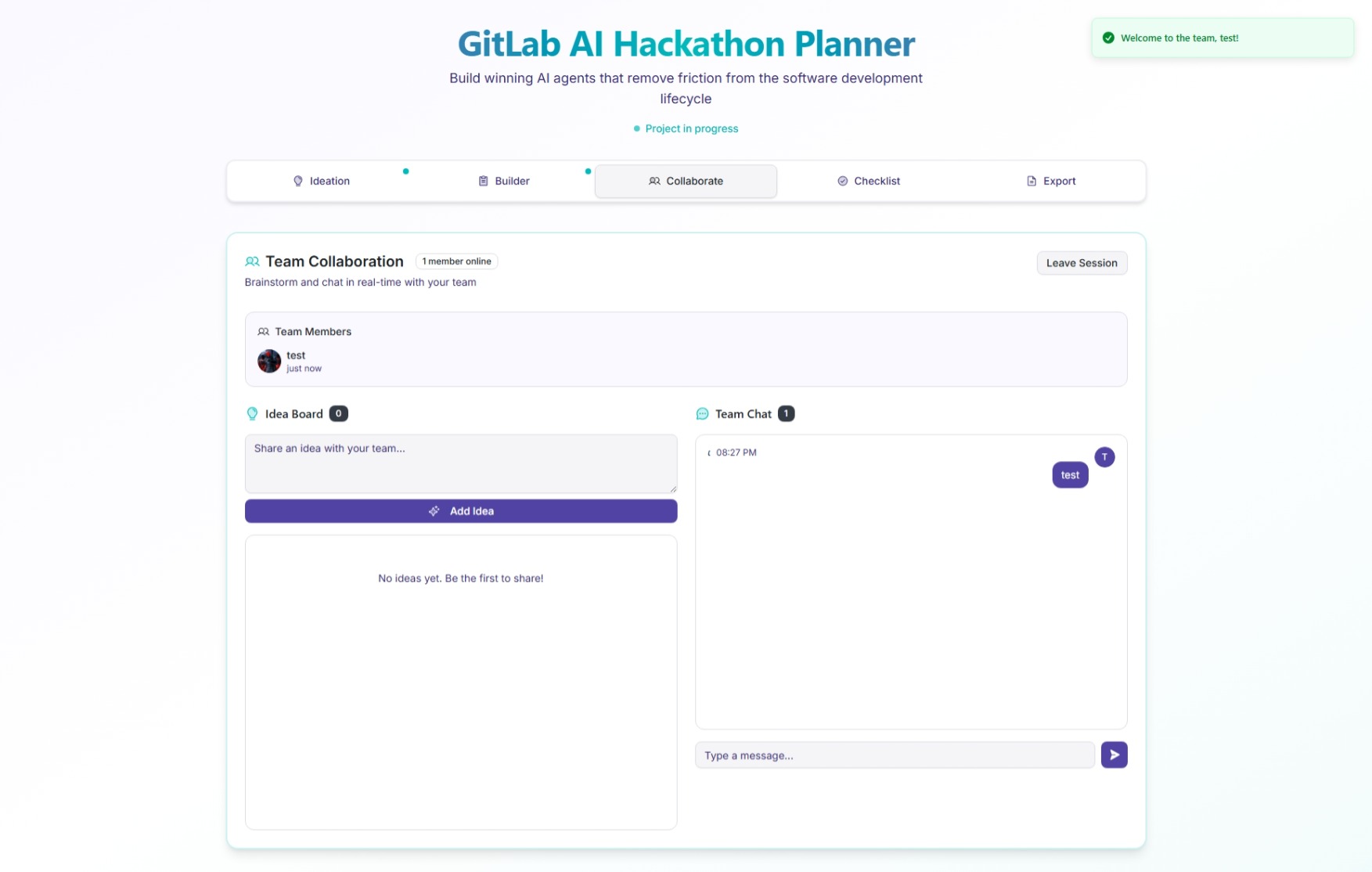
- Team Collaboration: Add real-time multiplayer features so distributed hackathon teams can brainstorm on the canvas simultaneously.
Built With
- css
- html
- javascript
- node.js
- openai-api/anthropic-api/gitlab-duo]
- react/next.js/vue]
- typescript
- vercel/netlify/gitlab


Log in or sign up for Devpost to join the conversation.