-
-
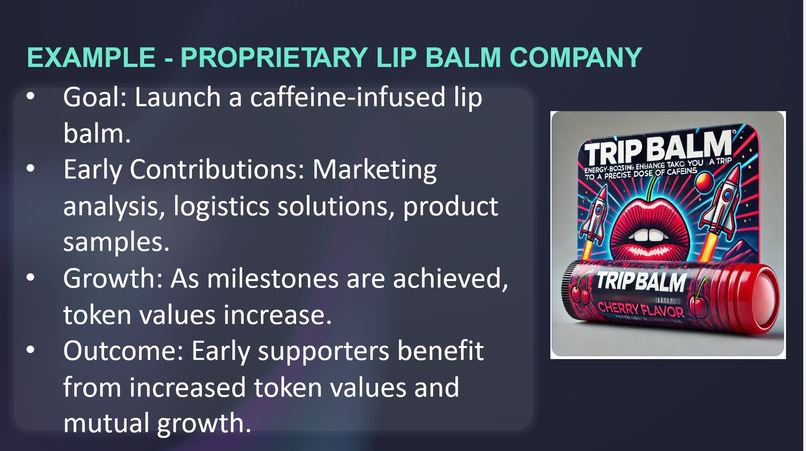
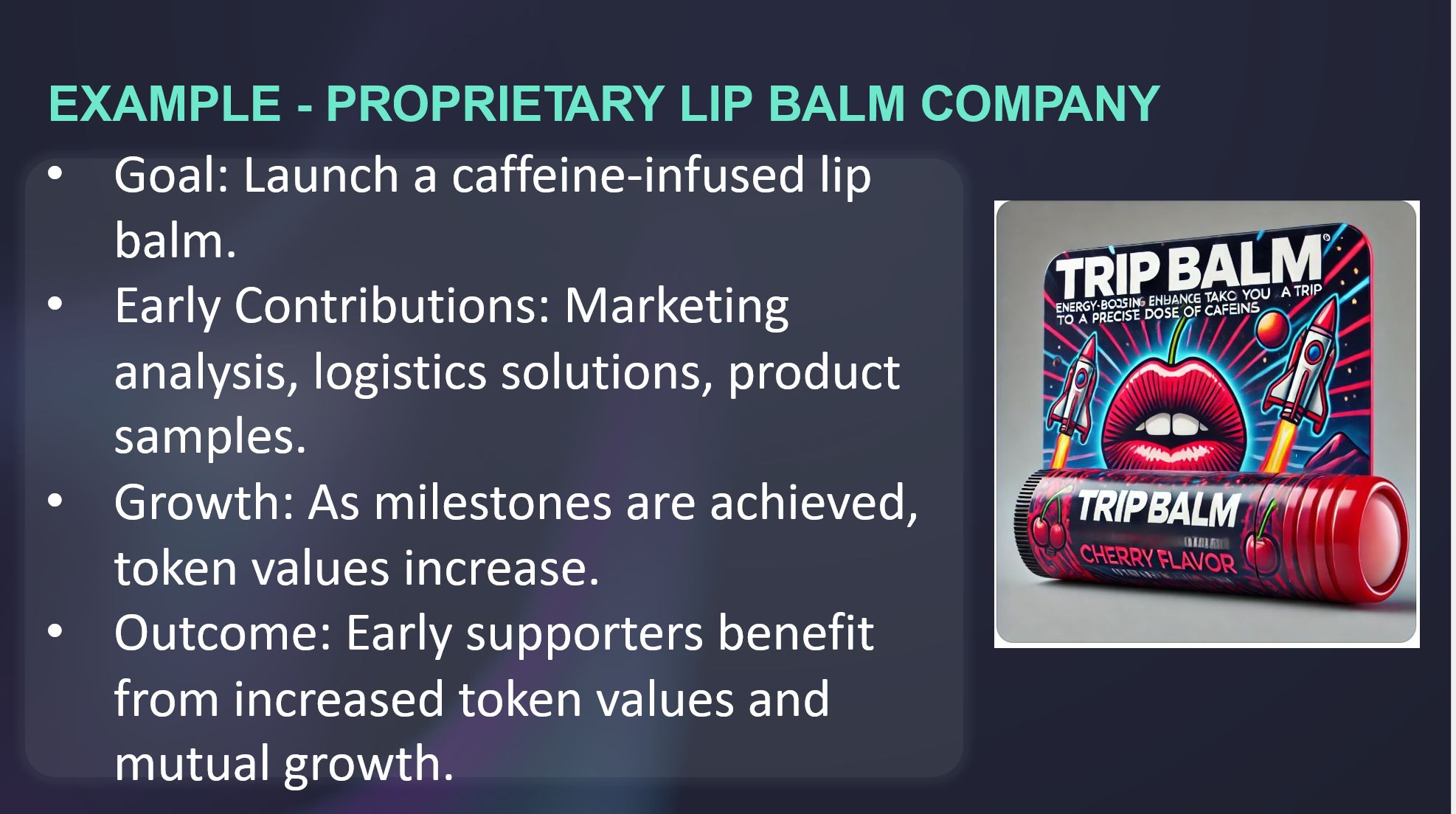
Sample Case: Caffeinated LipBalm
-
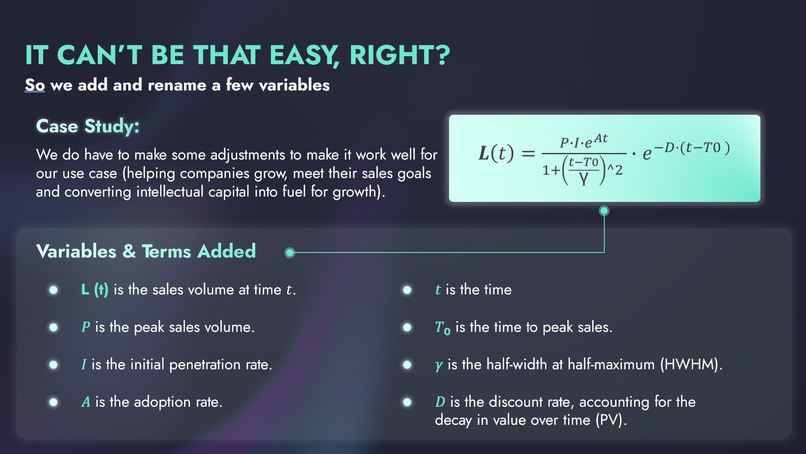
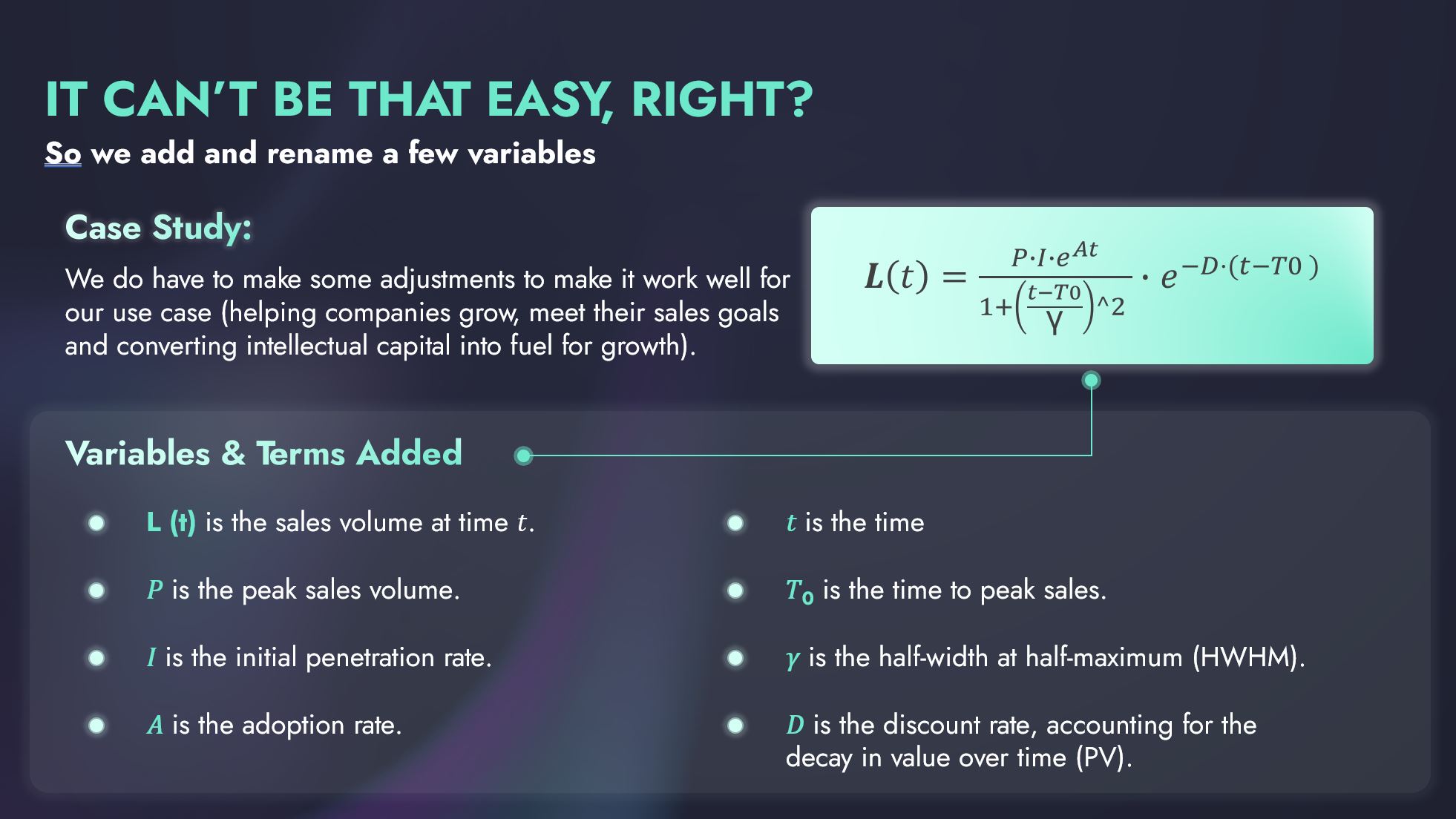
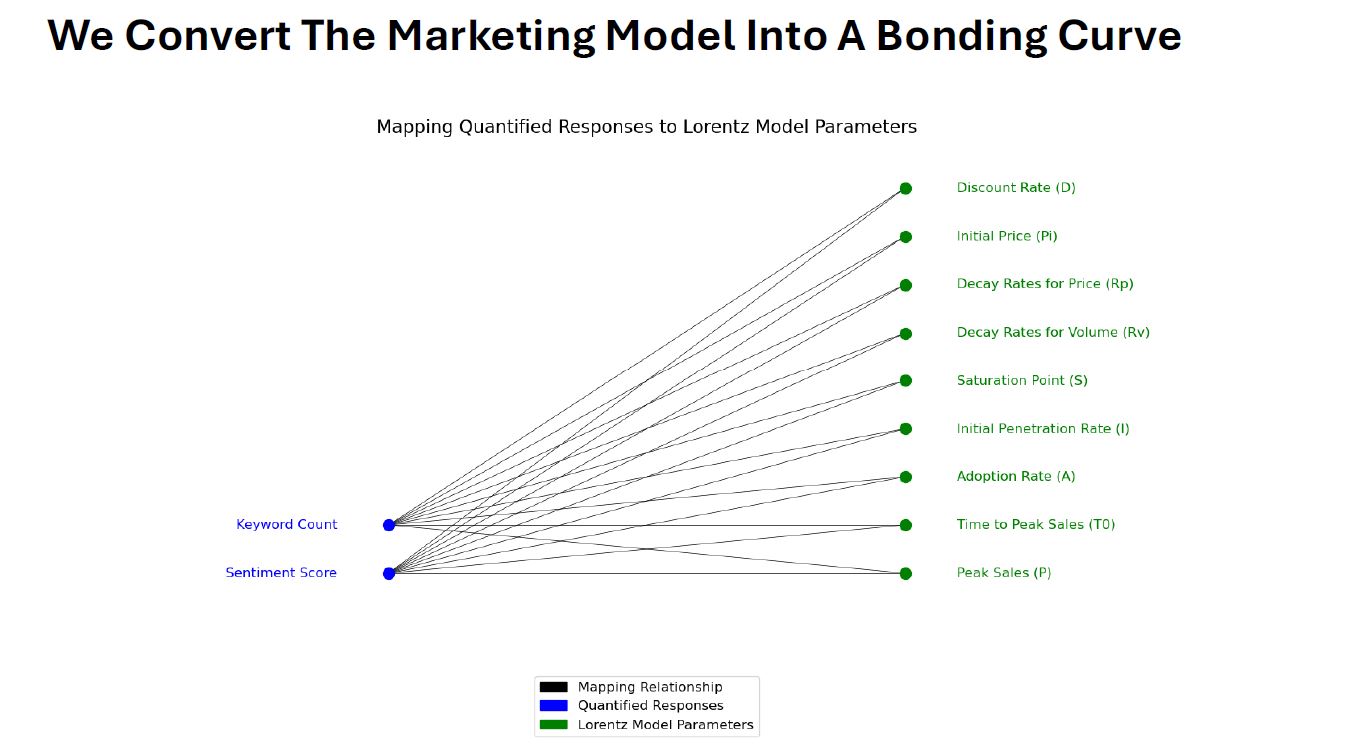
Lorentz to Bonding Curve
-
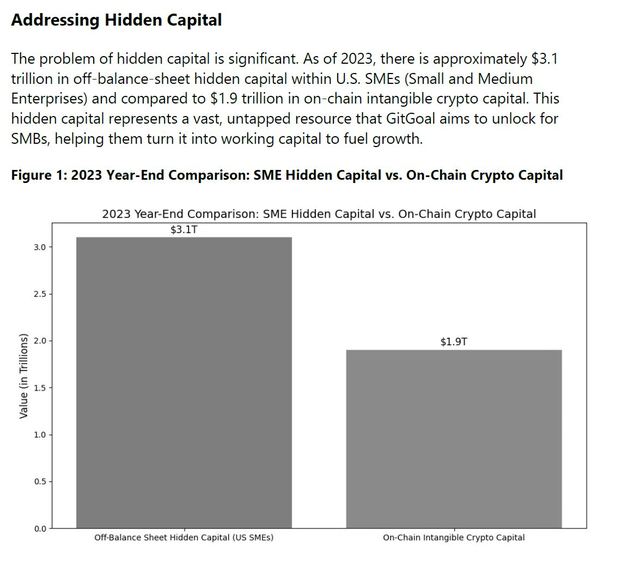
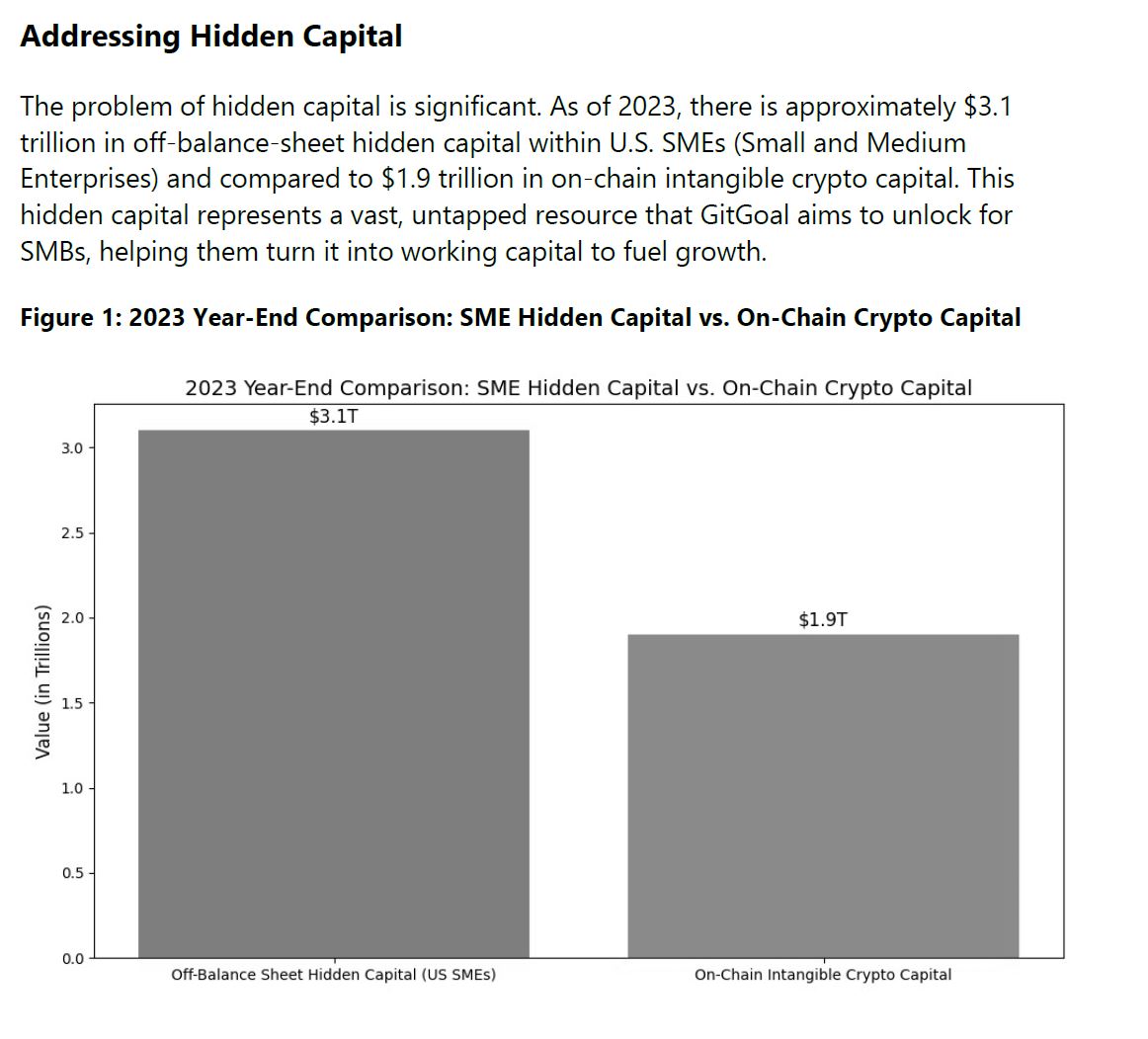
Small Business Hidden Capital Exceeds All Crypto Capital Today
-

Leveraging Goals
-
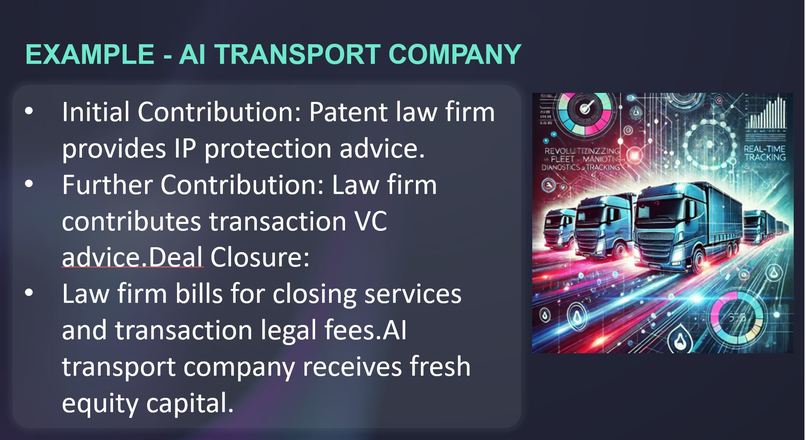
Sample Case: AI Transport Co
-

Sample Case: 0xTherapy
-
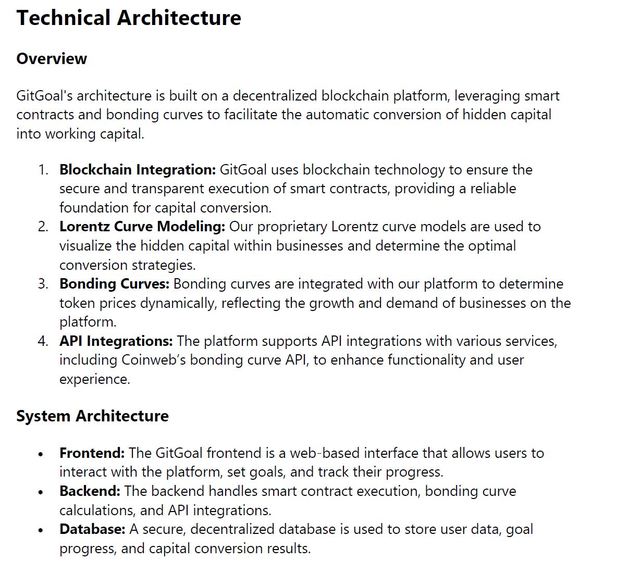
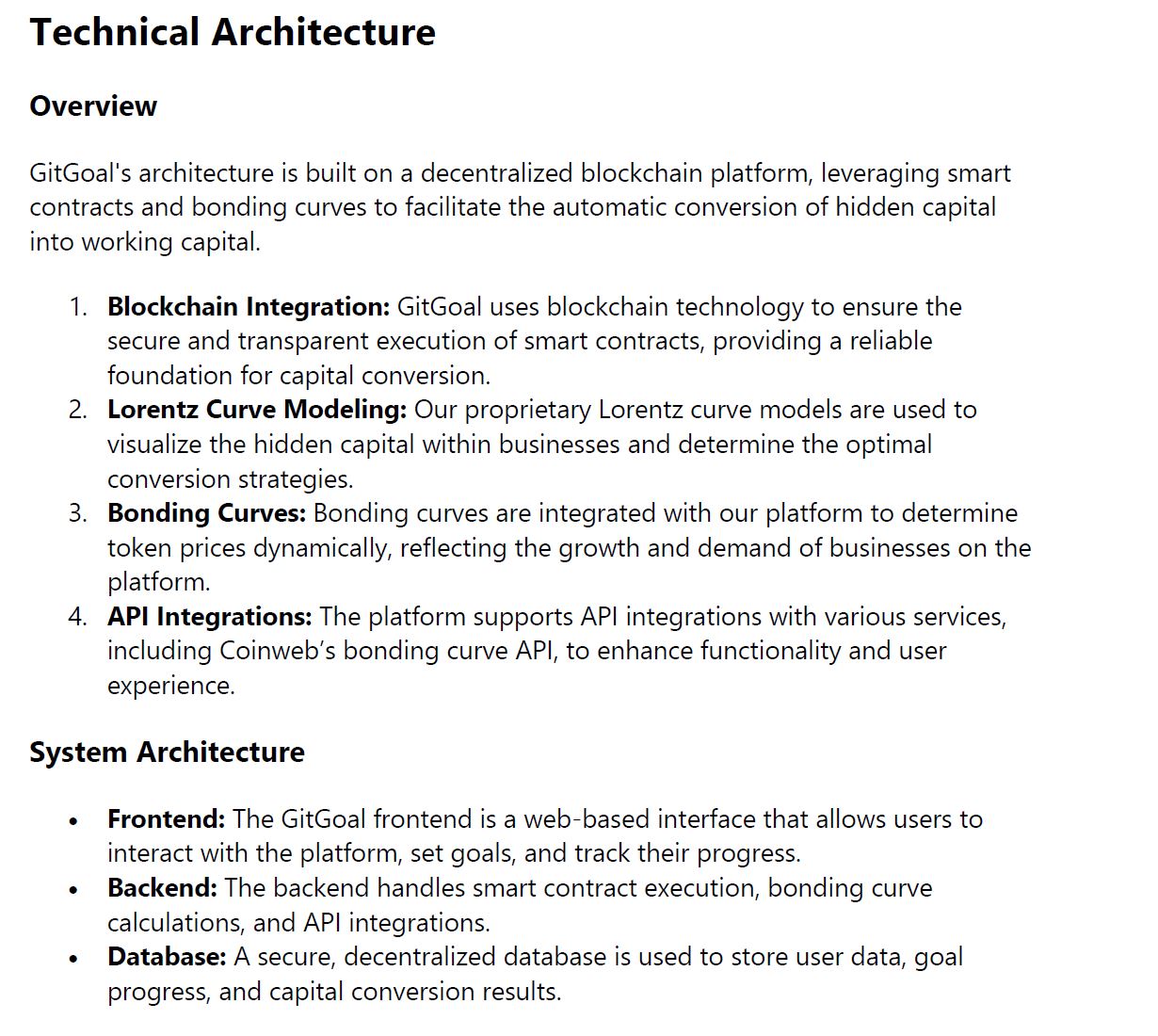
Technical Summary
-
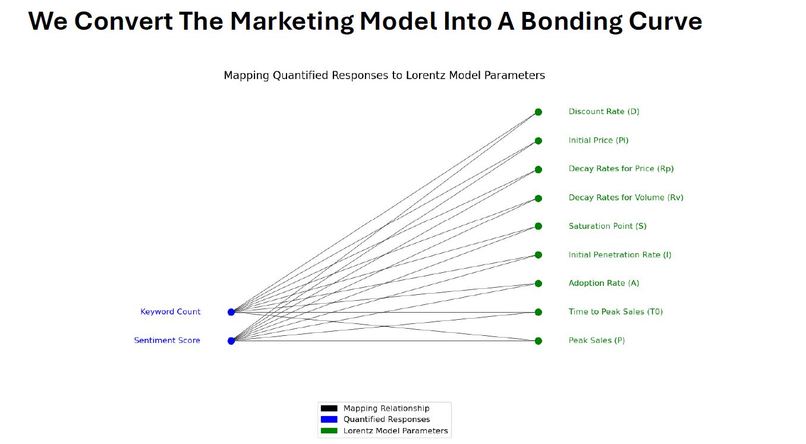
Sentiment to Bonding Curve
-
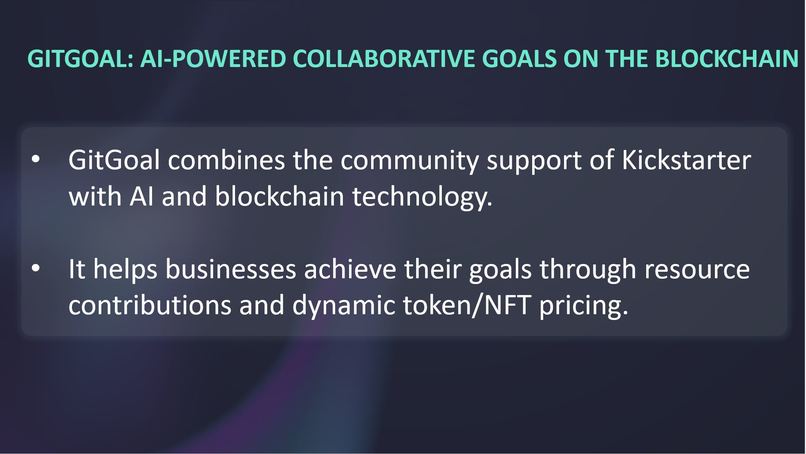
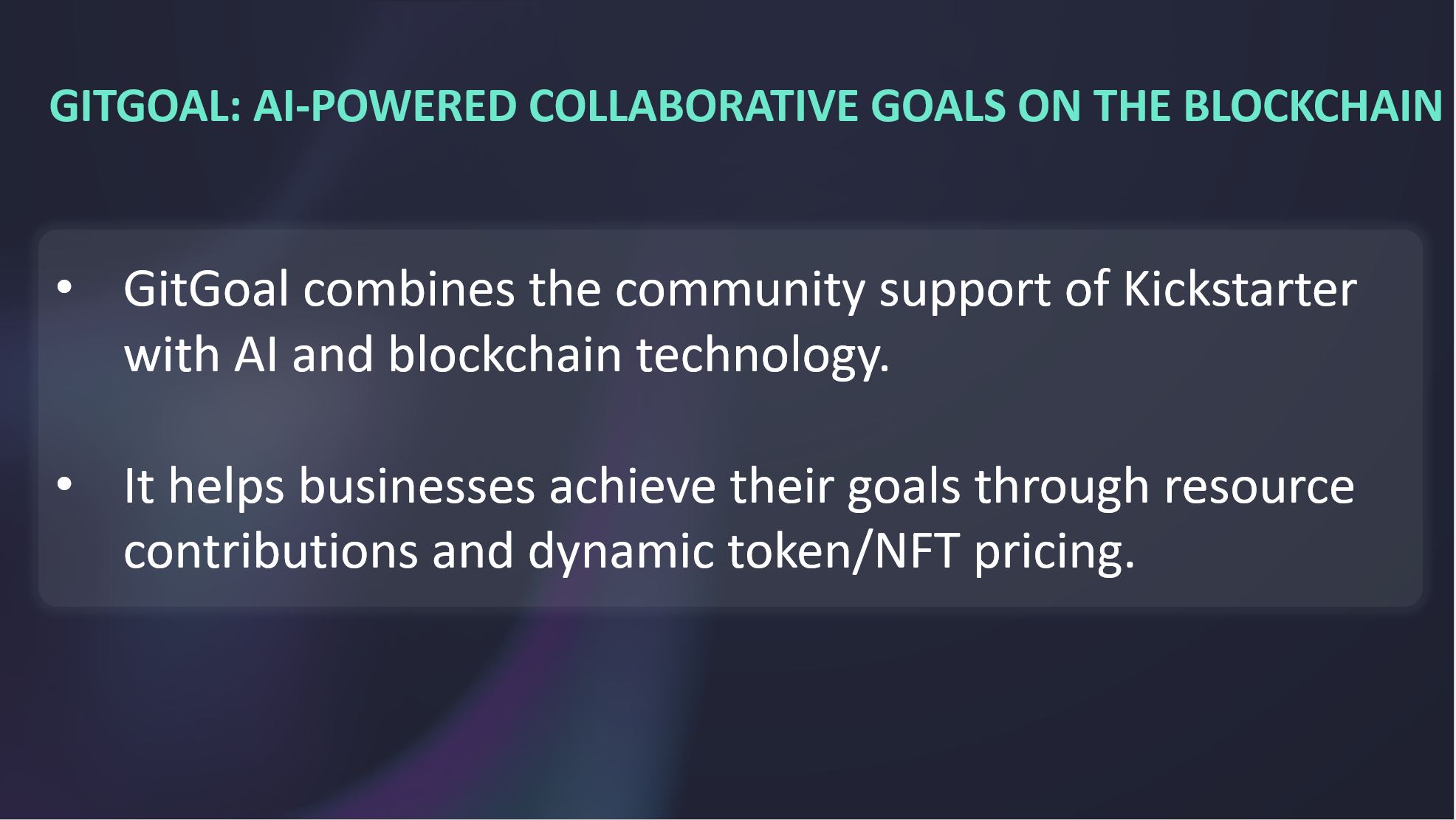
GitGoal Like Kickstarter to Some Users
-
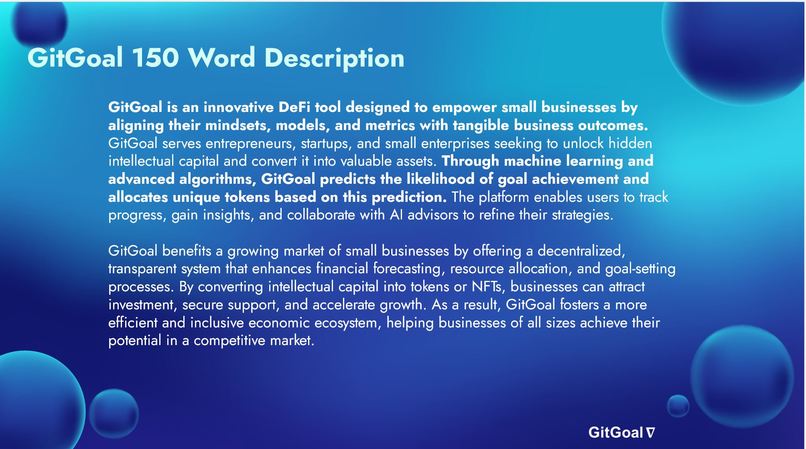
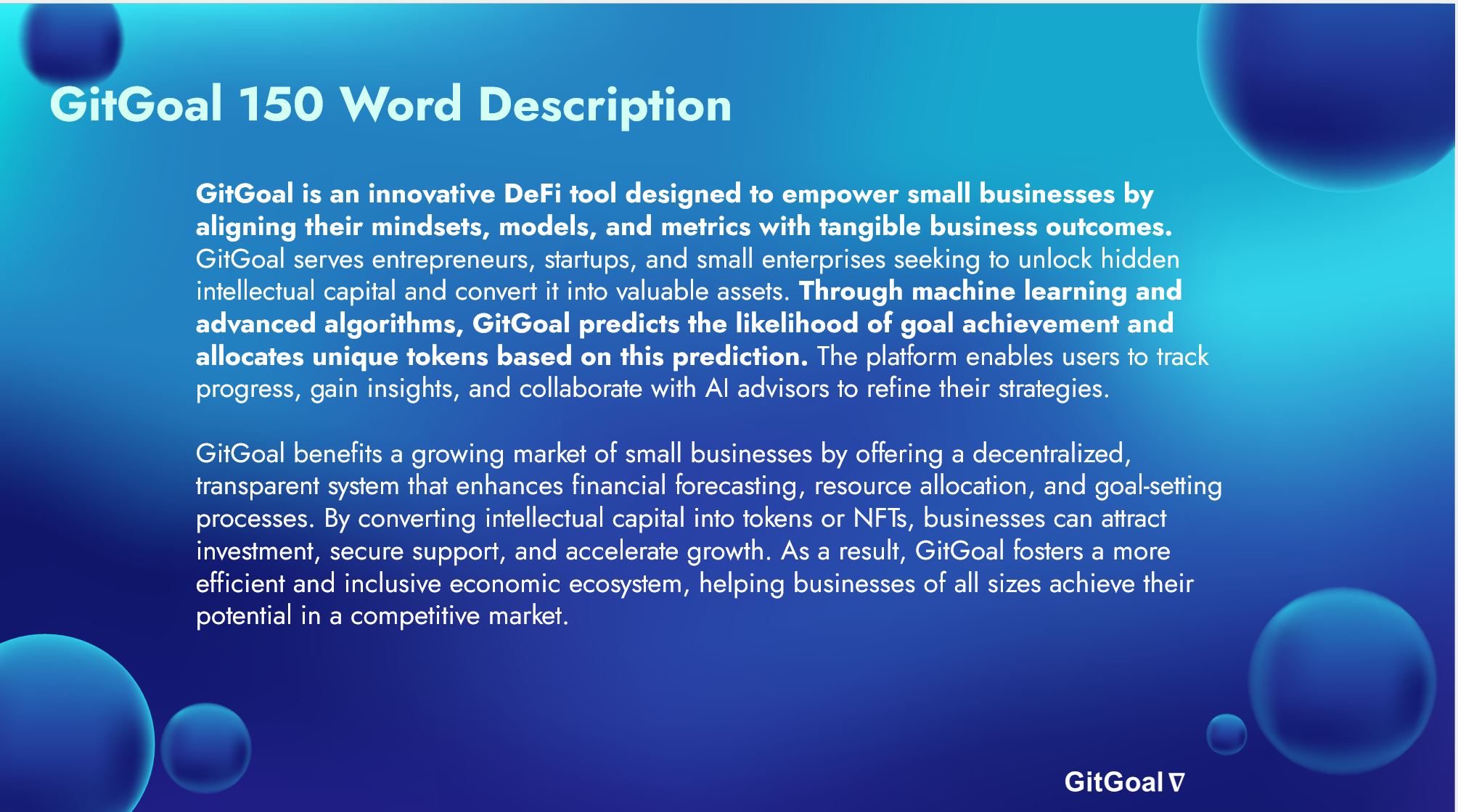
GitGoal 150 Word Description
-

GitGoal Web Landing Page




Inspiration
Our inspiration comes from a pressing need we've heard repeatedly from over dozens of small businesses: they all want more customers and more sales. While blockchain technology often feels like a hurdle to small and medium enterprises (SMEs) due to complicated onboarding and unfamiliar terms, our goal is to simplify and demystify it because we know it can help grow sales in ways no one has imagined.
What it does
GitGoal Powers Sales Goals uses AI to uncover hidden capital that can help businesses attract new customers. We utilize blockchain technology to compensate network participants, technology providers, and anyone who contributes to driving sales for small businesses.
How we built it

- Languages, Frameworks, and Technologies Used: Angular, Python, Firebase, Flask, TypeScript, Node.js, React, Yarn, Vitest, Esbuild
- Platforms and Cloud Services: TRON, Firebase, Google Cloud APIs
- APIs and Tools: OpenAI API, TRON API, Lerna, Nx
- Databases: Firebase Firestore
We built the project with a combination of Angular and Python for the frontend and backend, respectively. Firebase was integrated for database and hosting, and Flask for the backend server. The TRON API enabled decentralized finance functionalities. We switched from a quadratic to an exponential model for pricing NFTs, ensuring scalability and personalized growth metrics.
Technical Sidebar: Constructing the Bonding Curve from User Conversations
The bonding curve in the GitGoal ecosystem is crafted from deep user conversations with an AI persona, emulating successful entrepreneurs' wisdom. Here's a detailed technical description:
- Customer Understanding:
- The AI persona engages users in conversations about their primary customers and business goals.
- Sentiment Analysis:
- User responses are analyzed for positivity, confidence, and clarity to gauge market potential.
- Lorentz Model Construction:
- Insights are used to construct a Lorentz model, capturing growth dynamics.
- Transforming Parameters:
- Lorentz model parameters are transformed into an exponential bonding curve.
- Setting the Bonding Curve:
- Personalized token pricing and payback structures are established.
- Dynamic Adjustment:
- AI monitors milestones and updates token values in real-time.
Example Technical Workflow:
User Interaction:
- User: "Our primary customers are tech-savvy individuals who value innovative solutions. We aim to launch within six months and expect rapid adoption due to our unique features."
- AI Persona: Extracts key insights about customer profile, launch timeline, and expected adoption rate.
Sentiment Filter:
- Analysis: High confidence and positivity in user’s responses indicate strong market potential.
- Sentiments: Positive sentiment with clear market understanding.
Lorentz Model Construction:
- Parameters:
- Peak adoption: High
- Time to peak: 6 months
- Adoption rate: Rapid
Transforming Parameters to Exponential Bonding Curve:
- Exponential Parameters:
- 𝑎: 1000 (initial impact)
- 𝑏: 0.1 (growth rate)
- 𝑐: 500 (baseline adjustment)
Setting the Bonding Curve:
- Initial Curve: Exponential curve reflecting rapid initial growth and high market potential.
- Pricing: Tokens/NFTs priced based on the transformed parameters, ready for early contributions.
Dynamic Adjustment:
- Monitoring: AI tracks project milestones and updates token values dynamically.
- Real-time Data: Ensures the bonding curve reflects current project status and market conditions.
Challenges we ran into
We faced challenges with package management and compatibility issues with Coinweb tools on Windows systems. Troubleshooting these issues required close communication with the Coinweb team and extensive testing.

Accomplishments that we're proud of
We're proud of building a functional prototype that integrates machine learning models and decentralized finance features. The user-friendly interface and the platform's scalability and security are significant achievements.
What We Learned
Business that are hungry for growth are willing help others that are hungry for growth. This actually makes are project substantially easier to "sell" to user than we could have ever anticipated.
The Blockchain Trilemma and Our Approach
Traditional Blockchain Trilemma
The blockchain trilemma, introduced by Vitalik Buterin, founder of Ethereum, posits that blockchain systems can only achieve two out of three of the following attributes: decentralization, security, and scalability. This is often depicted as a triangle with:
- Decentralization at the top vertex.
- Scalability at the bottom left vertex.
- Security at the bottom right vertex.
Our Inverted Approach
We believe the key to mass adoption lies in addressing a different kind of scalability issue - the demand side scalability. This involves minimizing the steps required for users to experience the benefits of Web3. Here’s how we approach it:
User-Friendly Interface:
- Mouth of the Funnel: Users interact with the system as easily as chatting with an AI about their business needs, specifically focusing on customer growth.
- Abstracted Complexity: The blockchain's complexities are abstracted away, making the experience seamless and intuitive.
AI-Driven Insights:
- AI Persona Conversations: Through natural conversations, AI extracts key business insights and sentiments.
- Sentiment Analysis: These insights are used to model business growth dynamics.
Model Transformation:
- Lorentz Model: Captures initial rapid growth, peak, and eventual stabilization of the business.
- Exponential Bonding Curve: Transforms these parameters into a bonding curve that reflects the business’s potential.
Token Valuation:
- Personalized Bonding Curve: Sets token pricing and payback structures based on user inputs.
- Dynamic Adjustments: Continuously updates token values based on real-time data.
Challenges We Ran Into
- Package Management: Issues with managing dependencies and package compatibility, especially on Windows systems.
- Blockchain Integration: Ensuring seamless integration with Coinweb's API while keeping the user experience simple.
Accomplishments We're Proud Of
- Functional Prototype: Built a prototype that integrates advanced AI and blockchain technology.
- User Interface: Created a user-friendly interface that abstracts the complexities of blockchain.
- Scalability and Security: Achieved a balance that enhances user adoption without compromising security or decentralization.
What's Next for GitGoal Powers Sales Goals
- Algorithm Refinement: Further refine the token allocation algorithms.
- User Interface Enhancement: Improve the interface based on user feedback.
- Extensive Testing: Conduct thorough testing to ensure reliability.
- Partnerships: Explore partnerships with other DeFi platforms to expand functionalities.
Submission List
- Languages: JavaScript, TypeScript, Python
- Frameworks: Angular, React, Flask
- Platforms: TRON, Firebase, BTTC
- Cloud Services: Firebase Firestore
- APIs: OpenAI API, TRON API
- Tools: Yarn, Vitest, Esbuild, Lerna, Nx
Built With
- bittorrent
- bttc
- css
- esbuild
- eslint
- firebase
- firestore
- html
- javascript
- js-yaml
- json
- lerna
- node.js
- npm
- openai
- python
- react
- replace
- rimraf
- tron
- trx
- tsc
- typescript
- vertex
- vite
- vitest
- write-yaml-file
- yarn


Log in or sign up for Devpost to join the conversation.