-
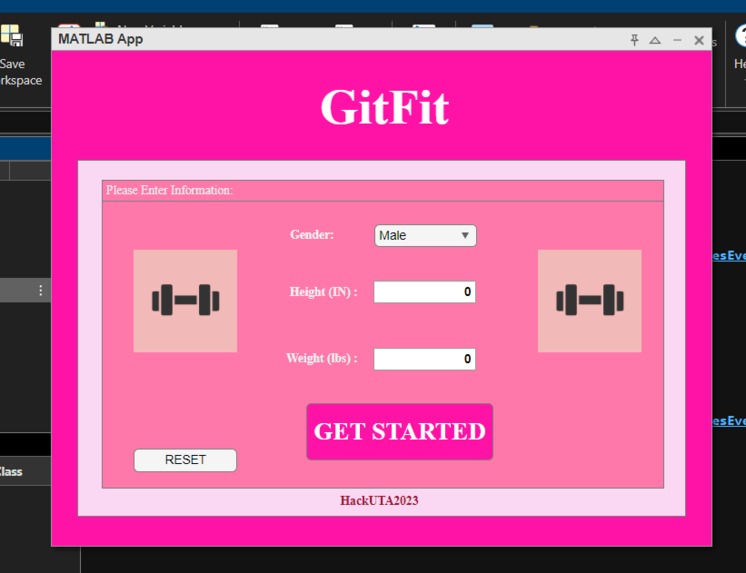
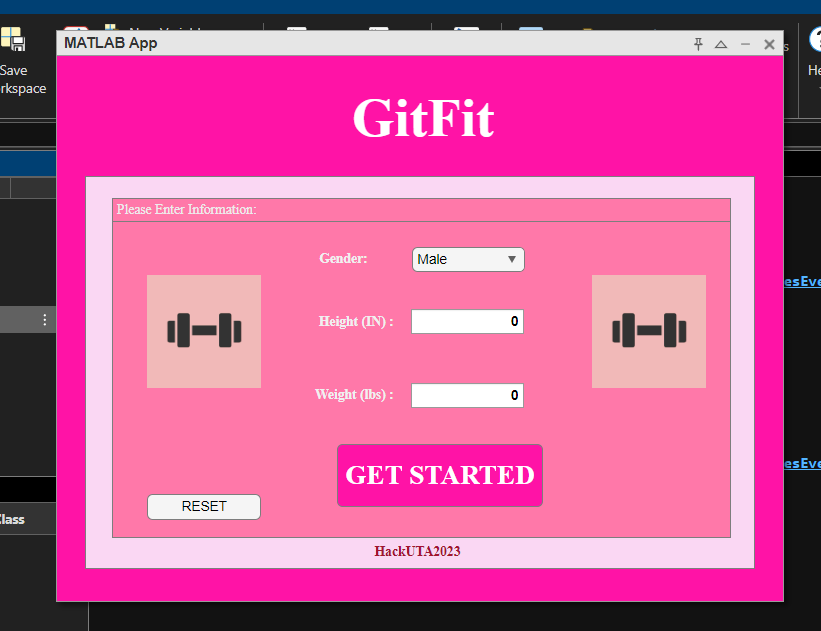
GitFit Launch Screen
-
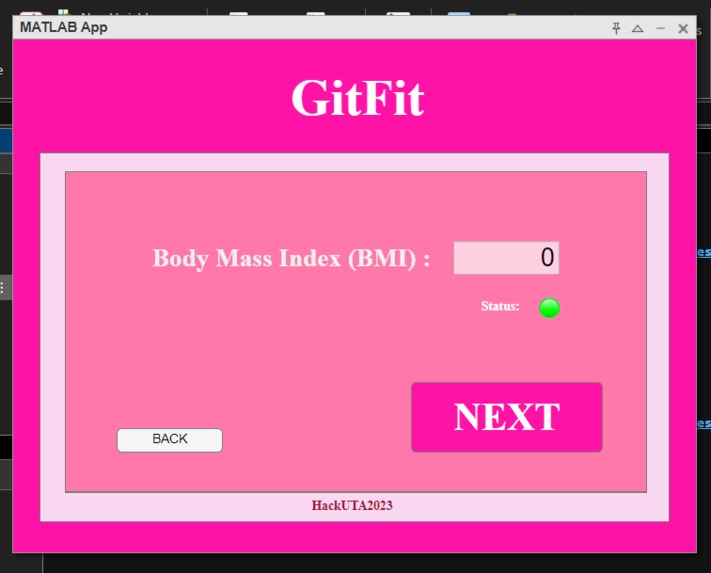
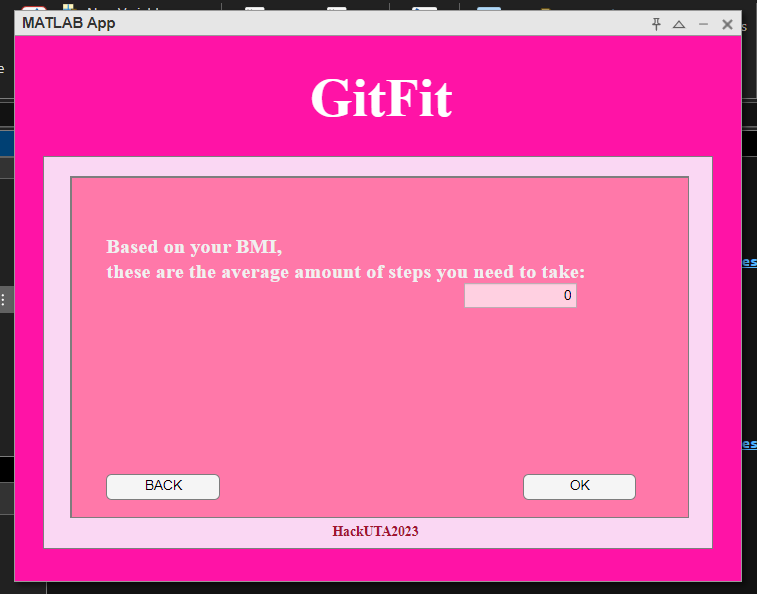
GitFit BMI
-
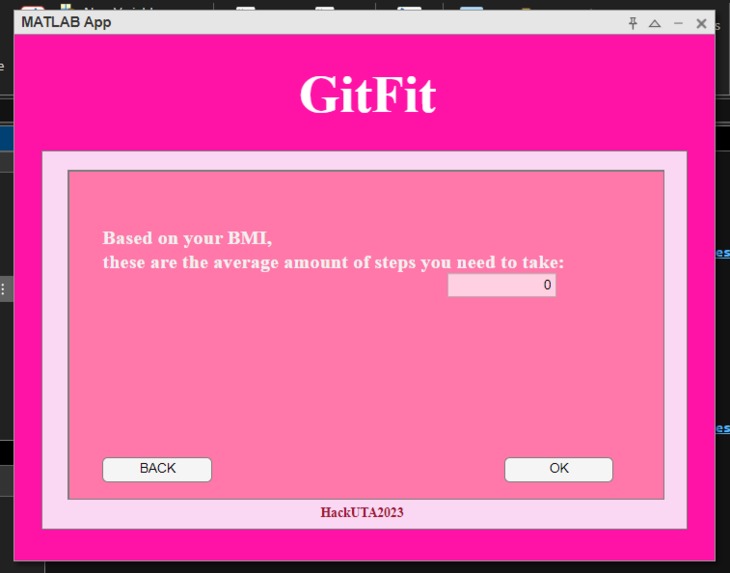
GitFit Steps Taken
-
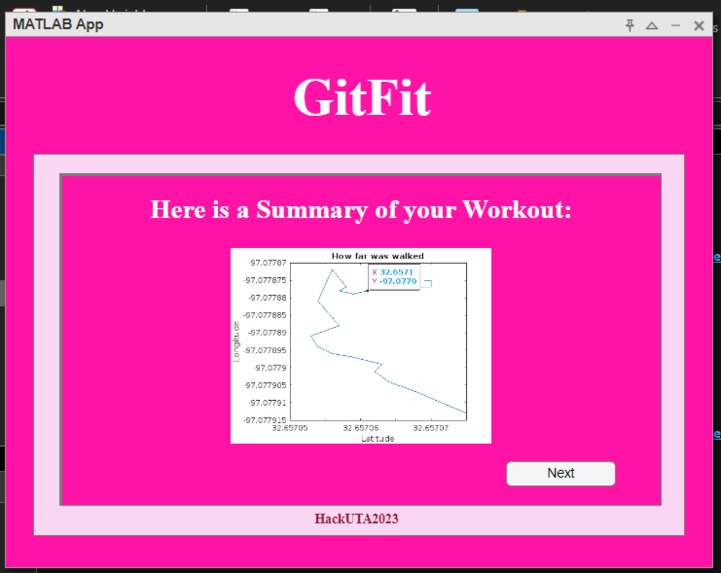
GitFit Summary
-
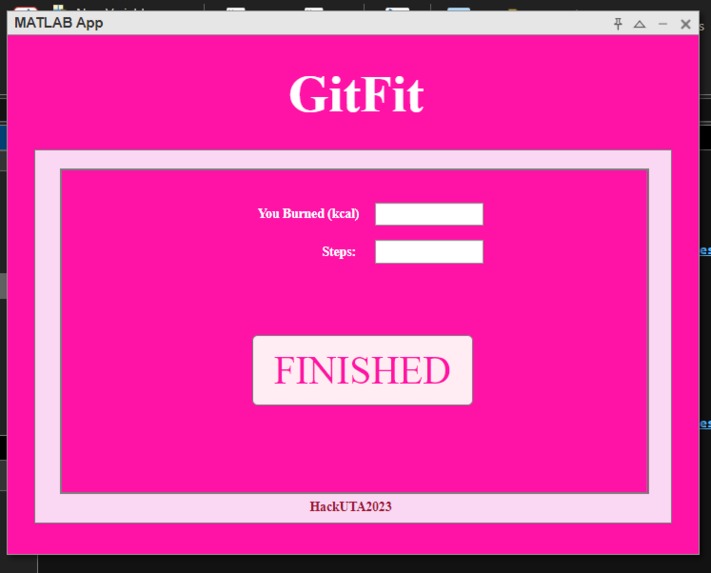
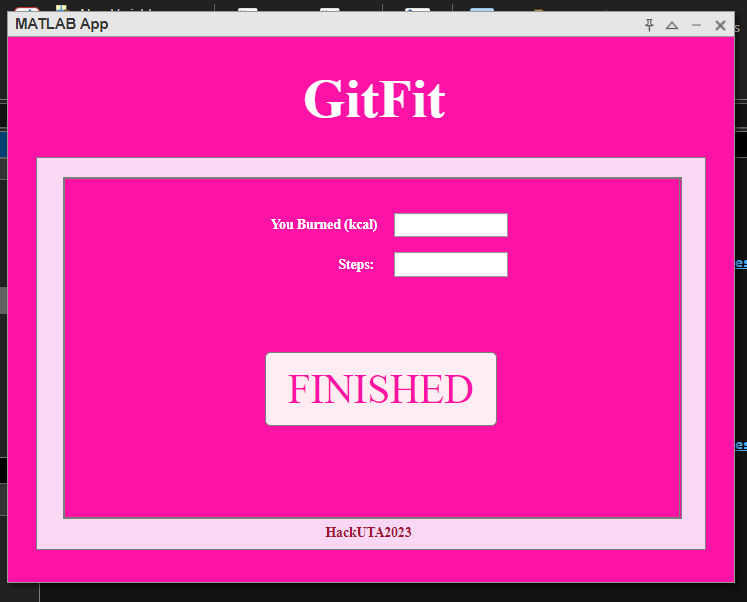
GitFit End Workout Screen
-
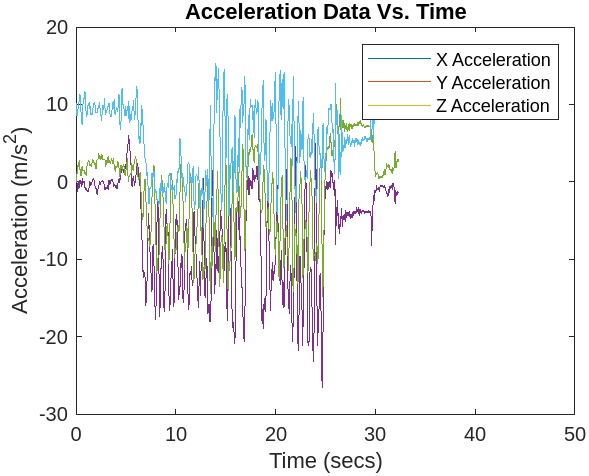
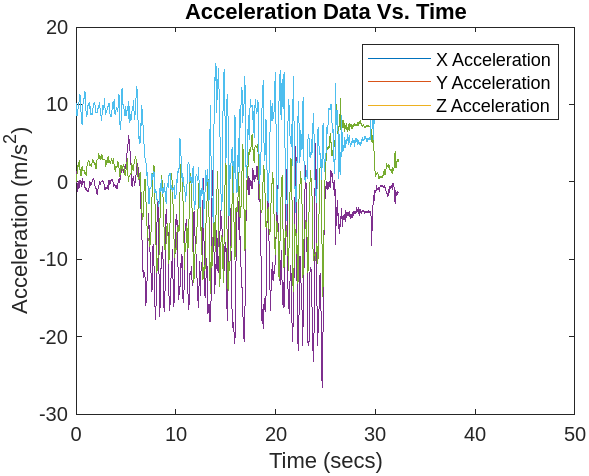
Accel v Time graph
-
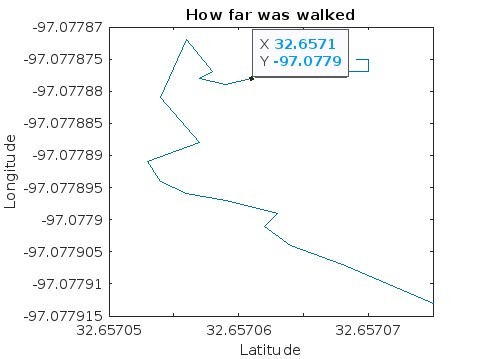
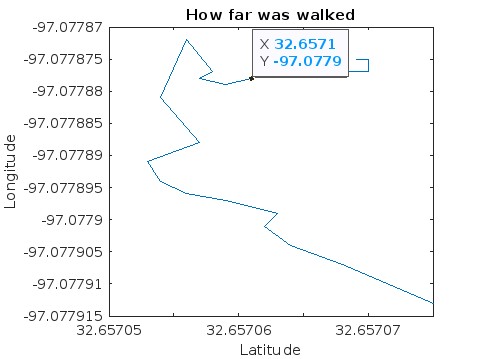
Activity Log


Inspiration
Every smart device has some form of a fitness tracker, but we hope ours will be more accessible to a variety of people.
What it does
GitFit does what every fitness tracker does, except it allows the user to run and walk and calculate calories burned accordingly. At this moment, we can only calculate your BMI index, the steps needed to burn off one pound, and provide data from your activity in an Accel v Time graph and a Steps Taken graph showing the latitude/longitude and distance you took during an activity.
How we built it
We used MATLAB to build the code from the ground up and trained an ML model in Matlab by using a KNN model from ClassificationLearner, getting a 99.5% accuracy with a trained dataset and fitting it against a test data.
Challenges we ran into
Given it is a 24-hour hackathon, time was definitely the biggest challenge faced. If we had more than 24-hours, we definitely could make the UI/UX aspect look much cleaner and organized. The other challenges we faced were: sensor data was often not uploading so retrying of data collection often occurred and scripts sometimes didn't run due to functions not being used properly.
Accomplishments that we're proud of
With the development of GitFit, the greatest accomplishment was allowing the development team to acquire the data. With the data, we are allowed to sort and display the needed information such as calculating calories burned based on speed.
What we learned
It was discovered during the development of GitFit that phones have sensors capable of collecting data for exercise-tracking apps.
What's next for GitFit
What's next for GitFit? We are working on a feature that allows users to have more control over the app. Introducing the start and run feature, where users can start their walk/run and allow the user to end when they finish their workout. With only a walk and running tracker, GitFit is working on more exercises such as biking, rollerblading, skateboarding, etc.

Log in or sign up for Devpost to join the conversation.