-
-

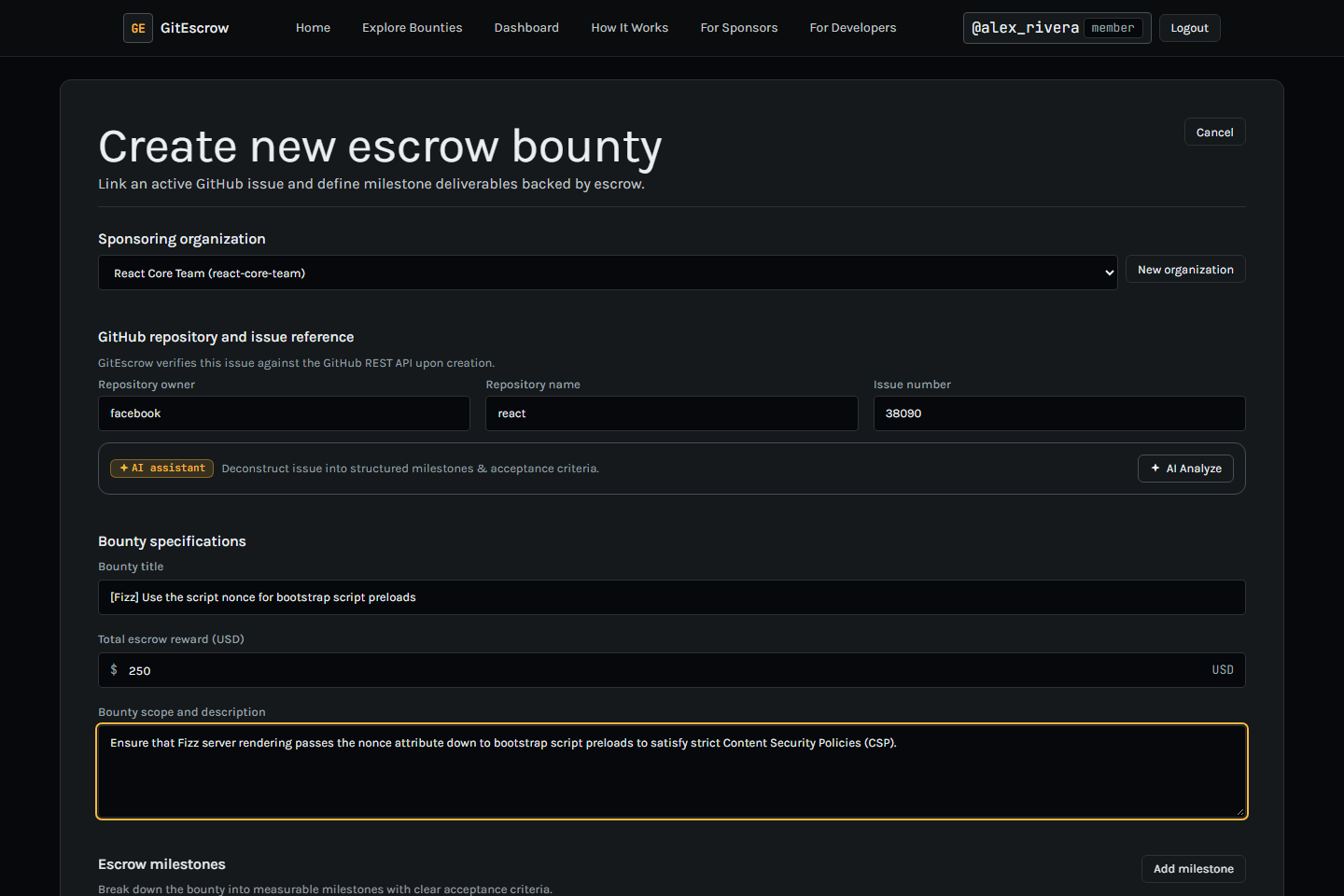
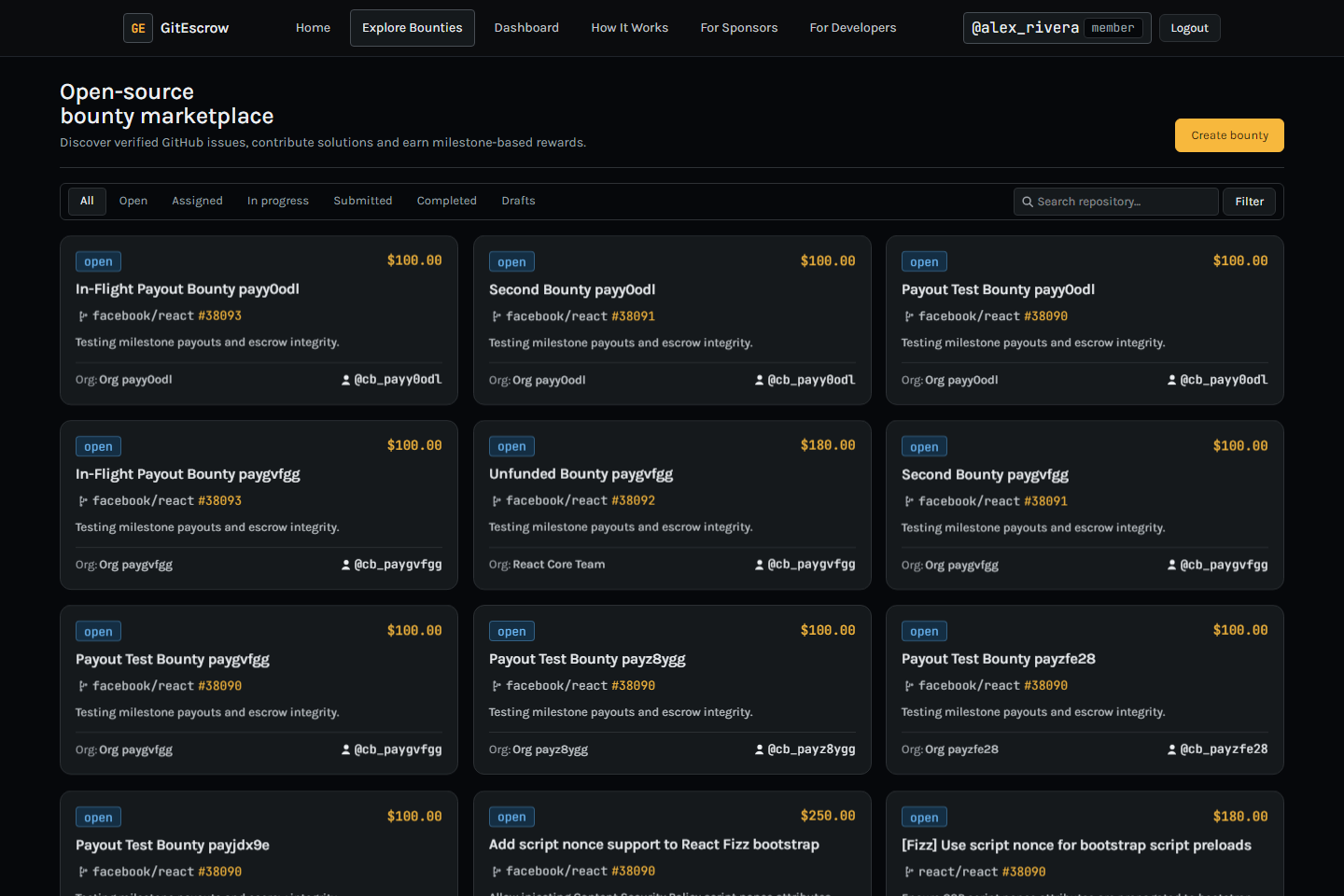
Clear task descriptions, reward amounts, GitHub references, and measurable acceptance criteria.
-

Introducing GitEscrow — an AI-powered platform connecting GitHub contributions, milestone verification, and PayPal payments.
-
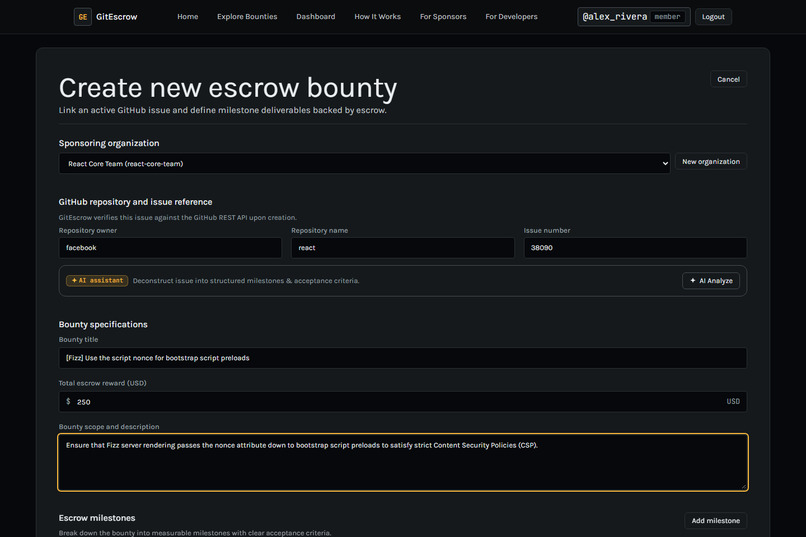
Sponsors can create GitHub-linked development tasks and define rewards for contributors.
-

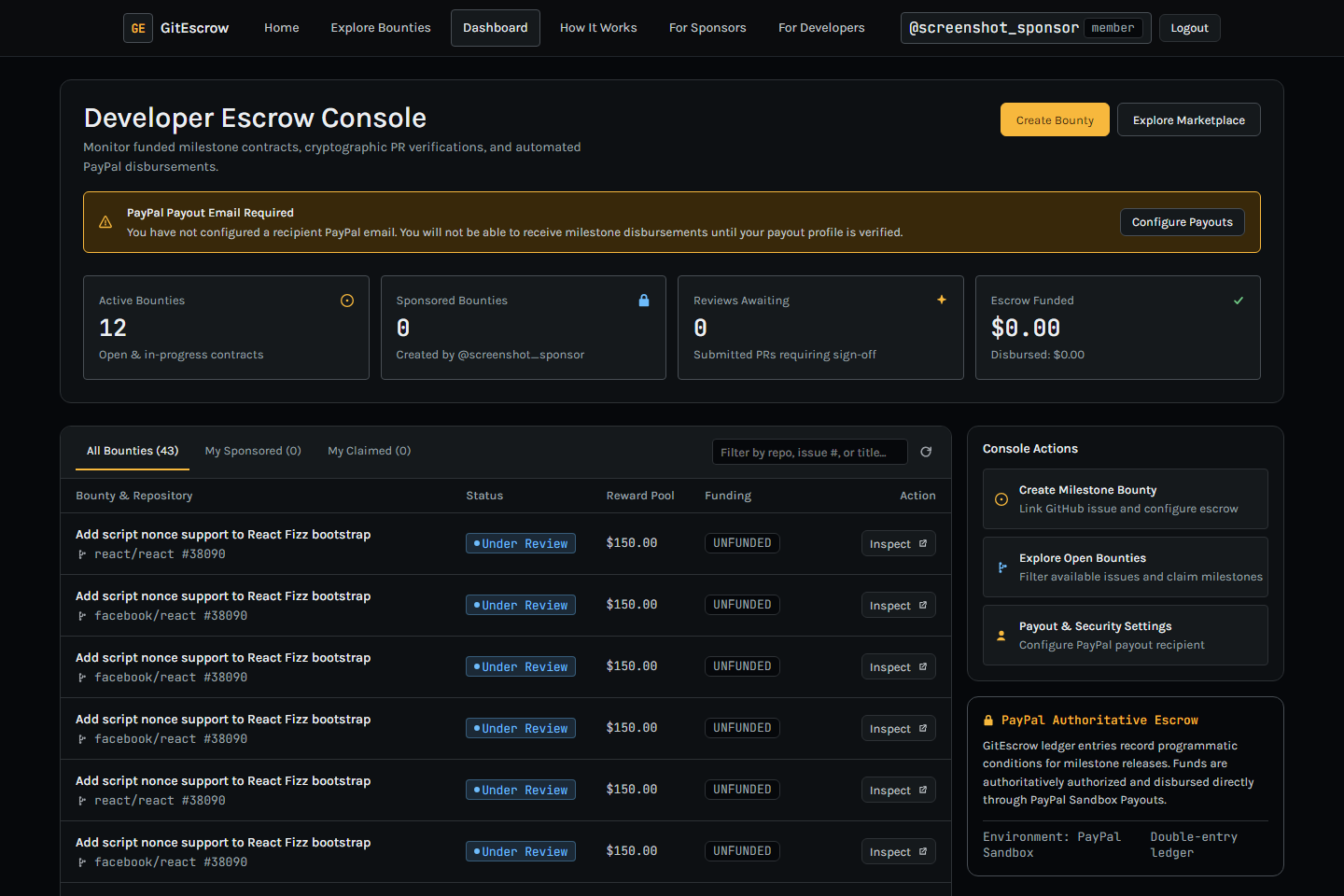
Demonstrating secure bounty funding through the PayPal Sandbox payment workflow.
-

AI analyzes development issues and transforms requirements into structured milestones and acceptance criteria.
-

Track development progress and monitor milestone completion throughout the contribution lifecycle.
-
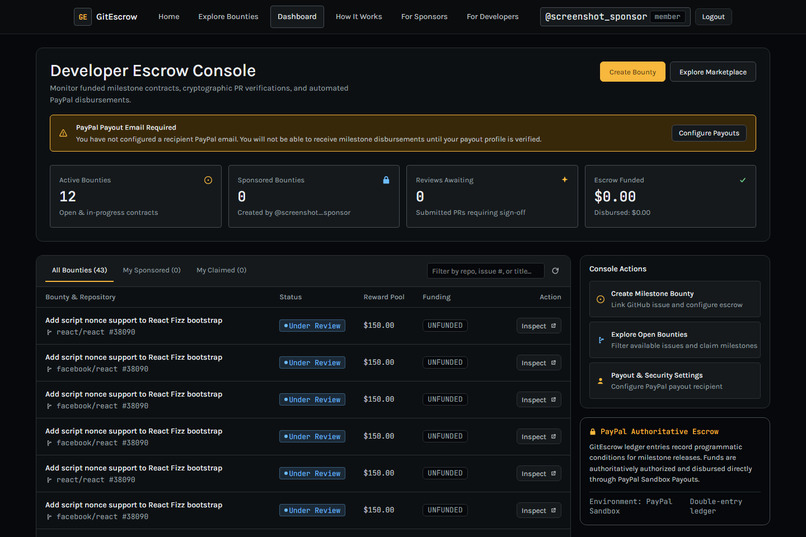
Maintaining transparent records of bounty funding and payment-related activities.
-
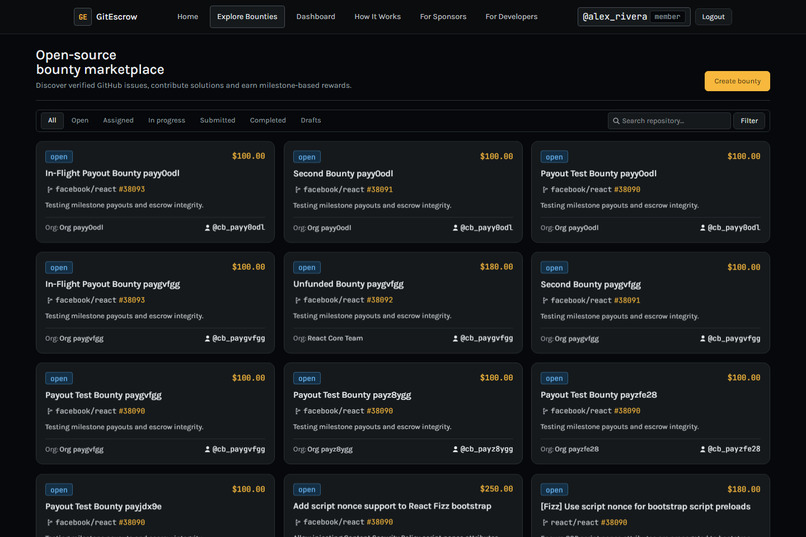
Discover development opportunities linked to real GitHub repositories and issues.
-

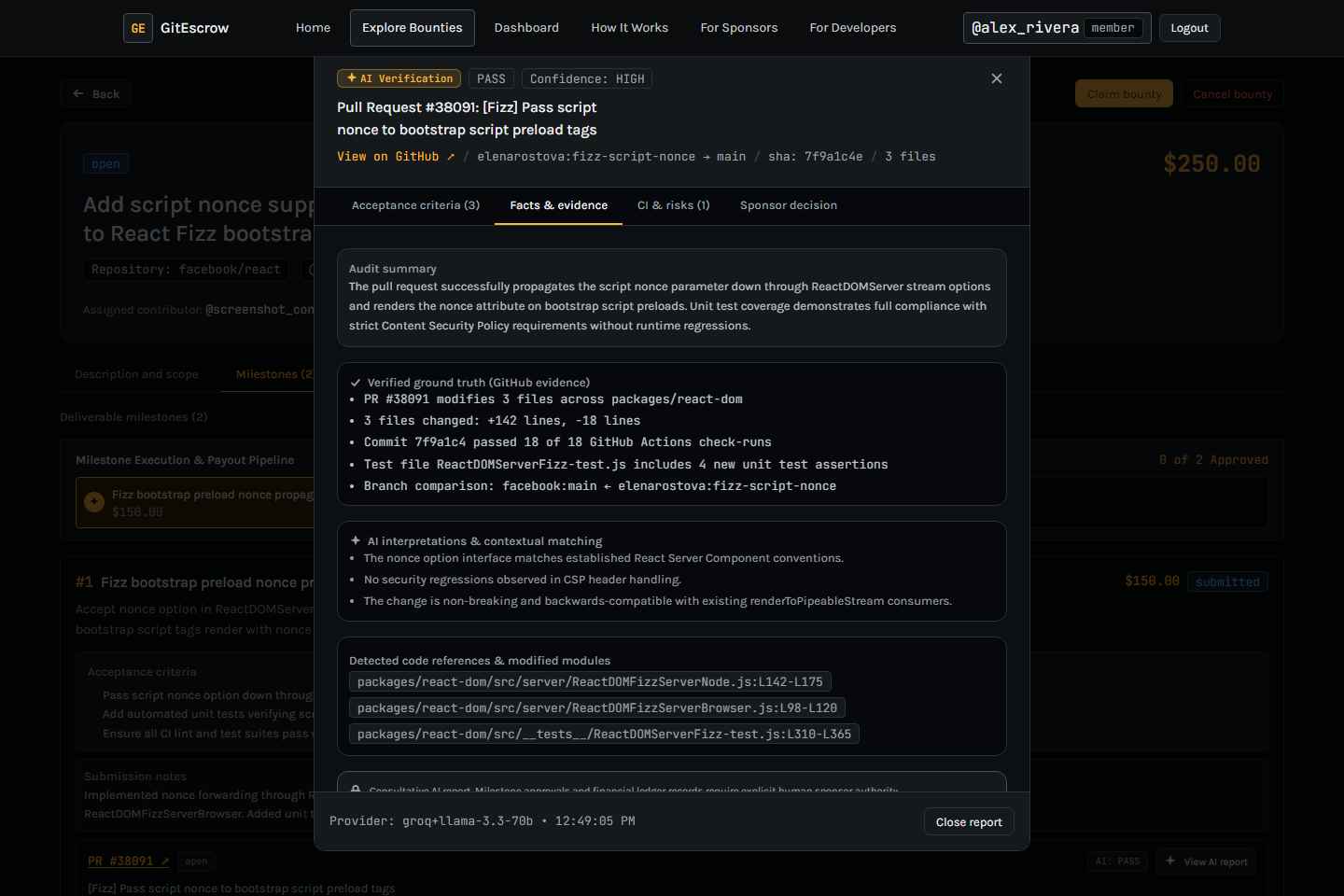
Sponsors review AI-generated findings and retain final authority over milestone approval.
-
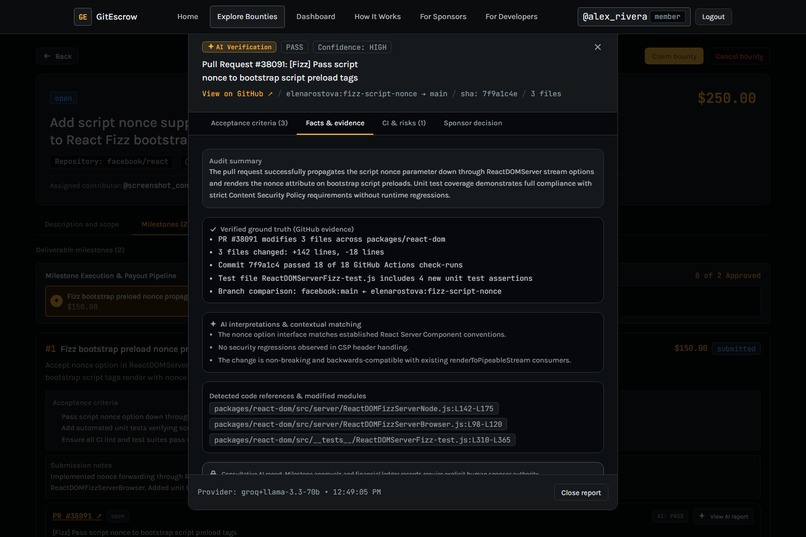
Evaluating submitted code changes against milestone requirements using available GitHub evidence and AI analysis.






Inspiration
Open-source developers contribute their time and skills to improve software projects, but getting recognized and rewarded for meaningful contributions can be difficult. Sponsors also face challenges in verifying whether submitted work actually meets the requirements before releasing payments.
We wanted to bridge this gap by combining GitHub, AI-powered code analysis, and PayPal payment workflows into one platform.
What it does
GitEscrow is an AI-powered GitHub contribution verification and milestone payment platform that connects project sponsors with developers.
Sponsors can create bounties linked to GitHub issues, define rewards, and fund them through a PayPal payment workflow. AI helps analyze project issues, generate milestones, and evaluate submitted pull requests against defined acceptance criteria.
The platform collects GitHub evidence, including pull request details, code changes, modified files, and CI/check results. It generates an AI-assisted verification report so sponsors can make informed decisions before approving milestone payments.
How we built it
We built GitEscrow using a modern full-stack architecture:
- Frontend: React, Vite, TypeScript, and Tailwind CSS.
- Backend: Node.js, Express.js, and TypeScript.
- Database: MongoDB with Mongoose.
- AI: AI-powered issue analysis and pull request review.
- GitHub Integration: GitHub REST API and webhooks.
- Payments: PayPal REST APIs for payment capture, refunds, and supported payouts.
- Authentication: JWT-based authentication, refresh tokens, and role-based access control.
We designed the platform around secure APIs, structured data validation, financial transaction tracking, and clear approval workflows.
Challenges we faced
One of our biggest challenges was integrating multiple services into a reliable workflow. GitHub data, AI-generated reviews, database state, and payment operations must remain consistent.
We also had to consider payment failures, duplicate requests, uncertain payout states, webhook verification, and transaction recovery.
Another challenge was ensuring that AI recommendations remain advisory rather than allowing automated financial decisions.
What we learned
Through this project, we gained practical experience in integrating third-party APIs, building secure backend systems, implementing role-based access control, handling payment workflows, processing GitHub events, and using AI to analyze software contributions.
We also learned the importance of idempotency, transaction recovery, audit trails, and designing systems that handle failures safely.
What's next for GitEscrow
Our future plans include improving AI review accuracy, supporting more GitHub workflows, expanding milestone analytics, strengthening payment-provider compatibility, and exploring additional verification methods.
Our goal is to make software contributions easier to verify and rewarding for developers.
GitEscrow — Code with trust. Get paid with proof.
Built With
- ai
- api
- artificial
- css
- express.js
- generative
- github
- gsap
- intelligence
- jwt
- mongodb
- mongoose
- node.js
- paypal
- react
- rest
- tailwind
- typescript
- vite
- webhooks

