-
-
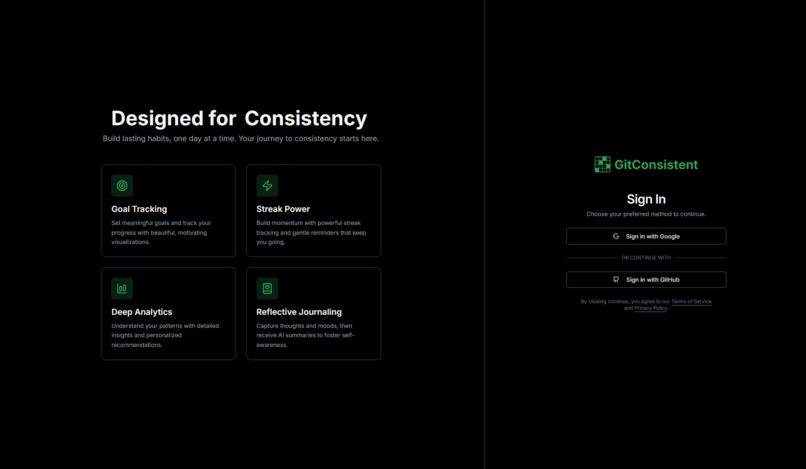
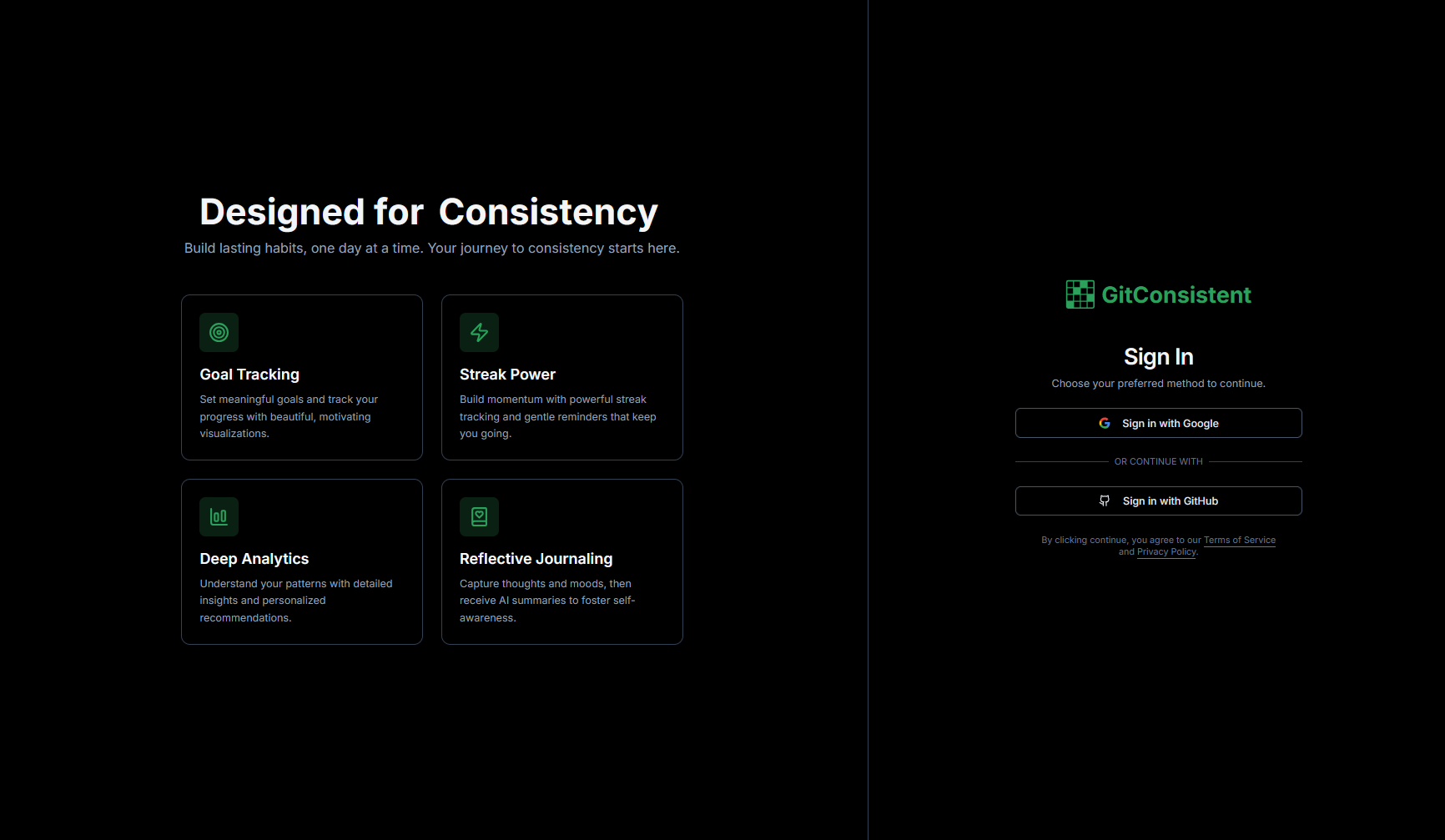
Landing Page
-
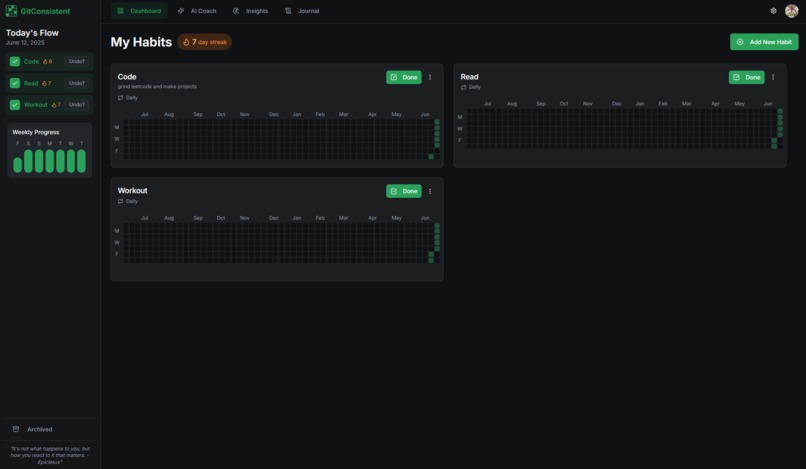
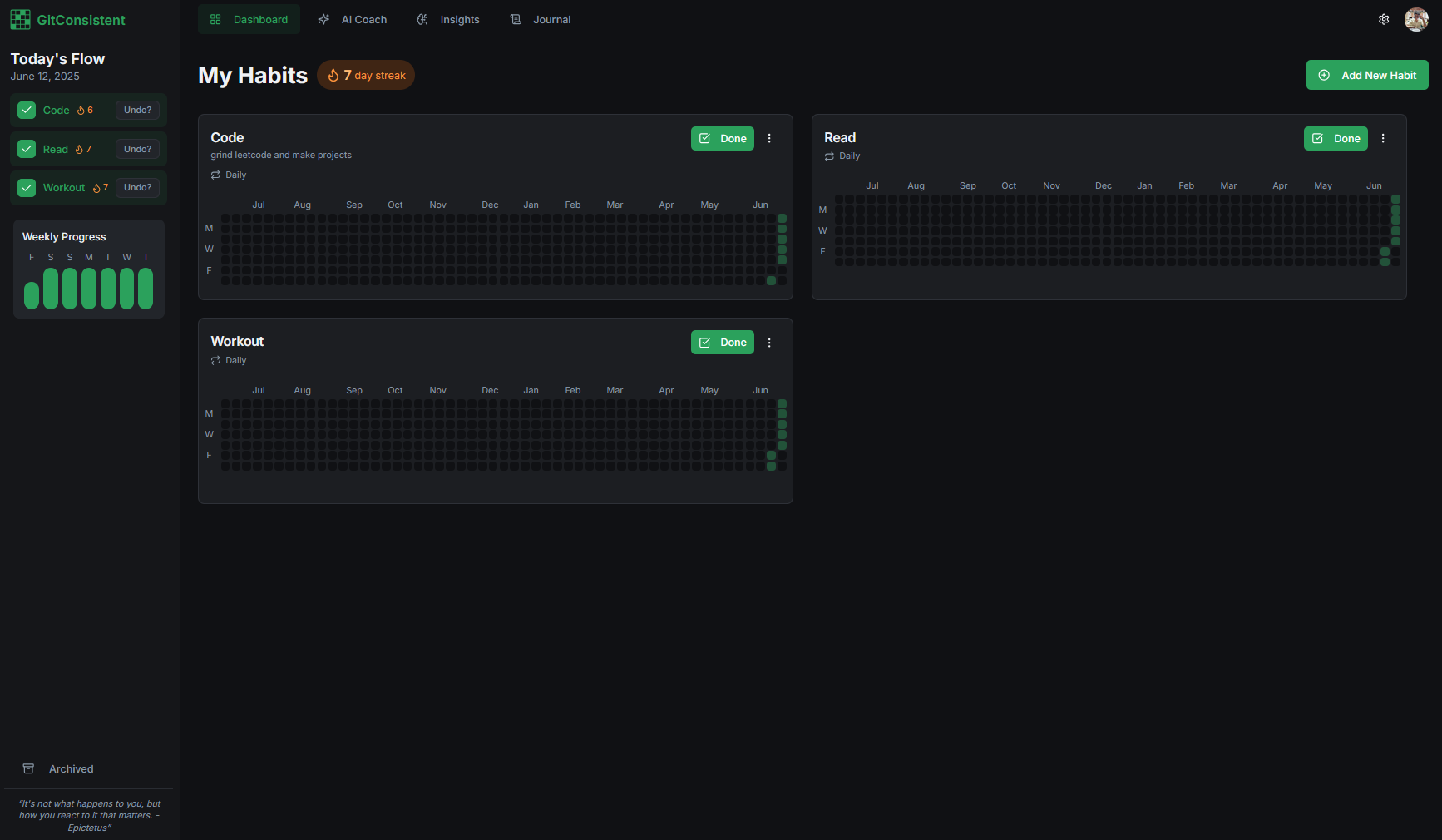
Dashboard
-
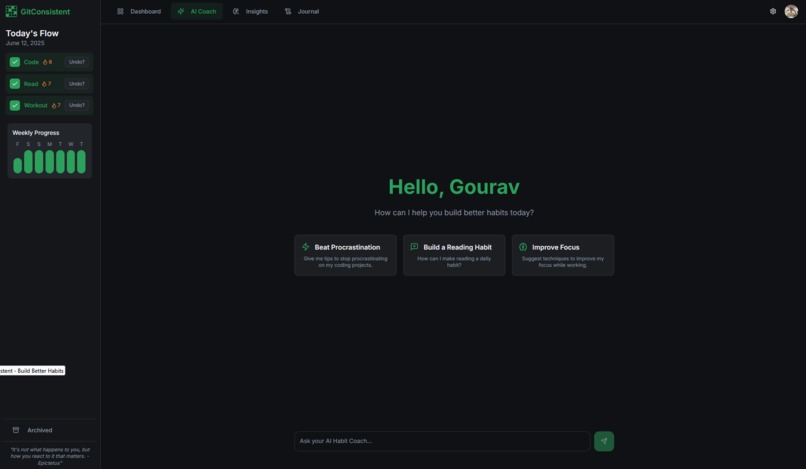
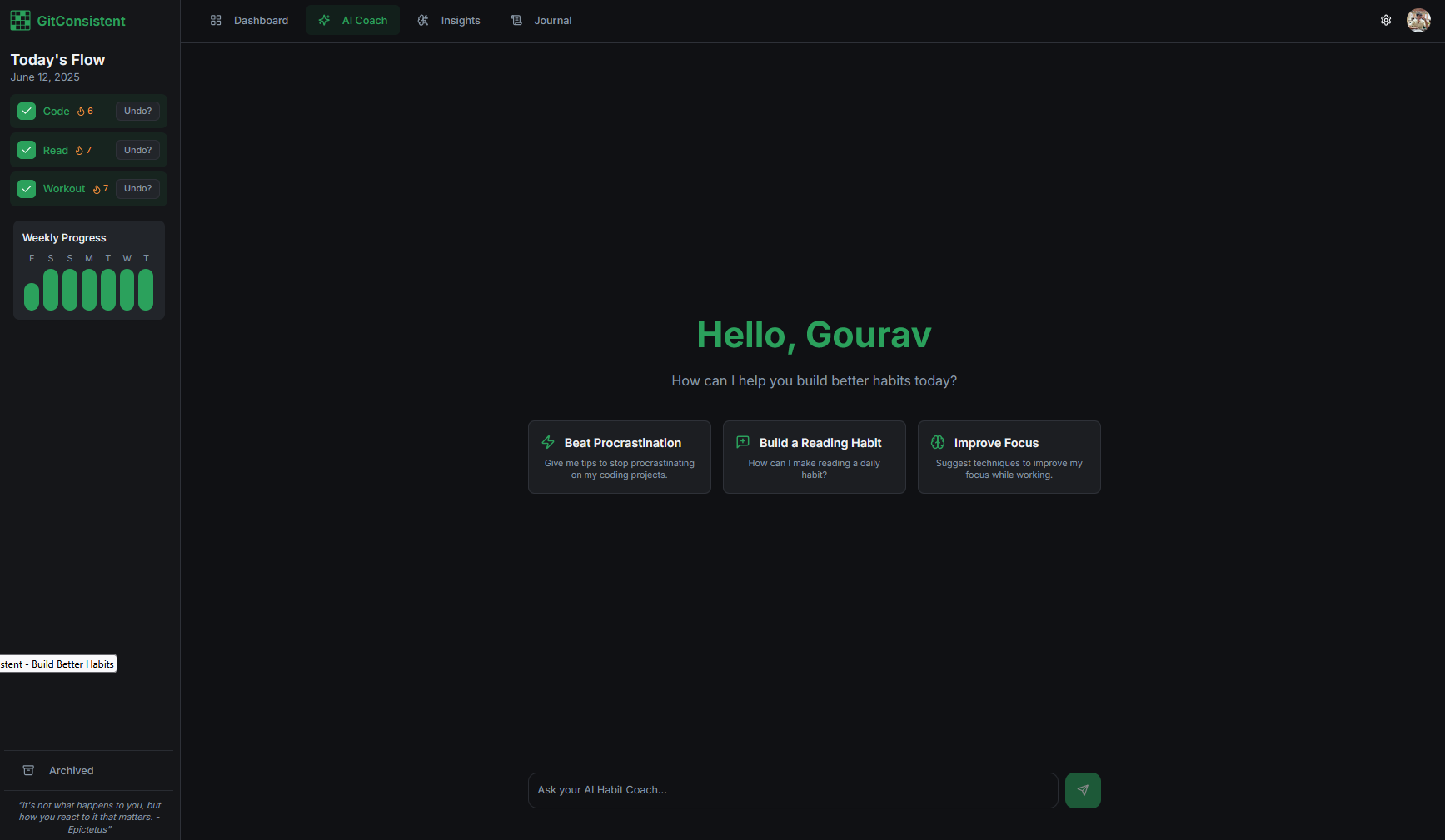
AI Coach
-
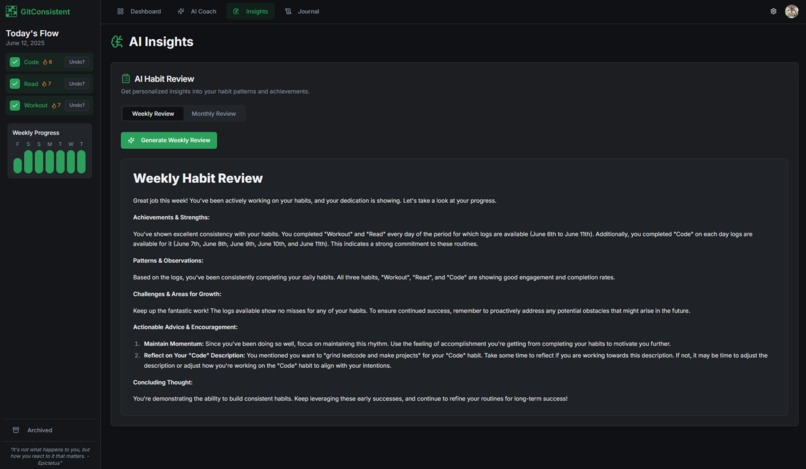
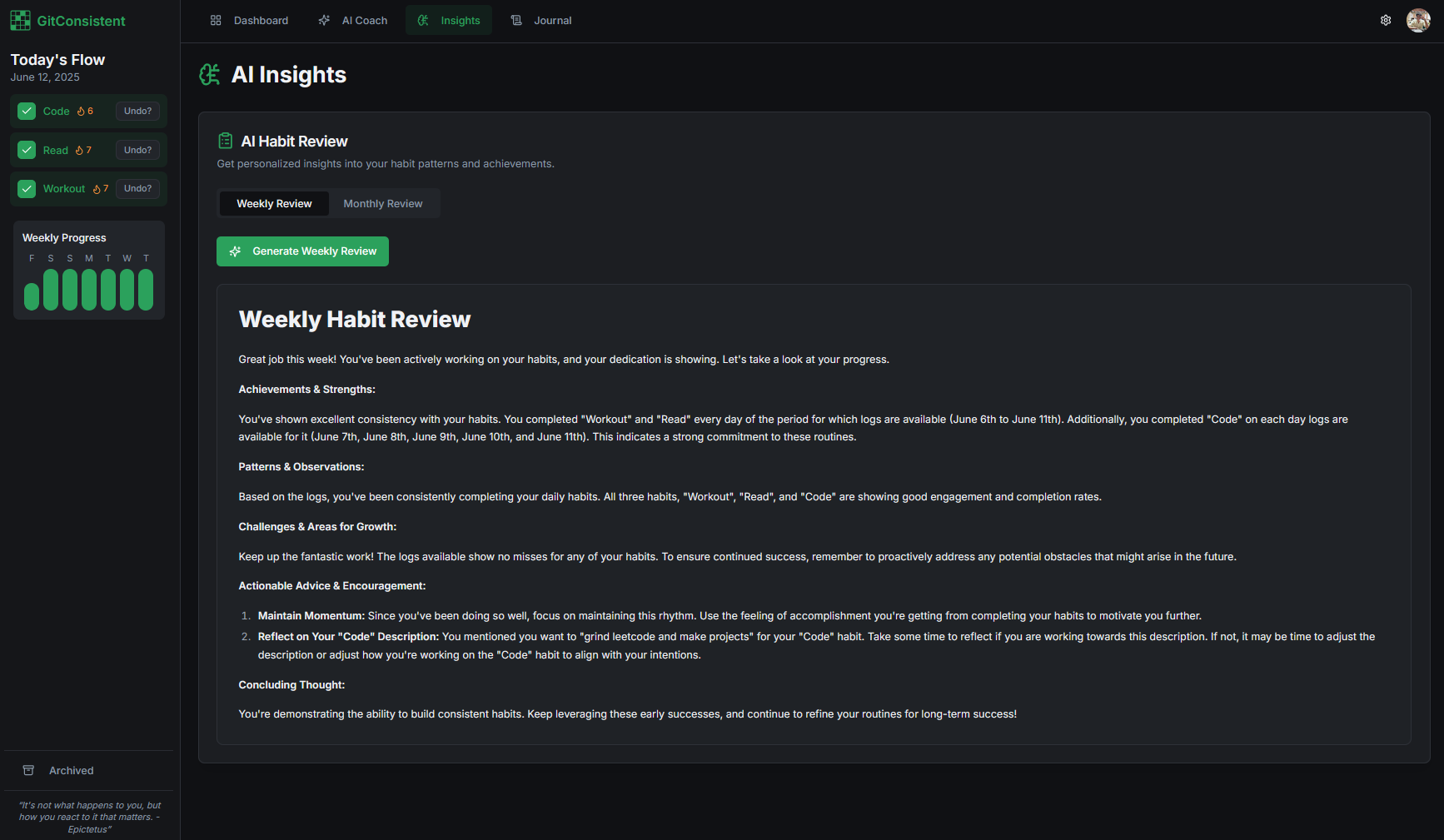
AI Analytics
-
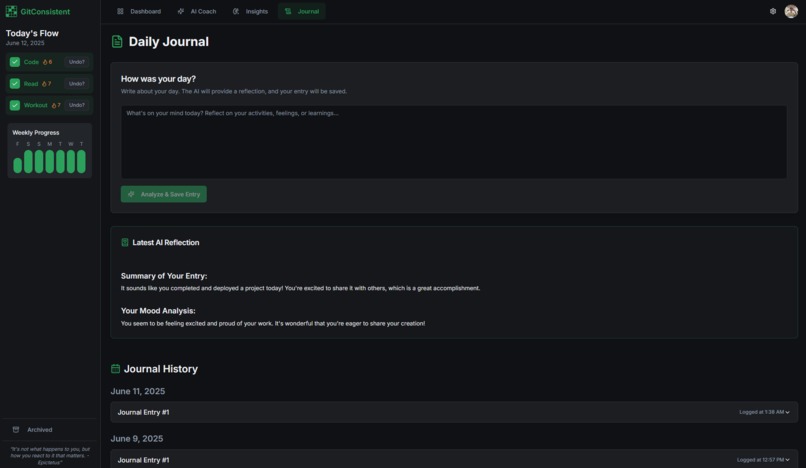
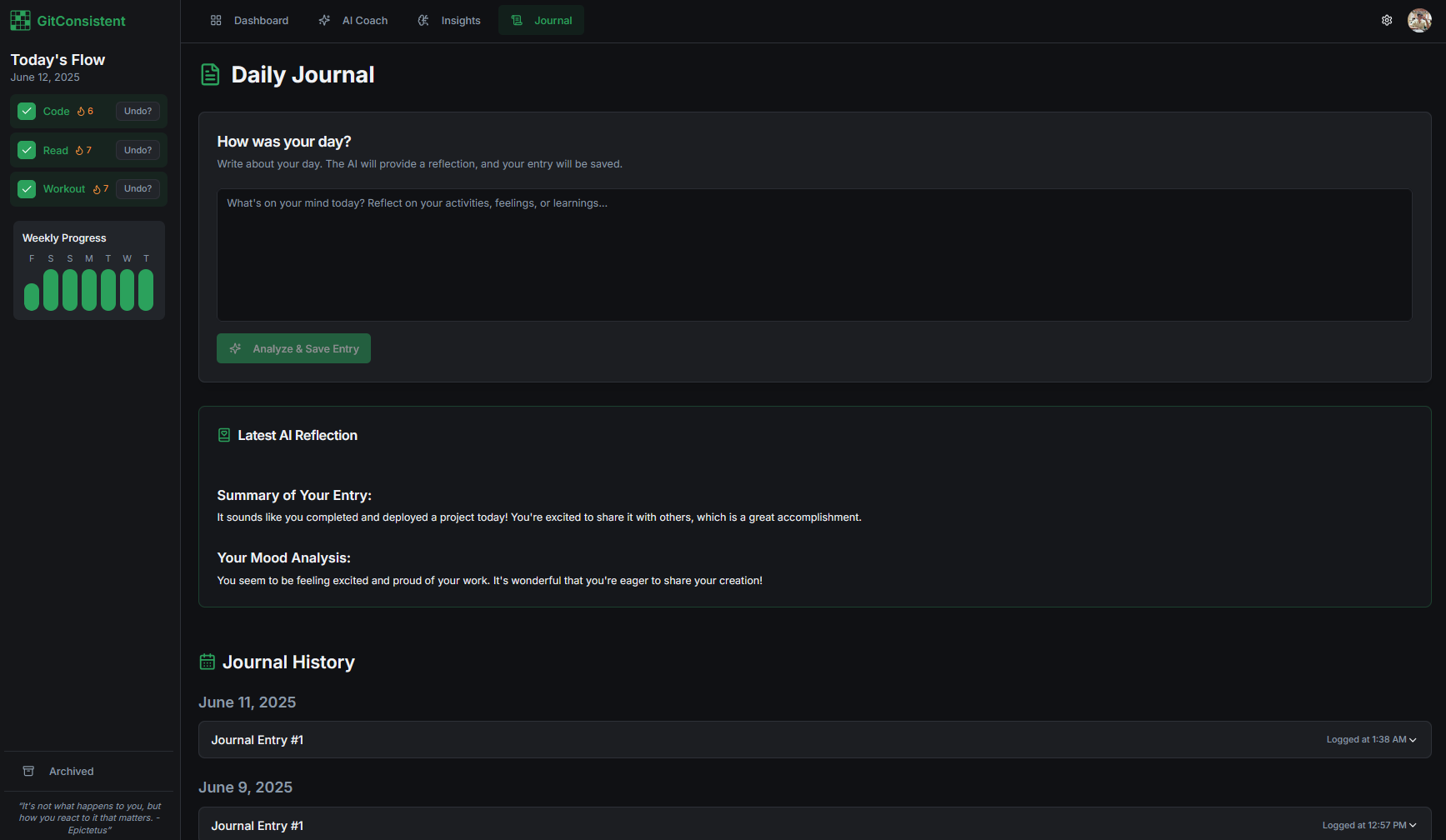
Journal
GitConsistent: My Journey to Building a Habit Tracking Revolution
The Spark of Inspiration
During a late-night development session, I found myself reviewing my GitHub profile, analyzing the contribution graph that visualized my coding consistency over the past year. Those green squares represented more than just commits - they told a story of dedication, momentum, and the inevitable gaps where life intervened. This observation led to a crucial insight: What if this same visual paradigm could be applied to personal habit formation?
Having experimented with numerous habit tracking applications - from minimalistic checkbox interfaces to complex gamification systems - I consistently encountered the same problem: lack of sustained engagement. These tools felt disconnected from my workflow and identity as a developer. However, GitHub's contribution visualization had achieved something remarkable: it created an intrinsic motivation to maintain daily coding practices.
This realization became the foundation for GitConsistent - leveraging the familiar and psychologically effective GitHub aesthetic to create a habit tracking system that resonates with developers and productivity enthusiasts alike.
The Personal Problem I Needed to Solve
My relationship with habit formation was characterized by consistent failure patterns. Initial enthusiasm would drive strong early performance, but within weeks, tracking would become sporadic and eventually abandoned entirely. The existing applications I evaluated suffered from fundamental design issues: they were either overly simplistic, providing insufficient feedback, or unnecessarily complex, creating cognitive overhead that deterred daily use.
I identified several critical requirements for a solution that would work for my workflow:
- Familiar interface patterns - Integration with tools and aesthetics I already found engaging
- Visual progress representation - Quantitative metrics alone lacked motivational impact
- Intelligent analysis - Beyond basic tracking to provide actionable insights
- Reflective capabilities - Mechanisms to understand the underlying factors affecting consistency
This wasn't merely a hackathon exercise - it represented a genuine attempt to solve a persistent personal productivity challenge.
How I Built It
The Foundation
I started with Next.js 14 and TypeScript because I wanted a robust, type-safe foundation. The GitHub-style contribution graph was the heart of the app, so I spent considerable time perfecting the visualization using custom React components.
The Visual Magic
Creating the contribution graph was both the most exciting and challenging part. I studied GitHub's actual implementation, analyzed color schemes, and built a responsive grid system that would work across devices. Each square represents a day, and the intensity of green shows how many habits you completed - just like GitHub's commit frequency.
The AI Brain
Here's where things got interesting. I integrated Google Gemini API to power three key features:
- Weekly AI Reports: Analyzing patterns in habit completion
- AI Coach: Providing personalized motivation and strategies
- Journal Summaries: Distilling daily reflections into actionable insights
The Backend Infrastructure
I chose Firebase for its real-time capabilities and seamless authentication. The database structure needed to efficiently handle:
- User profiles and habits
- Daily completion data
- Journal entries
- AI-generated insights
The Challenges I Faced
1. The Visualization Nightmare
Creating a responsive, GitHub-accurate contribution graph was harder than expected. I had to handle:
- Different screen sizes and orientations
- Smooth animations and hover effects
- Accurate date calculations and timezone handling
- Performance optimization for large datasets
2. AI Integration Complexity
Getting the AI features right required multiple iterations:
- Crafting prompts that generated useful insights
- Handling API rate limits and errors gracefully
- Ensuring AI responses felt personal and actionable
- Balancing AI coaching with human agency
3. Real-time Data Synchronization
Firebase's real-time features are powerful but tricky:
- Optimistic updates for instant UI feedback
- Handling offline scenarios
- Preventing data conflicts between devices
- Efficient queries to minimize database reads
4. The Perfectionism Trap
As a developer building for myself, I kept adding "just one more feature." I had to learn when to stop and ship, even when the perfectionist in me wanted to keep polishing.
What I Learned
Technical Insights
- State management becomes crucial when dealing with real-time data and AI interactions
- User experience matters more than perfect code - users don't care about your elegant architecture if the app is confusing
- API design for AI features requires careful consideration of context and prompt engineering
Personal Growth
- Shipping beats perfection - I learned to embrace the MVP mindset
- User feedback is gold - Even testing with friends revealed assumptions I didn't know I had
- Building for yourself creates authentic motivation but requires discipline to think beyond your own needs
The Habit-Building Meta Game
Working on GitConsistent actually helped me build better habits. The irony wasn't lost on me - I was using the act of building a habit tracker to develop more consistent coding habits. The green squares in my actual GitHub profile grew denser as I worked on this project.
The Outcome
GitConsistent became more than a hackathon project - it became my daily companion. Every morning, I check my habits and see my progress visualized in those familiar green squares. The AI coach gives me personalized encouragement, and the journal summaries help me understand patterns I never noticed before.
The productivity category was the perfect fit because GitConsistent doesn't just track habits - it transforms the relationship between intention and action. It makes consistency visible, celebrates progress, and turns habit-building from a chore into a game.
What's Next
This hackathon project proved that sometimes the best solutions come from scratching your own itch. I'm already planning features like:
- Habit sharing with friends
- Advanced analytics and pattern recognition
- Integration with other productivity tools
- Mobile app development
But most importantly, GitConsistent taught me that great products start with understanding your own problems deeply. When you build something you genuinely need, the passion and authenticity shine through in every detail.
The Bigger Picture
GitConsistent represents a new approach to habit tracking - one that speaks the language developers understand and love. It proves that productivity tools don't have to be sterile or generic. They can be personal, intelligent, and genuinely delightful to use.
Every green square in my GitConsistent graph now represents not just a habit completed, but a step toward becoming the person I want to be. And that transformation started with a simple idea at 2 AM, looking at my GitHub profile and wondering: "What if?"
Building consistent habits, one commit at a time
Final Thoughts: This project demonstrated that effective solutions often emerge from familiar paradigms applied in novel contexts. Innovation frequently involves recognizing the potential of existing, well-understood systems and adapting them to address entirely different problem domains. This principle drove the development of GitConsistent and reinforces my commitment to creating meaningful, user-centered productivity tools.
Built With
- firebase
- firestore
- next.js
- react
- shadcn
- tailwindcss
- typescript


Log in or sign up for Devpost to join the conversation.