-
Logo
-
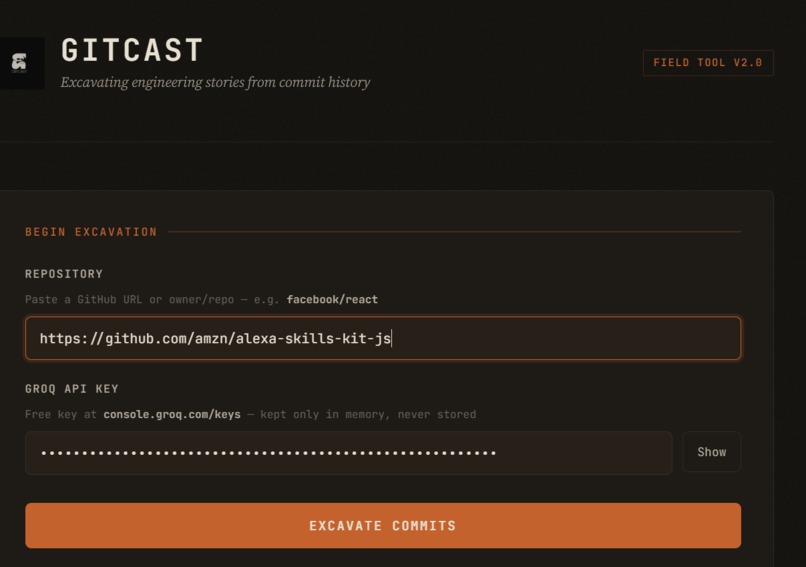
GIT read
-
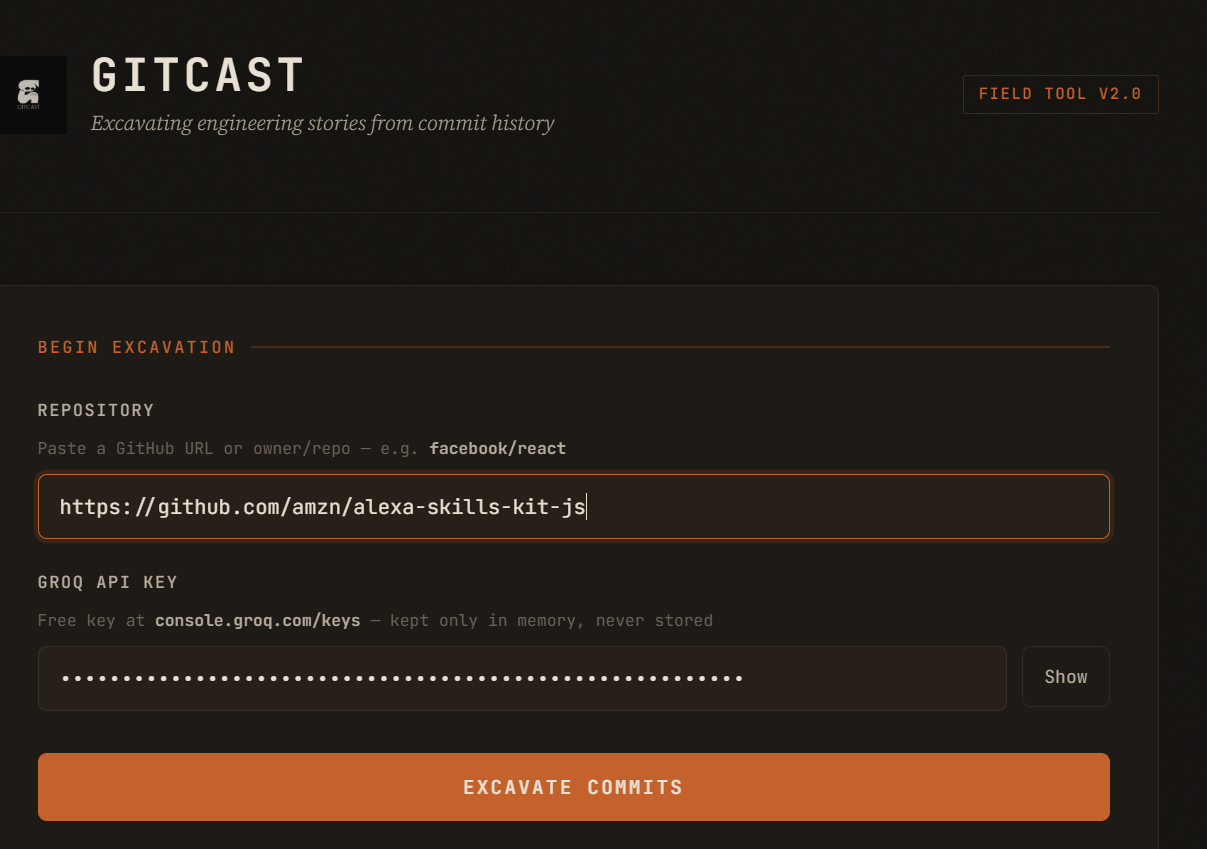
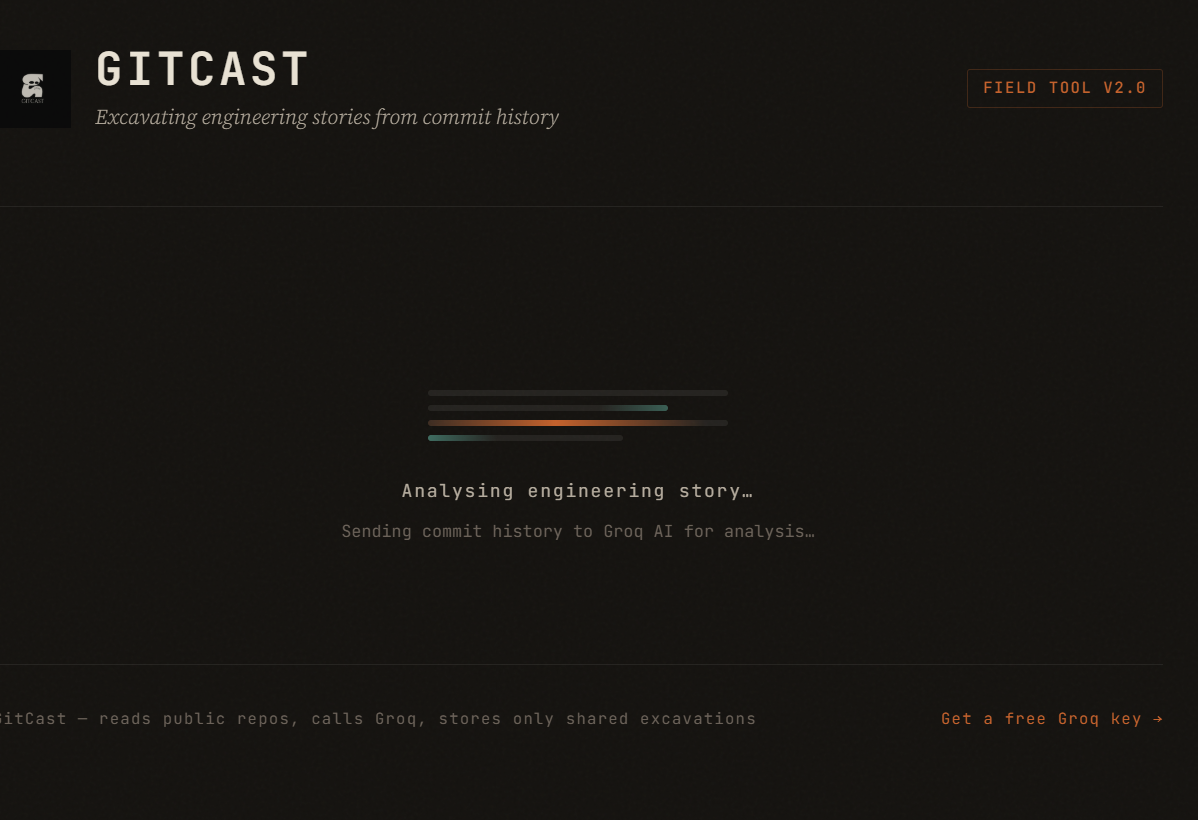
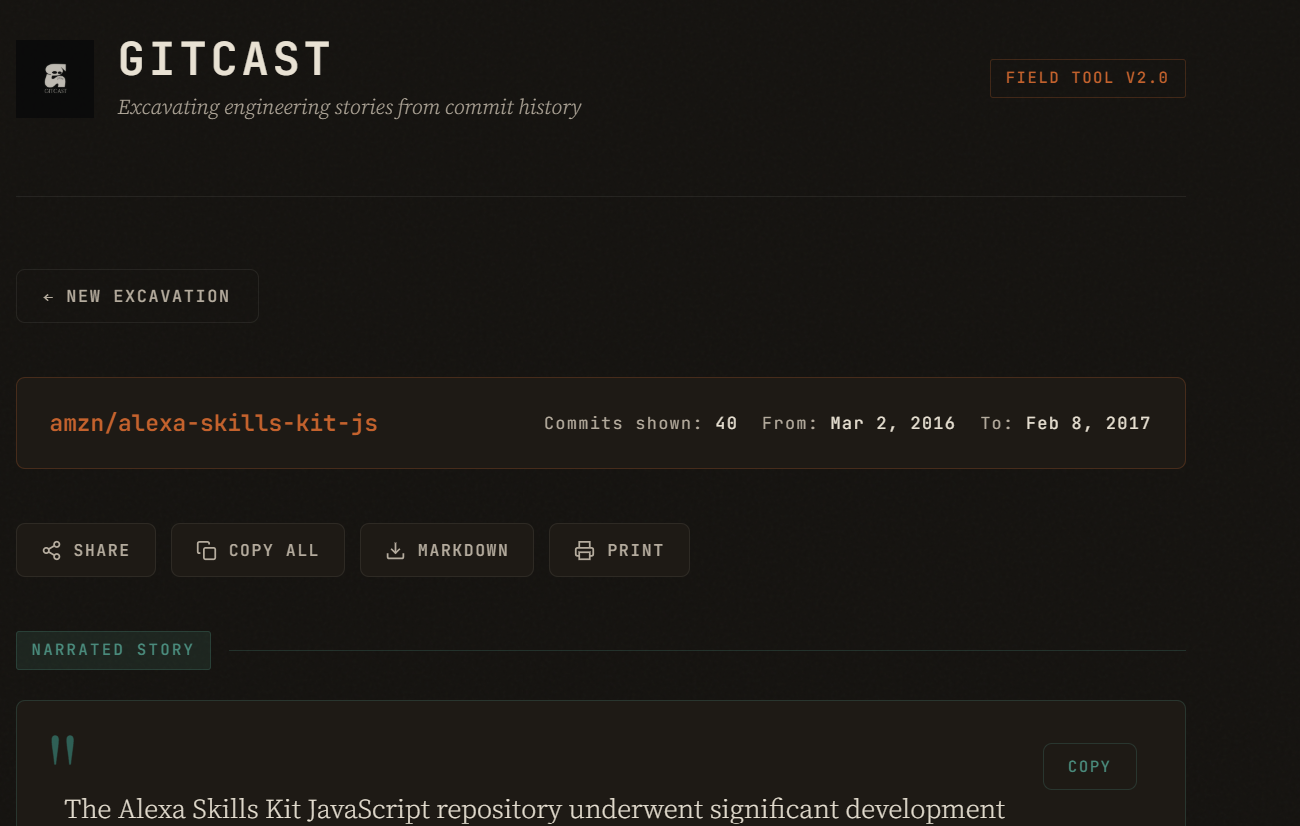
Analysing the given repo
-
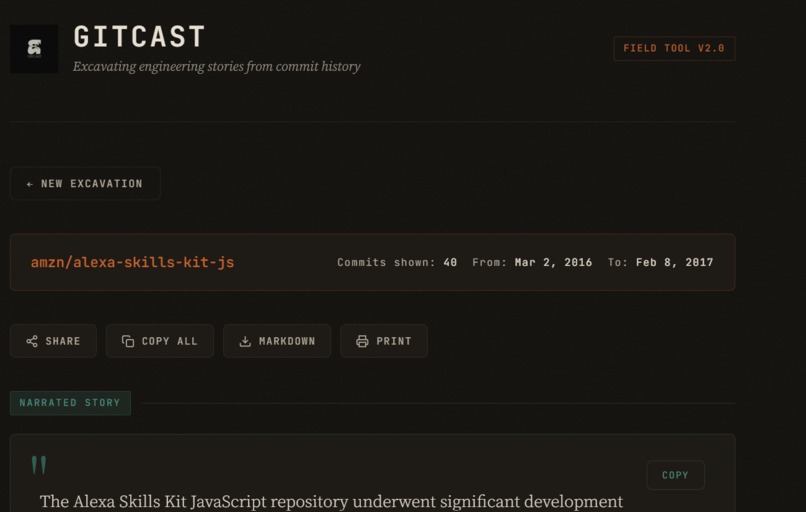
Repo Cast
-
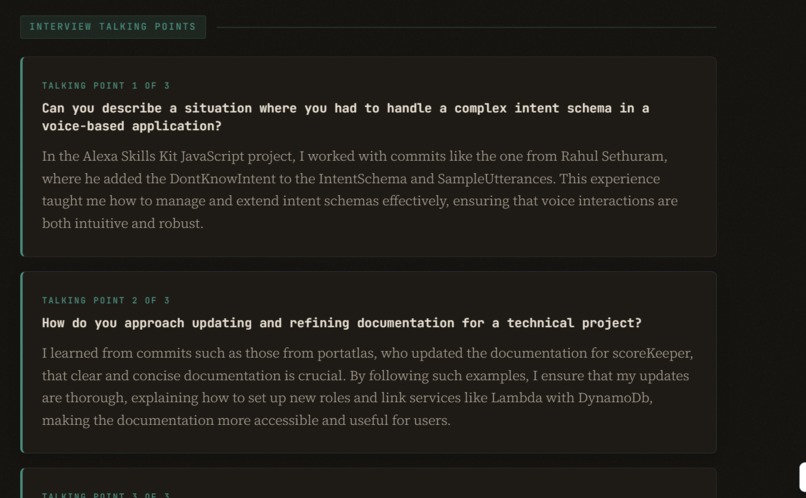
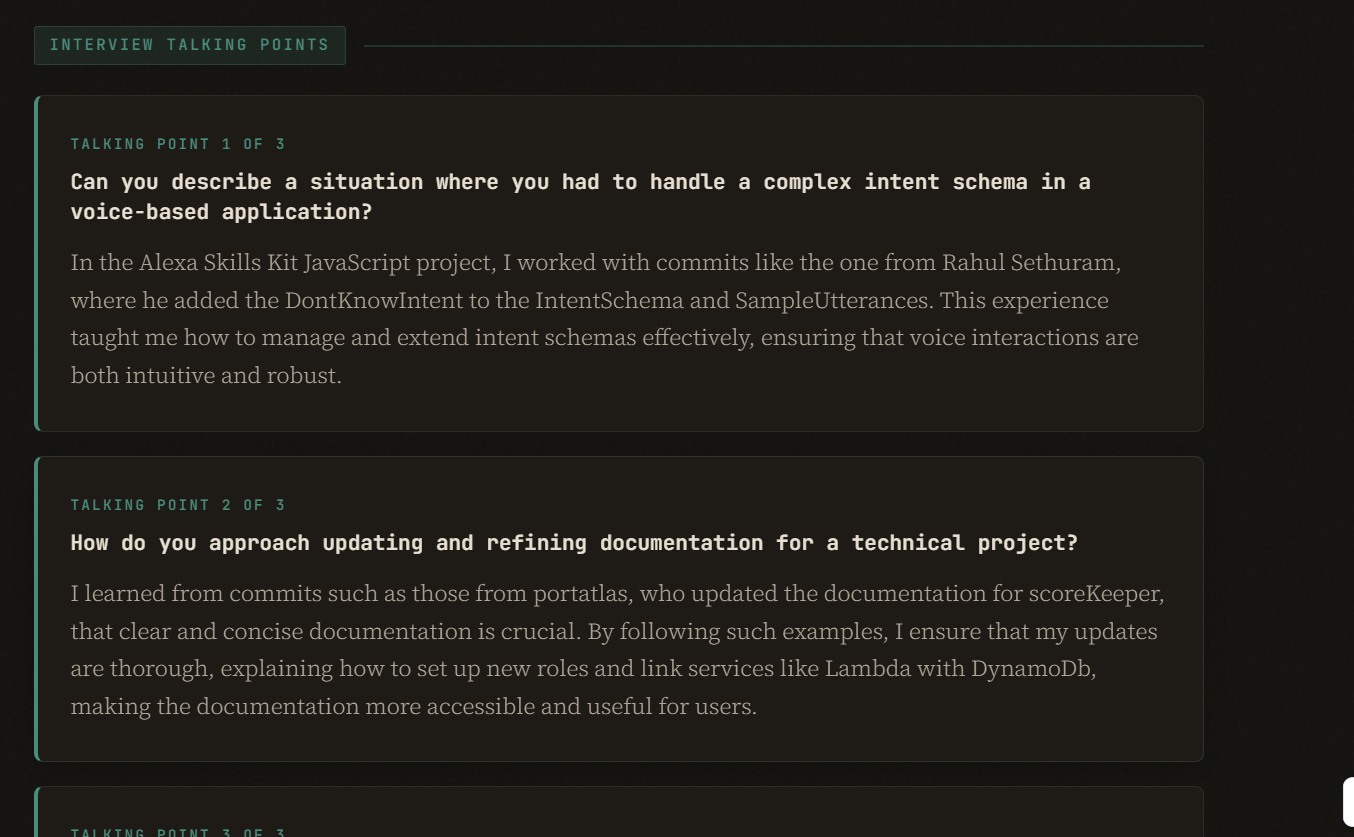
Interview Points
-
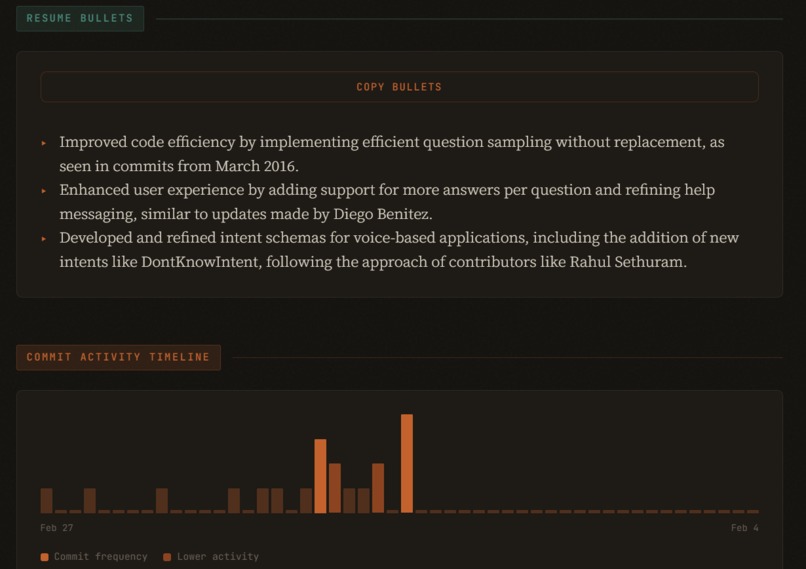
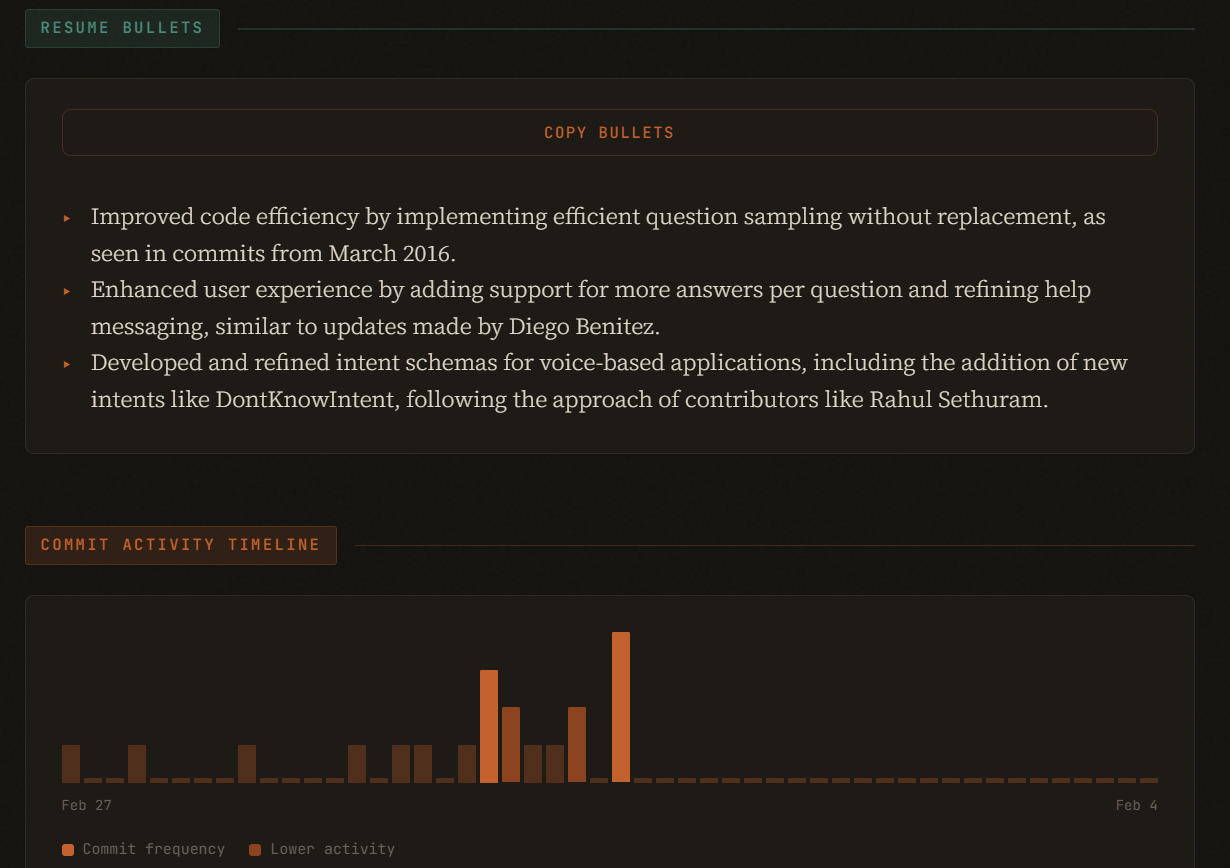
Activity and Key takeaways
-
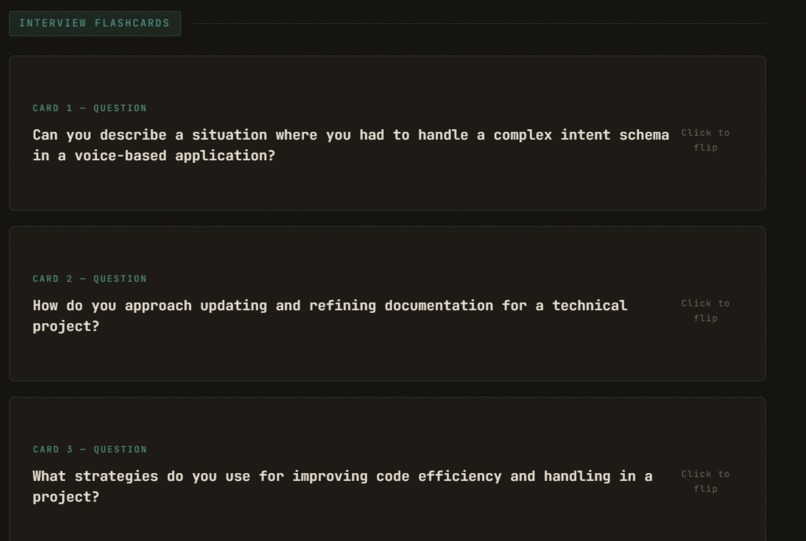
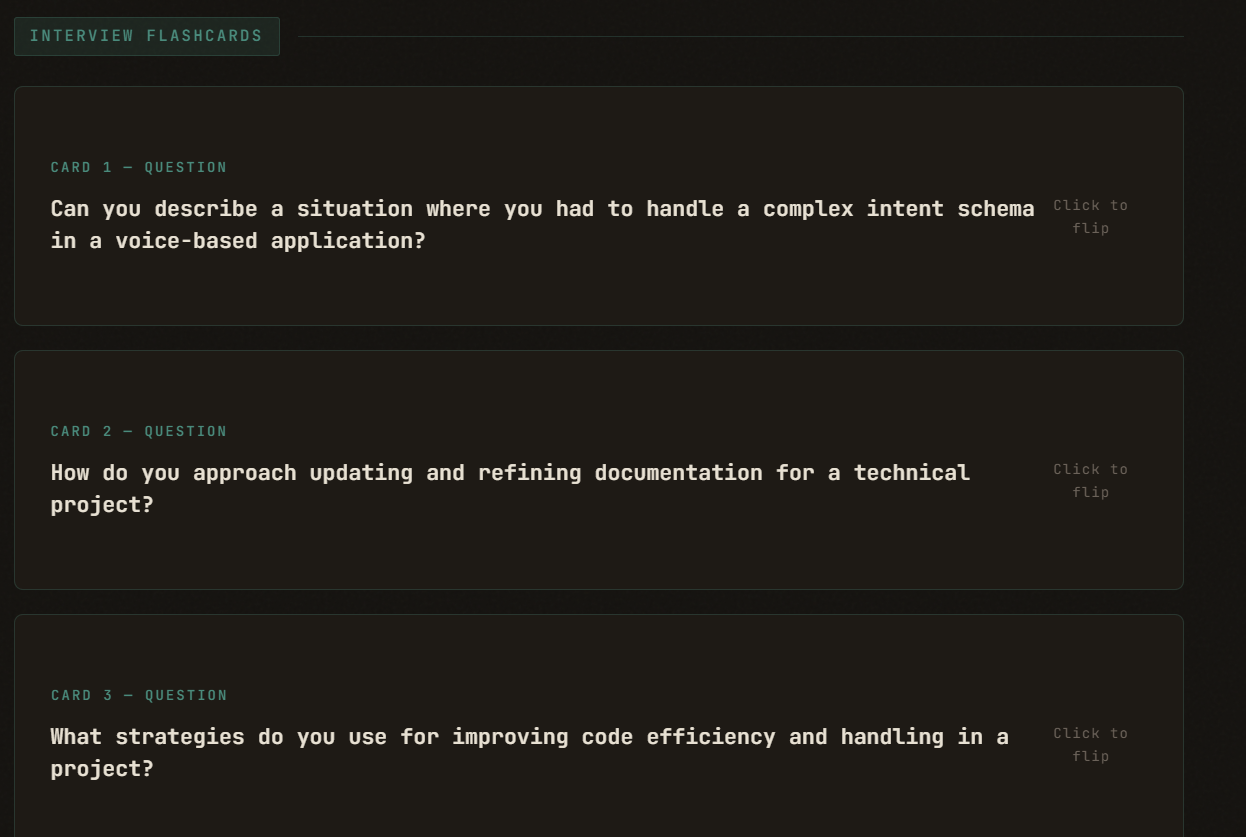
Flashcards of key points
-
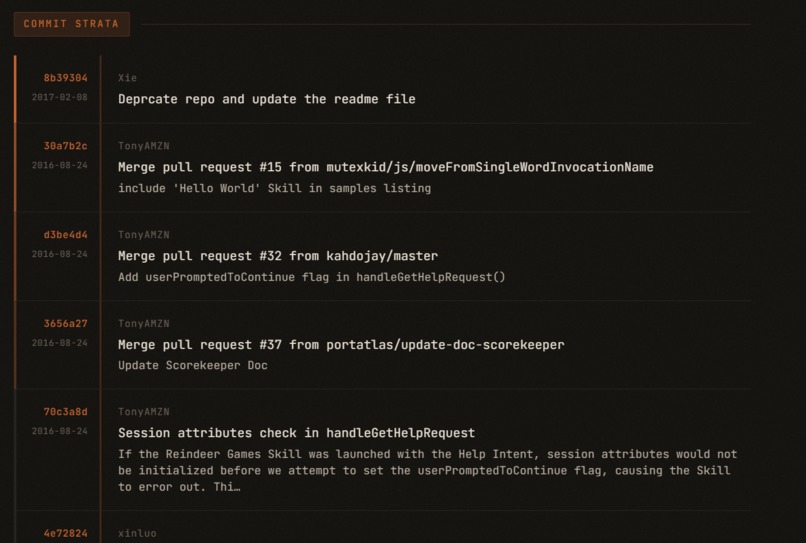
The Journey of engineer strata
-
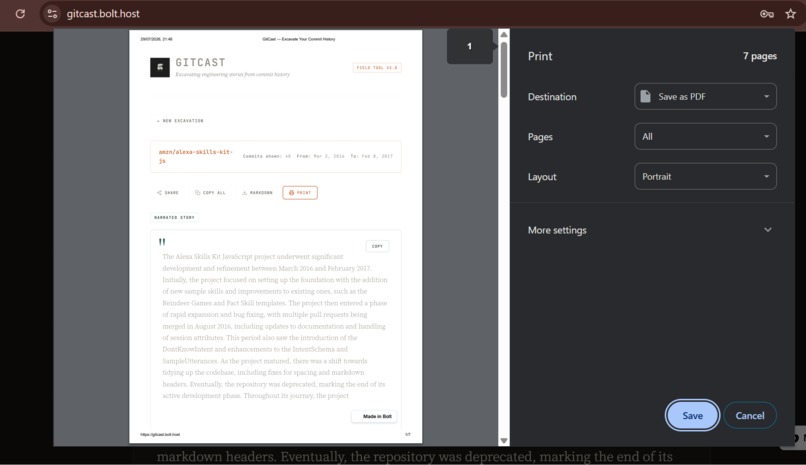
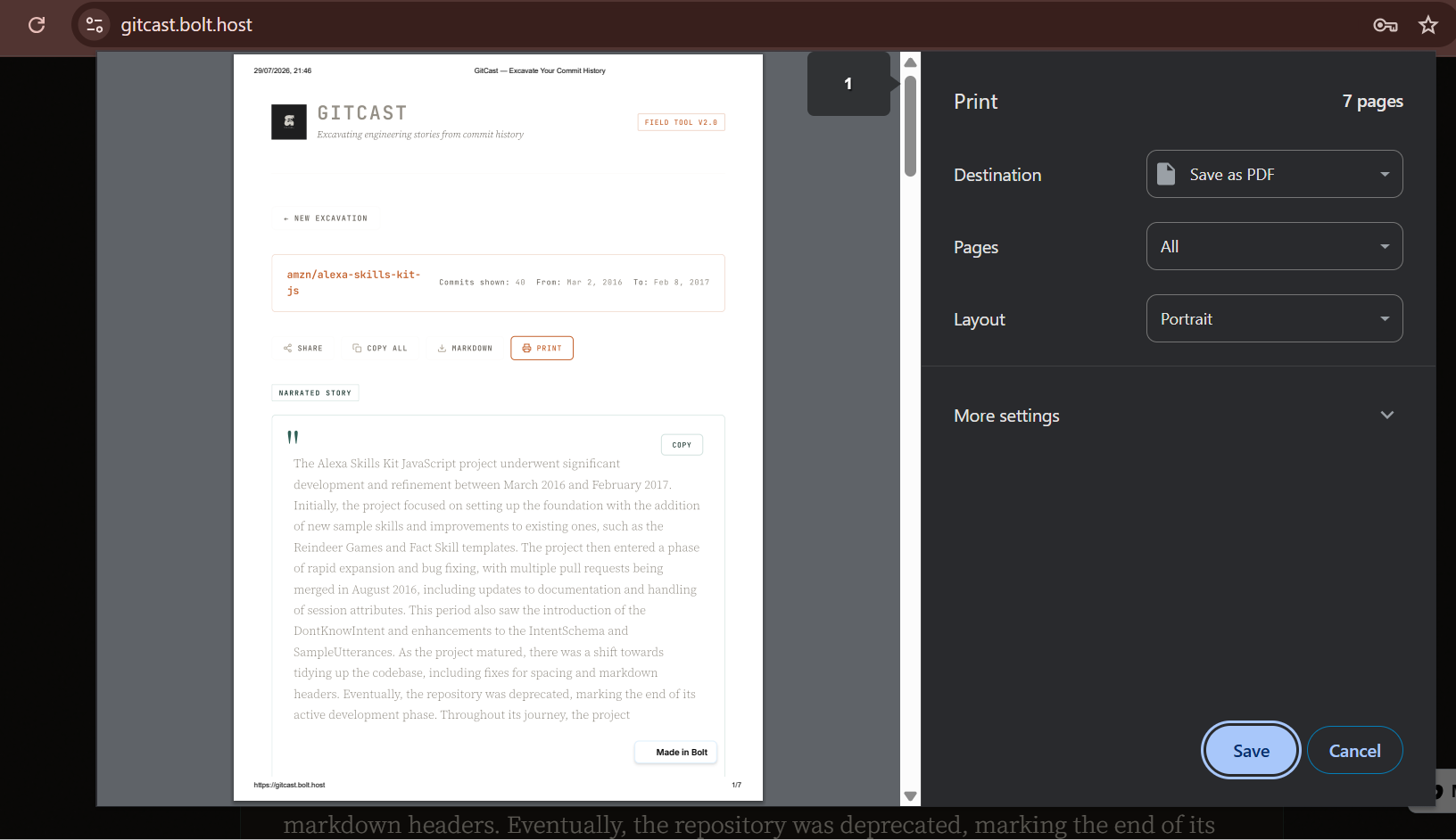
export the report as PDF
Inspiration
Developers often struggle to articulate the full scope and impact of their work during job interviews or portfolio reviews. While commit logs hold the real story of technical problem-solving, architectural pivots, and bug fixes, raw git logs are difficult for interviewers to digest. We built GitCast to automatically excavate those narrative insights directly from a project's commit history.
Why GITCAST
Developers pour hundreds of hours into complex code, refactorings, and edge cases. Yet when updating a resume or stepping into a technical interview, months of engineering get reduced to generic, forgettable bullet points.
Developers routinely undersell their real work.
The Memory Trap: By project end, you've forgotten the subtle trade-offs, bug hunts, and architectural pivots that prove your real problem-solving depth.
The "Just Doing My Job" Bias: Essential maintenance—like API migrations, session handling fixes, or refactored logic—feels routine in the moment, so it never makes the resume.
The Translation Gap: Turning raw git logs into compelling stories that recruiters and hiring managers actually digest is exhausting and unintuitive.
Your commit history is the only objective, unvarnished record of your real work. We built GitCast to bridge raw code with human-readable impact—excavating the real story behind your repos so you get full credit for what you’ve built.
What it does
Commit Excavation: Fetches up to 40 recent commits from any public GitHub repository via GitHub’s REST API.
Narrated Story Generation: Uses Groq's llama-3.3-70b-versatile model to synthesize commit logs into a concise, 150–220 word project evolution story.
Interview Talking Points: Formats real commit activity into targeted interview questions, complete with 2–3 sentence STAR-style answers.
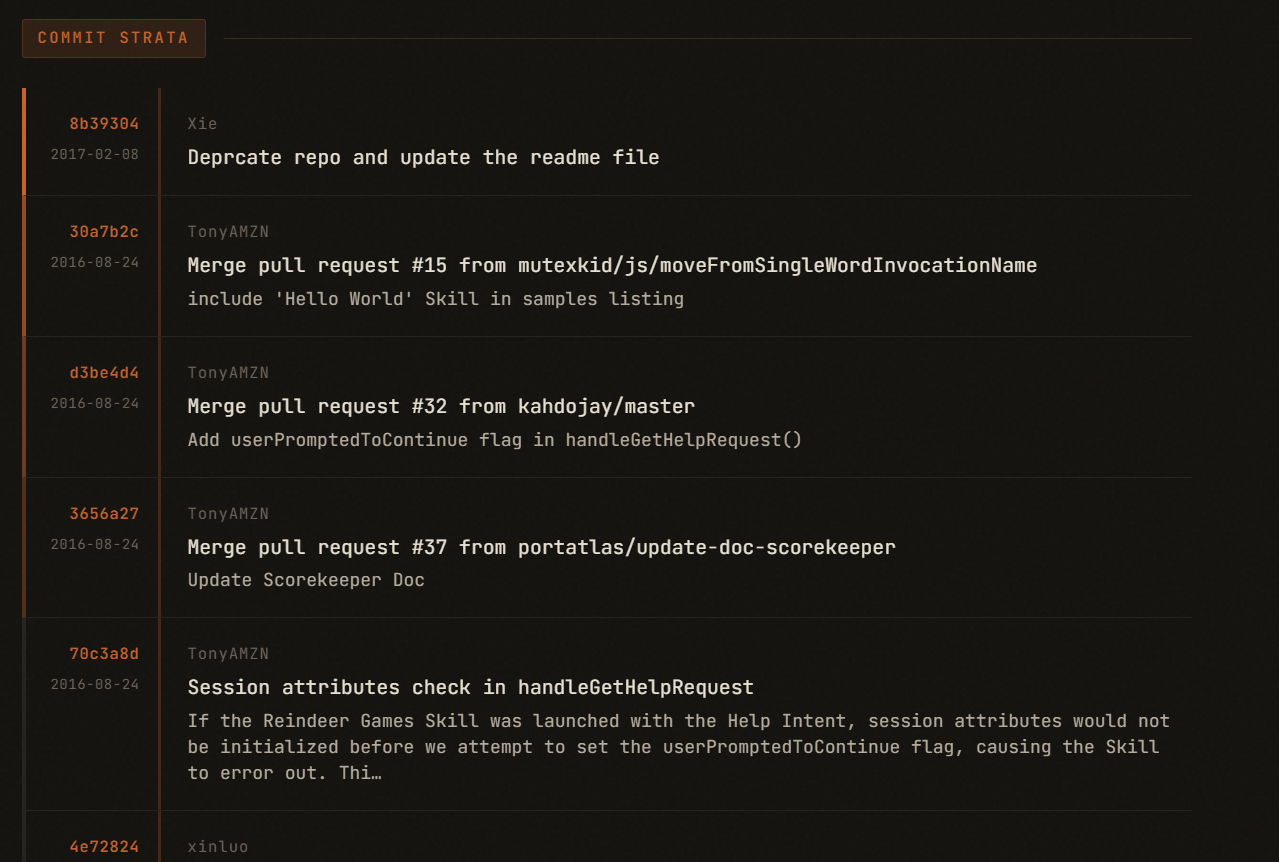
Visual Stratigraphy: Displays commits as interactive "sediment strata" stacked chronologically, visually separating raw git evidence from AI-generated insights.
Export Options: Allows users to copy formatted stories, interview flashcards, or markdown notes with one click.
How we built it
Architecture: Built as a zero-dependency, single-file web application using vanilla HTML, CSS, and JavaScript.
AI Integration: Direct browser-to-API calls to Groq (llama-3.3-70b-versatile) structured via JSON mode prompts for fast inference.
GitHub Integration: Client-side integration with the GitHub REST API to pull public repo histories without requiring user authentication.
Design & Typography: Designed with an archaeological "dig site" aesthetic—featuring dark soil tones (#14120F), bone parchment text (#E8E1D3), rust-orange accents (#C4622D) for raw code data, and muted teal (#4A8B7C) for AI insights. Styled using JetBrains Mono for commit metadata alongside Source Serif 4 for narrative prose.
Challenges we ran into
Grounded Narrative Extraction: Fine-tuning the system prompt so the LLM strictly interprets commit messages without inventing fictitious project drama or hallucinating uncommitted features.
Client-Side API Error Handling: Gracefully capturing distinct HTTP status codes (e.g., GitHub 404 for missing repos, GitHub 403 for rate limits, and Groq 401 for invalid API keys) to give clear, human-readable feedback.
Responsive Visual Strata: Designing the vertical commit layer UI to maintain scanability and smooth animations across mobile viewports down to 375px while adhering to prefers-reduced-motion.
Accomplishments that we're proud of
Zero Backend Overhead: Entirely client-side execution—API keys remain stored strictly in browser session memory and are never persisted or proxied through an external server.
Lightning-Fast Generation: Leveraging Groq's fast LPU inference to deliver complete narratives and flashcards in seconds.
Distinctive Visual Identity: Moving away from standard conversational AI UI patterns in favor of an immersive "geological excavation" motif.
What we learned
Prompt Precision: Enforcing JSON schema outputs from open-weights LLMs reliably structures unstructured git data into modular, presentable components.
Unlocking Technical Value: Developers frequently under-communicate routine maintenance and refactoring; structured commit summaries help frame foundational engineering tasks as valuable accomplishments.
What's next for GITCAST
Multi-Branch & PR Analysis: Expanding commit fetching across pull requests and multiple branches for a more comprehensive history.
Contributor Filtering: Allowing users to isolate commit narratives by specific author handles to build personalized portfolio summaries.
Interactive Timeline Zoom: Enabling date-range filtering to pinpoint specific project releases or sprint milestones.
Built With
- css3
- githubpublicapi
- groq
- html5
- javascript
- webapis


Log in or sign up for Devpost to join the conversation.