
Inspiration
The inspiration came from the challenge QA and SWE managers face in maintaining high test coverage without dedicating human engineers to write unit tests. With reduced QA resources and the need for faster releases, there was a clear need for an automated solution that could generate comprehensive test coverage without human intervention.
What it does
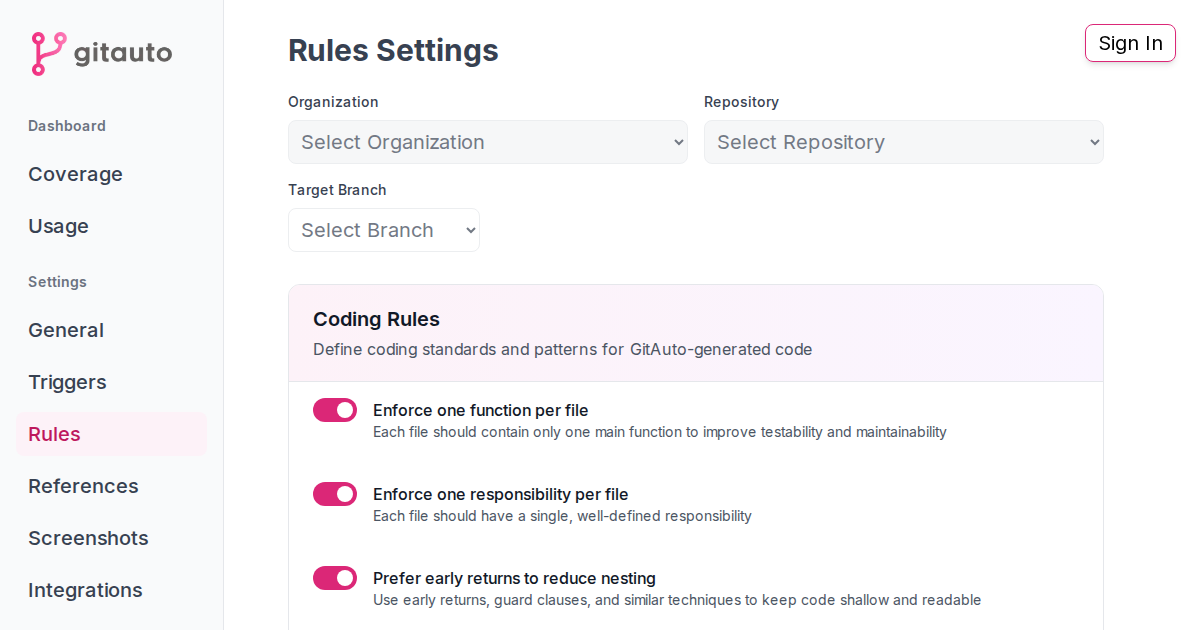
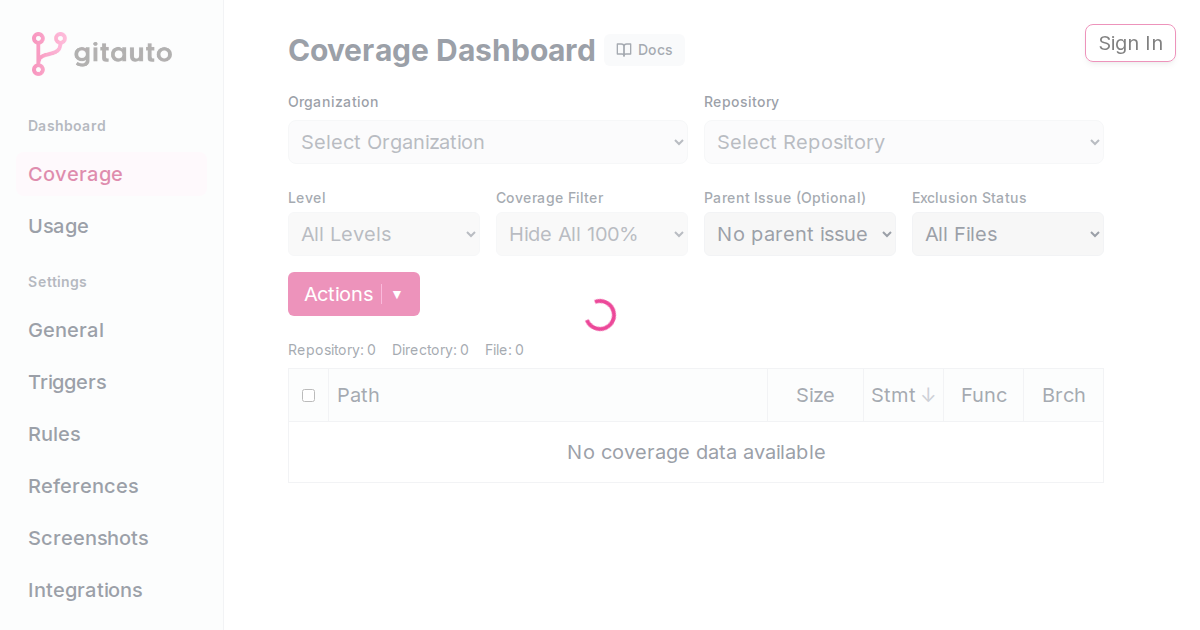
GitAuto is a QA coding agent that automatically generates unit tests from GitHub Actions coverage reports. It creates GitHub issues for low-coverage files and opens pull requests with comprehensive test cases, triggered by issue labels, commits, merges, or schedules.
How we built it
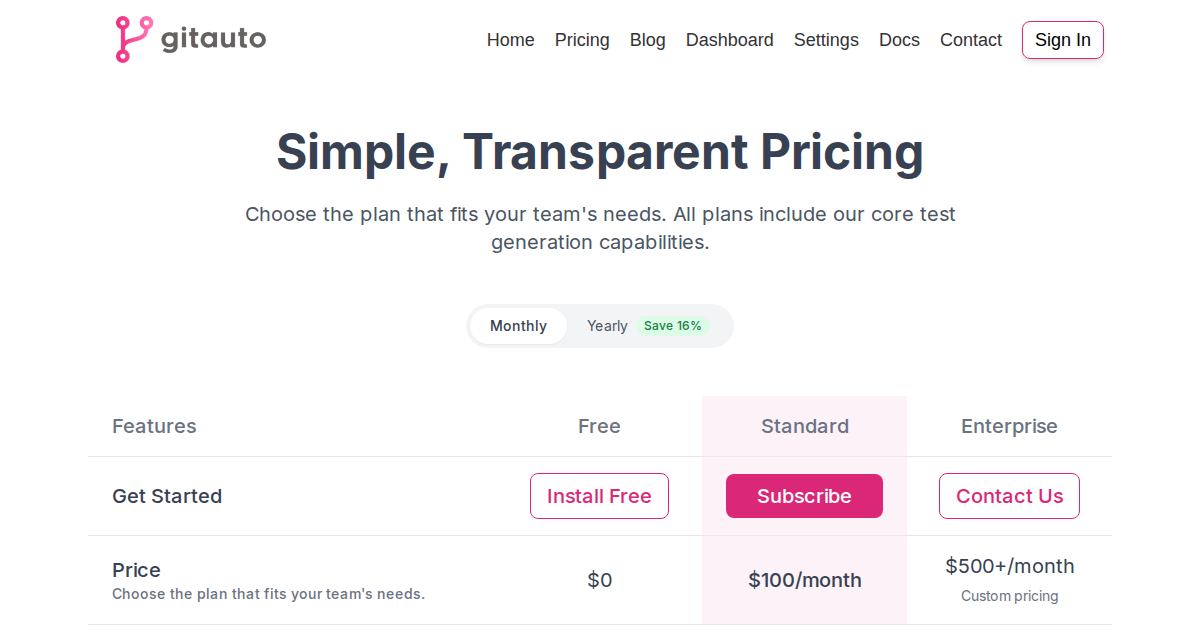
Built as a GitHub App using FastAPI (Python) deployed on AWS Lambda, with EventBridge Scheduler for automated triggers. The Next.js website runs on Vercel, integrated with Supabase for data and Stripe for payments.
Challenges we ran into
When users make requests to GitAuto, they often come in rapid succession, making cold starts problematic. We need isolated environments per user but with warm start capabilities - something between EC2 and AWS Lambda (though Lambda might handle this, I haven't figured it out yet).
Additionally, just as engineers clone a repo to code locally, GitAuto needs to clone it to test locally too. However, AWS Lambda and Flutter have some compatibility issues, preventing this workflow. We're actively seeking solutions for both challenges using AWS Lambda or combining other AWS services.
Accomplishments that we're proud of
Created a system that takes projects from 0% to 90% test coverage effortlessly using AWS Lambda's serverless architecture, built self-healing test generation with EventBridge Scheduler for reliable automation, and achieved seamless asynchronous workflows that don't require developers to be in their IDE.
What we learned
Initially, we tried to deploy as a general coding agent to tackle accumulated issue backlogs, but that scope was too broad. As a startup strategy, we pivoted to focus 10x on a single use case: automated unit test generation. We're planning the official release after this hackathon.
This was our first time adopting serverless architecture, and it's incredibly good and cheap - very startup-friendly. Deployment is easy, and managing configuration as code with CloudFormation is fantastic (previously, we never knew who configured what, how, or why).
What's next for GitAuto
We'll release GitAuto with commit triggers, merge triggers, and schedule triggers shortly after this hackathon. As a user myself, I want to gain practical experience with many customers - targeting 10 companies and $12K ARR initially.
We also want to find solutions to the current challenges we're facing - solving the cold start problem for consecutive user requests and enabling local testing environments for diverse tech stacks like Flutter within AWS Lambda constraints.
Built With
- amazon-web-services
- claude
- docker
- fastapi
- github
- python
- supabase

Log in or sign up for Devpost to join the conversation.