-
-
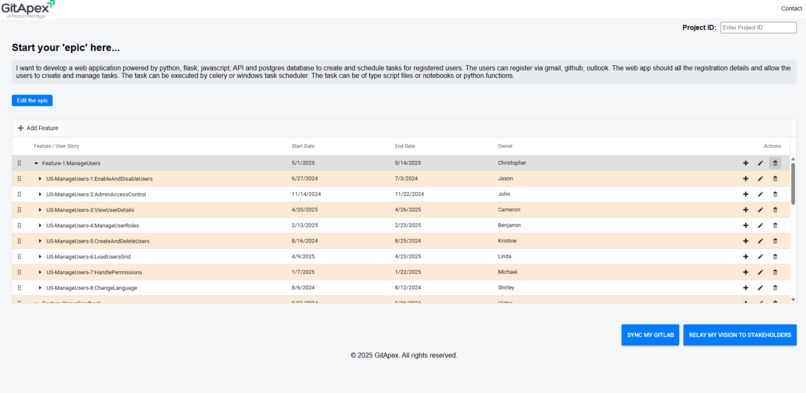
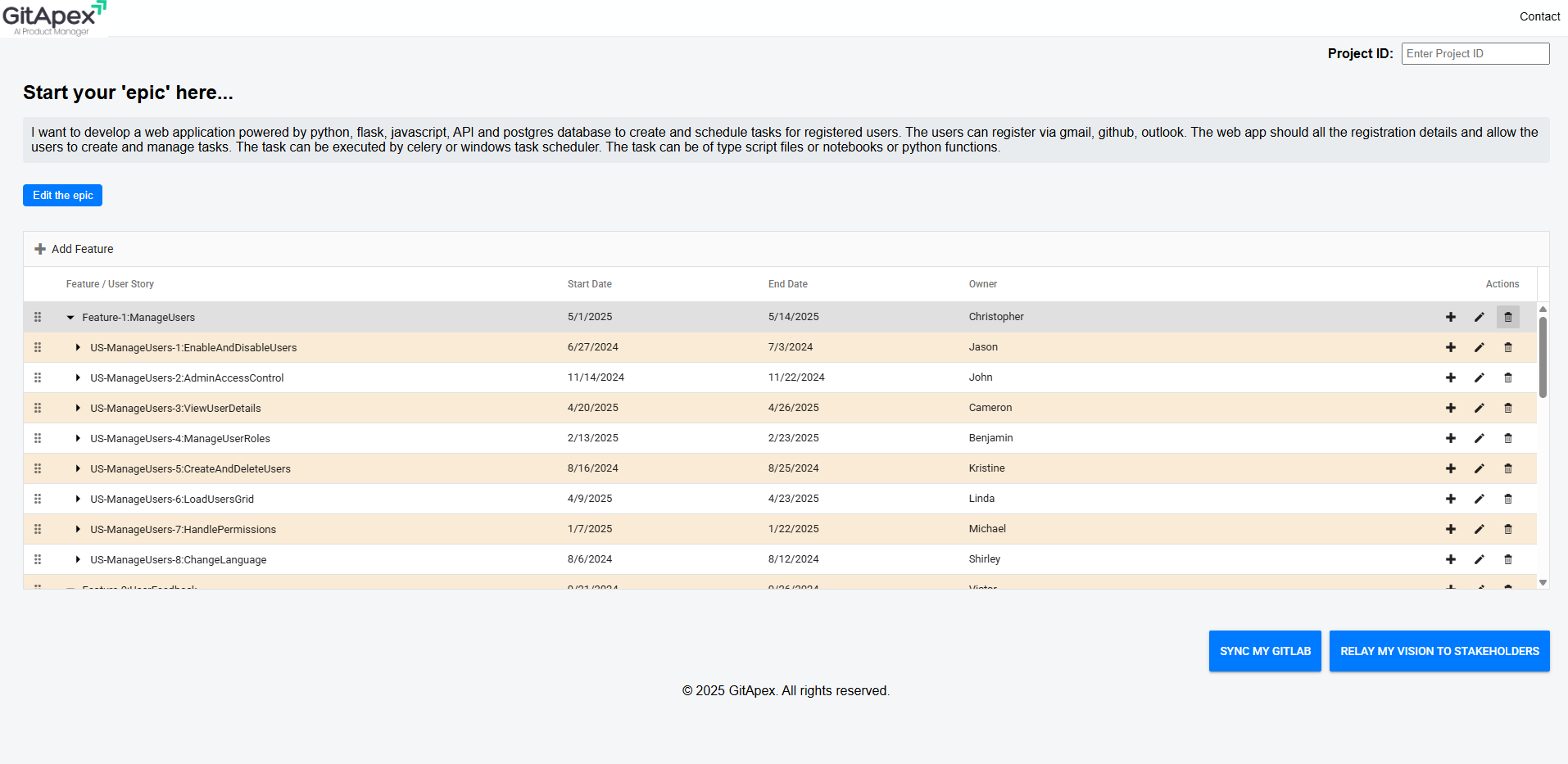
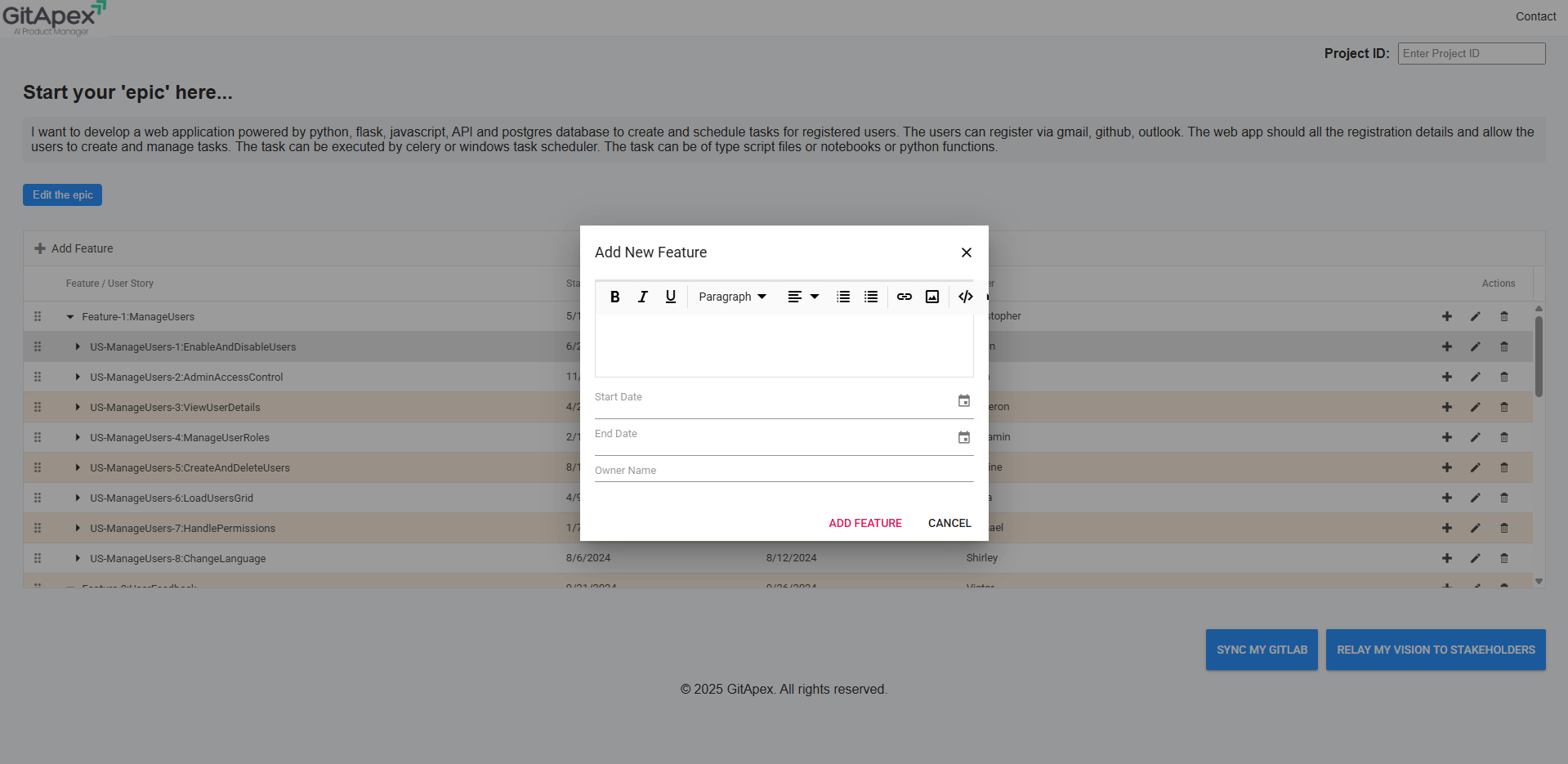
The Unified Landing Screen
-
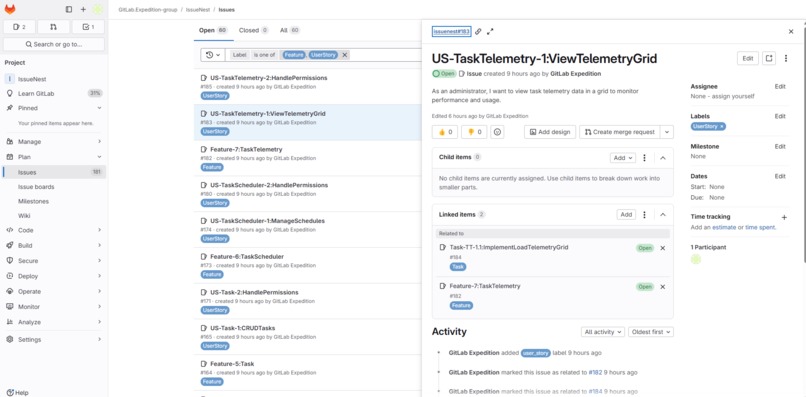
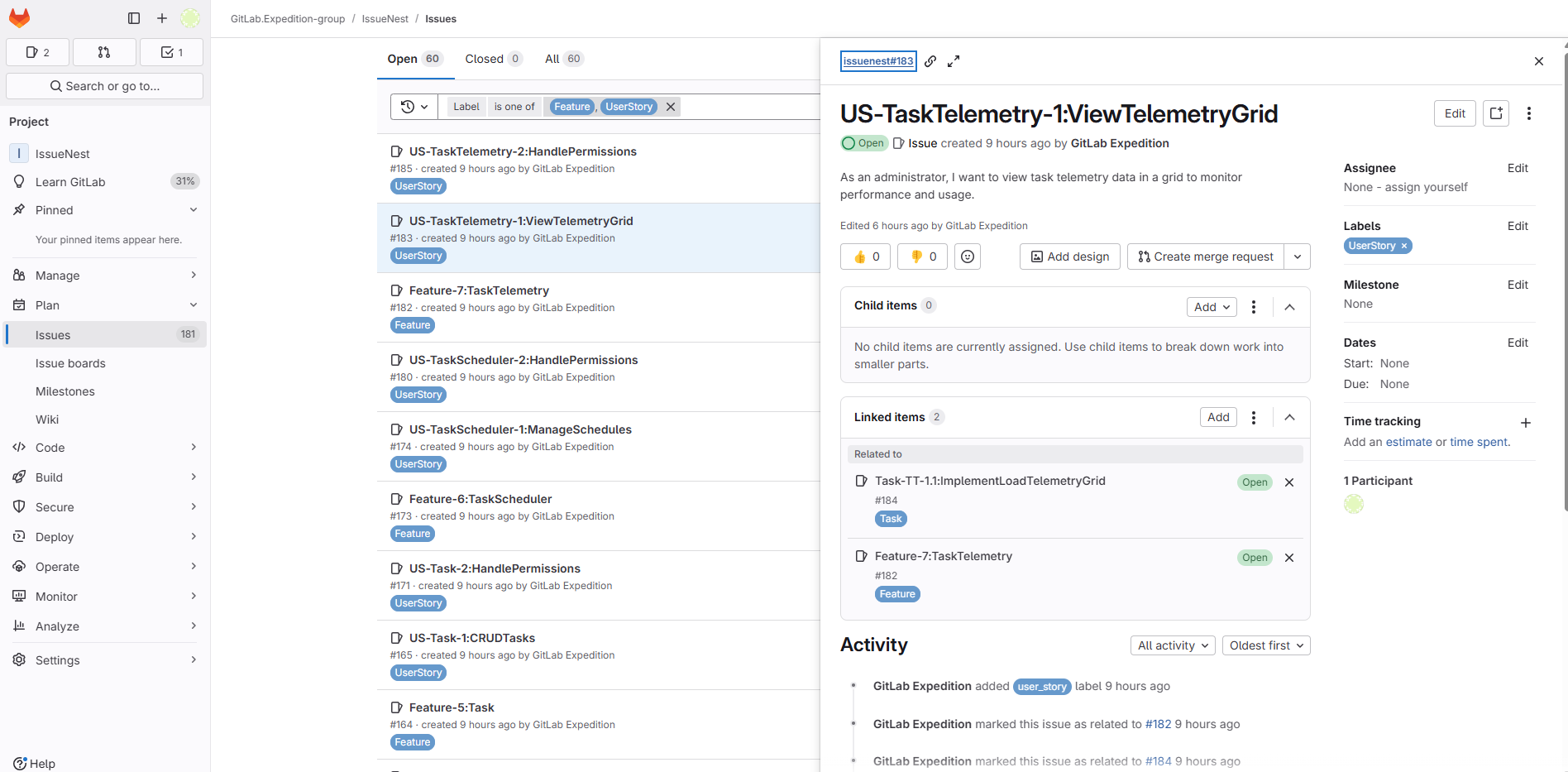
Full hierarchy of Epics, Features, User stories and Tasks with Description created in GitLab
-
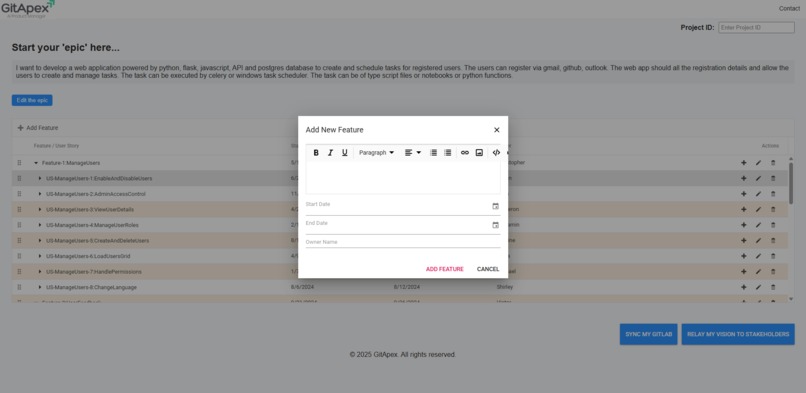
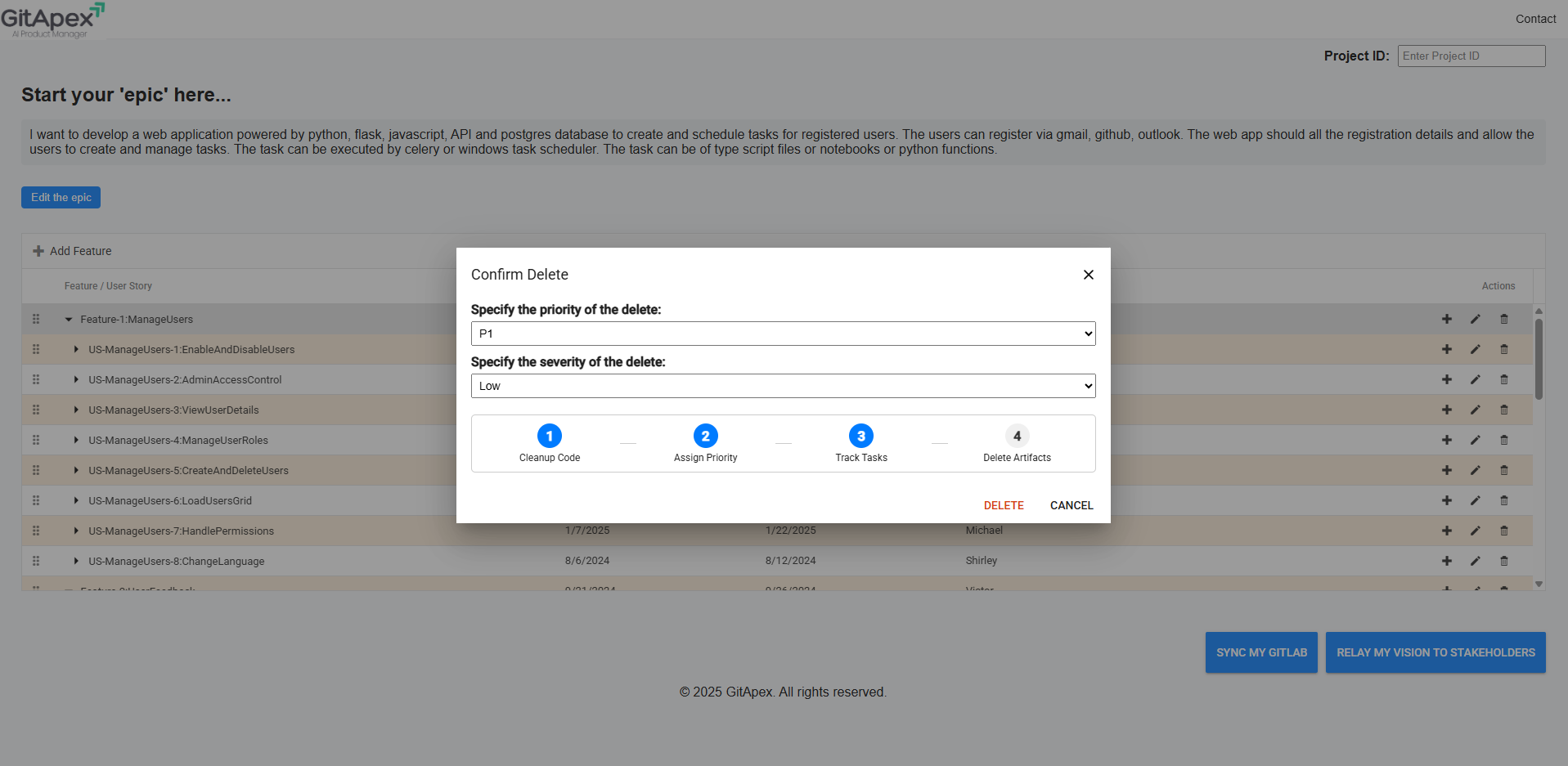
Change Management is a breeze
-
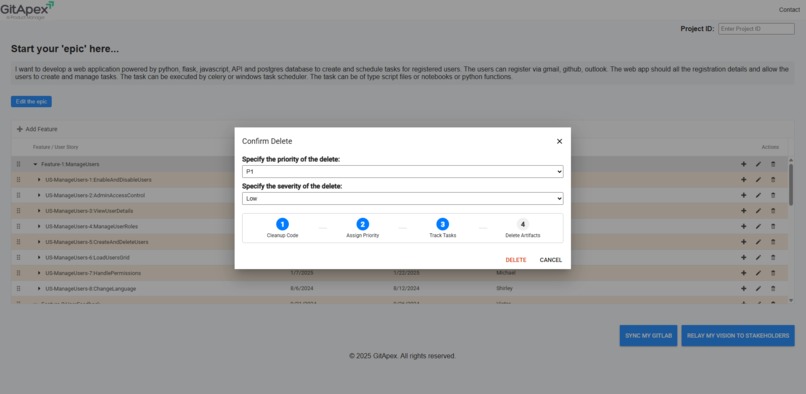
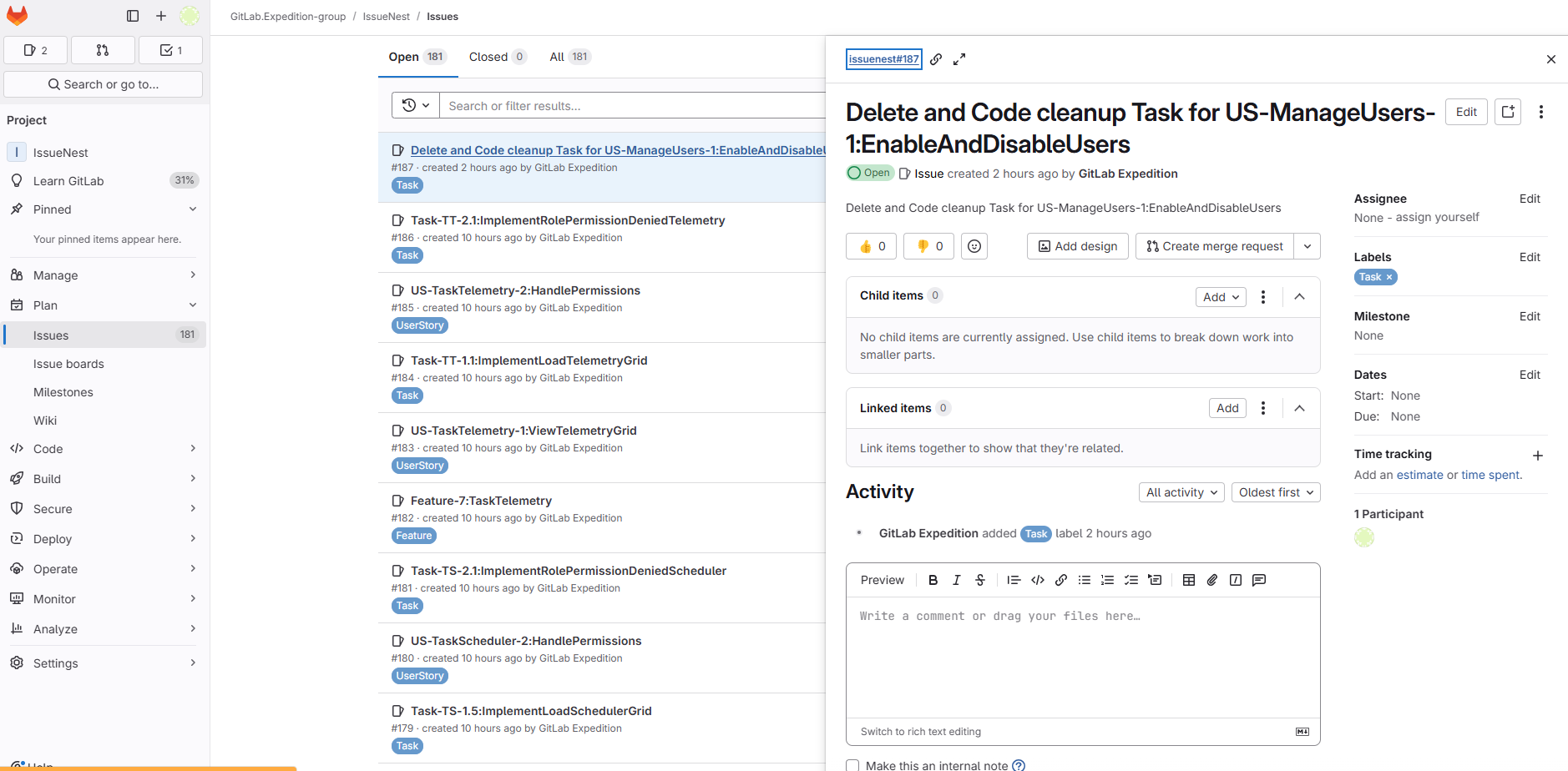
Delete workflow of refactoring etc. are created automatically
-
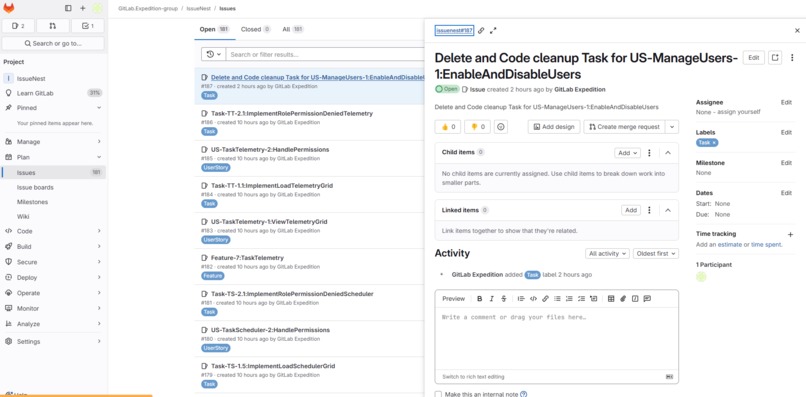
Delete workflow being tracked in GitLab
-
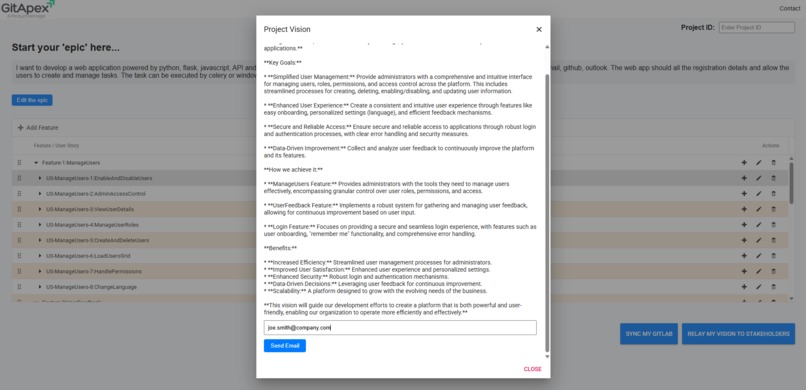
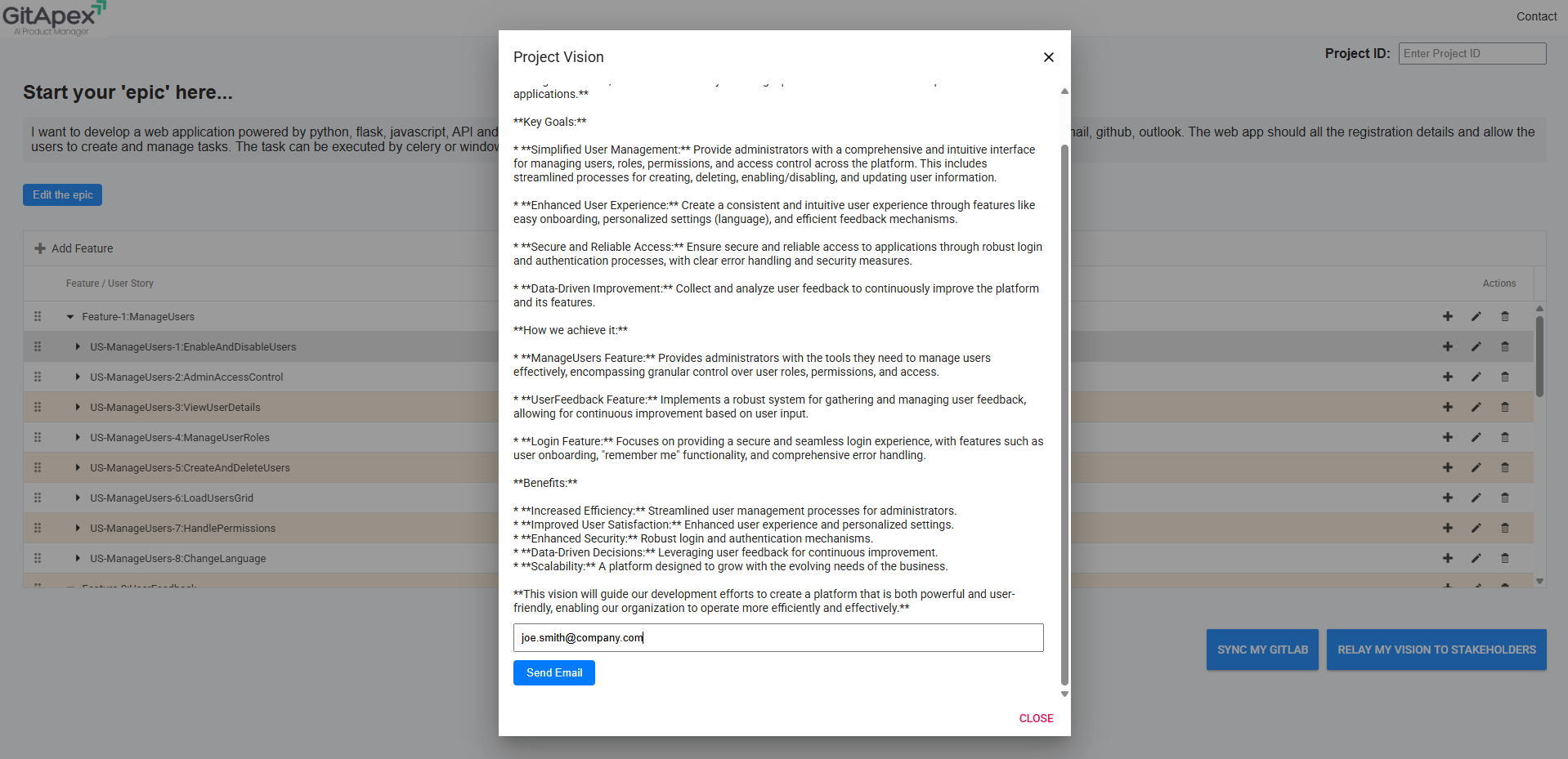
Product Roadmap communication
⚛️ Inspiration and Problem Statement

Imagine accelerating your product releases by at least 10x. That's the power of Git Apex, the unified UI for Agile Product Owners
As an Agile Product Owner, the role is to define the vision, manage the backlog, liaise with stakeholders, and track progress. But challenges like measuring value, keeping up with technology, compliance hurdles, and change management can slow you down.
GitApex solves these issues by automating and intelligently managing all activities in a single, seamless interface by creating epics, features, user stories and tasks from a simple story told with expected workflow in GitLab
All the issues and items created in GitLab are tied together with relationships, connections with strong relevant content powered by Google Gemini and multiple domain context aware models
With Git Apex, you can focus on what truly matters—delivering value fast and ensuring a strong compliant process
✔️ What it does
GitApex is a robust Web application built and deployed on Google Cloud, designed to streamline and enhance the product development lifecycle for Agile Product Owners.
Key Features:
Unified User Interface: GitApex offers a single, intuitive UI that empowers product managers to effortlessly create epics, features, and user stories. This reflects a natural, real-world hierarchy of events. All these items, along with their individual tasks, are automatically generated in GitLab, maintaining proper hierarchical and parent-child relationships.
Effortless Change Management: With GitApex's visual workflow, change management becomes a breeze. Required refactoring tasks are automatically created and intelligently managed, ensuring a smooth and efficient adaptation to evolving requirements.
Seamless Stakeholder Communication: Our platform ensures that communication to stakeholders is seamless through a shared and evolving product vision, keeping everyone informed and aligned.
Intelligent Automation & Content: All issues and items created within GitLab via GitApex are interconnected through robust relationships and connections. This is powered by strong, relevant content generated by Google Gemini, leveraging GCP Cloud Run and multiple domain-context-aware LLM models. This intelligent integration ensures that your product development process is not just efficient but also enriched with valuable insights and accurate information.
☮️ How we built it
GitApex is a Python Flask application deployed on Google Cloud (GCP Cloud Run), designed to streamline product management. It provides a unified UI (using Syncfusion) for Product Owners to manage development processes.
GitApex integrates with the GitLab API for creating and managing epics, features, user stories, and tasks, ensuring proper hierarchy. Crucially, it leverages Google Gemini and other context-aware LLMs to intelligently process natural language stories, automating the creation and linking of GitLab items.
GitApex architecture involves user interaction via the Syncfusion frontend, which sends API requests to the Flask backend. The Flask app, authenticated with a GitLab Personal Access Token (PAT), processes these requests, makes calls to the GitLab API, and integrates with LLMs for intelligent content generation. Data persistence is handled by GitLab. GitApex also supports visual workflow and change management by fetching and rendering GitLab statuses, enabling Product Owners to manage tasks efficiently.
Security is a key focus. The GitLab PAT is securely stored as an environment variable, never hardcoded. API Security for Flask endpoints ensures controlled access, and robust input validation prevents vulnerabilities, safeguarding the application and its data.
♒ Challenges we ran into
Here are some of the major challenges we ran into:
Integration Complexity: Integrating deeply with the GitLab API for creating and managing various items (epics, features, user stories, tasks, and their hierarchies/relationships) can be complex, requiring careful handling of API versions, rate limits, and error scenarios.
LLM Integration and Performance: Leveraging Google Gemini and other context-aware LLMs introduces challenges such as prompt engineering for accurate and relevant content generation, managing API costs, ensuring low latency for real-time processing, and handling potential limitations in model context windows or token limits.
Security Management: While the text states the GitLab Personal Access Token (PAT) is securely stored as an environment variable, managing PATs, their permissions/scopes, and overall API security for the Flask endpoints (especially for multi-user access) requires robust implementation to prevent unauthorized access or vulnerabilities.
UI Framework Complexity: Integrating a comprehensive UI component library like Syncfusion to build a "unified UI" can involve significant frontend development effort and require expertise in the chosen frontend framework (e.g., React, Angular, Vue) that Syncfusion is used with.
Automated Change Management Accuracy:Automatically creating and managing refactoring tasks based on a "visual workflow" for change management could be challenging to implement accurately and reliably, ensuring that the right tasks are generated for the correct changes.
🔯Accomplishments that we're proud of
Here are some accomplishments of the GitApex approach that we can be proud of,
Unified and Streamlined Product Management: GitApex provides a single, unified UI for Product Owners, significantly simplifying and streamlining the entire product management process.
Automated GitLab Integration: It intelligently automates the creation of epics, features, user stories, and tasks directly within GitLab, ensuring proper hierarchy and relationships are maintained.
AI-Powered Story Processing: By leveraging Google Gemini and other context-aware LLMs, GitApex can intelligently process natural language stories, transforming them into structured GitLab items and automating their creation and linking.
Robust Security Measures: GitApex prioritizes security by securely storing the GitLab Personal Access Token (PAT) as an environment variable and implementing robust input validation for its Flask API endpoints.
☯️ What we learned
We certainly learnt a lot in this journey. Some major highlights are :
Strategic Cloud-Native Development:Building GitApex as a Python Flask application deployed on Google Cloud (GCP Cloud Run) demonstrates a learning in leveraging scalable and managed cloud infrastructure for efficient application deployment and operation.
API-Driven Integration for Enhanced Workflows: The approach highlights the effectiveness of using the GitLab API to programmatically create and manage development artifacts, establishing a robust and automated link between the custom UI and the underlying SCM system.
AI-Powered Automation for Intelligent Product Management: A significant learning is the power of integrating Google Gemini and other context-aware LLMs to transform unstructured natural language into structured, actionable GitLab items. This intelligent automation streamlines tasks like story breakdown and content generation.
Focus on Unified and Simplified User Experience:The emphasis on a "unified UI (using Syncfusion)" underscores the learning that a streamlined and intuitive interface is critical for enhancing Product Owner productivity and simplifying complex development processes.
Proactive Security Best Practices:The explicit mention of securely storing the GitLab PAT as an environment variable and implementing robust API security with input validation reflects a learning in prioritizing and embedding security measures from the ground up to safeguard the application and its data.
🕎 What's next for GitApex
Here are some potential roadmap items for GitApex, we can think of now and will certainly implement :
Enhanced LLM Integration & Workflow Automation: Expand the intelligence of Gemini and other LLMs to automate more complex product management tasks, such as generating compliance reports, suggesting sprint goals based on project status, or predicting potential bottlenecks.
Develop more sophisticated prompts for the LLMs to handle nuanced story variations and generate highly accurate and detailed GitLab items, including specific task breakdowns for refactoring and change management.
Advanced Visual Workflow & Reporting: Develop interactive, customizable dashboards within the Syncfusion UI that offer deeper insights into GitLab data, including burn-down/burn-up charts, value stream mapping, and compliance dashboards. Implement features for visualizing and managing dependencies between epics, features, and user stories across multiple projects or teams within GitLab.
Multi-User & Role-Based Access Control: Implement a robust authentication and authorization system within the Flask backend to support multiple Product Owners and potentially other roles (e.g., Scrum Masters, Developers), each with specific permissions. This would likely involve integrating with GitLab's OAuth or a similar identity provider.
Bidirectional Synchronization with GitLab: Explore real-time, bidirectional synchronization with GitLab. This could involve WebSockets or GitLab webhooks to ensure that changes made directly in GitLab are immediately reflected in the GitApex UI, and vice-versa, minimizing data inconsistencies.
Integration with Other Tools (Beyond GitLab): Investigate integrations with other popular Agile tools or enterprise systems (e.g., Slack for notifications, JIRA for migration paths, or other analytics platforms) to provide a more comprehensive ecosystem for Product Owners.
Customizable Templates & Rule Sets: Allow Product Owners to define custom templates for epics, features, and user stories, as well as custom rules for how LLMs should process stories and create items in GitLab, catering to diverse organizational processes.
Performance Optimization & Scalability: Continuously optimize the Flask application for performance, especially as LLM integrations and GitLab API calls scale. Ensure the GCP Cloud Run deployment is effectively configured for cost-efficiency and high availability.
Built With
- cloudrun
- flask
- gemini
- gitlab
- html5
- javascript
- python
- syncfusion


Log in or sign up for Devpost to join the conversation.