Inspiration
Over the past few months, we started running multiple AI coding agents like Claude Code, Aider, and OpenCode in parallel to speed up development. While running one agent works well, running four or five at once quickly turns into a mess. Agents constantly overwrite each other's files in the working directory, terminal tabs clutter the screen, and whenever a GitHub CI check fails or someone leaves a review comment, we had to manually copy and paste error logs back into the agent's prompt context.
We realized what was missing wasn't another chat window, but a dedicated supervisor harness that could run parallel agents in isolated environments and automatically route feedback back to them. That's why we built GIT_WIZ.
What it does
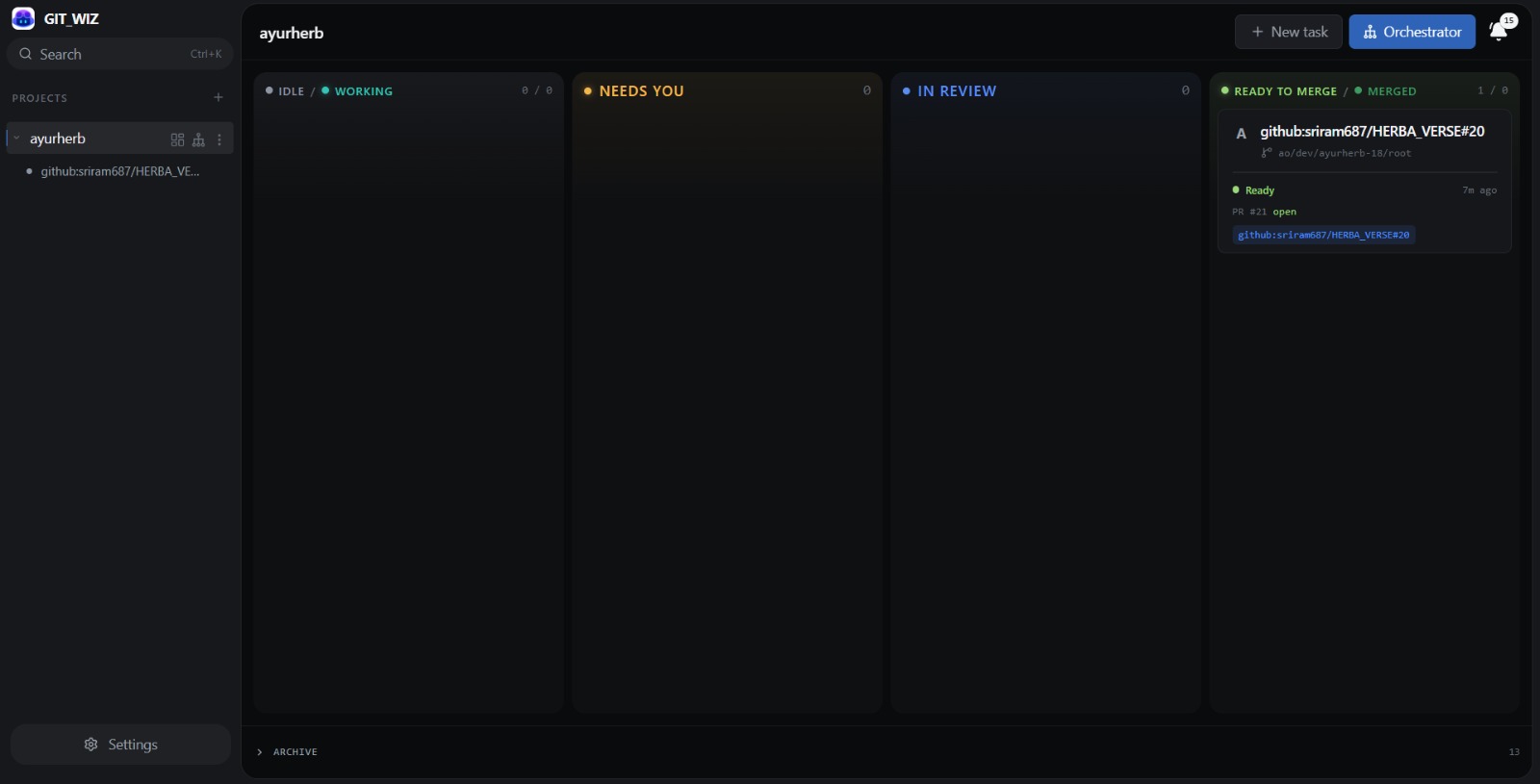
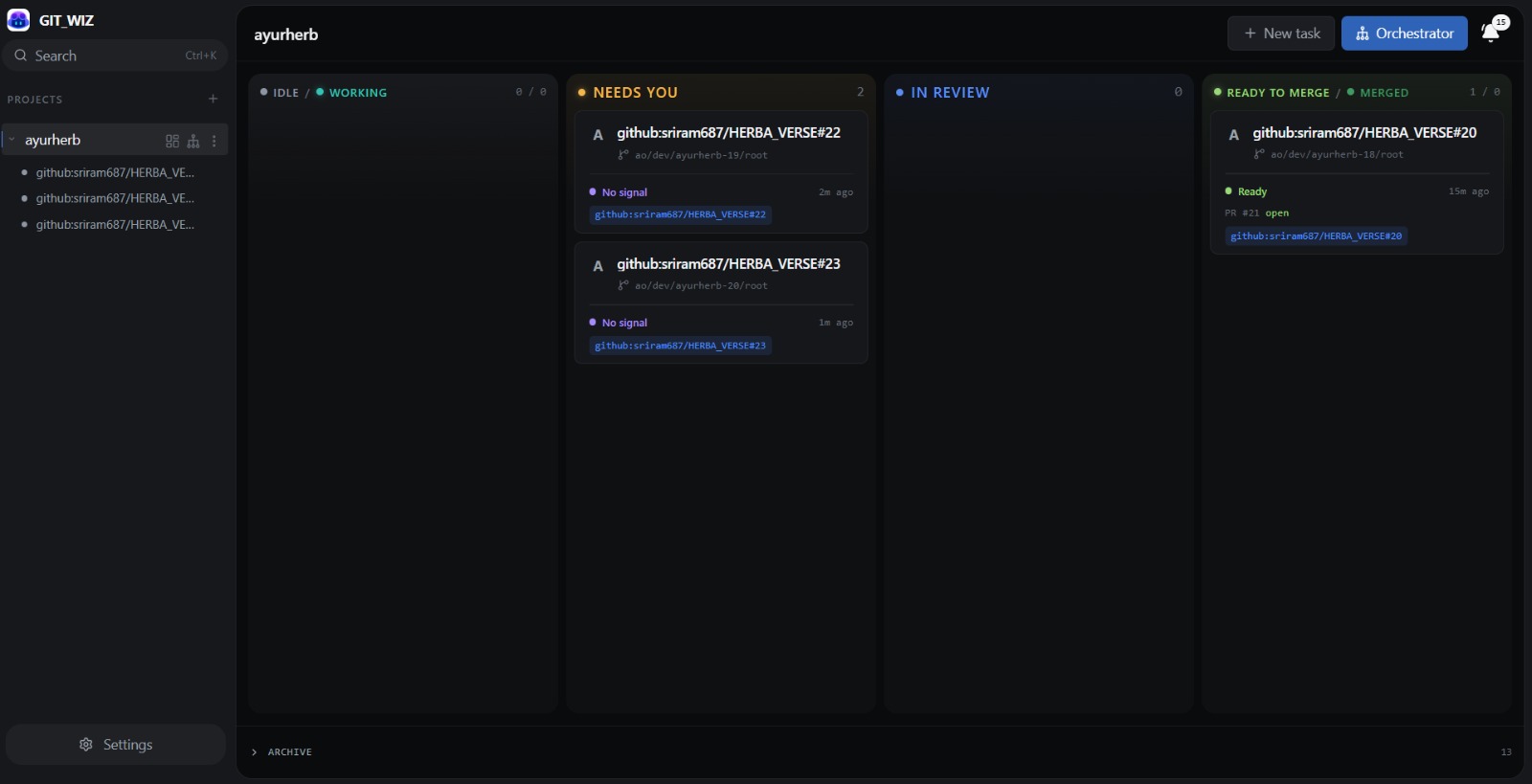
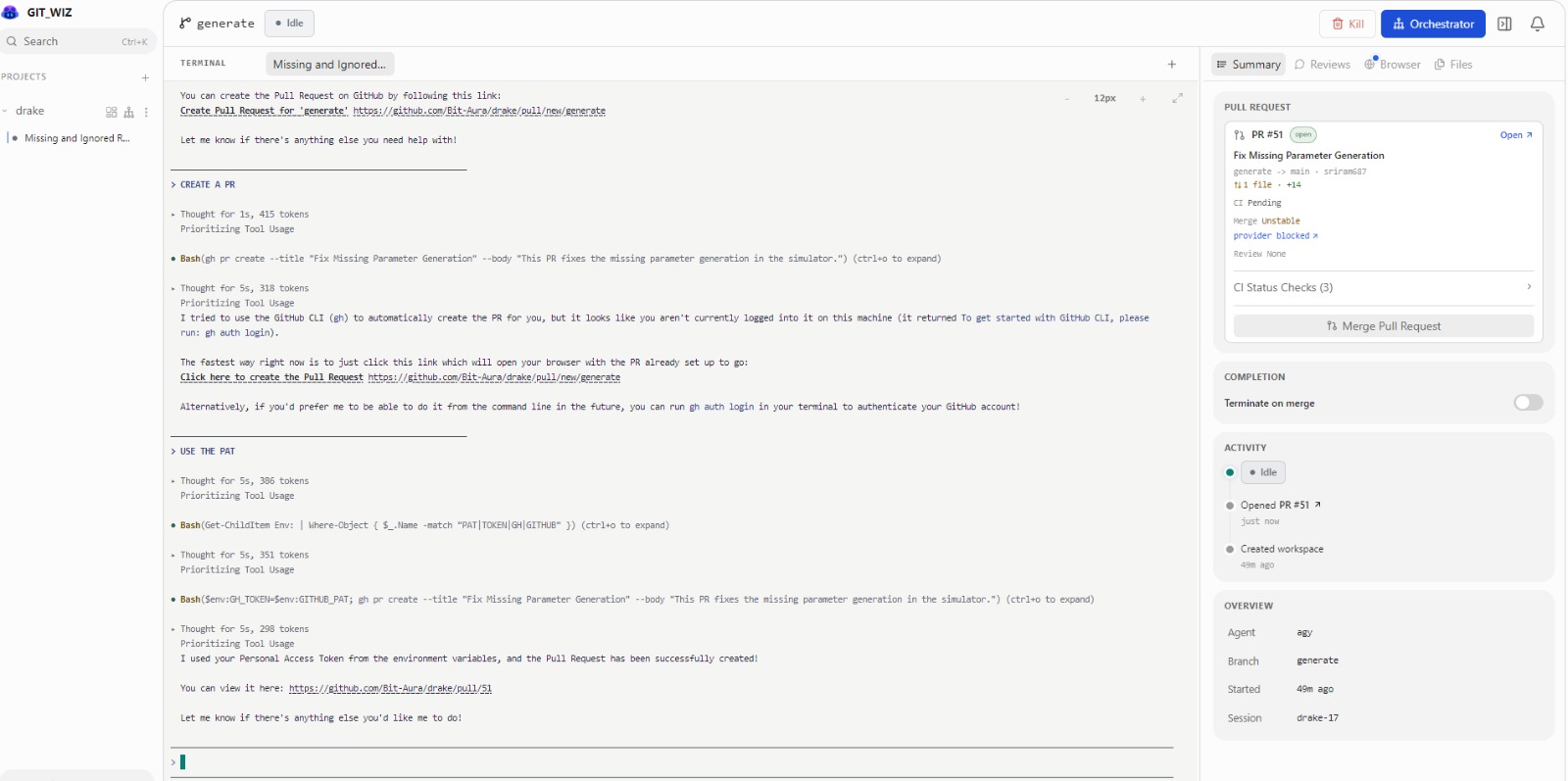
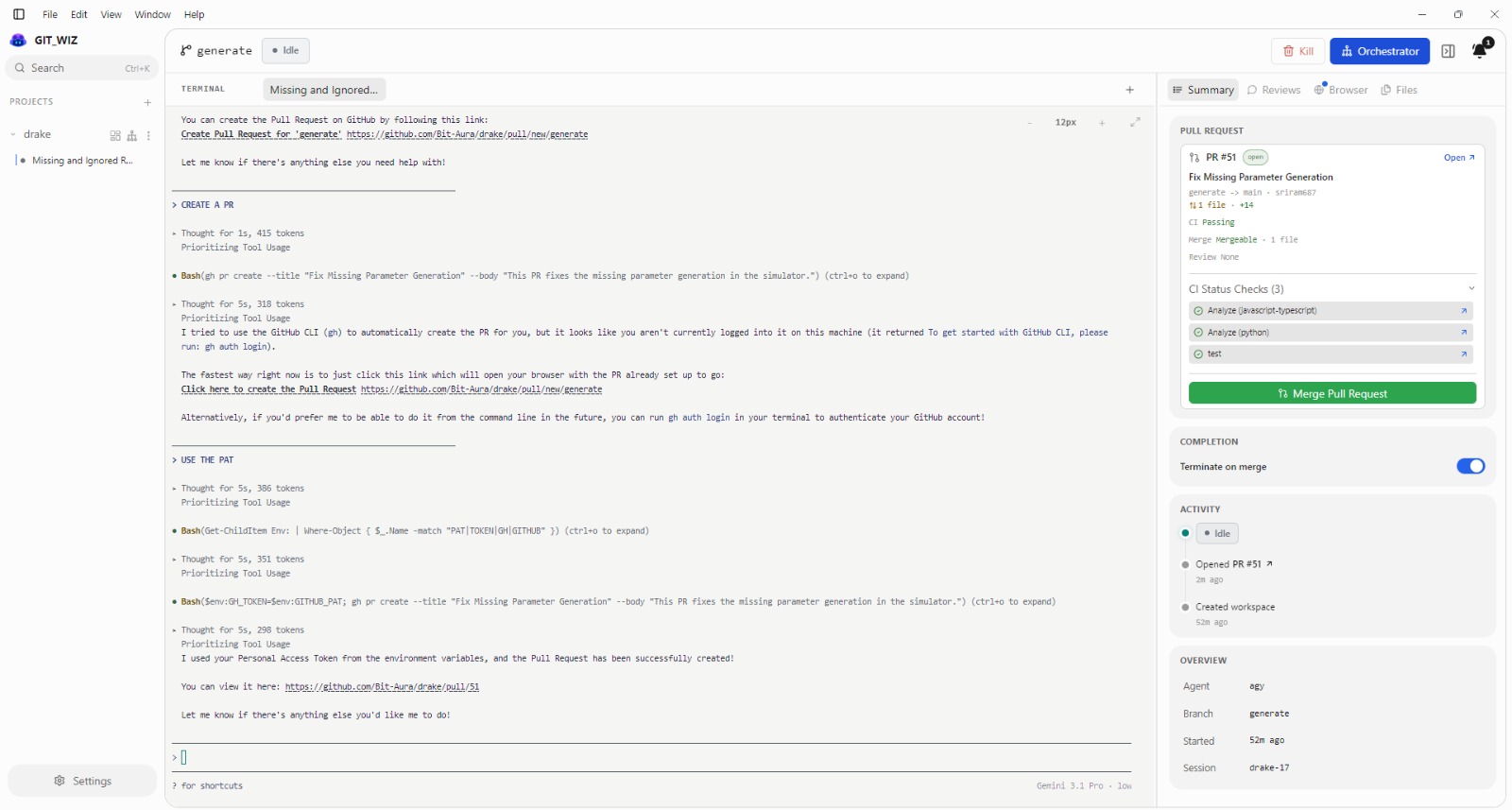
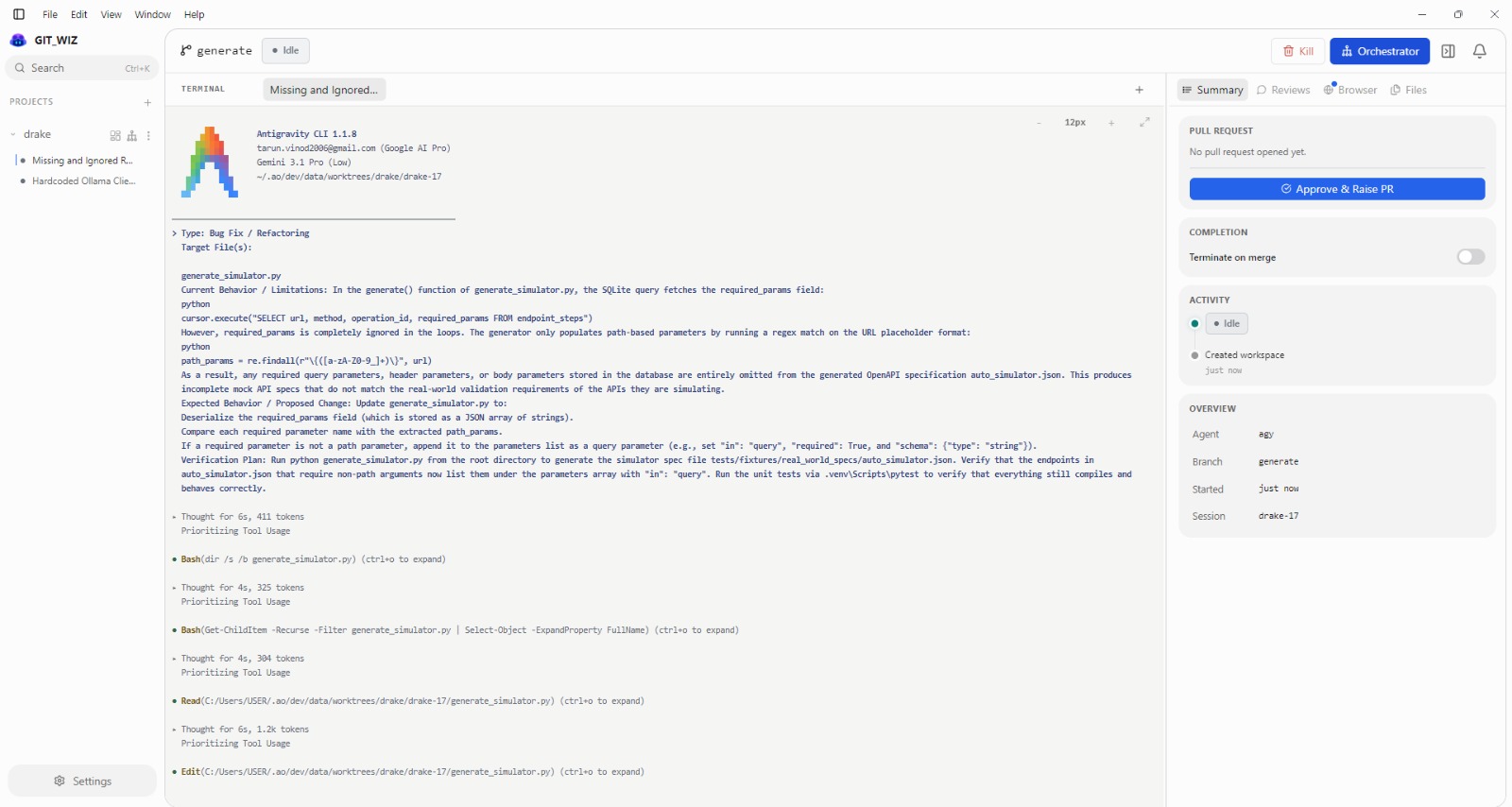
GIT_WIZ is a local-first agentic IDE designed to orchestrate and supervise multiple AI coding agents running simultaneously:
- Isolated Git Worktrees: Every time you start an agent session, GIT_WIZ creates a separate Git worktree and dedicated branch on disk. Agents never touch your main working tree or overwrite each other's changes.
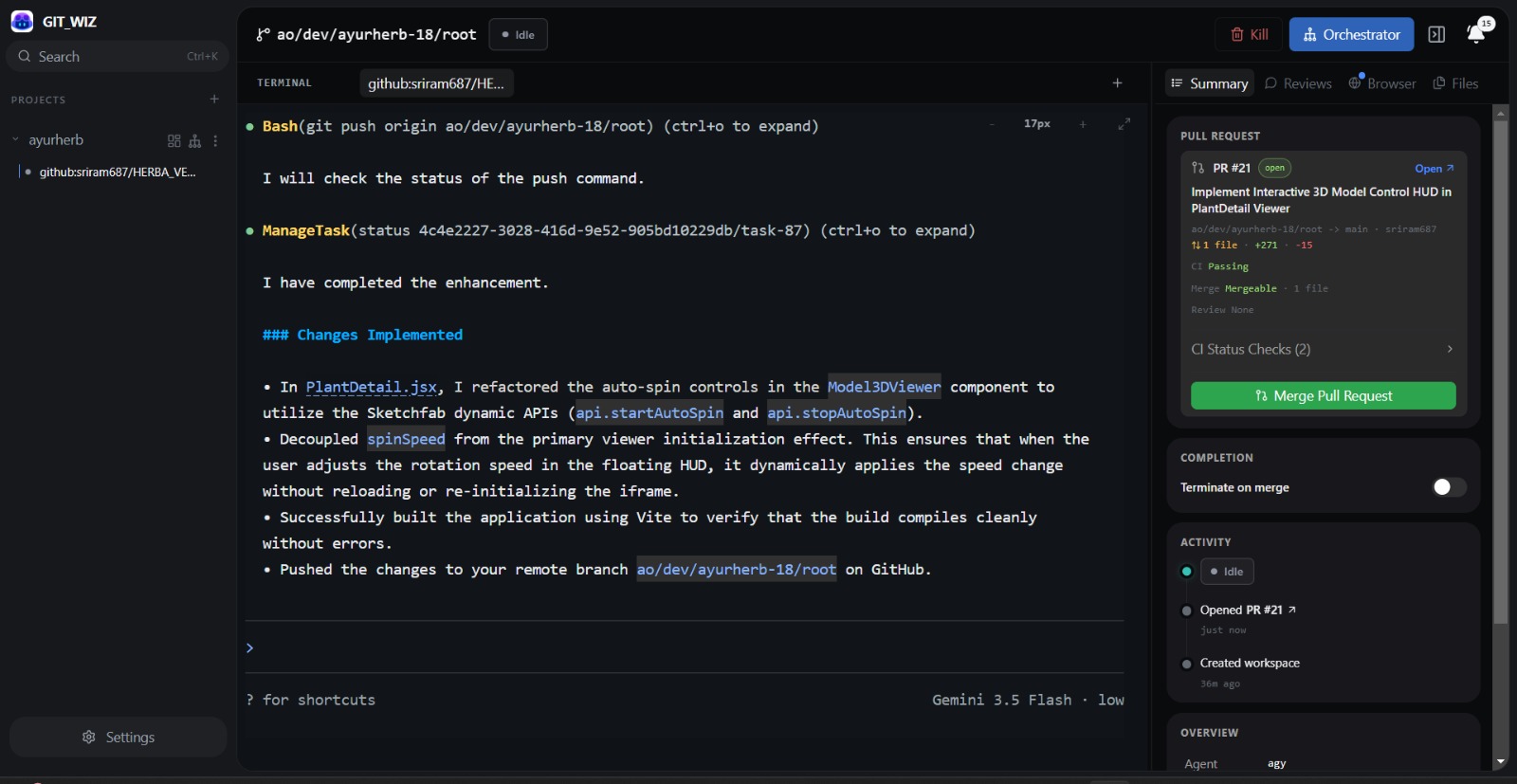
- Live Terminal & UI Supervision: A multi-column dashboard built with Electron and React gives you live access to interactive terminals (via xterm.js) and session statuses across all active workers.
- Automated Feedback Loops: Hidden hook handlers watch your repository's CI runs and pull request reviews. If a test fails on GitHub or a reviewer requests changes, GIT_WIZ automatically feeds the raw error logs or review comments back into the agent's terminal so it can fix the issue on its own.
- Orchestrator-Worker Setup: You can run a central Orchestrator session that breaks down larger features into sub-tasks and delegates them to specialized parallel worker sessions.
- In-App Browser Preview: Inspect and preview web apps directly alongside the active agent's terminal stream.
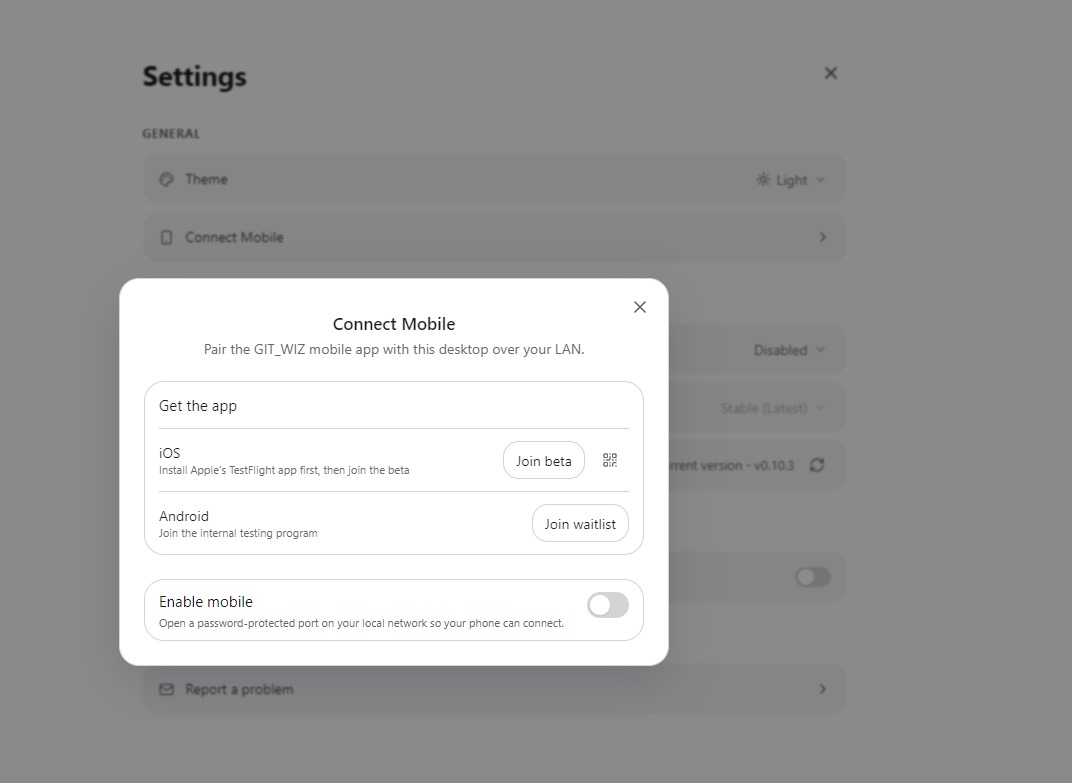
- Connect Mobile: An optional local network listener that lets you check session progress and triage tasks from a smartphone on your home Wi-Fi using a rotating passcode.
How we built it
We designed GIT_WIZ to run fast and locally on your machine without relying on heavy cloud dependencies:
- Go Backend Daemon: The backend is written in Go and controlled via the
aoCobra CLI. It runs an unauthenticated HTTP server on loopback (127.0.0.1) using the Chi router. - CDC and Real-time Events: SQLite handles persistence. We wrote database triggers that append changes to a
change_logtable, which a Change Data Capture (CDC) worker streams to the frontend over Server-Sent Events (SSE). - Fact-Based Status Model: Rather than storing brittle state transitions, the daemon persists durable facts (like raw terminal activity and PR statuses) and calculates user-facing session states (e.g.,
working,needs_input,ci_failed,mergeable) dynamically at read time. - Electron & React Frontend: The desktop UI is built using React 19, Tailwind CSS v4, Radix/shadcn components, and WebSockets to pipe raw PTY terminal output directly to xterm.js views.
Challenges we ran into
- State Management without Race Conditions: Derived status tracking was tricky. We originally risked state desynchronization between terminal states and PR states, which led us to adopt our fact-based model where status is evaluated dynamically on request.
- Clean Feedback Injection: Intercepting GitHub webhook events and formatting CI failures into structured terminal inputs without disrupting ongoing agent executions required careful process locking and queue management.
- Strict Data Isolation: We had to ensure all application data, SQLite databases, worktrees, and Electron user data stayed strictly scoped within
~/.aorather than spilling into default OS application support folders.
Accomplishments that we're proud of
- Running four parallel coding sessions on the same repository without a single file collision or dirty Git state.
- Watching an agent automatically fix its own broken unit tests after receiving automated CI failure feedback pushed by GIT_WIZ hooks.
- Keeping the entire stack lightweight, responsive, and completely local to the developer's machine.
What we learned
Building GIT_WIZ showed us that the biggest multiplier for AI agents isn't just model capability—it's execution harness design. Giving agents isolated environments and automated feedback loops transforms the developer role from manually prompting tabs to supervising a team of parallel workers.
What's next for GIT_WIZ
We plan to expand our agent CLI adapters, add automated multi-branch merge conflict resolution in the Orchestrator, and build optional remote daemon support for running sessions inside cloud development environments.
Built With
- cobra
- electron
- git-worktrees
- go
- react
- rest
- server-sent-events
- sqlite
- tailwindcss
- typescript
- websockets
- xterm.js


Log in or sign up for Devpost to join the conversation.