-
-
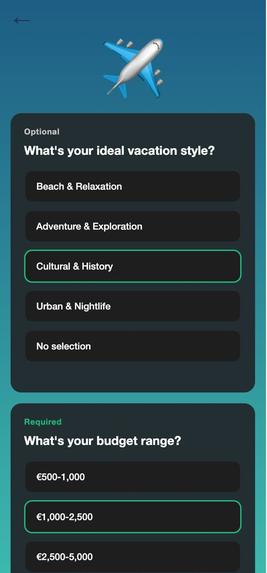
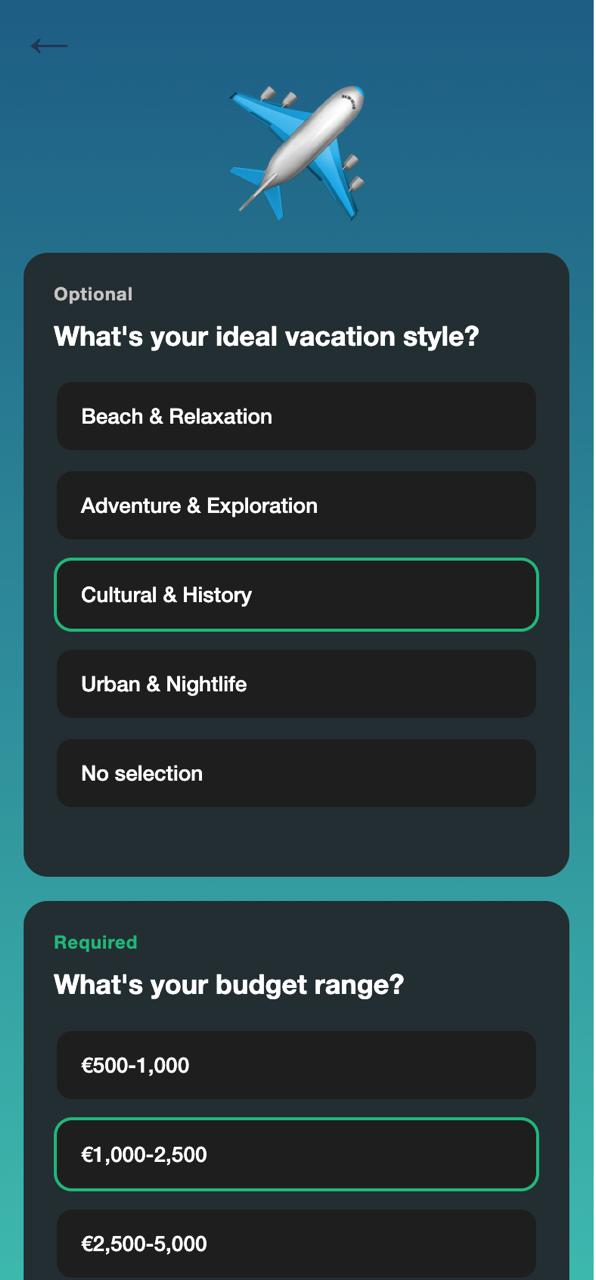
Questionnaire questions
-
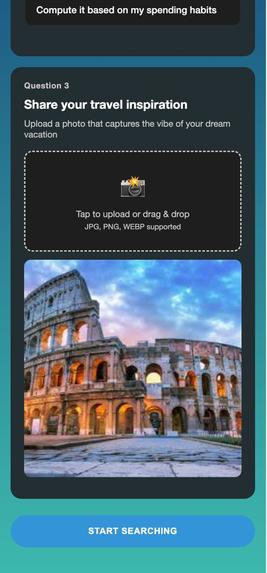
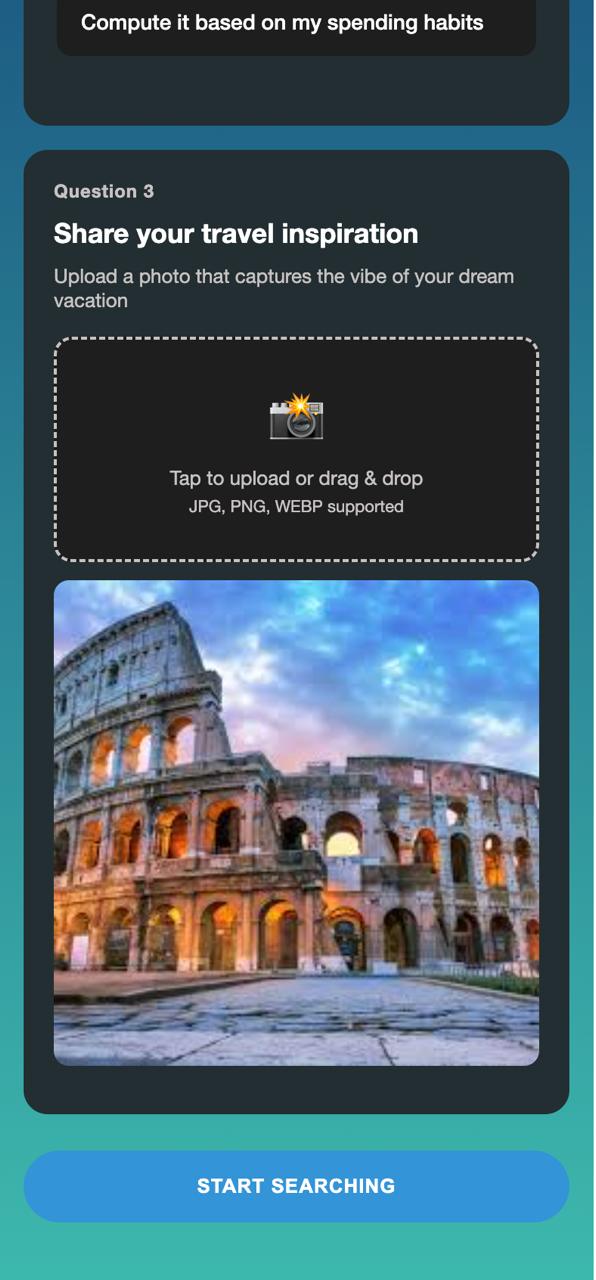
Questionnaire questions continuation
-
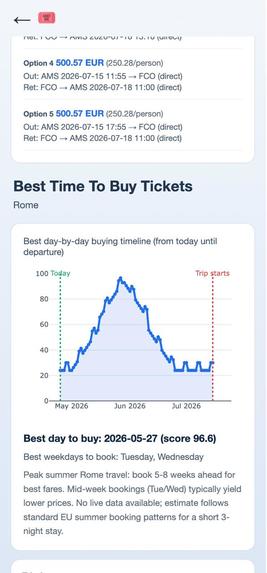
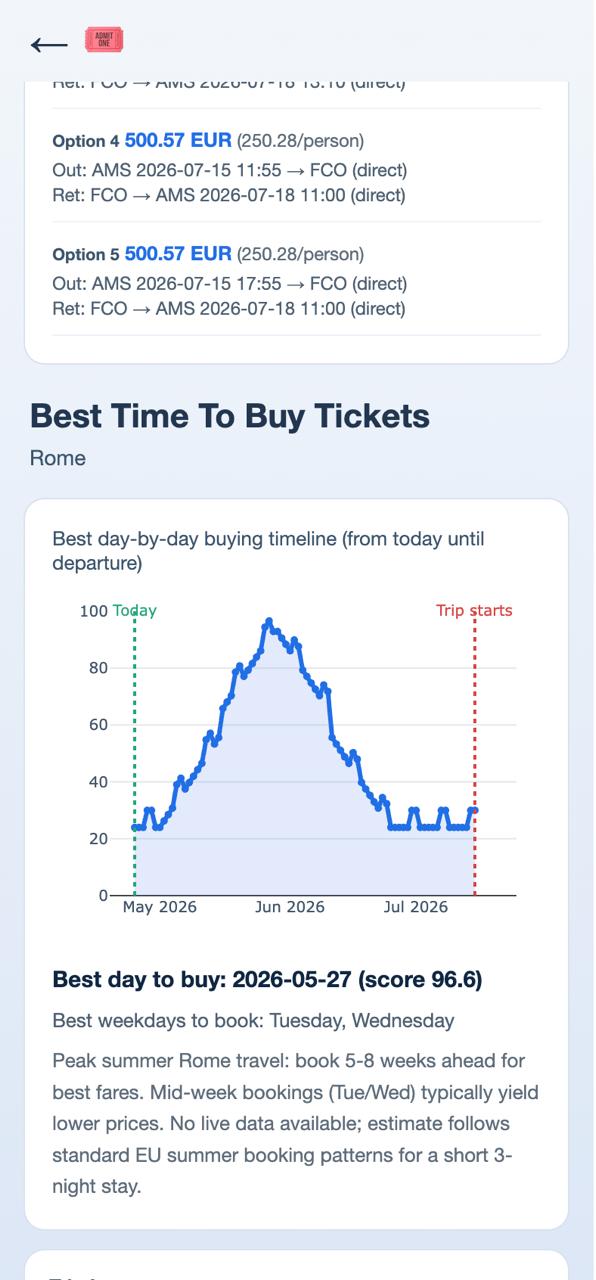
Best days to buy recommended by the model
-
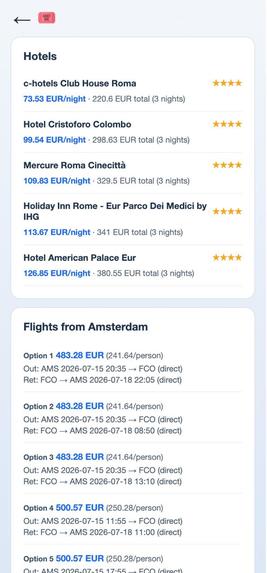
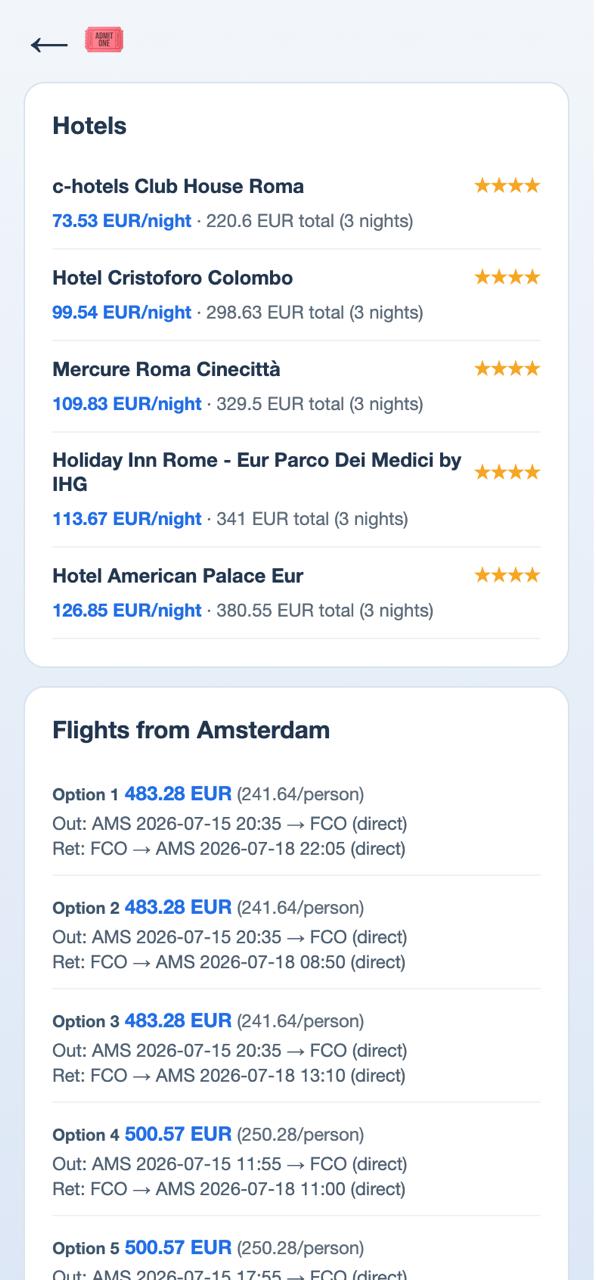
Flights and hotels recommended by the AI
MinMaxingVacation
Inspiration
We are a group of friends who met over four years ago and share a love for traveling. Every trip we’ve taken together started the same way: endless group chats, dozens of browser tabs, and a surprising amount of time trying to answer simple questions like “Can we afford this?” or “Where should we even go?”.
Everyone has experienced the frustration of checking flights, hotels, and bank accounts on multiple websites and platforms, trying to optimize everything to get the best possible vacation for the lowest cost. With Bunq’s financial data and Claude AI, we wanted to build something that removes this stress entirely: a smart, intelligent travel agent that turns scattered decisions into one clear, personalized plan.
What it does
MinMaxingVacation is an AI-powered feature integrated into the Bunq app that helps users plan their vacations from start to finish.
The core idea is an AI “helper” that finds the best possible holiday deals while keeping your budget and preferences in mind. Overall, our project centralizes all this information from different platforms(e.g. Booking, Bunq) in a user understandable manner.
After a short questionnaire about what kind of trip you want, the system:
- Estimates a realistic vacation budget based on account activity and spending habits over time
- Searches for destinations that match your budget, travel style, and atmosphere preferences
- Generates a top 3 list of the best locations
- Allows users to configure details like dates, number of travelers, hotel preferences, and currency
- Predicts the best time to book flights using a timeline from today until departure and an agent that looks at online data
- Surfaces flight and hotel options to make planning actionable
Multimodal AI
Our system is built as a multimodal AI, meaning it can process and combine different types of input and output:
- It takes text input through questionnaires to understand user preferences
- It can use image input to better capture the desired “vibe” of a trip
- It integrates financial data to ground recommendations in real budgets
- It provides visual outputs, such as graphs for price predictions and booking timelines
By combining these modalities, the system creates a much richer and more personalized travel planning experience than traditional tools. This is done by interpreting all these inputs and determining your travel budget, your top 3 travel destinations and finding hotels and flights that fit your preferences.
How we built it
We built a multi-screen Dash application in Python, combining financial data, Claude AI, and travel integrations into a single system.
Key components include:
- Bunq API integration for accounts, balances, transactions, and activity
- A budget estimation pipeline using Claude with heuristic fallback logic for reliability
- A destination recommendation engine based on questionnaires and image inputs
- Flight and hotel search integrations
- A prediction system for optimal booking timing
- An interactive UI that ties everything together into a seamless experience
Challenges we ran into
AI reliability and parsing
Claude sometimes returned malformed or incomplete JSON, requiring robust parsing and fallback mechanismsMock data realism
As a proof of concept, we used synthetic transactions, which required careful prompting to simulate realistic behaviorData integration complexity
Combining financial insights, recommendations, travel data, and predictions into one smooth flow required a lot of work
Accomplishments that we’re proud of
- Built a complete end-to-end travel assistant, not just a single feature
- Connected financial behavior directly to real-world travel decisions
- Implemented a timeline-based “best day to buy” prediction system
- Designed fallback systems to ensure the app remains useful even when AI responses fail
- Created a system that is both technically complex and easy to use
- Successfully combined multiple domains into one cohesive product
- Added real data for flights and hotels
What we learned
- Real-world APIs are unpredictable and require robust error handling
- AI systems need validation, fallback logic, and careful prompt design to be reliable
- Multimodal AI significantly improves user experience by combining different types of input and output
- Financial data becomes far more valuable when translated into actionable insights
- Fast iteration across frontend, backend, and AI components is essential
- Integrating multiple systems is often more challenging than building them individually
- Clear user experience design is critical when dealing with complex underlying systems
- Collaboration and dividing responsibilities effectively allows for much faster development
What’s next for Girliepops
- Real-time hosting of the functionality (we were planning on using AWS services)
- Real-time fare monitoring with alerts when prices drop
- Smarter “book now vs wait” recommendations based on historical data
- Deeper Bunq integration with savings goals and automated budgeting
- Enhanced destination ranking including weather, events, visa requirements, and crowd levels
- Collaborative planning features with shared trip boards and budget splitting
Running instructions
To run the project: Install the requirements from requirements.txt Then run:
python bunq_screens.py```
Then open http://127.0.0.1:8051/
Make sure you add your API keys in .env before running the project.


Log in or sign up for Devpost to join the conversation.