Inspiration
My friend, a professional stylist, observed a common pain point among her diverse clientele: many customers struggle to define their personal style or feel stuck in a fashion rut. They are actively seeking professional guidance—whether to explore styles outside their comfort zone or to find a look that truly fits them. Crucially, these customers demonstrate a strong willingness to pay for this expertise, often purchasing entire outfits recommended by the stylist.We aim to address this need by bridging the "imagination gap" for these consumers. We also observed that while professional styling is a high-growth market (over $100B across retail and independent tiers), it remains a manual, elite luxury. GiraStyle was born to democratize this expertise, transforming professional styling logic from an exclusive service into an everyday utility that helps brands bridge the gap between their SKU count and a consumer’s unique identity.
What it does
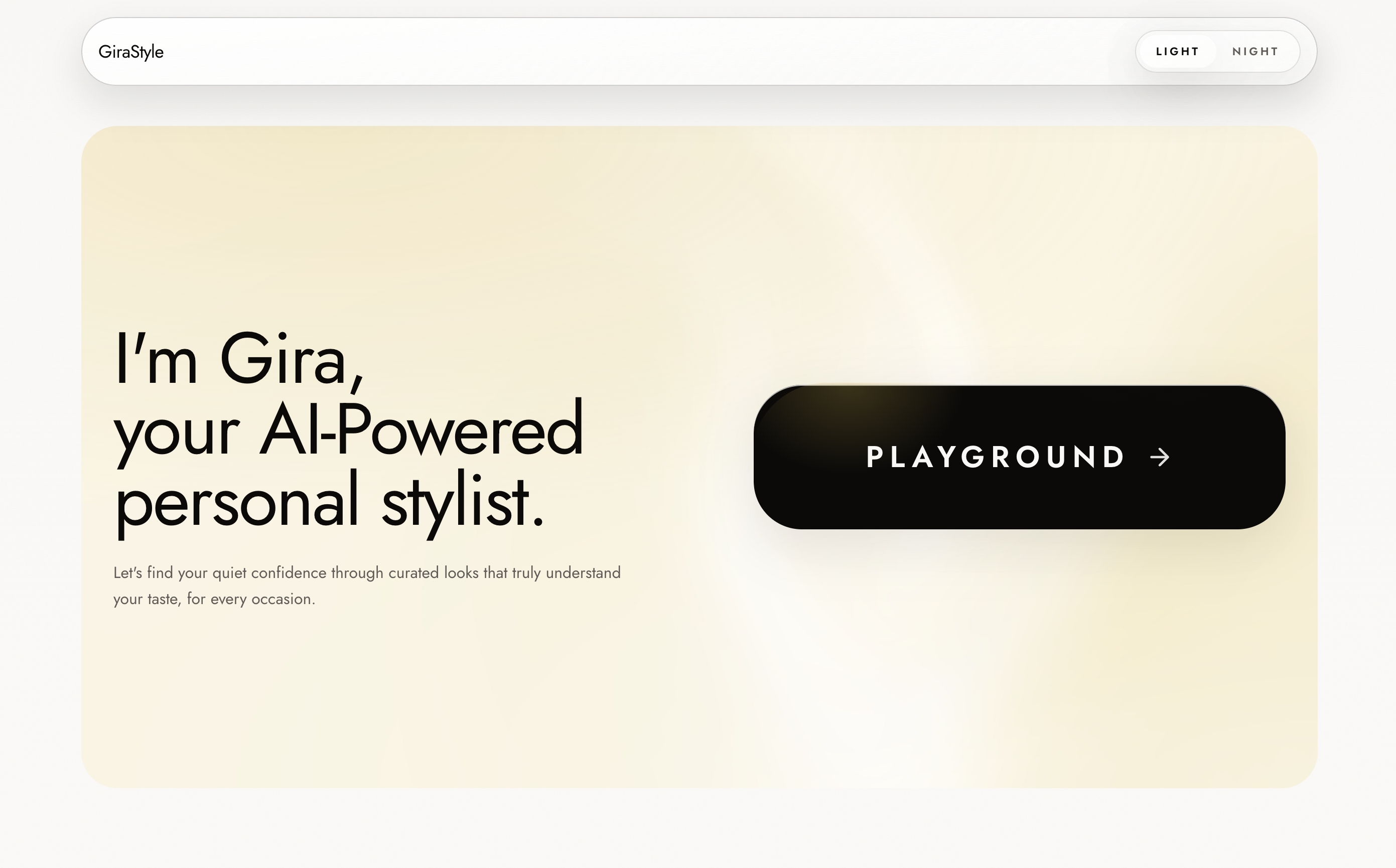
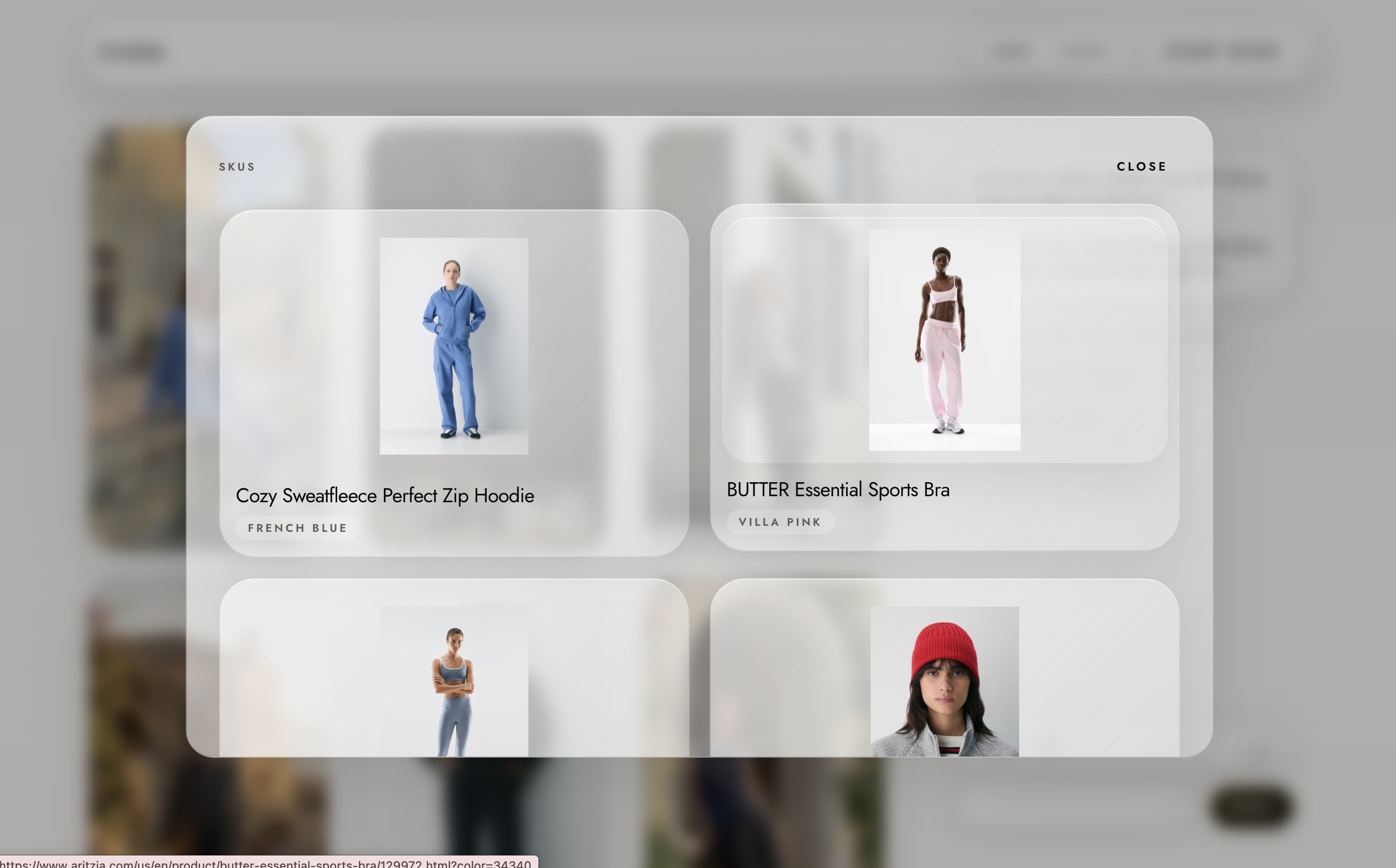
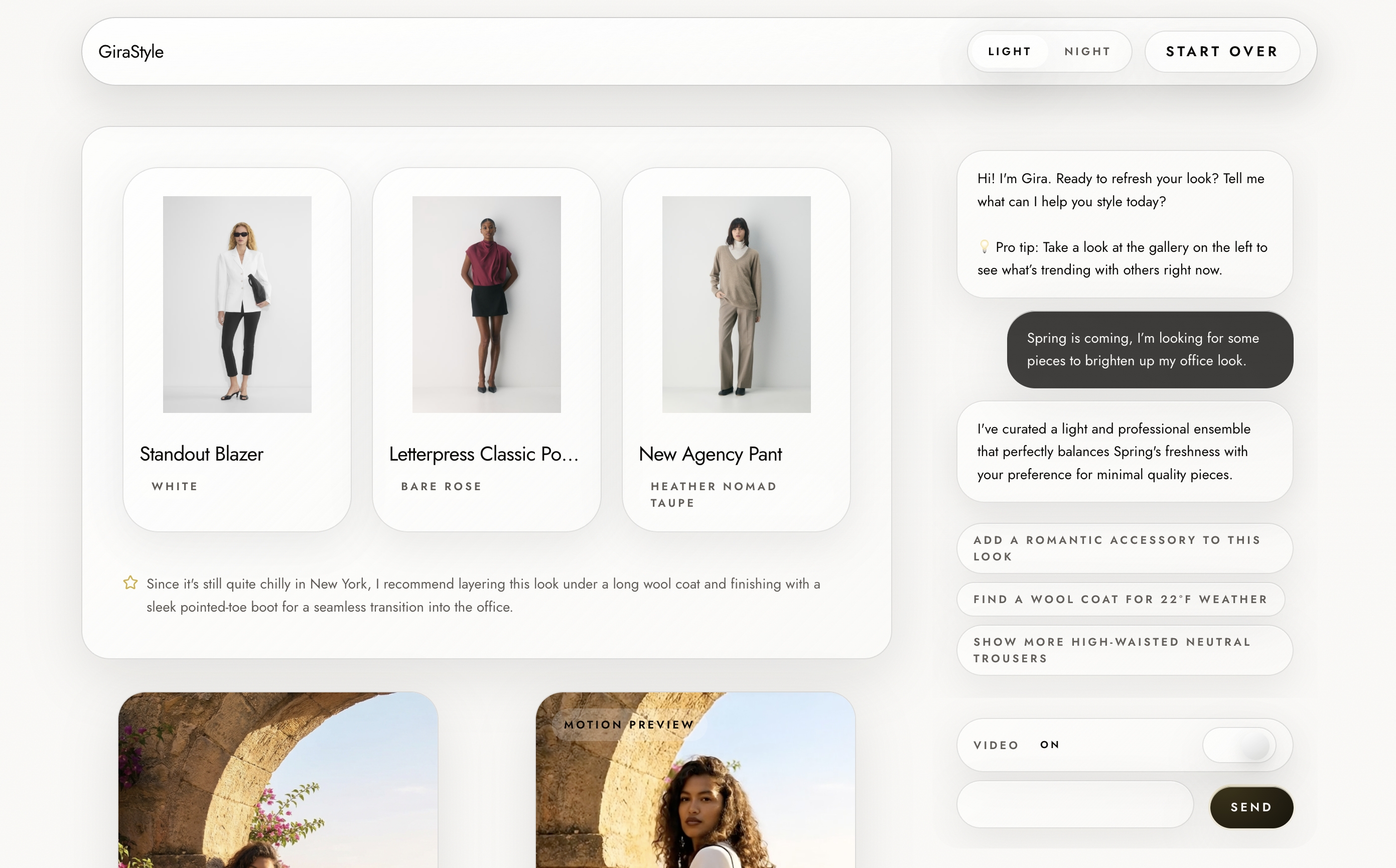
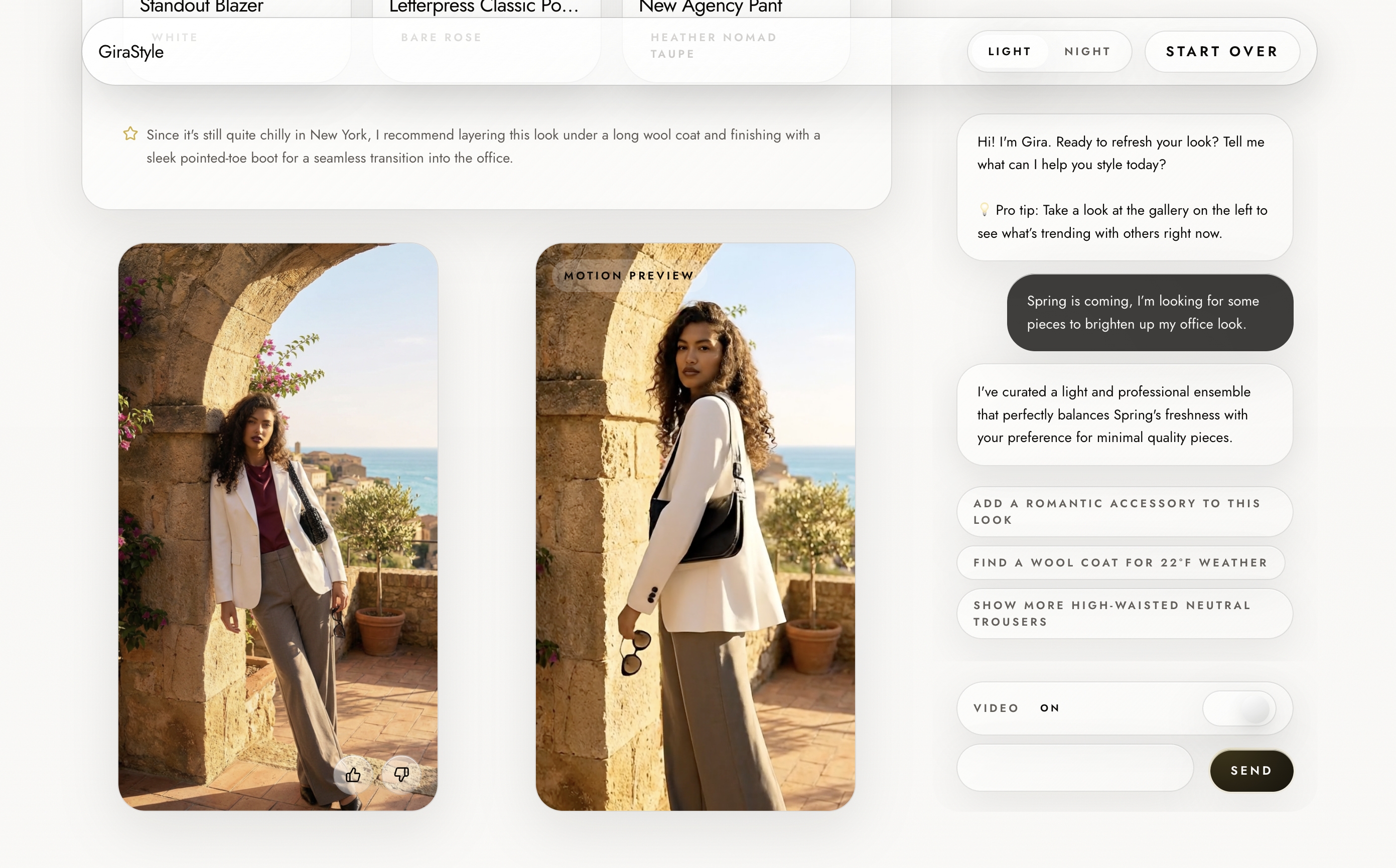
GiraStyle is an autonomous B2B2C styling agent that acts as a personalized "Agentic Layer" at the brand entrance. By leveraging the Google Gemini 3 ecosystem, it provides: Personalized Multimodal Advice for customers : pick the item best fit customers personality, and truly resonate with them. Generative Lookbooks for customers: High-fidelity outfit cards powered by Nano Banana and 3-second motion previews via Veo 3.1 to showcase fabric drape and movement. Revenue Optimization for brands: By shifting focus from single items to cohesive, styled ensembles, we directly increase Average Order Value (AOV) and reduce return rates.
How we built it
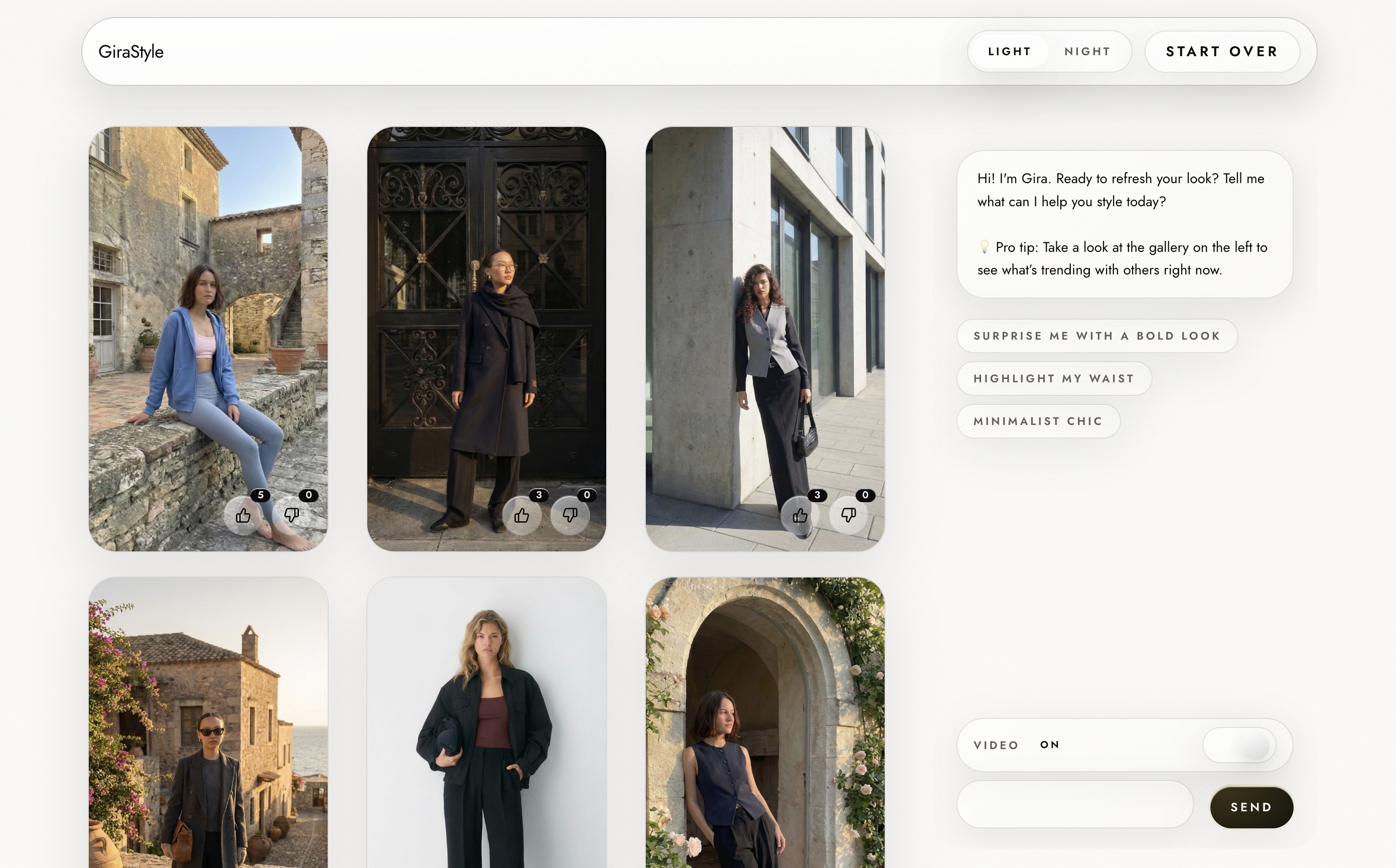
We evolved from an initial prototype in the Google AI playground to a custom-hosted server architecture to support robust data collection and user iteration. Reasoning Engine: Gemini 3 Flash orchestrates the styling logic and maintains a streaming "Pro-Stylist" conversation. User Feedback Loop: We built the "Inspirations" page based on direct feedback, allowing new users to find style "anchors" from outfits liked by others in the community.
Challenges we ran into
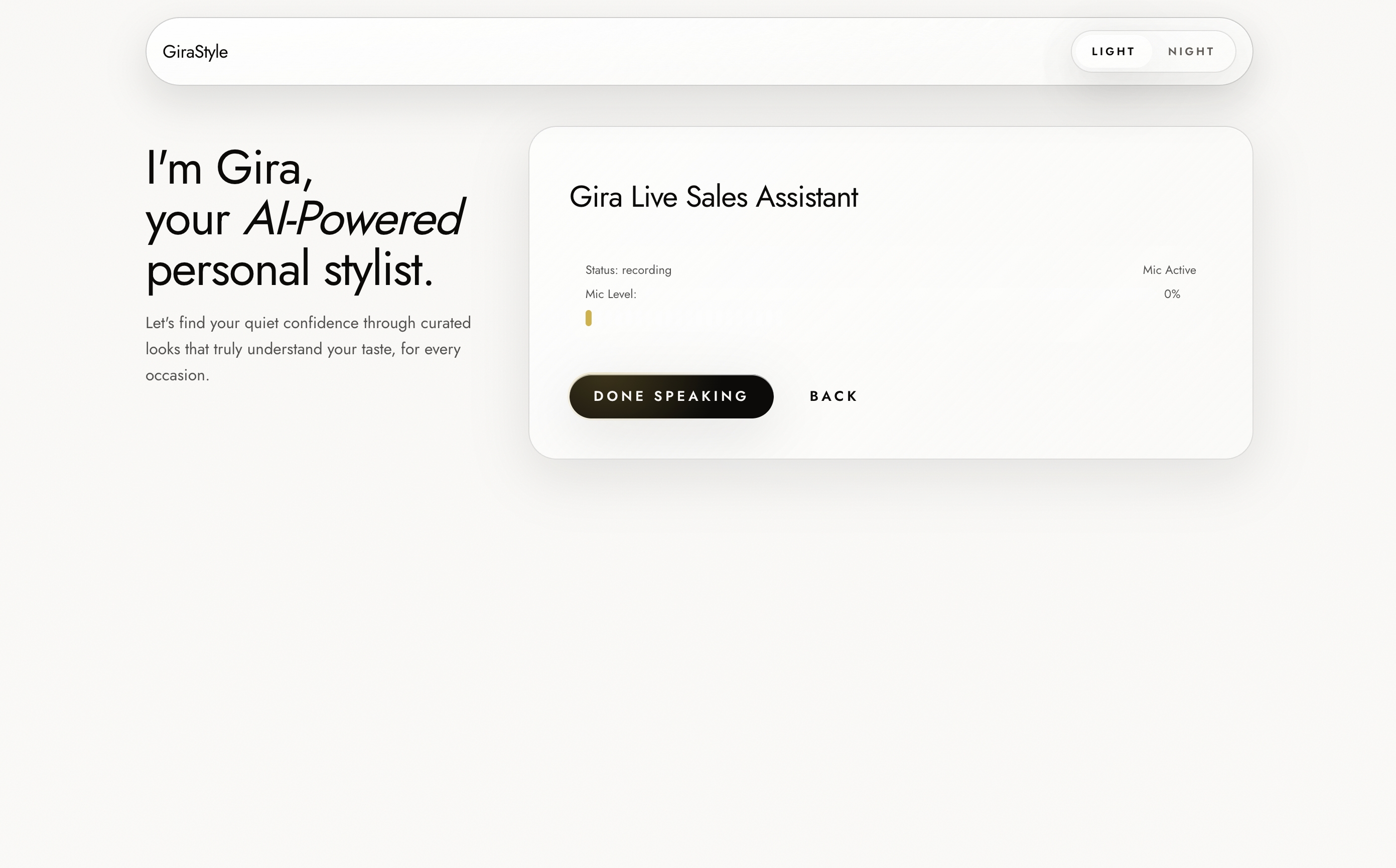
The Latency vs. Quality Trade-off: When we build the live conversation capability, the original purpose is letting users have a live interaction with the agent, so that when users talk, we can better understand the nuance and sentiment in the conversation, so that it is better to picture them. Which is more like a real stylist helping you. During the development, it’s very difficult to make the live conversation stable, it has a high demand on the user network condition since it’s based on websocket. And there is a glitch in the agent's voice. And also to analyze user personality from a simple conversation is still very hard, which also takes a lot of time. The Latency vs. Quality Trade-off: Gemini 3 initially showed higher latency during complex recommendations. We attempted a two-stage agent using Vertex AI for filtering, but found it severely limited output diversity. We ultimately pivoted back to Gemini 3 with File Search, optimizing performance by disabling thinking_config to strike the right balance. Data Scarcity: Without direct access to private brand CRM data, we developed a comprehensive Style DNA Quiz to bridge the personalization gap from day one.
Accomplishments that we're proud of
We are able to finish the features in such a short period of time, and conquer many tech difficulties, including but not limited to: Building a stable, low-latency live conversation feature, despite the inherent challenges of WebSocket and sentiment analysis complexity. Successfully integrating the Gemini 3 API with Google file search for personalized recommendations, navigating initial performance hurdles and model-specific limitations. Developing a user-friendly questionnaire to compensate for the initial lack of brand data, ensuring that personalization capabilities were maintained from day one. User-Centric Design: We moved beyond building for the sake of technology; we iterated based on real-world feedback from friends and surveys, ensuring our features solved genuine "style paralysis". Visionary Roadmap: Developing a B2B2C business plan that scales from a hackathon MVP to an enterprise-ready "Ambient Intelligence" layer.
What we learned
The Power of Multimodality: Gemini 3’s ability to understand "Human Context"—like dressing for a specific museum date versus a traditional wedding—is what truly separates an AI agent from a traditional tagging system Speed is a Feature: The latency can be a deal breaker, users expect a real time recommendation conversation, but the current recommendation takes 7s, not mentioning the image / video generation. The trade off between latency vs quality is still severe, which is a challenge for production. Feedback collection is crucial: We initially focused on technical capabilities but quickly realized that real-user feedback was essential for shaping a product that truly meets customer needs and expectations, leading us to pivot some features. Data is the Foundation: In RAG-based retail, the quality and structure of the source SKU data are just as critical as the model's reasoning capabilities.
What's next for GiraStyle Agent AI
Enterprise Partnerships: We are actively seeking partnerships with major brands like Aritzia, Nordstrom, and Cider to test the agent's impact on AOV in live environments. D2C Expansion: We are also going to launch a version of DToC, building with more brand data, since the current version only has Aritzia brand data. This is for collecting more data and feedback to better understand the customer needs. Scaling Efficiency: Finding sustainable ways to lower the cost of high-fidelity image and video generation for high-traffic retail environments.


Log in or sign up for Devpost to join the conversation.