-
-
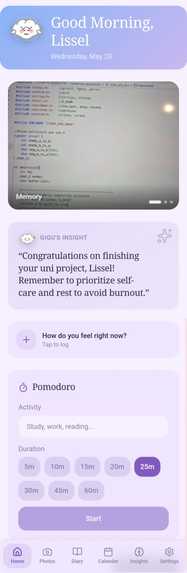
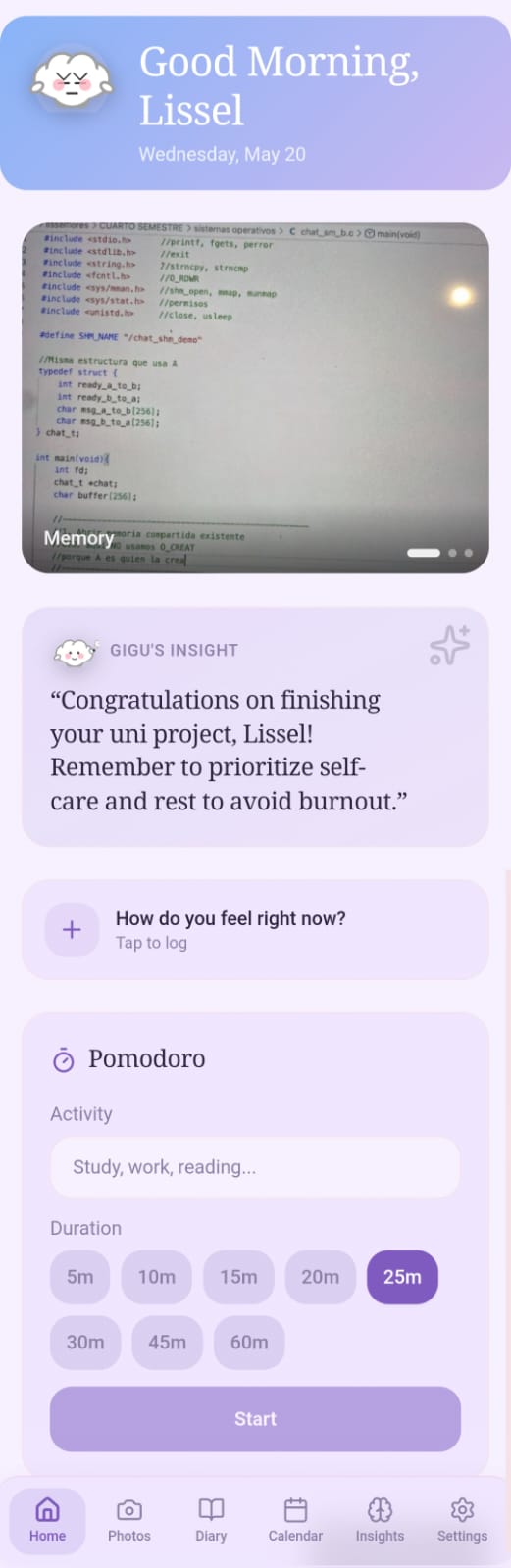
Home Screen. Photo dumb of the week, IA recommendations, Mood Track, Pomodoro
-
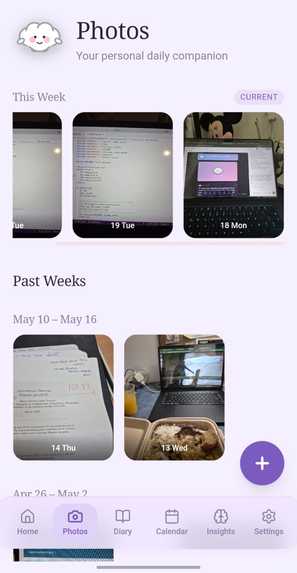
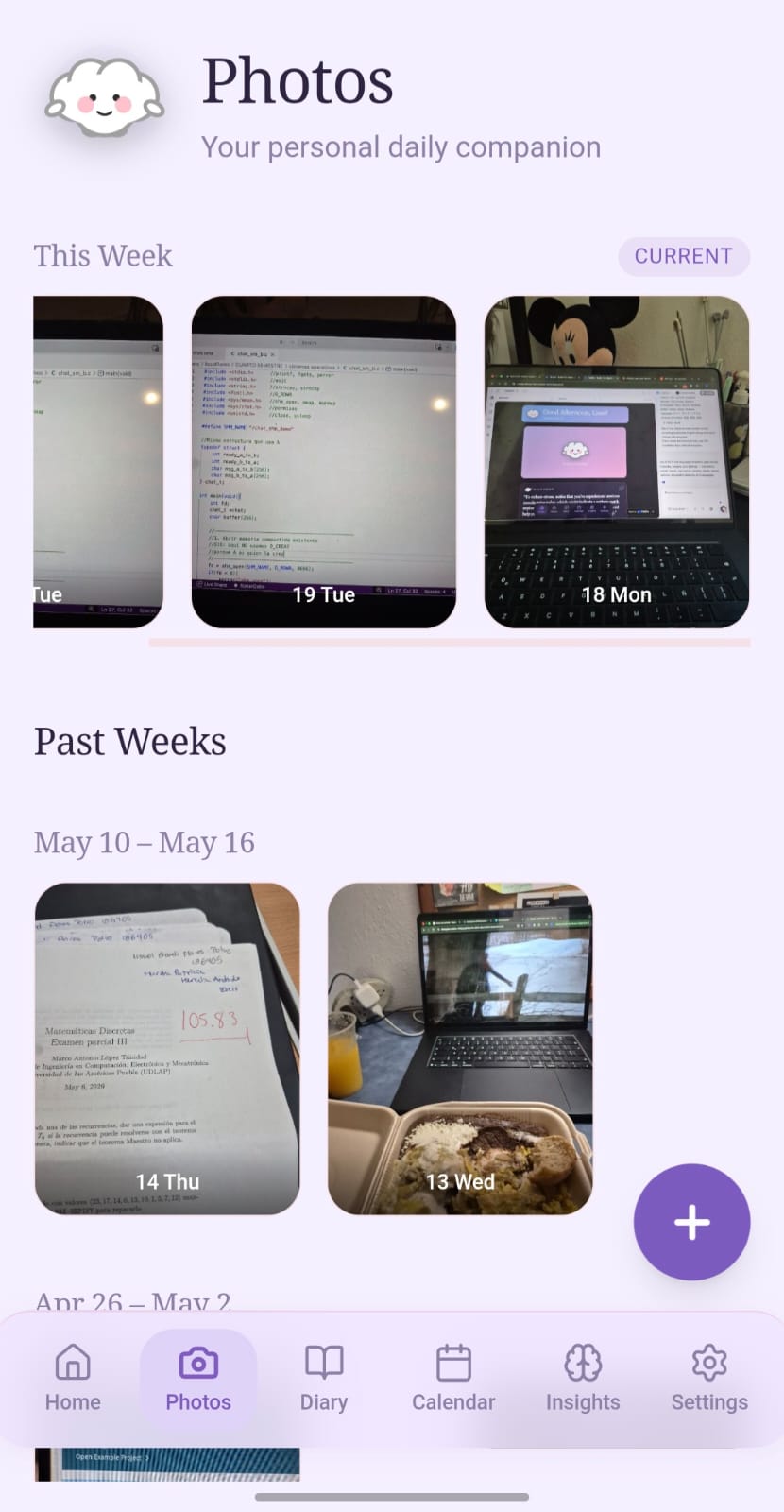
Photos Screen
-
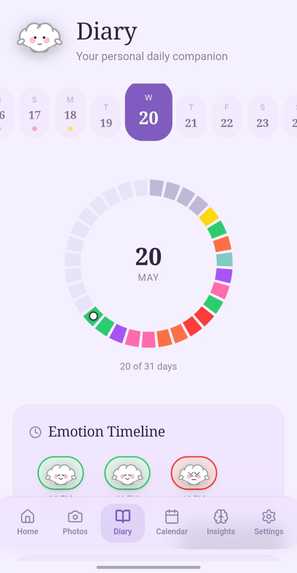
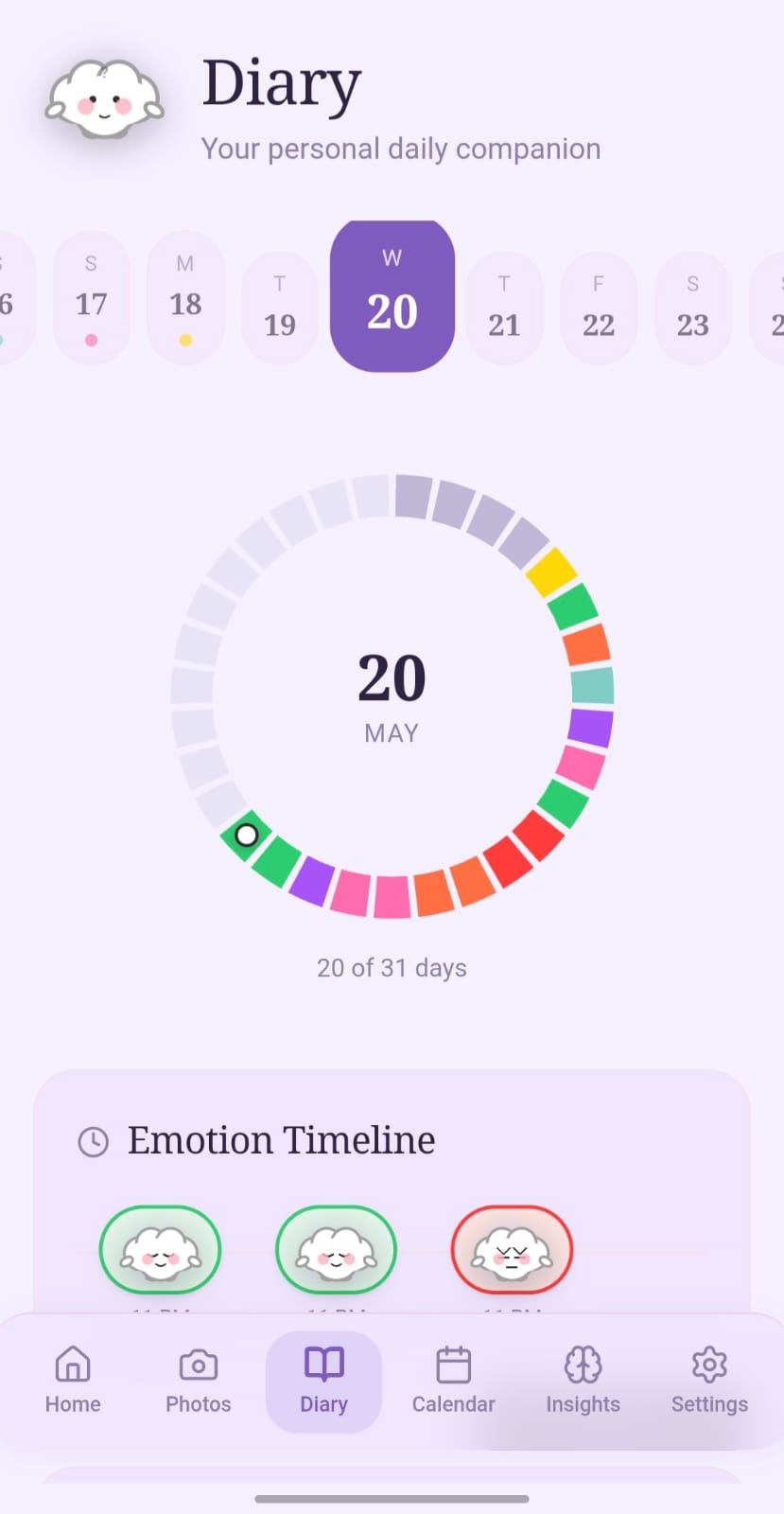
Diary Screen
-
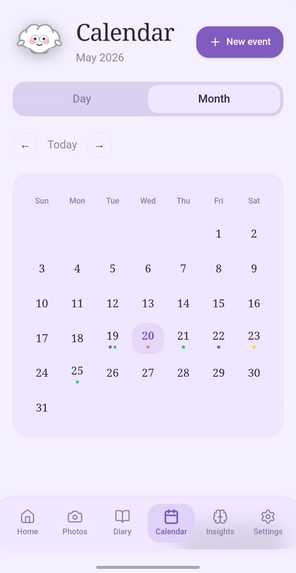
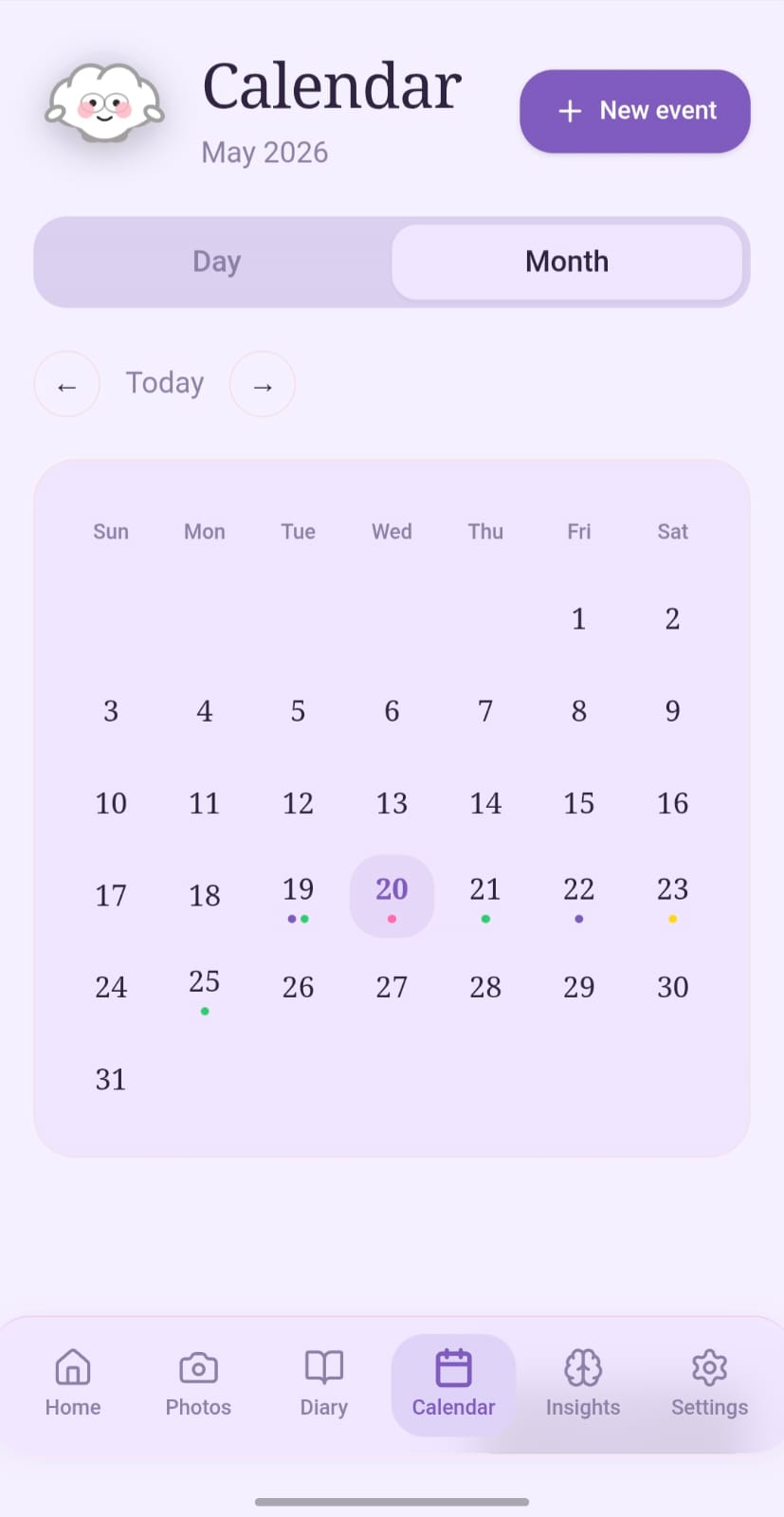
Calendar Screen
-
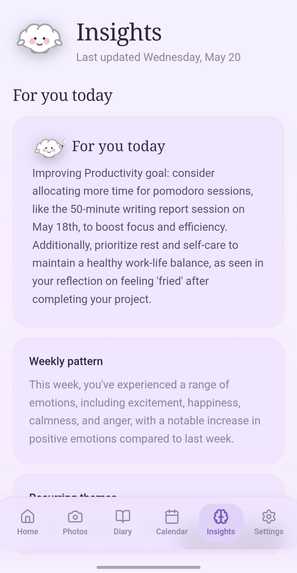
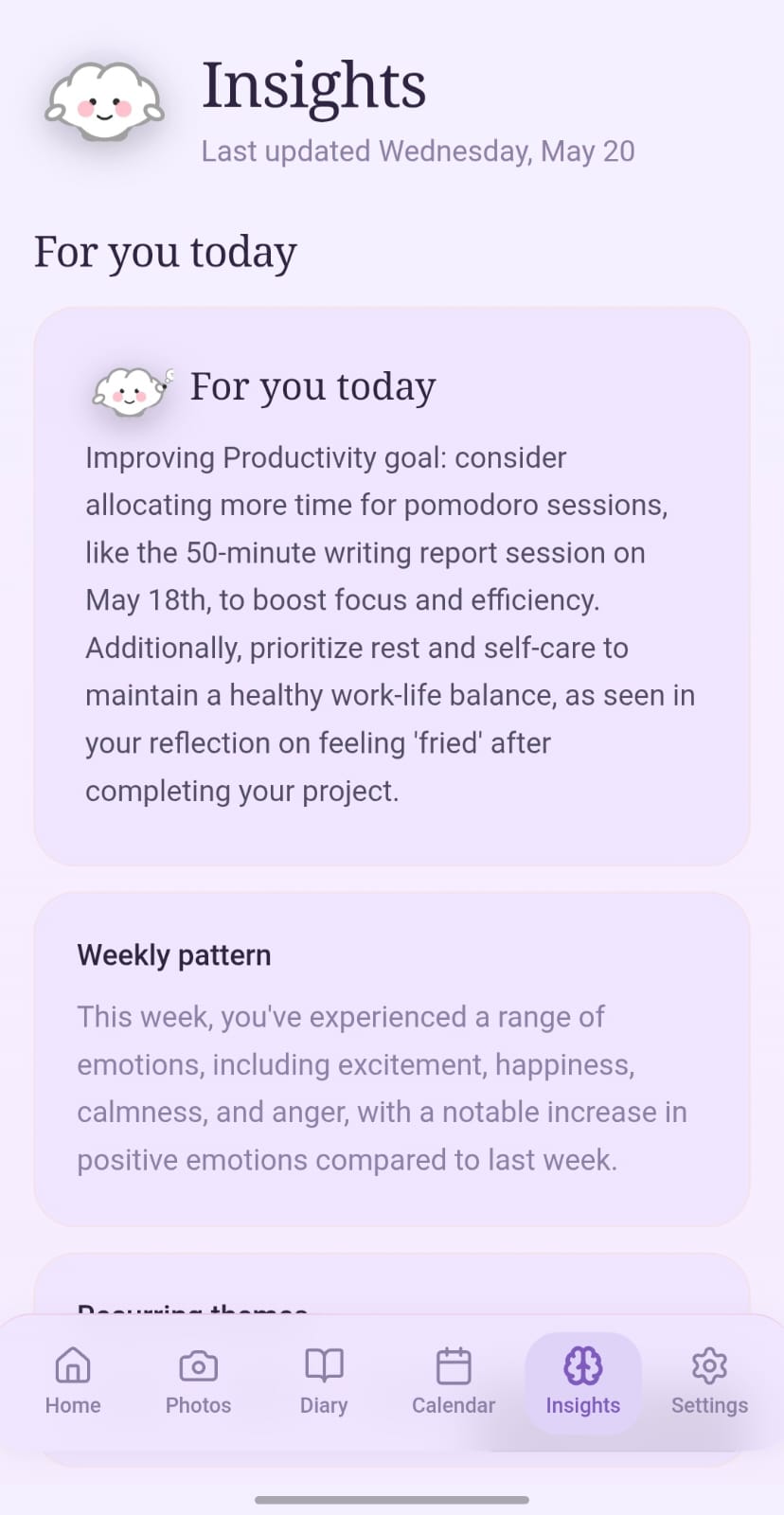
Insights Screen - IA recommendations
-
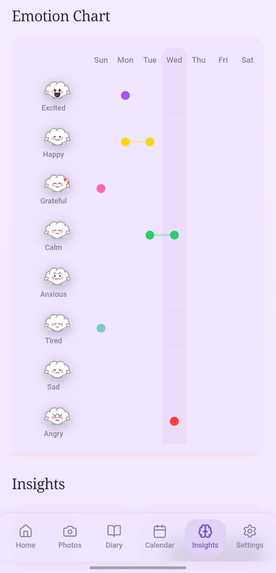
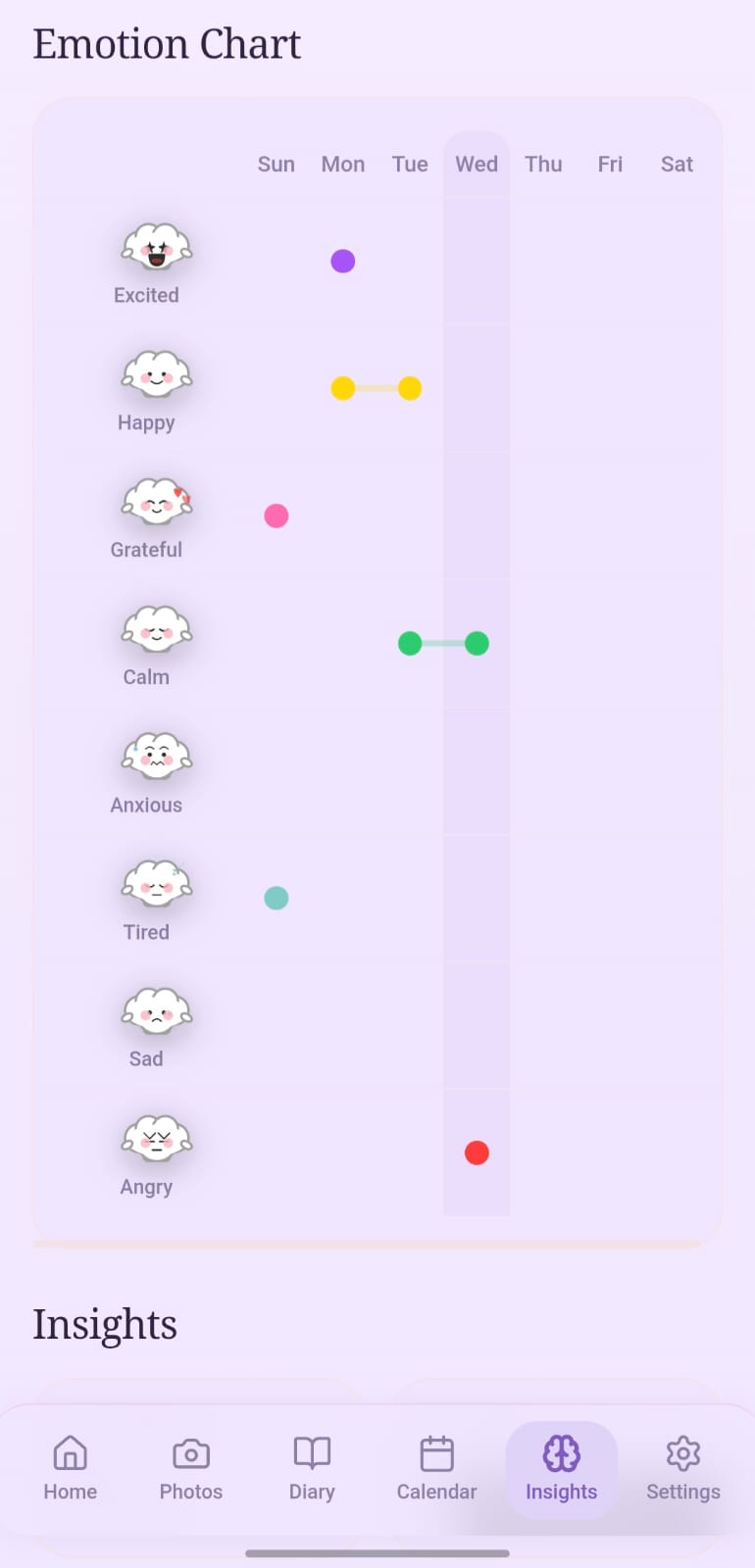
Insights Screen - Emotional Chart
-
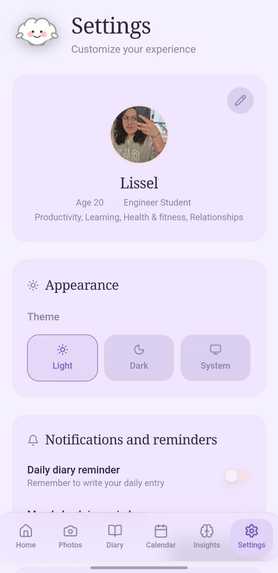
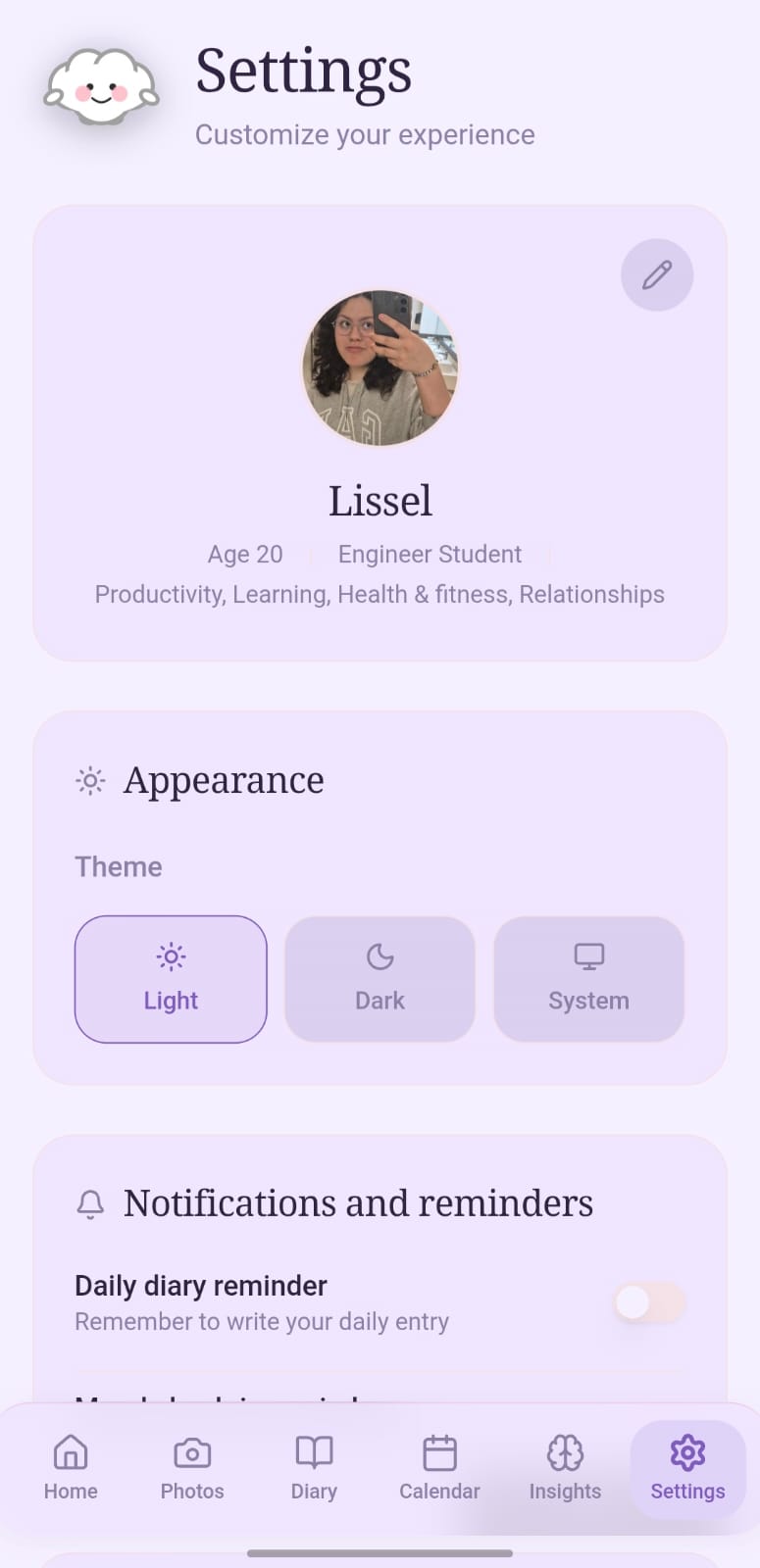
Settings Screen. Modes design, Notifications settings, profile settings, Calendar cattegories
Inspiration
I was deeply inspired by watching my university friends—and myself—struggle with burnout. I saw classmates dealing with anxiety, running on minimal sleep, and skipping meals just to keep up with heavy academic workloads. The biggest issue I noticed was fragmentation: students were losing their organization because they had to use different physical diaries, scattered digital notes, and rigid study methods that simply didn't adapt to their chaotic daily routines. I realized that building a single, highly personalized tool that seamlessly united emotional well-being with productivity was the exact solution needed to tackle this crisis.
What it does
Gigu&me is an all-in-one, AI-powered lifestyle and productivity companion that centralizes mental well-being, habit tracking, and academic organization into a single, privacy ecosystem. It features an emotional and habit diary where users can log their daily moods, triggers, water intake, sleep, exercise, and main goals. An intelligent AI engine analyzes these entries to generate personalized emotional support and detailed mood patterns on a dedicated Insights dashboard. To help manage academic workloads, the app includes a smart calendar with custom categories and advanced notifications, alongside a built-in Pomodoro timer for deep work without the need for context-switching. Also, it offers a highly customizable experience with a personal, locally stored motivation photo gallery, dark and light mode design, and real-time multi-language support across eight languages, seamlessly adapting to any student's unique lifestyle.
How I built it
Gigu&Me was built entirely through conversational prompts with MeDo. The process started with a detailed requirements document describing every screen, interaction, and data flow: Home, Diary, Calendar, Photos, Insights, and Settings. From there, MeDo generated the full frontend, while simultaneously setting up a Supabase backend with PostgreSQL and Edge Functions. The AI insights engine was the most technically complex piece. MeDo built a Supabase Edge Function running on Deno that receives the user's emotional data, diary entries, focus sessions, and personal goals, then calls the Groq API (llama-3.3-70b-versatile) to generate personalized daily recommendations. The frontend caches the response in localStorage so the AI tip loads instantly on every visit without unnecessary API calls. Gigu, the companion, was designed iteratively through prompts, with 8 distinct emotional expressions that dynamically reflect the user's most recent mood throughout the app. The app supports 8 languages (English, Spanish, French, German, Portuguese, Italian, Japanese, and Chinese Simplified) through a complete i18n system built by MeDo. A Pomodoro timer with Gigu animation cycles was added late in development and integrated directly with the Insights screen to correlate focus sessions with emotional patterns. Throughout the build, MeDo handled debugging, refactoring, and iterative improvements through natural language: from fixing React hook race conditions to deploying Supabase Edge Function secrets.
Challenges I ran into
One of the most complex challenges was making the AI integration truly universal across languages. I initially attempted to make the AI dynamically respond in different languages based on the user's UI selection. However, this caused significant issues with the API: translating the AI's prompt broke the JSON structure and caused parsing errors. To solve it, I had to make a strategic engineering decision. I restructured the code to standardize the API's data flow, freezing the AI's core generation language to ensure total stability for the demo, while relying strictly on the app's internal i18n system to handle the frontend localization. Additionally, I had to debug critical conditional rendering issues where uploading a profile picture temporarily blocked local storage data from saving properly.
Accomplishments that I'am proud of
I am incredibly proud of the entire application. Most of all, I am proud that I was able to create a tool to help so many people navigate the overwhelming nature of university life. It was about truly getting to know the students, understanding their actual needs, and recognizing the immense time pressures they face in today's fast-paced environment. Creating "Gigu", the app companion, was one of the biggest challenges, but it became one of my favorite parts of the project because I truly feel it brings a strong sense of calm and trust to the user. I'm proud to have successfully integrated an API for the first time and made it work seamlessly within the app. Finally, I take immense pride in the UI/UX design. I achieved my goal of creating a safe digital space where any student can step in and feel a genuine moment of peace, even if it is just visually.
What I learned
This project was a massive learning experience. Technically, I gained a deep understanding of how APIs work, spending time researching and testing various API providers to find the perfect fit for this specific use case. I also learned that UI/UX design is not just an aesthetic choice; it is absolutely critical when building a tool meant to relieve stress. But above all, my biggest takeaway was the importance of user research. By talking directly to other students and asking them what they actually needed, I learned that deeply knowing and empathizing with your user is the most important step you can take before making a product for them.
What's next for Gigu&Me
In the future, I plan to take gigu&me to the next level by fully expanding our API integration to offer seamless, dynamic multilingual AI responses, going beyond just the UI translation. I also want to enhance Gigu's visual identity with better animations, making our companion a more persistent and interactive buddy throughout the app experience. As the platform grows, I aim to scale the architecture from local-only storage to a secure backend with user authentication, allowing users to safely sync their data across multiple devices. Finally, I would love to integrate dedicated meditation and calm spaces that are intelligently recommended by the AI, triggering automatically based on the user's real-time behavioral analysis and daily mood patterns.
Built With
- api
- groq
- i18n
- local-storage
- medo
- postgresql
- supabase

Log in or sign up for Devpost to join the conversation.