-
-
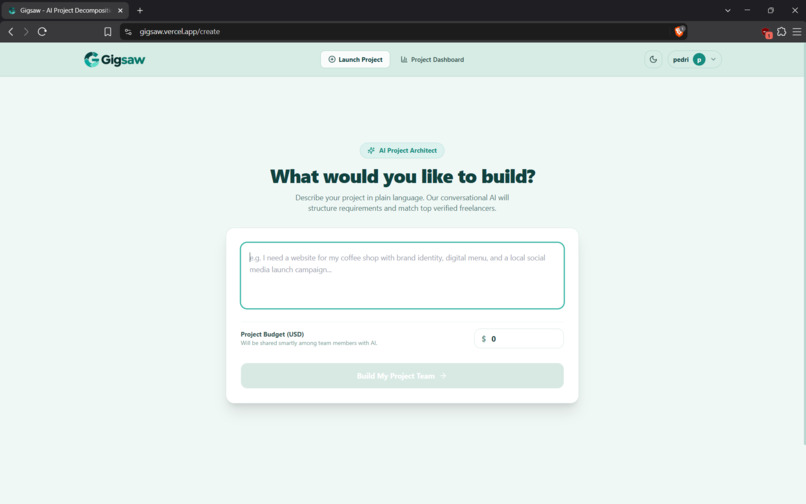
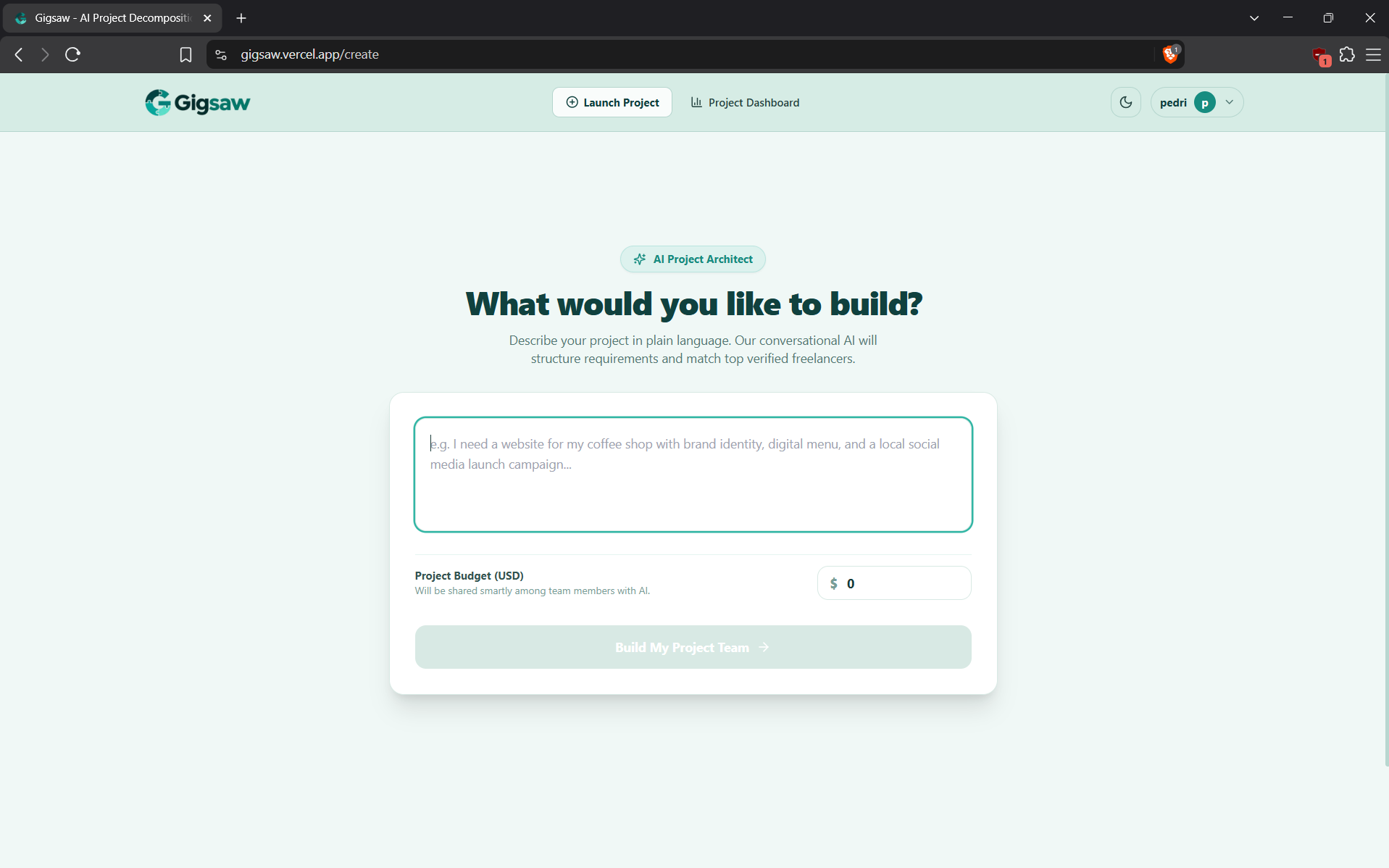
Merchant /create
-
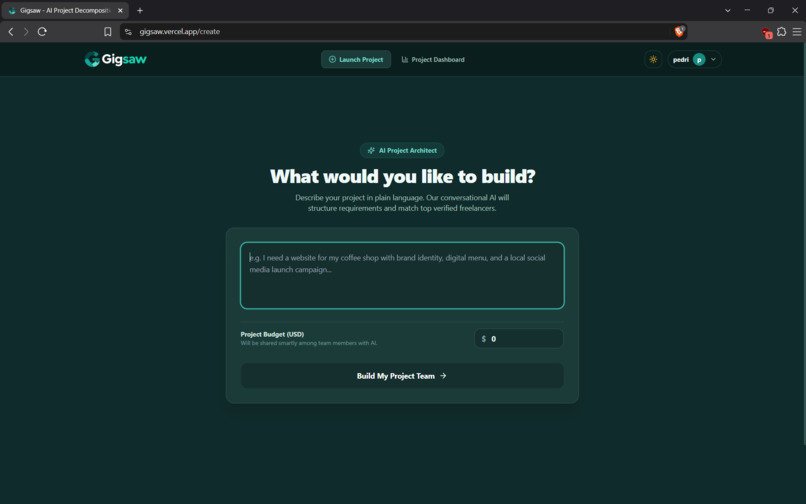
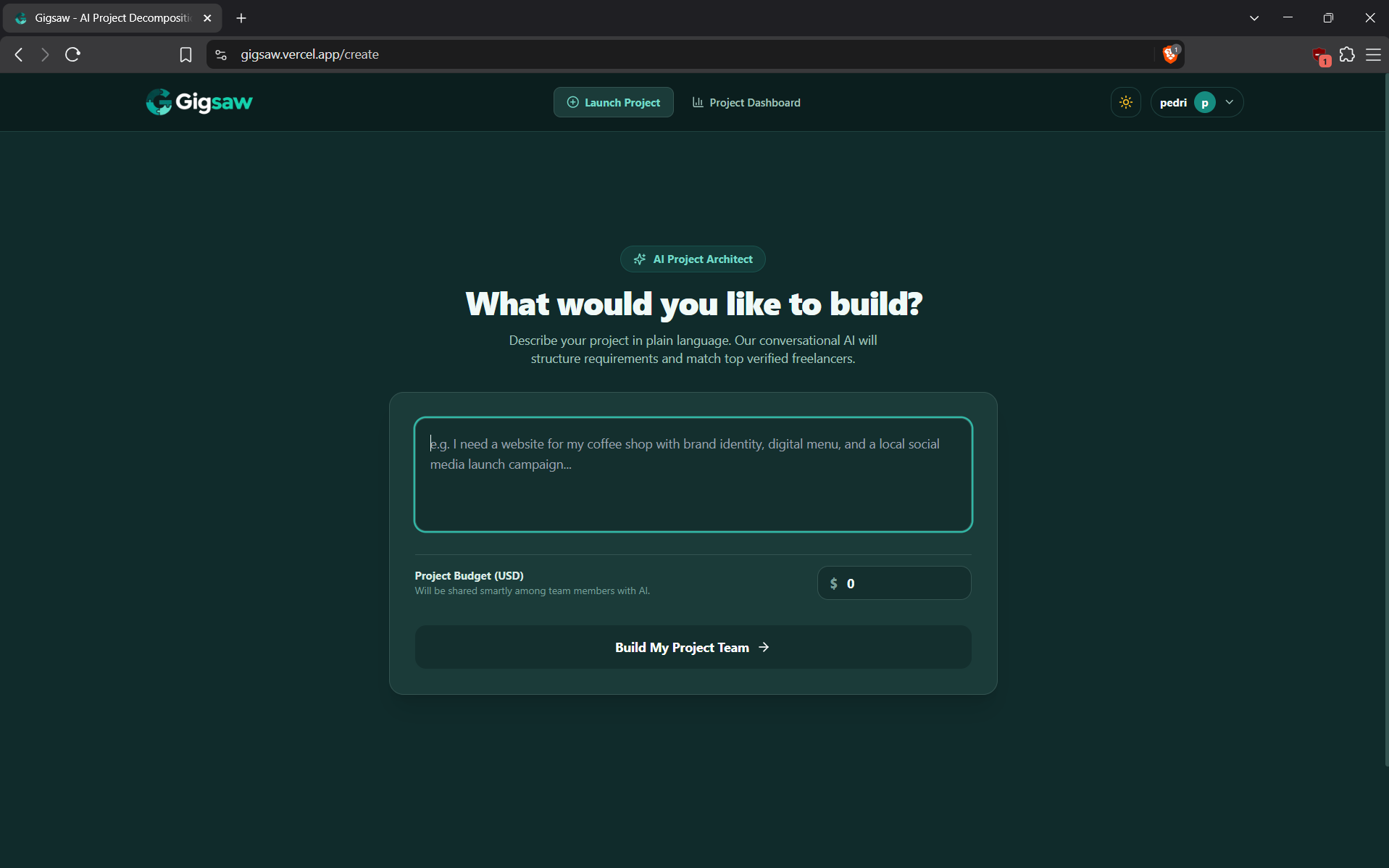
Dark theme Merchant create project
-
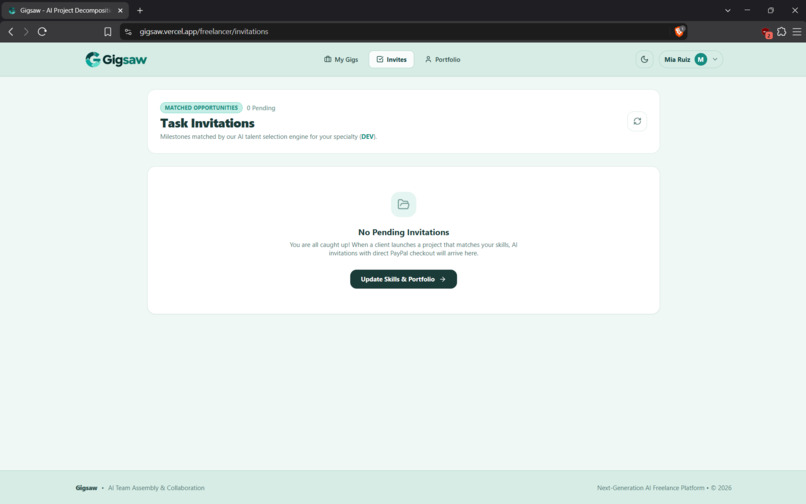
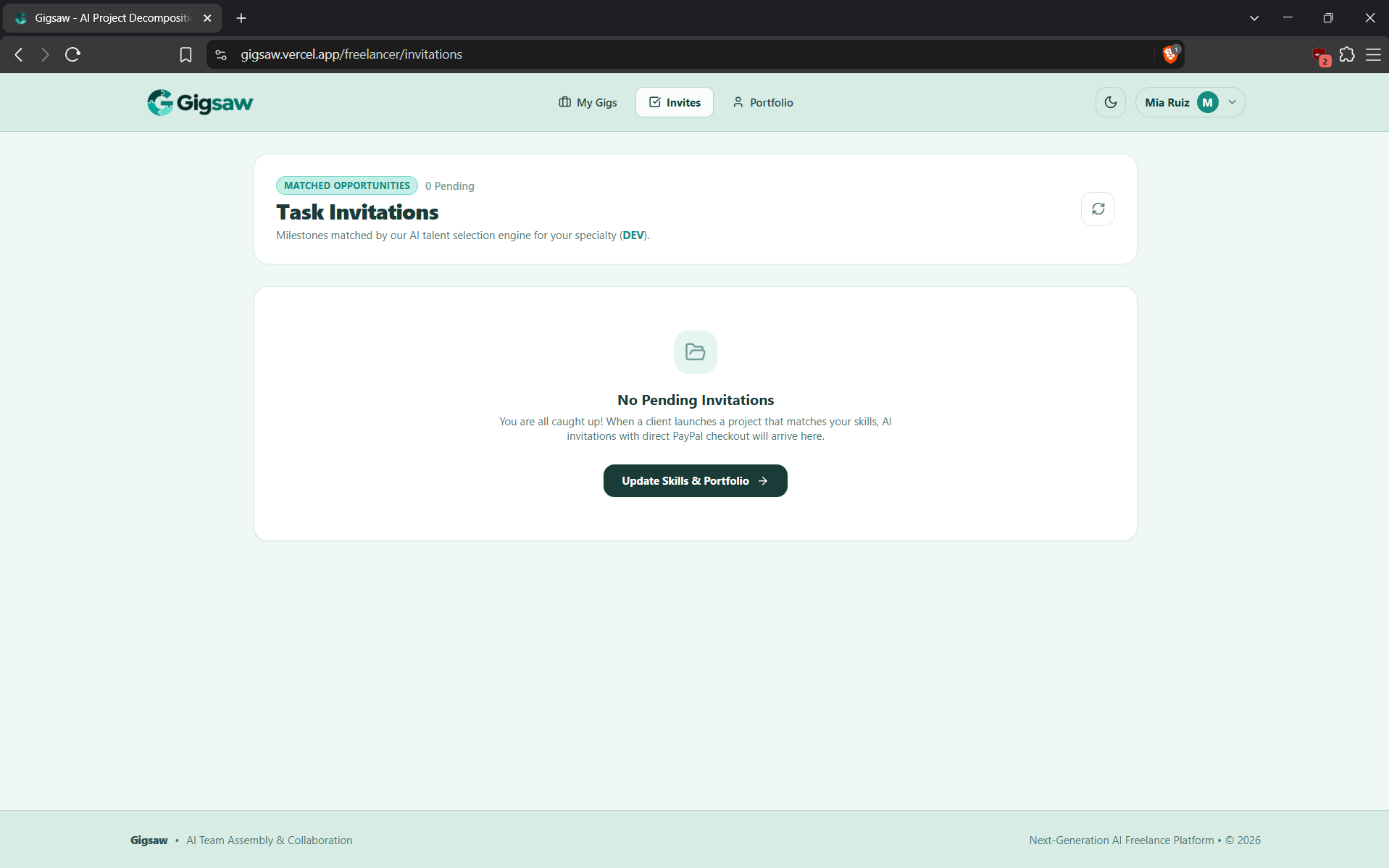
Freelancer Invitations page (light theme)
-
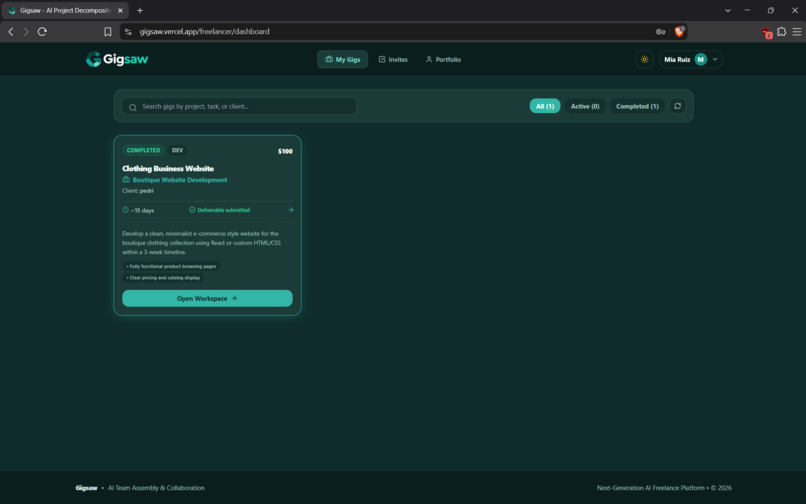
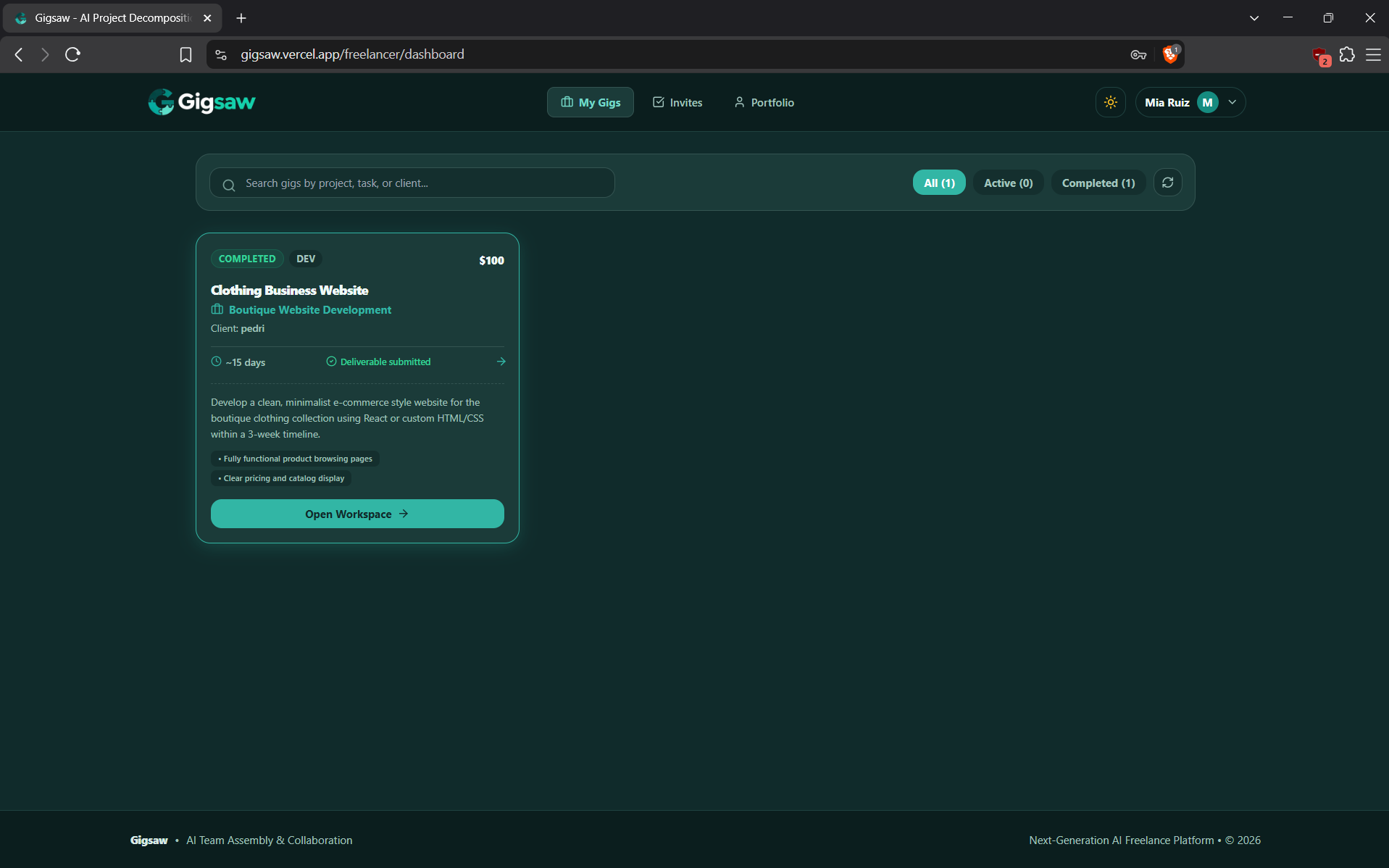
Freelancer - Projects list
-
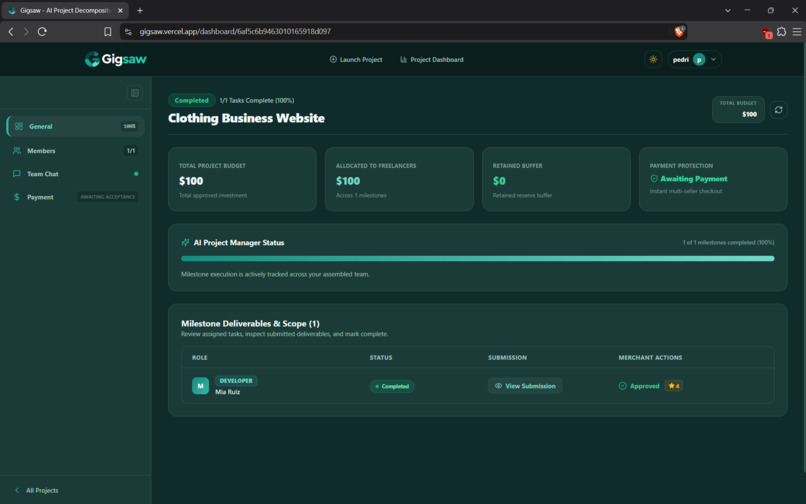
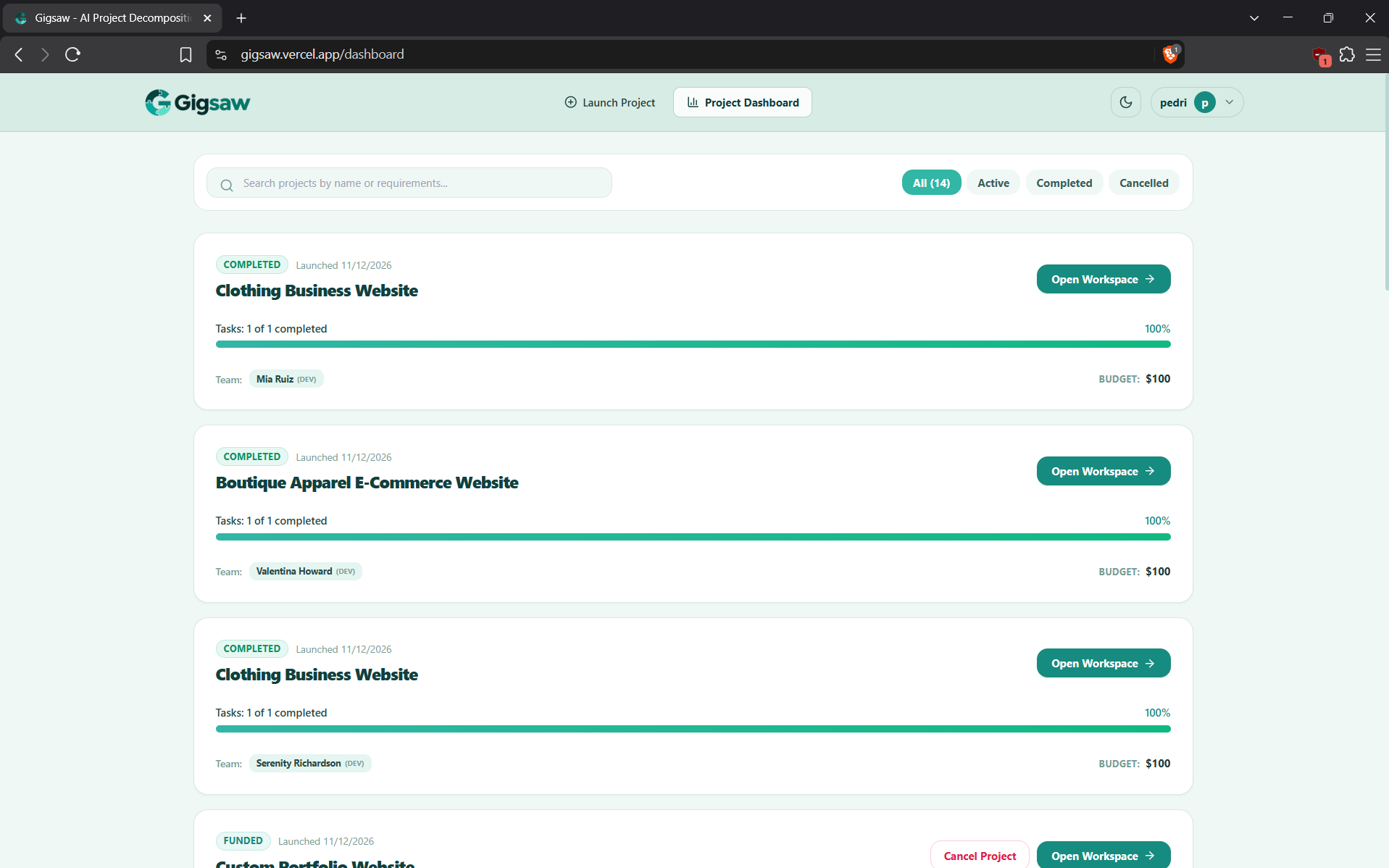
Merchant - Project dashboard
-
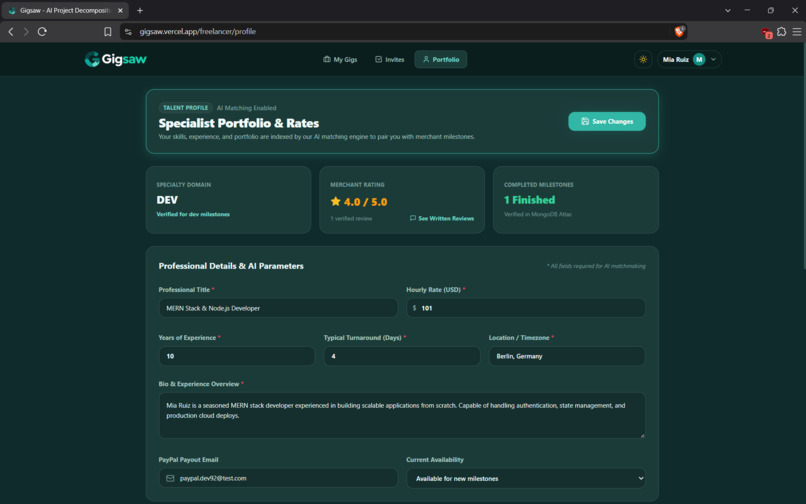
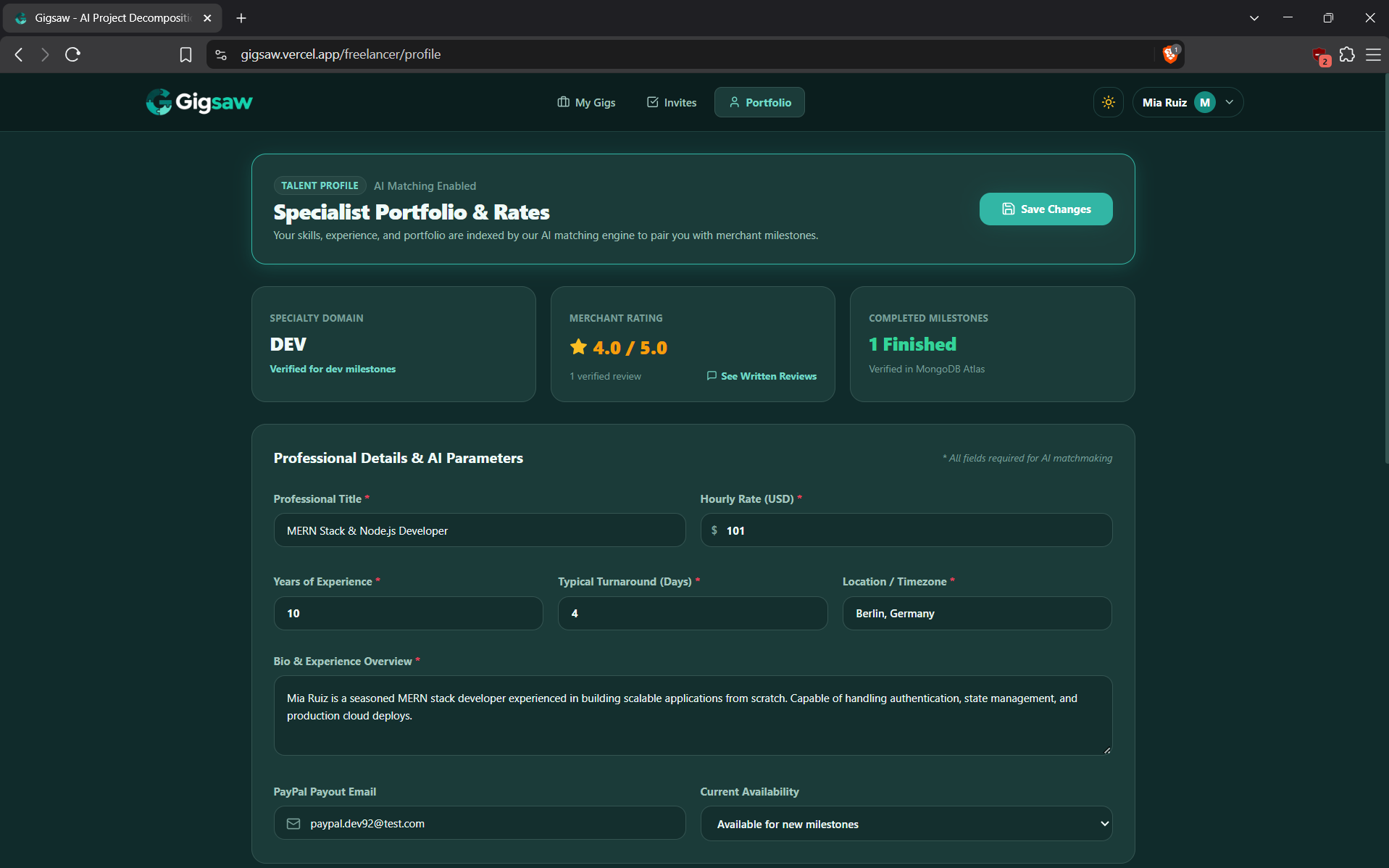
Freelancer Portfolio
-
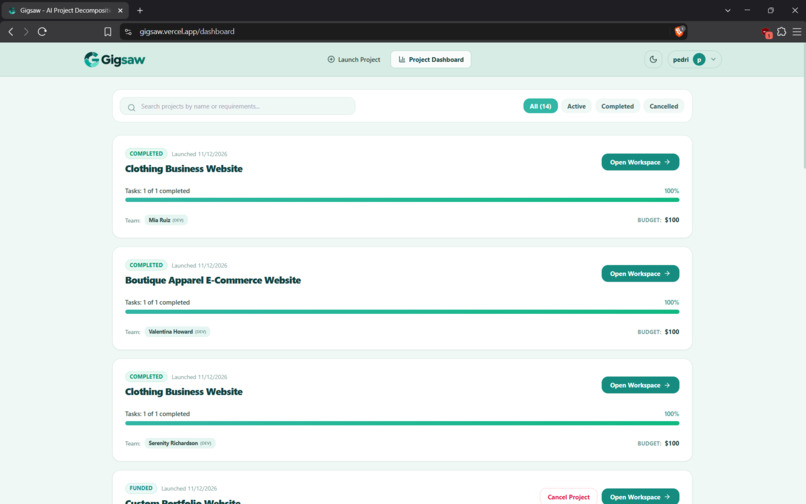
Merchant projects
-
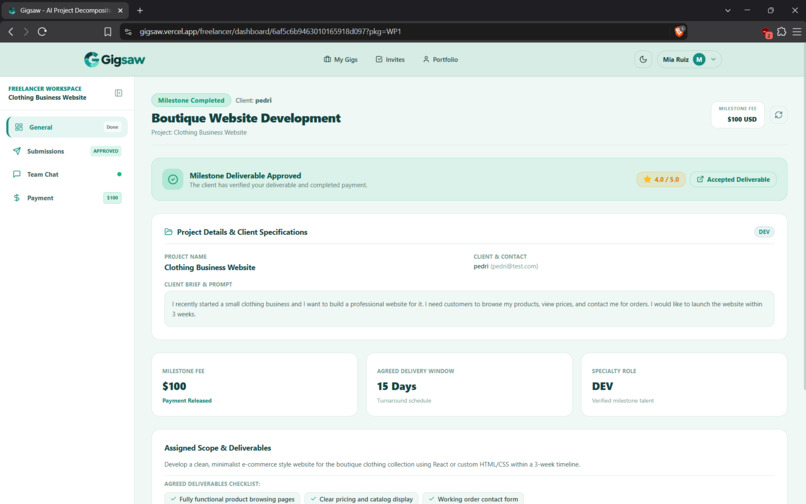
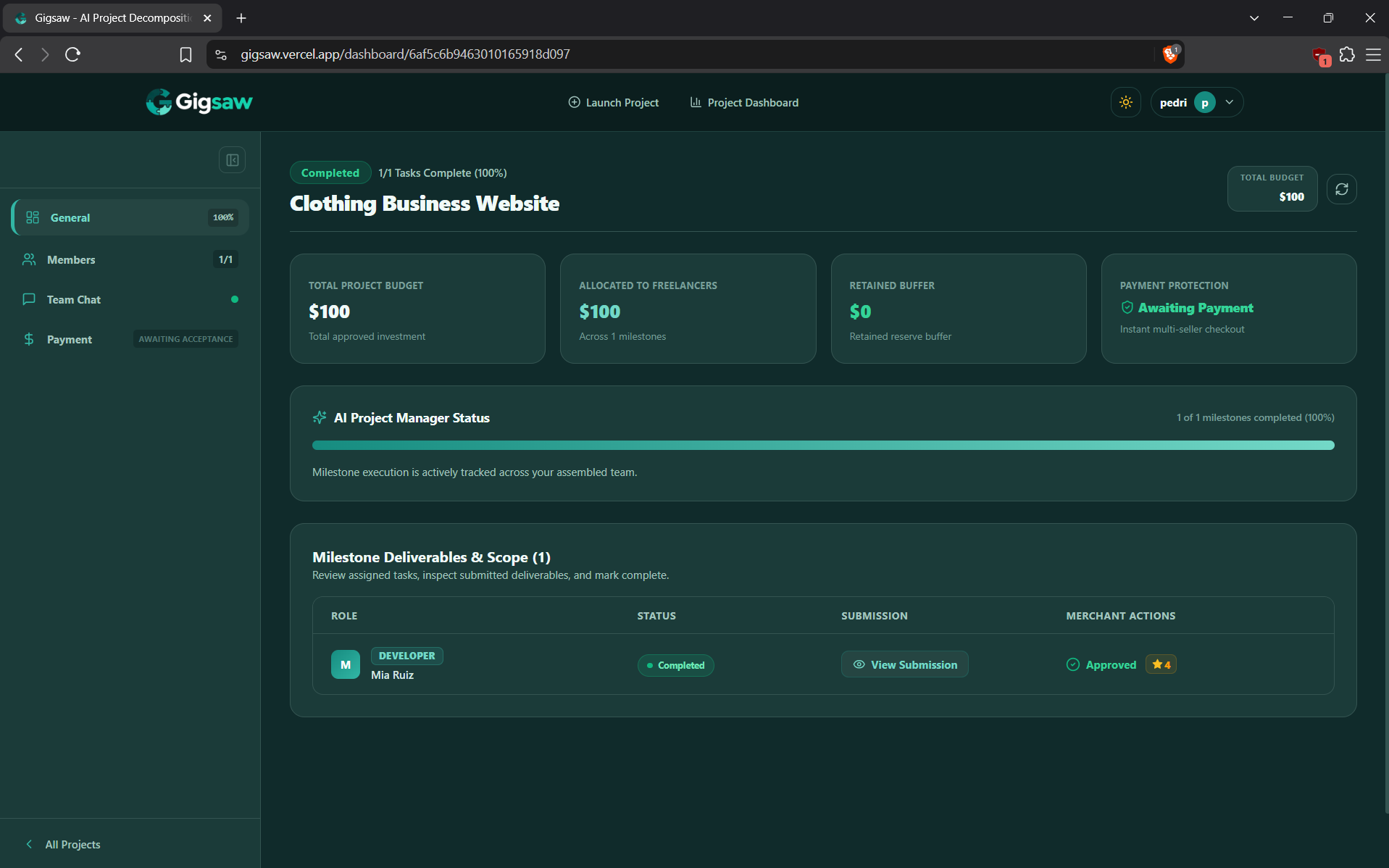
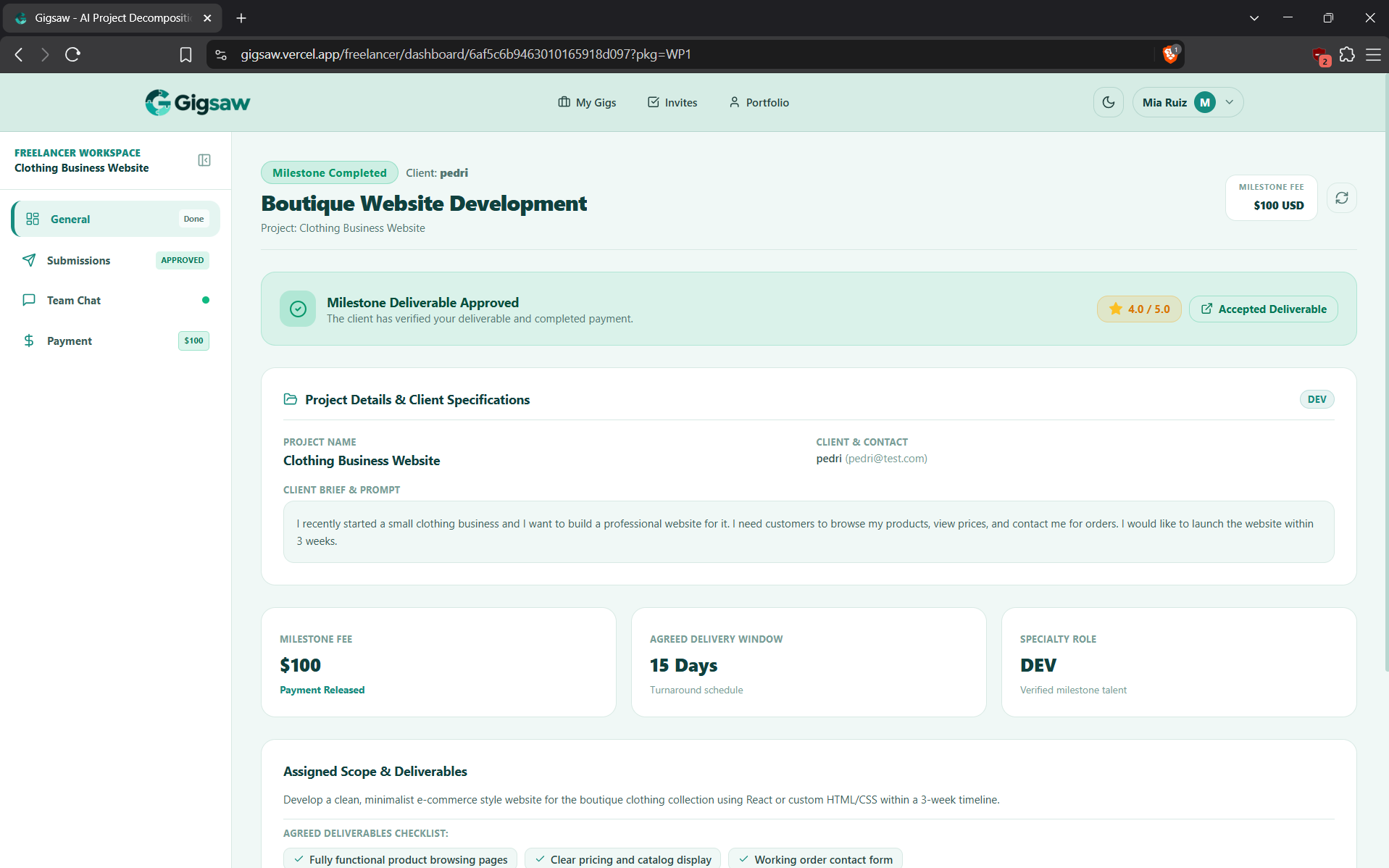
Freelancer Project dashboard general
-
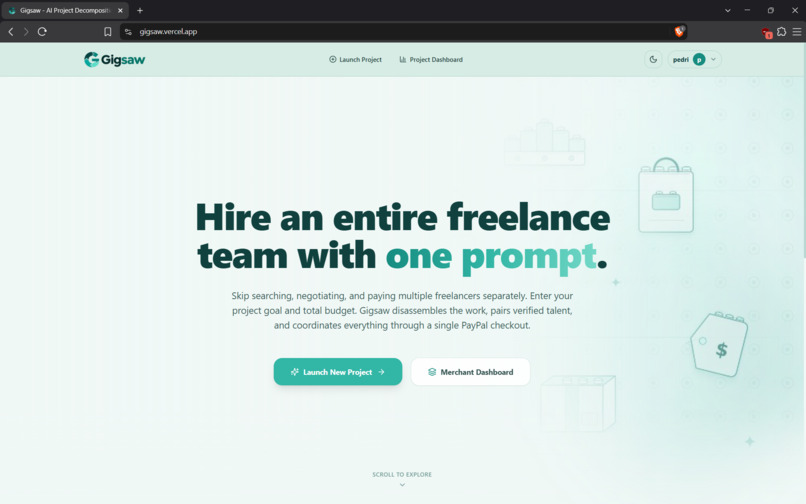
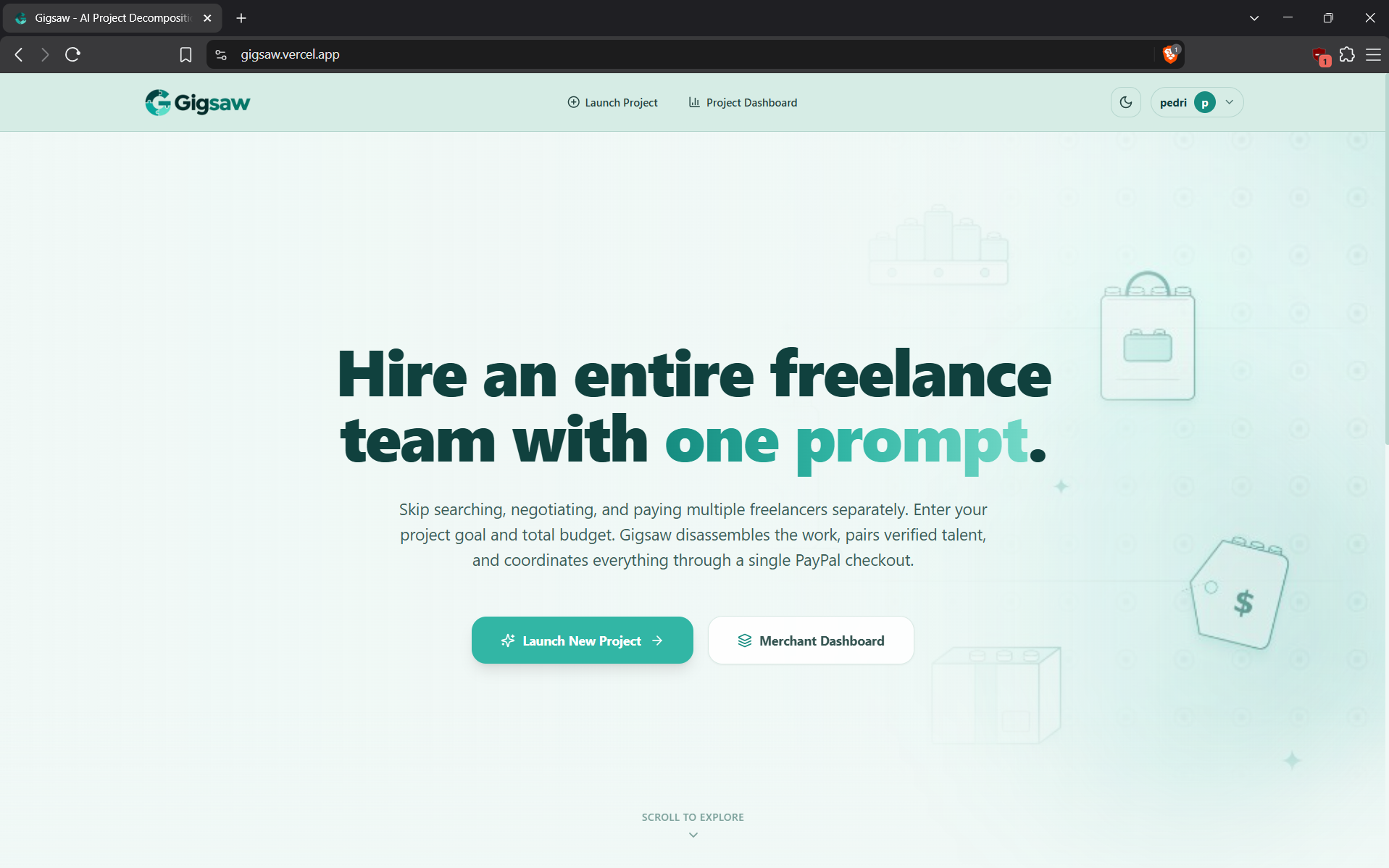
Landing Page
Inspiration
This was our first international hackathon. Juggling college classes, assignments, and exams while building a project from scratch wasn't easy. While everyone else slept after a long day of lectures, we stayed up late coding because we genuinely wanted to build something impactful.
The idea came from a simple problem: hiring freelancers today is frustrating. If you want to build a website or an app, you don't just need one person. You need a designer, a frontend developer, and a backend developer. Finding them one by one, negotiating separately, and managing three different payments is messy and stressful. We thought: What if you could hire an entire coordinated team with just one prompt? That is how GigSaw was born.
What it does
GigSaw lets anyone hire and manage a complete freelance team in minutes:
- Describe Your Idea: You enter what you want to build and your total budget.
- AI Project Manager: An AI chats with you to understand your design preferences, tech needs, and timeline.
- Smart Task Breakdown: The AI breaks your project into clear milestones and splits your budget fairly among them.
- Auto-Match Specialists: The platform finds verified freelancers (designers, developers) that fit each task.
- Team Acceptance: Freelancers review the scope and accept their invites.
- One PayPal Checkout: You pay once. PayPal holds the money safely in escrow for all freelancers at the same time.
- Workspace & Delivery: Freelancers submit their work, the client approves it with a review, and funds are automatically released.
How we built it
- Frontend: Next.js 14, React, TypeScript, and Tailwind CSS for a fast, responsive UI with dark and light modes.
- Authentication: NextAuth.js for secure logins and separate dashboards for clients and freelancers.
- Backend & Database: Next.js API routes and MongoDB Atlas to store users, projects, milestones, and reviews.
- AI Engine: A Python FastAPI service (hosted on Render) that talks to LLMs to scope projects and match talent.
- Payments: PayPal Multi-Seller API to handle multi-freelancer escrow payments in a single transaction.
- Hosting: Vercel for the web app and Render for the AI service.
Challenges we ran into
- College vs Hackathon Time: Managing lectures, assignments, and late-night coding sessions required serious discipline.
- Multi-Seller PayPal Escrow: Setting up PayPal so one buyer can pay multiple freelancers into escrow at the same time took a lot of debugging.
- Keeping State in Sync: Making sure both clients and freelancers saw instant live updates when invites were accepted, payments were completed, and work was submitted.
- Accurate AI Budgets: Making sure the AI never hallucinated numbers and always made milestone costs add up exactly to the client's budget.
Accomplishments that we're proud of
- Going from a one-sentence prompt to an assembled, ready-to-work freelance team in under 60 seconds.
- A fully working PayPal Multi-Seller payment flow that safely holds escrow.
- Clean, simple dashboards tailored for both clients and freelancers.
- Shipping a complete, working product live on Vercel while keeping up with college.
What we learned
- How to build and deploy complex full-stack apps using Next.js 14 and FastAPI.
- How multi-party fintech escrow and payment gateways work behind the scenes.
- How to design practical AI agents that guide users through back-and-forth conversation.
- That hard work and consistency can turn a late-night idea into a real product.
What's next for GigSaw
- Automatic code testing and preview links when developers submit GitHub repos.
- AI assistant to help resolve any scope disagreements between clients and freelancers.
- Voice input so users can just talk to describe what they want to build.

