-
-
-
-
-
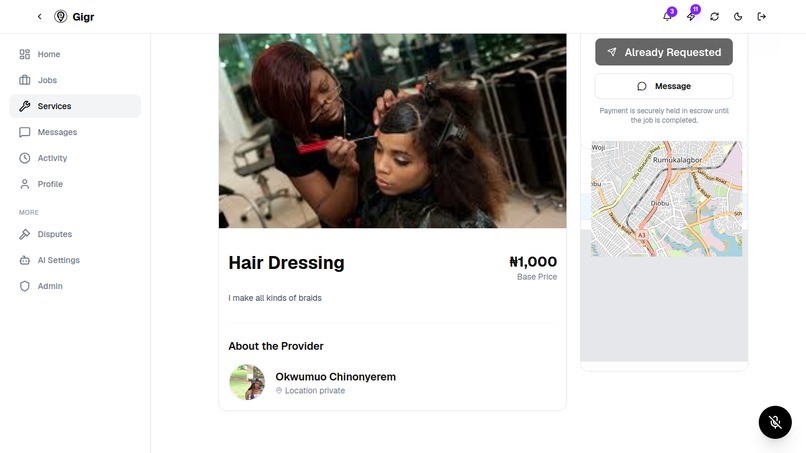
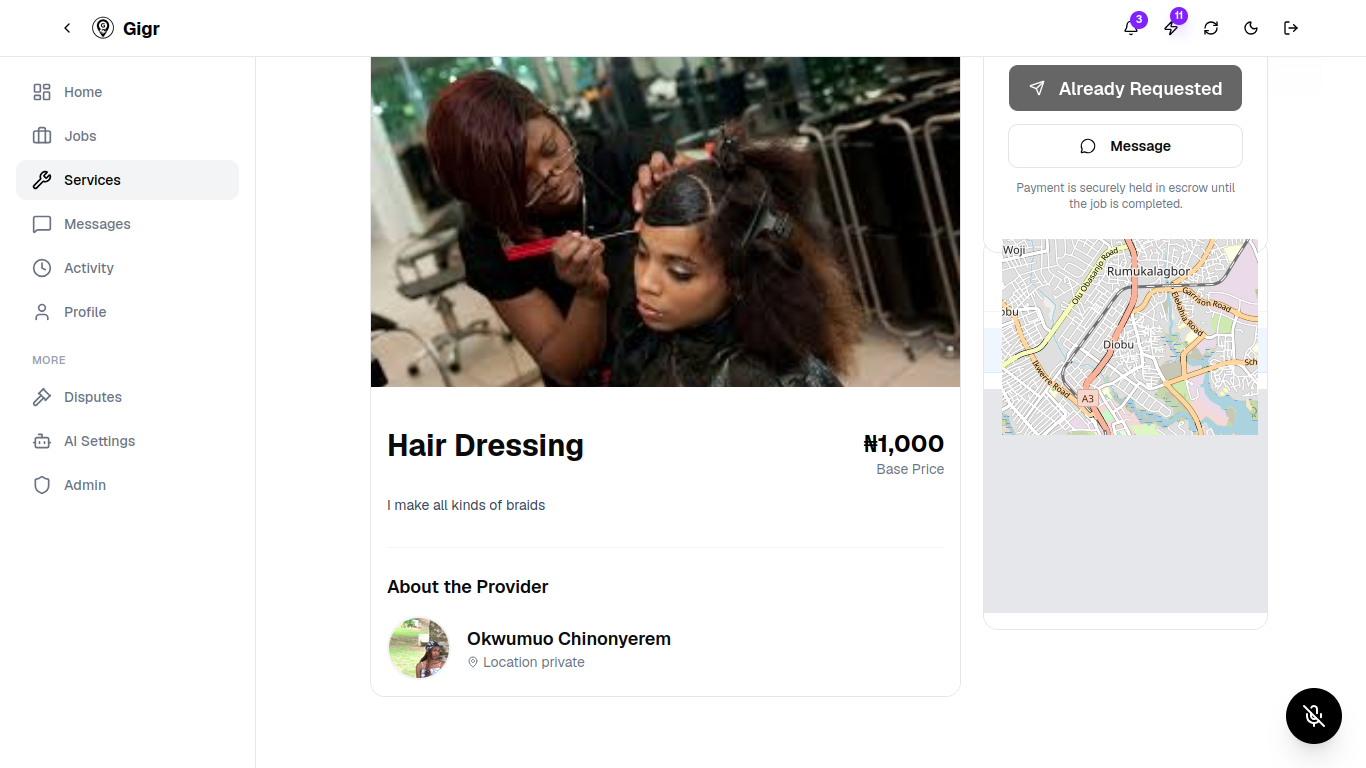
Servicedetail
-
-
-

App icon

Inspiration
A friend needed a plumber and asked our local group chat, but received zero responses. People either did not know a plumber or refused to vouch for one they did know. Relying on blind messages to find local workers creates high financial risk for clients and payment risk for workers. We built Gigr to replace this guesswork with verifiable proof and guaranteed payments.
What it does
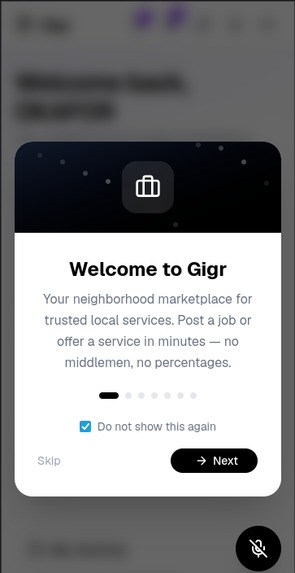
Gigr is a frictionless digital economy solution for local gigs and services. It functions as a hyper-local peer-to-peer marketplace that abstracts Web3 mechanics entirely. Users authenticate via Google SSO, pay in fiat, and rely on a Solana smart contract escrow that locks payments until work is verified. Completed jobs automatically mint a permanent compressed NFT to serve as a tamper-proof reputation record.
How we built it
Smart Contracts: Built on Solana to handle trustless escrow and cNFT minting.
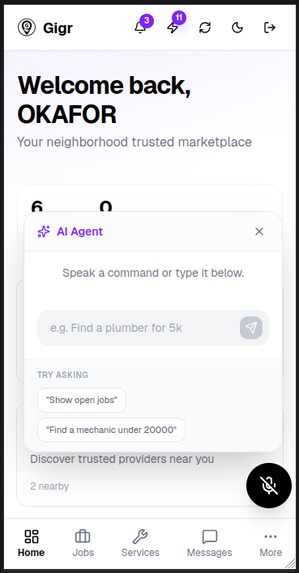
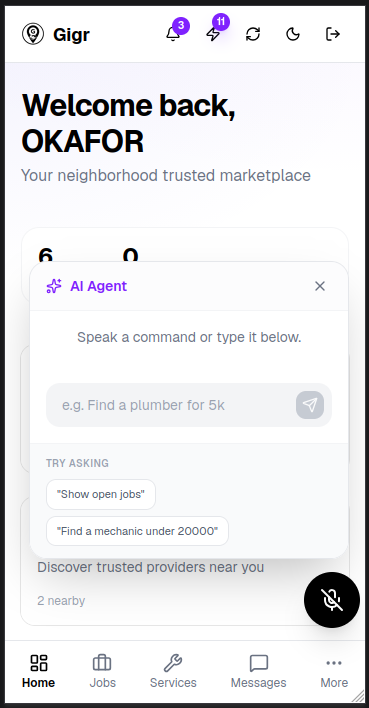
Autonomous AI Assistant: A Python-based AI agent processes voice commands to find services and negotiate rates on behalf of the user.
Backend Infrastructure: Services written in Python and TypeScript manage multi-tenant state and route transactions to blockchain RPCs.
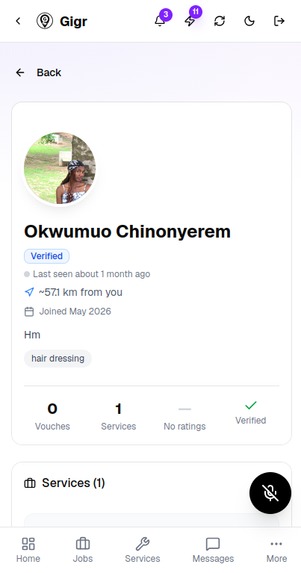
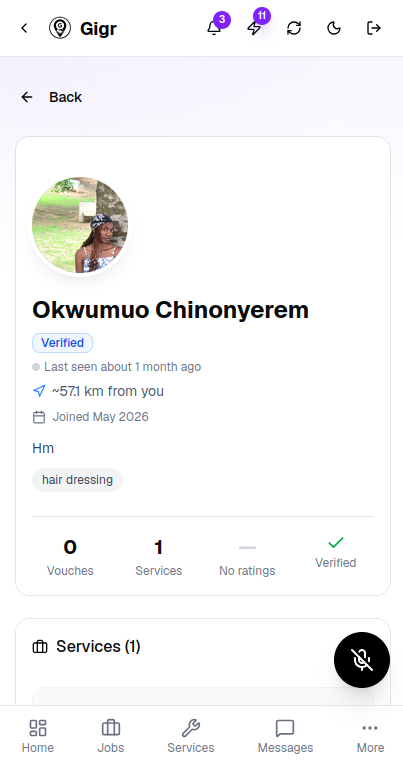
Reputation Engine: To prevent early reviews from skewing a worker's ranking, we calculate reputation using a Bayesian average:
$$R = \frac{C \cdot m + \sum_{i=1}^{n} r_i}{C + n}$$
Challenges we ran into
- State Synchronization: Syncing Solana PDAs (Program Derived Addresses) with our PostgreSQL database was our biggest hurdle. We experienced severe race conditions where the escrow would release on-chain but fail to update on the DB. This required implementing strict idempotency keys and exponential retries to eliminate duplicate events.
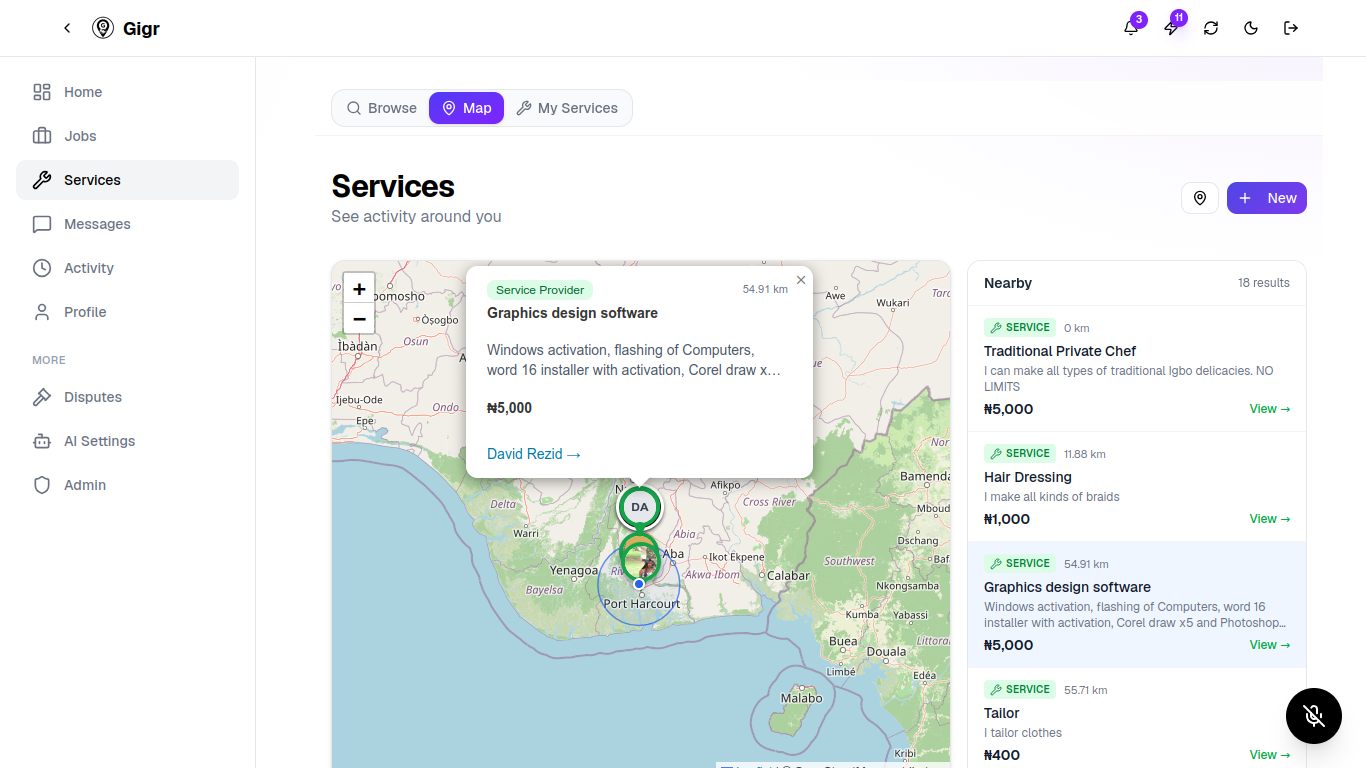
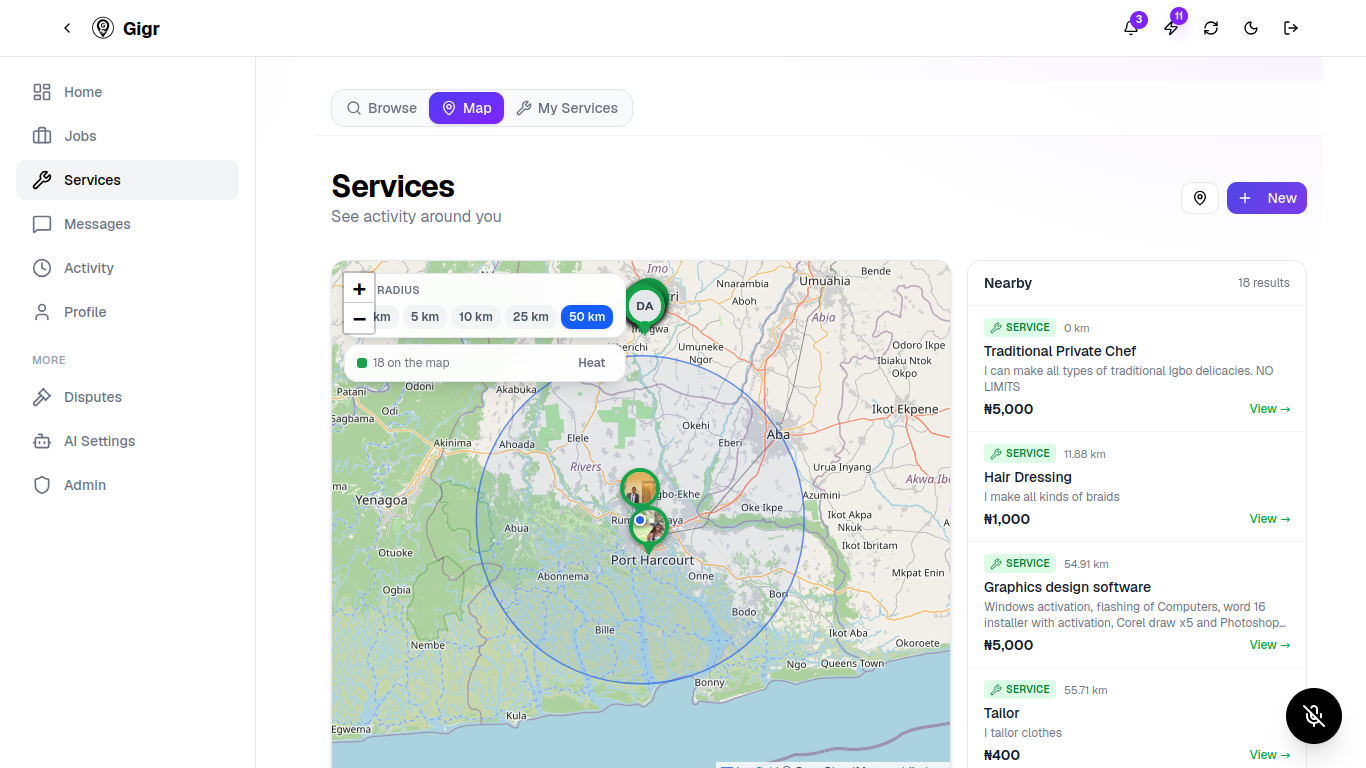
- Hyperlocal-ness: Engineering the spatial logic required to accurately map users and services at a micro-neighborhood level.
- Platform Architecture: Configuring the Progressive Web App (PWA) for native-feeling mobile access, managing transactional emails, and building isolated smart contract rooms for secure peer-to-peer agreements.
- AI Latency: Ensuring the AI agent's calling and negotiation logic executed rapidly enough to avoid on-chain transaction timeouts.
Accomplishments that we're proud of
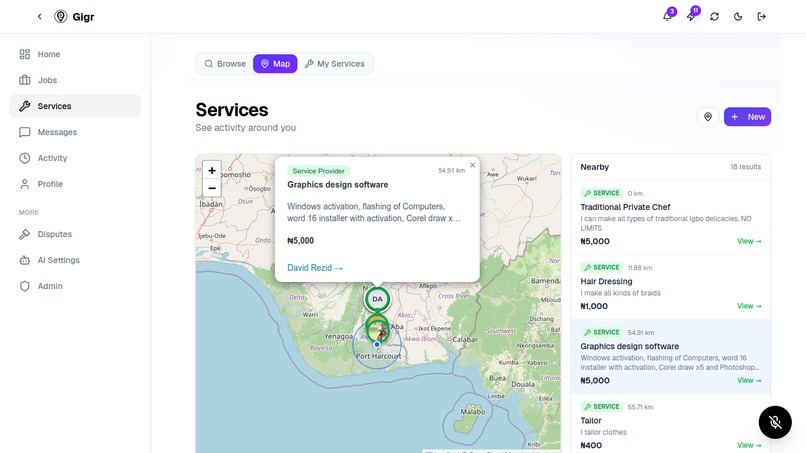
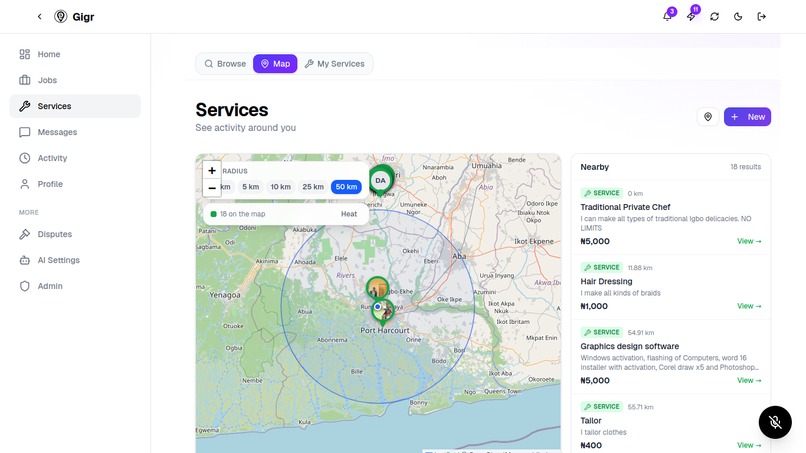
- Successfully rendering the neighborhood live heat map for real-time local discovery.
- Delivering our pitch presentation at H4F and winning the Rising Star award.
- AI Agent
What we learned
We learned a massive amount about bridging synchronous user actions with asynchronous on-chain finality. Safely abstracting custodial wallets demands a robust architecture and flawless state synchronization between the server and the blockchain. We also discovered that variable AI autonomy requires highly structured, context-aware prompt routing to prevent agents from executing unauthorized tasks.
What's next for Gigr
The platform is currently running securely on Devnet. Our immediate priority is securing funding, which will allow us to move straight to Mainnet. Following the Mainnet launch, we will execute a comprehensive marketing campaign to publicize the app and drive widespread public adoption.

Log in or sign up for Devpost to join the conversation.