-
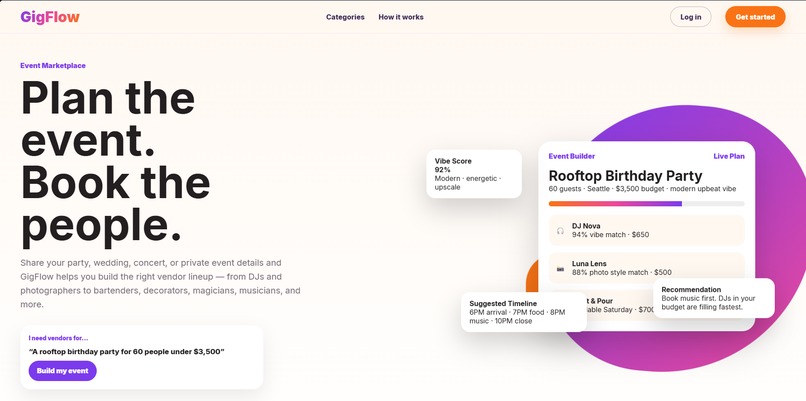
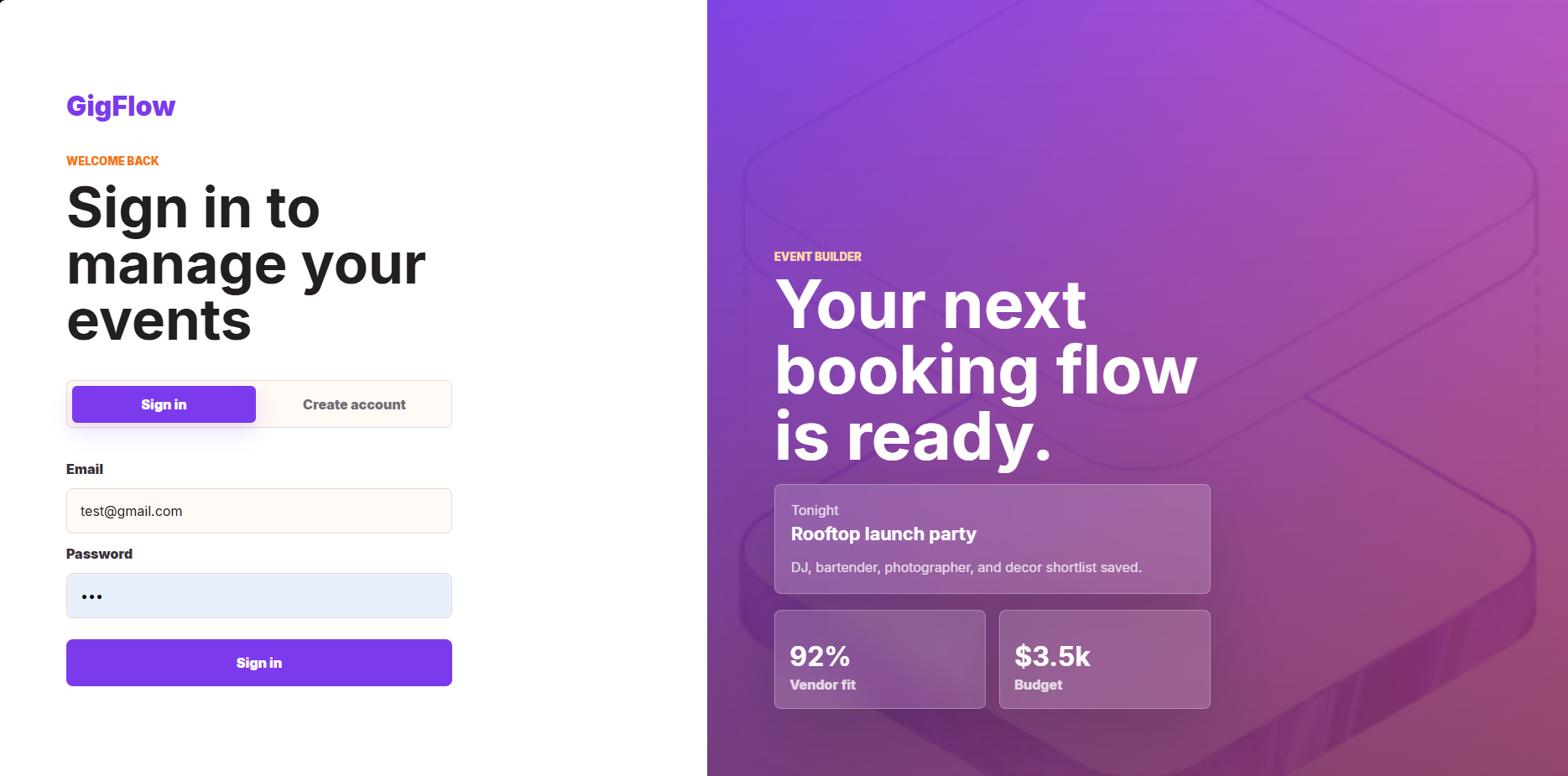
Front Page
-
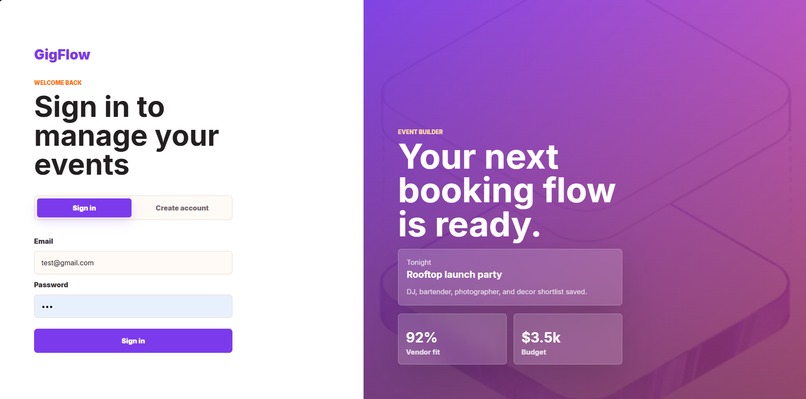
Login Page
-
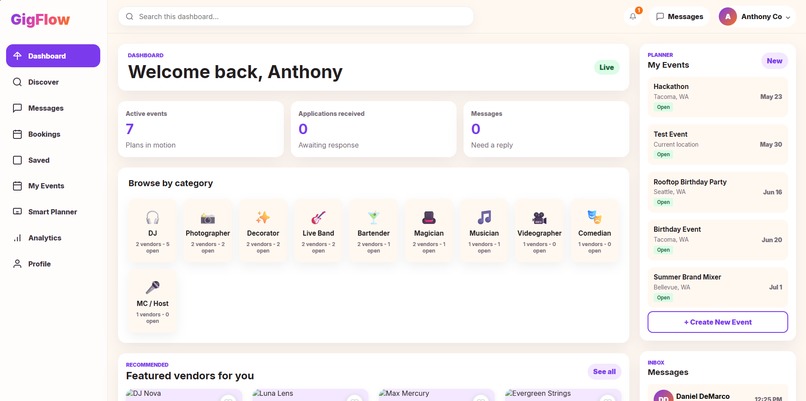
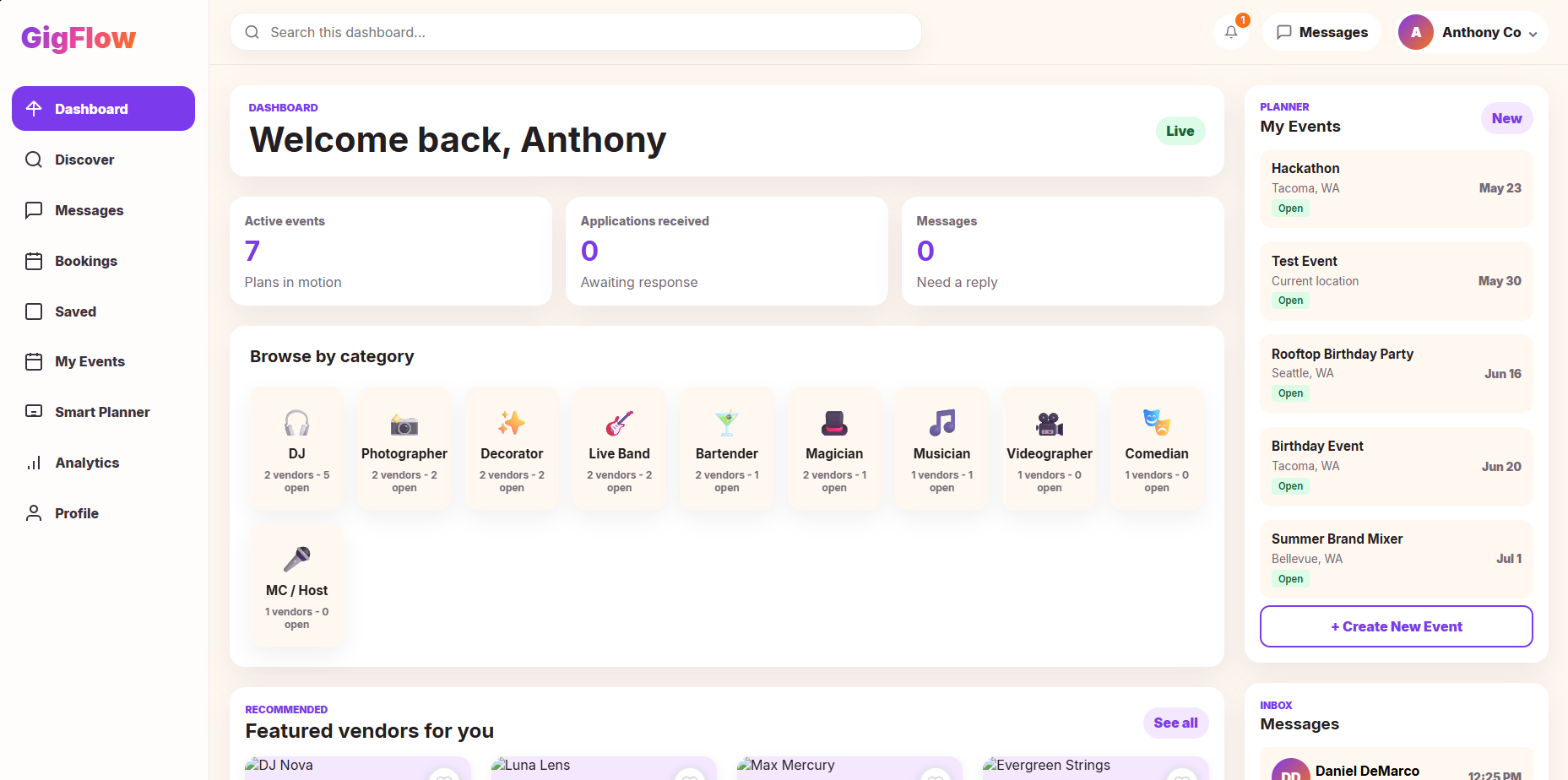
Dashboard
-
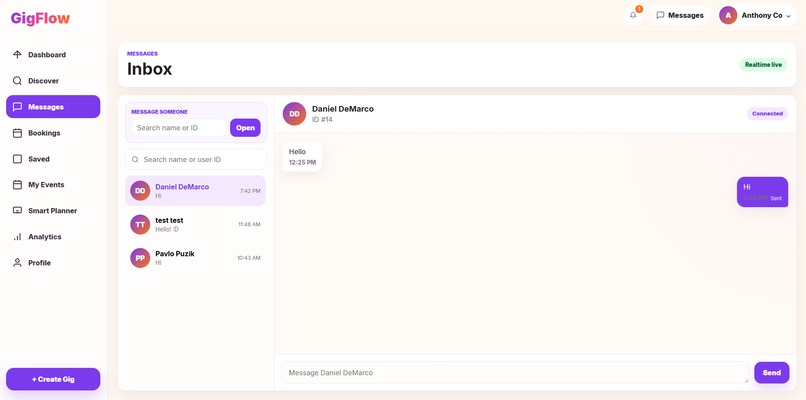
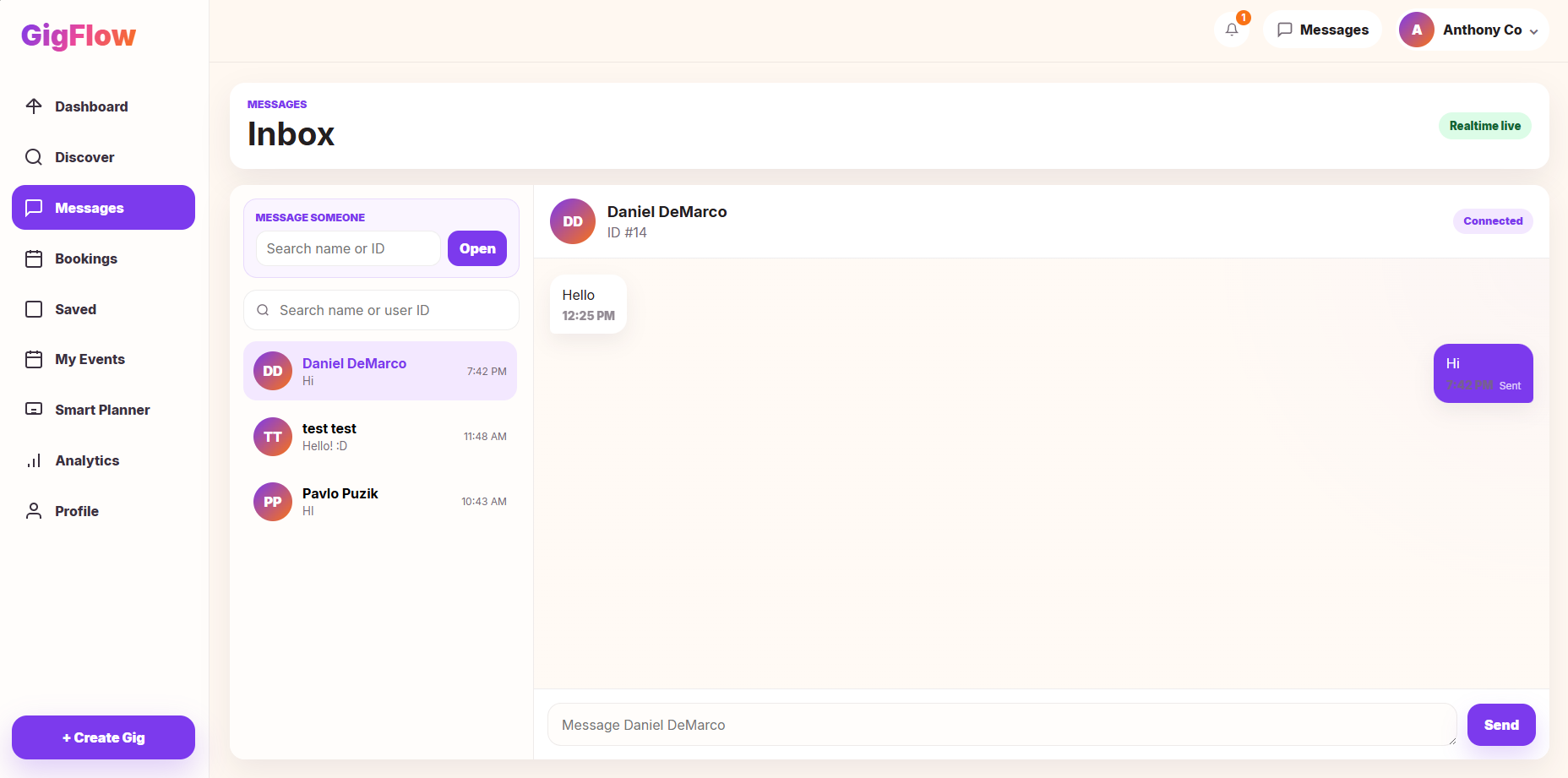
Messaging Page
-
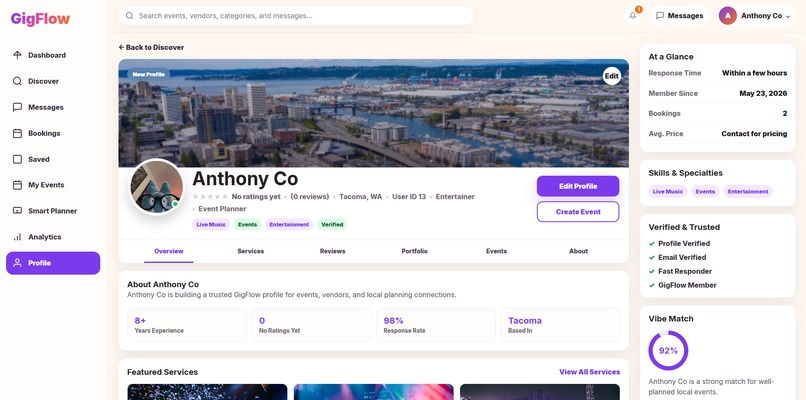
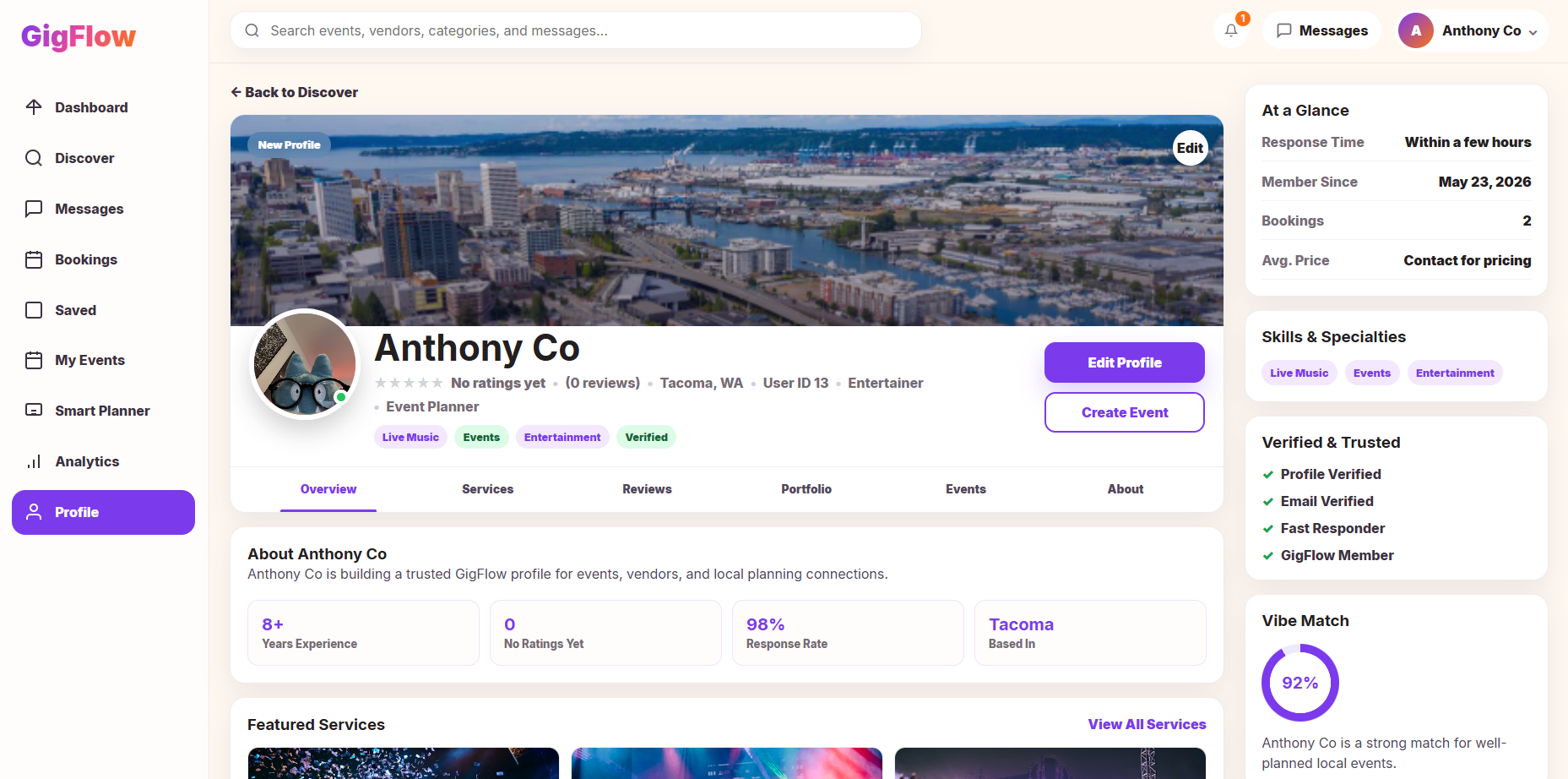
Profile Page 1
-
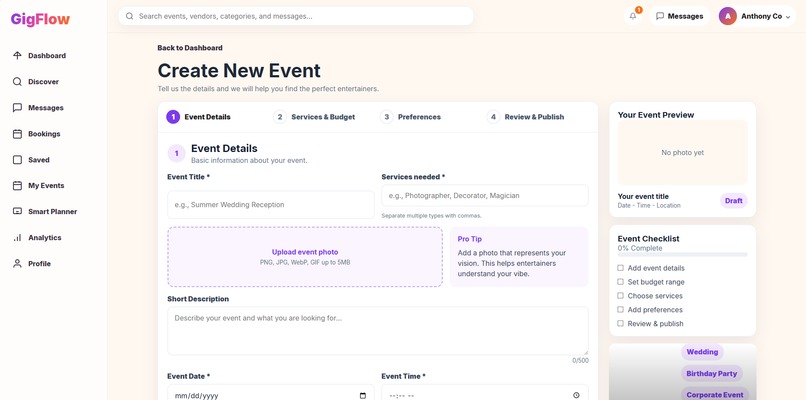
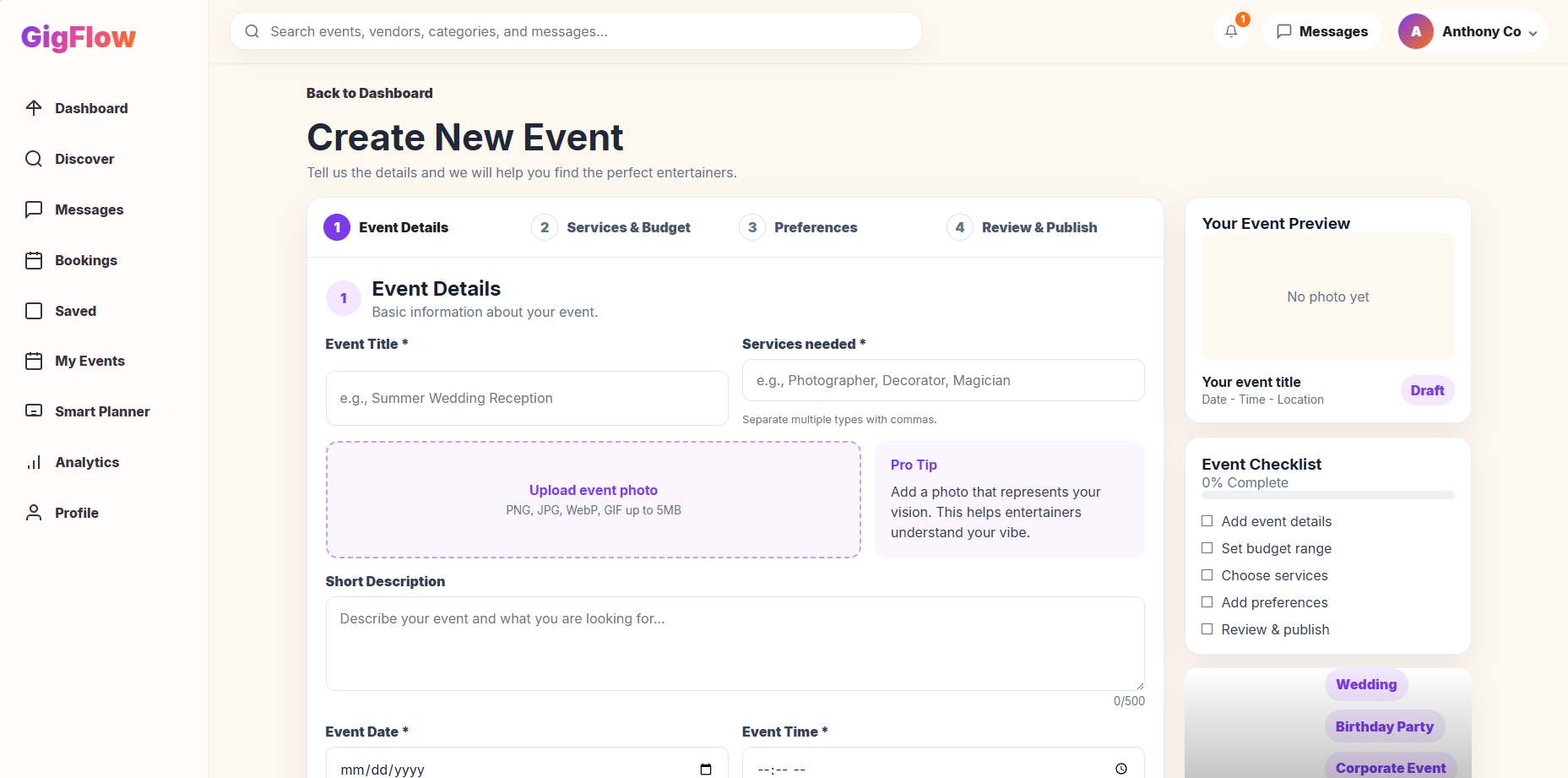
New Event Page
-
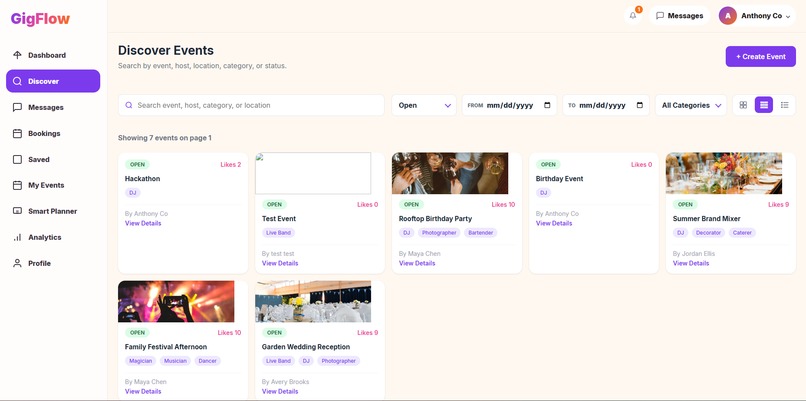
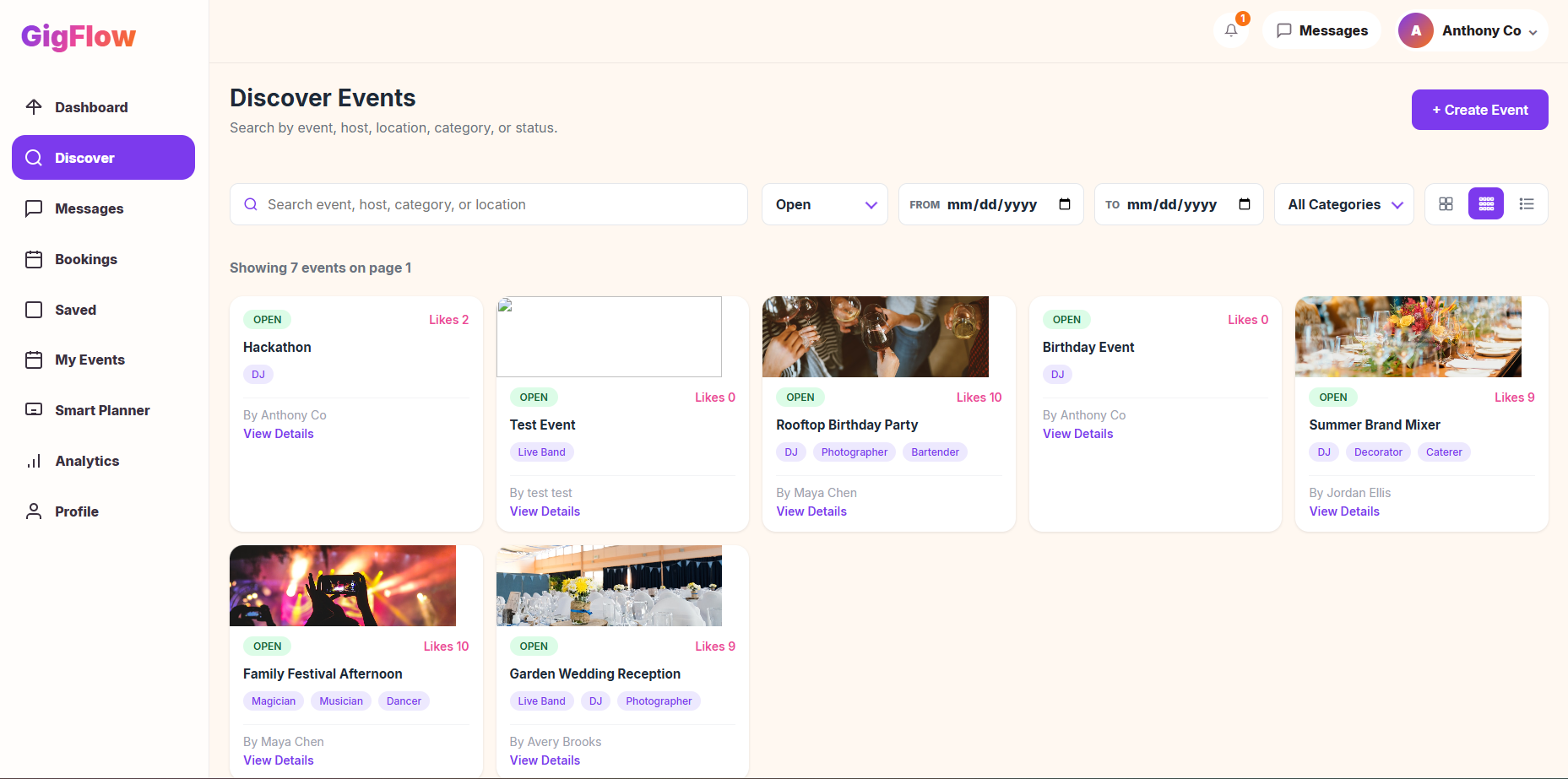
Discover Page
-
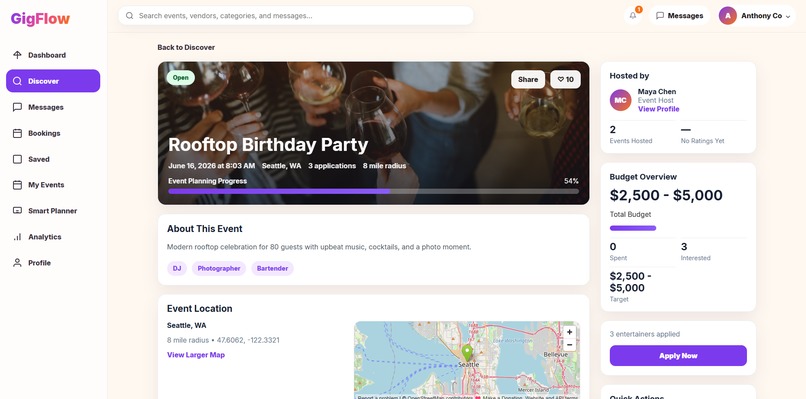
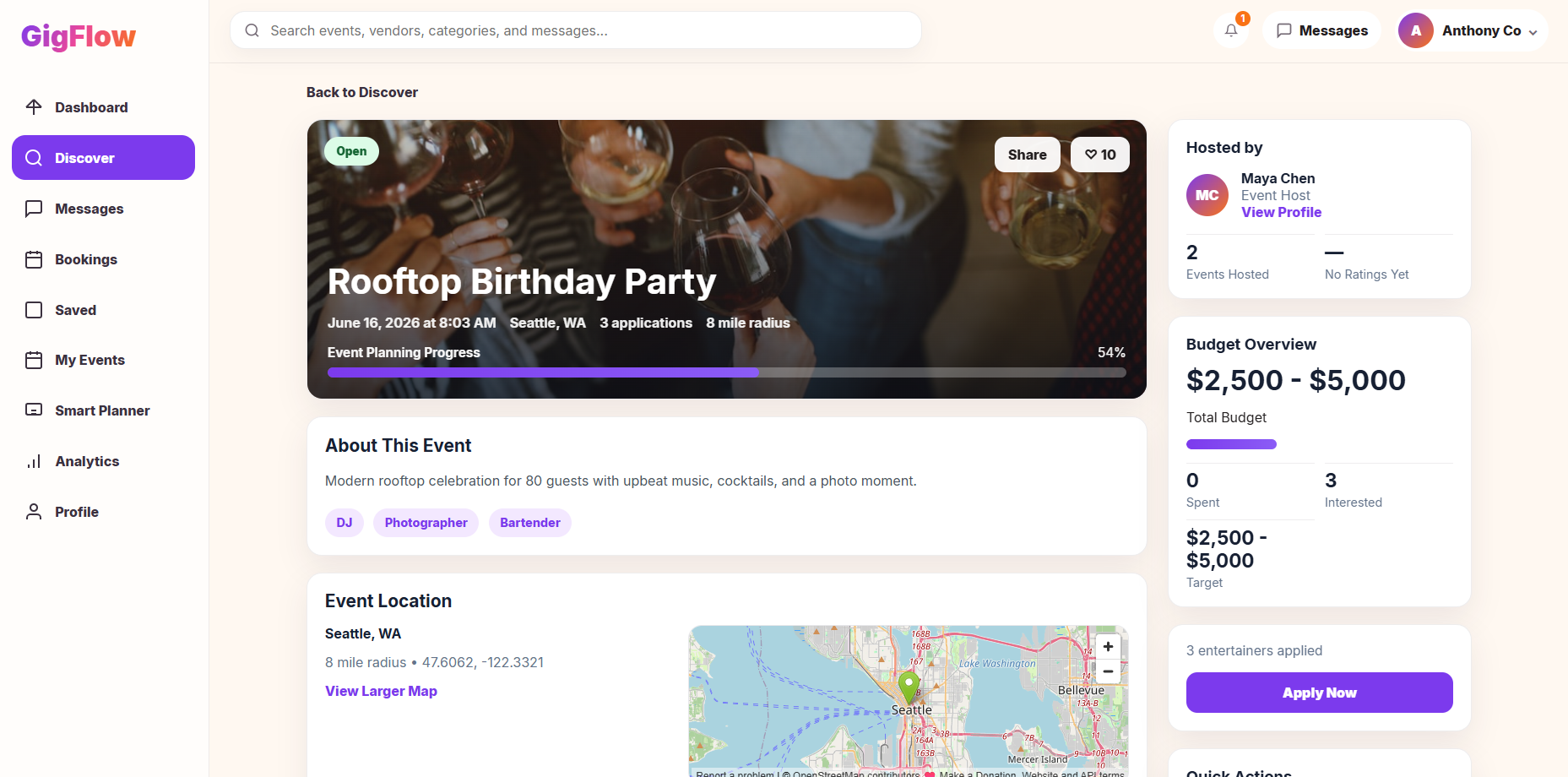
Hosted Event
-
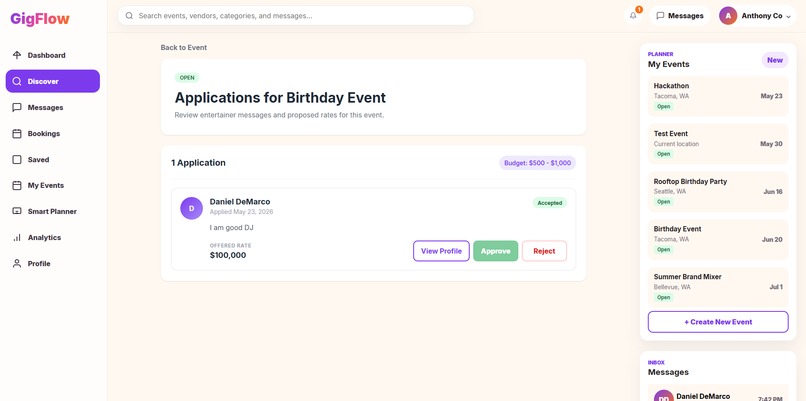
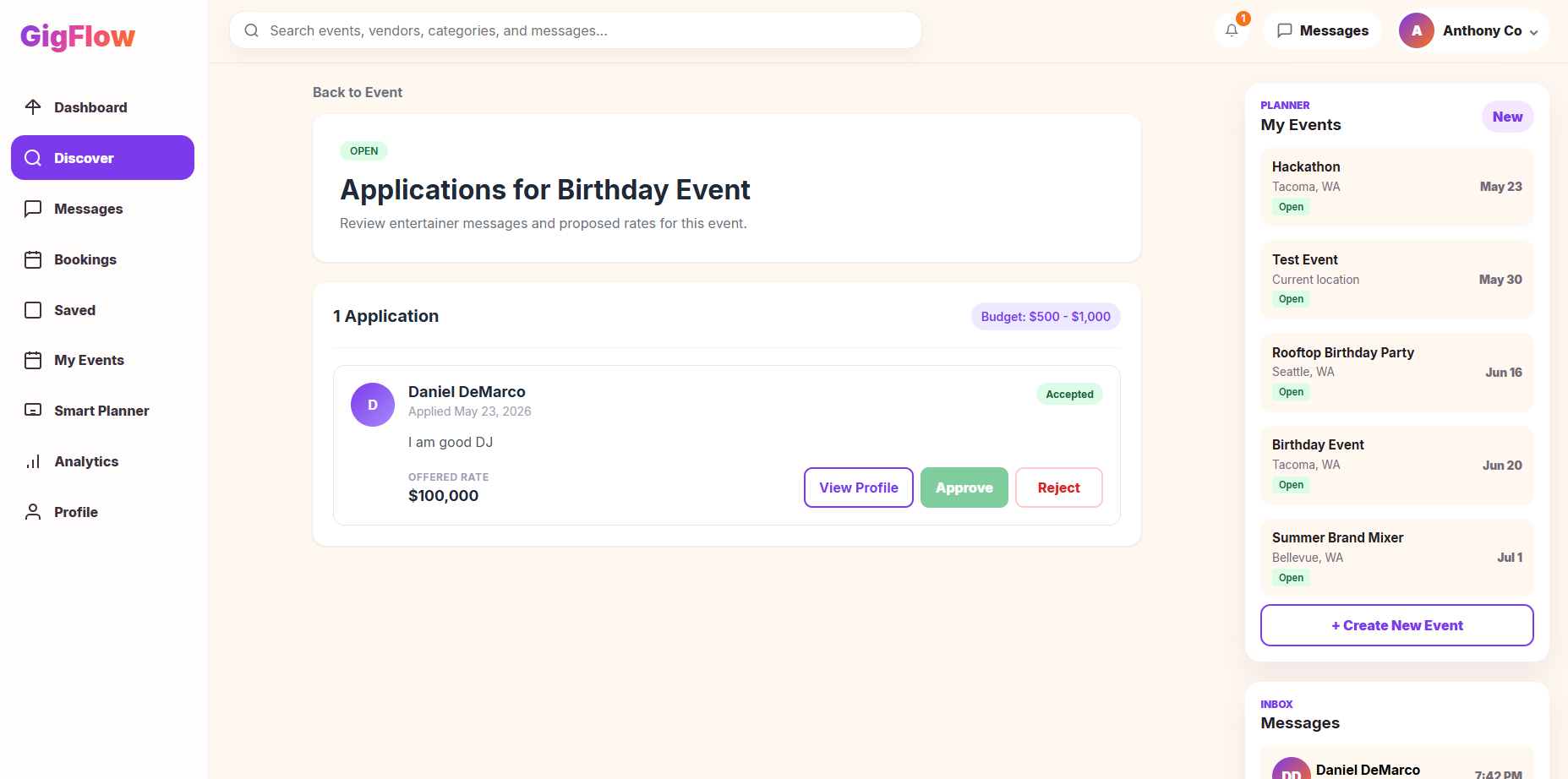
Applications Page
-
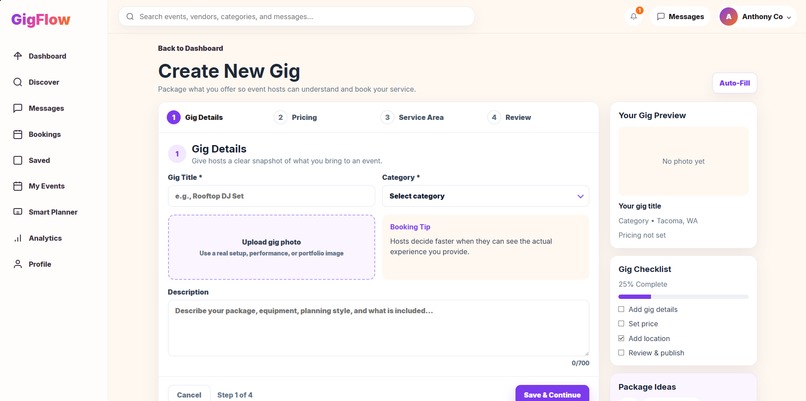
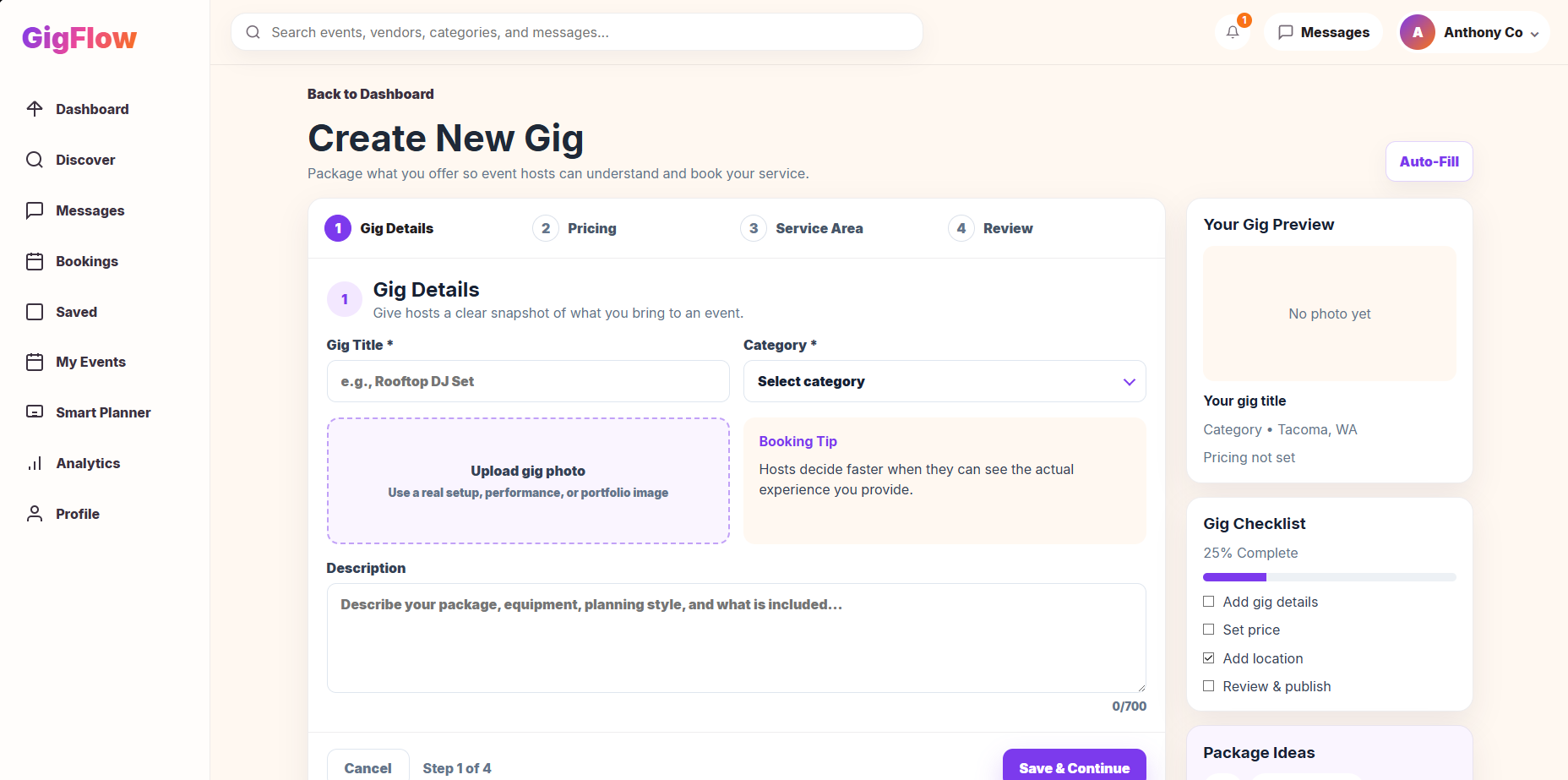
New Gig Page
-
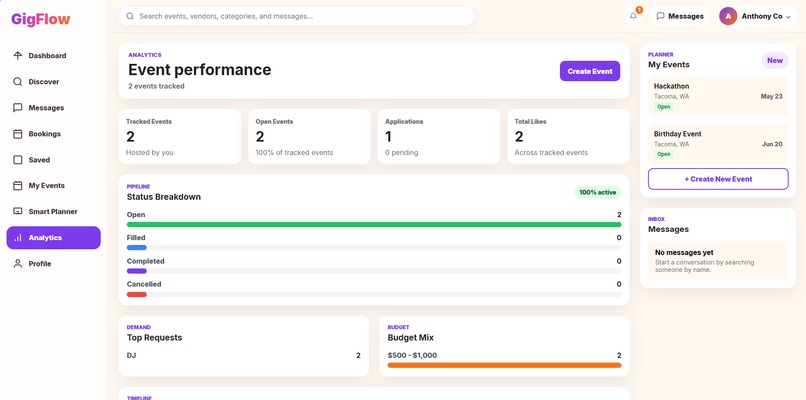
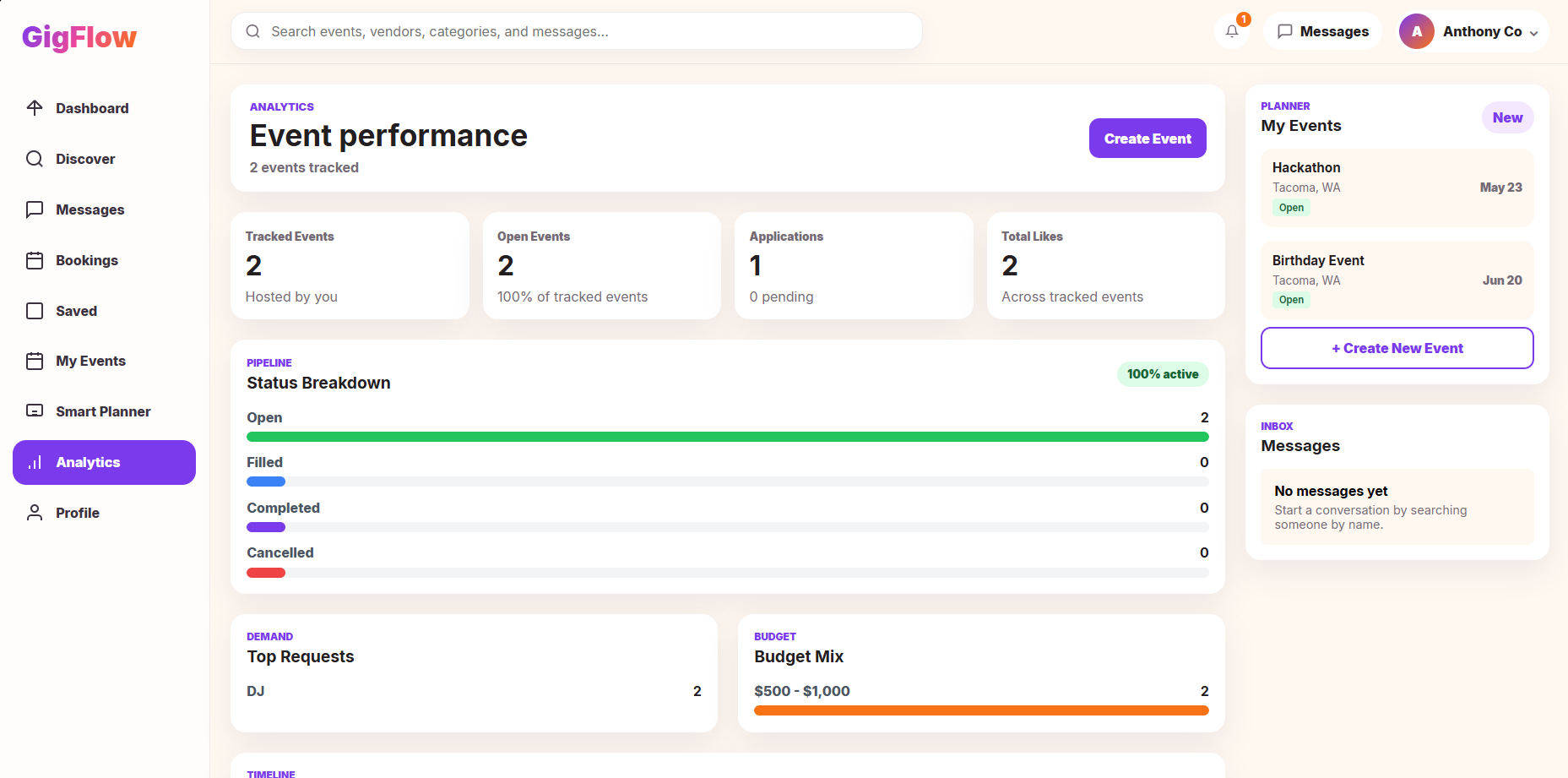
Analytics Page
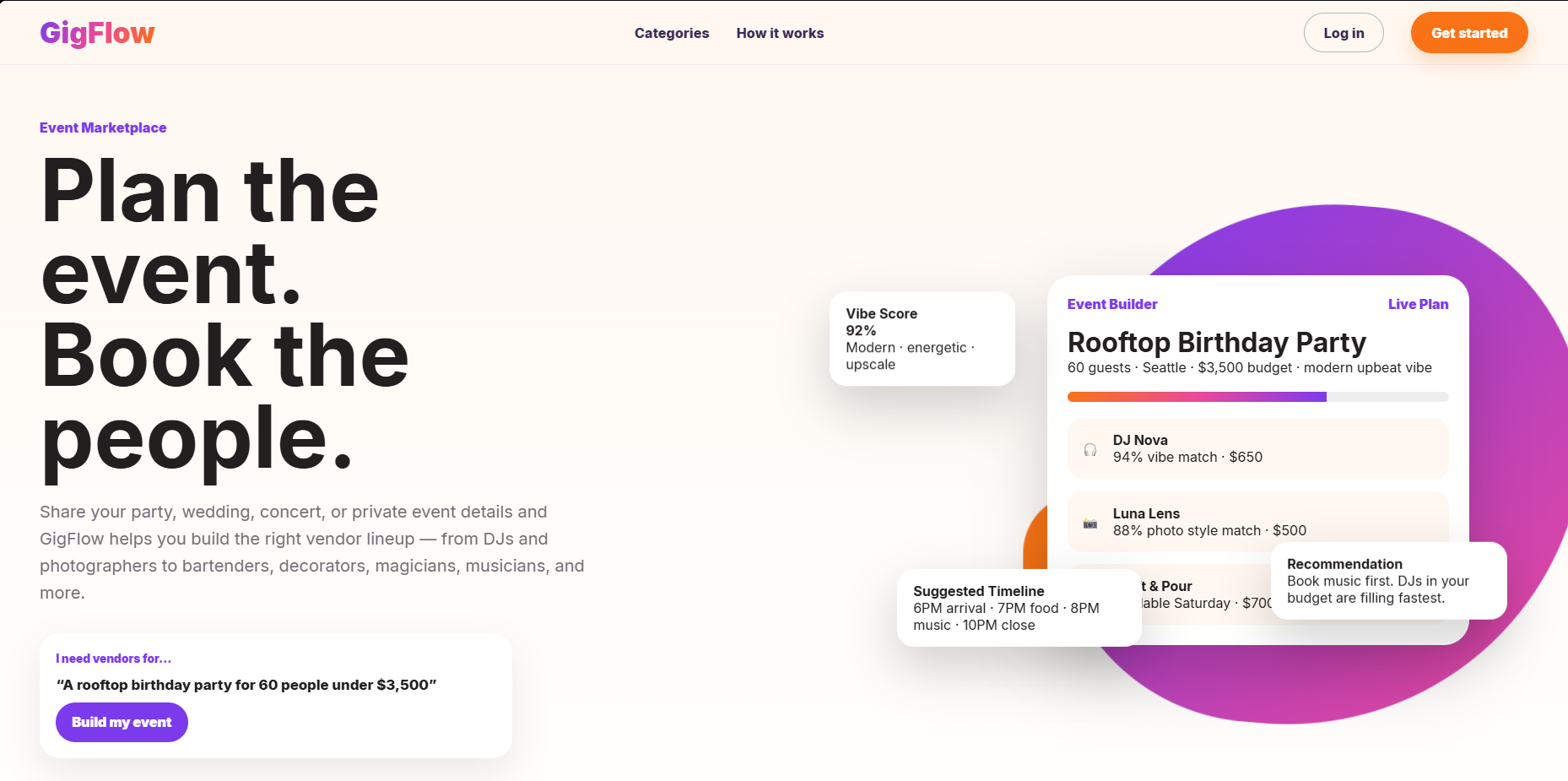
Inspiration
Today, event planners often rely on scattered social media posts, outdated marketplaces, group chats, or word-of-mouth recommendations to find DJs, photographers, decorators, bartenders, musicians, and other event professionals. This process is time-consuming, inconsistent, and lacks trust, transparency, and real-time communication.
What it does
GigFlow creates a centralized platform where event planners can post events, browse entertainers, review portfolios, compare pricing, and communicate directly with providers in real time. On the other side, entertainers and vendors gain a dedicated space to showcase their services, receive applications, build reviews, and grow their business through visibility and reputation.
How we built it
The project was built using a modern full-stack architecture with React on the frontend, Python/FastAPI on the backend, SQL-based data persistence, real-time WebSocket communication, and scalable API-driven design. We also focused on performance optimization, dashboard analytics, and responsive UI/UX to create a polished experience despite hackathon time constraints.
Challenges we ran into
One of the biggest challenges we faced was building a secure, reliable authentication system that worked smoothly across the entire platform. Getting sign‑up, login, and session handling to behave consistently took far more debugging than expected, especially when integrating it with our database models. Connecting the backend to the database was another major hurdle: we had to design clean schemas, handle relational data, and ensure that user profiles, event listings, and talent information all synced correctly without breaking the flow of the app.
Accomplishments that we're proud of
One of our biggest accomplishments was getting real‑time messaging fully working inside GigFlow. Building a smooth, responsive chat system pushed us to handle live data updates, user presence, and message synchronization across clients, all while keeping the experience fast and intuitive. Seeing two users communicate instantly through our platform felt like a breakthrough moment and made the project feel truly alive. We’re also proud that we were able to integrate this feature on top of our authentication and database layers, which were challenging on their own. Bringing all of these systems together into a single, functioning experience is something our whole team is proud of.
What we learned
Working on GigFlow taught us a lot about building real, production‑style systems. We learned how to implement secure authentication flows and handle all the edge cases that come with user accounts, sessions, and protected routes. We also gained hands‑on experience with Supabase, designing tables, managing relational data, and connecting our backend logic to a live database in a clean, scalable way. Finally, we learned how to use WebSockets to power real‑time messaging, which pushed us to think about live data synchronization, event handling, and building features that update instantly across clients. These were all new challenges for us, and solving them helped us grow as developers.
What's next for GigFlow
Our next steps include integrating AI to help users discover events and talent more intelligently, polishing our existing features to improve reliability and user experience, and deploying our database to a fully hosted production environment so the platform can scale. We also plan to build a dedicated mobile app to make GigFlow accessible anywhere, giving users a seamless way to browse, book, and communicate on the go. These upgrades will help transform GigFlow from a prototype into a fully featured marketplace.
Built With
- fastapi
- javascript
- postgresql
- python
- react
- supabase

Log in or sign up for Devpost to join the conversation.