-
-
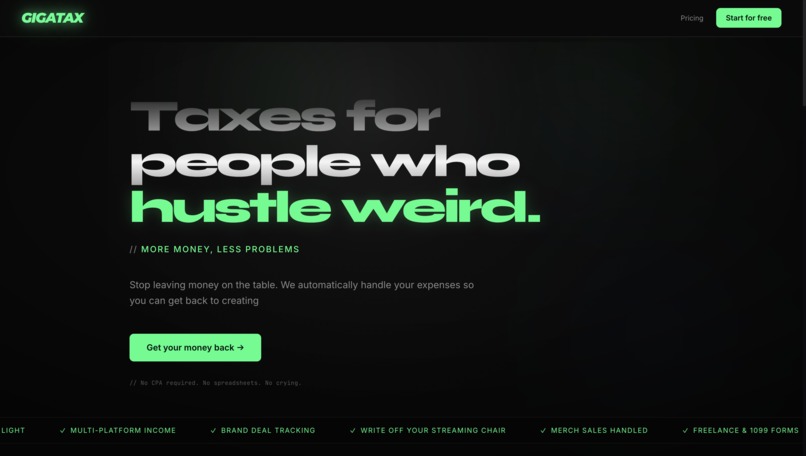
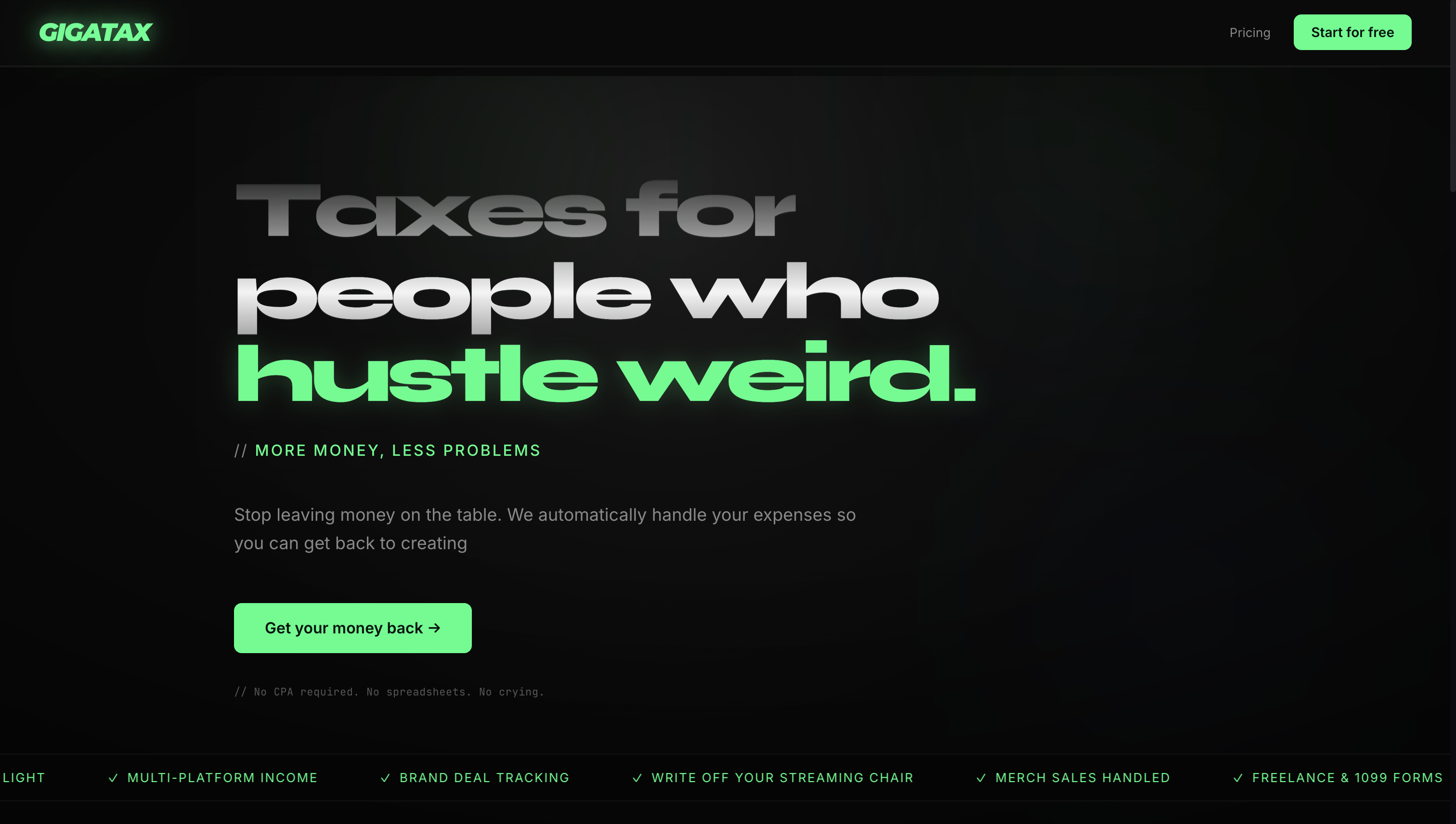
Landing page
-
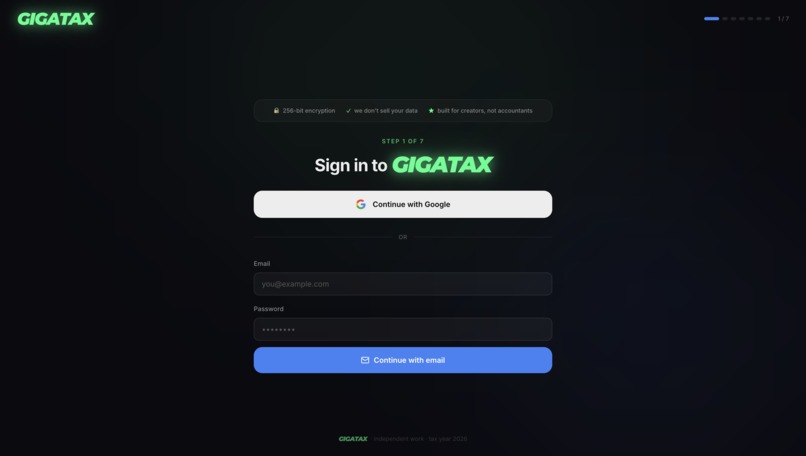
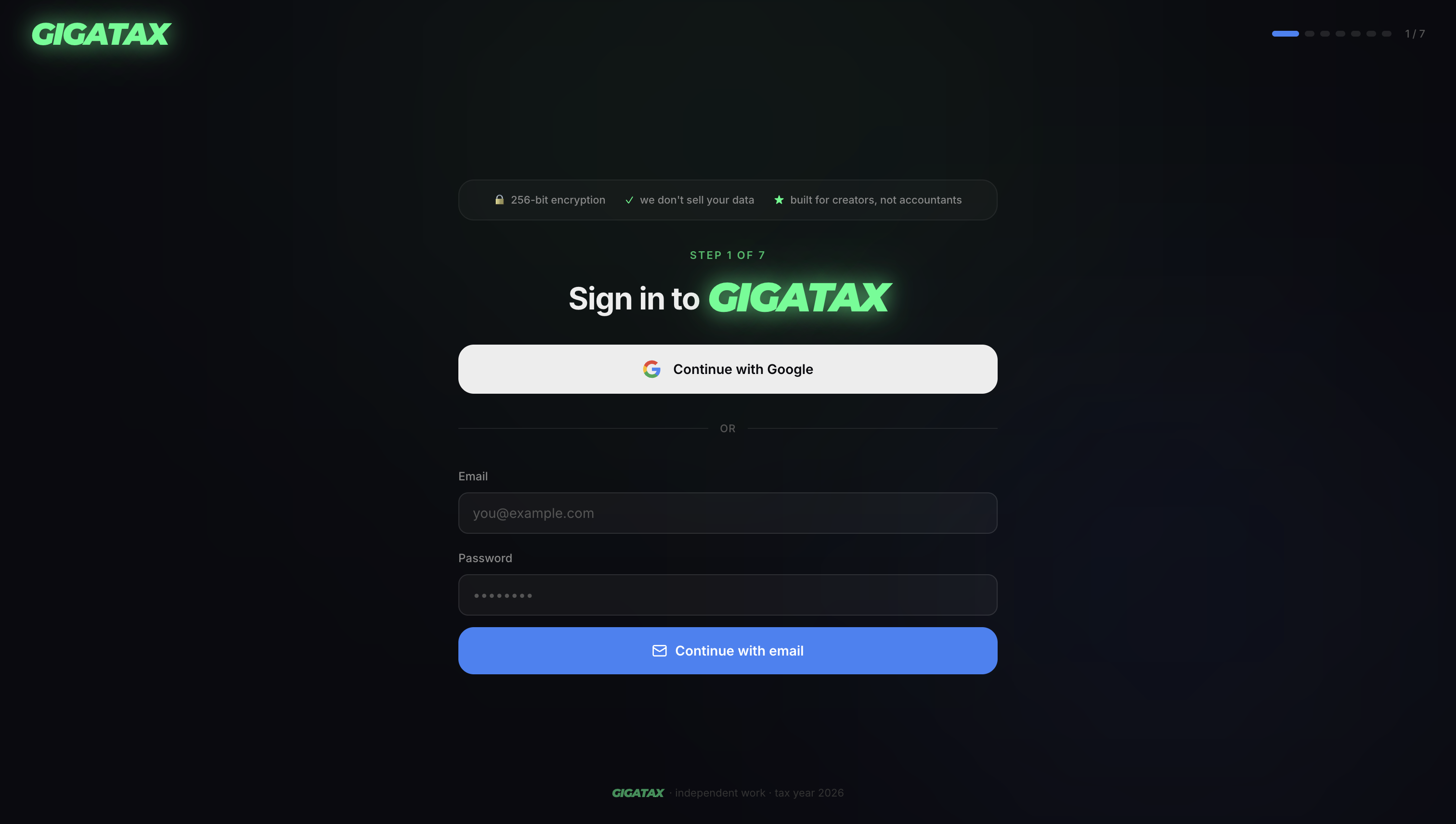
Authorization Page
-
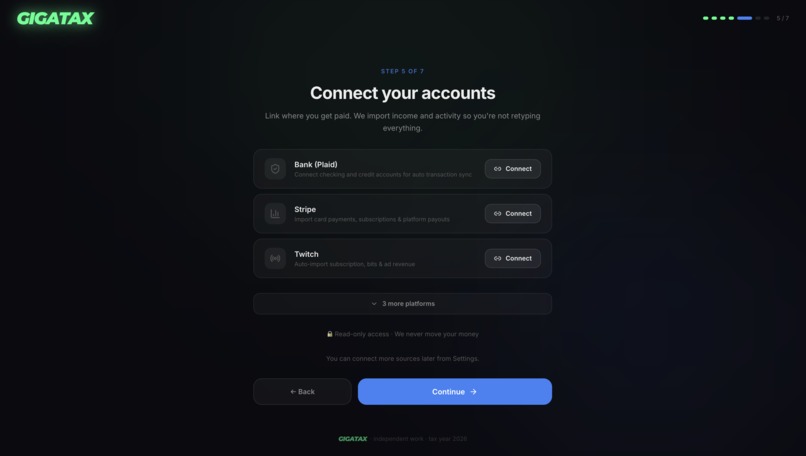
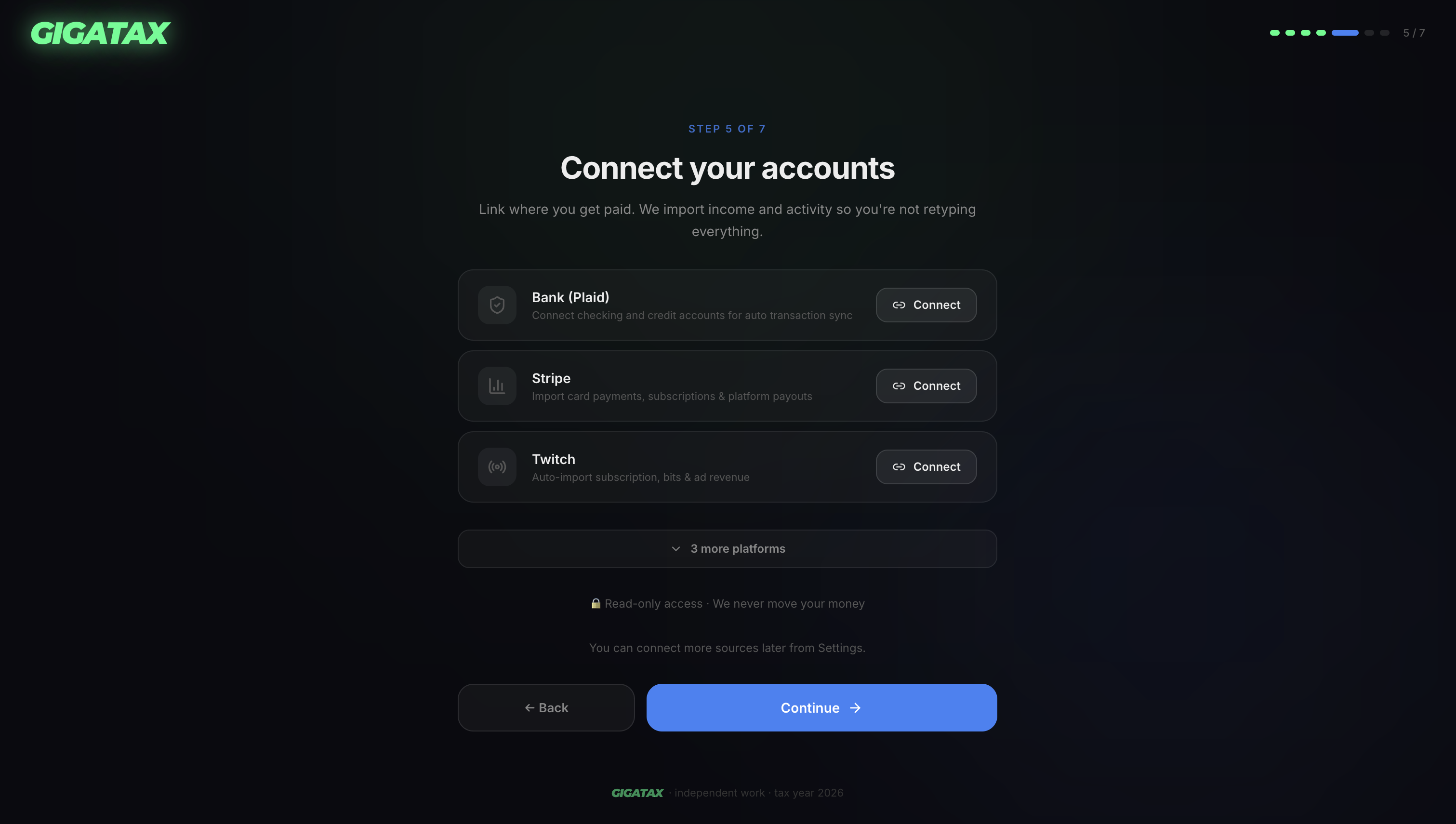
Connect your accounts
-
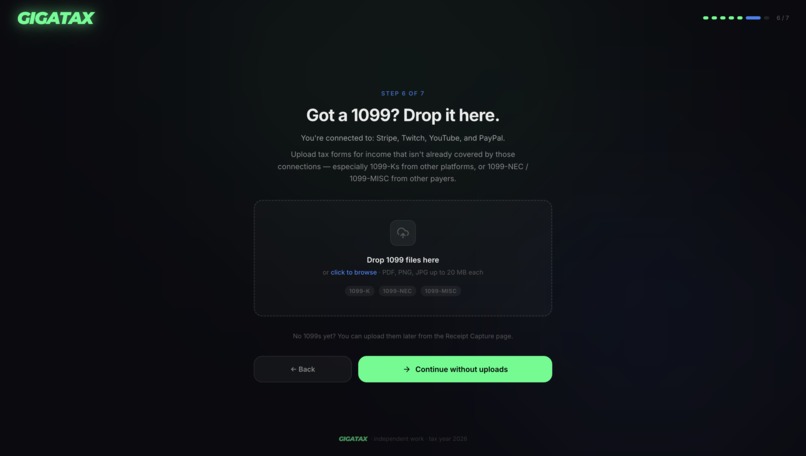
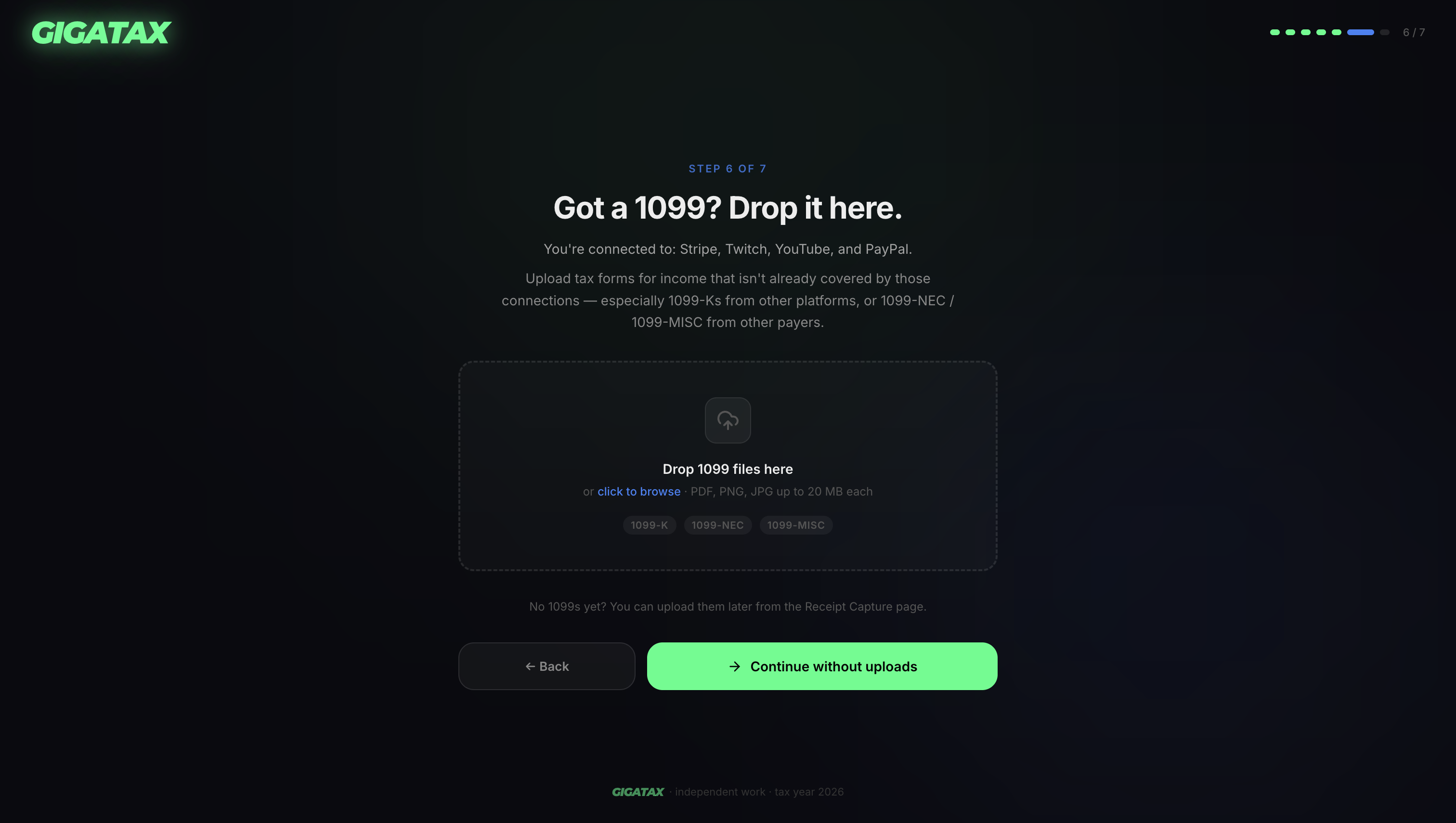
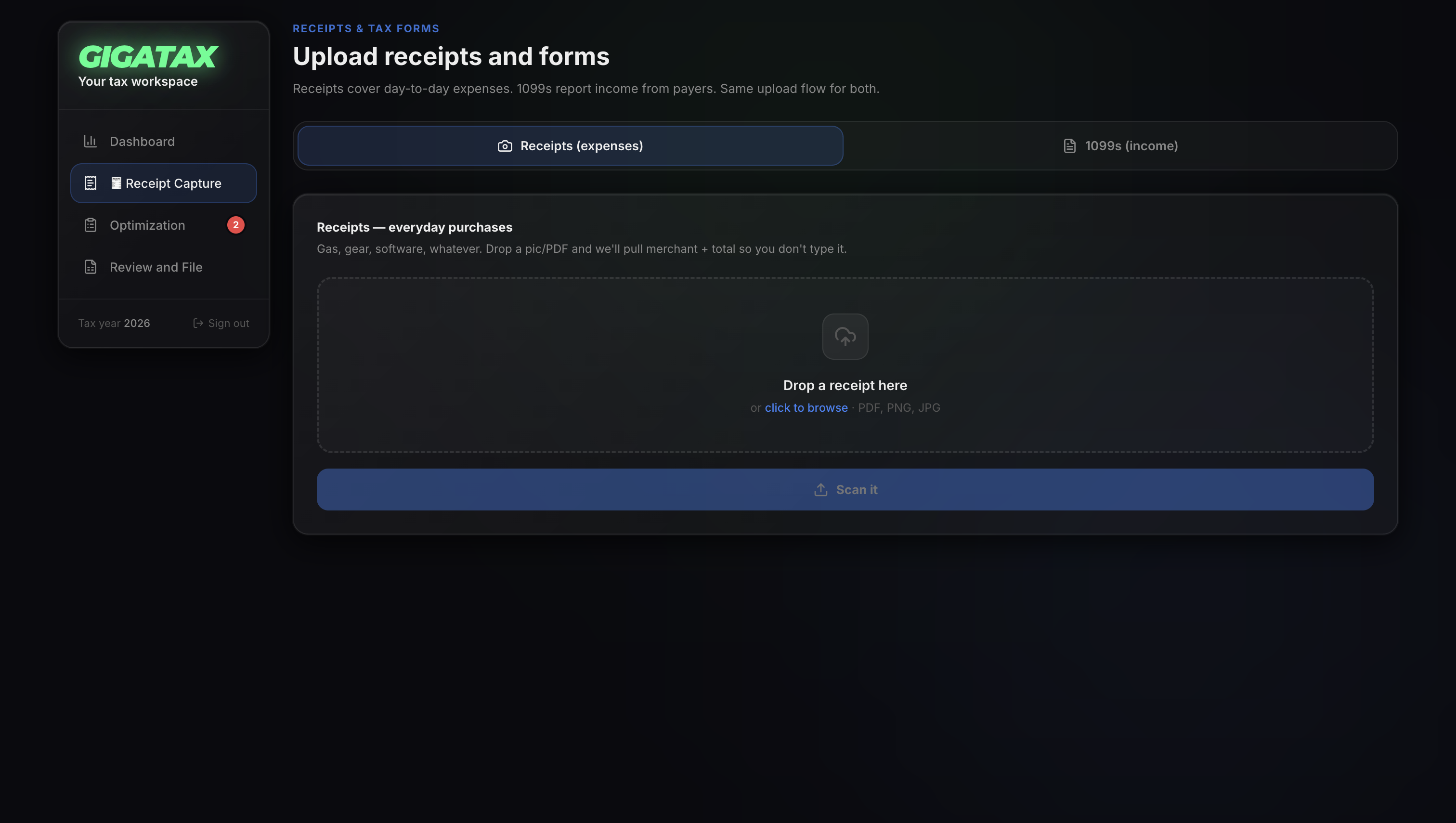
Add your 1099
-
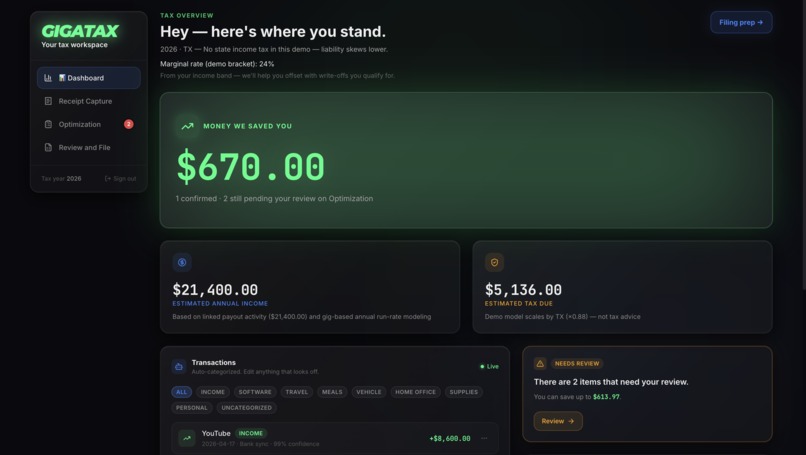
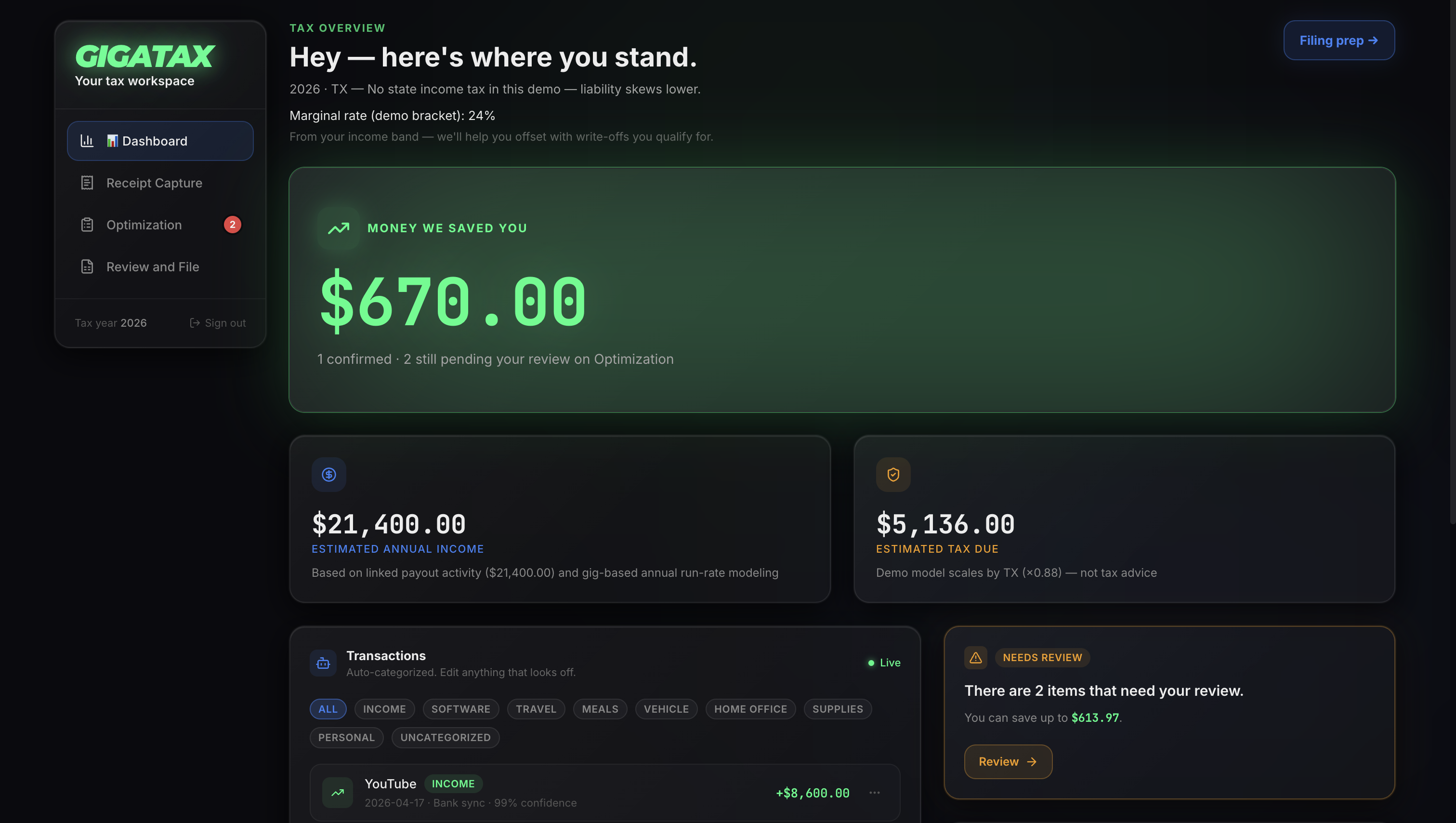
Main Dashboard View
-
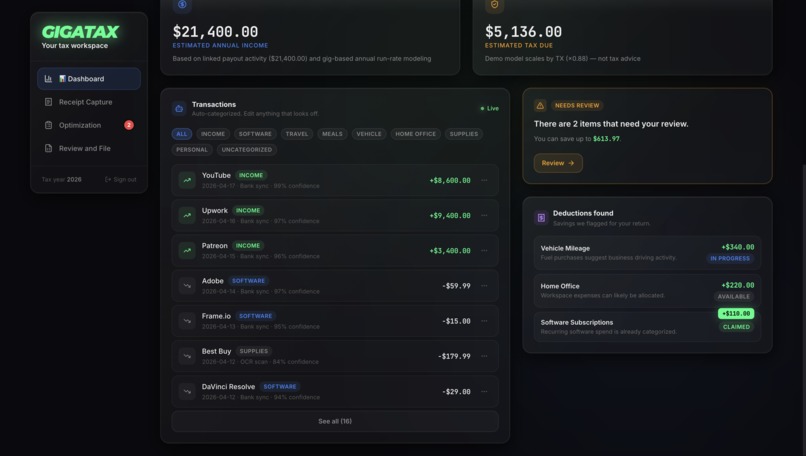
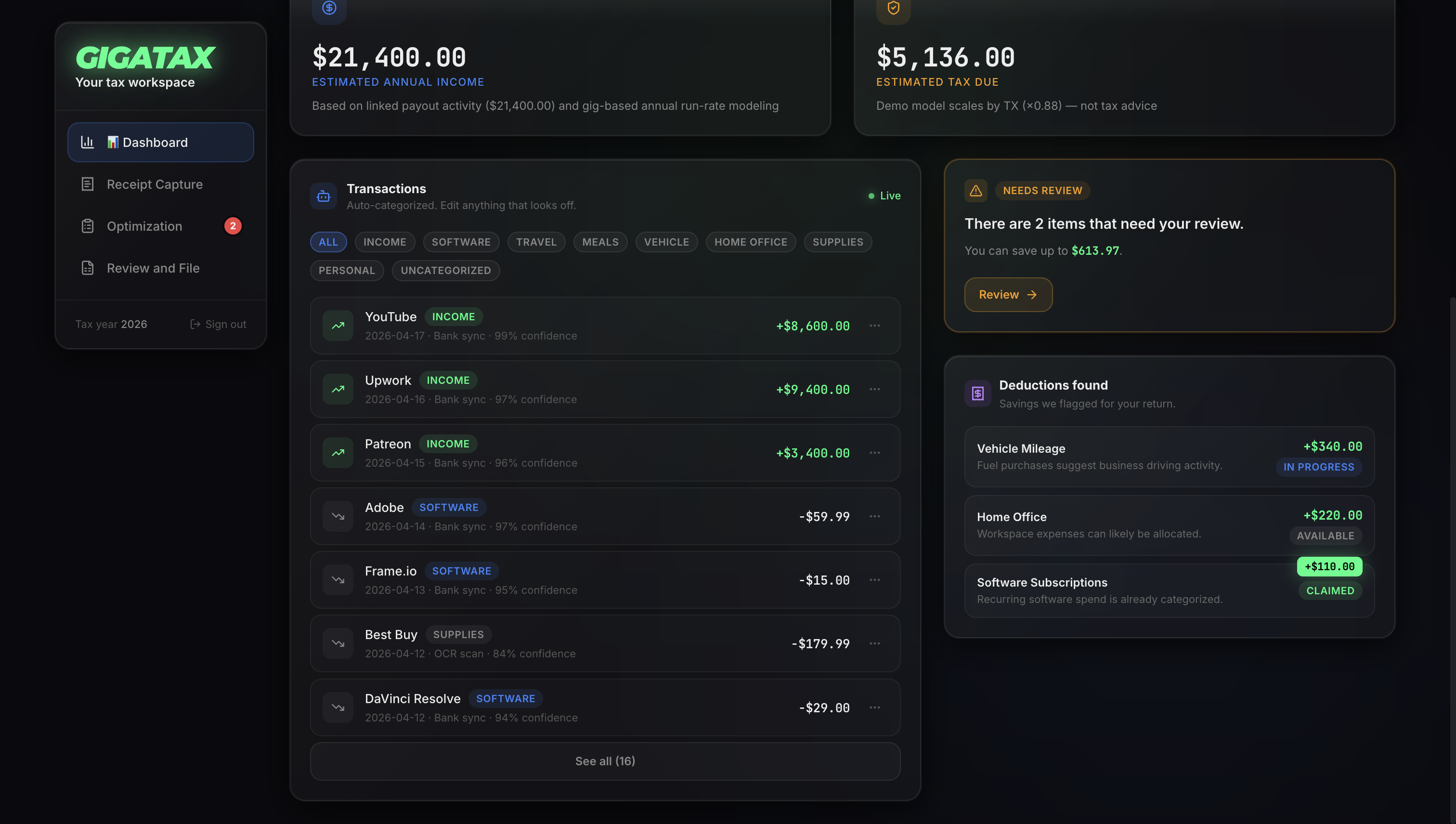
Categorized Transaction Page and Need Review
-
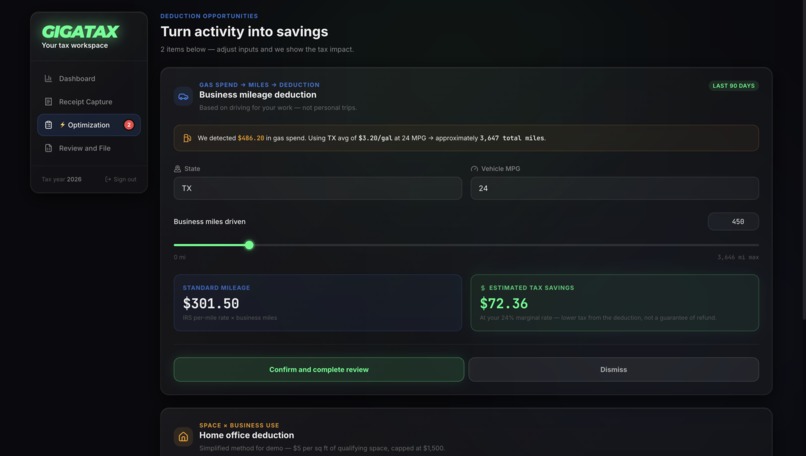
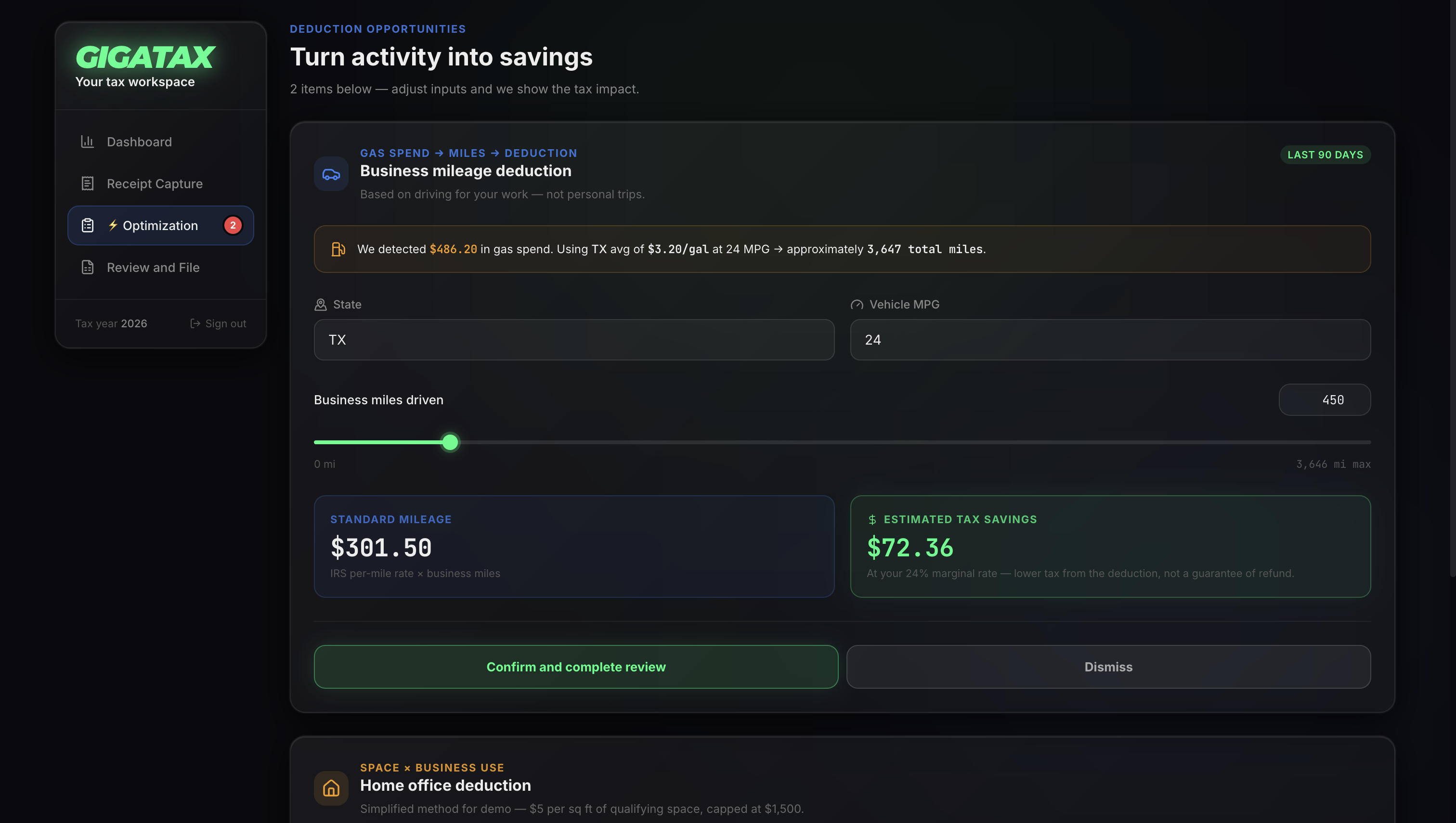
Need Review - Optimization Page
-
-
-
Inspiration
Every year, most people in America dread tax season. As students who also do part-time work on the side, we never know what we owe, money is left on the table every single year, and the one time we try to do it right, we hand a CPA hundreds of dollars just to avoid a penalty.
The painful truth is we are not alone. Millions of creators, creatives, and independent workers are navigating a tax system that was never built for them, using tools designed for a W2 world most of them have left behind. The gig economy has fundamentally changed how people earn a living.
What it does
We built a platform that understands how independent workers actually operate, connects directly to your income sources, categorizes your transactions as they happen, finds the deductions your profession actually qualifies for, and keeps you ahead of what you owe so April never catches you off guard again.
How we built it
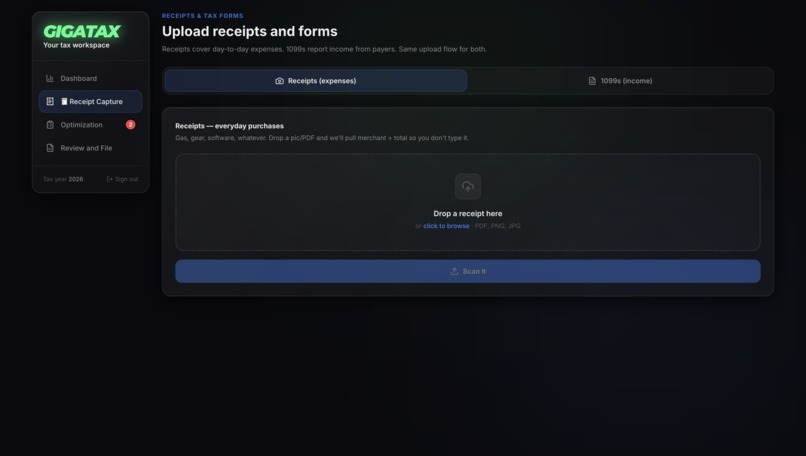
We used React on the frontend and Python with FastAPI on the backend, with Supabase handling our database, authentication, and file storage. The intelligence behind GigaTax runs on Claude Sonnet 4.6 via the Anthropic SDK. When a transaction comes in, Claude reads the merchant, amount, and the user's gig type together to categorize it, score its confidence, and determine deductibility in a single pass. The same model powers our receipt scanner, reading actual image and PDF files through Claude's vision API to extract the data automatically. We also built a deduction discovery layer that runs across a user's full transaction history and surfaces profession-specific write-offs they would have otherwise missed. Bank connections are handled through Plaid, and the entire experience is tied together with Google OAuth and real-time dashboard updates so users always see the live tax impact of every transaction.
Challenges we ran into
One of our biggest technical challenge was figuring out how to categorize transactions accurately without overcomplicating the architecture. We need something that understands context, not just merchant names, because the same purchase at Best Buy means something completely different depending on whether you are a streamer buying a capture card or a rideshare driver buying a phone mount. Our MVP solution is a system level prompt that analyzes each transaction as it comes in, taking the merchant, amount, and the user's gig type together to produce a category, confidence score, and deductibility determination in a single pass.The prompt does the heavy lifting and the rules engine handles the edge cases on top of it, serving as an MVP solution.
The other challenge is the product problem itself. Building a platform that actually fits how independent workers think and operate is a completely different problem. Gig workers do not have payroll, they do not have a single employer, and their expenses look nothing like a traditional employee's. Every design decision, from how we label transactions to how we frame deductions, has to account for someone who is running a business without necessarily thinking of themselves that way. Getting that framing right across every screen, every prompt, and every number in the product is something we are still refining.
Accomplishments that we're proud of
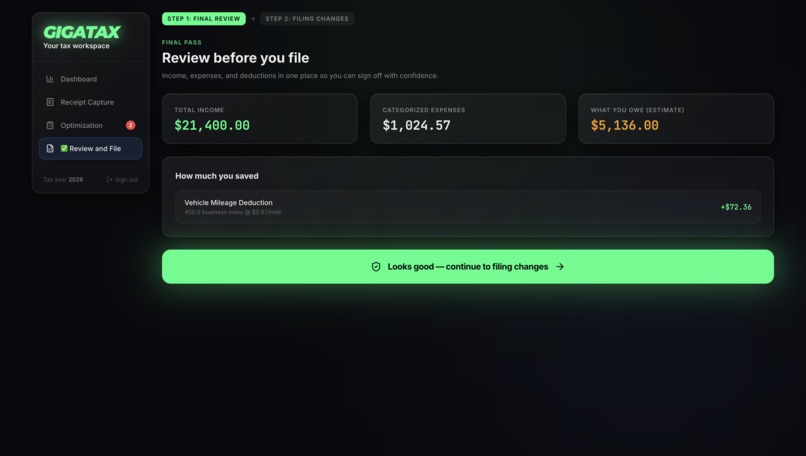
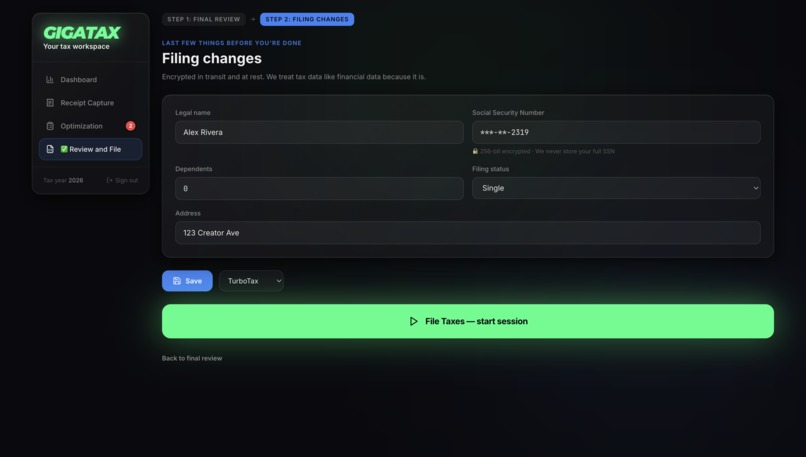
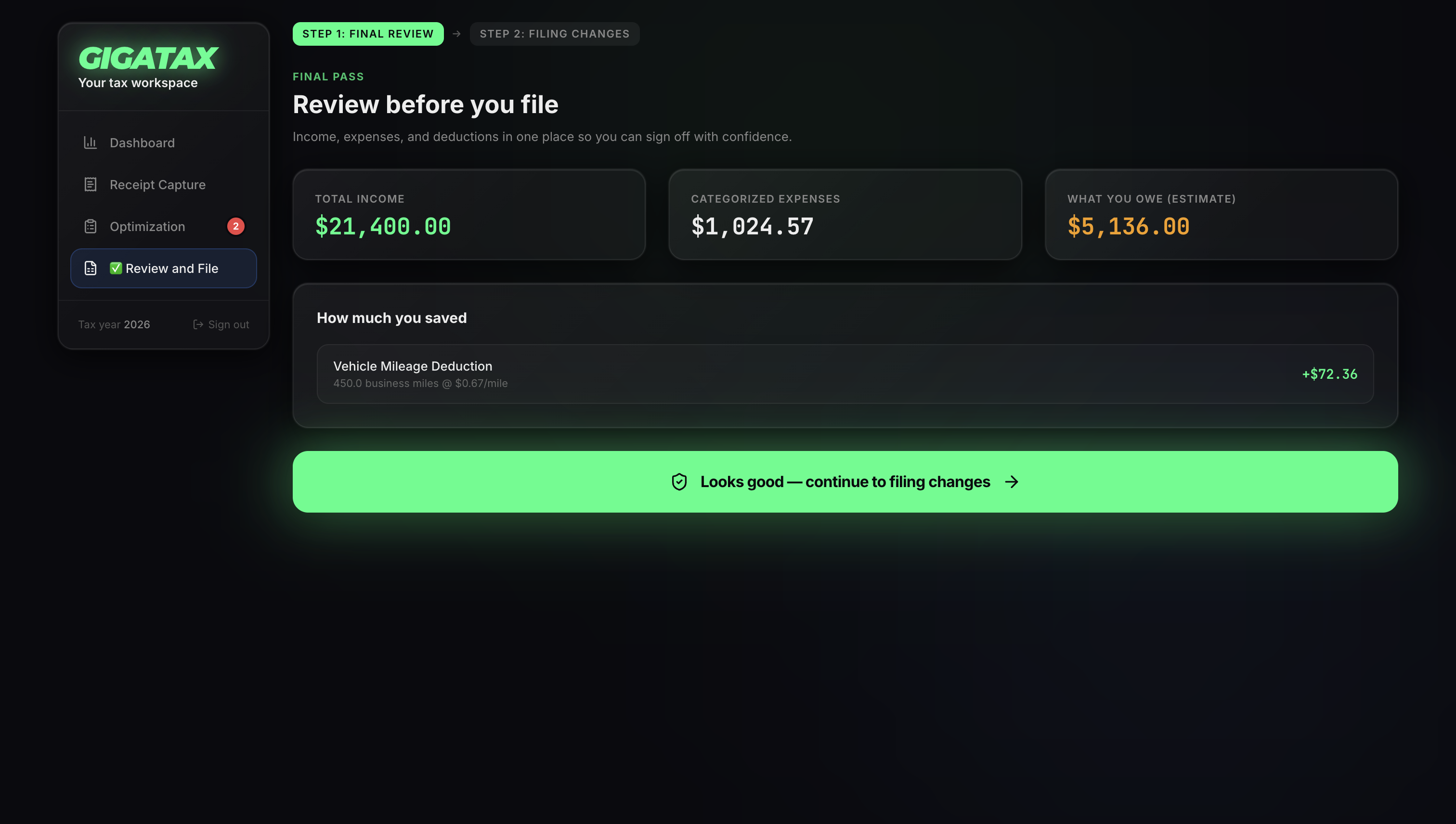
Seeing the real time tax impact update on every single transaction is something the whole team is proud of. When a YouTube payout hits and the user can immediately see how much that deposit increases their estimated tax due, the abstract becomes concrete in a way that most tax tools never achieve. We are also proud of how the Needs Review queue works as a complete product loop. A transaction gets flagged in the feed, it surfaces on the dashboard with a potential savings figure attached, the user resolves it in Optimization using sliders and toggles, and the dashboard updates live the moment they confirm. Getting that entire flow to feel seamless within a hackathon timeframe is something we do not take for granted.
What we learned
Building GigATax taught us that the gap in the market is much bigger than we initially realized. We came in thinking this was a tax problem. It is actually an infrastructure problem. Independent workers have been duct taping together spreadsheets, generic tax software, and expensive accountants for years because nothing was ever purpose built for them. The demand is there. The demographic is growing faster than any other segment of the workforce. And the space is wide open for a product that actually speaks their language.
We also learned that the technical challenge is not the tax math. The tax math is solved. The real challenge is context. Knowing that a Shell transaction means something completely different for a rideshare driver than it does for a photographer, and building a system that reflects that automatically, is where the actual product value lives. That insight shapes everything we build going forward.
What's next for GigATax
The immediate focus is scale. The prompt based categorization engine that powers our MVP works, but we want to move toward a purpose built model trained specifically on gig worker transaction data so that categorization gets smarter with every user on the platform. The more people use GigATax the better the system becomes at understanding how independent workers actually spend money.
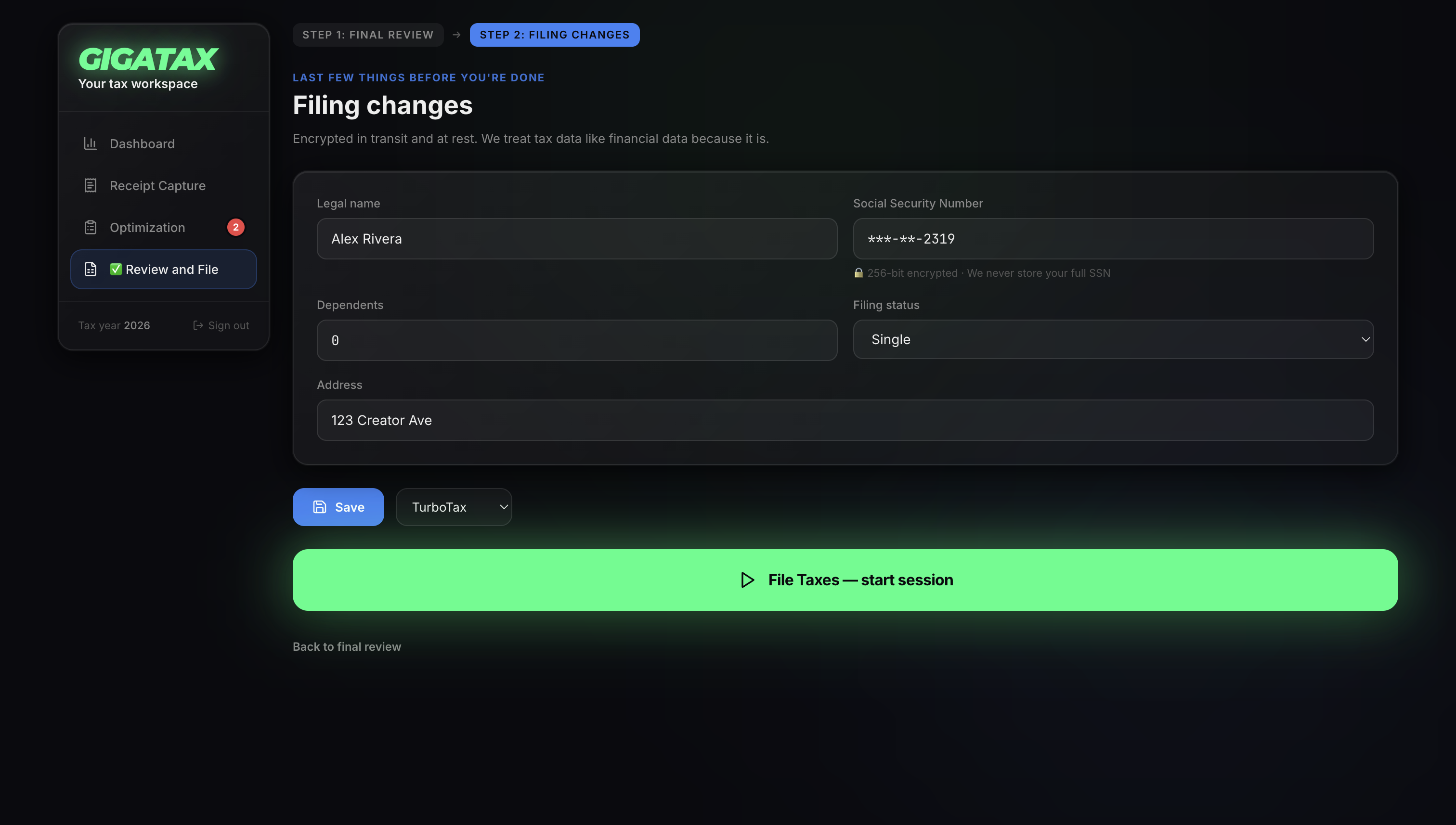
Beyond the model we are building out the full infrastructure layer. Quarterly estimated tax payments with automatic reminders and direct IRS payment integration. Full e-file support without any third party handoff. Expansion beyond Texas as we add state tax support market by market. And longer term, an audit protection layer that reviews every return before it transmits and flags anything that looks statistically unusual before it ever reaches the IRS.
The vision is straightforward. Every independent worker in the country deserves a tax platform built around how they actually work. We are building it.
Built With
- anthropic
- api
- claude
- fastapi
- google-oauth
- googleauth
- machine-learning
- plaid
- python
- react
- sonnet
- supabase
- tailwind
- vite

Log in or sign up for Devpost to join the conversation.