-
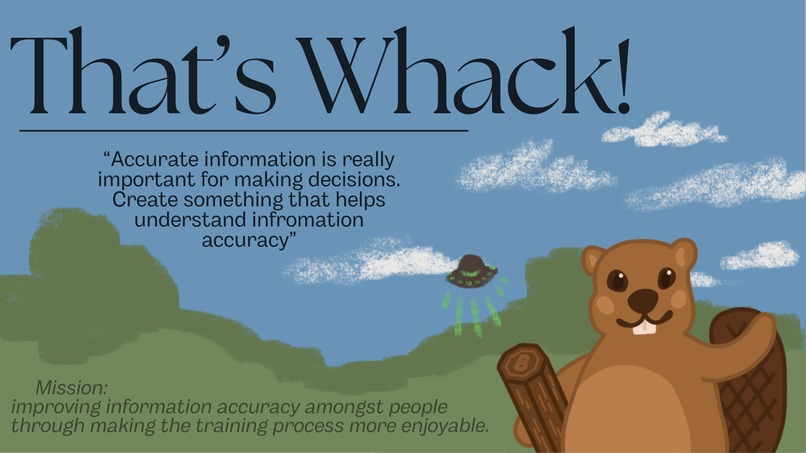
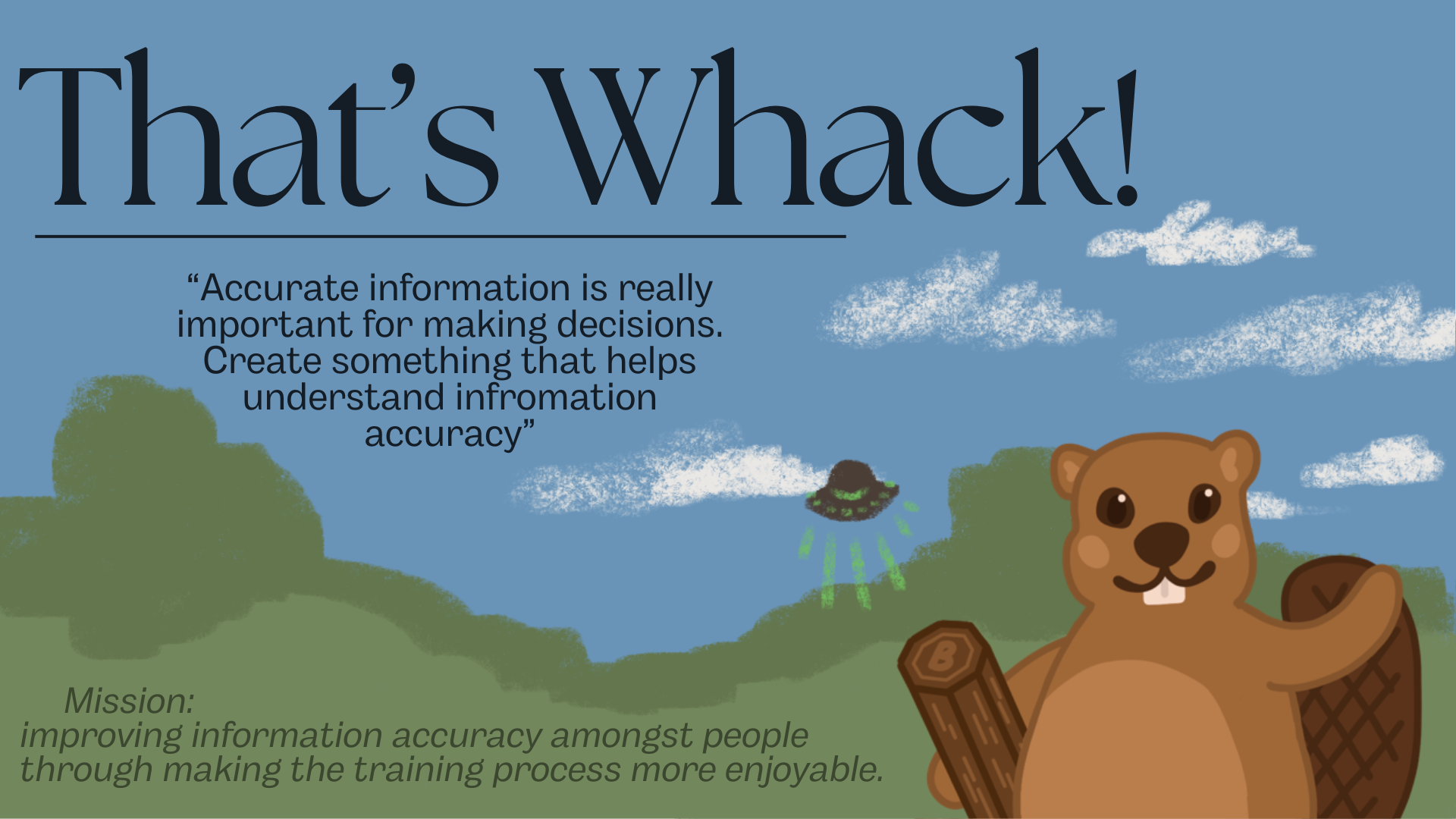
Our game is called That's Whack!
-
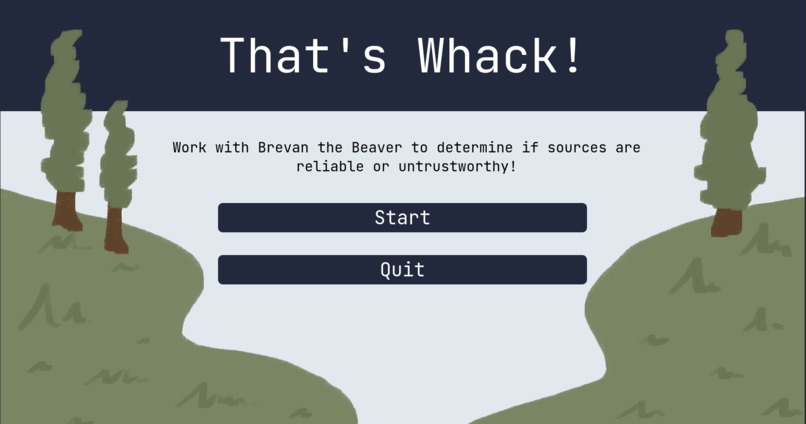
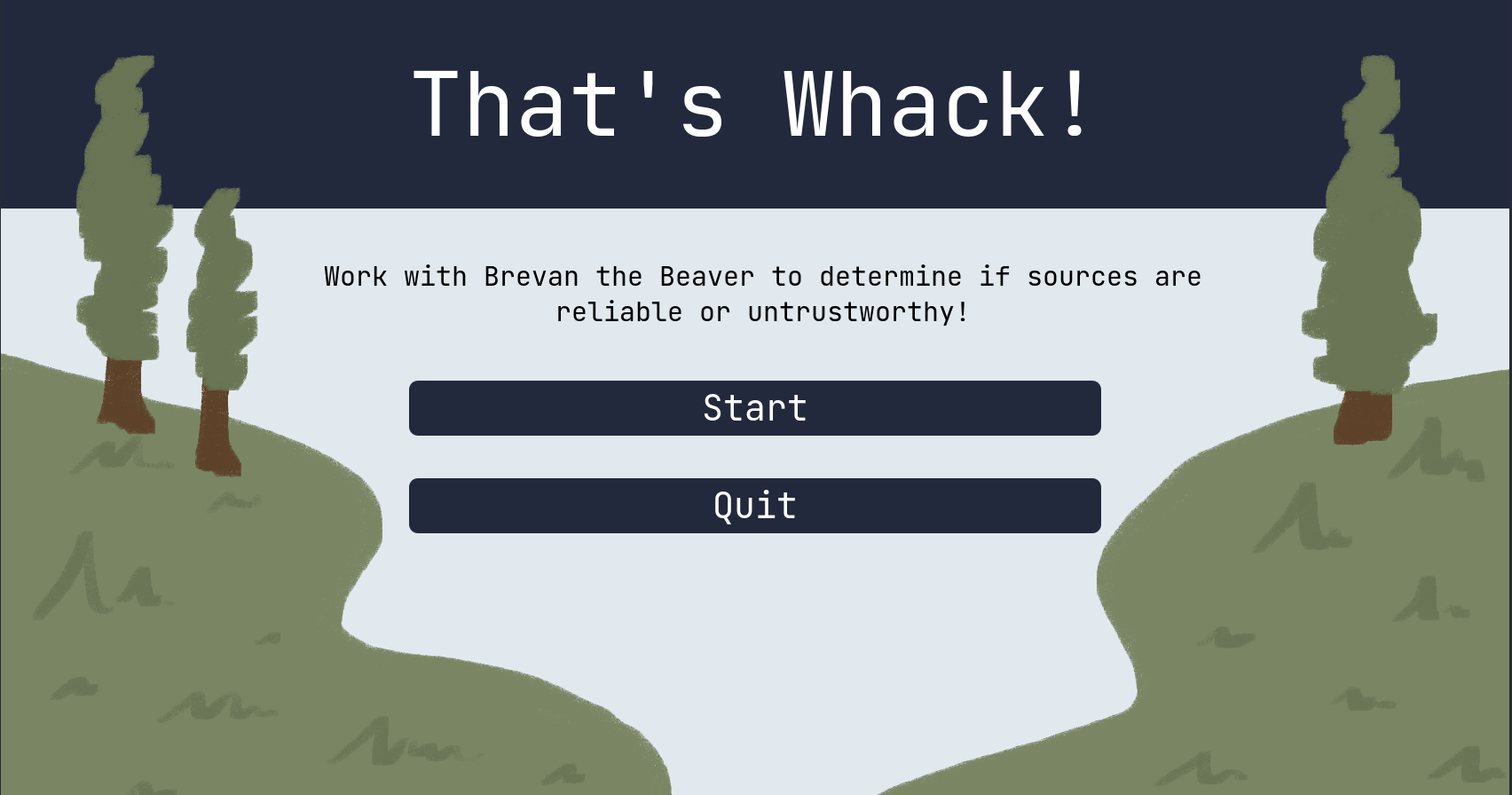
This is the main menu to our simulator. You are able to start or quit the simulator from here.
-
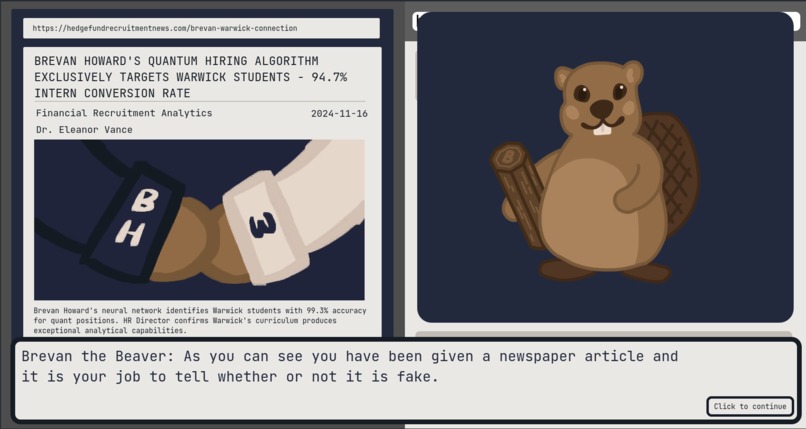
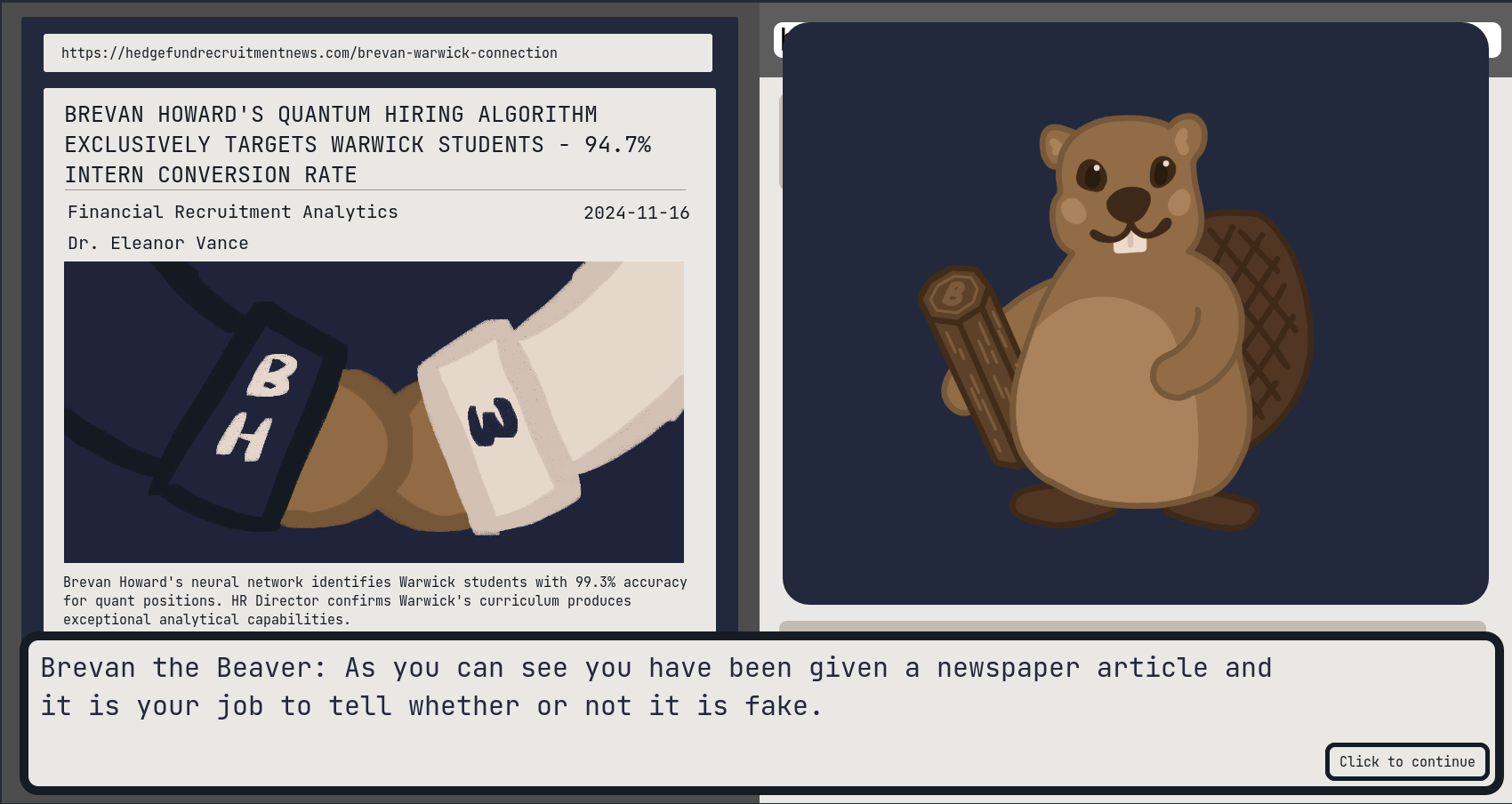
A snippet of our hand-holding tutorial where our mascot, Brevan the Beaver, guides you through how to use the simulator.
-
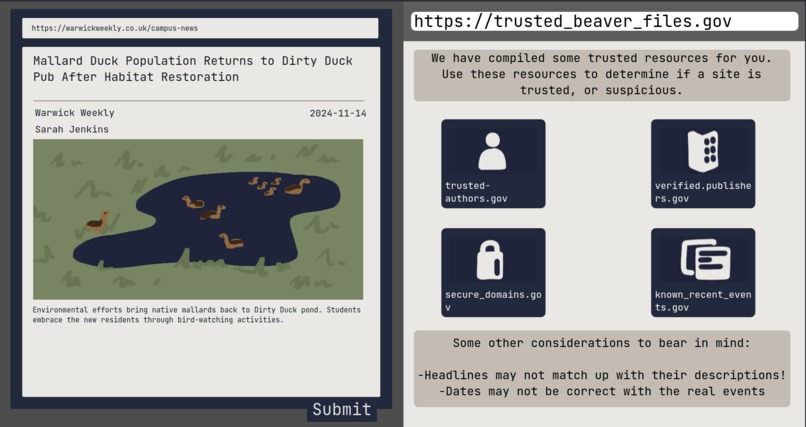
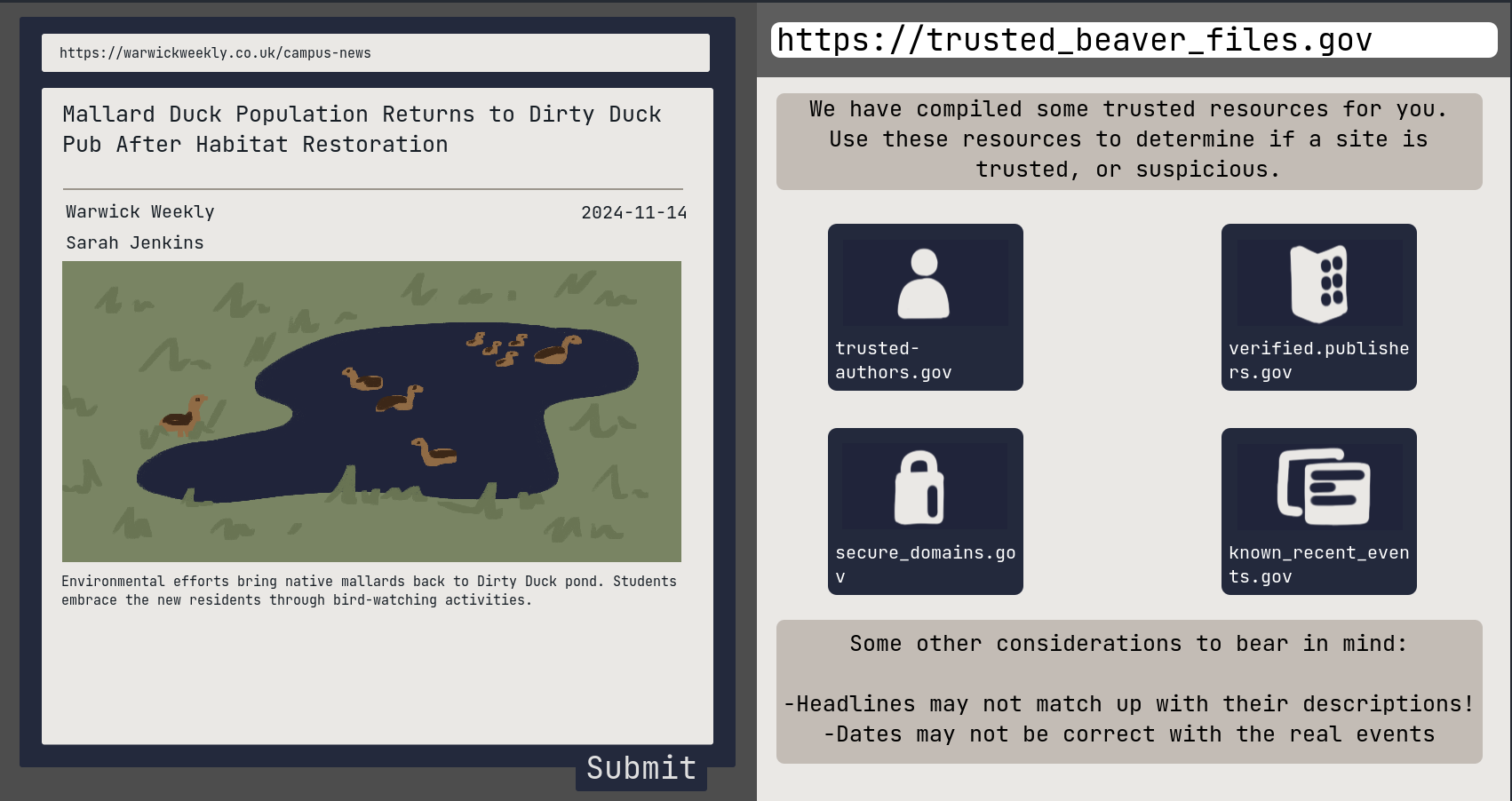
The user interface of the newspaper article version of the simulator. User must select suspicious components on the LHS, based on RHS info.
-
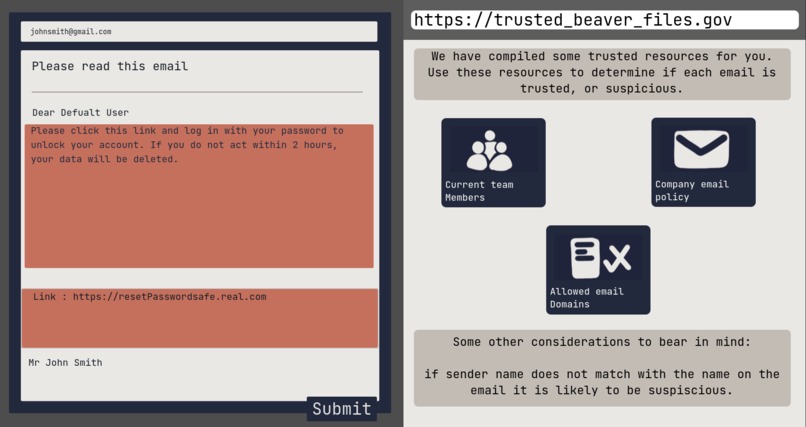
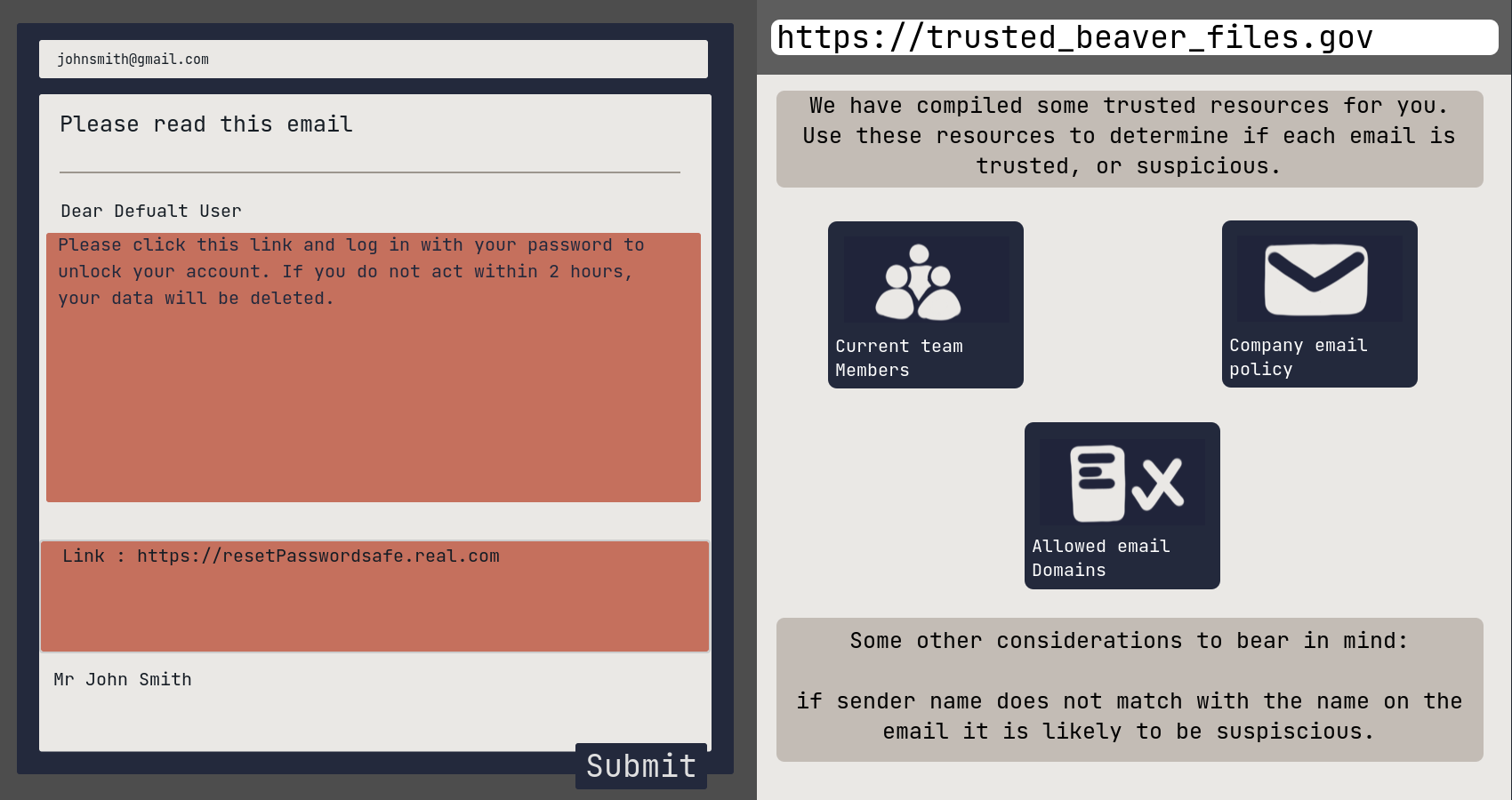
In the email simulator, it is the same concept as the news article simulator. Use the LHS to identification and RHS for fact-check research.
-
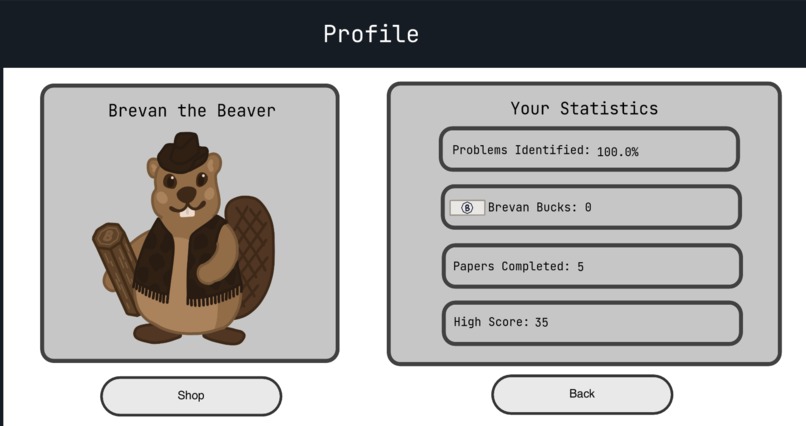
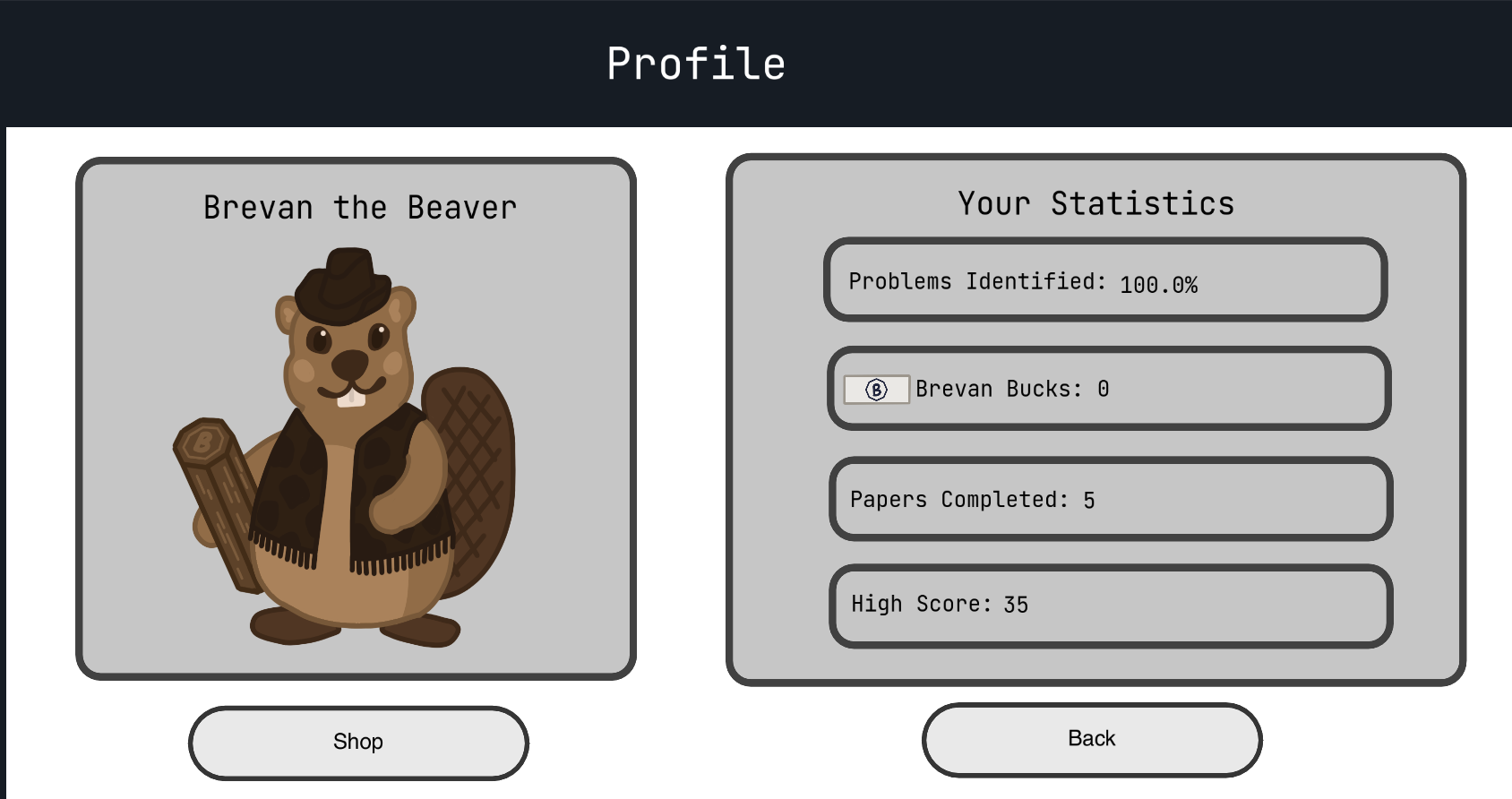
Profile section displaying the statistics of all your attempts in the simulators. From here, you are able to access the shop.
-
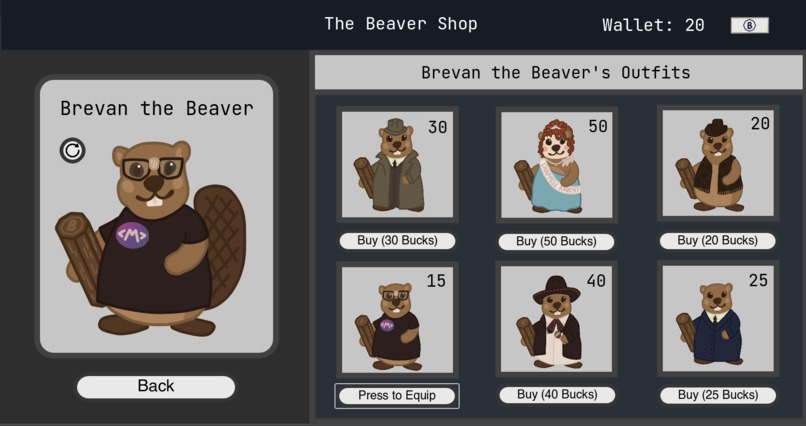
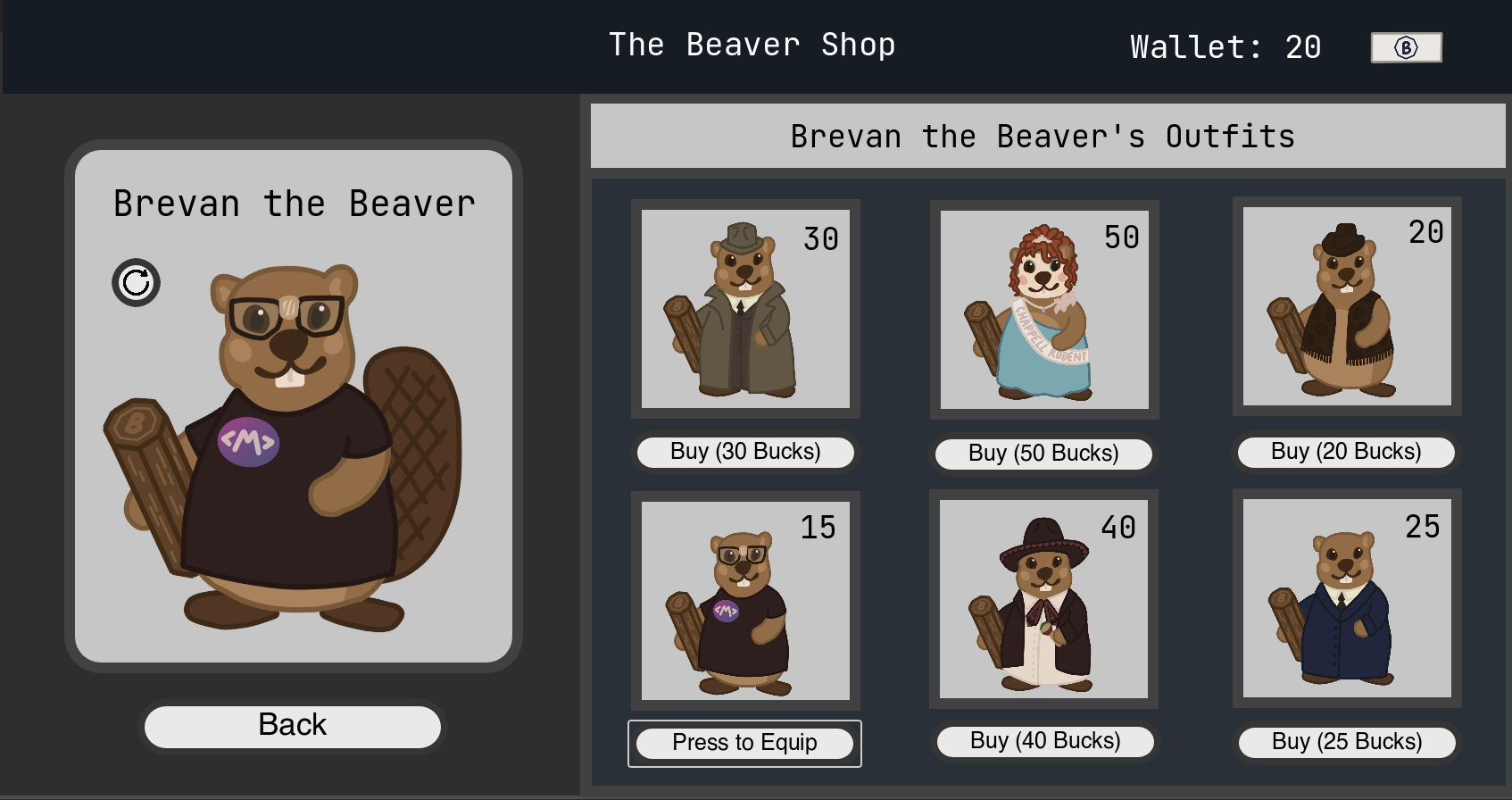
In the shop, you are able to buy from a selection of outfits. You can equip the outfits for Brevan to wear throughout the simulation.
-
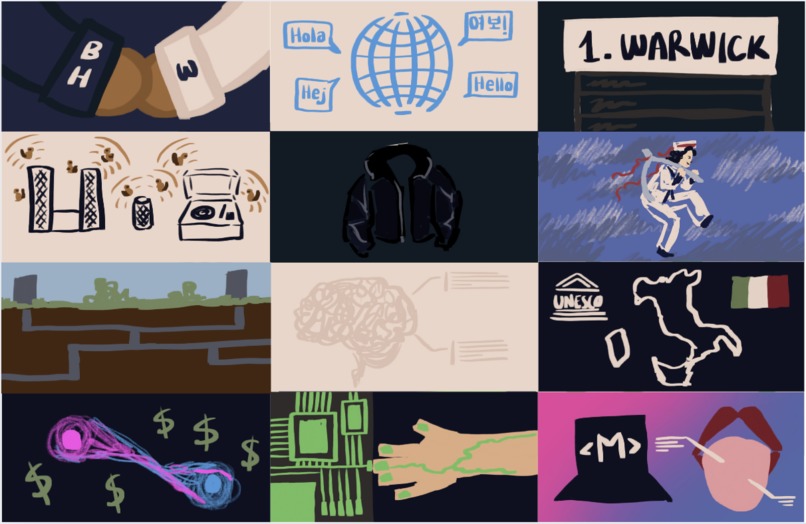
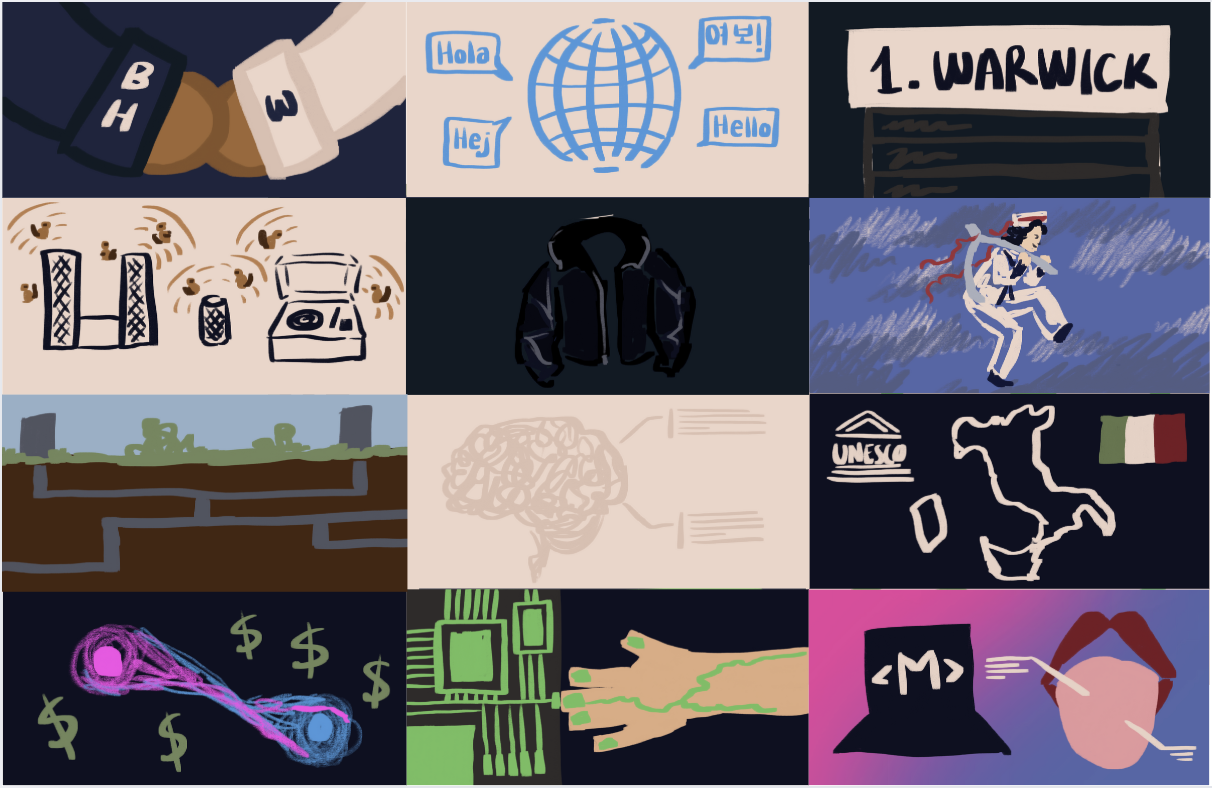
These are all the assets made for the game (part 1), showing the first part of all of the article images.
-
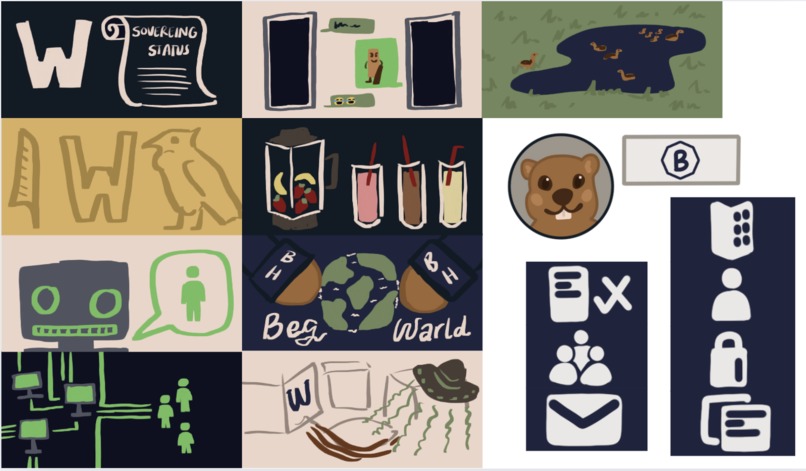
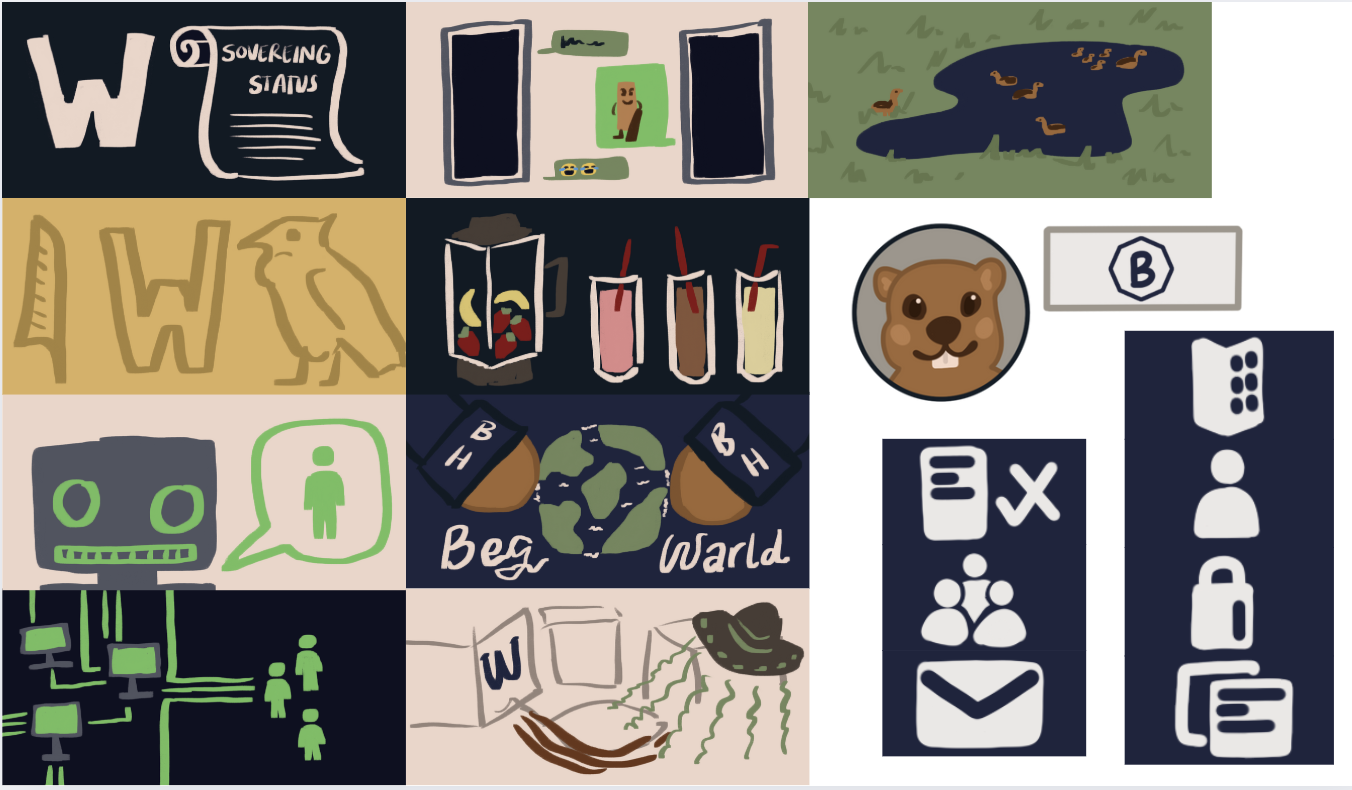
These are all the assets made for the game (part 2), showing the rest of the article images and all the icons.
Inspiration
Having experienced hours' worth of cybersecurity training, all of us felt it was tedious, and the lessons didn't stick. We wanted to take this opportunity to reshape the way we learn how to assess information accuracy online by improving the training process through gamification.
What it does
- Provides an interface where the objective is to identify as many false aspects of a fixed amount of given news articles.
- Upon starting the game, you are brought to the simulator. On the LHS, you have a news article. On the RHS, you have files (trusted authors, trusted publishers, trusted domains, and recent events) to navigate through. Using the available information on the RHS, you must select the aspects (link, headline, author, publisher, date, image, and text) of the article on the LHS that appear to be inaccurate information based on the resources on the RHS. This is repeated a few times before you reach the end.
- At the end screen, your score and Brevan Bucks earned are calculated depending on your success rate.
- Spend your Brevan Bucks on cosmetic outfits for the in-game Beaver mascot, "Brevan the Beaver!" within the shop and customisation section.
Additional note: Our simulator comes with a built-in (hand-holding) tutorial in the beginning to teach you how to operate it.
How we built it
We used Godot to build, GitHub for version control, and Procreate to independently develop all the assets. Godot is chosen because it's a flexible and powerful game engine, especially for 2D.
Challenges we ran into
Half of us had minimal experience in Godot, and it was our first time building a product in Godot. Moreover, it was our first time using proper Git branching, pulling, and pushing practices. This meant we occasionally came into conflicts in branches due to missteps.
Accomplishments that we're proud of
We're incredibly proud of our idea because we like how creative it is, our UI because of how clean and user-friendly it is, and our game logic in Godot because we managed to make something as complicated as an information accuracy simulator into something easily usable and enjoyable!
What we learned
We learned how to properly use Git, how to build in Godot properly, and how to make user-friendly UI. Moreover, it was a good exercise in learning how to turn difficult problems into solutions through gamification, which is what we believe makes our solution effective. In fact, it is proven that gamification improves engagement by 48%!
What's next for Giddy Up, Glitch
As 2nd-year students, we'd love to participate in more hackathons together in the future. We generally find these opportunities a great way to develop our hard and soft skills while spending quality time with each other.


Log in or sign up for Devpost to join the conversation.