-
-
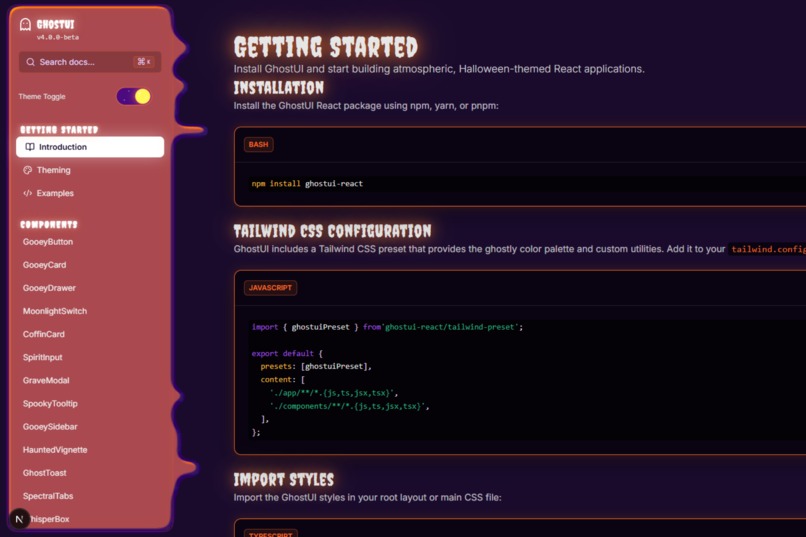
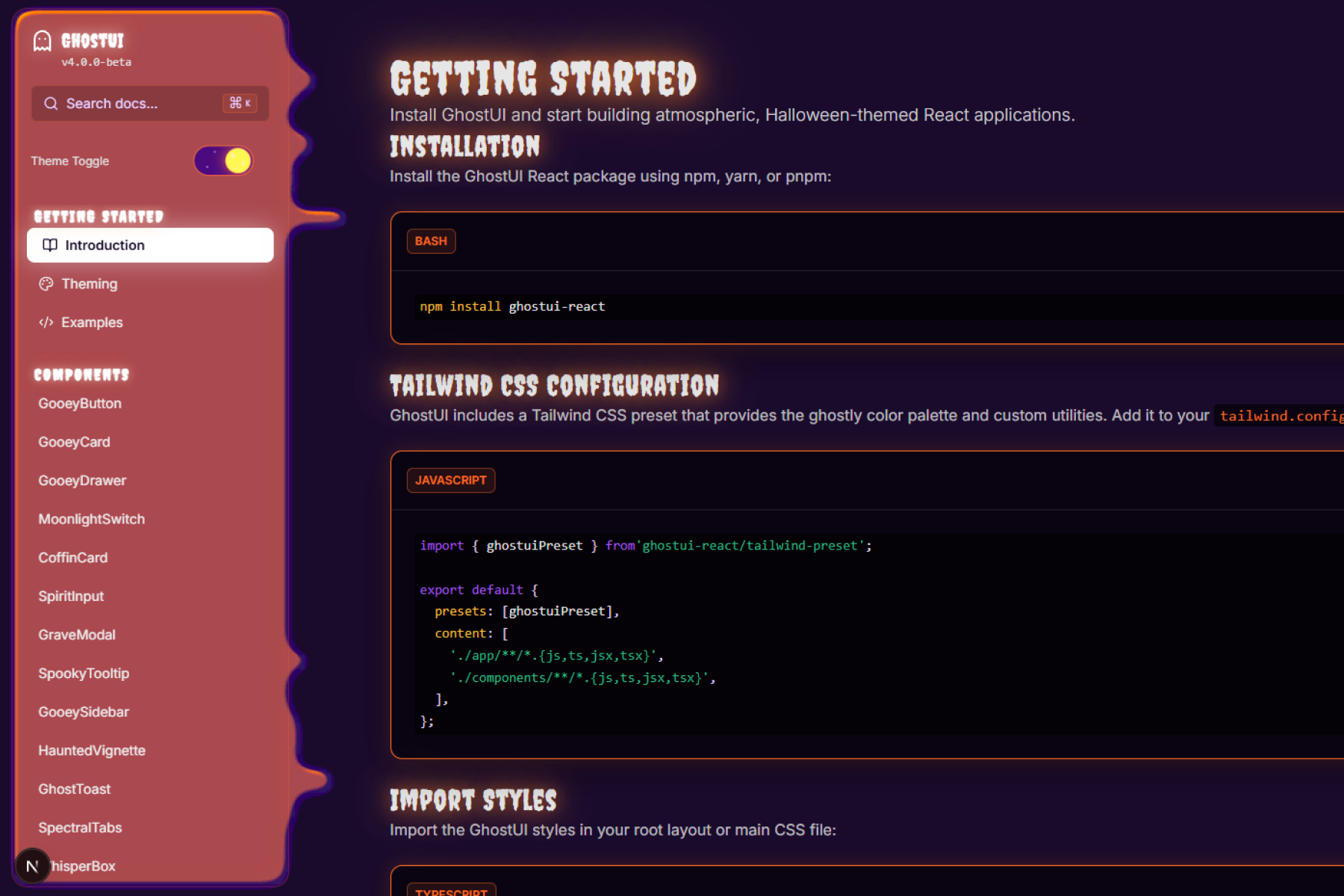
npm commands that automatically updates your Tailwind config and sets your project up for GhostUI components to be implemented.
-
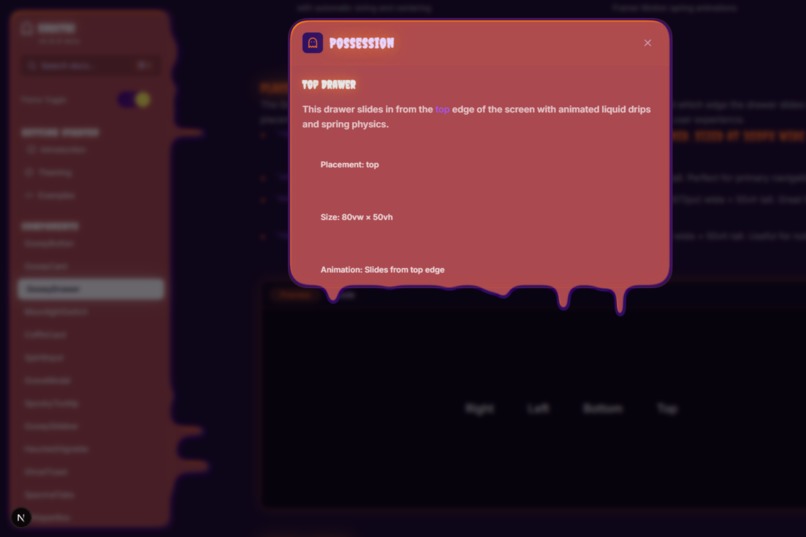
An animated Gooey drawer example.
-
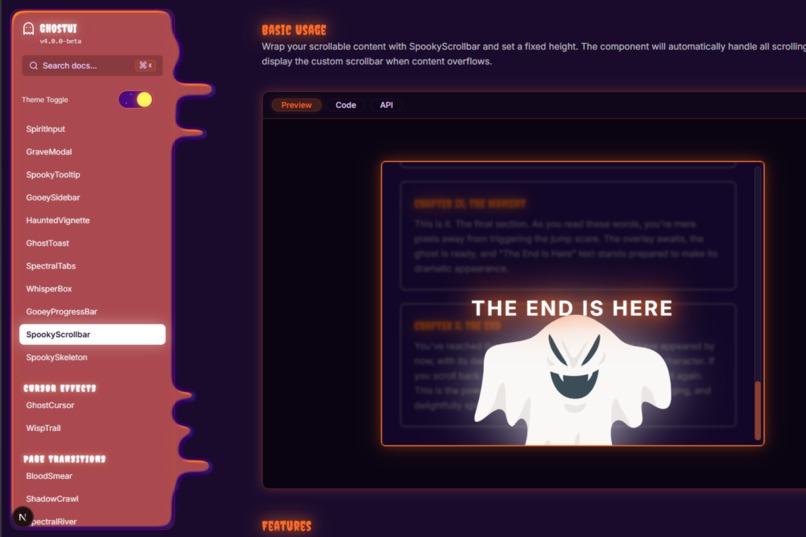
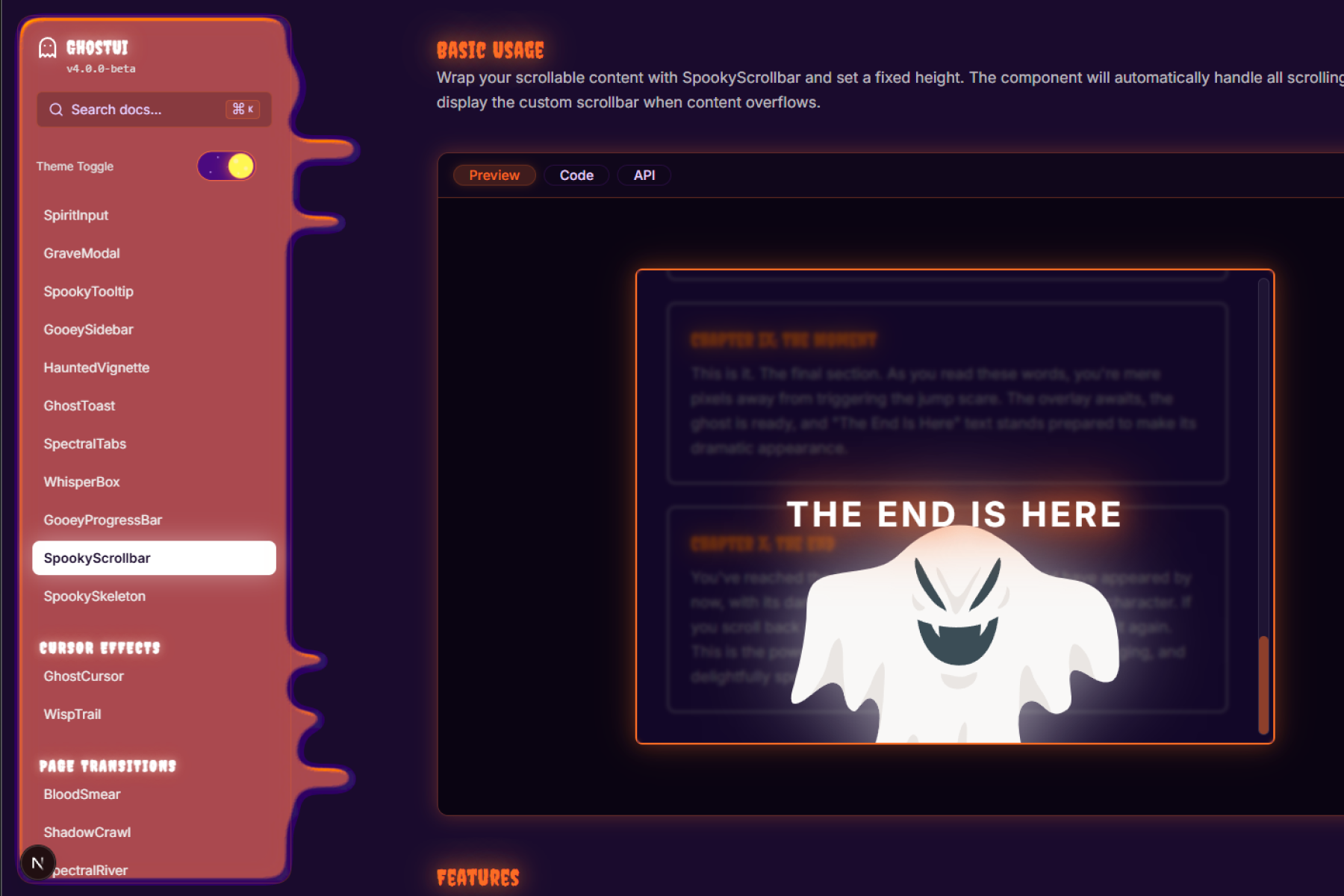
Spooky ghost jump scares.
-
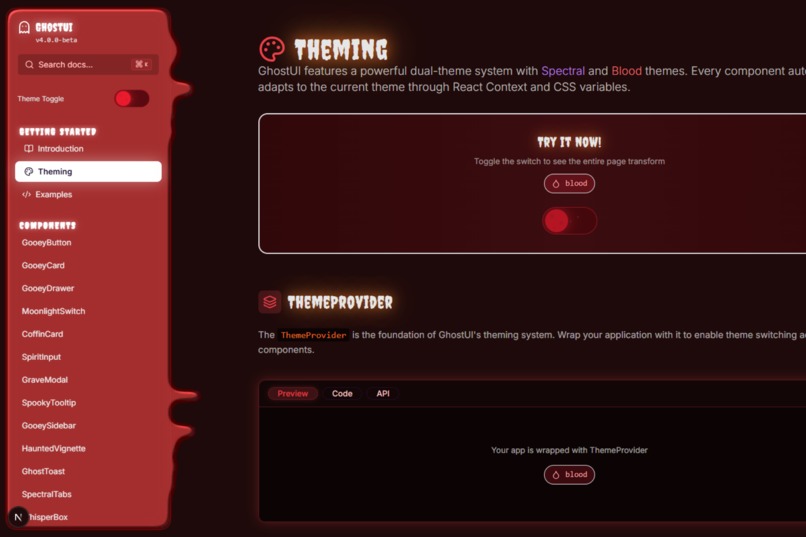
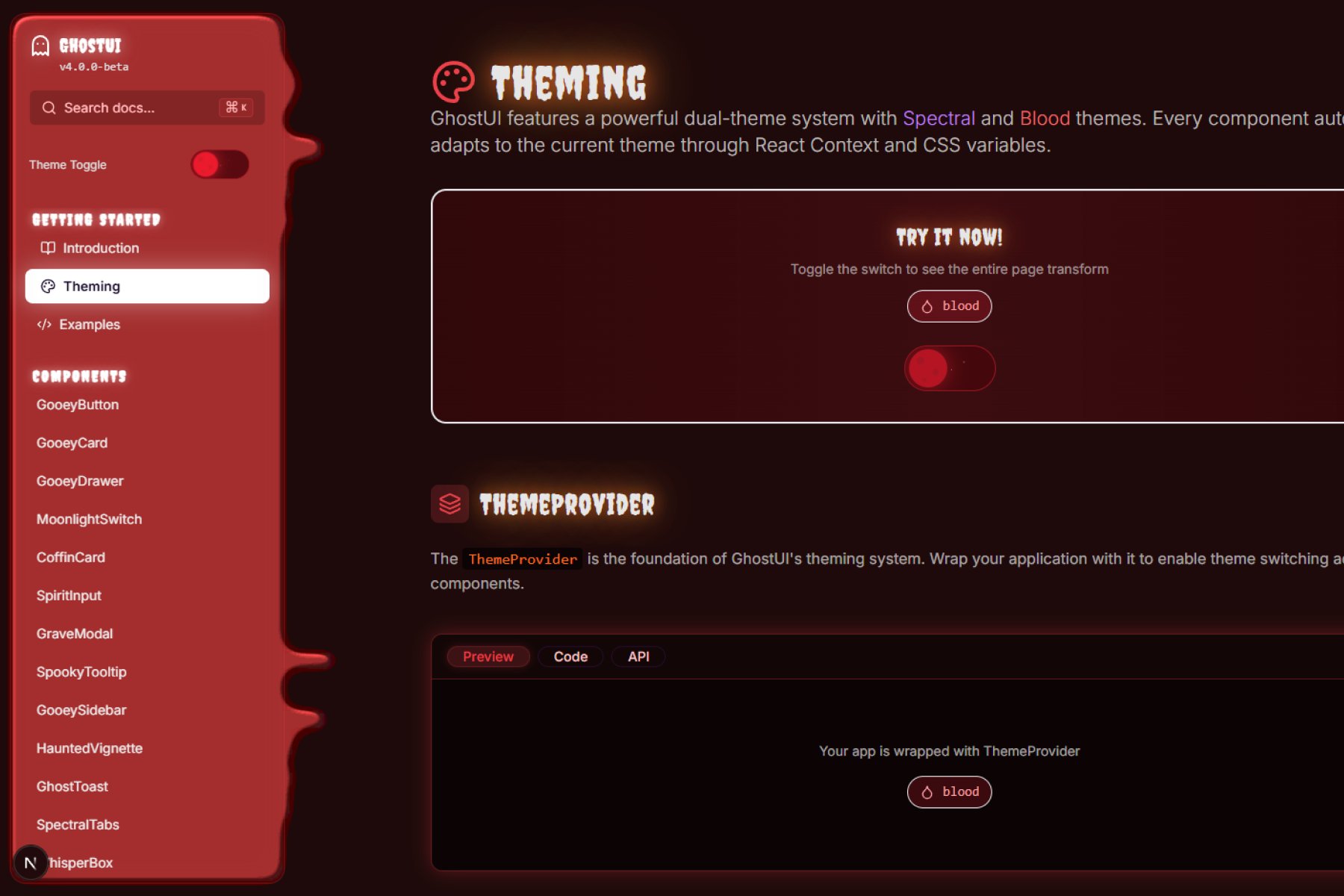
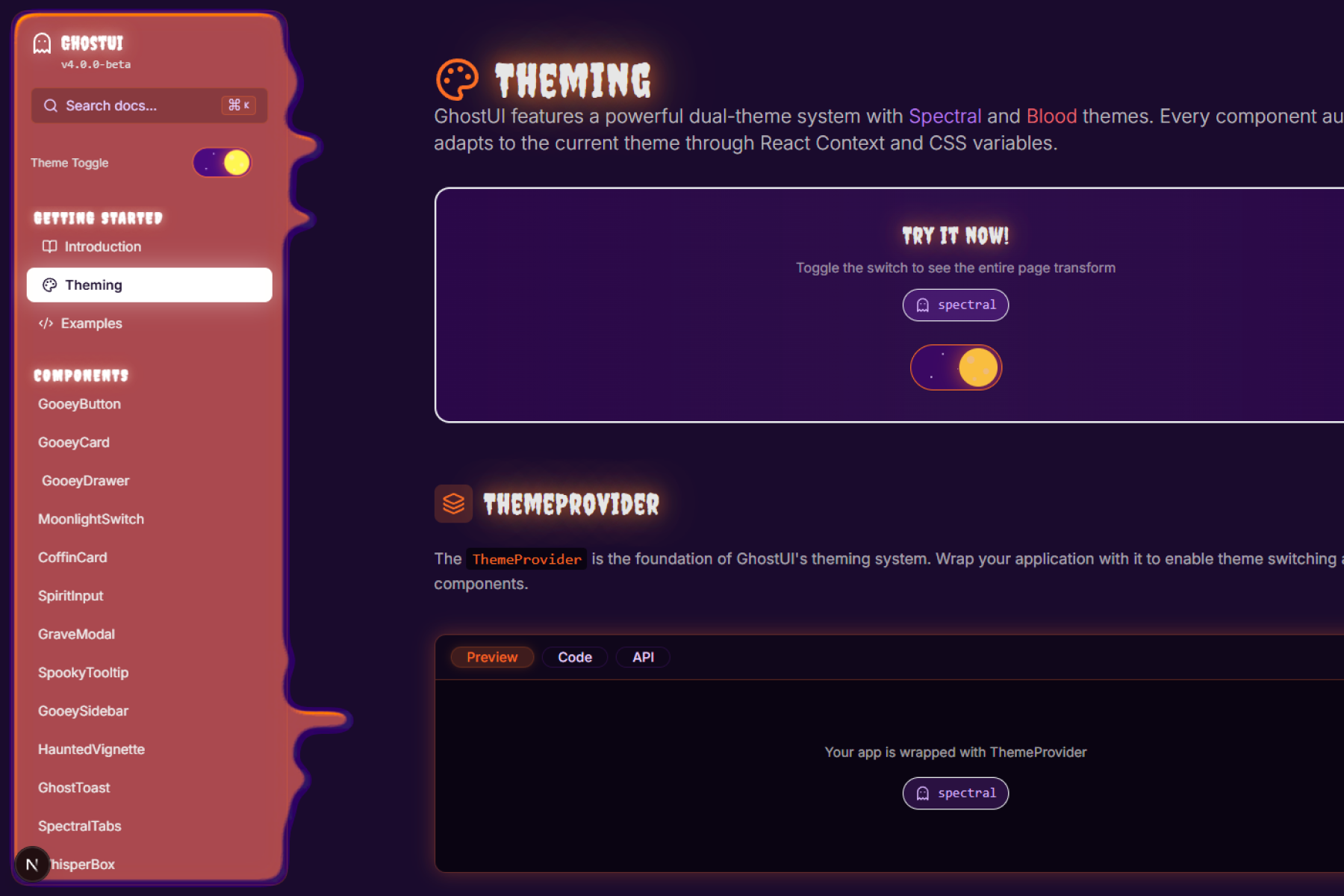
A blood moon theme with a built-in theme provider.
-
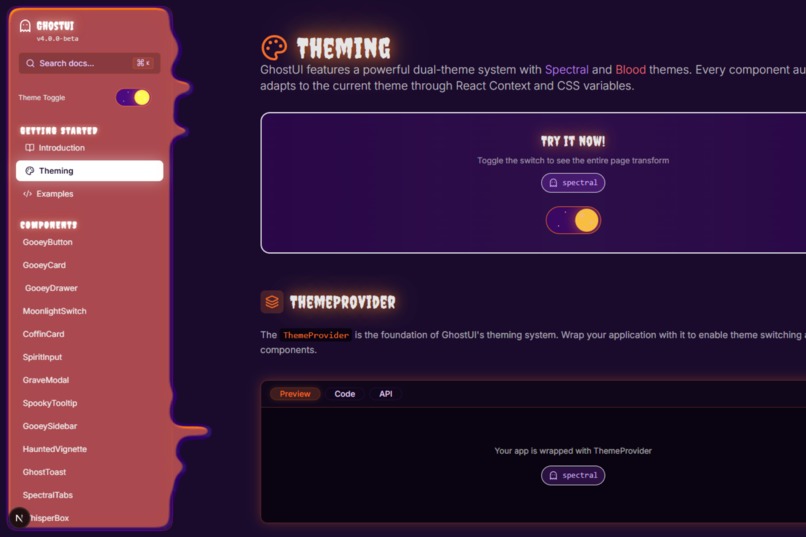
Spectral Purple theme with the built-in theme provider.

GhostUI — A Halloween-Themed Animated React Component Library
🎃 Inspiration
As a solo developer, I’ve always wanted to build a UI system that feels alive — something atmospheric, cinematic, and filled with personality. Most modern UI libraries are clean and minimal… but none embrace the spooky, the haunted, or the gooey.
When I saw the Kiroween Hackathon theme, it clicked immediately:
- What if a UI library fully embraced Halloween aesthetics?
- Dripping goo, glowing runes, drifting fog, spectral animations, and cinematic transitions?
- And what if I used Kiro not just as a tool, but as a true development partner?
GhostUI was my answer — a fully animated, theme-driven React component library powered by Kiro’s agentic development model.
👻 What GhostUI Is
GhostUI is a Halloween-inspired React component library featuring:
- Spooky: Ghostly fades, fog, ectoplasm
- Haunted: Runes, occult shapes, cursed motions
- Gooey: Slime physics, drips, blob interactions
The library includes 24+ production-ready components, each engineered with:
- SVG filters (gooey, blur, dripping)
- Framer Motion physics
- Tailwind CSS theming
- SSR-safe logic for Next.js
- TypeScript typings
- Animated transitions
- Dark cinematic visuals
I also built:
- A demo app showcasing real usage
- A documentation site
- A fully packaged NPM library
- A monorepo powered by Kiro’s specs and hooks
🧠 How I Used Kiro in the Project
Kiro wasn’t just a helper — it acted as a co-engineer, shaping the architecture, automating workflows, and enforcing consistency across the entire system.
🌀 1. Vibe Coding — Fast Creative Exploration
I used vibe coding to explore ideas conversationally:
- “What would a haunted drawer look like?”
- “Give me gooey variants of this component.”
- “Explain how to animate dripping slime using SVG filters.”
Kiro helped me brainstorm dozens of spooky components — loaders, backgrounds, transitions, toggles, cards, fog systems, etc.
Most impressive outcome: The Ectoplasm Page Transition — a multi-layer gooey wipe animation — came entirely from iterative vibe coding before becoming a formal spec.
📘 2. Spec-Driven Development — From Idea to Implementation
Once the concepts were solid, I used .kiro/specs to define:
- Phase 1 — Requirements: Props & states, behavior & accessibility, SSR strategy, interaction rules.
- Phase 2 — Design: Tailwind token usage, SVG filters (gooey, blur, liquify), haunted shapes (coffins, runes, webs, spells), motion sequences & easing curves.
- Phase 3 — Actionable Tasks: File creation, component scaffolding, documentation steps, tests & edge cases.
This made every component consistent and production-ready.
⚙️ 3. Agent Hooks — Automated File Scaffolding
I created a GhostUI-Boilerplate Hook, which triggers whenever a new component file is created. The hook automatically injects:
"use client"when required- Import templates (
clsx,tailwind-merge,motion) - Props interface
- Component skeleton
- Accessibility reminders
- Display name
- Starter Tailwind classes
This eliminated repetitive setup and ensured architectural consistency across all 31+ components.
📜 4. Steering Docs — Defining the GhostUI Universe
The /kiro/steering.md document defined the constraints Kiro must always follow:
Design Rules
- Prefer irregular shapes, not rectangles
- Every interactive state must animate
- Spooky/Haunted/Gooey themes drive color & effects
- Glow is allowed and encouraged
- Fog should be subtle, never overwhelming
Technical Rules
- Client components must include
'use client' - Ensure SSR safety for all server-rendered components
- Use Tailwind + SVG filters consistently
- Prefer Framer Motion for physics-based animations
Naming Rules
- PascalCase components
- Consistent prop naming
- Theme variants respected
Steering made Kiro operate like a dedicated GhostUI engineer rather than a generic model.
🧪 What I Learned
AI-assisted UI design is incredibly powerful Gooey filters, dripping SVGs, rune pulses, fog layers — complex animations became easier using Kiro.
Specs turn AI into a deterministic builder Moving from vibe → spec mode created predictable, repeatable results.
Hooks eliminate boilerplate and allow scaling I was able to build a large component library as a solo dev by automating repetitive tasks.
A themed design system requires intentional visual rules Steering ensured consistency across spooky, haunted, and gooey aesthetics.
Publishing and deploying a UI library is a serious engineering task I learned a lot about monorepos, npm packaging, SSR boundaries, and documentation workflows.
Built With
- javascript
- kiro
- next
- react
- tailwind
- ts
- vercel
- vite

Log in or sign up for Devpost to join the conversation.