-
-
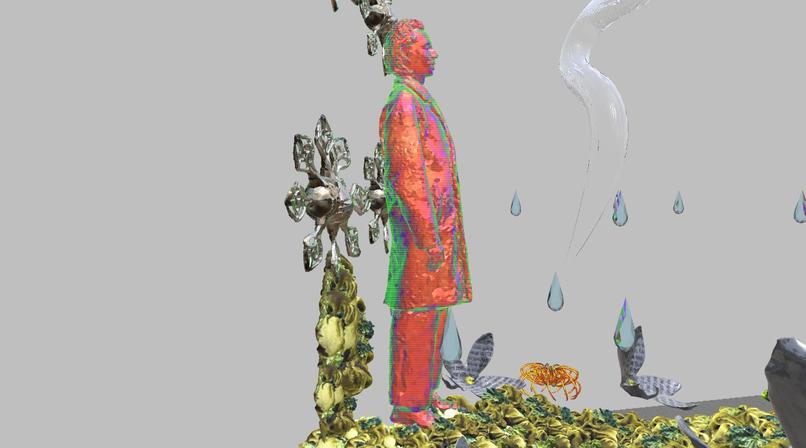
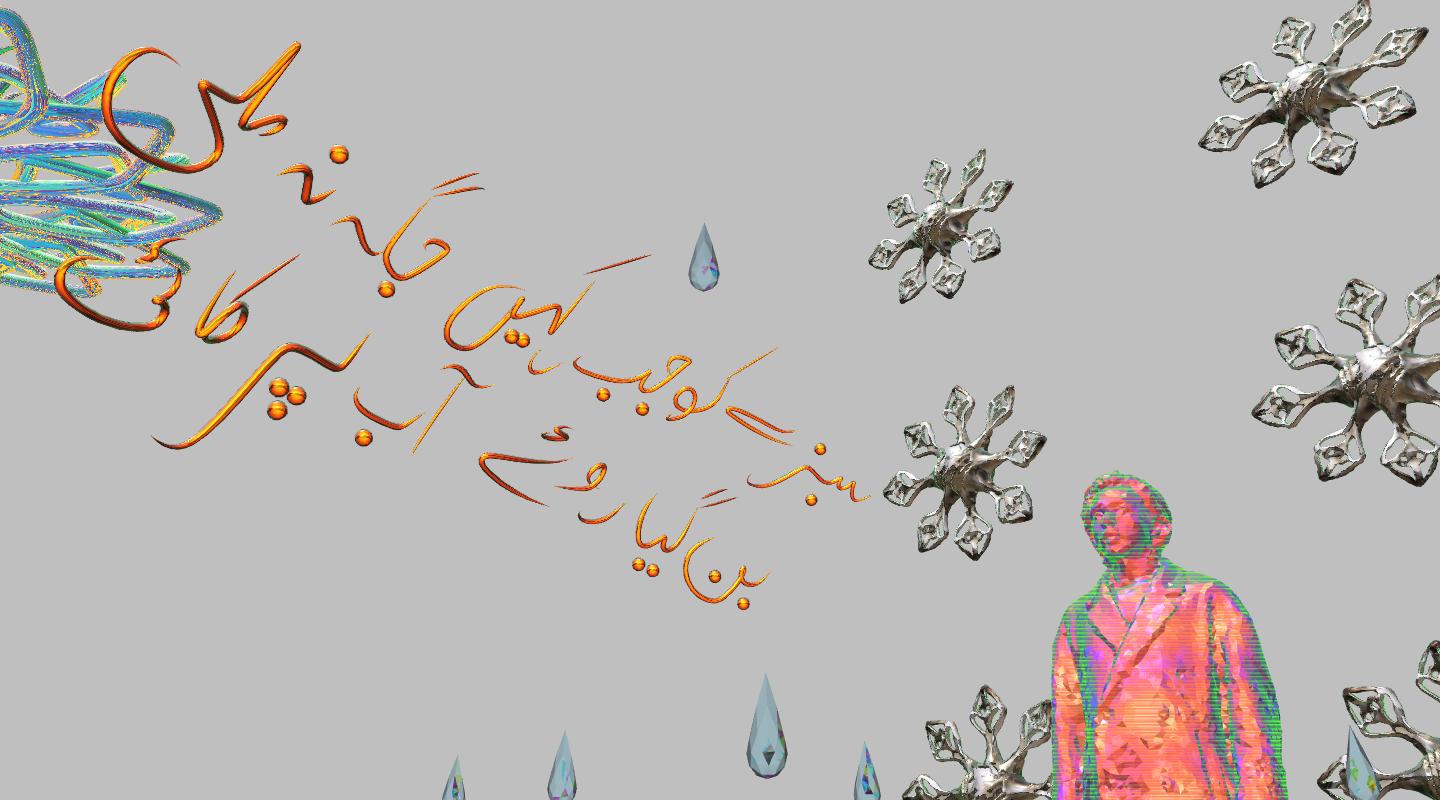
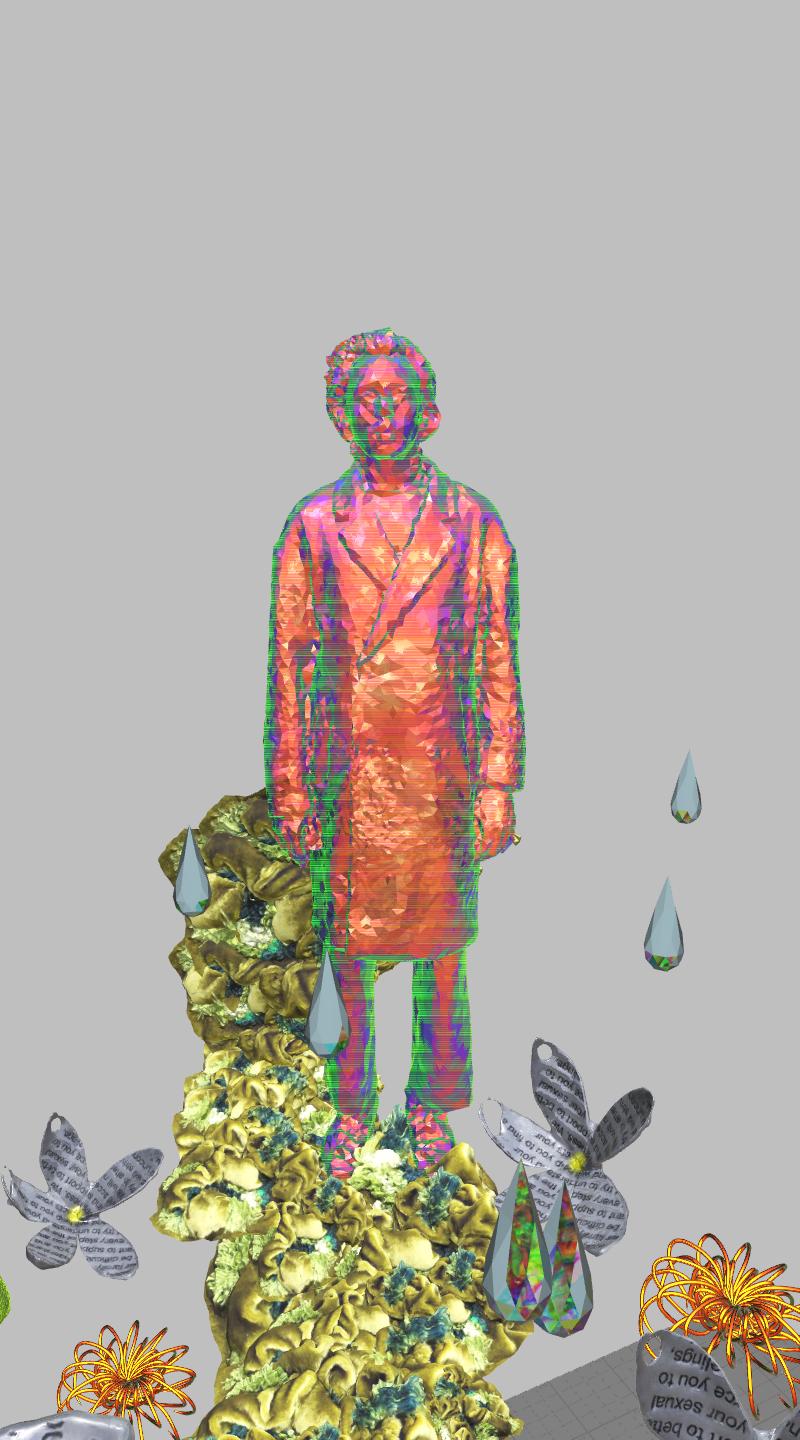
Screenshots from inside LensStudio
-
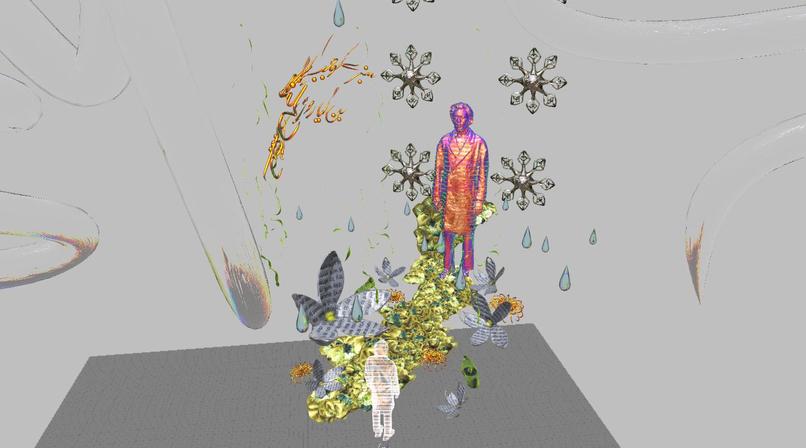
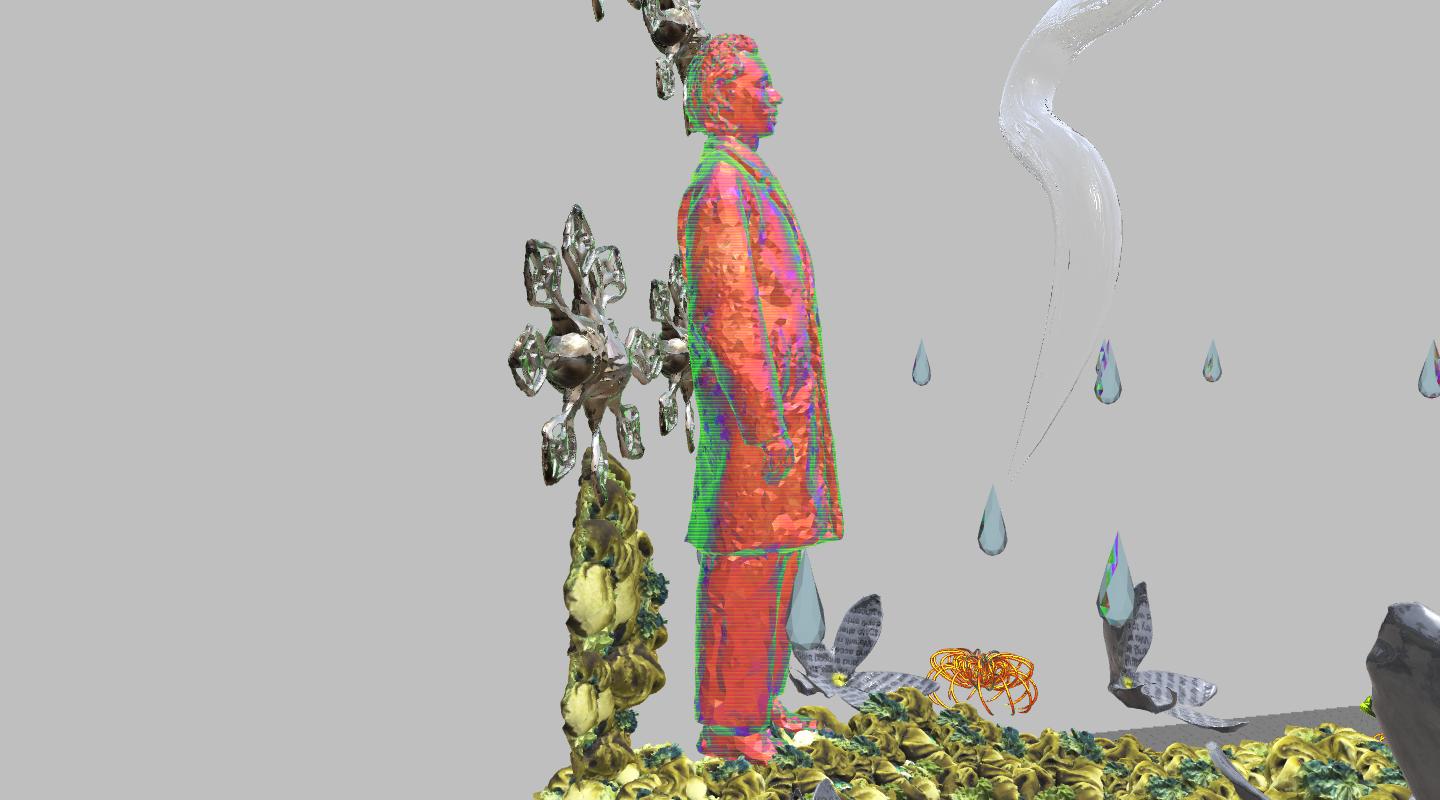
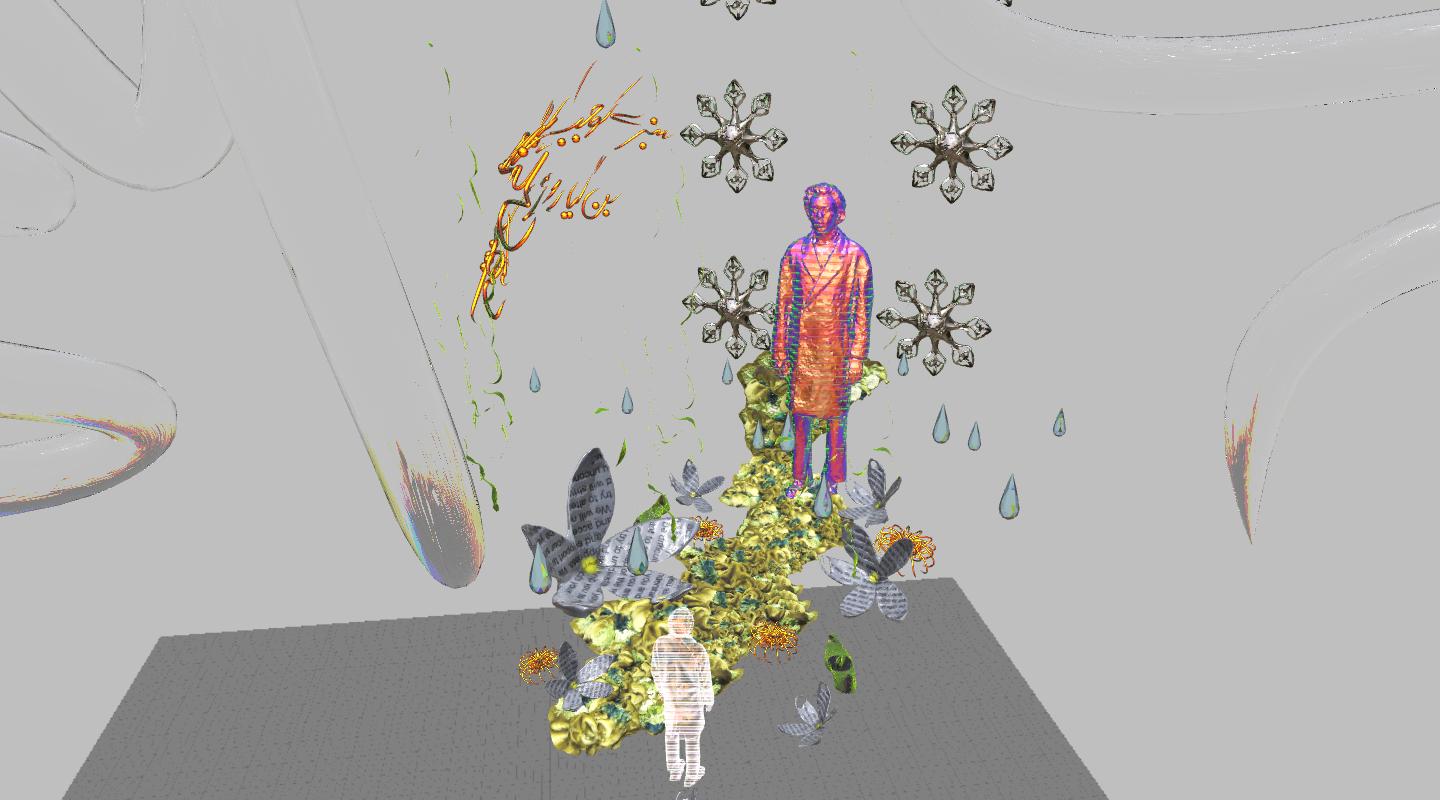
Screenshots from inside LensStudio, showing the installation + Glass structures modelled in Gravity sketch representing my dance.
-
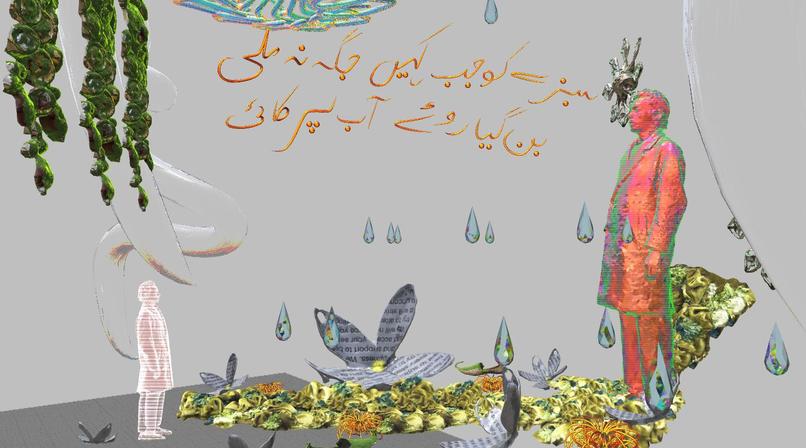
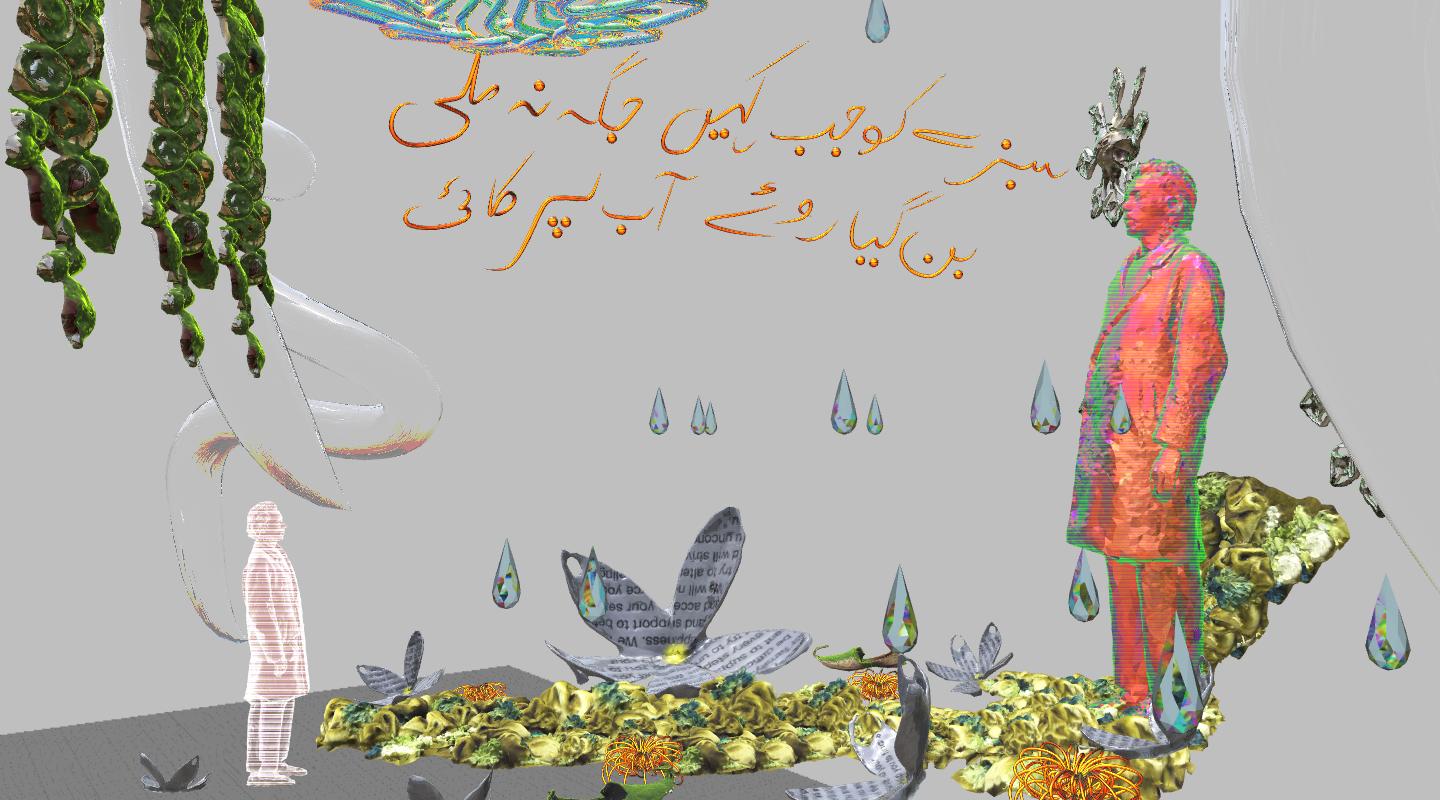
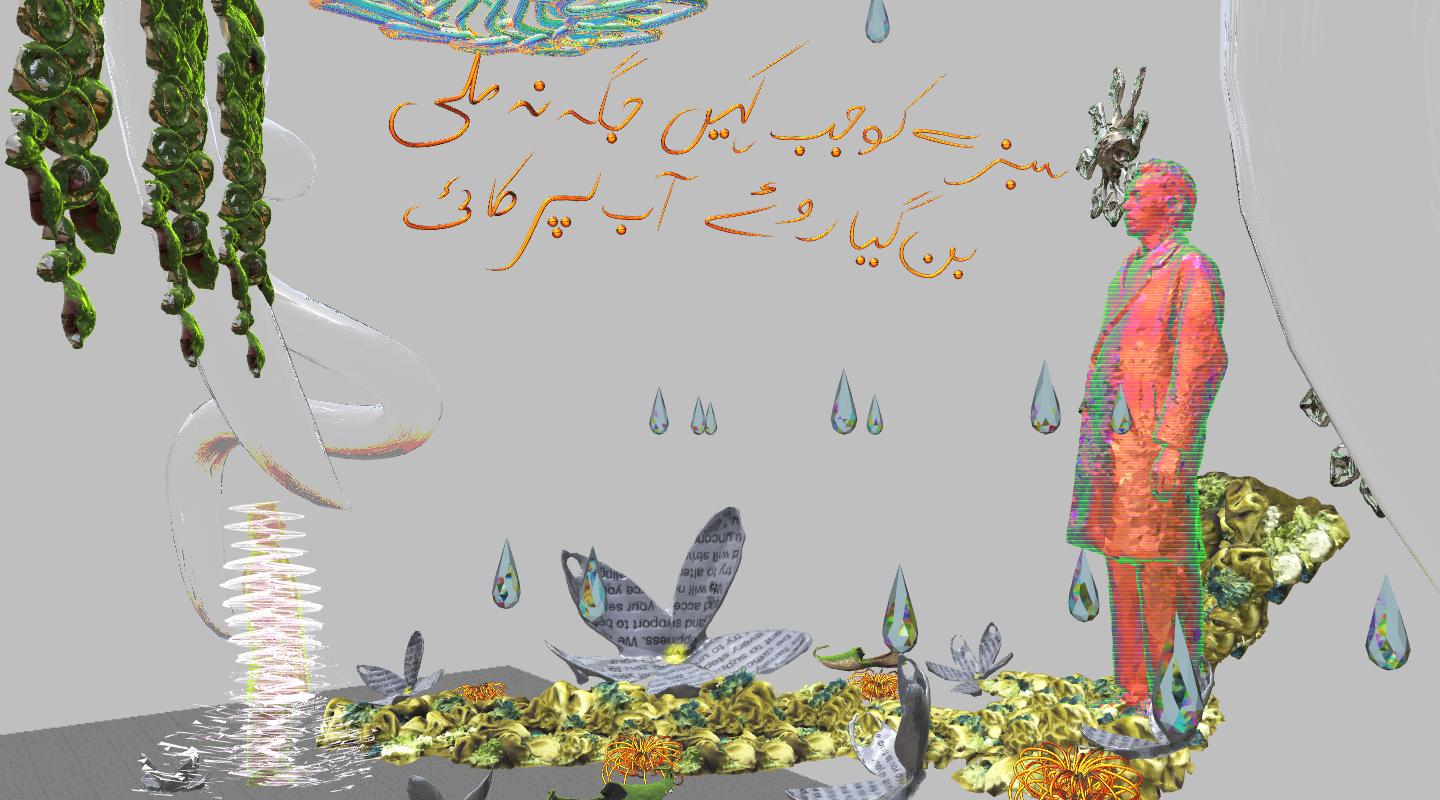
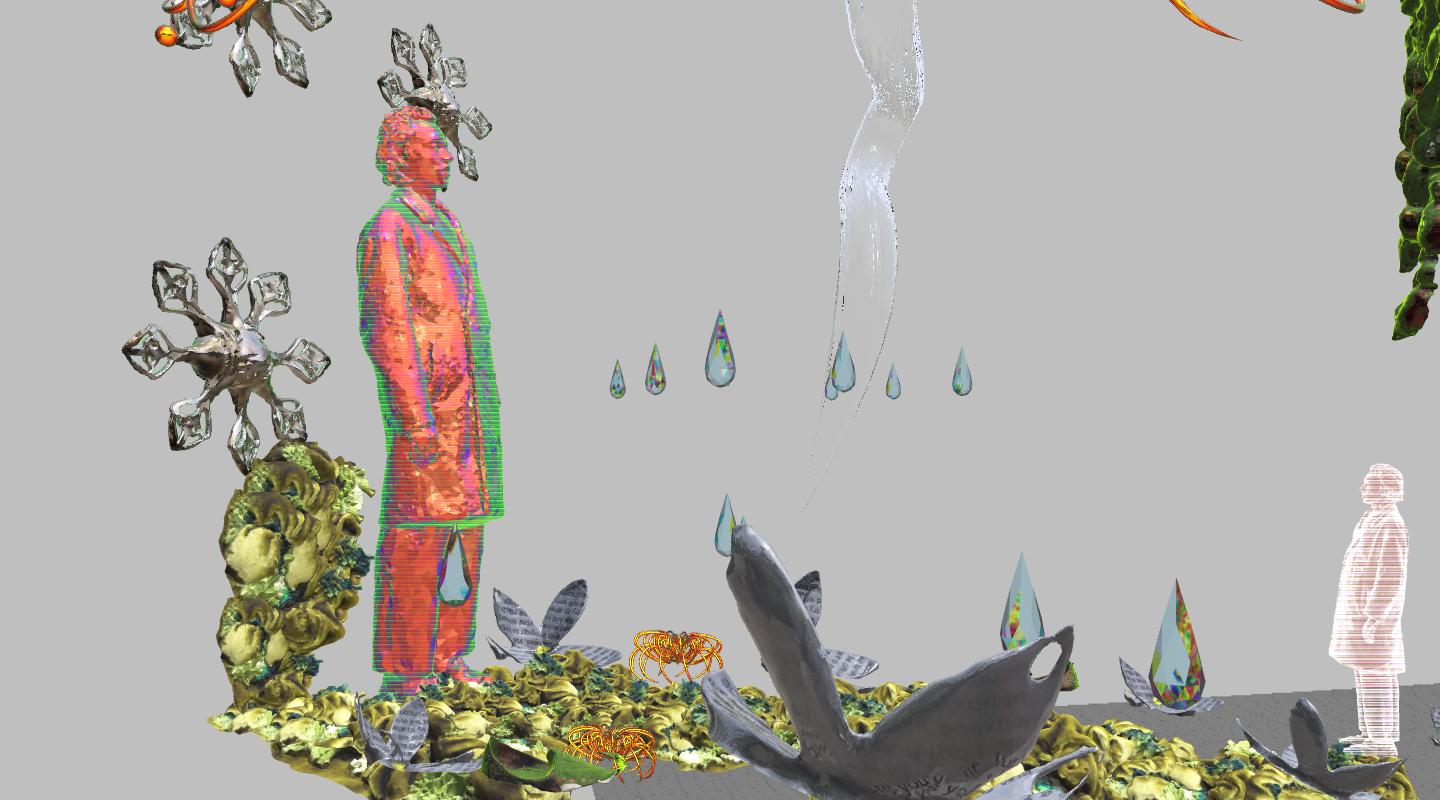
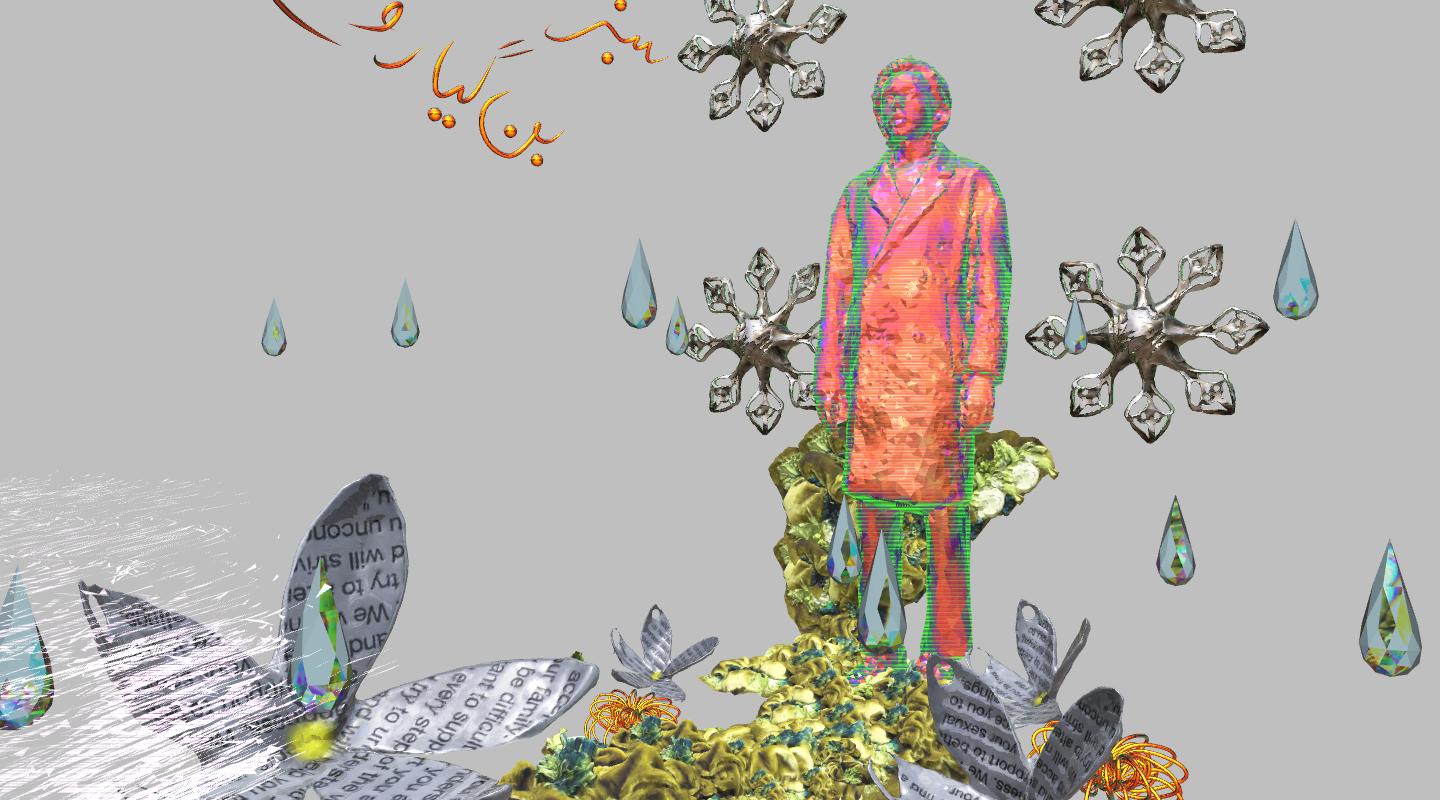
Screenshots showing the Urdu poetry/saying as well as Older version looking at a younger version of myself (ghostsfromthePast)
-
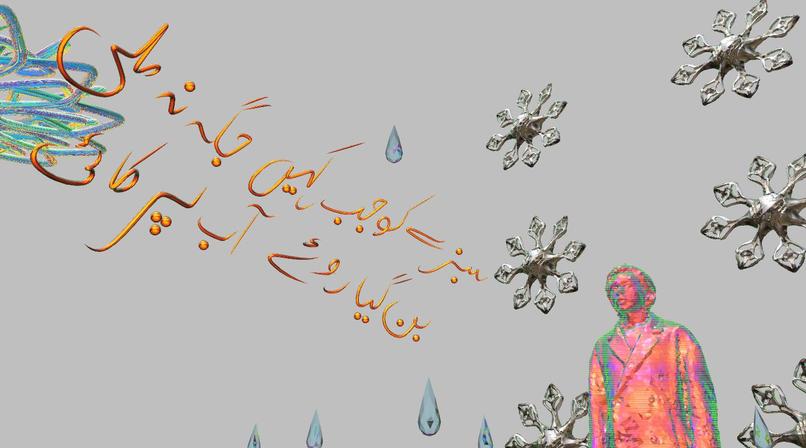
Screenshots from inside LensStudio
-
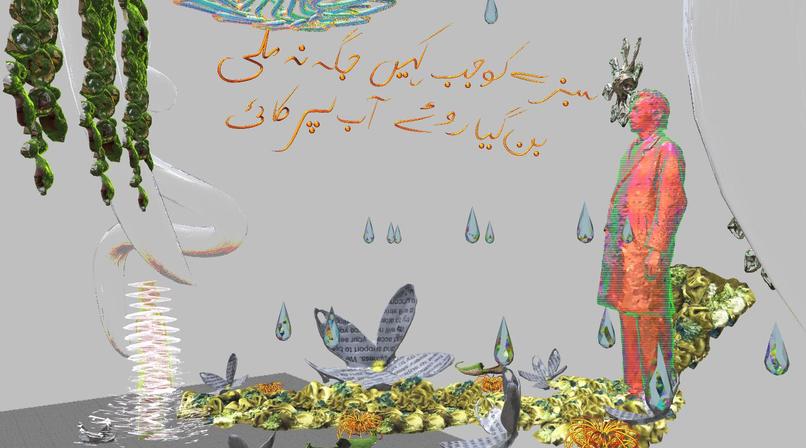
Screenshots showing the Urdu poetry/saying as well as Older version looking at a younger version of myself (ghostsfromthePast)
-
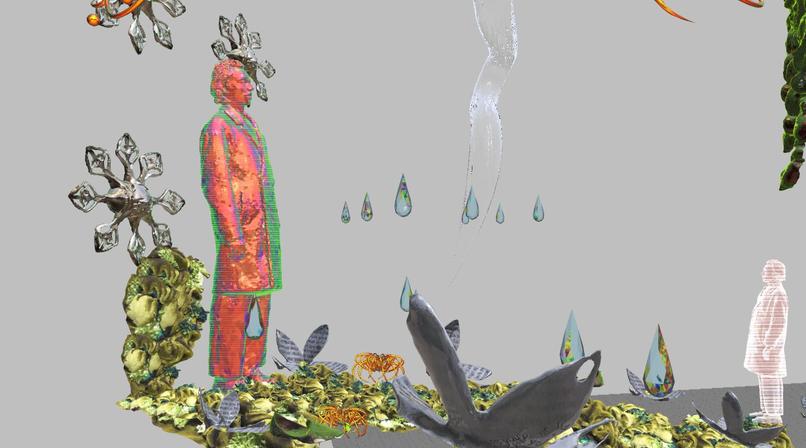
Screenshots from inside LensStudio showing the 3d scans of moss embroidery on the floor with the Jasmine flowers.
-
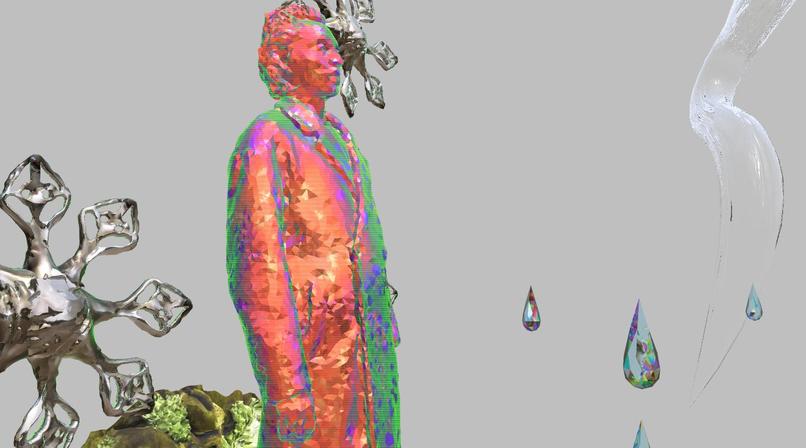
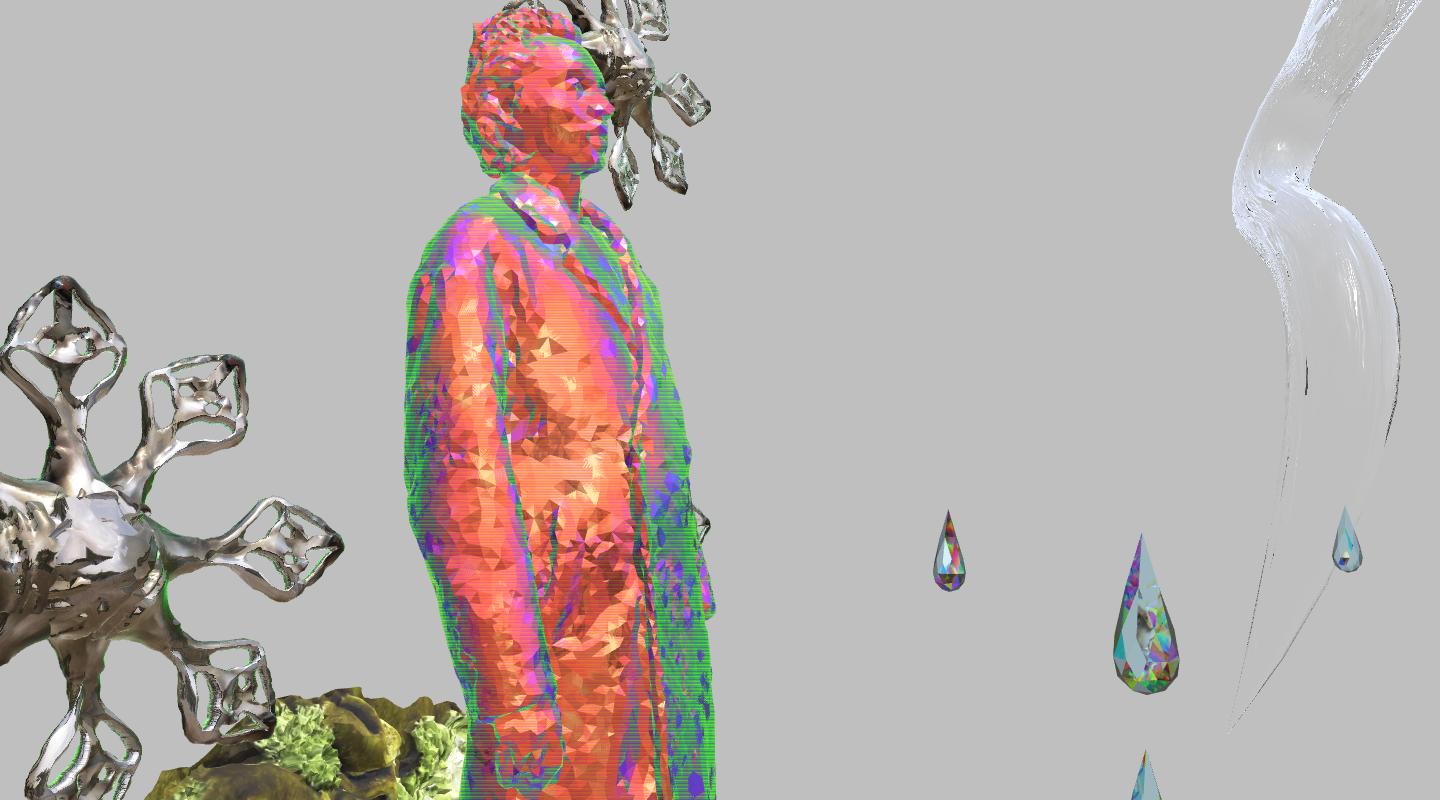
Screenshots from inside LensStudio showing a 3D scan of me and the Kohl bottle behind me
-
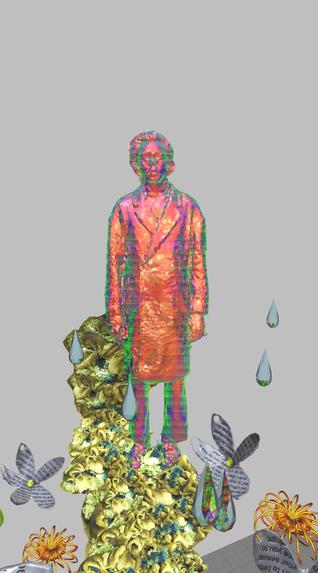
Screenshot of Older version of with the moss and flowers
-
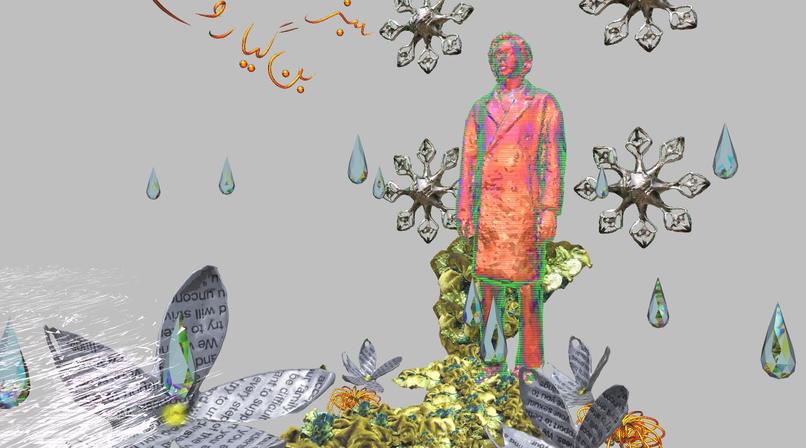
Screenshots from inside LensStudio, showing crystal tear drops.
INSPIRATION
When I go to art museums and famous galleries, I fail to find myself represented in the same way my counterparts do and I always wonder why? And I thought to myself - can I display my art in the world's most famous modern Art museum? And what is art? Who owns public space?
‘GhostsOfThePast' is a ghost art exhibition that uses custom land-markers to anchor a 3D digital collage inside the Tate Modern made out of visual elements that represent fragments of my identity.
For this exhibition, I used 3D scans of physical objects from my world to build a visual language to express my art and include the following:
- Handmade moss-shaped embroidery
- Hand-made paper sculptures
- Objects of affection from my childhood that include my mother's earrings, family heirlooms like my grandmother's Kohl liner bottle, and my hand-made Khussas (Pakistani slippers) that my father wore on his wedding
- 3d scans of me
The central element of the exhibition is an Urdu phrase that translates to:
‘When there was no space for greenery on earth It became moss on the surface of water’
This lens uses the back camera for the best results.
Video Demo
//Research - Dada and Me
A huge inspiration for me was Dada - the art movement. The dictionary defines Dada as a movement in art and literature based on deliberate irrationality and negation of traditional artistic values. However, Dada was an art movement formed during the First World War in Zurich in a negative reaction to the horrors and folly of the war. The art, poetry and performance produced by dada artists is often satirical and nonsensical in nature. To me, Dadaism is about questioning and subverting structures around us - which include and are not limited to powerful institutions, societal constructs and even how we express ourselves.
I wanted to build a case for the revival or rather the reimagining of Dada, given that we are now at a time again where we are surrounded by quite a lot of negativity - wars between countries, wars between ideologies and wars within ourselves. I wanted to explore is Dadaist expression can help us heal again?
The reason I am so interested in Dada is because of my own autoethnographic research. Autoethnography as an approach to research and writing seeks to describe and systematically analyse (graphy) personal experience (auto) to understand cultural experience (ethno). I looked at all my art works from childhood up until now and realised that anything I ever made fell into the realm of Dada - includeing paintings and collages on canvas from my childhood to then progressing on to digital and augmented reality artworks from my adulthood and more recent years.
I used Dadaist cut-up techniques to form collages to reimagine what it would look like in a 3D virtual format.
//What is a Ghost exhibition?
A ghost exhibition is an art exhibition that is created using augmented reality (AR) technology. In a ghost exhibition, the artwork is not physically present in the exhibition space, but rather is created and displayed using AR technology. This allows viewers to experience the art in a virtual space, and to interact with it in a more immersive and dynamic way.
//Personal Experience
The project took on a completely different meaning for me and was reinforced by my very recent experience at the Tate, while doing research for this project, which left me feeling deeply upset and unwelcome. As a person of colour, the feeling of being watched is something I'm familiar with, but this time it felt different.
I spent the last few days doing research for my graduate project, taking pictures & using my laptop, just like many others around me. There were people with notebooks sketching, others were having their lunch, and some were there with their DSLRs taking pictures of the building. As I sat in the Turbine Hall on the first floor, I noticed the security observing me every now & then - I brushed it off completely and thought to myself ‘they are doing their job’.
But as the day progressed, the security seemed to be visibly lingering around me more than others and that is when I started feeling even more uncomfortable - questioning myself, wondering if I had done anything wrong. My white presenting counterpart was sitting a few steps away from me with her headphones in and working away as well and every time the security would walk past me, I would look up to see if she was being observed the same way. And she was not. They would not even walk in her direction. She could continue enjoying her activities without any direct or indirect interruptions.
A friend later joined me to help with my project, and that's when the security guard finally approached me and said 'You're not allowed to film here'. This was particularly jarring and left me dumbfounded as others around us were doing so without being questioned. I wasn't even filming. Security doing its job is one thing but singling people out is where it comes becomes deeply problematic. Like most people of colour, I know what it's like to be watched more closely than others and when this happened my thought process changed from ‘They are trying to do their job’ to ‘I feel like I was just racially profiled’.
Racial microaggressions are brief and commonplace daily verbal, behavioural, or environmental indignities, whether intentional or unintentional, that communicate hostile, derogatory, or negative racial slights and insults toward people of colour.
As a Pakistani immigrant living in the UK, I feel like I had become so accustomed and desensitised to being treated differently at airports and security that this experience really sobered me up about my own conditioning. And this feeling is quite alien to me - it took me days to digest what had happened as I questioned the sequence of events and even questioned myself about whether I was blowing things out of proportion. But I guess this is how structures of power operate and this project went from questioning outward power structures to then also questioning and subverting power structures that I had internalised.
WHAT IT DOES?
Drawing on themes of Dada, memory vs. counter-memory, fragmentation, ready-made art and subversion, I wanted to challenge and question traditional notions of art and identity as well as structures that exist in our society. Through the use of AR, I invite visitors to engage with my work, encouraging them to consider their own relationship to the art world and their place within it.
Visitors can use their smartphones to access the augmented reality installation through Snapchat. Visitors can go to ghosts.shahnanigans.co.uk to find instructions on how to use and experience the exhibition.
Once the experience launches in Snapchat, the viewer is instructed to go to the main bridge in the Turbine Hall in Tate Modern, London. Once they get there, they’re instructed to look around through their phones to unlock the exhibition which takes over the space around them.
There are slight animations in the 3D scans but I tried to keep them minimal so that people can walk around and experience these objects that have been scaled up tremendously to weave in elements of surrealism into the artwork.
HOW I BUILT IT?
Creating an AR exhibition can be a complex process. The first step in creating my final project was researching visuals. This step involved looking at various references and inspirations to guide the overall aesthetic and direction of the project.
After discovering custom-land markers, I knew that I wanted to use that capability for this project. For the second step, I conducted a few tests around London before taking a trip to Tate Modern. I then used the custom landmark scanning lens inside Snapchat to 3D scan different areas of the Turbine Hall bridge. After a few tries, I got a scan that I was happy with. This scan was then imported into Lens Studio, where I then imported my assets to start curating and building this project.
The third step involved 3D scanning objects that visually represented ‘fragments of my identity’ and including objects from my childhood home and the things I made. By using Polycam, I 3D scanned the following:
My mother’s earrings: Earrings are the ultimate symbol of femininity in Pakistani culture. When a girl is born they get her ears pierced to make her look like a female child. The earrings pay homage to all the strong women in my life and a reminder of how their empowerment is crucial to my being.
A family heirloom, a small silver bottle of Kohl liner that belonged to my Grandmother - Kohl has a lot of cultural significance but in this case, it is a symbol for eyes and perspective as I invite people to look through my eyes
My traditional Pakistani handmade embroidered shoes called Khussas that my father wore on his wedding day before passing them on to me. These represent my journey as I ask the viewer to step into my shoes
A 3D scan of myself - A bigger version of me looks back at a smaller version. This represents growth and looking back at ghosts from my past as I realise how far I have come.
I used printed paper and cut it into small jasmine flowers, Pakistan's national flower and a flower that reminds me of childhood. I 3D-scanned these flowers and included them in the AR installation.
I also 3D-scanned my handmade embroidery of moss, adding another layer of personal and meaningful elements to the installation. The moss represented a visual dialogue between the society around me and myself and pays homage to the Urdu saying mentioned above. Moss grows out of darkness and in cold and wet places - it represents resistance. It can represent decay or it can represent life, where nature reoccupies and nature inherently reclaims constructs built by man. In World War I and according to Irish Gaelic history, Moss was used for treating wounds and to stuff open wounds when they ran out of cotton. There is something very poetic about using moss to tell my story. I am the moss. Moss represents me.
I have always been a dancer and wanted to incorporate that as an element of visual poetry and a piece of my identity into this project. This was a challenge but by using Gravity Sketch in VR, I used the movement of my body to 3D model elements in the installation.
Lastly, I modelled crystal teardrops to add more depth and realism to the AR installation. These teardrops represent what was lost and all that was gained and represent a long journey that I went through to be here today.
CHALLENGES I RAN INTO?
Building an AR installation can be a challenging process, and this project was no exception. One of the main challenges I faced was trying to anchor my digital collage to the outer facade of the Tate Modern using the City Scale AR method. After 2 weeks of building it in LensStudio, when I finally tested it on-site, it didn't work as expected and crashed. This was a setback that required me to think on my feet and come up with a new plan.
Frantic with the situation, I conducted some experiments in the turbine hall and used a 3D scan of the bridge as a custom geolocation land-markers. I imported this into Lens Studio and then rebuilt, rearranged, and remade the entire AR project.
ACCOMPLISHMENTS THAT I'M PROUD OF?
The user experience and the reaction of people when they experience GhostsOfThePast! I sent the link to some people who then shared it further. Within the next few days, I was receiving DMs from strangers who had heard about the project and wanted to experience it. At first, I felt like people will not understand how to use it but even when I didn’t share any instructions, the instructions within the Lens itself were sufficient to guide them.
WHAT I LEARNED?
Custom landmarkers have opened up my world for creative expression by giving me a dadaist tool. I think of AR as a medium to display my art. Art can exist anywhere - it can be there without physically being there and opens up very interesting conversations about the future of storytelling and the future of how we create and consume art in a digital age.
WHAT'S NEXT FOR GhostsOfThePast?
GhostsOfThePast will become a travelling AR exhibition. It is an exploration of how my art exhibition can be experienced if we remove the limitations of our physical world. I will be using more custom landmarkers to anchor the collage at different locations around the world. It is a project that will deeply and critically research creative expression through Dadaist tools like Augmented Reality.
Built With
- blender
- gravitysketch
- lensstudio
- polycam


Log in or sign up for Devpost to join the conversation.