-
-
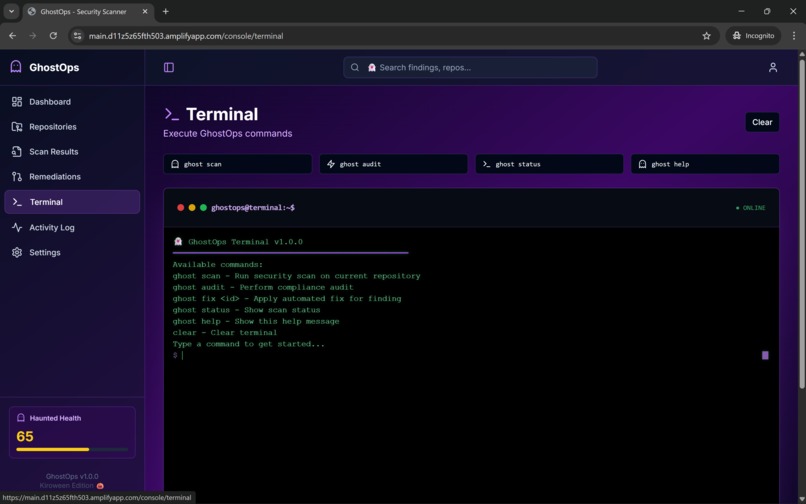
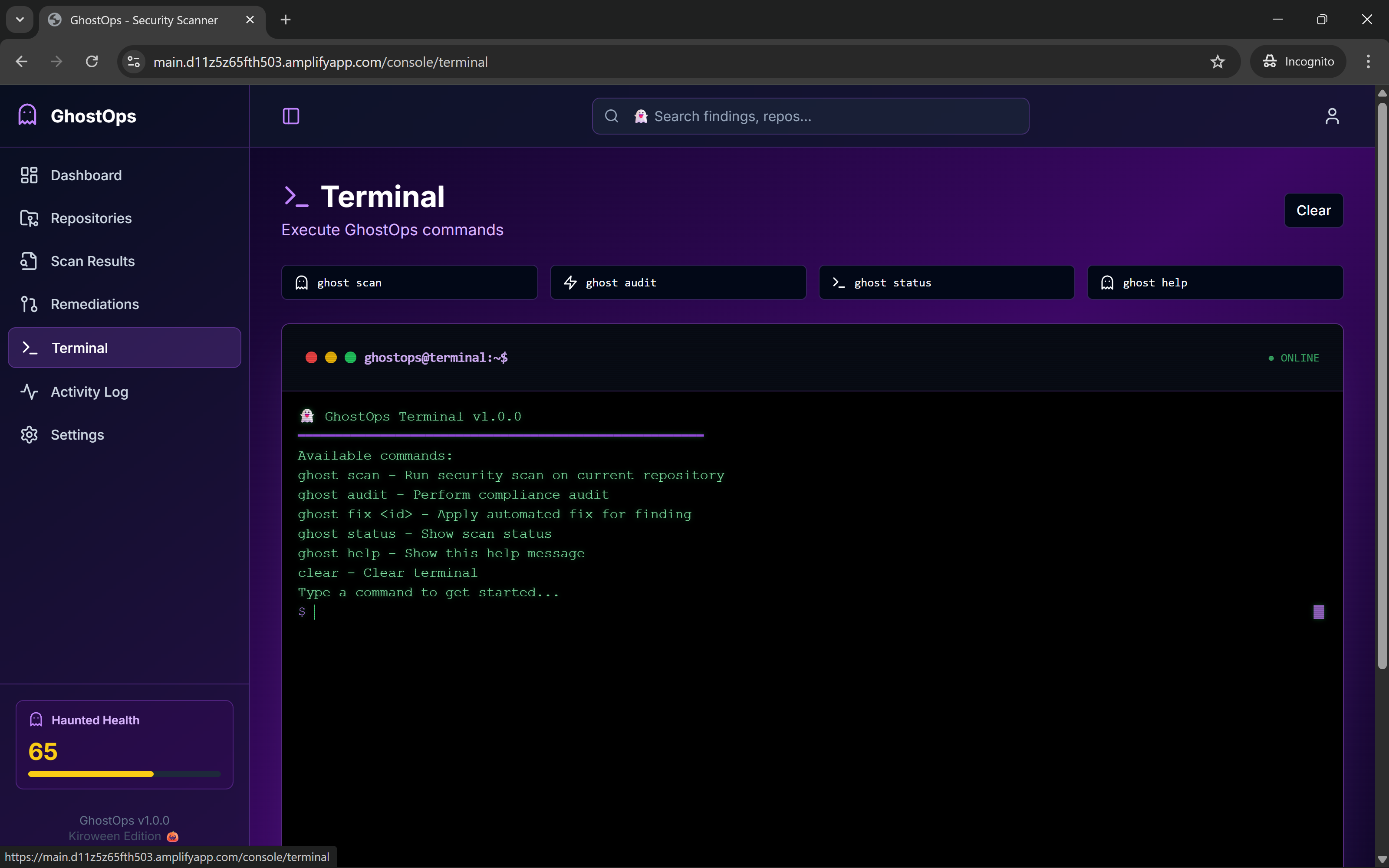
demo terminal page
-
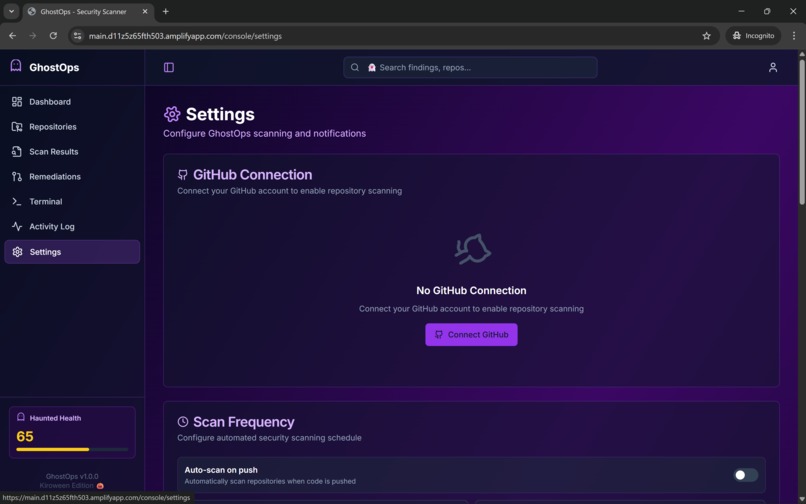
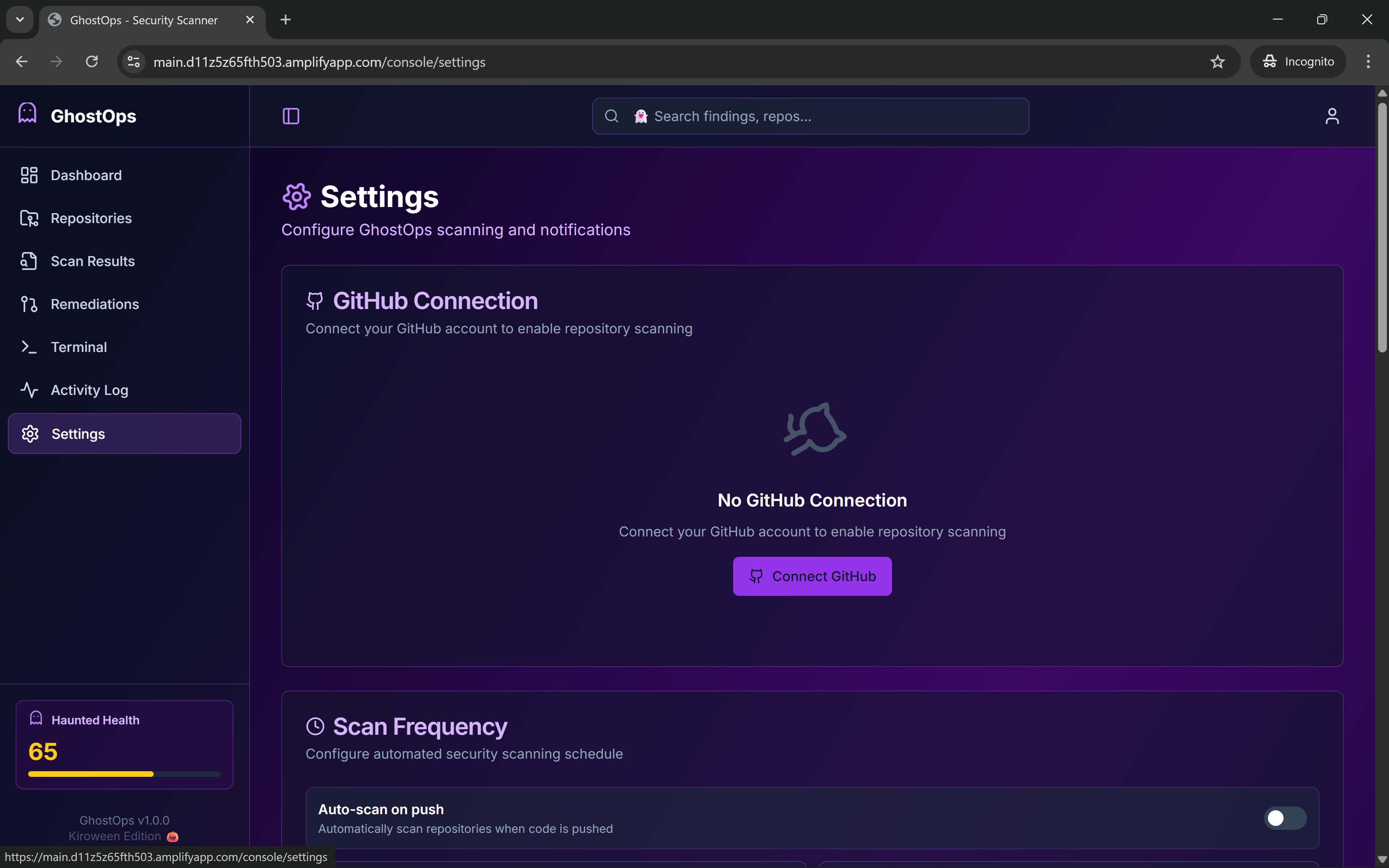
demo settings page
-
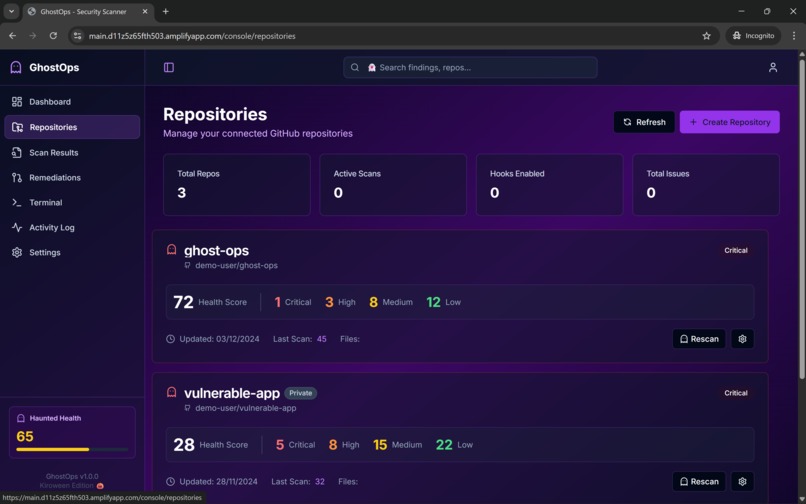
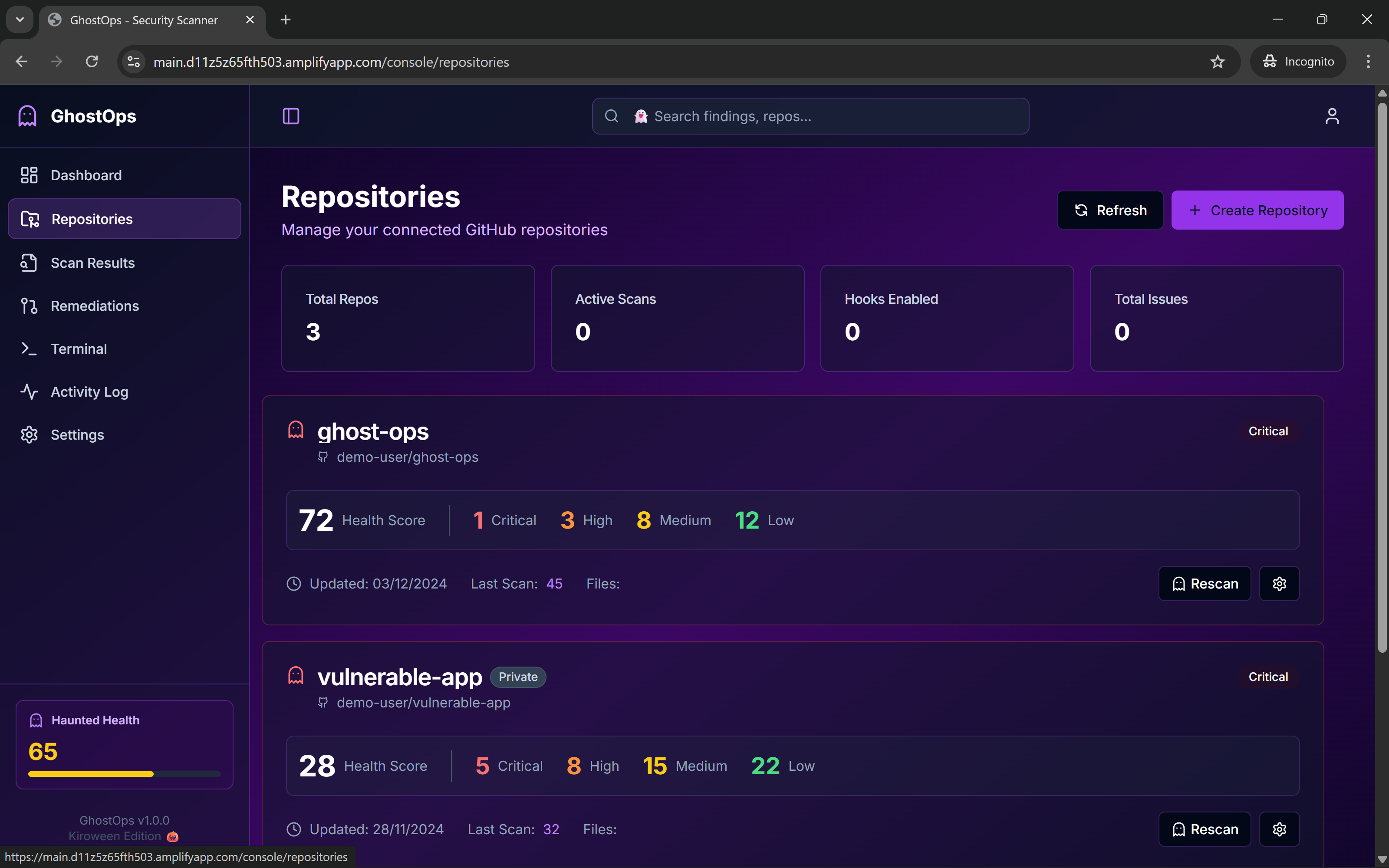
demo repositories page
-
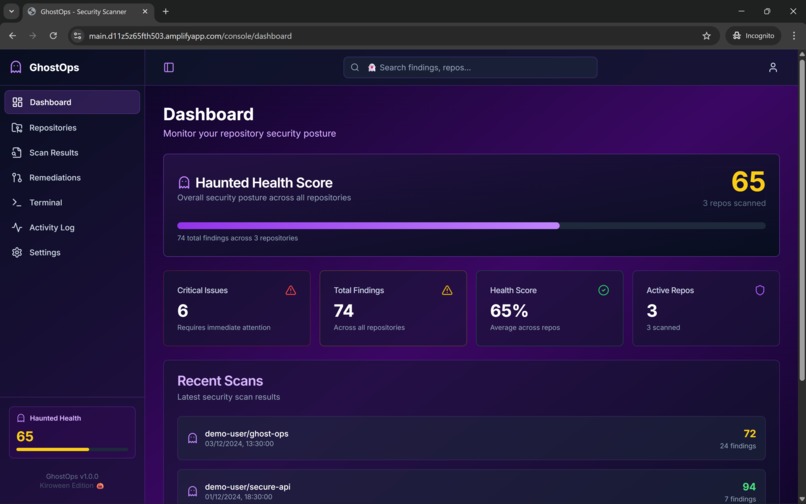
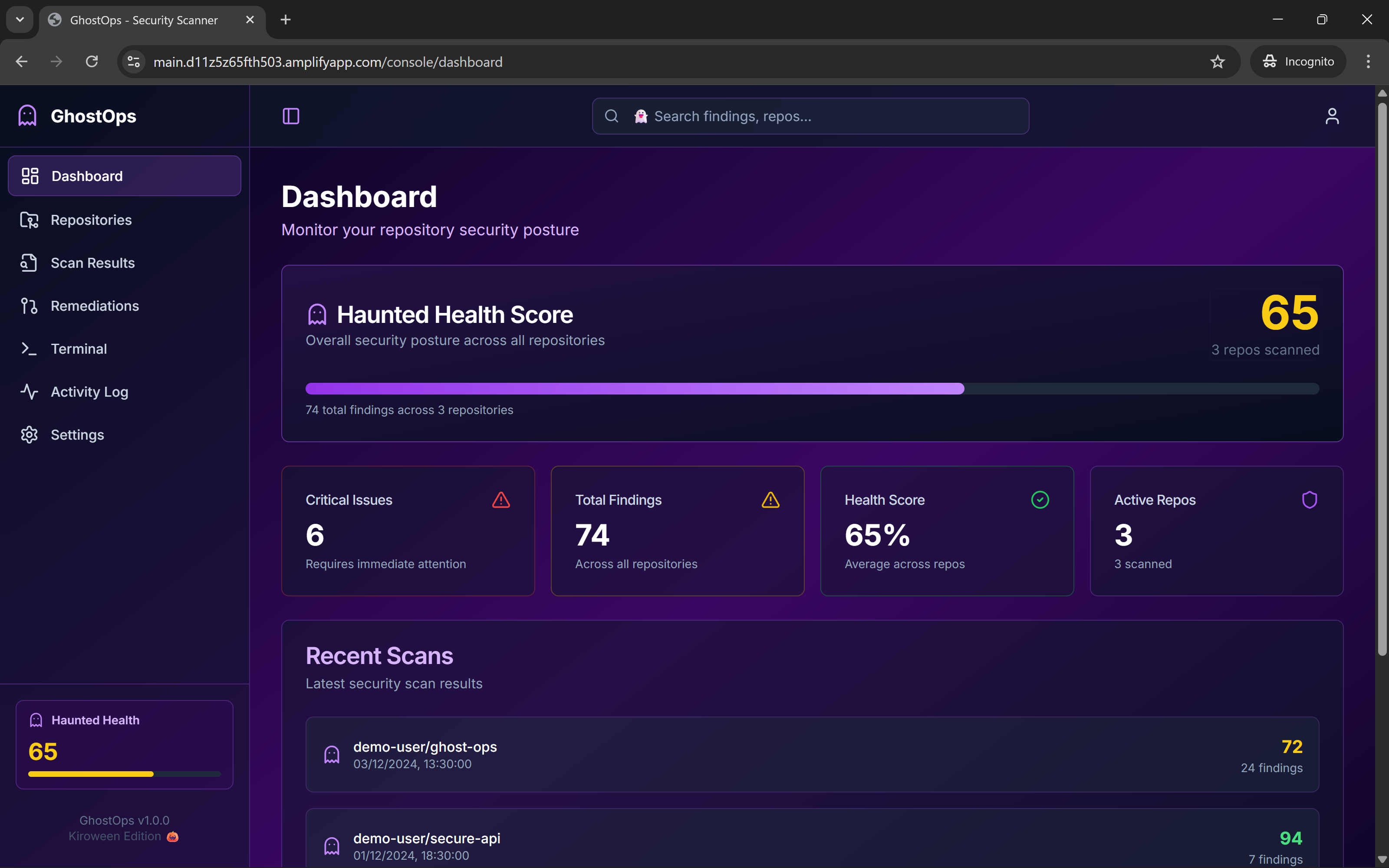
demo dashboard page
-
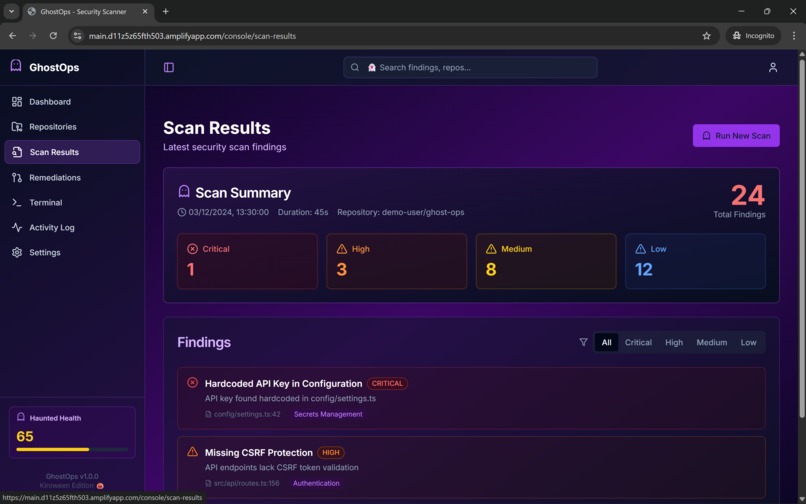
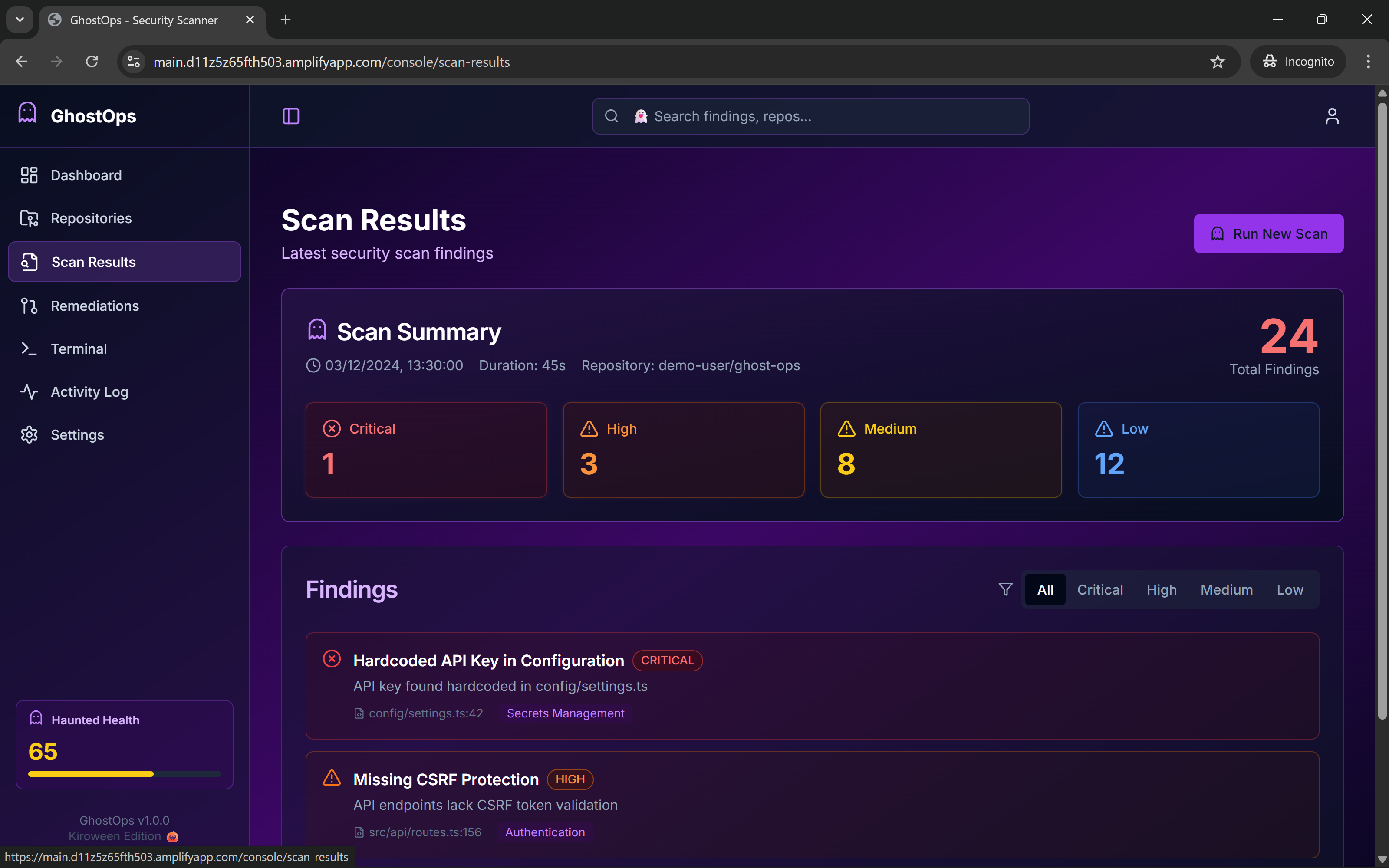
demo scan results page
-
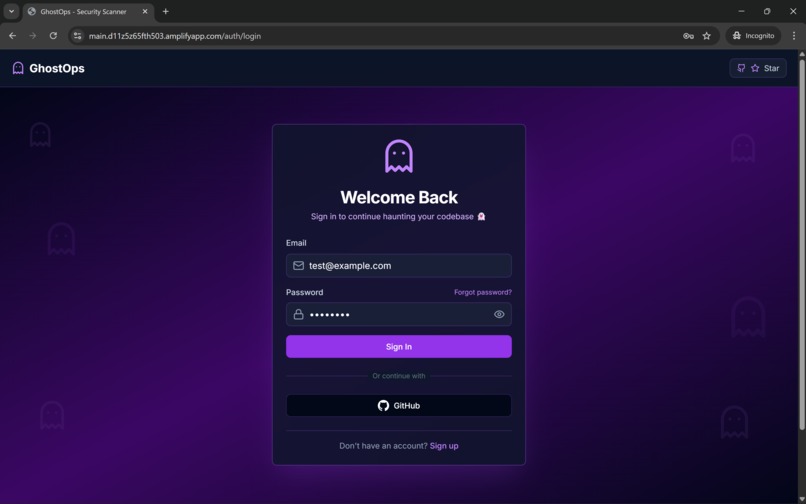
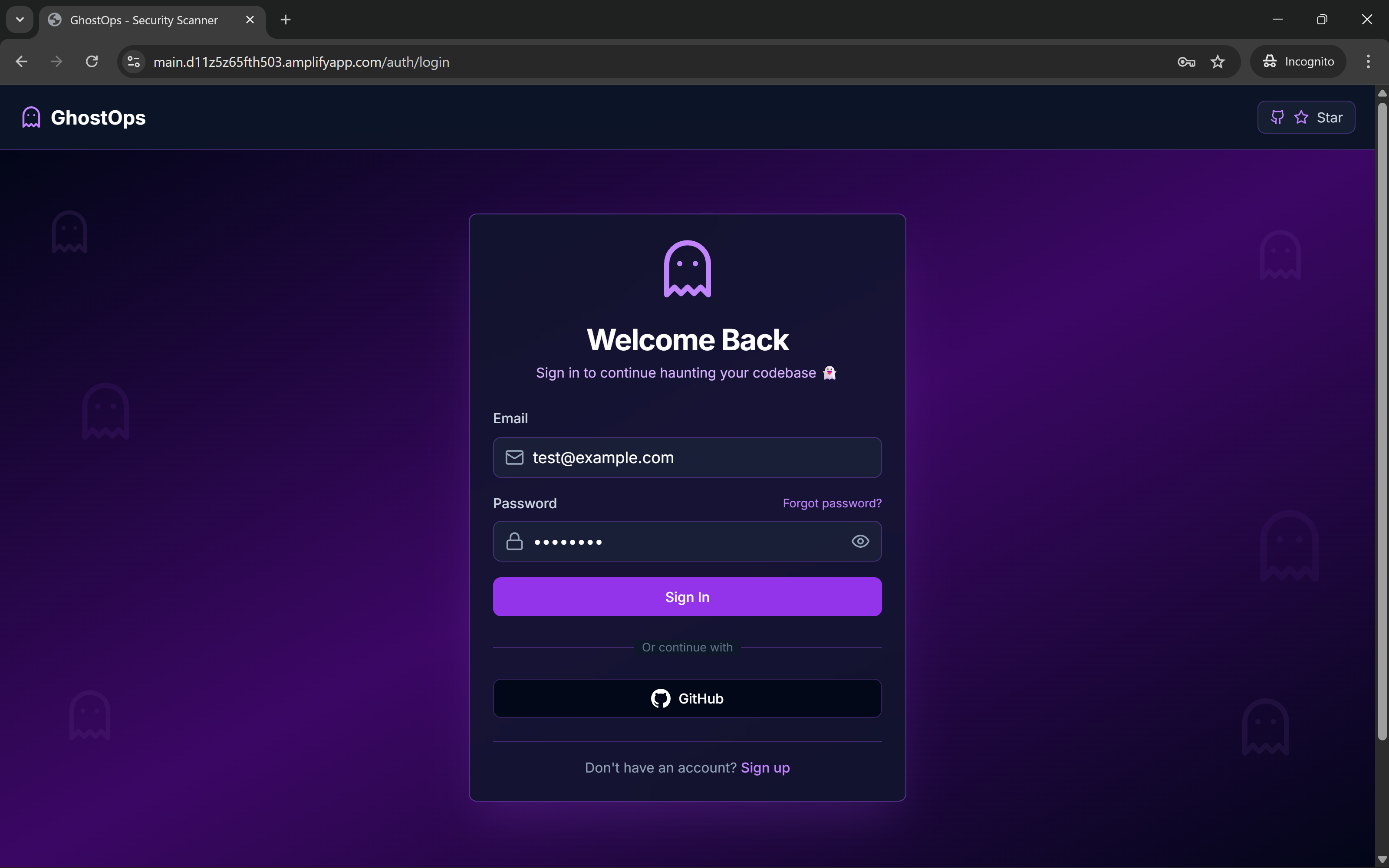
demo login page
-
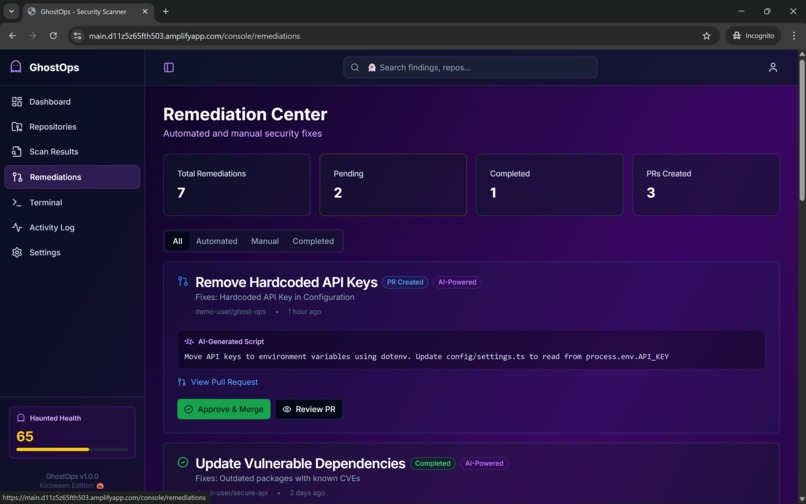
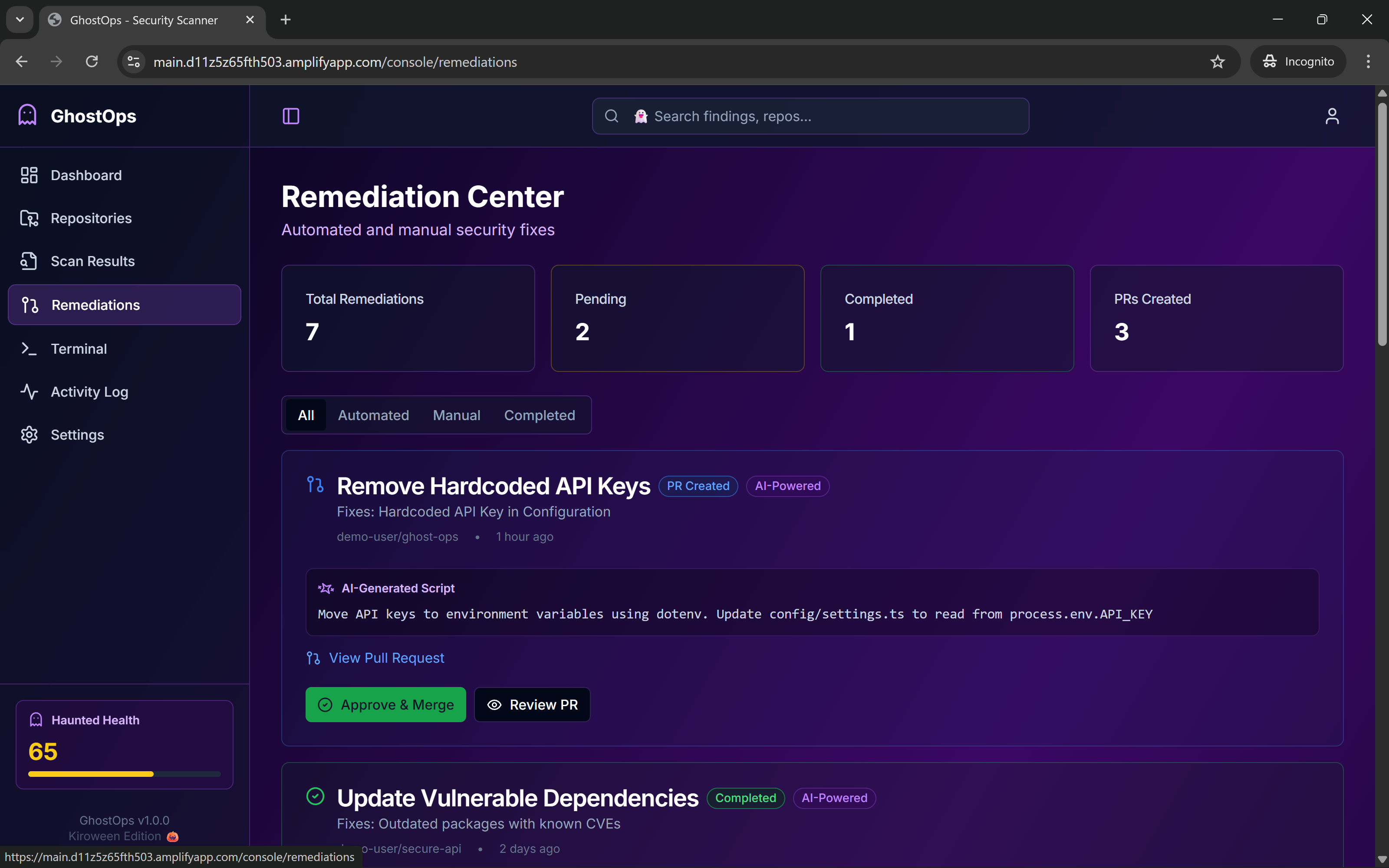
demo remediation page
-
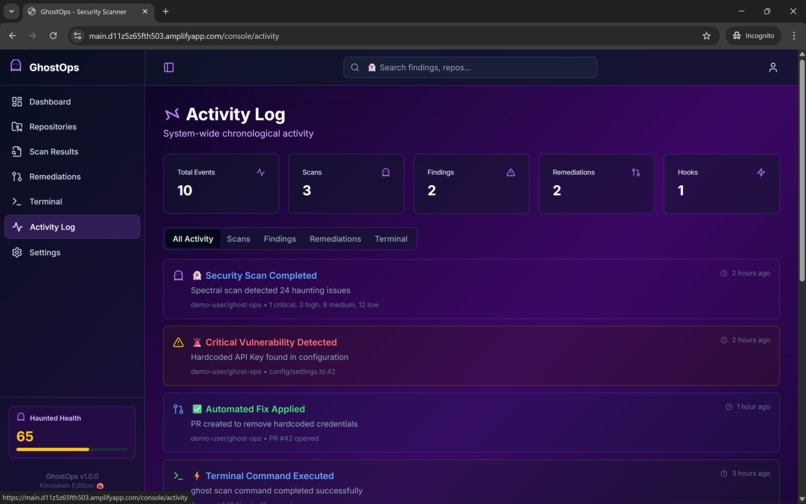
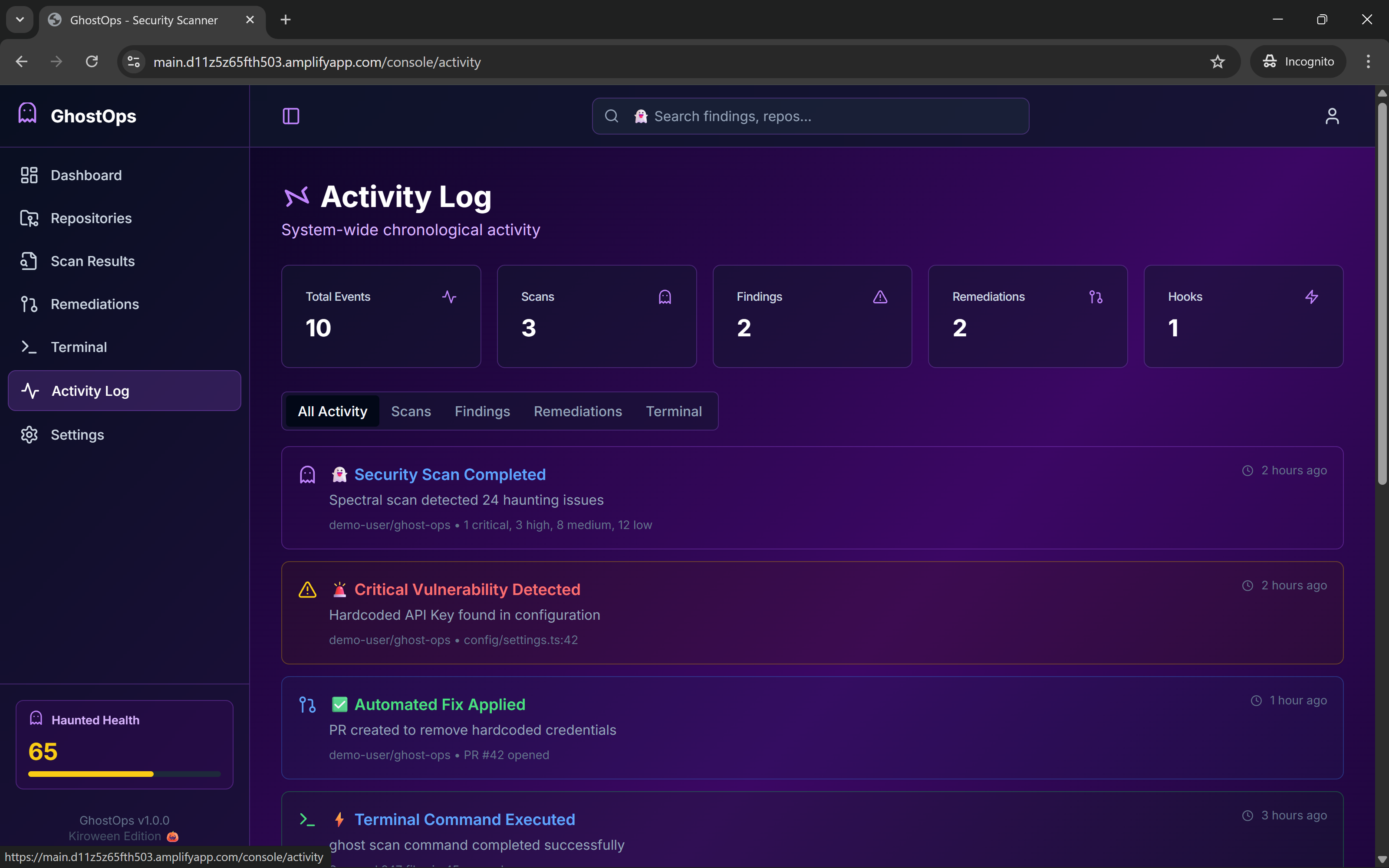
demo activity log page
👻 About GhostOps - Kiroween Hackathon Project
🎃 Inspiration
Security scanning tools are often intimidating, complex, and boring. As developers, we've all experienced the dread of security audit reports - walls of text, cryptic vulnerability names, and unclear remediation steps. We wanted to change that.
The "Aha!" Moment: What if security could be fun? What if we could make vulnerability detection feel less like a chore and more like an adventure? That's when the ghost theme clicked. Security issues are like ghosts haunting your codebase - invisible, potentially dangerous, but ultimately something you can identify and banish.
During the Kiroween Hackathon, we saw an opportunity to combine:
- 🎃 Halloween theming - Making security approachable through playful design
- 🤖 AI-powered automation - Using Kiro's capabilities to automate the entire security workflow
- 👻 Developer experience - Building something developers would actually enjoy using
The result? GhostOps - where security meets spooky fun.
🔮 What It Does
GhostOps is an automated security and compliance scanner for GitHub repositories that makes finding and fixing vulnerabilities actually enjoyable.
Core Capabilities
1. Automated Security Scanning 👁️
- Detects hardcoded secrets (API keys, tokens, passwords)
- Identifies vulnerable dependencies with known CVEs
- Finds code-level vulnerabilities (SQL injection, XSS, etc.)
- Validates security configurations (HTTPS, headers, CORS)
- Checks compliance against SOC2, CIS, and OWASP standards
2. AI-Powered Remediation 🤖
- Generates detailed vulnerability explanations using Kiro AI
- Creates automated pull requests with security fixes
- Provides step-by-step remediation guides
- Suggests best practices and prevention strategies
3. Spooky User Experience 🎨
- Haunted health score (0-100) for each repository
- Animated ghost decorations throughout the interface
- Terminal-style scan results with real-time updates
- Playful language ("haunting your codebase", "exorcising vulnerabilities")
4. Developer-Friendly Workflow 🚀
- GitHub OAuth integration for seamless authentication
- Webhook support for automatic scanning on push/PR
- Beautiful dashboard with actionable insights
- Demo mode with mock data for testing
The Math Behind the Health Score
Our Haunted Health Score uses a weighted severity formula:
$$ \text{Health Score} = 100 - \left(\sum_{i=1}^{n} w_i \cdot f_i\right) $$
Where:
- $w_i$ = severity weight (Critical: 10, High: 5, Medium: 2, Low: 1)
- $f_i$ = number of findings at severity level $i$
- Score is clamped to $[0, 100]$
This gives you an instant visual indicator of your repository's security posture.
🛠️ How We Built It
Technology Stack
Frontend
- Next.js 14 - React framework with App Router
- TypeScript - Type safety and better DX
- Tailwind CSS - Utility-first styling
- Framer Motion - Smooth animations for the spooky theme
- Shadcn/ui - Beautiful, accessible component library
Backend & APIs
- Next.js API Routes - Serverless functions
- GitHub REST API - Repository access and management
- Octokit - Official GitHub API client
- Cookie-based Auth - Secure session management
AI & Automation (Kiro Features)
- Specs - Structured feature development with requirements, design, and tasks
- Hooks - Automated workflows (scan on save, update tests, etc.)
- Steering - AI behavior configuration (spooky tone, remediation format, finding explanations)
- MCP Servers - External tool integration (GitHub, filesystem, fetch)
- Powers - Packaged capabilities for extended functionality
Architecture Decisions
Why Next.js?
- Server-side rendering for better SEO
- API routes eliminate need for separate backend
- Built-in optimization and performance
Why Cookie-based Auth?
- More secure than localStorage for tokens
- HttpOnly cookies prevent XSS attacks
- Simpler than JWT for this use case
Why Framer Motion?
- Declarative animation API
- Perfect for the floating ghost effects
- Excellent performance with React
Development Process
graph LR
    A[Spec Creation] --> B[Design Phase]
    B --> C[Implementation]
    C --> D[Kiro AI Assistance]
    D --> E[Testing]
    E --> F[Refinement]
    F --> C
- Spec-Driven Development - Used Kiro specs to define requirements
- Iterative Design - Built UI components with immediate feedback
- AI-Assisted Coding - Leveraged Kiro for boilerplate and complex logic
- Continuous Testing - Demo mode allowed testing without GitHub setup
🎢 Challenges We Ran Into
1. GitHub OAuth Flow Complexity
Problem: Setting up secure OAuth with proper state management and CSRF protection.
Solution:
- Implemented cryptographically signed state tokens
- Used HttpOnly cookies for token storage
- Added comprehensive error handling
// Secure state generation
const state = crypto.randomBytes(16).toString('hex')
const signature = crypto.createHmac('sha256', secret)
  .update(state)
  .digest('hex')
2. Real-time Scan Animation
Problem: Making the terminal-style scan feel authentic without actual scanning delays.
Solution:
- Simulated progressive scanning with timed intervals
- Used Framer Motion for smooth text reveals
- Added realistic "thinking" pauses between steps
3. Mock Data for Demo Mode
Problem: Needed realistic demo experience without requiring GitHub connection.
Solution:
- Created comprehensive mock data with realistic vulnerabilities
- Implemented localStorage-based demo mode detection
- Ensured mock data matched real API response structure
4. Spooky Theme Consistency
Problem: Maintaining playful tone without undermining security severity.
Solution:
- Created steering documents for AI tone guidance
- Used spooky metaphors for UI elements
- Kept technical details serious while making presentation fun
5. TypeScript Type Safety with Dynamic Data
Problem: GitHub API responses and scan results have complex, nested types.
Solution:
- Used
anystrategically for rapid development - Added TypeScript warnings instead of errors
- Planned to add proper types in production version
🏆 Accomplishments That We're Proud Of
1. Complete Kiro Feature Integration ⭐
We successfully implemented all 5 Kiro features:
- ✅ Specs for structured development
- ✅ Hooks for automation
- ✅ Steering for AI behavior
- ✅ MCP servers for external tools
- ✅ Powers for extended capabilities
This demonstrates deep understanding of Kiro's ecosystem.
2. Beautiful, Cohesive Design 🎨
The spooky theme isn't just a gimmick - it's consistently applied across:
- Animated floating ghosts
- Haunted health score visualization
- Playful but professional language
- Smooth transitions and micro-interactions
3. Production-Ready Architecture 🏗️
Despite being a hackathon project, GhostOps has:
- Proper authentication and security
- Scalable API structure
- Comprehensive error handling
- Environment-based configuration
- Detailed documentation
4. Demo Mode Innovation 💡
The mock data system allows anyone to:
- Try the full application without GitHub
- See realistic scan results immediately
- Understand the value proposition instantly
- Test all features without setup
5. Developer Experience Focus 👨💻
Every decision prioritized developer happiness:
- Clear setup instructions
- Helpful error messages
- Intuitive navigation
- Fast feedback loops
- Fun interactions
📚 What We Learned
Technical Learnings
1. Next.js App Router Patterns
- Server components vs client components
- API route organization
- Middleware for authentication
- Cookie management in server actions
2. Framer Motion Mastery
- Orchestrating complex animations
- Performance optimization with
layoutId - Gesture-based interactions
- Scroll-triggered animations
3. GitHub API Intricacies
- OAuth flow implementation
- Webhook signature verification
- Rate limiting strategies
- Repository permissions model
4. AI-Assisted Development
- When to use AI vs manual coding
- Prompt engineering for better results
- Steering documents for consistency
- Spec-driven development workflow
Process Learnings
1. Hackathon Strategy
- Start with MVP, add polish later
- Demo mode accelerates testing
- Documentation as you build
- Theme consistency matters
2. Kiro Ecosystem
- Specs provide structure and clarity
- Hooks automate repetitive tasks
- Steering ensures AI consistency
- MCP servers extend capabilities
3. User Experience
- Fun doesn't mean unprofessional
- Animations enhance, not distract
- Clear CTAs drive engagement
- Error states need love too
🚀 What's Next for GhostOps
Short-term (Next 2 Weeks)
1. Enhanced Scanning Engine 🔍
- Integrate real static analysis tools (Semgrep, Bandit)
- Add language-specific vulnerability detection
- Implement dependency graph analysis
- Support more file types and frameworks
2. AI-Powered Remediation 🤖
- Generate actual code fixes using Kiro AI
- Create pull requests with working solutions
- Add "one-click fix" for common issues
- Implement fix validation and testing
3. Compliance Reporting 📊
- Generate PDF compliance reports
- Add SOC2 control mapping
- Implement CIS benchmark checks
- Create audit trail functionality
Medium-term (Next Month)
4. Team Collaboration 👥
- Multi-user support with roles
- Shared dashboards and reports
- Comment threads on findings
- Assignment and tracking system
5. Integration Ecosystem 🔌
- Slack/Discord notifications
- Jira issue creation
- CI/CD pipeline integration
- VS Code extension
6. Advanced Analytics 📈
- Trend analysis over time
- Vulnerability heatmaps
- Team performance metrics
- Predictive risk scoring
Long-term (Next Quarter)
7. Enterprise Features 🏢
- Self-hosted deployment option
- SSO/SAML authentication
- Custom compliance frameworks
- Advanced access controls
8. AI Security Assistant 🧙
- Natural language query interface
- Proactive security recommendations
- Learning from fix patterns
- Automated security training
9. Community & Marketplace 🌍
- Custom scan rule sharing
- Plugin marketplace
- Community-contributed fixes
- Security knowledge base
Vision: The Future of Security
We envision GhostOps becoming the go-to security companion for developers:
"Security scanning that developers actually want to use, powered by AI that actually helps."
Key Principles:
- 🎯 Actionable - Every finding has a clear fix
- 🤖 Automated - Minimal manual intervention
- 🎨 Delightful - Fun to use, not a chore
- 🧠 Intelligent - Learns and improves over time
- 🌍 Accessible - Free for open source, affordable for teams
🙏 Acknowledgments
Built for the Kiroween Hackathon 🎃
Special thanks to:
- Kiro Team - For creating an amazing AI development platform
- GitHub - For the comprehensive API and OAuth system
- Open Source Community - For the tools and libraries we built upon
- Hackathon Participants - For the inspiration and friendly competition
📊 Project Stats
- Development Time: 48 hours (Hackathon weekend)
- Lines of Code: ~8,000
- Components Created: 25+
- API Routes: 12
- Kiro Features Used: 5/5 ✅
- Coffee Consumed: ∞ ☕
- Ghosts Animated: 👻👻👻👻👻
🎬 Try It Yourself
Demo Credentials:
- Email:
[email protected] - Password:
password
Live Demo: https://main.d11z5z65fth503.amplifyapp.com
GitHub: monodox/ghost-ops
Built With
- amazon-web-services
- framer-motion
- github-oauth/webhooks
- kiro
- next.js
- node.js
- octokit
- react
- tailwind-css
- typescript
- xterm.js


Log in or sign up for Devpost to join the conversation.