-
-
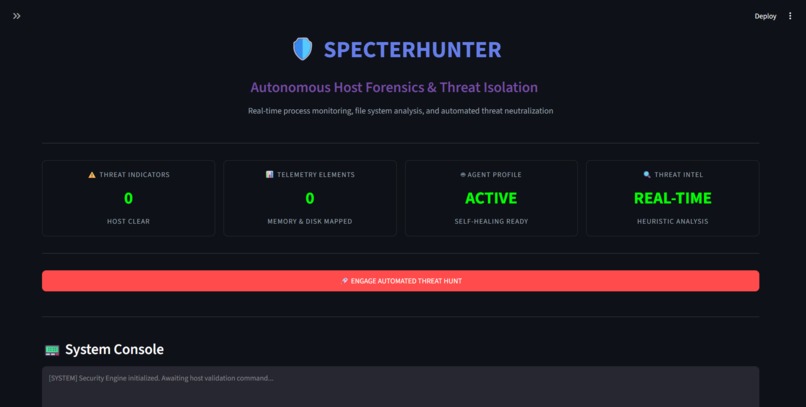
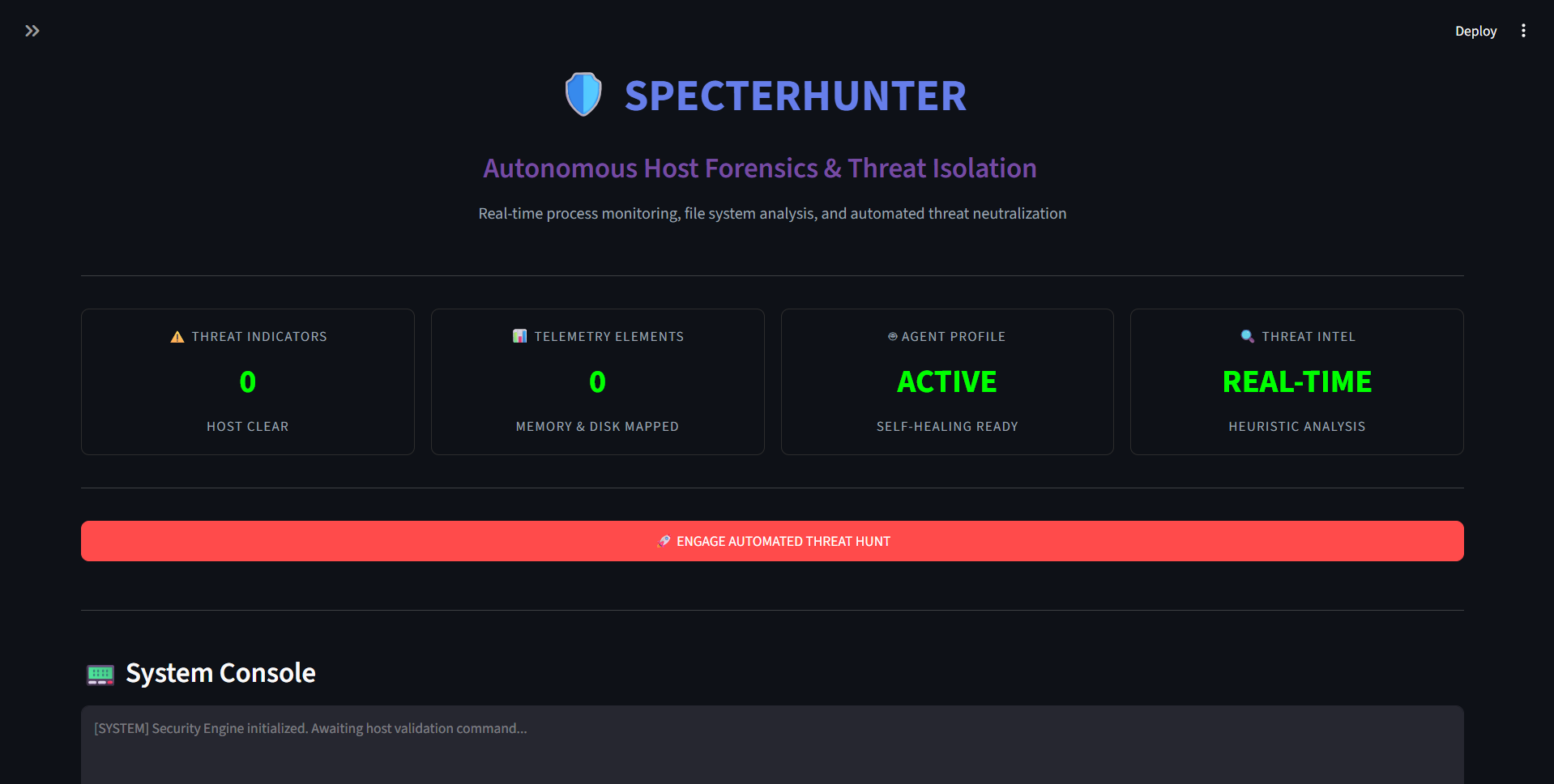
Home Page
-
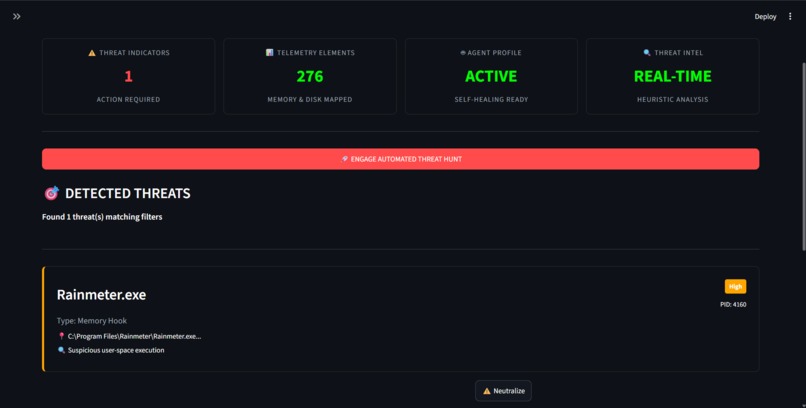
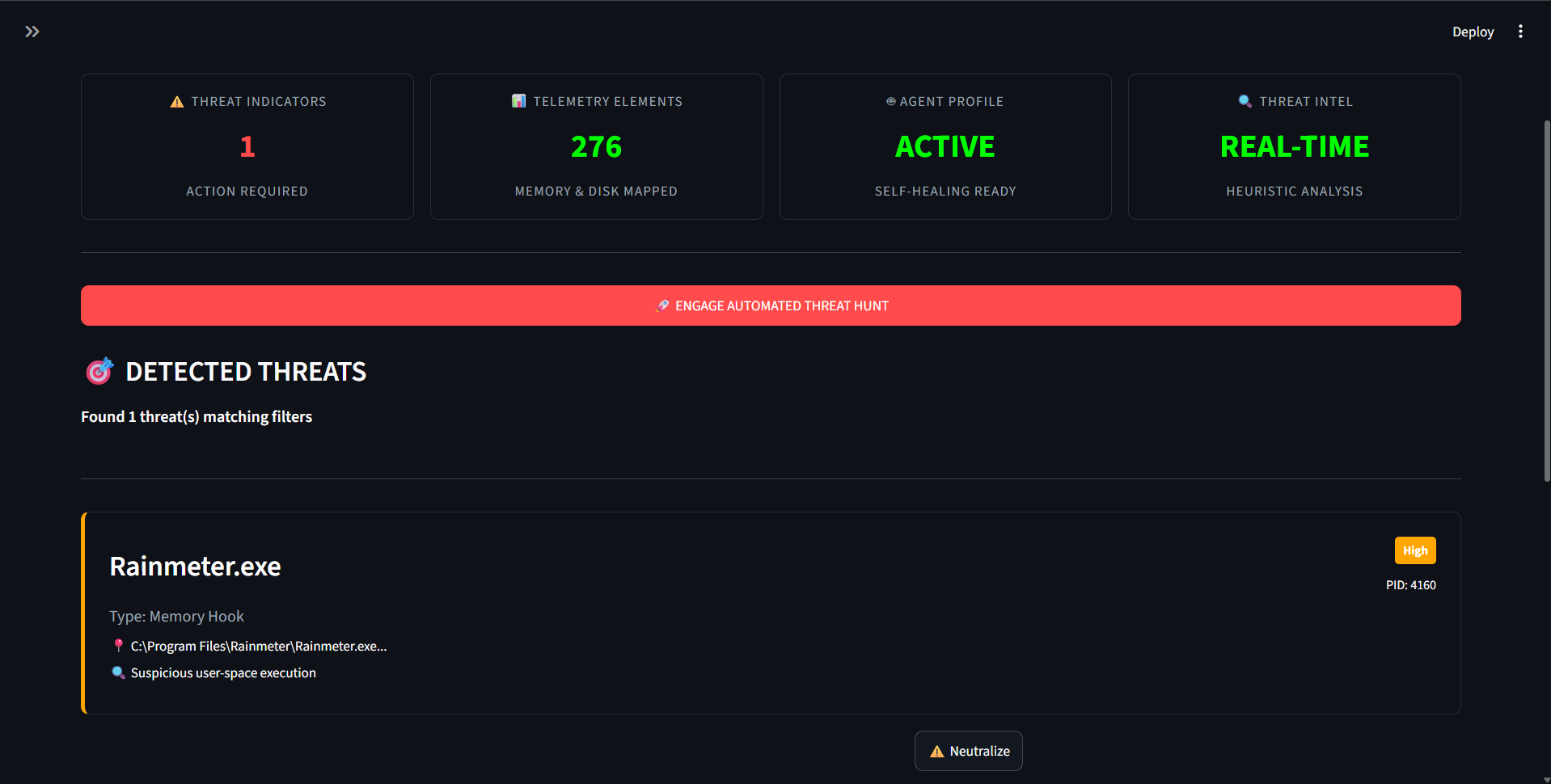
Results After a Run
-
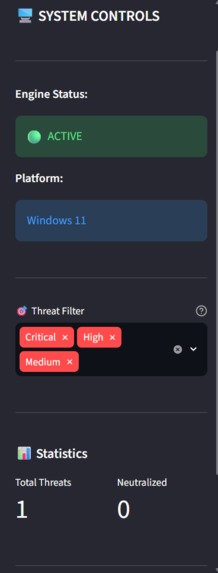
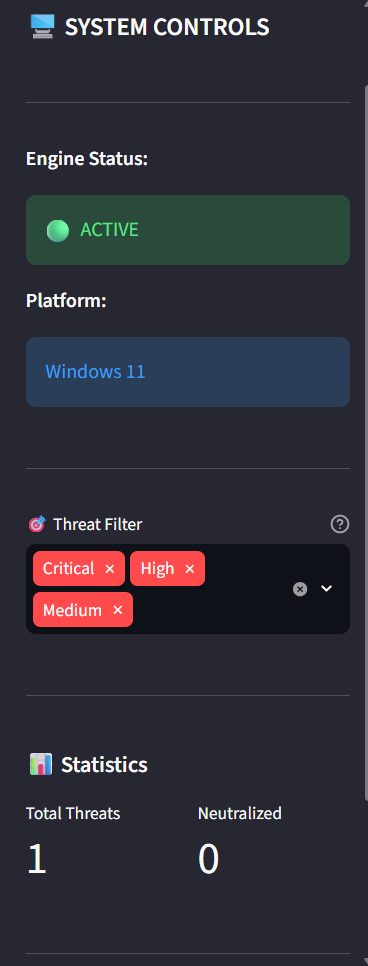
Side Panel
-
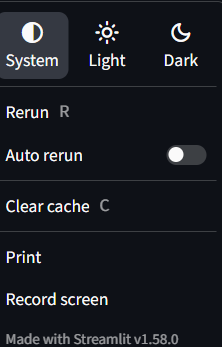
Themes and some other settings
Inspiration
Traditional Digital Forensics and Incident Response (DFIR) struggles with operational lag. When a high-severity breach occurs, human analysts spend critical hours running fragmented scripts to parse system hives, leaving a window of opportunity for attackers to delete footprints or move laterally. We built SpecterHunter to automate the threat-hunting process, enabling defensive architectures to discover, track, and isolate hidden malware at machine speed.
What it does
SpecterHunter is an autonomous incident response platform. When deployed to a target host, it:
- Performs Deep Live Triage: Audits core RAM execution threads, open network socket endpoints, and user-space pathways (
App Data,Program Data,Temp) for hidden anomalies and masquerading processes. - Executes Autonomous Self-Correction: Guided by embedded logic loops, the agent automatically interprets system-level anomalies and dynamically evaluates risks in real-time.
- Neutralizes Volatile Threats: Provides defenders with an active, tactical kill switch to immediately terminate flagged malicious PIDs directly from the interface.
- Preserves Evidence Chains: Compiles discovered telemetry indicators into an exportable, certified forensic JSON audit manifest.
How we built it
- The Interface: Developed a premium, low-latency dark-mode UI using Streamlit, engineered with custom CSS for high-density, tactile data visualization.
- The Forensics Core: Driven by native Python architecture hooks (
psutil,os,sys) to capture live process metadata, network beacon connections, and volatile file tracking blocks.
Challenges we faced
Creating a platform resilient enough to operate on heavily restricted or compromised environments where normal system tools are stripped. We resolved this by bypassing traditional subprocess shell dependencies and relying on raw memory-mapping libraries to handle structural evaluations safely.
Accomplishments we're proud of
We built a living, functioning defensive prototype. This isn't just a mock-up—you can click the live execution vector, watch it audit live RAM spaces, flag real directory anomalies, track network socket behaviours, and cleanly terminate rogue threads in real time.
What we learned
We learned how to translate dense cyber forensic telemetry—such as localized user-space path variances—into clear, side-by-side technical indicators that enterprise security teams can analyze and act upon instantly.
What's next for SpecterHunter
Scaling the matrix to include cross-platform telemetry monitoring for Linux (auditd) and macOS unified logs, integrating SHA-256 cryptographic hashing to cross-reference global reputation databases, and compiling the runtime environment into a standalone native application framework.


Log in or sign up for Devpost to join the conversation.