-
-
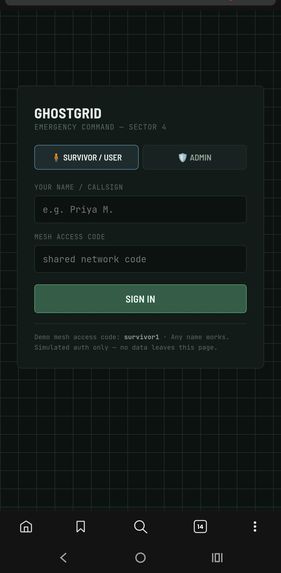
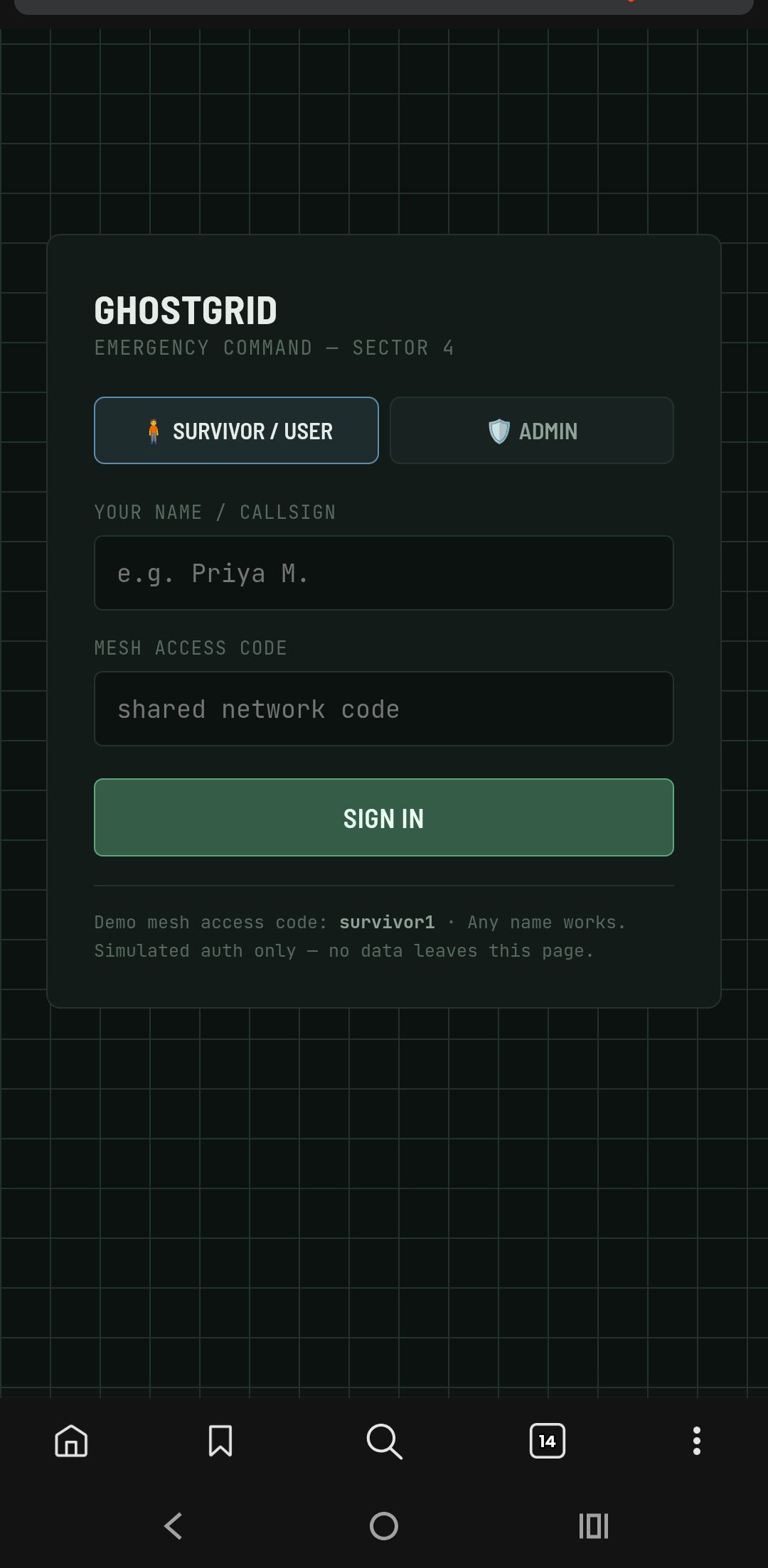
Admin/User page
-
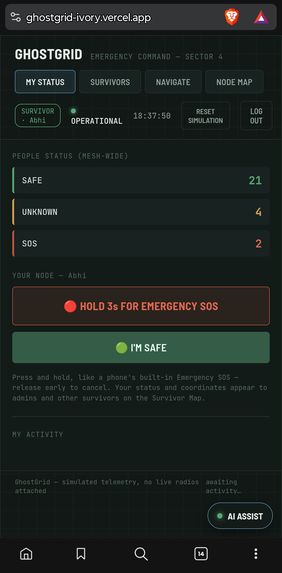
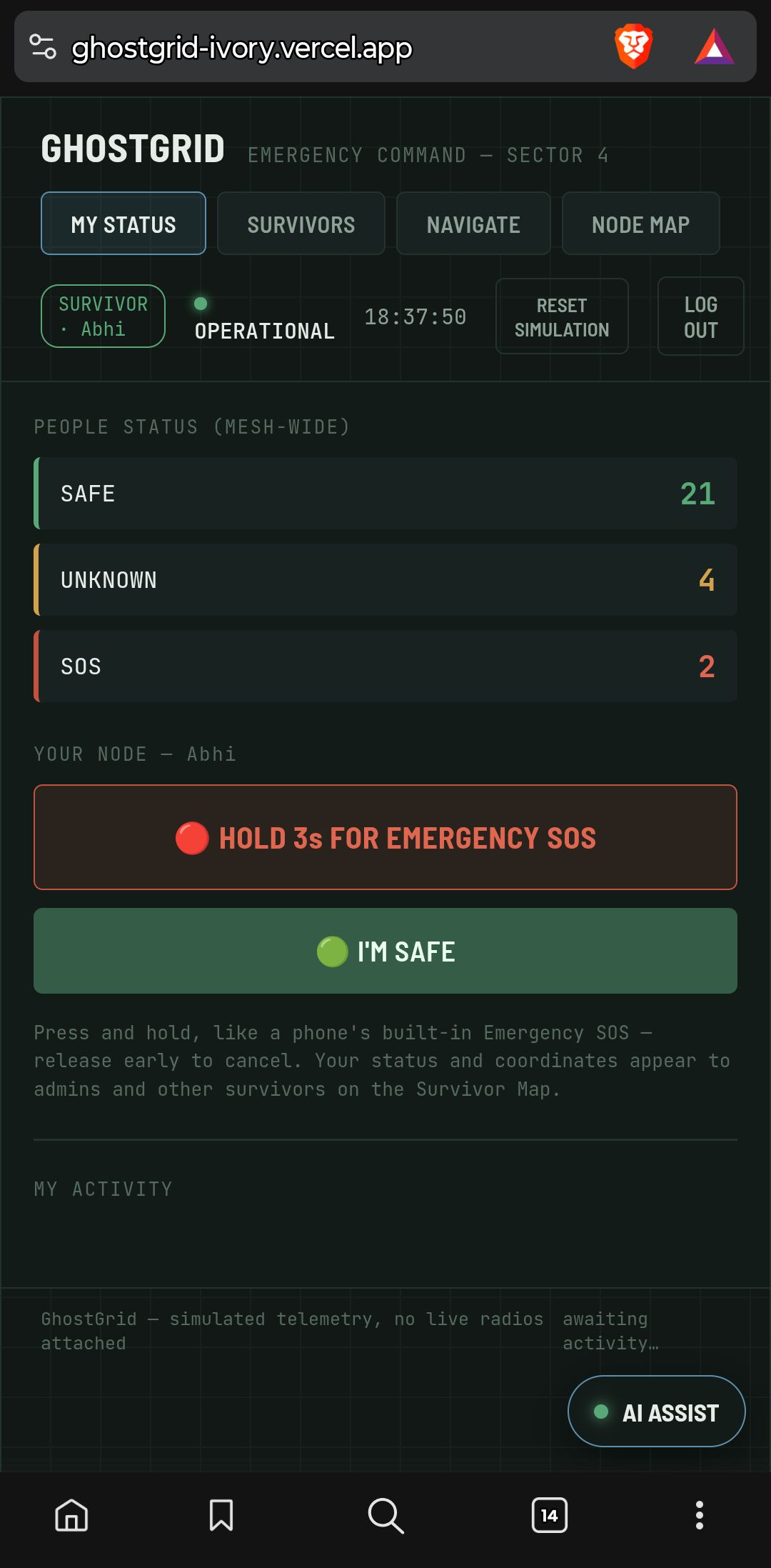
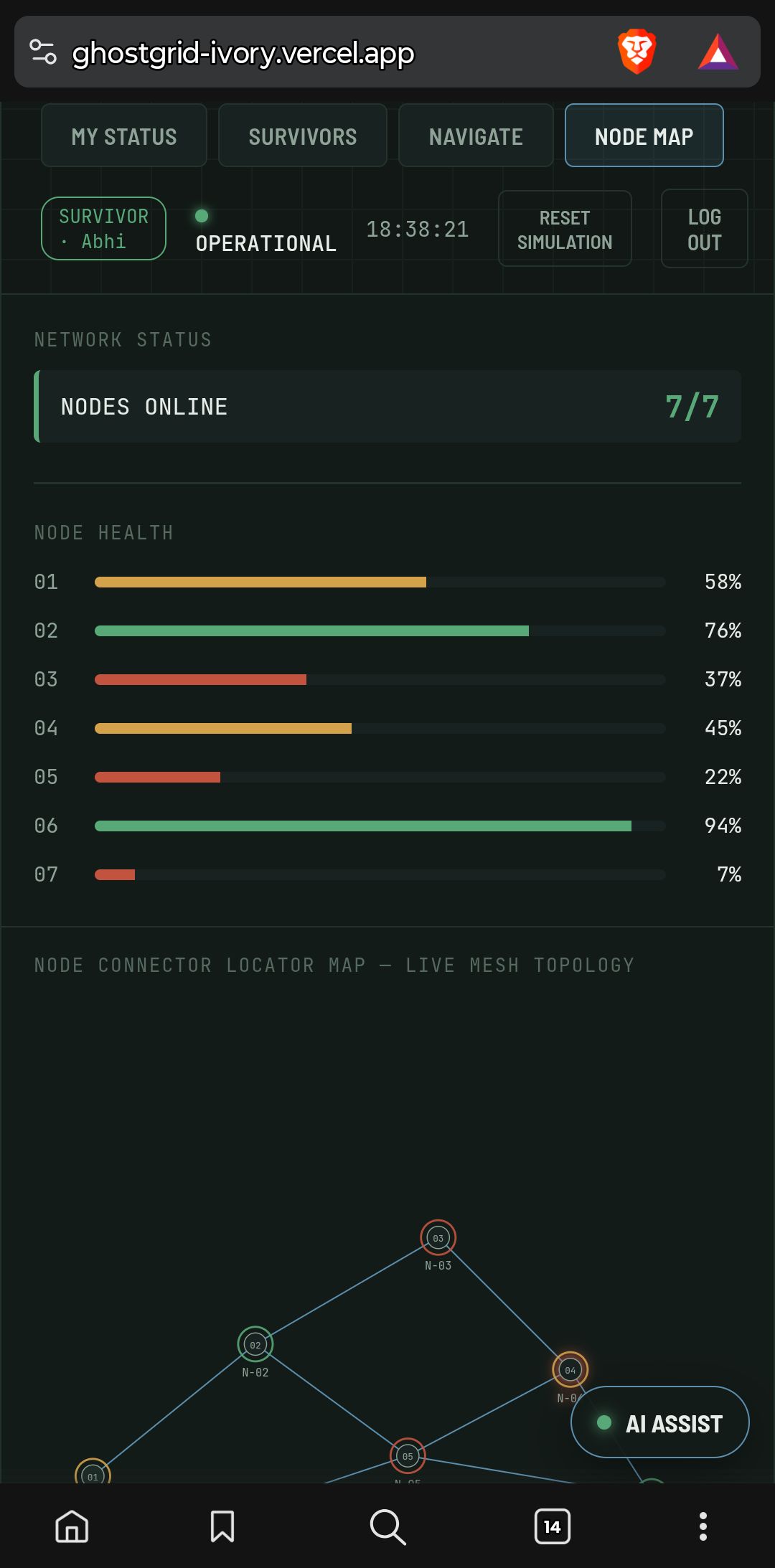
GhostGrid emergency command interface with SOS and survivor status
-
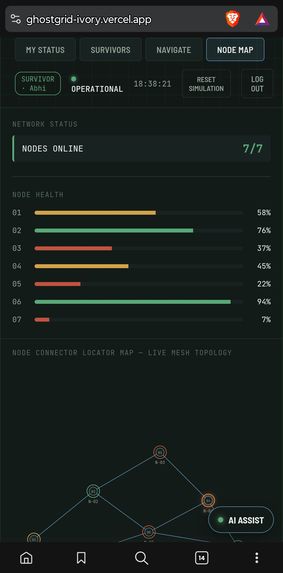
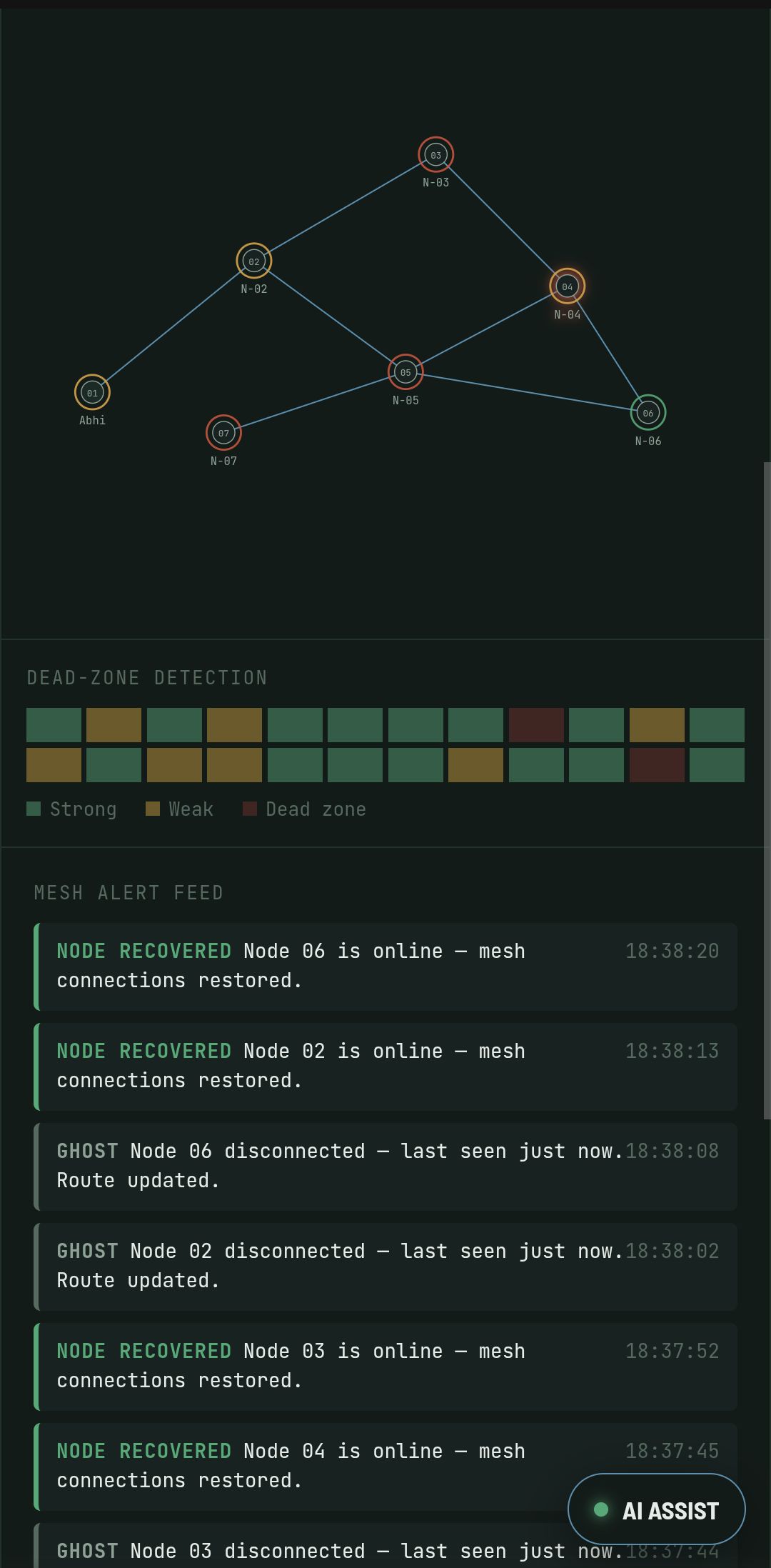
Live mesh topology and node health monitoring
-
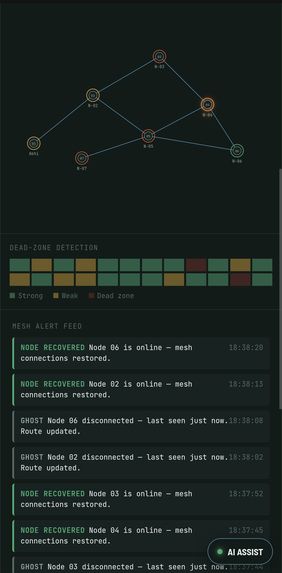
Ghost Mode detects disconnected nodes and updates routes
-
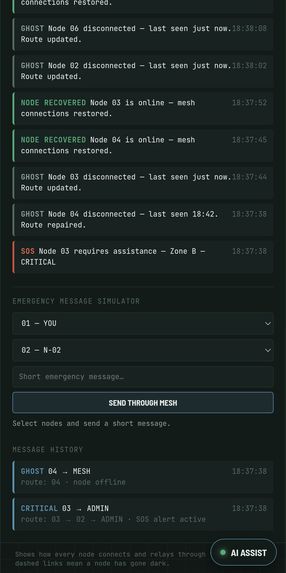
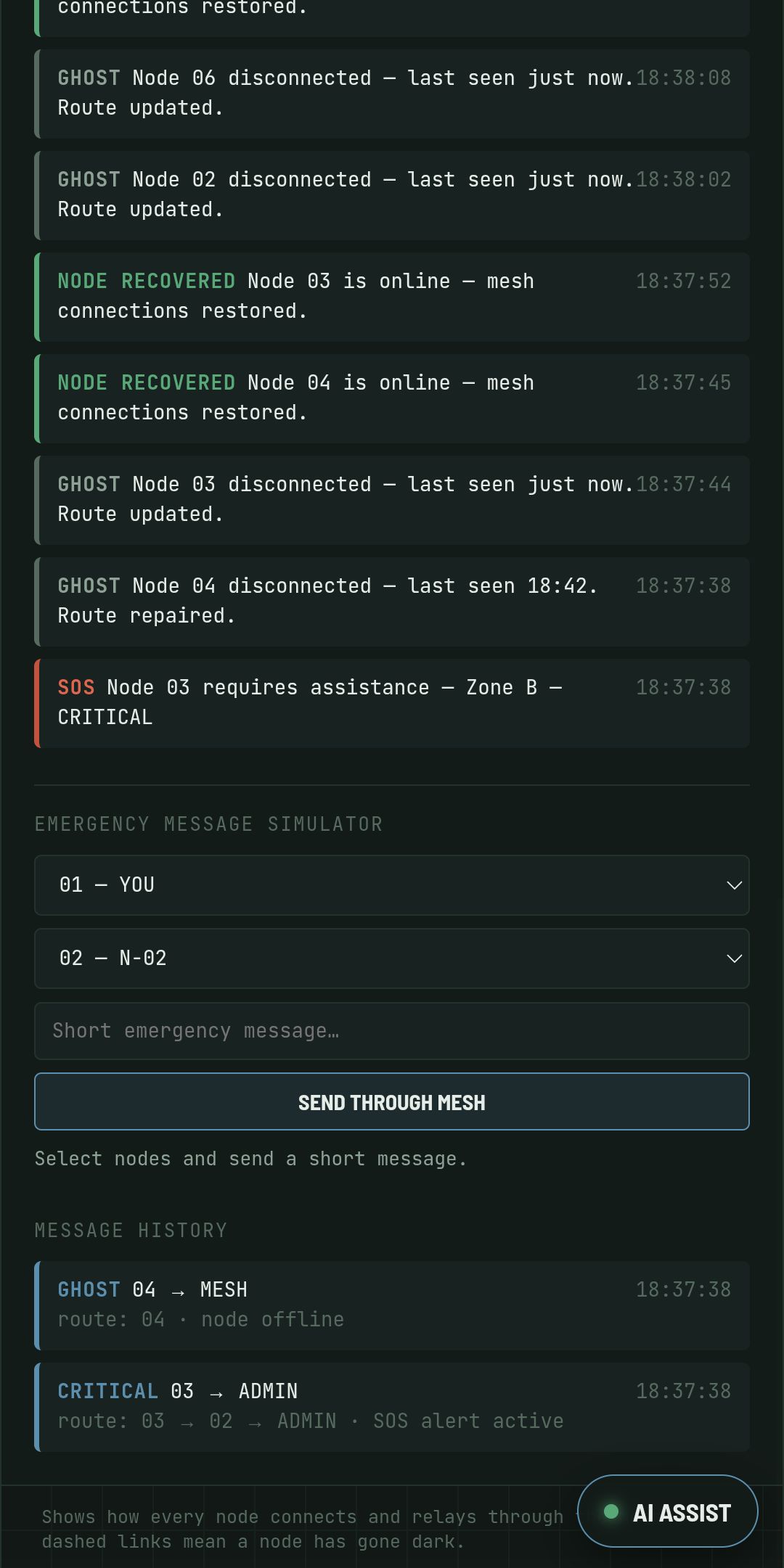
Emergency messaging and SOS alerts routed through the mesh
-
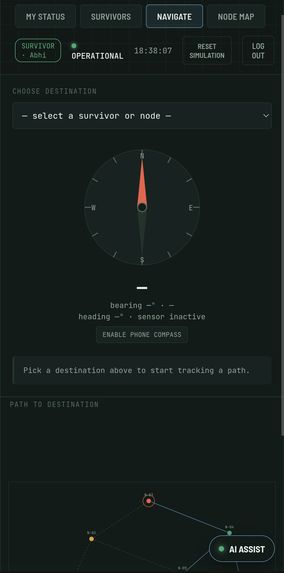
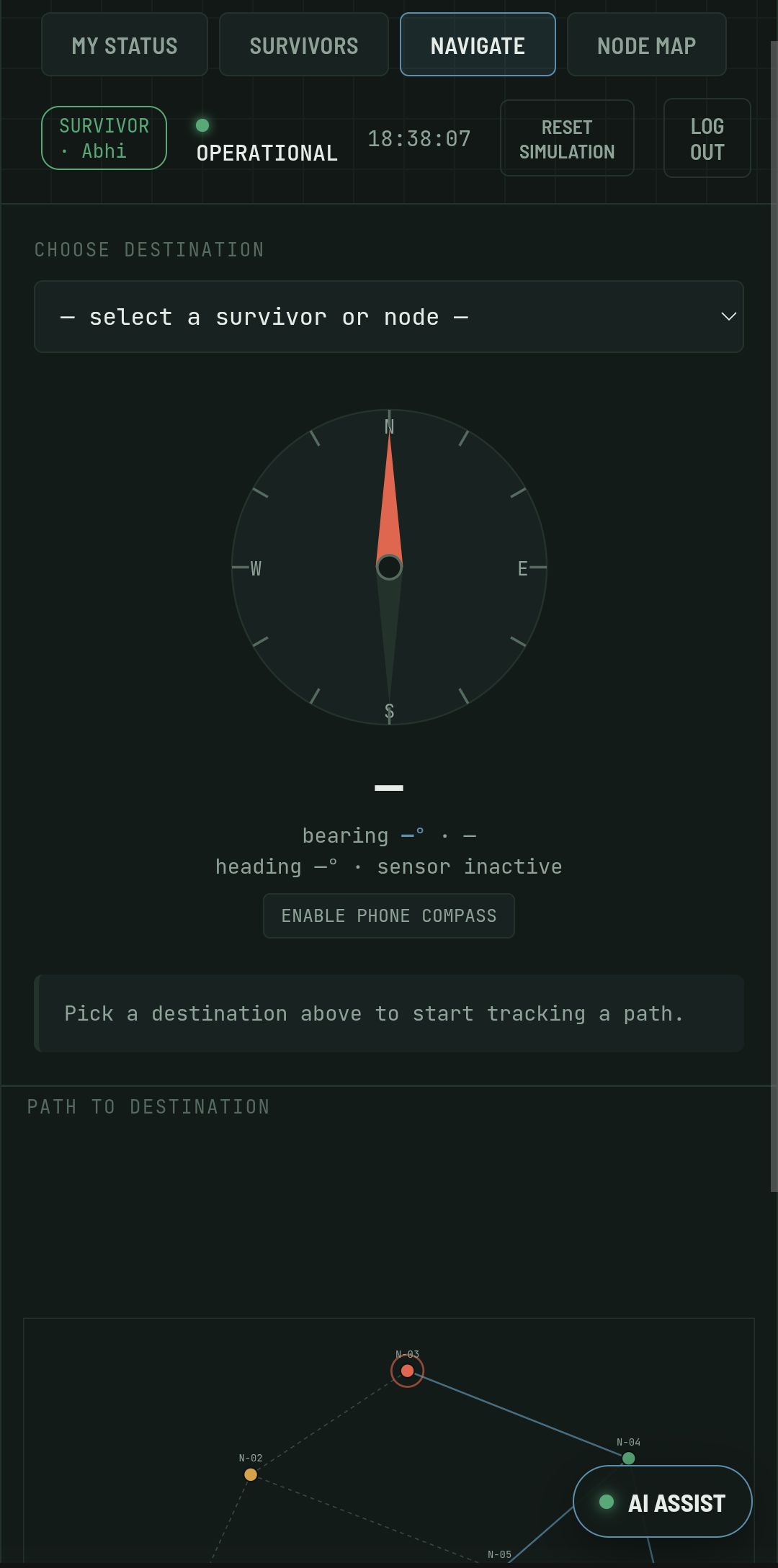
Offline navigation with mesh-aware route tracking
Inspiration
During emergencies, internet and cellular networks may become unavailable exactly when communication is most important. We wanted to build a system that could keep people connected without depending completely on traditional networks.
What we built
GhostGrid 2.0 is an emergency communication and sensing network designed to work when normal connectivity disappears. It uses a mesh of low-cost nodes to support SOS alerts, emergency messaging, survivor status, node monitoring, navigation, and alternate routing.
AI Integration
AI helps GhostGrid act as an intelligent emergency coordinator. It provides emergency assistance, prioritizes SOS situations, analyzes node health, predicts possible node failures, and helps optimize routes when parts of the network become unavailable.
How it works
When a node becomes unavailable, GhostGrid can detect the change and adapt the network by considering alternate routes. This allows communication to continue instead of depending on a single connection.
Challenges
One of our main challenges was combining emergency communication, network monitoring, routing, navigation, and AI features into a simple interface that can be understood quickly during an emergency.
What we learned
We learned how AI can be combined with resilient communication systems to make emergency networks more adaptive and useful when conventional connectivity is unavailable.
Built With
- ai/ml
- css
- emergency
- esp32
- html
- iot
- javascript
- lora
- mesh
- networking
- pwa


Log in or sign up for Devpost to join the conversation.